Galapagos racer snake - Galapagos Conservation Trust (original) (raw)
Common name:
Galapagos racer snake
Scientific name:
Pseudalsophis spp
Spanish name:
Culebra de Galápagos
Conservation status:
Near Threatened
EX EW CR EN VU NT LC
Average size:
80 centimetres - 1 metre
Maximum size:
1.25 metres
Overview
Racer snakes on Galapagos are constrictors and only mildly venomous. They are known to prey on lava lizards, geckos, insects, iguanas, mice, rats and hatchlings of several bird species. They are not at all aggressive towards humans and could not do much harm if they were to attack after being threatened. Racers tend to be dark brown with stripes or spots.
There is some confusion over the number of species of racer snake found in Galapagos due to poor research. The latest research suggests that there are: the Galapagos racer (Pseudalsophis biserialis) from San Cristobal and Floreana – though it is locally extinct on Floreana and now only found on nearby islets; the Española racer (Pseudalsophis hoodensis) from Española and adjacent islets; Santa Cruz racer (Pseudalsophis dorsalis) from Santa Cruz, Baltra, Santa Fe and adjacent islets; Fernandina racer (Pseudalsophis occidentalis) from Fernandina, Isabela, and Tortuga; banded racer (Pseudalsophis slevini) from Pinzon; and the striped racer (Pseudalsophis steindachneri) from Baltra and Santa Cruz.
It is the Fernandina racer which has been observed hunting for marine fish from rock pools and the shallows around Fernandina. GCT Ambassador Godfrey Merlen was the first scientist to ever see this behaviour happening as he noted up to 15 individual snakes slithering around the lava rock pools around Cape Douglas. This is a unique behaviour of terrestrial snakes not observed anywhere else in the world. The racers on Fernandina were also the stars of BBC’s Planet Earth II where they were filmed hunting juvenile marine iguanas.
Racer snakes in Galapagos
Where to see them: Racer snakes can be found on most of the major islands, though they are now locally extinct on Floreana.
When to see them: The snakes are found throughout the year, but unlike many other Galapagos animals they are shy of humans and will hide away making them reasonably tough to spot without looking for them specifically. They are diurnal, most active around dawn and dusk, and often rest around midday.
The native snake population has been decimated by introduced species such as cats, pigs and feral goats which forage for their eggs.
There is research into the Galapagos racer on the islets off Floreana island, looking at their demography and conservation. They are a priority species for reintroduction to Floreana island where they are locally extinct – we are working partners to restore the habitat on Floreana and enable this to happen.
Photo gallery
Click an image to view larger
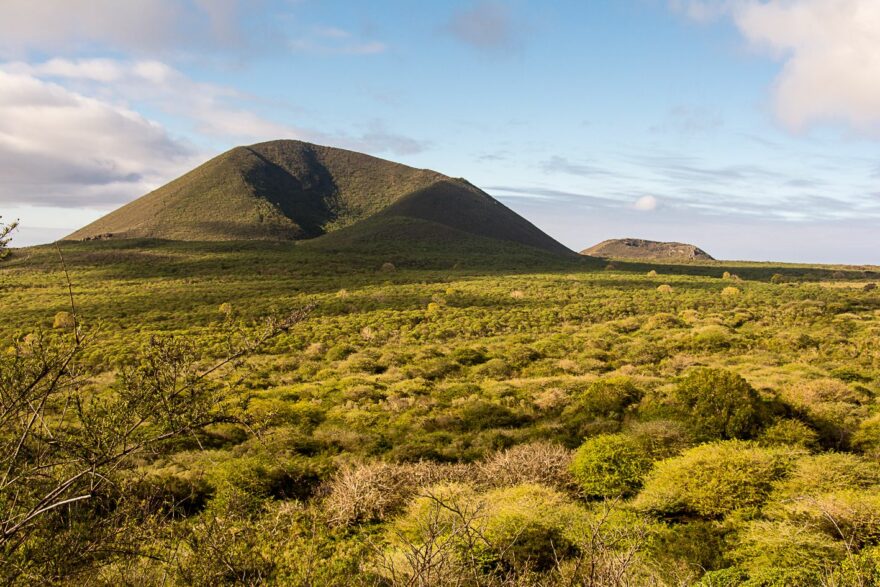
© Just Janza
Restoring Floreana
"12 species are locally extinct on the island, including the Floreana mockingbird and Floreana racer snake."
Once home to some of the most iconic wildlife in Galapagos, Floreana has been devastated by invasive species. We are supporting a hugely ambitious project to restore the island to its former glory.

How you can help
Please help us protect the wildlife of Galapagos by donating today.
Read more about racer snakes...

Events Rewilding
Rewilding Islands Webinar 2026
At our webinar on 3 March, Dr Luis Ortiz-Catedral gave a fascinating insight into the efforts to reintroduce species including the Floreana mockingbird, Floreana racer snake and Galapagos land iguana.
Island restoration Rewilding
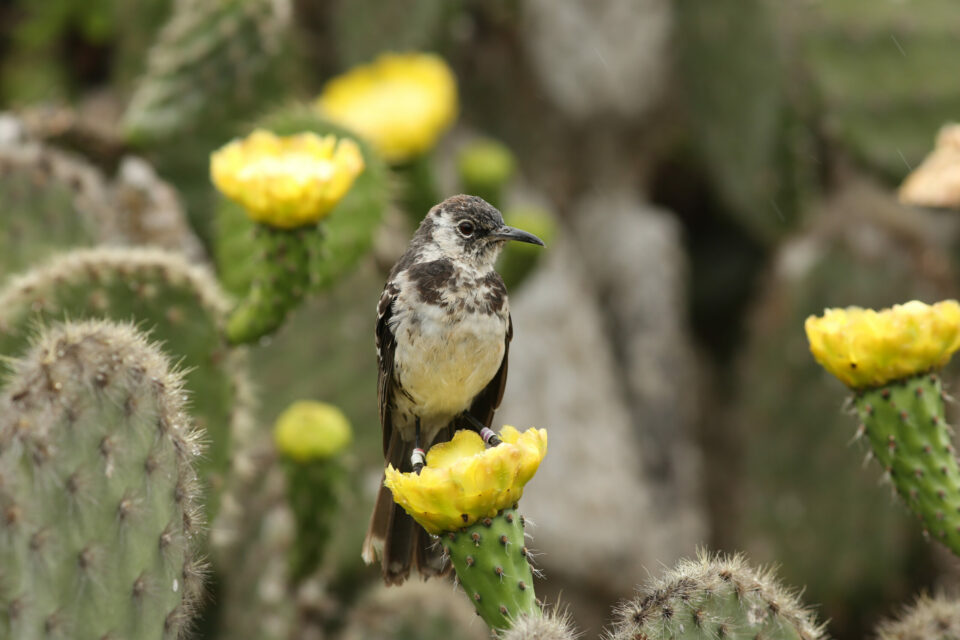
12 missing species set to return to Floreana
The restoration of Floreana is a hugely ambitious project, which seeks to repopulate the island with its missing plants, birds, snakes and tortoises.

Research
Snakes, iguanas and more... Part 2
Euan Moncrieffe was lucky to volunteer with one of our partners, Luis Ortiz-Catedral, on some of his projects in Galapagos in 2019. Here is the second of two blogs that he wrote for us about his experiences working with snakes, iguanas and more.
News
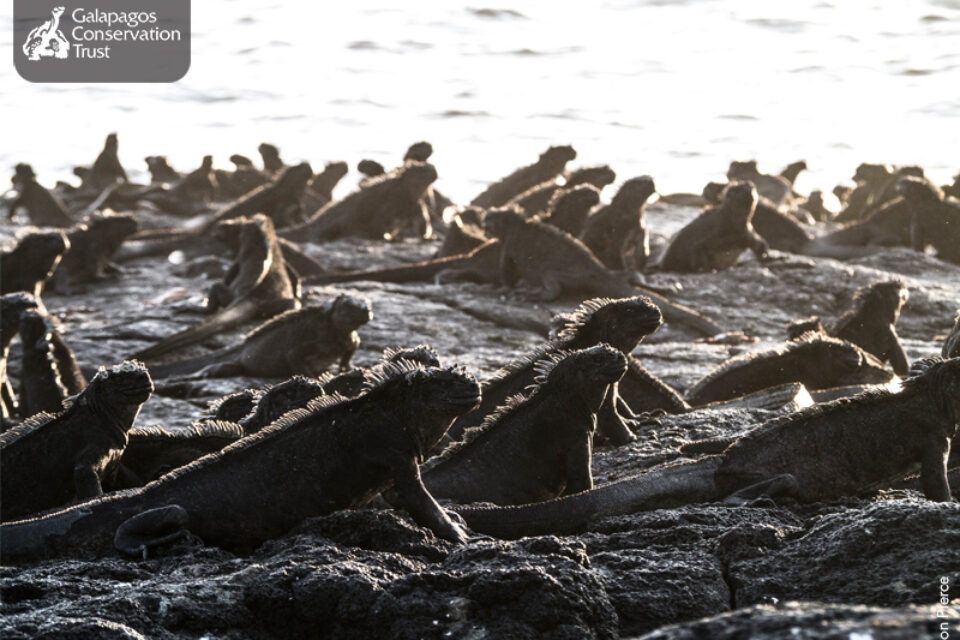
BBC Documentary: Planet Earth II Ep. 1
The long awaited second series of the ground breaking Planet Earth programme was shown last Sunday 6 November to millions of viewers, and it did not disappoint.
Get the latest news from Galapagos
Join our mailing list to receive our monthly email newsletter, bringing you the latest news on Galapagos and our work to protect the Islands.