Qur'anic misconceptions addressed (original) (raw)
Orientalists’ claims The conclusion they try to reach is that the Prophet (ﷺ) was likely literate, and later Muslims exaggerated illiteracy for theological reasons. The issue is not simplistic Even academically, this is not settled. It’s a multi-layered debate, not an indisputably proven view either way. There are three possible positions: The Qur’anic evidence The…

Is the awrah of slave-women not like that of free women? Were they not covered except what is between the navel and the knees? In other words, were they bare chested?[1] This is a very important and thoughtful question, and one that many students of Islamic history, law, and ethics have struggled with. Before we…
The following Hadith is under discussion: ‘Amir b. Rabi’ah saw Sahl b. Hunayf’s (رضي الله عنه) body and commented: ‘By Allah! I haven’t seen such an attractive body. Sahl then fell to the ground. The Prophet (ﷺ) was dismayed and said: ‘Why do you’ll kill your fellow brothers. Why didn’t you make du’a for him to…

This is the third page for question and answers. The first one and the second one have become very crowded and gone down in the list of articles and so a new page is dedicated for it. This blog witnesses a number of questions asked in the comments section that do not pertain to the article…
Martin Taverille wrote another piece trying to disprove the Qur’an.[1] His earlier piece can be found here. Martin comes from the mindset where he must find a way to disprove the Qur’an so he could comfort himself and those who find the menacing warnings in the Qur’an somewhat disturbing and wish to gain peace of…

This question touches on Islamic criminal law (fiqh al-jināyāt), not theology or morality in the abstract. Much confusion arises when legal classifications are mistaken for moral value judgments. Let us address each issue step by step but before we do that, if the question of the existence of slavery in the first place comes to…
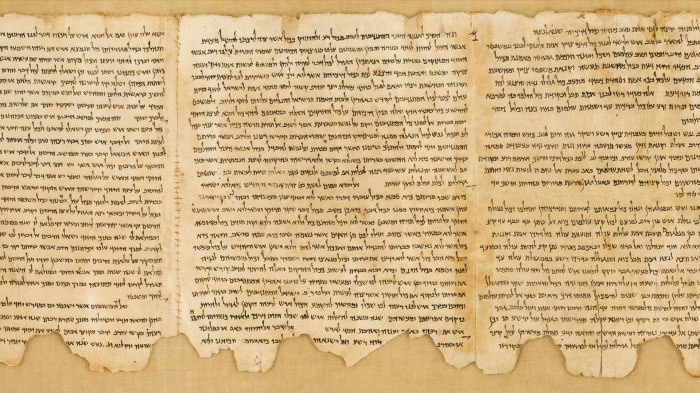
The Gospel of Thomas The claim that the Qur’an plagiarized from the Gospel of Thomas, popularized in modern form by W. Atallah, rests on a methodological error: confusing shared religious vocabulary with literary dependence.[1] The Gospel of Thomas is not a Gospel in the historical sense The Gospel of Thomas is a 2nd-century Gnostic text,…

Islamophobes often cite a statement attributed to Abu Hurayrah (رضي الله عنه): “I used to accompany Allah’s Apostle to fill my stomach”, claiming this proves he followed the Prophet Muhammad (ﷺ) for material benefit and was therefore a hypocrite. This argument collapses once the historical context, Arabic usage, and Islamic definition of hypocrisy are understood.…

The narration referenced by critics (Sahih al-Bukhari 77) reads: “When I was a boy of five, I remember, the Prophet (ﷺ) took water from a bucket (used for getting water out of a well) with his mouth and threw it on my face.” This is an authentic hadith, and nothing in its wording mentions laughter…
One narration describing the huur al-ayn (maidens of Paradise) states that their beauty is such that “the marrow of their leg-bones can be seen.” This phrase appears in authentic hadith collections such as Sahih Muslim and Sahih al-Bukhari, and it has often been mocked by enemies of God who interpret it in a crude, literal,…
If someone asks ‘why should I believe in the Qur’an‘ or ‘why should I take the Qur’an to be the word of God‘ then the answer to that is simple. The Qur’an is the only book which claims to be from God. No other scripture even makes this claim. The claim of the Qur’an is…

The following verse of the Qur’an provides us with a lot of insight into a lot of things: وَتِلْكَ ٱلْأَيَّامُ نُدَاوِلُهَا بَيْنَ ٱلنَّاسِ … these days [of varying conditions] I alternate among the people … (Q.3:140) In our times we find that some people claim that since many people want to immigrate to some countries,…

Introduction The Qur’an, as the ultimate revelation and final guidance from Allah (ﷻ), conveys truths that transcend time and space, often through multi-layered expressions that reveal deeper meanings upon reflection. One of the most enigmatic figures discussed in the Prophetic traditions is the Dajjal i.e., the false messiah and great deceiver, who will appear before…
There have been quite a few questions regarding this topic, and I thought to add a new post to address them in one place. The two Hadiths under question are as follows: The questions asked are as follows: According to many of the scholarly opinions I have read, they have used the hadiths in the…

Among the authentic narrations of the Prophet ﷺ is the Hadith about Hellfire’s two “breaths”; one in summer and one in winter, which explains extreme heat and extreme cold on earth. Some critics raise objections to this narration, arguing that the Qur’ān mentions “when Hell is kindled” (Q.81:12), implying it does not yet exist. Others…

The following questions have been asked: Below are the answers: 1) Marrying someone off without her consent is not OK. In the past, there were even pre-birth marriages in most cultures. For example, two people may agree that their unborn son would marry the unborn daughter of the other. This action may be called ‘marriage’…
This is a clarification piece on how to understand problematic Hadiths or narrations and especially when they are not followed or implemented by the Muslims. Hadith reports are often concise and to the point and do not indulge in extra complications as opposed to others, and keep the account crisp, to-the-point, and user-friendly. There are…
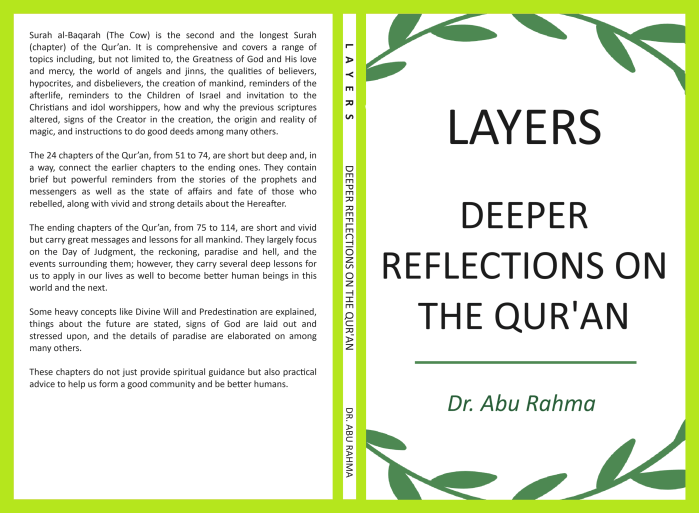
Assalaamu’alaykum, I am pleased to announce the launch of notes/commentary on the Qur’an in a book format and covers the first two Surahs and Surahs 51 to 114. It is a life-time project and the introduction section below the image has the idea behind it. If it helps someone in any way, that would be…
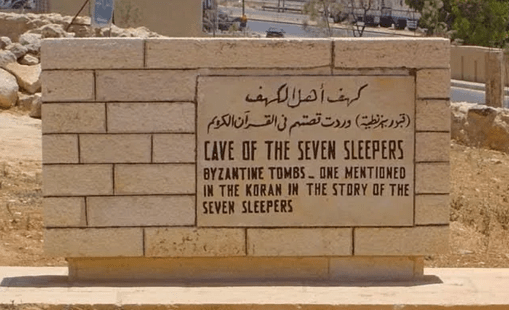
Muhammad b. Ishaq mentioned the reason why the chapter 18, Surah al-Kahf, was revealed: The Quraysh sent two men to the Jewish rabbis in Madinah and told them: ‘Ask them (the rabbis) about Muhammad, and describe him to them, and tell them what he is saying. They are the people of the first Book, and…

It is claimed that ‘Ahad’ in Q.112:1 does not mean ‘One’ but rather ‘one of’[1] and these mischief-makers then translate the verse as follows: “Say: He, Allah, is one of”. This is a major and basic error in Arabic grammar and the claimant of this states that the Qur’an should have used the following words:…
There is an incident of a companion of the Prophet (ﷺ) killing someone who was forgiven by the Prophet (ﷺ). Before we look at the incident and the details surrounding it, we need to look at a few important matters. 1. The Qur’an was revealed over a period of 23 years and hence, we learn…
This is the second page for question and answers. The first one here has become very crowded and gone down in the list of articles and so a new page is dedicated for it. This blog witnesses a number of questions asked in the comments section that do not pertain to the article above. For…

This piece is written to cover the misconceptions of the Roman from Finland – see here and should be read in conjunction with this. The Roman from Finland extensively used the work of Koray Durak to make his claim that the ‘Romans’ according to Islam were simply the Byzantines who collapsed and hence, Romans do…
It is alleged that Prophet Muhammad (ﷺ) made some false prophecies and two are discussed here. Before we look at those two prophecies, this snide remark is interesting: There are hundreds of prophecies attributed to Muhammad in the hadith literature, but I want to focus on the two I think are the best case for…

A common criticism is that since the Qur’an is supposed to be a Book of guidance and clarity, why does it contain verses that are Mutashabihat (ambiguous)? This criticism can be addressed by shedding light on the following: Benefits of the presence of Mutashabihat, which are possible to contemplate on. Benefits of the presence of…