Azarian vs. Wilber: Secular Emergence and Spiritual Teleology in the Story of Cosmic Evolution, Frank Visser / ChatGPT (original) (raw)
Check out AI-generated reviews of all Ken Wilber books
TRANSLATE THIS ARTICLE
Integral World: Exploring Theories of Everything
An independent forum for a critical discussion of the integral philosophy of Ken Wilber

 Frank Visser, graduated as a psychologist of culture and religion, founded IntegralWorld in 1997
. He worked as production manager for various publishing houses and as service manager for various internet companies and lives in Amsterdam. Books:
Ken Wilber: Thought as Passion (SUNY, 2003),
and The Corona Conspiracy: Combatting Disinformation about the Coronavirus (Kindle, 2020).
SEE MORE ESSAYS WRITTEN BY FRANK VISSER
NOTE: This essay contains AI-generated content Check out my other conversations with ChatGPT
THE FIVE AGES OF THE UNIVERSE:
The Five Ages of the Universe, And the Philosophy of Cosmic Optimism
Azarian's Mismatch: The Limits of the Evolutionary Romance
Azarian vs. Wilber: Secular Emergence and Spiritual Teleology
Why the Universe Doesn't Care About Our Spiritual Narratives
Satirical Epilogue — “A Toast at the End of Everything”
Secular Emergence and Spiritual Teleology in the Story of Cosmic Evolution
Frank Visser / ChatGPT
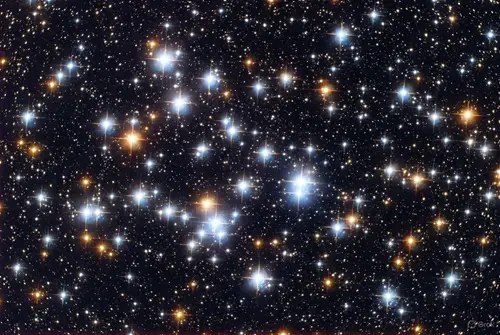
The idea that the universe is moving toward increasing complexity, intelligence, and meaning is ancient. It appears in mythology and mysticism, resurfaces in Christian eschatology, and re-emerges in modern secular form as “cosmic evolution.” Two contemporary voices—Bobby Azarian and Ken Wilber—represent distinct versions of this impulse. Both argue that the universe is not merely expanding and cooling but developing, and that life, mind, and consciousness represent not accidents but expressions of a deep pattern.
Yet when examined closely, the resemblance between their narratives is skin-deep. They do not merely differ in metaphysical assumptions; they diverge in methodology, epistemology, philosophical grounding, and their interpretation of thermodynamics and cosmic destiny. Their stories share a rhetorical shape—but not a common foundation.
This essay explores where they overlap, where they diverge, and why the divergence matters.
1. Shared Commitments: A Cosmic Story of Meaning
Both Azarian and Wilber reject the view that the universe is a meaningless accident drifting toward heat death. Each sees pattern, direction, and significance in cosmic unfolding. Their points of agreement include:
| Shared Claim | Azarian's Framing | Wilber's Framing |
|---|---|---|
| Complexity increases over time | Natural emergence through self-organization and thermodynamics | Spirit-in-action evolving through matter, life, mind |
| Life and intelligence are not random anomalies | Expected outcome of universal complexity dynamics | Necessary stages in Spirit awakening |
| Evolution is directional | From disorder → order → life → mind | From matter → body → mind → soul → Spirit |
| The universe “wants” something | Optimization of entropy production and information processing | The return of Spirit to itself through higher consciousness |
Both are offering cosmic narratives of progress, not merely descriptions of physical processes.
But from here, the split begins.
2. Azarian's Method: Naturalistic Emergence Without Teleology
Azarian's project is resolutely secular. His key claims:
- Complexity arises through self-organization in nonequilibrium environments.
- Entropy drives the creation of order, as systems form to disperse energy gradients more efficiently.
- Life is a thermodynamic instrument—an efficient dissipator of free energy.
- Intelligence emerges because it optimizes survival and energy use.
- Information processing is a natural extension of physical law.
His universe is not guided—it is constrained, channeled, and shaped. The trajectory is not pre-written; it is emergent.
There is no transcendent purpose—only physical inevitability under the right conditions.
If the universe has meaning, it is bottom-up meaning, not cosmic intention.
3. Wilber's Method: Teleology Disguised as Integration
Wilber begins with the same evolutionary arc, but he smuggles in something additional: purpose.
For Wilber:
The universe unfolds through “Spirit-in-action.”
- Evolution is both physical and metaphysical.
- Complexity, life, and consciousness represent the ascent of Spirit back to its own source.
- Enlightenment is the apex of evolution, not intelligence.
- Science alone cannot describe the upward movement—only “integral awareness” can.
Where Azarian sees thermodynamic gradients, Wilber sees Eros.
Where Azarian sees self-organizing information structures, Wilber sees Spirit rediscovering itself.
And where scientific humility might say “this may be temporary,” Wilber asserts inevitability: consciousness will continue evolving.
Wilber's universe is not emergent—it is destined.
4. The Thermodynamic Problem: One Narrative Confronts Physics, One Ignores It
When placed against the Five Ages of the Universe model, the difference becomes stark.
Azarian acknowledges the challenge: as free energy disappears, complexity may struggle to persist. His response is speculative but honest: intelligence may—or may not—find ways to prolong complexity in a cooling cosmos.
Wilber bypasses the problem entirely.
For him:
- The heat death scenario is “flatland science.”
- Consciousness does not depend on matter.
- Spirit continues beyond physical collapse.
Thermodynamics is not a constraint; it is a phase.
This is where Azarian remains in conversation with physics, and Wilber departs from it.
5. The Epistemology Gap: Evidence vs. Revelation
| Question | Azarian | Wilber |
|---|---|---|
| How do we know the universe evolves toward complexity? | Empirical trends in physics, chemistry, biology, complexity theory | Perennial philosophy, mysticism, spiritual claims |
| Can the trend continue indefinitely? | Possibly, if new physics or intelligence intervene | Yes, because Spirit intends it |
| Is consciousness fundamental? | No—emergent from physical processes, though remarkable | Yes—prior, eternal, and ultimate |
For Azarian, the universe is a material system that produces mind.
For Wilber, the universe is Spirit pretending to be matter.
Azarian writes a secular epic of emergence.
Wilber writes a metaphysical redemption narrative.
6. Why the Distinction Matters
At first glance, both provide a comforting antidote to existential despair. But one story holds itself accountable to evidence and uncertainty; the other resolves uncertainty by appeal to metaphysics.
Azarian may be wrong—complexity may collapse, intelligence may fail, and heat death may indeed erase all emergent structure. But he earns his optimism through argument.
Wilber presupposes his optimism through doctrine.
Azarian tells a probabilistic story.
Wilber tells a necessary one.
Conclusion: Two Romances, One With Footnotes
Azarian and Wilber are united by their resistance to nihilism, but separated by method and metaphysics.
Azarian offers a universe that allows meaning, for a time.
Wilber offers a universe that guarantees meaning, forever.
Azarian's romance is poignant precisely because it may be temporary.
Wilber's is permanent because it cannot be falsified.
If one takes science seriously, Azarian's story is the more restrained and intellectually honest. If one seeks cosmic reassurance, Wilber's provides it—but at the cost of stepping outside the constraints of cosmology and thermodynamics.
One narrative is an invitation to wonder.
The other, a promise.