Arctic Practices - 40,00€ - - Actar Publishers (original) (raw)

40,00€
Design for a Changing World
Bert De Jonghe and Elise Misao Hunchuck
Arctic Practices: Design for a Changing World emerges at a critical juncture wherein the very stability of Arctic ecosystems hangs in a precarious balance induced, almost entirely, by humans. This volume assembles forty-six contributors—designers, educators, artists, photographers, filmmakers, some Indigenous, some residents, and some visitors to the Circumpolar North—to create a polyvocal assembly of Arctic practices.
As a geographical reality, conceptual framework, and region with shared physical characteristics, the Arctic emerges from a complex intersection of Indigenous knowledge systems, colonial histories, and scientific paradigms. From early Greek measurements of Polaris’s position to today’s satellite monitoring of rapidly retreating ice sheets, understanding of this region has been shaped by successive waves of external observation and internal resistance. This tension between ways of knowing—between Traditional Knowledge holders and (often Western) scientific frameworks—lies at the heart of contemporary Arctic discourse and design practice.
The colonial legacy of Arctic exploration and design cannot be overstated—from Martin Frobisher’s 1576 expedition seeking the Northwest Passage to the Franklin Expedition’s fatal disregard for Inuit knowledge in 1845, Western approaches to the Arctic have consistently demonstrated what Sheila Watt-Cloutier terms “environmental colonialism.” This pattern has persisted through the twentieth century, evidenced in the forced relocation of Inuit communities like Inukjuak and Resolute Bay in the 1950s for Canadian sovereignty claims, the displacement of Sámi people for hydroelectric development in Norway’s Alta River project (1979-1981), and the Soviet Union’s systematic resettlement of Nenets communities for industrial development in Yamal. The material manifestations of this colonialism remain evident in architectural and planning decisions—from the imposition of southern-style housing unsuited to Arctic conditions in Nunavut communities to the development of extraction infrastructure like the Prudhoe Bay oil complex without meaningful Indigenous consultation. This historical context demands that contemporary engagement with Arctic design must first acknowledge its complicity in these colonial structures before attempting to imagine new futures.
Arctic Practices stands as both documentation and provocation—an attempt to record current practices while simultaneously imagining new possibilities for Arctic design in an age of crisis. By bringing diverse voices and perspectives together, we hope to contribute to an emerging discourse that recognizes the urgency of climate action and the necessity of anticolonial practice in Arctic contexts. This volume thus represents not an endpoint but rather a series of moments in an ongoing process of learning and unlearning. This process must continue as we collectively face the challenges of climate change and anticolonial reconciliation in Arctic contexts. Through this polyvocal assembly, we hope to open new possibilities for meaningful design interventions across northern lands, seas, skies, and ice, always mindful of both the urgency of our present moment and the weight of historical injustices that have shaped these landscapes and the lives lived with them.
The above is an edited excerpt from “Introduction to a Polyvocal Assembly” in Arctic Practices by Bert De Jonghe & Elise Misao Hunchuck
With Contributions FromClaudio Aporta, Brandon Bergem, Mari A. Aston Bergset, Caitlin Blanchfield, Arlyn Charlie, Thomas Juel Clemmensen, Bert De Jonghe, A K Dolven, Jakob Exner, Nadezhda Filimonova, Jeffrey Garcia, Aniella Sophie Goldinger, Maureen Gruben, Nicholas Gulick, Magdalena Haggärde, Peter Hemmersam, Elise Misao Hunchuck, Konstantin Ikonomidis, Morgan Ip, Maaretta Jaukkuri, Akie Kono, Kyra Kordoski, Elena Krapivina, Helena Lennert, Gisle Løkken, Nicole Luke, Jessica MacMillan, Dorte Mandrup, Caitlin Jakusz Paridy, Olga Petri, Andrey N. Petrov, Lasse Rau, Sophy Roberts, Svetlana Romanova, Marya Rozanova-Smith, Todd Saunders, Anastasia Savinova, Susan Schuppli, Lola Sheppard, Sofia Singler, Inuuteq Storch, Bertine Tønseth, Michael Turek, Eimear Tynan, and Mason White.
Description
**Editors: Bert De Jonghe and Elise Misao Hunchuck
Graphic Design: Studio Folder
Size: 15 x 21,5 cm / 5.91 × 8.46 in**Pages: 464
Illustrations: Color
Cover: Softcover
Publication date: April 2025
ISBN: 9781638401339
Price: 45,95$/ 40€/ 40£
Additional information
| Weight | 1 kg |
|---|---|
| excerpt | Arctic Practices: Design for a Changing World is an edited volume framing plural understandings of an accelerated and amplified environment, the Arctic |
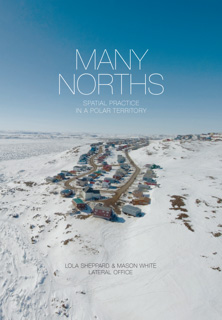 Quickview
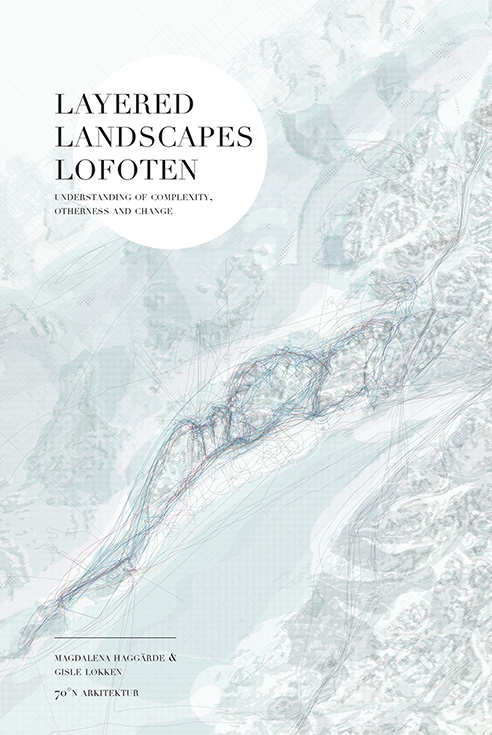 Quickview
 Quickview