Mixed Reality Fabrication - 35,00€ - - Actar Publishers (original) (raw)

Mixed Reality Fabrication

35,00€

Gwyllim Jahn

Mixed Reality Fabrication challenges the conventional focus on automation and precision in digital fabrication, instead advocating for approaches that bridge the gap between digital design and the wide tolerances, improvisation and non-uniform materials common to traditional craft practices. It promotes a humanist philosophy of technology, emphasizing the value of skilled labour and craft traditions while revealing opportunities for reduced documentation complexity, accelerated knowledge transfer, waste reduction, and increased design freedom.

Making by hand in mixed reality opens a broad space of designs characterised by stochasticity, formed curves, networks and field conditions that would otherwise be impractical to draw and build. Several case-study projects from the scale of sculptural pieces to small pavilions illustrate how working within immersive mixed reality environments can empower both novices and experts to realize complex digital designs through subjective interpretation of simple digital models, demonstrating the potential of mixed reality to reshape the relationship between designing and making.

With Contributions From Vivian Mitsogianni, Cameron Newnham, Nick van den Berg.

Description

Author: Gwyllim Jahn

**Size: 16,5 x 23,5 cm

Pages: 238

Illustrations: Color
Cover: Hardcover

Publication date: April 2026
ISBN: 9781638401902
Price: 39,95USD/35€/£35/39,95 USD/ 35€/ £35/ 39,95USD/35€/£35/59.95 AUD

Additional information

excerpt Mixed Reality Fabrication redefines processes of making by enabling traditional craft, improvised prototyping, and material experimentation to occur within immersive digital environments

You may also like…

Quickview

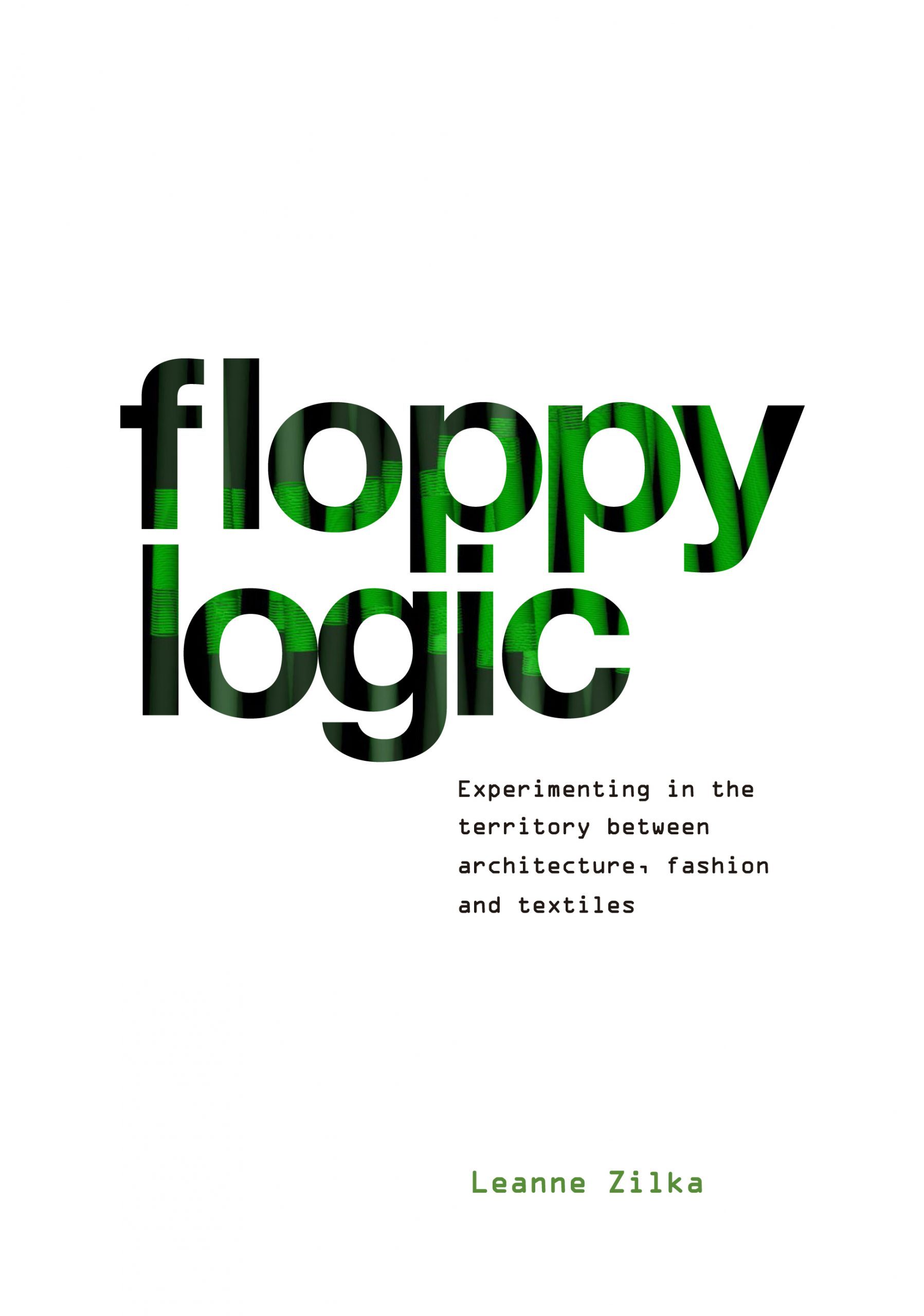
Floppy Logic Leanne ZilkaAn exploration into fashion and textiles, and how the concepts, aesthetics, techniques and construction of this architecture might be used to design and fabricate objects and space differently Experimenting in the Territory between Architecture, Fashion and Textile Leanne Zilka Floppy Logic is an exploration into the 'architecture' of fashion and textiles, and how the concepts, aesthetics, techniques and construction of this architecture might be understood and used to design and fabricate objects and space differently. These seemingly diverse disciplines can be used to traverse from the scale of material and garment to that of rooms and buildings. By working with fashion and textile techniques on form and material simultaneously, ideas for architecture can also be revealed opening new ways of approaching the design and fabrication of architecture. A key concept here is the Floppy, defined as a quality in material that requires extraneous support to produce architecture. Floppy generally refers to fabric but can also refer to any material that fails when there is not enough support, as is the case with sheet materials when the span between supports exceeds a 32,00€

Buy Ebook

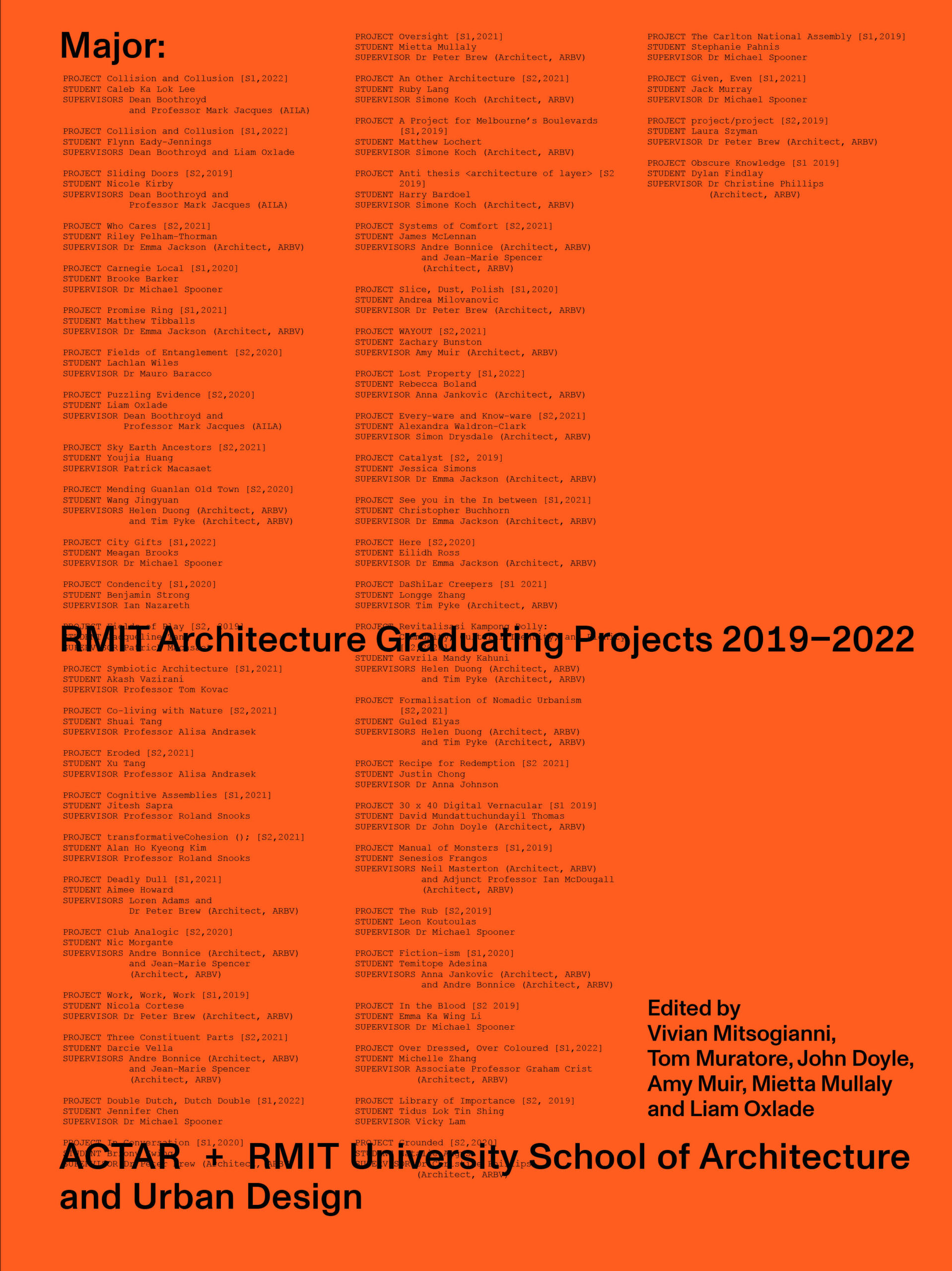
RMIT Architecture Major Graduating Projects Quickview

Major RMIT Vivian Mitsogianni, Tom Muratore, John Doyle, Amy Muir, Mietta Mullaly & Liam OxladeThis publication contains a selection of RMIT Master of Architecture independent graduating projects from seven semesters between 2019 and 2022. RMIT Architecture Graduating Projects 2019-2022 Vivian Mitsogianni, Tom Muratore, John Doyle, Amy Muir, Mietta Mullaly & Liam Oxlade RMIT Architecture is interested in ideas-led venturous design exploration that aspires to contribute to the future of our discipline and an increasingly complex world. Architecture schools should be concerned with experimentation that challenges the orthodoxies of the discipline, as well as our underlying assumptions about what architecture is and what it should do next. Architecture schools should point towards possible futures not yet evident within existing understandings of the discipline or the profession. The significant challenges of our time are wicked problems, which require new ideas and transdisciplinary approaches. Architects need to find ways to contribute, be effective and have agency in situations in which architecture – in its expanded definition – is often considered to be a peripheral contributor. This publication contains a selection of RMIT Master of Architecture independent graduating projects from seven 40,00€