original ) (raw )
29,00€
Re-thinking urban obsolescence
Diego García-Setién , Enrique Espinosa , Begoña de Abajo , Almudena Ribot / CoLaboratorio
PostDomestiCity is an inquiry and speculative exercise into the conditions of obsolescence in the post-industrial city, from a contemporary perspective. Working with three paradigmatic cases that were conceived from industrial logics—the Packard plant in Detroit, Lima’s PREVI neighbourhood, and theGrand’Mare complex in Rouen—, we explore alternative ways of reusing, reprogramming, and redensifying the built environment as alternatives to demolition. Relevant voices in the field of architecture share their approaches and visions of the future for the pre-existing city, helping us imagine post-domesticity in the current climate crisis and socio-technological context. PostDomestiCity, along with Open Building 2.0 (CoLab, 2018) and OpenCity (Actar, 2020), forms another trilogy by CoLaboratorio , approaching and understanding architecture as a resilient support with enormous transformative potential over time.
With Contributions of Anne Lacaton, Marina Otero, Ippolito Pestellini, Duplex Architects, Lacol, Antonio Vázquez de Castro, Carmen Espegel, Luis Takahashi, Lys Villalba, O.F. architects, DABG, Patricia Lucas, Ramón Araujo, Paulo Dam, Renato Manrique, CoLaboratorio (Diego García-Setién , Enrique Espinosa , Begoña de Abajo , Almudena Ribot ).
EBOOK VERSION
Weight
1 kg
excerpt
PostDomestiCity explores and speculates from contemporaneity about the post-industrial city obsolescence.
Epub
https://cutt.ly/DwKa3e0o
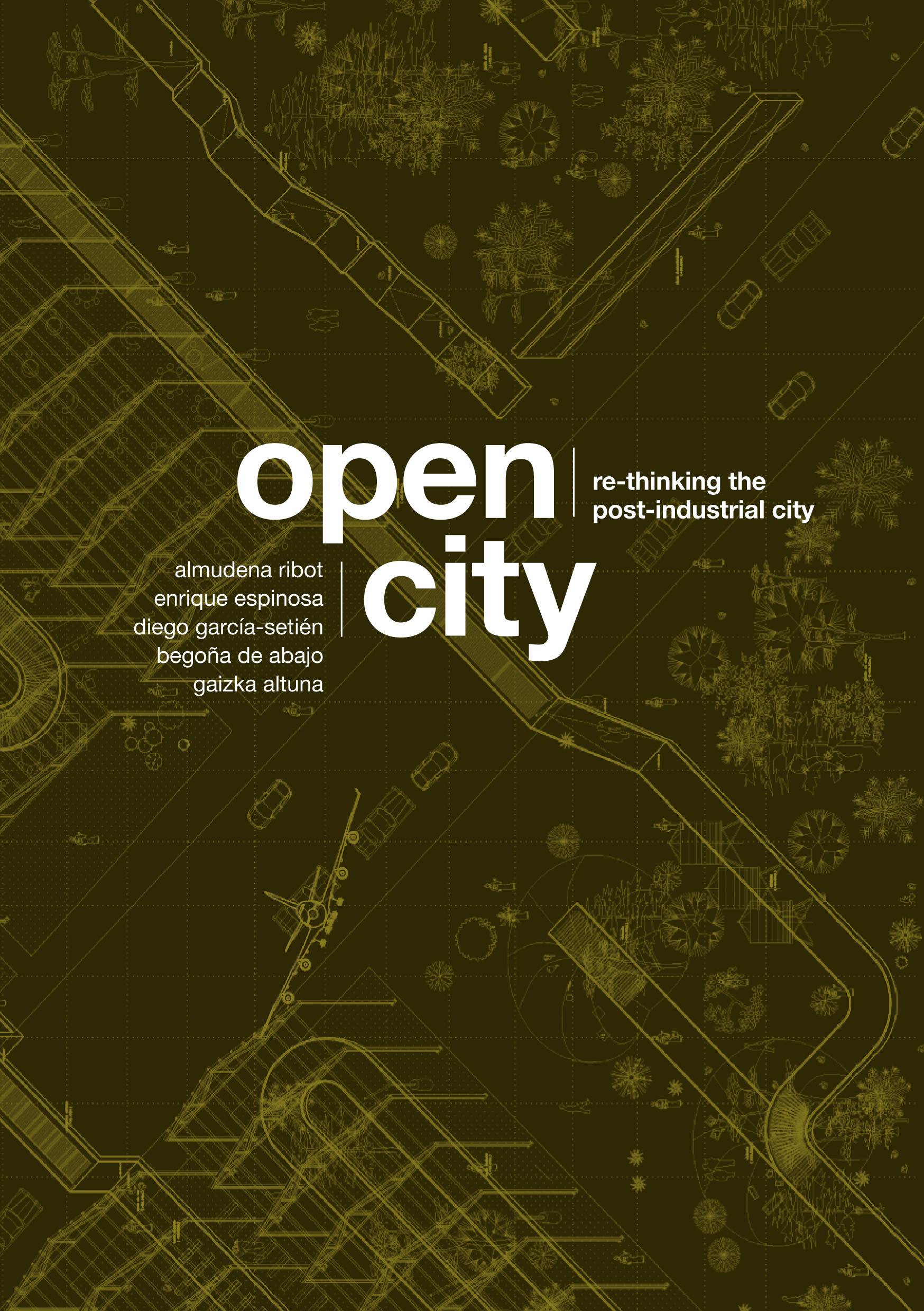
Open City Almudena Ribot, Enrique Espinosa, Diego García-Setién, Begoña de Abajo, Gaizka Altuna / CoLaboratorioOpen City explores and speculates from contemporaneity about the future of the post-industrial city Re-thinking the post-Industrial City / Re-pensando la ciudad postindustrial Almudena Ribot, Enrique Espinosa, Diego García-Setién, Begoña de Abajo, Gaizka Altuna / CoLaboratorio Currently 55% of the world's population lives in cities, predictably reaching 70% in 2050. Cities are organisms in continuous transformation: growth, change, but also shrinking or collapse. Open City explores and speculates from contemporaneity about the future of the post-industrial city, where industrial archipelagoes (S), frames (XL) and obsolete or deprogrammed singularities (M/L) represent critical contexts but also opportunities for a new Open City. Open Systems have been the research focus of CoLab. This book collects some relevant and engagingly contemporary insights, including contributions by Andrés Jaque, Juan Herreros, Philipp Oswalt, Momojo Kaijima (Atelier Bow-Wow), Langarita Navarro or Cedric Price, among others. EBOOK EDITION 24,00€
Buy Ebook
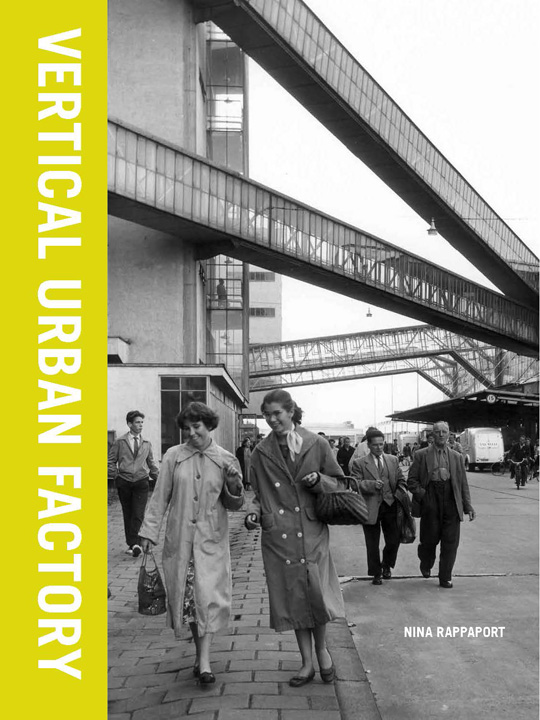
Vertical Urban Factory Nina RappaportFocuses on the spaces of production in cities both the modernist period and today and the technologies that have contributed to shifts in factory architecture, manufacturing, and urban design Nina Rappaport This publication focuses on the spaces of production in cities —both the modernist period and today —and the technologies that have contributed to shifts in factory architecture, manu- facturing, and urban design. Vertical Urban Factory tracks the evolution of the vertical urban factory from the first industrial revolution to the present and provides an analysis of the political, social, and econo- mic factors that have shaped today's global industrial landscape. Ultimately, it provokes new concepts for the future of urban manufacturing, and the necessity of creating new paradigms for sustainable, self-sufficient urban industry. The book demonstrates how entrepreneurial, hybrid spaces and cleaner and greener factories can reintegrate manufacturing into city life as new paradigms for urban industry that will prove more sustainable, self-sufficient, and socially equitable workplaces. Vertical Urban Factory includes a timeline of significant developments in technology, architecture, and manufacturing and is illustrated by over four hundred black and white 42,00€
Architecture and Waste Hanif Kara, Leire Asensio-Villoria & Andreas GeorgouliasThis book presents a refreshed, design-led approach to waste-to-energy (WTE) plants, reflecting work done at Harvard’s Graduate School of Design over a period of three years. A (re)planned Obsolescence Hanif Kara, Leire Asensio-Villoria & Andreas Georgoulias This book presents a refreshed, design-led approach to waste-to-energy (WTE) plants, reflecting work done at Harvard’s Graduate School of Design over a period of three years. Architecture and design currently play a minor role in the design and construction of industrial building types, especially waste-to-energy facilities. As densities increase and consumption patterns change, the need for more waste-to-energy facilities is only going to increase. Through comparing the well-established waste-to-energy industries in Sweden with less established engagements in the northeast of the United States, opportunities and lessons are revealed. Architects have a role to play in integrating waste-to-energy plants physically and programmatically within their urban or suburban contexts, as well as potentially lessening the generally negative perception of energy recovery plants. These hybrid WTE building typologies have the potential not only re-connect and communicate to the public, but also weave new public or institutional programs with 42,00€
Buy Ebook
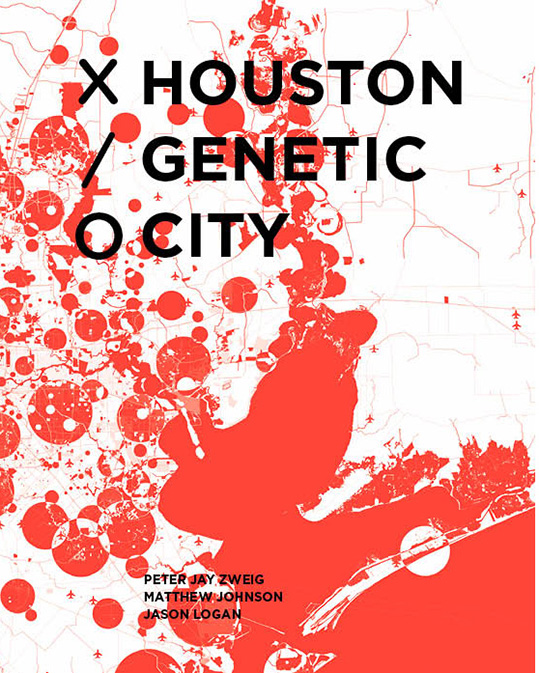
Houston Genetic City Peter Zweig, Matthew Johnson, Jason LoganHouston represents an evolving city type. No longer formal, axial, or planned, it is instead based on heuristics, on trial-and-error, on ad hoc strategies. Peter Zweig, Matthew Johnson, Jason Logan No city in the United States is synonymous with unbridled growth and land speculation as the sprawling Texas city of Houston. Though Houston is described as a city, its massive size makes it regional or even megaregional in scale—including a patchwork of satellite downtowns and suburbs, a vast floodplain of bayous and coastal prairie, as well as a long stretch of Gulf Coast. This fragile landscape is increasingly beset by global problems, from flooding to rampant growth to congestion. Its lack of zoning means ad hoc developments scatter across the landscape with little formal planning, where urban developments are always provisional and negotiable. Houston Genetic City is a collaborative and speculative book about Houston’s future, and by extension the future of urbanism in unplanned cities globally. Using maps, photographs, timelines, and collages, the book lays out the conditions for new urbanization in this fragile landscape. We 49,00€
Buy Ebook

 Quickview
  Quickview
  Quickview
 Quickview