Recent Discussions
By Soham Patel A prerequisite to securing an organization on the internet is first knowing what digital assets in the organization are internet-facing. With the constantly changing internet, the migration to multi-cloud environments, the evolution of organizations with mergers and acquisitions, and the emergence of shadow IT, it is often difficult to maintain an updated external view of an organization’s attack surface, leading to security gaps emerging for attackers to exploit. Microsoft Defender External Attack Surface Management (EASM) solves this challenge by discovering externally facing assets and identifying their risk. Their vulnerabilities can be identified, which helps with prioritizing them, so you know where to start with remediation efforts. While Defender EASM equips organizations with an updated external attack surface view and the risks associated with it, these vast, multifaceted attack surfaces require many resources to analyze each asset and its associated metadata. This often increases the time to remediation and the likelihood of an attacker exploiting a security gap. However, generative AI can expedite this analysis process, enabling security professionals to defend organizations at machine speed. Read the full post here: Leverage Generative AI to expedite attack surface investigations in Defender EASM 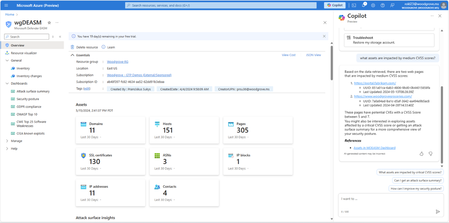


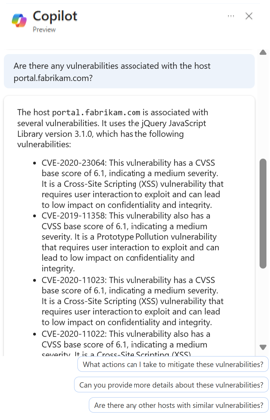
By Soham Patel A prerequisite to securing an organization on the internet is first knowing what digital assets in the organization are internet-facing. With the constantly changing internet, the migration to multi-cloud environments, the evolution of organizations with mergers and acquisitions, and the emergence of shadow IT, it is often difficult to maintain an updated external view of an organization’s attack surface, leading to security gaps emerging for attackers to exploit. Microsoft Defender External Attack Surface Management (EASM) solves this challenge by discovering externally facing assets and identifying their risk. Their vulnerabilities can be identified, which helps with prioritizing them, so you know where to start with remediation efforts. While Defender EASM equips organizations with an updated external attack surface view and the risks associated with it, these vast, multifaceted attack surfaces require many resources to analyze each asset and its associated metadata. This often increases the time to remediation and the likelihood of an attacker exploiting a security gap. However, generative AI can expedite this analysis process, enabling security professionals to defend organizations at machine speed. At Microsoft Ignite in November 2023, we announced Defender EASM’s prompting capabilities in Copilot for Security. Today, we are thrilled to share that the same capabilities – and more – are available in public preview the Copilot chat pane in the Azure portal and can be used alongside Copilot for Security customers’ Defender EASM resources. This allows organizations to stay secure, with ease. Dig into your external attack surface The Copilot chat pane in Azure gives customers AI-driven insights on risky assets within their external attack surface. Instead of manually drilling down to investigate asset details, simply ask Copilot about recently expired SSL certificates and domains, and you’ll get automated answers for each in seconds. To understand which assets may have Common Vulnerabilities and Exposures (CVE), you can quickly find out by asking Copilot “which assets have critical severity CVEs?” or “Does this ‘CVE ID’ impact me?” Knowing where CVEs lie, and how they are classified, will help you in focusing resources and remediation efforts on those that matter most. Our Copilot capabilities also enable customers to quickly identify assets impacted by specific risks and vulnerabilities, such as assets that have Common Vulnerability Scoring System (CVSS) scores, that are still using SHA-1 certificates, or are expiring soon – empowering them to determine what assets must be remediated first. For example, we can investigate which assets are impacted by medium priority CVSS Scores and what vulnerabilities must be remediated to secure the targeted assets. In this scenario in the image below, we can see that because of the jQuery version, https://portal.fabrikam.com/ is at risk. Read the full post here: Leverage Generative AI to expedite attack surface investigations in Defender EASM 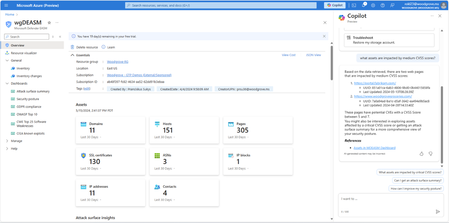
By Soham Patel A prerequisite to securing an organization on the internet is first knowing what digital assets in the organization are internet-facing. With the constantly changing internet, the migration to multi-cloud environments, the evolution of organizations with mergers and acquisitions, and the emergence of shadow IT, it is often difficult to maintain an updated external view of an organization’s attack surface, leading to security gaps emerging for attackers to exploit. Microsoft Defender External Attack Surface Management (EASM) solves this challenge by discovering externally facing assets and identifying their risk. Their vulnerabilities can be identified, which helps with prioritizing them, so you know where to start with remediation efforts. While Defender EASM equips organizations with an updated external attack surface view and the risks associated with it, these vast, multifaceted attack surfaces require many resources to analyze each asset and its associated metadata. This often increases the time to remediation and the likelihood of an attacker exploiting a security gap. However, generative AI can expedite this analysis process, enabling security professionals to defend organizations at machine speed. At Microsoft Ignite in November 2023, we announced Defender EASM’s prompting capabilities in Copilot for Security. Today, we are thrilled to share that the same capabilities – and more – are available in public preview the Copilot chat pane in the Azure portal and can be used alongside Copilot for Security customers’ Defender EASM resources. This allows organizations to stay secure, with ease. Dig into your external attack surface The Copilot chat pane in Azure gives customers AI-driven insights on risky assets within their external attack surface. Instead of manually drilling down to investigate asset details, simply ask Copilot about recently expired SSL certificates and domains, and you’ll get automated answers for each in seconds. To understand which assets may have Common Vulnerabilities and Exposures (CVE), you can quickly find out by asking Copilot “which assets have critical severity CVEs?” or “Does this ‘CVE ID’ impact me?” Knowing where CVEs lie, and how they are classified, will help you in focusing resources and remediation efforts on those that matter most. Our Copilot capabilities also enable customers to quickly identify assets impacted by specific risks and vulnerabilities, such as assets that have Common Vulnerability Scoring System (CVSS) scores, that are still using SHA-1 certificates, or are expiring soon – empowering them to determine what assets must be remediated first. For example, we can investigate which assets are impacted by medium priority CVSS Scores and what vulnerabilities must be remediated to secure the targeted assets. In this scenario in the image below, we can see that because of the jQuery version, https://portal.fabrikam.com/ is at risk. Read the full post here: Leverage Generative AI to expedite attack surface investigations in Defender EASM 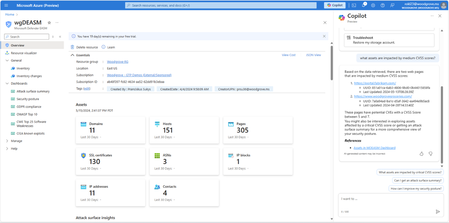
By Sushma Raja Finding, tracking, and managing all the assets found within an organization’s vast – and often unknown – digital attack surface can be a daunting task. A lack of knowing and monitoring all your assets, including shadow IT, leads to security gaps that can be exploited by attackers. Understanding and documenting your entire attack surface with relevant asset tracking is critical to securing your environment. This highlights the importance of adding an external attack surface management (EASM) tool to your security stack. EASM solutions are designed to provide a view of your digital attack surface from the outside in, enabling organizations to see exactly what attackers browsing the internet see when they come across an asset owned by your organization. Microsoft Defender EASM discovers and maps both known and unknown assets from an external perspective just as an attacker would see as they look to find a way to compromise an organization. Enhanced Defender EASM functionality in Microsoft Copilot for Security In November 2023, we announced new Defender EASM capabilities in Microsoft Copilot for Security that help security teams understand their attack surface, the pervasive CVEs within it, and get assistance remediation prioritization with the help of generative AI. The attack surface snapshot that Copilot users receive when using the prompts are, by default, generated from a library of pre-built attack surfaces that Microsoft has discovered for thousands of organizations. From our daily scans of the internet, Defender EASM discovers and searches for an organization’s attack surface based on publicly available information. The results of prompts pulled from an organization’s pre-built attack surface are intended to give customers high-level visibility into their external assets and associated vulnerabilities. So far, they have been used by Early Access customers to achieve this visibility. One customer reported that they were able to identify unknown assets and remediate major vulnerabilities based on information gathered from EASM. Now, we are thrilled to share enhanced functionality with these capabilities, which allows customers to directly connect their seeded and curated Defender EASM resource to Copilot for Security. With the curated Defender EASM integration, Copilot users can leverage generative AI to get comprehensive, up-to-date information about their external attack surface, analyzing assets that go above and beyond their pre-built attack surface. Setting up is simple. In the configuration menu of Copilot for Security, turn on the Defender External Attack Surface Management skills on and then click on the Settings icon to enter your resource information. Once this information is entered, your future prompts in Copilot will utilize information from your configured EASM resource. Read the full post here: Get visibility into your curated external assets with enhanced generative AI capabilities 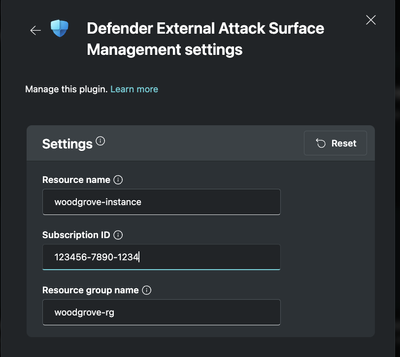
By Sushma Raja Finding, tracking, and managing all the assets found within an organization’s vast – and often unknown – digital attack surface can be a daunting task. A lack of knowing and monitoring all your assets, including shadow IT, leads to security gaps that can be exploited by attackers. Understanding and documenting your entire attack surface with relevant asset tracking is critical to securing your environment. This highlights the importance of adding an external attack surface management (EASM) tool to your security stack. EASM solutions are designed to provide a view of your digital attack surface from the outside in, enabling organizations to see exactly what attackers browsing the internet see when they come across an asset owned by your organization. Microsoft Defender EASM discovers and maps both known and unknown assets from an external perspective just as an attacker would see as they look to find a way to compromise an organization. Enhanced Defender EASM functionality in Microsoft Copilot for Security In November 2023, we announced new Defender EASM capabilities in Microsoft Copilot for Security that help security teams understand their attack surface, the pervasive CVEs within it, and get assistance remediation prioritization with the help of generative AI. The attack surface snapshot that Copilot users receive when using the prompts are, by default, generated from a library of pre-built attack surfaces that Microsoft has discovered for thousands of organizations. From our daily scans of the internet, Defender EASM discovers and searches for an organization’s attack surface based on publicly available information. The results of prompts pulled from an organization’s pre-built attack surface are intended to give customers high-level visibility into their external assets and associated vulnerabilities. So far, they have been used by Early Access customers to achieve this visibility. One customer reported that they were able to identify unknown assets and remediate major vulnerabilities based on information gathered from EASM. Now, we are thrilled to share enhanced functionality with these capabilities, which allows customers to directly connect their seeded and curated Defender EASM resource to Copilot for Security. With the curated Defender EASM integration, Copilot users can leverage generative AI to get comprehensive, up-to-date information about their external attack surface, analyzing assets that go above and beyond their pre-built attack surface. Setting up is simple. In the configuration menu of Copilot for Security, turn on the Defender External Attack Surface Management skills on and then click on the Settings icon to enter your resource information. Once this information is entered, your future prompts in Copilot will utilize information from your configured EASM resource. Read the full post here: Get visibility into your curated external assets with enhanced generative AI capabilities 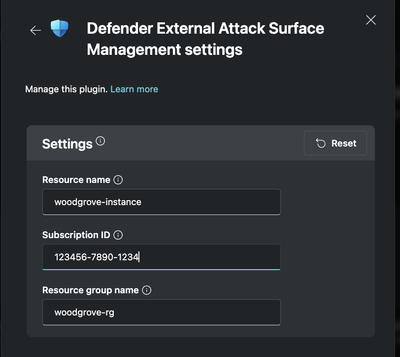
Read the full blog post: Identify Digital Assets Vulnerable to Subdomain Takeover - Microsoft Community Hub Subdomain takeover vulnerabilities are, in most cases, the result of an organization using an external service and letting it expire. However, that expired subdomain is still a part of the organization's external attack surface, with domain DNS entries pointing to it. An attacker could then claim this subdomain and take control of it with little to no effort, a considerable blow to an organization's security posture. How does this happen? For example, a company might enlist a service desk provider, "FreshDesk.' It would point a subdomain like "support.mycompany.com" to FreshDesk and then claim this domain with the Freshdesk service to activate it. However, a problem arises when the organization abandons the service because they migrate to other services or for some other reason. Meanwhile, after the service agreement expires, the subdomain remains pointing to the FreshDesk platform. While this might not seem bad initially, the risk of allowing attackers to execute scripts under the subdomain enables them to obtain data from the main website. The risk becomes even more significant when this scenario involves a service that handles PPI, PHI, or trade secrets. Microsoft Defender External Attack Surface Management continuously maps the external-facing resources across your organization's attack surface to identify, classify, and prioritize risks, including subdomain expiration and takeover. 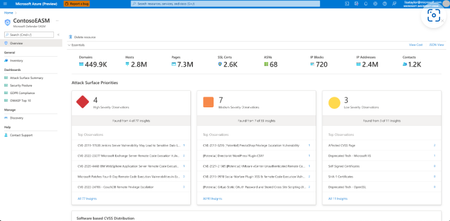
Events
Recent Blogs
Announcing availability of Defender EASM prompting capabilities in the Copilot for Azure chat pane.
May 21, 2024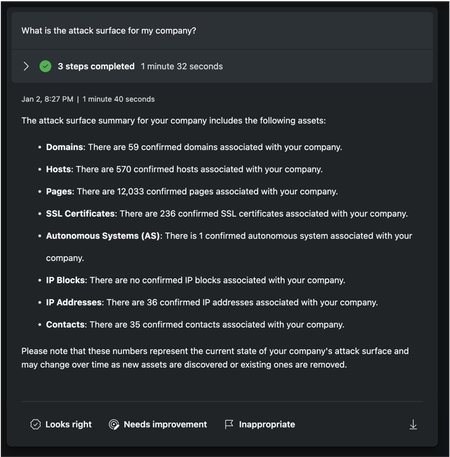
Announcing new and enhanced Defender EASM integrations
Mar 13, 2024


