The Uniparty Game - American Compass (original) (raw)
The Uniparty Game
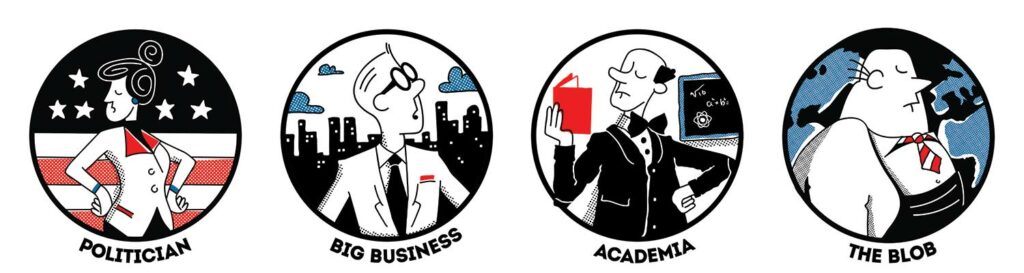
The Uniparty and its constituencies in Politics, Big Business, Academia, and the Washington Blob have spent recent decades advancing a foolhardy agenda of globalization with unanimous support in our nation’s capital.
We’ve compiled 12 quotes reflecting the dogmatic tenets of this consensus; can you tell where on the political spectrum they originate?
Results
#1. “Globalization is a fact, not a policy option.”
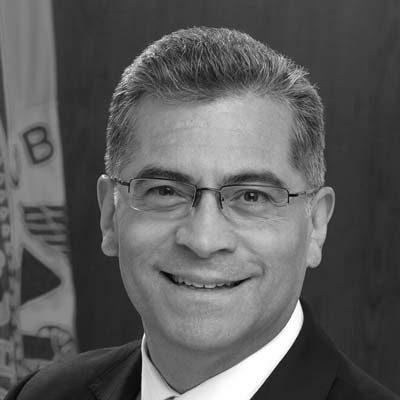
Rep. Xavier Becerra
U.S. Representative (D-CA), 1993–2017
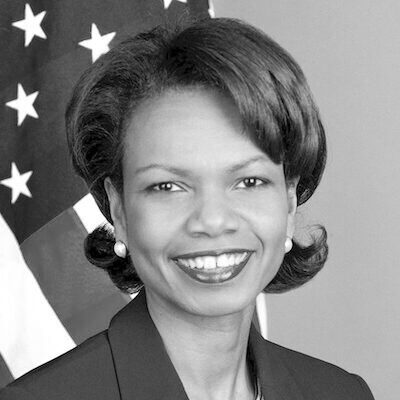
Condoleezza Rice
Secretary of State, Bush Administration, 2005–2009
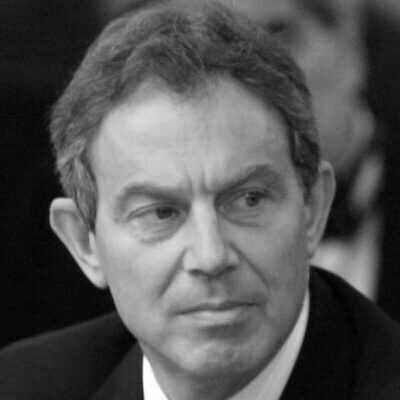
Tony Blair
U.K. Prime Minister, 1997–2007
Rep. Becerra made this assertion in a Los Angeles Times letter to the editor in 1999. The Clinton State Department adopted the phrase verbatim in its interpretive statement expanding on the statement issued by the United Nations’ Women 2000: Beijing-Plus-Five conference.
#2. “Intel, a manufacturer of semiconductors, is an American firm striving to realize these principles. Each of Intel’s 1,000 Chinese employees receives a home computer and the company is in the process of providing each with home Internet access. Moreover, Intel’s operations in China are managed under the same environmental, health, safety and labor policies the company applies to its U.S. operations—all of which are higher than Chinese norms. Average base pay and health benefits are far more generous than those provided by Chinese competitors. The more American companies bring not only our capital but also our values to Chinese soil, the more we can become a partner in unleashing positive change there.”
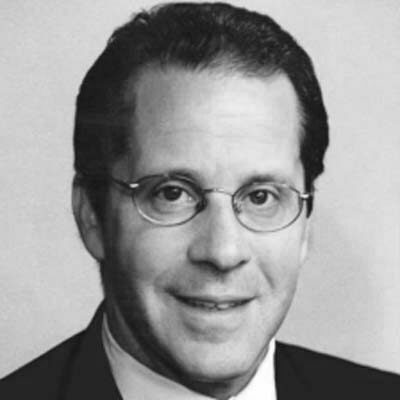
Gene Sperling
Director of the National Economic Council, Clinton Administration, 1996–2001
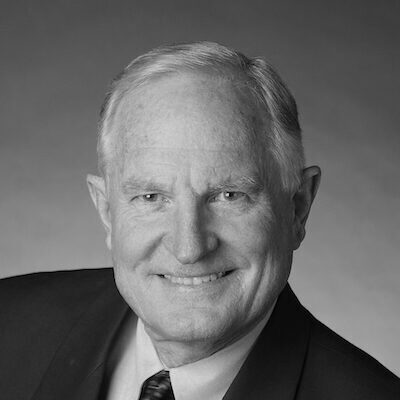
Craig Barrett
Intel CEO, 1998-2005
Glenn Hubbard
Council of Economic Advisers Chair, Bush Administration, 2001–2003
Sperling was speaking at the 2000 Dallas Ambassadors Forum, making the case for the Clinton Administration’s efforts to establish Permanent Normal Trade Relations with China.
#3. “Globalization will continue. It is a fact on the ground. As policymakers, economists, statisticians, political theorists, researchers, academics, and citizens—it is absolutely critical that accurately we model and measure the positive and negative impacts of globalization.”
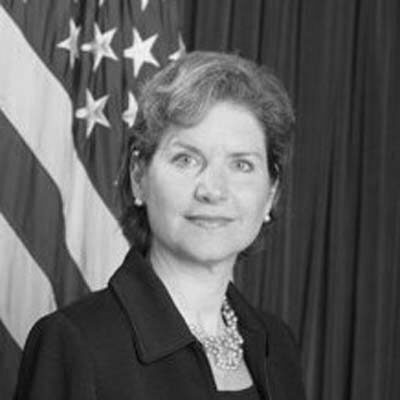
Susan Schwab
U.S. Trade Representative, Bush Administration, 2006–2009
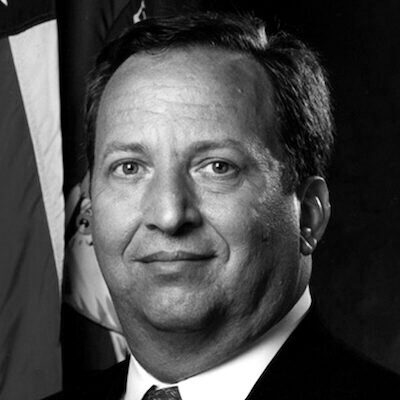
Lawrence Summers
Director of the National Economic Council, Obama Administration 2009–2011
Schwab was speaking at a 2008 conference convened by the Woodrow Wilson Center on the need for further academic research to inform free-trade debates.
#4. “The essential things to teach students are still the insights of Hume and Ricardo. That is, we need to teach them that trade deficits are self-correcting and that the benefits of trade do not depend on a country having an absolute advantage over its rivals. If we can teach undergraduates to wince when they hear someone talk about ‘competitiveness,’ we will have done our nation a great service.”
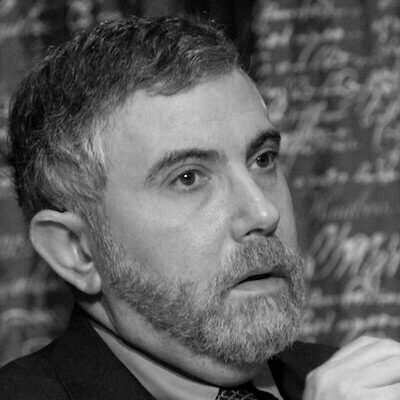
Paul Krugman
Nobel Prize Winner in Economics, 2008
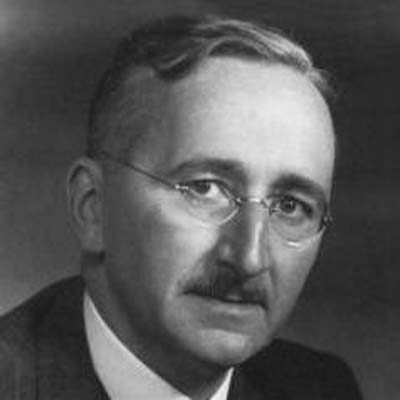
Friedrich Hayek
Nobel Prize Winner in Economics, 1974
Krugman’s essay, “What Do Undergraduates Need To Know About Trade?” was published in the May 1993 issue of the American Economic Review and argued that “the most important thing to teach our undergrads about trade is how to detect nonsense.” Touché.
The Wealth of Our Nation
4 down, 8 to go!
When they weren’t waxing poetic about a world of “free markets and free people,” the Uniparty insisted that embracing globalization would generate unprecedented prosperity here at home. They dismissed concerns about competitiveness and celebrated deindustrialization.
#5. “I believe that having [China] in the WTO will not only have economic benefits for the United States and other countries … but will increase the likelihood of positive change in China and therefore stability throughout Asia.”
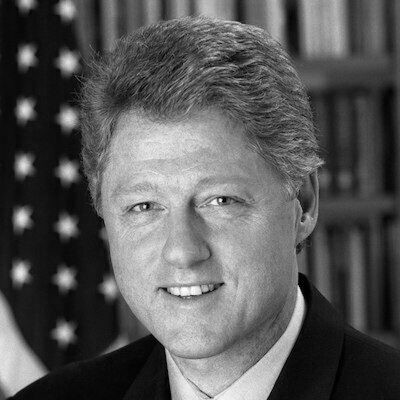
Bill Clinton
U.S. President, 1993–2001
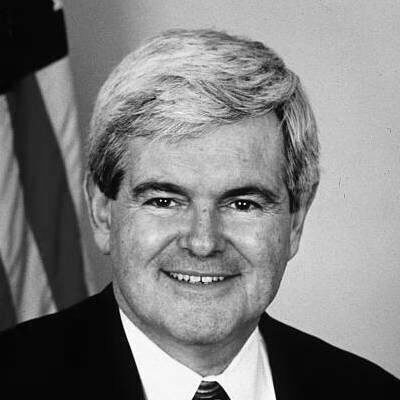
Newt Gingrich
Republican Speaker of the U.S. House of Representatives, 1995–1999
President Clinton delivered these remarks at the 2000 World Economic Forum in Davos, Switzerland, a month after the “Battle in Seattle” protests at the WTO Ministerial Conference in 1999.
#6. “What is the role of governments in shaping the new global economy? One role is to get out of the way—to remove barriers to the free flow of goods, services, and capital.”
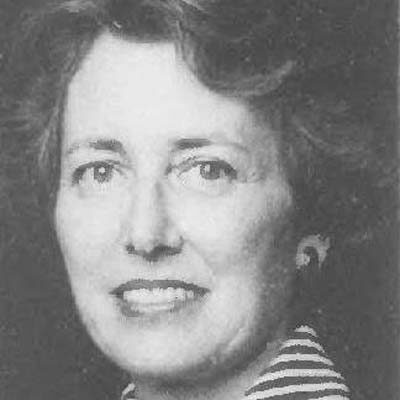
Joan E. Spero
Under Secretary of State, Clinton Administration, 1993–1997
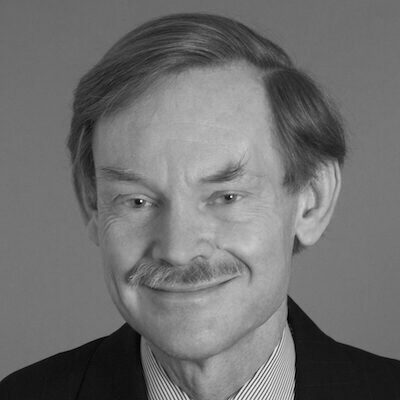
Robert B. Zoellick
U.S. Trade Representative, Bush Administration, 2001–2005
Spero delivered these remarks at the fifth annual meeting of the Word Economic Development Congress in 1996.
Click “Give Me My Score” to finish! ⬇️
#7. “We can give the world confidence that openness works. That openness creates jobs. That openness creates prosperity and openness leads to better lives in China and in the U.S. And, I believe the world would like to hear that message from us.”
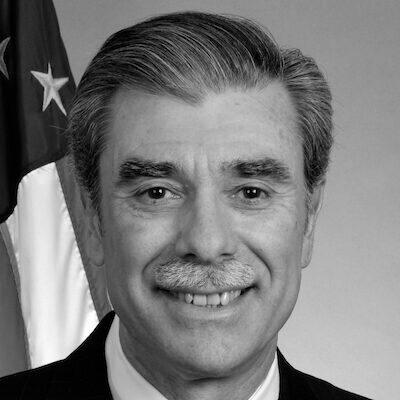
Carlos Gutierrez
Secretary of Commerce, Bush Administration, 2005–2009
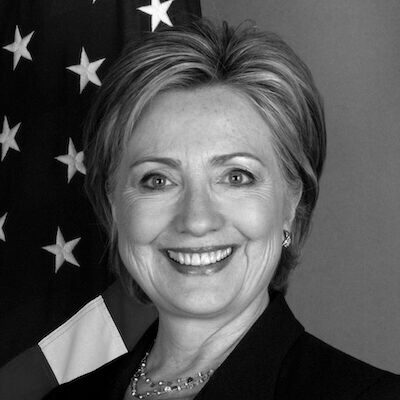
Hillary Clinton
Secretary of State, Obama Administration, 2009–2013
Secretary Gutierrez was speaking in Beijing at the 18th U.S.–China Joint Commission on Commerce and Trade in 2007, just as the United States was filing an intellectual property-related complaint at the WTO against China.
#8. “I’m worried about jobs. And I believe if you trade more, there are more jobs available for hardworking Americans. There are some who play politics with the trade issue. They want to shut down trade. I like to remind people, those who shut down trade aren’t confident. They’re not confident in the American worker; they’re not confident in the American entrepreneur; they’re not confident in American products.”
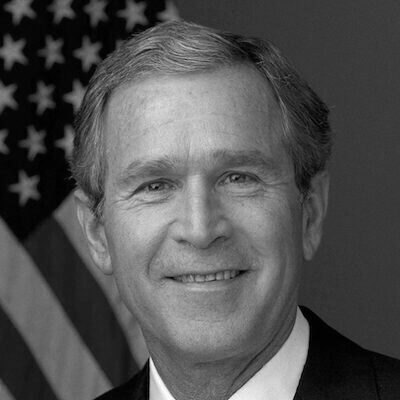
George W. Bush
U.S. President, 2001–2009
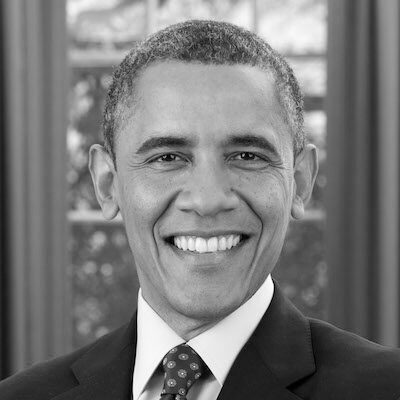
Barack Obama
U.S. President, 2009–2017
President Bush delivered these remarks at the Port of New Orleans in 2002, outlining his trade agenda.
#9. “The TV manufacturing industry really started here, and at one point employed many workers. But as TV sets became ‘just a commodity,’ their production moved offshore to locations with much lower wages. And nowadays the number of television sets manufactured in the U.S. is zero. A failure? No, a success.”
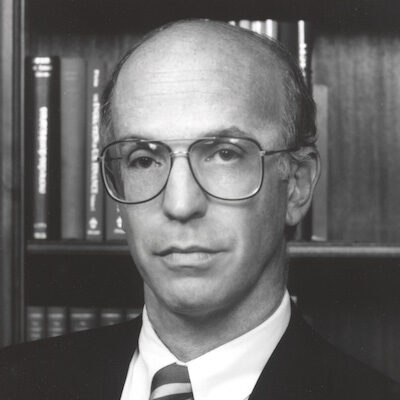
Alan Blinder
Federal Reserve Vice Chair, Clinton Administration, 1994–1996
Greg Mankiw
Council of Economic Advisers Chair, Bush Administration, 2003–2005
The Princeton University economist was quoted in Bloomberg Businessweek by Intel CEO Andy Grove.
#10. “Trade with China will promote freedom. Freedom is not easily contained. Once a measure of economic freedom is permitted, a measure of political freedom will follow. […] Trade freely with China, and time is on our side.”
George W. Bush
U.S. President, 2001–2009
Madeleine Albright
Secretary of State, Clinton Administration, 1997–2001
Then-candidate Bush was delivering a campaign address to Boeing workers in Washington State in 2000, endorsing the Clinton Administration’s efforts to grant Permanent Normal Trade Relations status to China.
#11. “Trade has brought untold benefits to our people not the least of which are high-paying jobs, increased consumer choice, increased economic competitiveness.”
Sen. Phil Gramm
U.S. Senator (R-TX), 1985–2002
Hilda Solis
Secretary of Labor, Obama Administration, 2009–2013
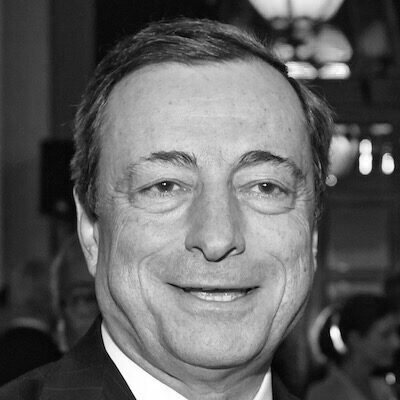
Mario Draghi
European Central Bank President, 2011–2019
Senator Gramm offered these remarks in a public statement upon the introduction of a suite of trade bills in 2001—to grant the president “fast track authority” to implement trade agreements, to accede Chile and the UK into NAFTA, and to promote a free-trade zone in the Western Hemisphere.
Bulls in the China Shop
At the turn of the 21st century, a bipartisan collection of politicians, academics, business leaders, and policy “experts”—call them “the Uniparty”—devoted much of its energy to fighting for, and later defending, free trade with China. It succeeded: the United States granted China “Permanent Normal Trade Relations” status in May 2000, and China joined the Word Trade Organization (WTO) in December 2001.
Choose the leader who made each statement:
I, For One, Welcome Our New Overlords
Still four more chances to improve your score!
Even as it advocated for policy measures to enable globalization, the Uniparty maintained that policy was irrelevant and that markets, not democracy, should govern economic affairs. Globalization was a force of nature to accommodate, not a question of political economy to debate.
#12. “We are fortunate that, thanks to globalization, policy decisions in the US have been largely replaced by global market forces […] It hardly makes any difference who will be the next president. The world is governed by market forces.”
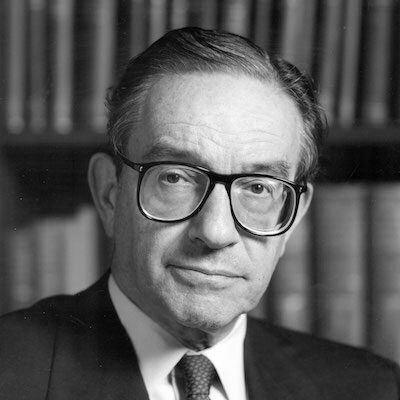
Alan Greenspan
Federal Reserve Chair, 1987–2006
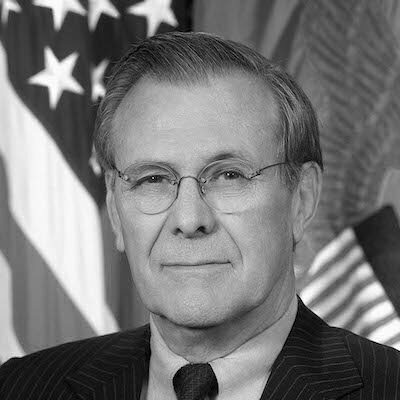
Donald Rumsfeld
Secretary of Defense, Bush Administration 2001–2006
In 2007, Greenspan offered this answer in response to a Swiss newspaper’s question about who would be elected president in the next year’s general election.