Animal Corner | Animal Facts, Information and Pictures (original) (raw)
Welcome to Animal Corner
The Animal Encyclopaedia
Animal Corner is a free educational resource covering hundreds of animals and pet breeds — from the smallest invertebrates to the largest mammals on land and sea. Every guide is written to answer the questions people actually ask: where an animal lives, what it eats, how it behaves, how long it lives, and what threats it faces in the wild.
Explore 630+ wild animals organised A-Z, dig into 330+ dog breeds and 50+ cat breeds in our pets section, or browse the 7 animal groups — mammals, birds, reptiles, fish, amphibians, insects and invertebrates. We also publish anatomy guides, an illustrated glossary, and a blog covering wildlife conservation and animal behaviour.
Whether you're a student researching for school, a pet owner, or just curious about the natural world, there's something here for you.
Latest Animals

Cellar Spider (Daddy Long-Legs)
The Cellar Spider (Pholcus phalangioides) is the spindly, long-legged spider you find hanging upside-down in messy webs on basement and garage ceilings across most of the world. Confusingly, it shares the nickname Daddy Long-Legs with two completely unrelated animals (harvestmen and crane flies), and it is at the centre of a popular myth about being […]

Giant House Spider
The Giant House Spider (Eratigena atrica, formerly Tegenaria atrica) is one of the largest spiders found indoors in Europe and the Pacific Northwest of North America. It is closely related to the Hobo Spider and the two species are commonly mistaken for one another, but the Giant House Spider is bigger, faster and far more […]
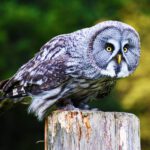
Great Grey Owl
The great grey owl (Strix nebulosa) is a very large owl and is considered to be the world’s largest species of owl by length. As its name suggests, the great grey owl is grey in colour and has a dense, fluffy plumage, a large head, and long wings and tail.
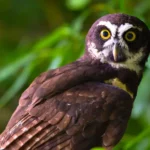
Spectacled Owl Facts
The spectacled owl (Pulsatrix perspicillata) is a large owl found near to water in the tropical forests of Central and South America. The largest of the tropical owl species, this owl gets its name from “spectacles” of white feathers around their eyes and throat.
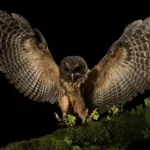
Mottled Owl Facts
The mottled owl (Strix virgata) is a medium sized owl that gets its name from its mottled brown head and back. Females are considerably larger than males, and this species shows the largest amount of sexual dimorphism of any species of owl.


Peacock Spiders – Australia’s Dancing Arachnids
Have you ever heard of a Peacock Spider? These little arachnids are members of the ‘Maratus‘ genus, and are not just your everyday spider. There are around 108 species known so far, but the vast majority have only recently been discovered and described in the last decade.

Raven – Large, Mysterious and Devilishly Clever
The raven, belongs to the genus ‘Corvus‘, which is widely distributed across the globe. At one time it was considered to be a single species, but it is now accepted that there are 9 seperate species of raven within the genus Corvus.


Mouse Deer – Exploring the Smallest Hoofed Mammal
The Mouse Deer, also known as Chevrotain, is a really peculiar little ungulate. Captivating and elusive in equal measure. They belong to two genera ‘Tragulus‘ and ‘Moschiola‘, which are members of the ‘Tragulidae‘ family. This is the only family in the infraorder ‘Tragulina‘, which falls under the order ‘Artiodactyla‘ which is mostly made up of […]

Beluga Sturgeon – The Jewel of the Caspian Sea
The Beluga Sturgeon is probably the most famous of all the sturgeon fish. They are ancient fish, that have graced our planet for millions of years. Often referred to simply as the Beluga, the species is scientifically known as (Huso huso), and belongs to the ‘Huso‘ genus, which is one of the four genera of […]

Fishing Cat – The Asian Wetlands Feline
The Fishing Cat is a beautiful and familiar looking cat, with some amazing features that make it an expert in and around water. Known scientifically as ‘Prionailurus viverrinus‘, this intriguing feline is the sole member of its species, and sits within the taxonomical genus of ‘Prionailurus‘. It is the largest of the cats in this […]

South American Horned Frog – From Camouflage to Cannibalism
The South American horned frog, is an incredibly attractive type of frog, with some very interesting features and behaviours. Often referred to as the Pacman frog due to its round shape and large mouth, which gives it the familiar look of the iconic video game character, ‘Pac-Man’. These frogs exist within the genus ‘Ceratophrys‘, which […]
Reader Favourites
The animal guides readers spend the most time with.

Capybara
The Capybara (Hydrochoerus hydrochaeris), can be found in various regions of South America and in Panama. The capybara…

Axolotl
The Axolotl (Ambystoma mexicanum) is a unique amphibian that can be found in Mexico. It is often called…

Anaconda Snake
Anacondas are four species of aquatic boa inhabiting the swamps and rivers of the dense forests of tropical…

Spider Monkey
Spider monkeys are primitive New World monkeys of the family ‘Atelidae’ found in tropical lowland rainforests from Mexico…

Red Panda
Did you know that the red panda is not actually a panda at all? They are a part…
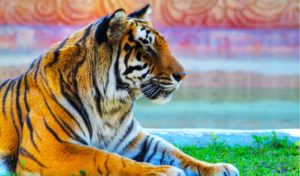
Bengal Tigers
The Bengal tiger (Panthera tigris tigris or Panthera tigris bengalensis) is sometimes known as the Royal Bengal tiger…

Jaguar
The Jaguar (Panthera onca), is a New World mammal of the ‘Felidae family’. It is one of four…

Wolves
Wolves (Canis Lupus), are related to dogs, or more rightly, dogs are actually related to wolves. Wolves and…

Sloth
Sloths are medium-sized mammals that live in the Central and South American rainforests. The sloth got its name…

Cheetah
The Cheetah (Acinonyx jubatus) is the fastest terrestrial animal in the world and is a unique member of…

Snow Leopard
The Snow Leopard is sometimes known as the ‘Ounce’. It is a large cat native to the mountain…

Polar Bear
The Polar Bear is found in the coastal areas throughout the Arctic. Polar Bears are semi-aquatic mammals that…
Popular Anatomy Guides
Illustrated reference guides to how animals are built.
The 7 Different Types of Animal Groups

Mammals
Mammals are a diverse group of warm-blooded vertebrates characterised by mammary glands, hair or fur, and a four-chambered heart. They range from tiny bats and mice to large elephants and whales.

Birds
Our planet is home to between 9,000 and 10,000 distinct bird species across more than 227 families, exhibiting a vast spectrum of colours and sizes from ostriches to hummingbirds.

Reptiles
Reptiles are cold-blooded vertebrates with skin adorned with scales. Classified as tetrapods and amniotes, they include lizards, snakes, turtles, and crocodilians.

Fish
Fish are aquatic vertebrates thriving in both freshwater and marine environments. Characterised by gills, scales, and fins, they play a crucial role in aquatic ecosystems worldwide.

Amphibians
Amphibians were the first four-limbed vertebrates to walk the Earth. Cold-blooded and spending part of their lives in water and part on land, their name means "double life".

Insects
Insects constitute over half of all known living entities on Earth. With over a million recognised species, they represent the most varied and adaptive animal group on our planet.

Invertebrates
Invertebrates make up the majority of all known animal species, from butterflies and ants to jellyfish and crabs, exhibiting an astonishing range of forms and habitats.