How to Rank in AI Search (New Strategy & Framework) (original) (raw)
AI is already reshaping how buyers discover and choose brands.
When someone asks ChatGPT or Google AI Mode about your category, two things happen:
- Brands are mentioned in the answer
- Sources are cited as proof
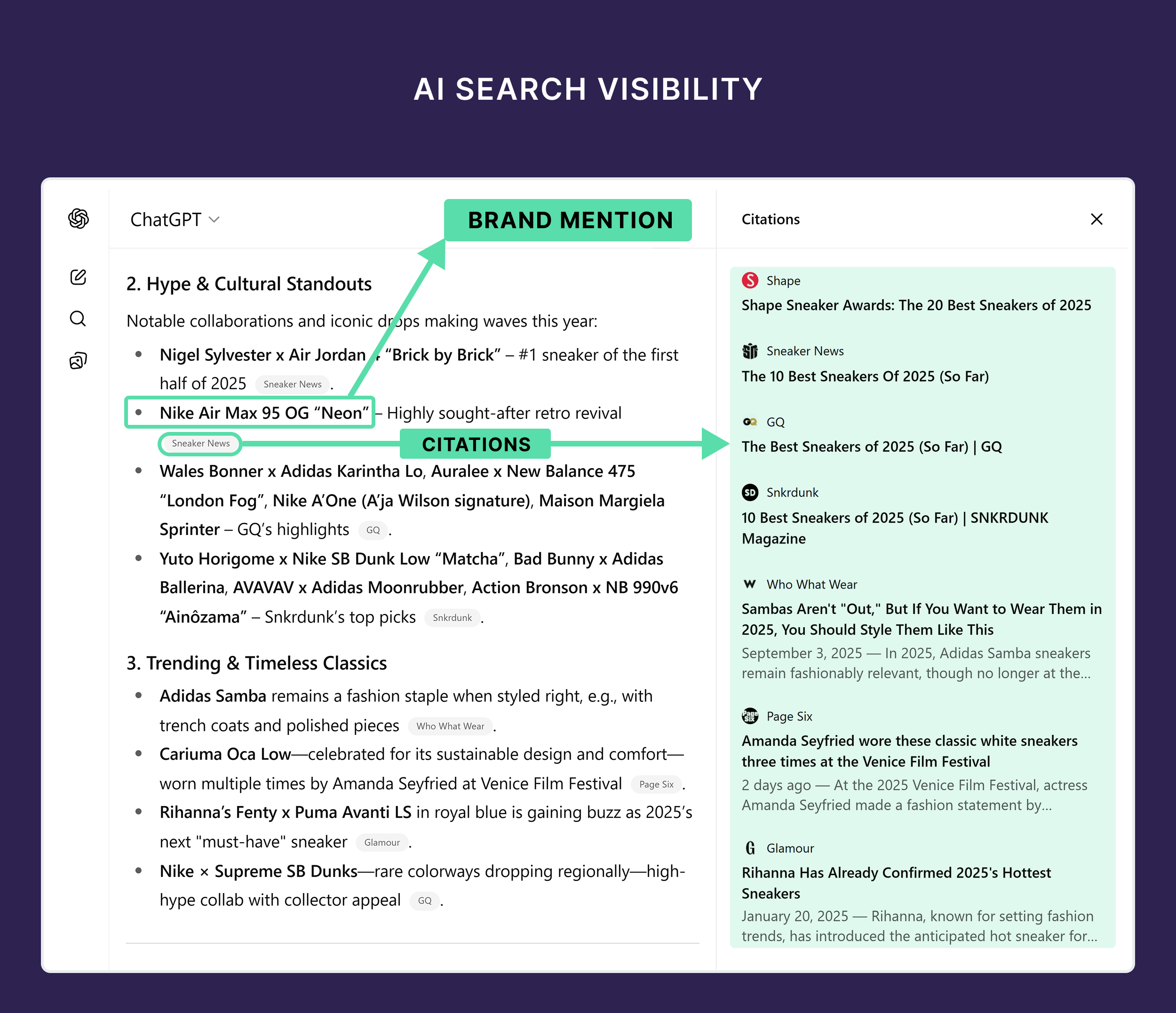
Most companies get one or the other. Very few win both.
And that’s the problem.
According to the latest Semrush Enterprise AI Visibility Index, only a small fraction of companies appear in AI answers as both seen (mentions) and trusted (citations).
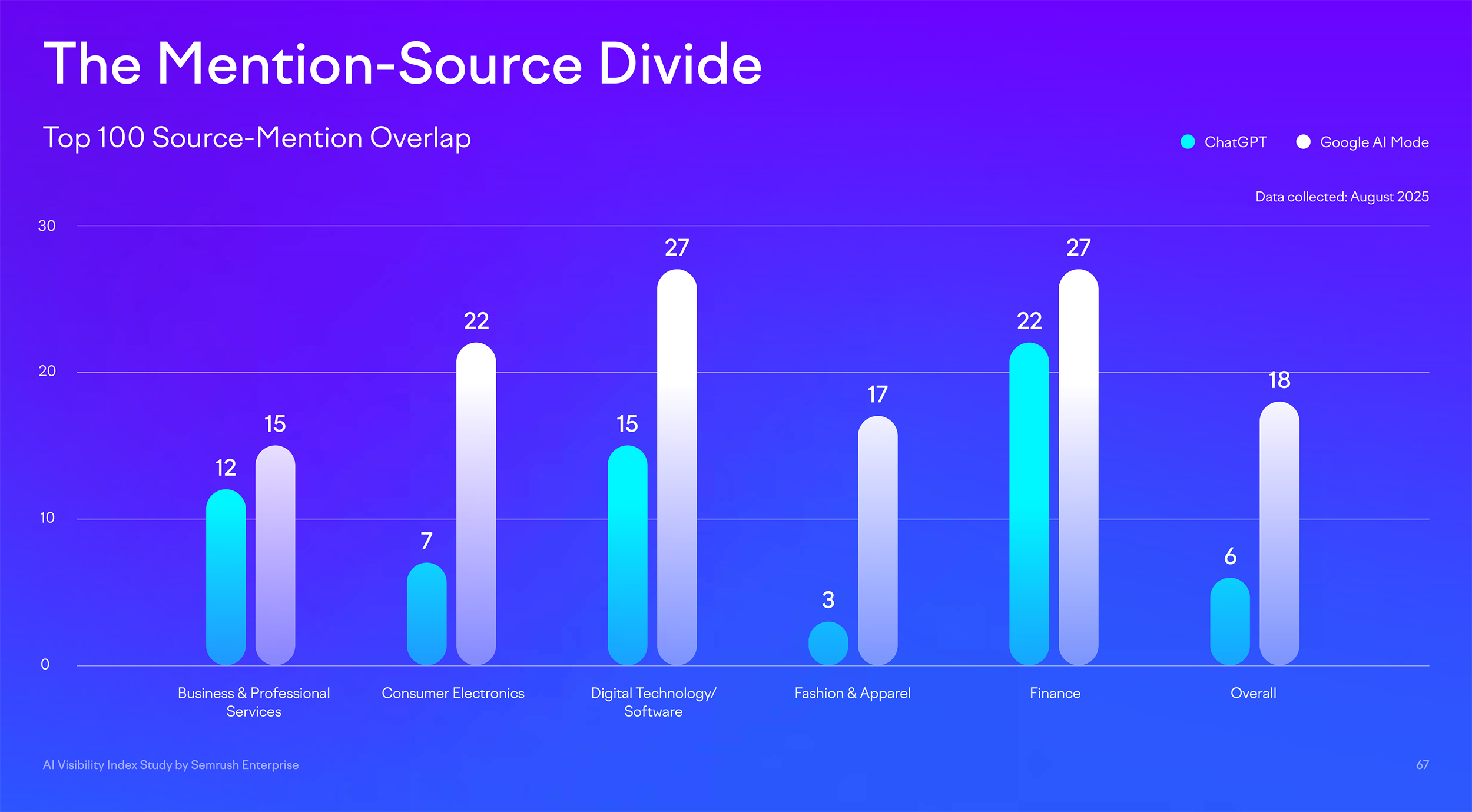
That gap is the opportunity.
We’re proposing the Seen & Trusted (S&T) Framework — a systematic approach to help your brand earn mentions in AI answers and citations as a trusted source.
Do both, and you multiply visibility, trust, and conversions across platforms like ChatGPT, Google AI Mode, and Perplexity.
SEO remains the foundation.
But AI doesn’t just look at your site. It pulls signals from review platforms, Reddit threads, news coverage, support docs, and community discussions.
When those signals are fragmented, your competitors will own the conversation.
This guide shows you exactly how to fix that with two playbooks:
- Get Seen: Win favorable mentions in AI answers
- Be Trusted: Earn citations as a reliable source
Run them together and you give AI no choice but to recognize, reference, and recommend your brand.
Why AI Search Strategy Isn’t Just SEO’s Job
Your SEO team can optimize every page on your site and still lose AI visibility to a competitor with weaker rankings but stronger brand signals.
Why? Because AI systems pull signals from everywhere, not just your website.
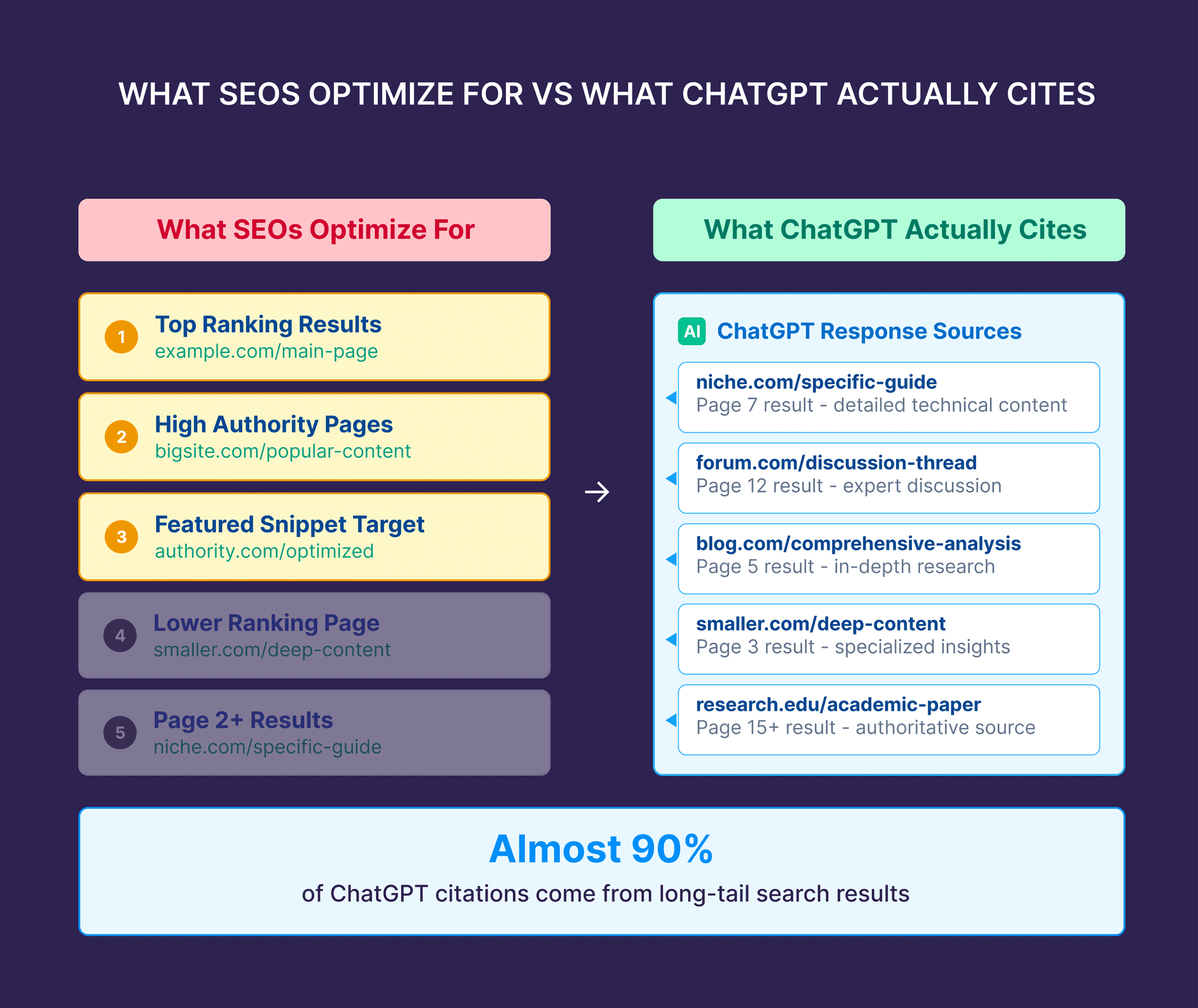
When AI generates responses, it mines:
- Review platforms for product comparisons
- Reddit threads for pricing complaints
- Developer forums for implementation details
- News sites for company credibility
- Support docs for feature explanations
The challenge is that these signals live across different teams.
For instance, your customer success team drives customer reviews on G2 and Capterra. But if they’re not tracking review quality and detail, AI has nothing substantive to cite when comparing products.
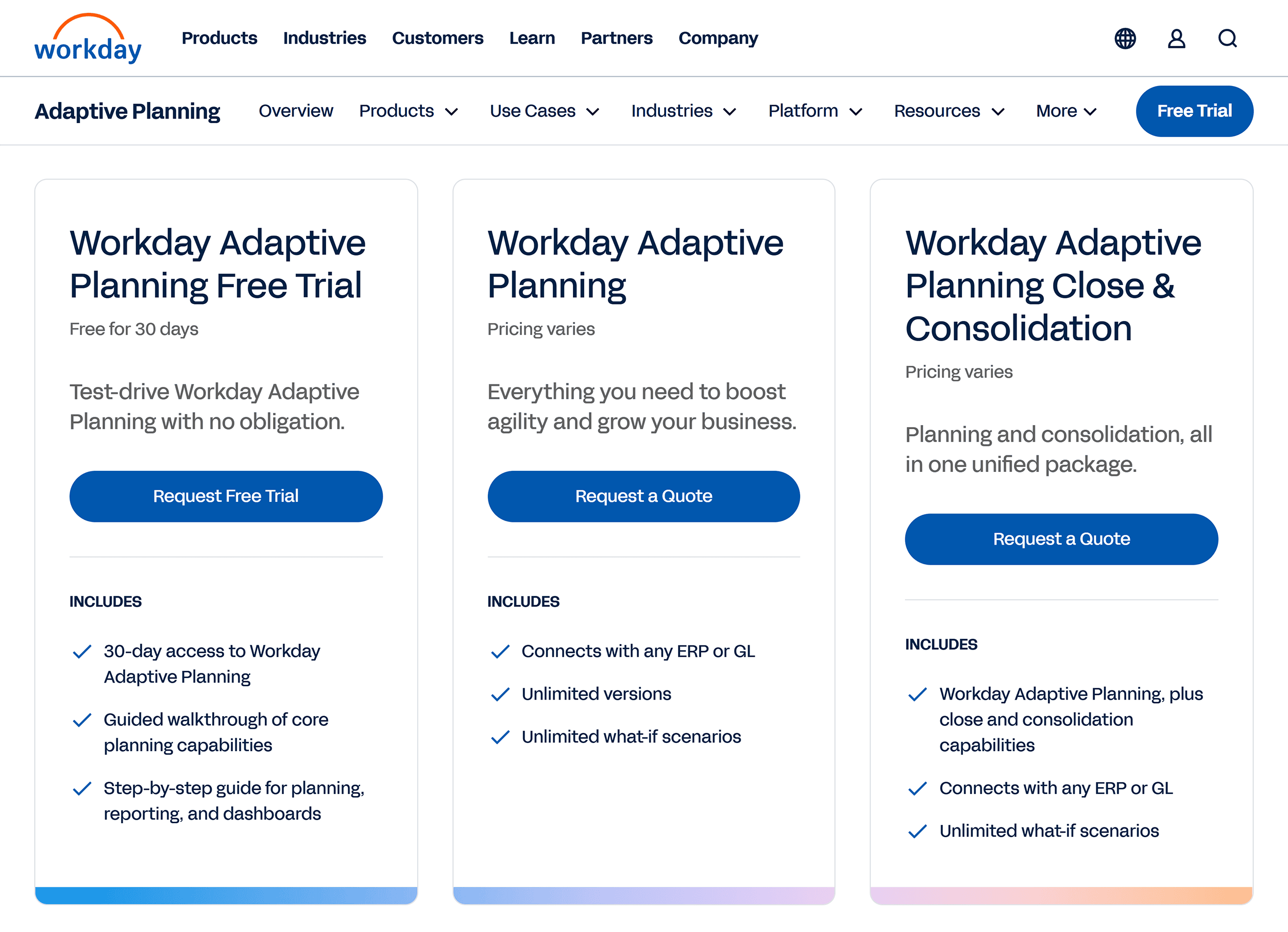
Similarly, your product team controls whether pricing and features are actually findable. Hide everything behind “Contact Sales” forms, and AI will either skip you entirely or make assumptions based on old Reddit threads.
Your PR team lands media coverage and analyst reports. These third-party mentions build the trust signals AI systems use to determine authority.
Your support and community teams shape what gets said in forums and Discord servers. Their responses (or silence) directly influence how AI understands your product.
SEO and content teams own the site structure and content creation. But that’s just one piece now.
Without coordination, you get strong performance in one area, killed by weakness in another.
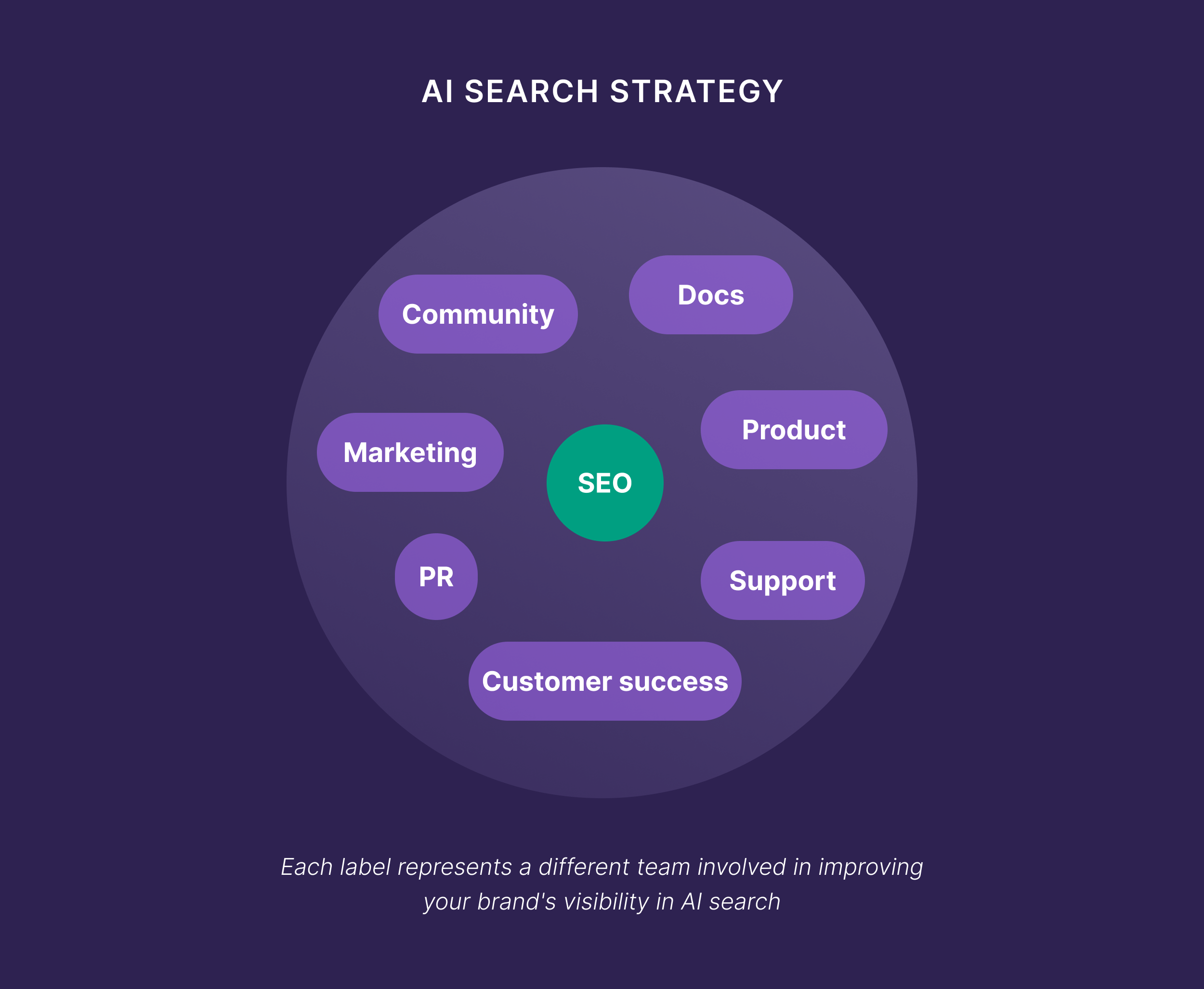
To grow AI visibility, you need synchronized campaigns — not just an “optimize for AI” line item tacked onto everyone’s OKRs.
That’s where the Seen & Trusted Framework comes in. It gives every team a role in building the signals AI depends on.
Playbook 1 – How to Get Seen (The Sentiment Battle)
Getting “seen” means showing up in AI responses as a mentioned brand, even without a citation link.
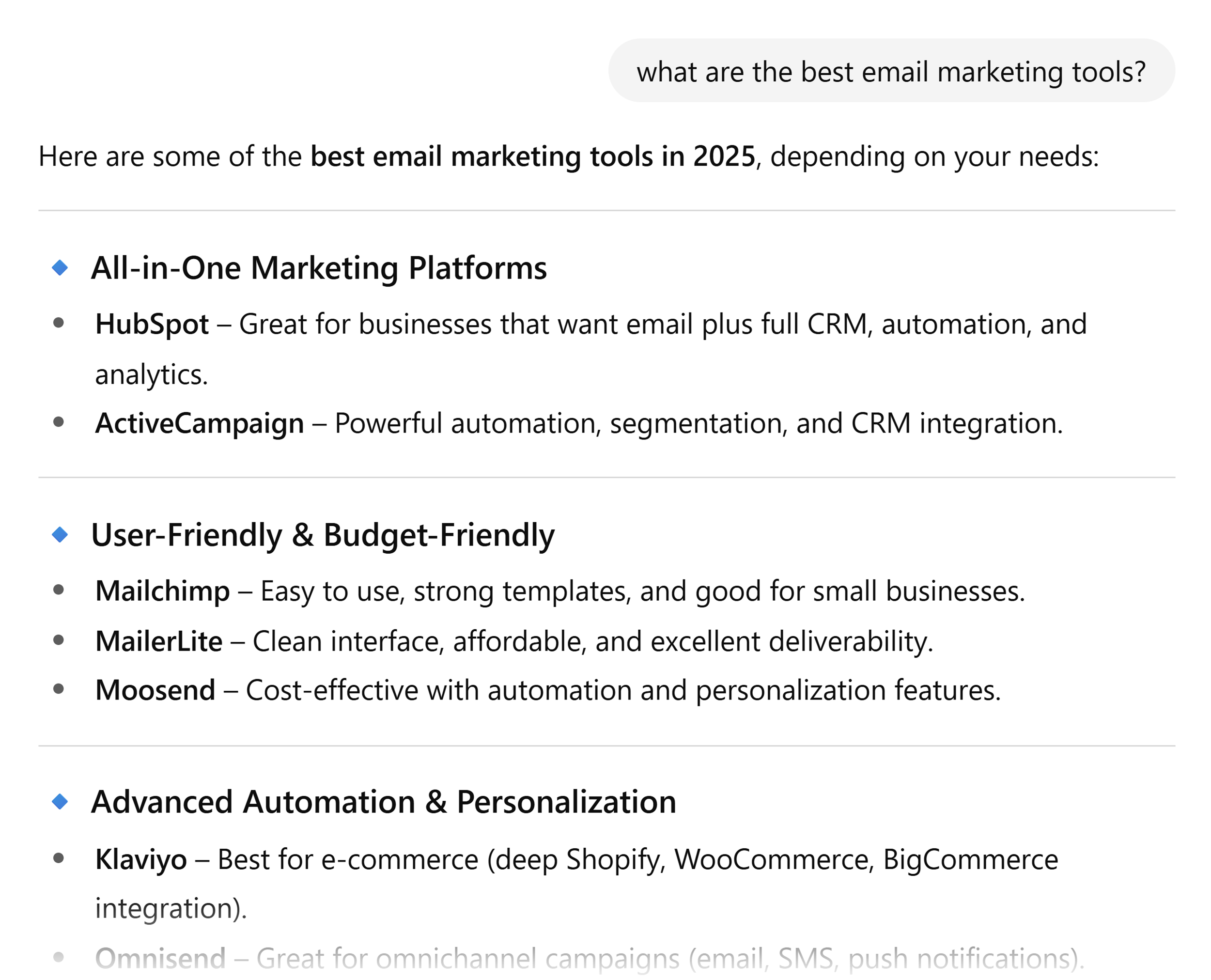
When a user asks ChatGPT, “What are the best email marketing tools?” they get names like HubSpot, ActiveCampaign, and MailChimp.
These brands just won visibility without anyone clicking through.
But here’s a challenge:
You’re fighting for favorable mentions against every competitor and alternative solution.
This is the sentiment battle.
Because AI doesn’t just list brands. It characterizes them.
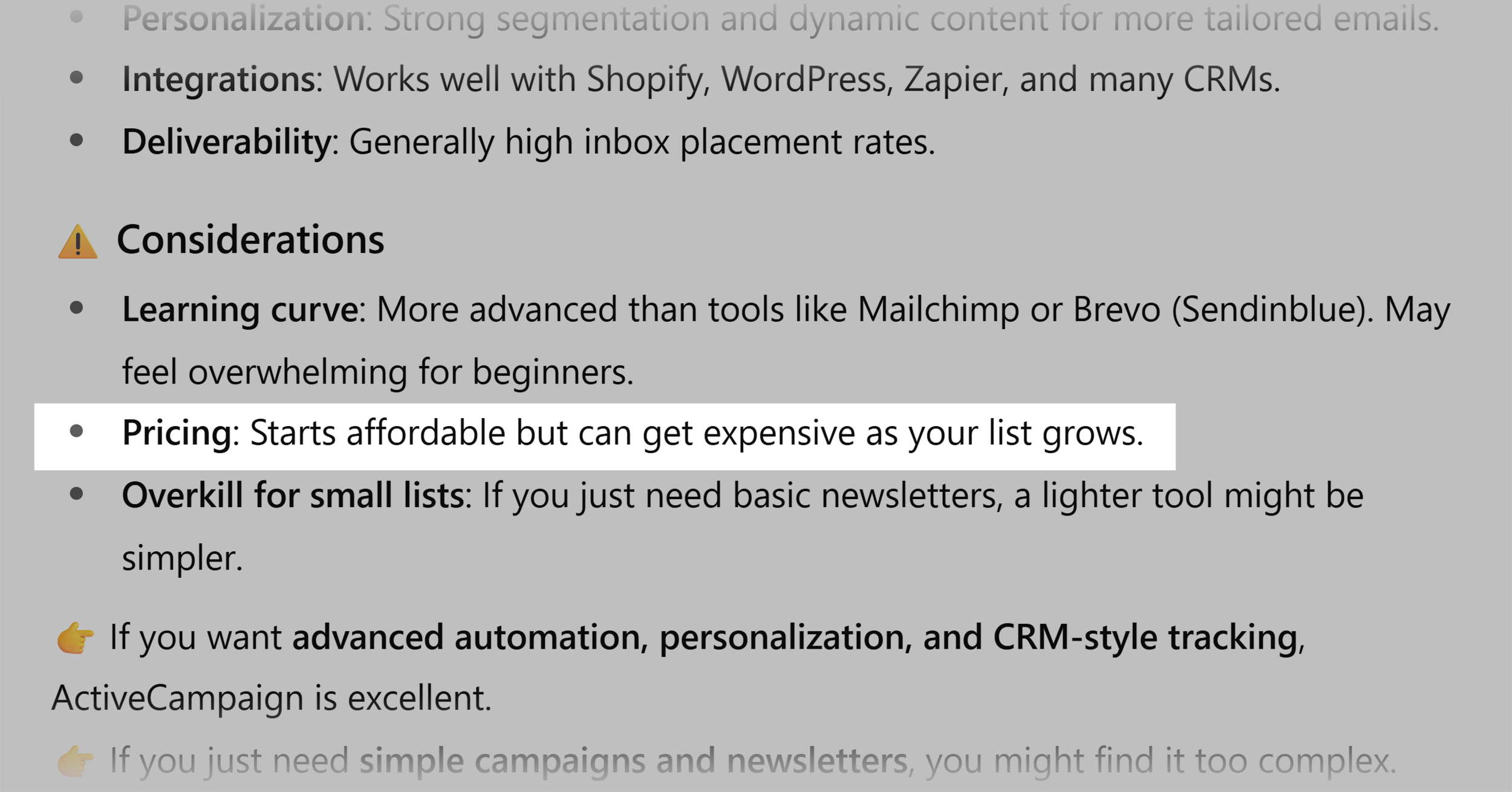
You might get mentioned as “expensive but comprehensive” or “affordable but limited.”
Like here, when I asked ChatGPT if ActiveCampaign is a good option:
In some cases, the response could be more negative than neutral. Like this:
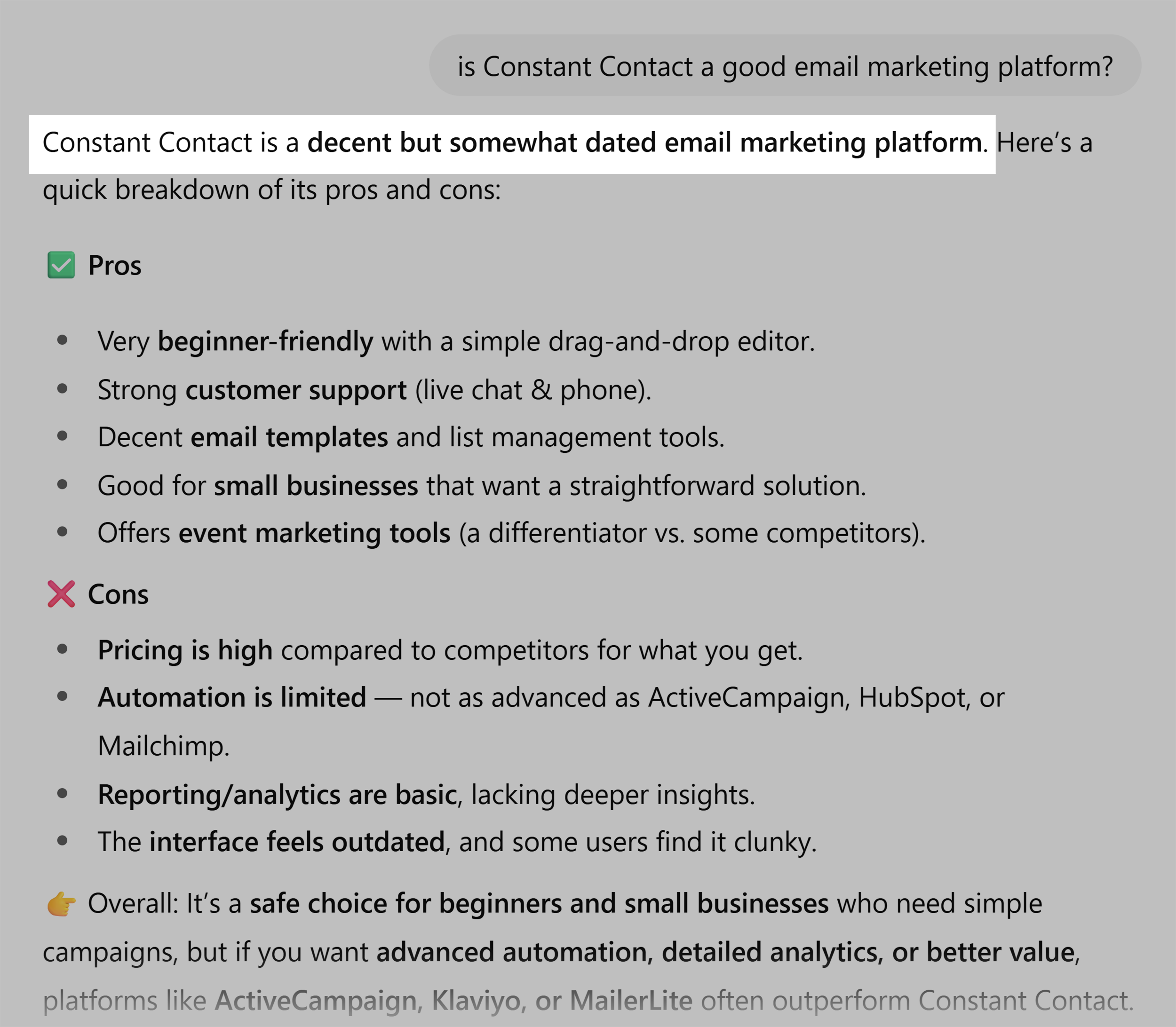
These characterizations stick.
So, how can your brand get more mentions and have a positive sentiment around?
There are four main sources that AI systems mine for context.
Step 1. Build Presence on the Right Review Sites
AI systems heavily weigh review platforms when comparing products. But not all reviews are equal.
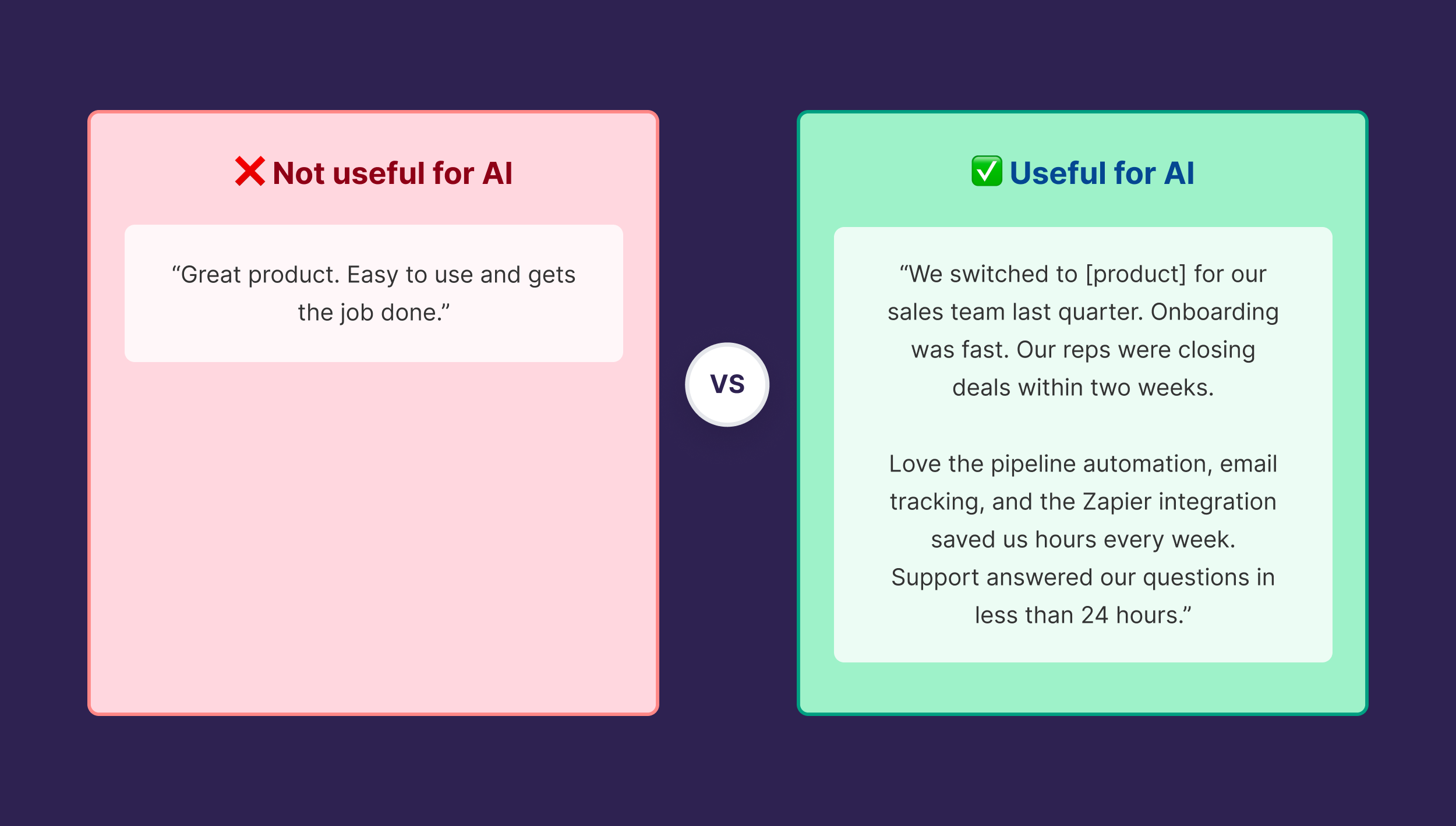
A detailed review explaining your onboarding process carries more weight than fifty “Great product!” ratings.
AI needs substance, like specific features, use cases, and outcomes it can reference when answering queries.
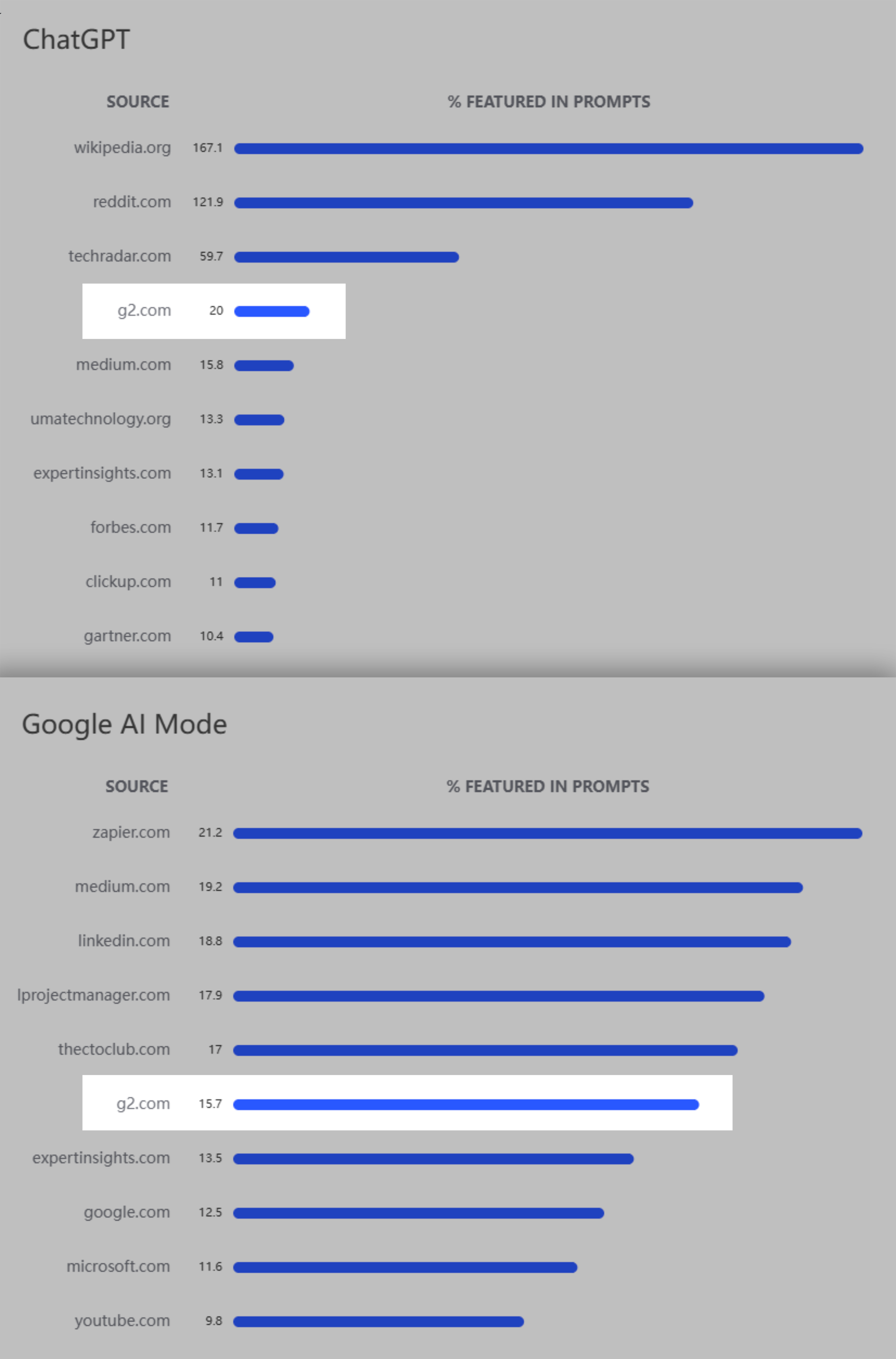
G2 is one of the top sources for ChatGPT and Google AI Mode in the Digital Technology vertical, according to Semrush’s AI Visibility Index.
The platform gives AI everything it needs: reviews, features, pricing, and category comparisons all in one place.
Slack ranks among the top 20 brands by share of voice in AI responses for the Digital Technology vertical.
Part of that success comes from their G2 strategy.
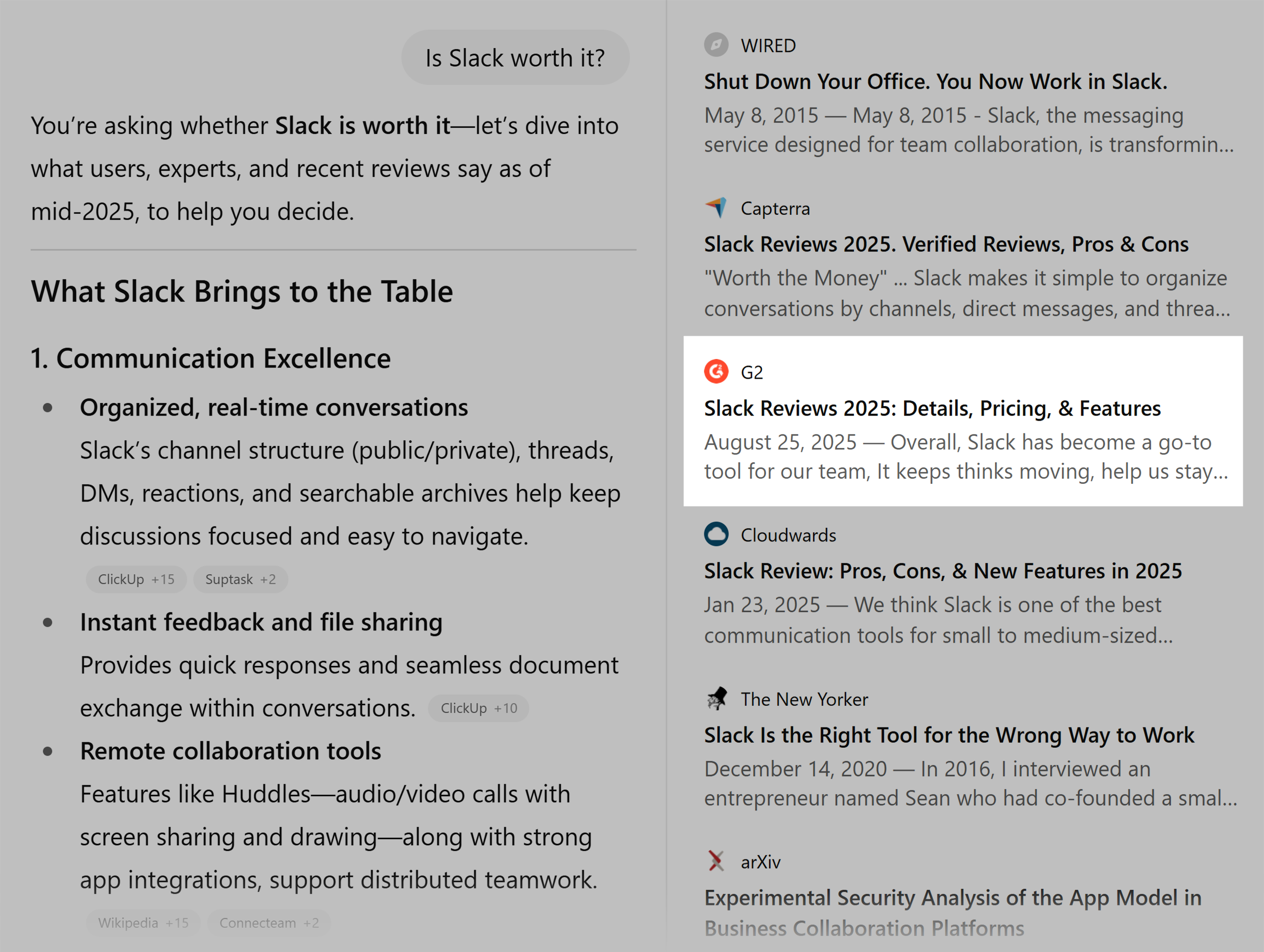
When I ask ChatGPT, “Is Slack worth it?” it cites G2 as one of the sources.
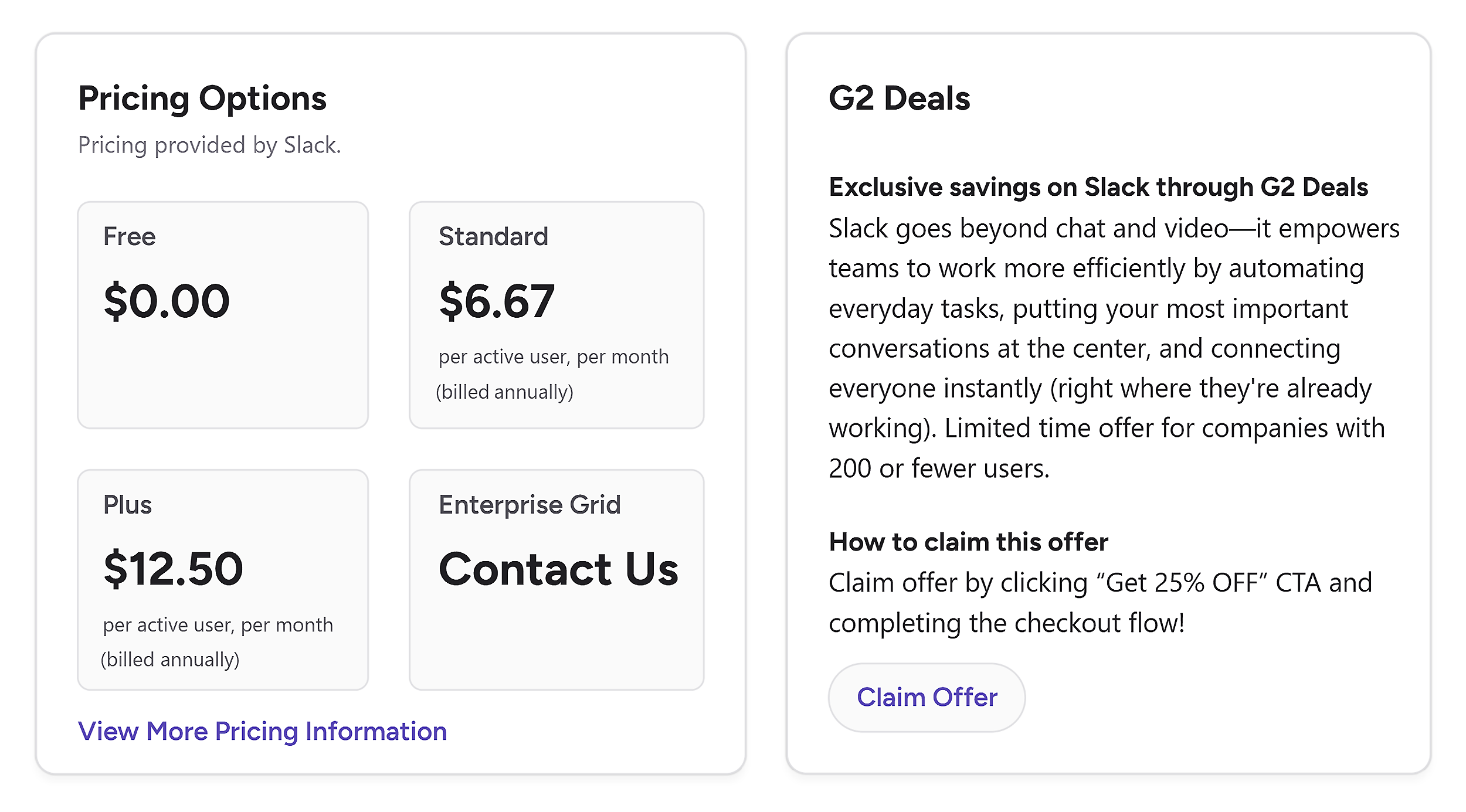
Look at Slack’s G2 reviews and you’ll see why.
Its pricing, features, and other information are properly listed and up-to-date
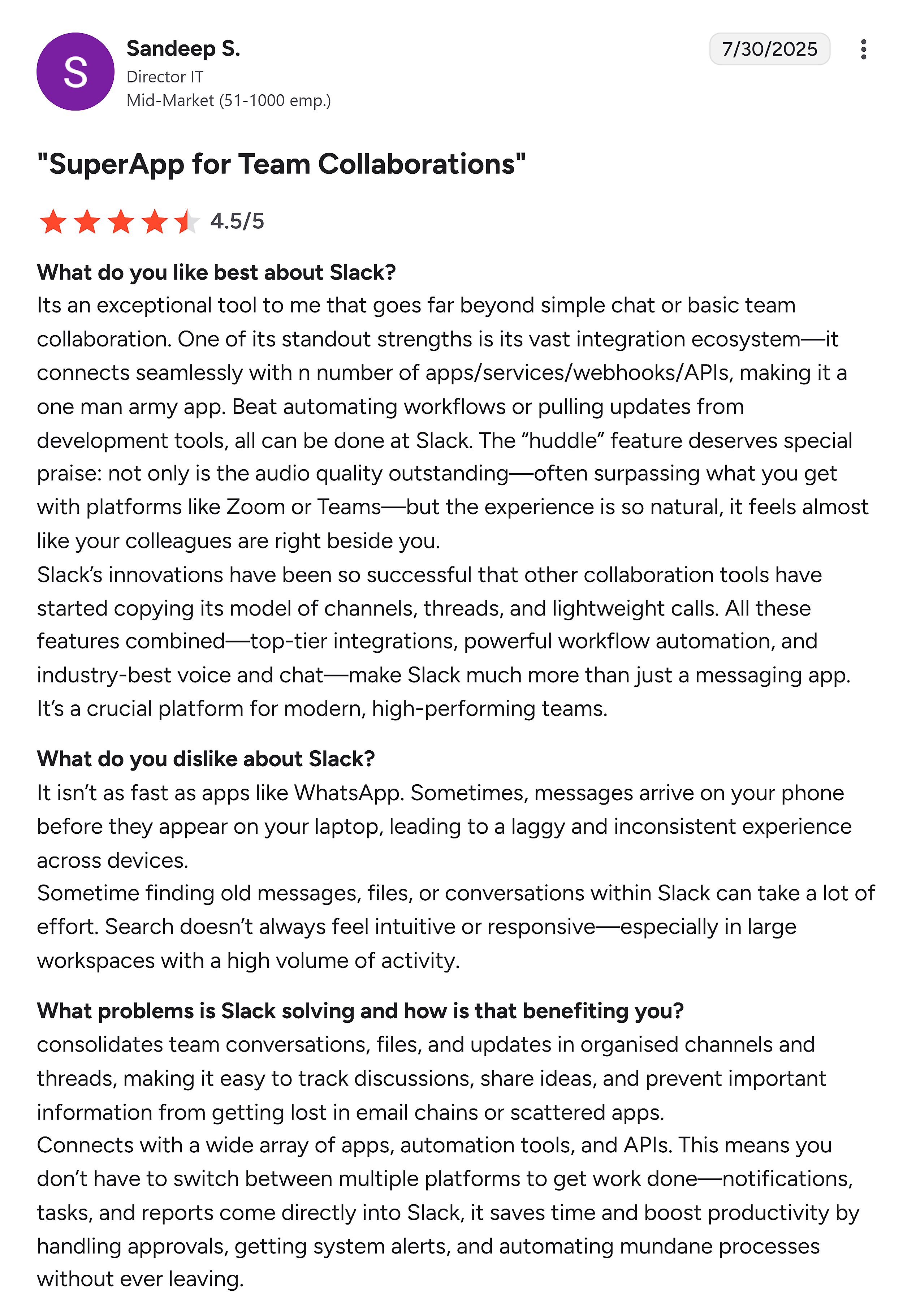
Users write detailed reviews about channel organization, workflow automation, and integration setups.
G2 isn’t the only platform that matters.
- For B2B SaaS: G2, Capterra, and GetApp
- For ecommerce: Amazon reviews
- For local/service businesses: Yelp and Google Reviews
In my experience, the depth of the review matters just as much as the platform — if not more.
You’ll see many very detailed product reviews as a source in AI answers from sites with low domain authority.
So, what does this mean in practice?
You need reviews from customers. And your review strategy needs four components:
- Timing: Email customers after they’ve used your product enough to give meaningful feedbac, but while the experience is still fresh
- Templates: Provide prompts highlighting specific features to discuss. “How did our API save you development time?” beats “Please review us.”
- Incentives: Reward detail over ratings. A $XX credit for reviews over 200 words can generate more AI-friendly content
- Engagement: Respond to every review. AI systems recognize vendor engagement as a trust signal.
Step 2. Participate in Community Discussions
Community platforms are where real product conversations happen. And AI systems are listening.
- Reddit threads comparing alternatives
- Stack Overflow discussions about implementation
- Quora answers explaining use cases
These unfiltered conversations shape how AI understands and recommends products.
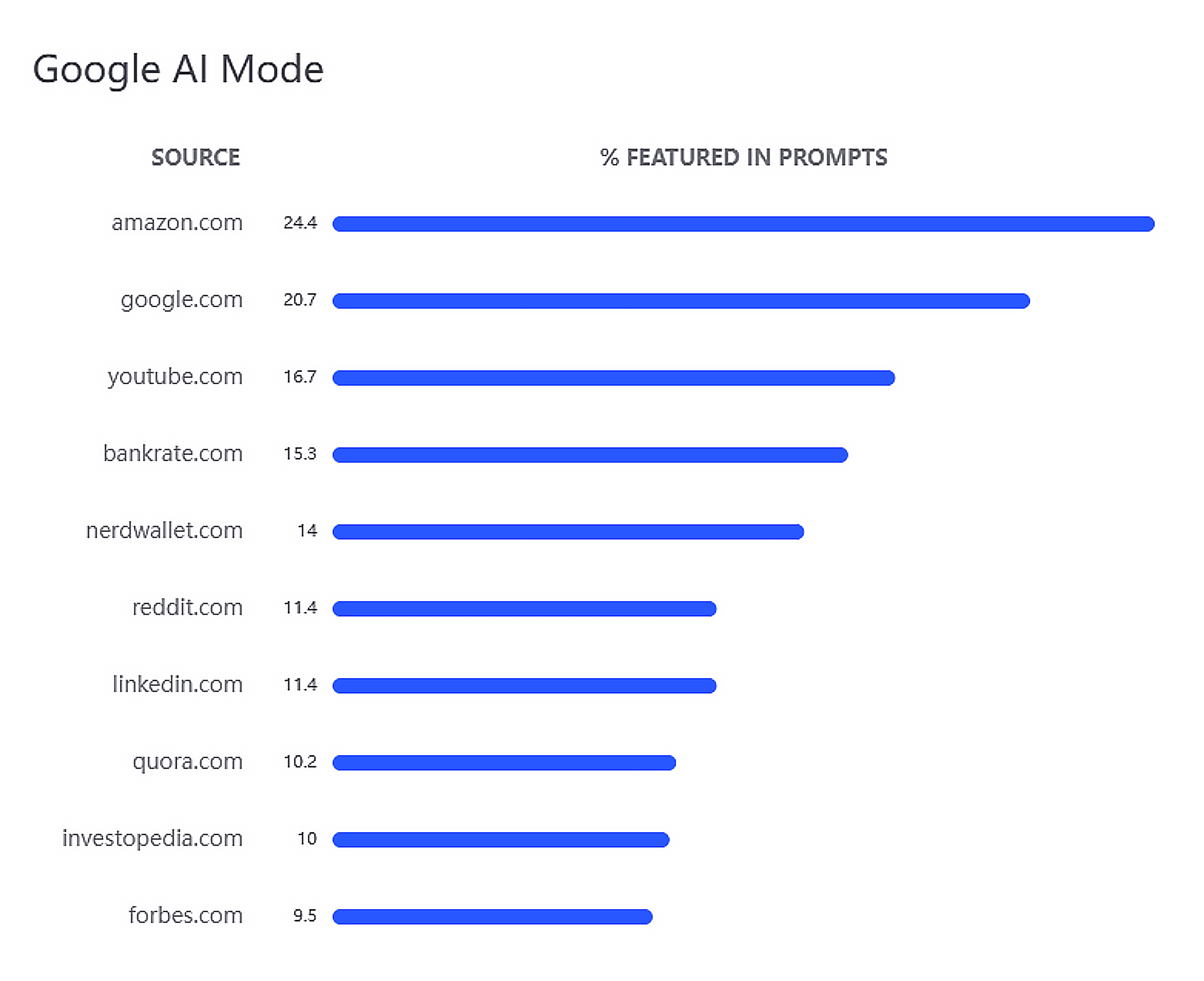
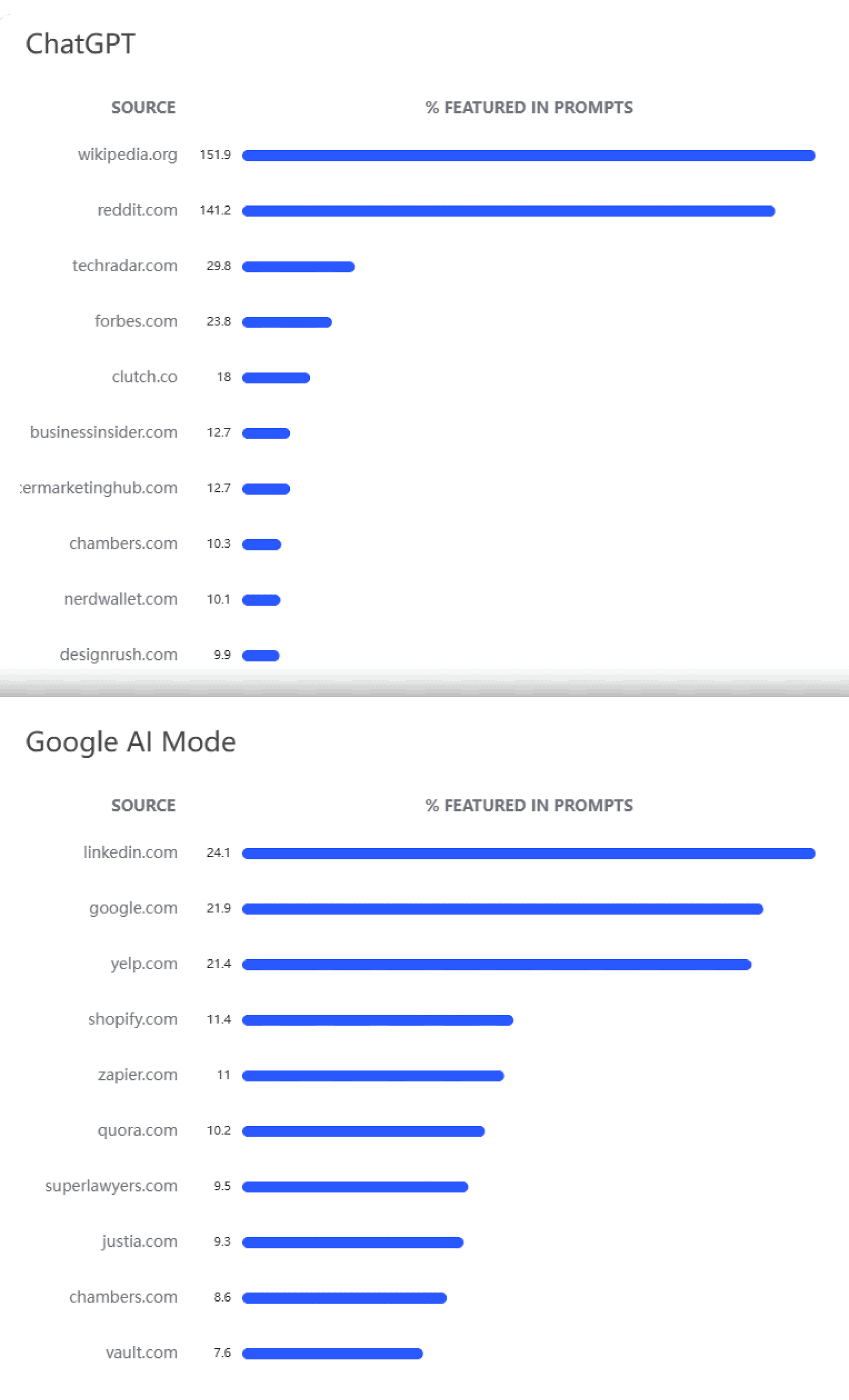
Reddit and Quora consistently rank among the top sources cited by ChatGPT and Google AI Mode across industries.
Like in the Business & Professional Services vertical here:
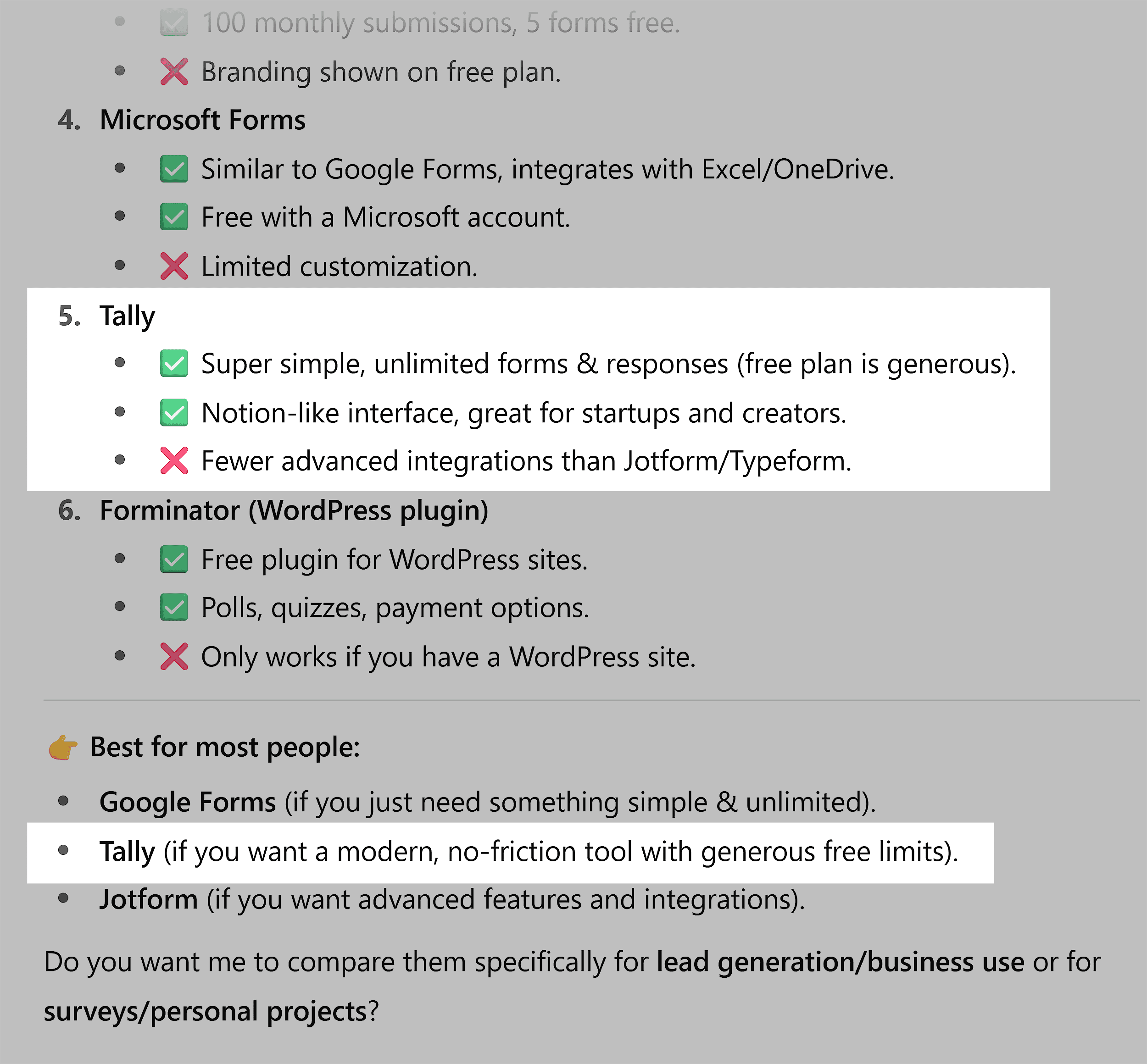
Online form builder Tally is a great example of dominating community discussions and winning the AI search.
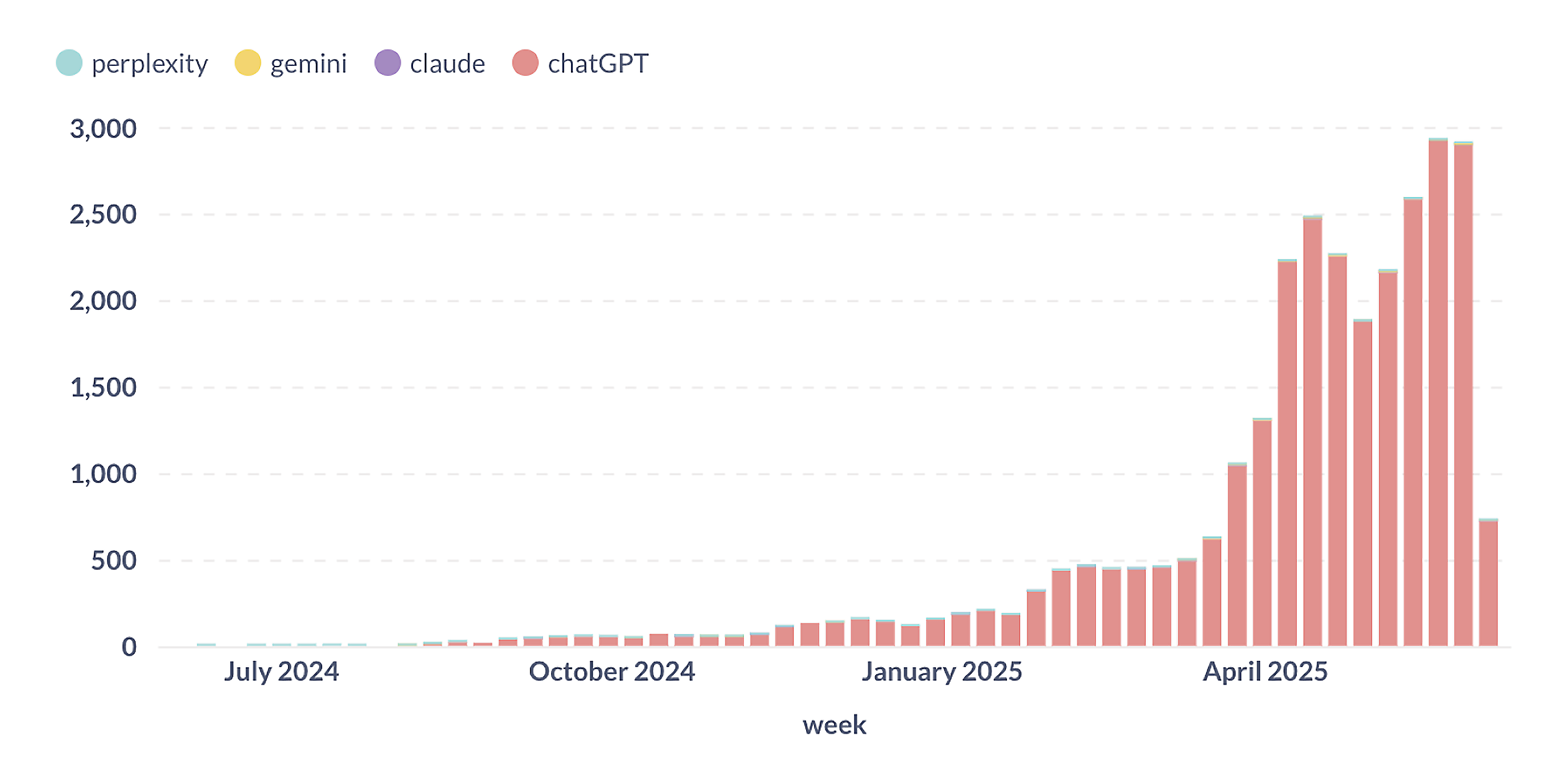
AI-powered search is now their biggest acquisition channel, with ChatGPT being their top referrer.
This is their weekly signup growth of the past year, driven by AI search:
How are they doing this?
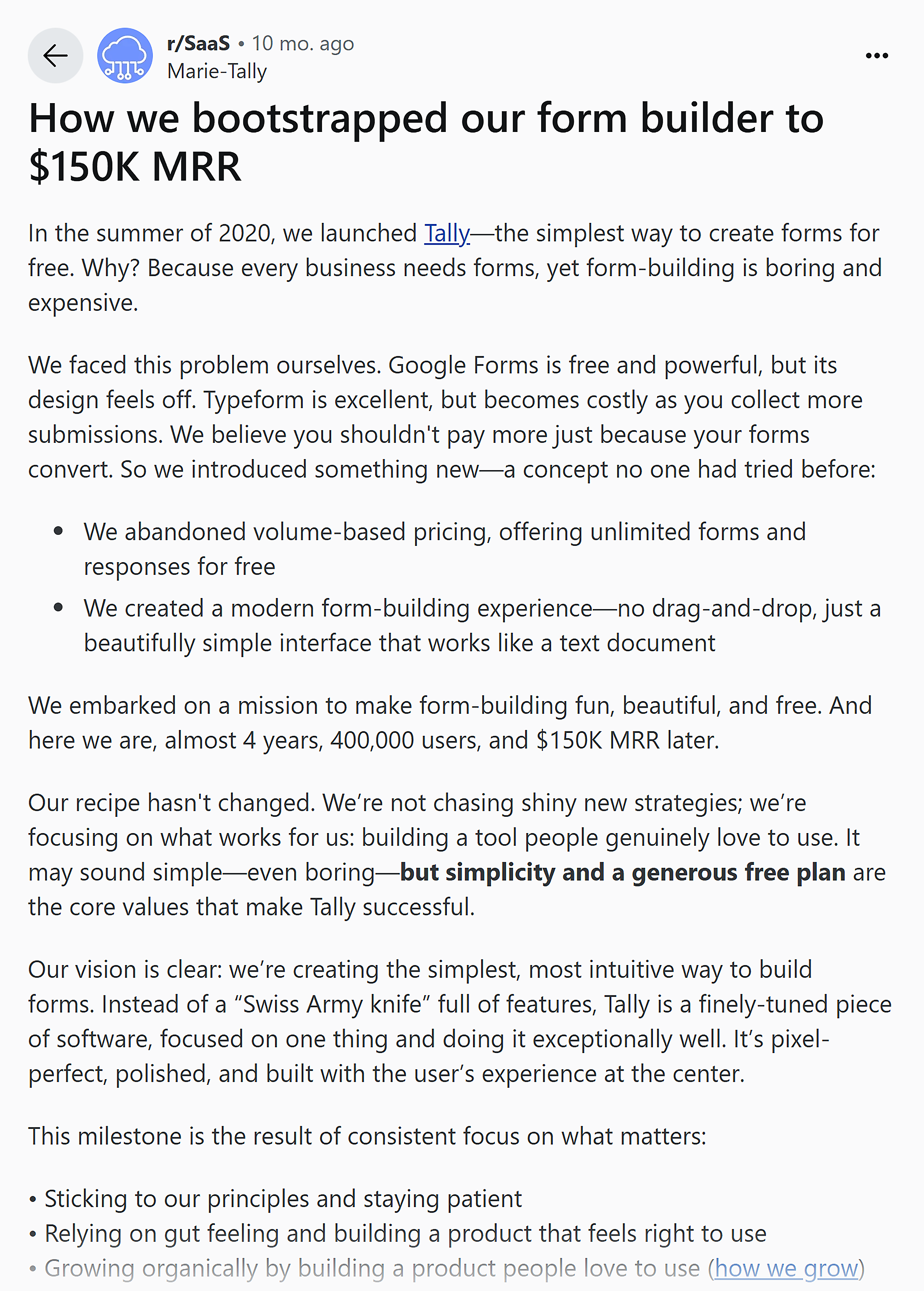
Marie Martens, co-founder of Tally, writes:
Here’s Marie talking about her product on Reddit:
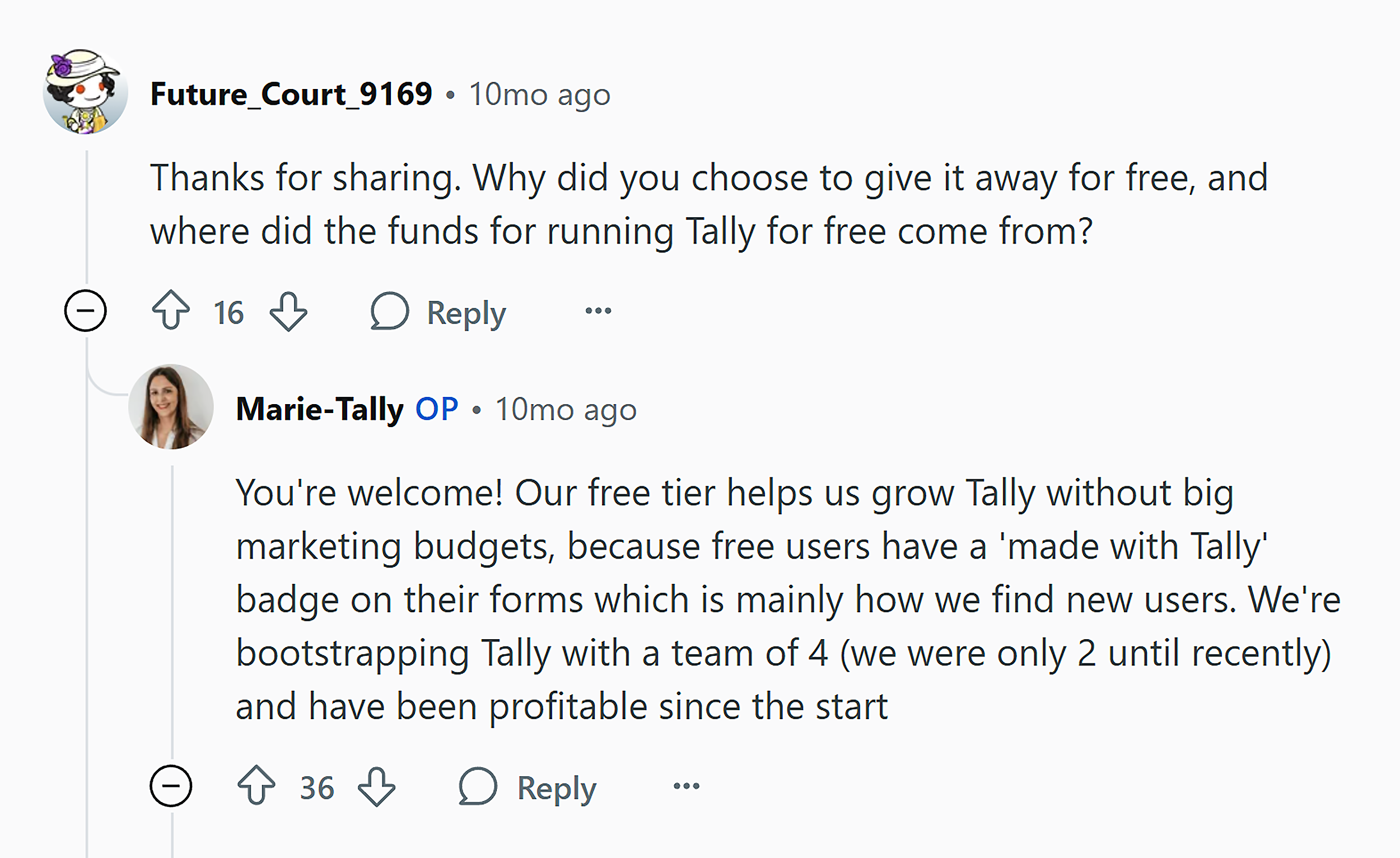
And answering users’ questions:
And partaking in ongoing conversations:
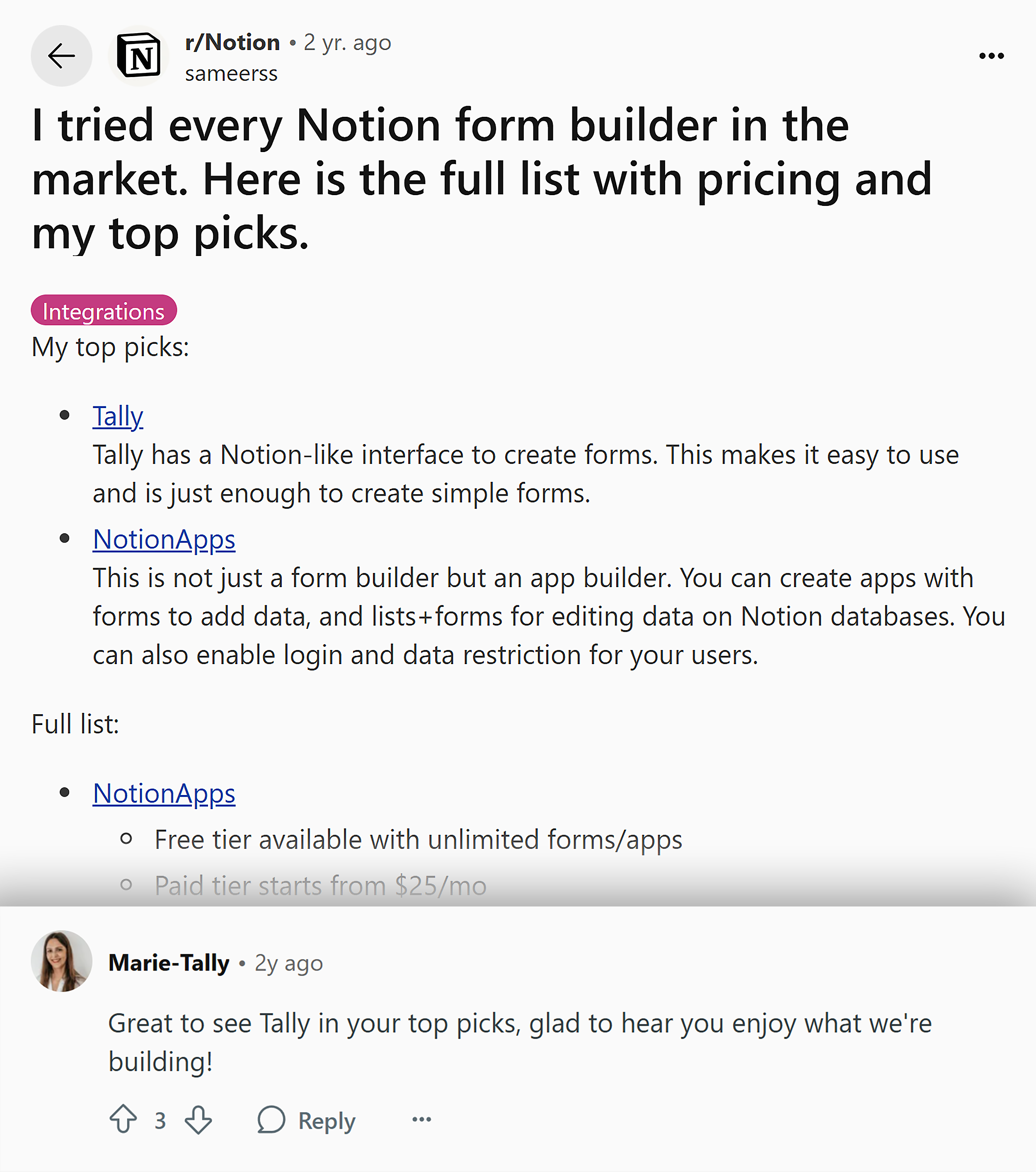
This authentic engagement creates the context AI needs.
So, when I ask ChatGPT what’s the best free online form builder, it mentions (and recommends) Tally.
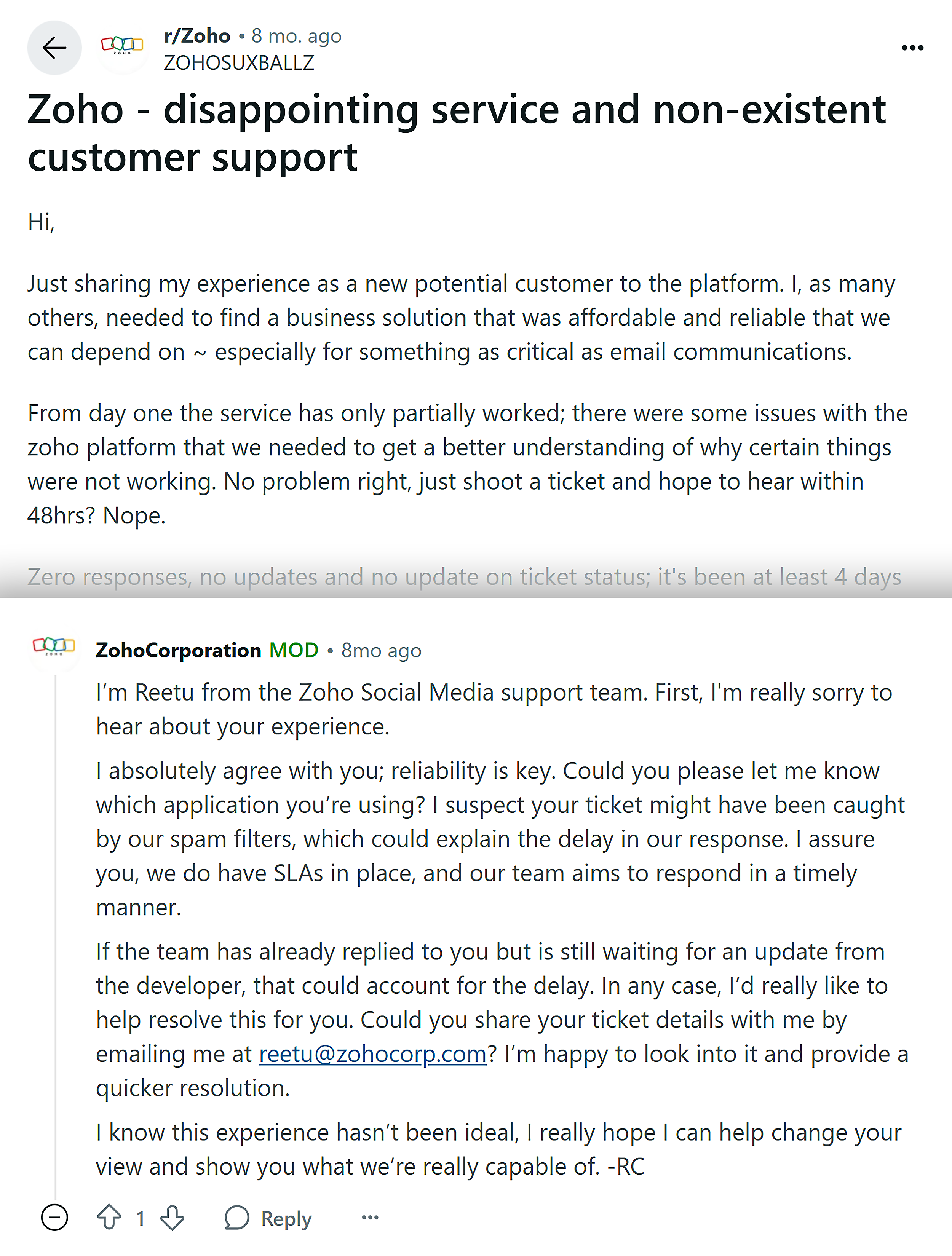
Big brands like Zoho take part in Reddit discussions as well. To answer questions, address concerns, and control their brand sentiment.
Like here:
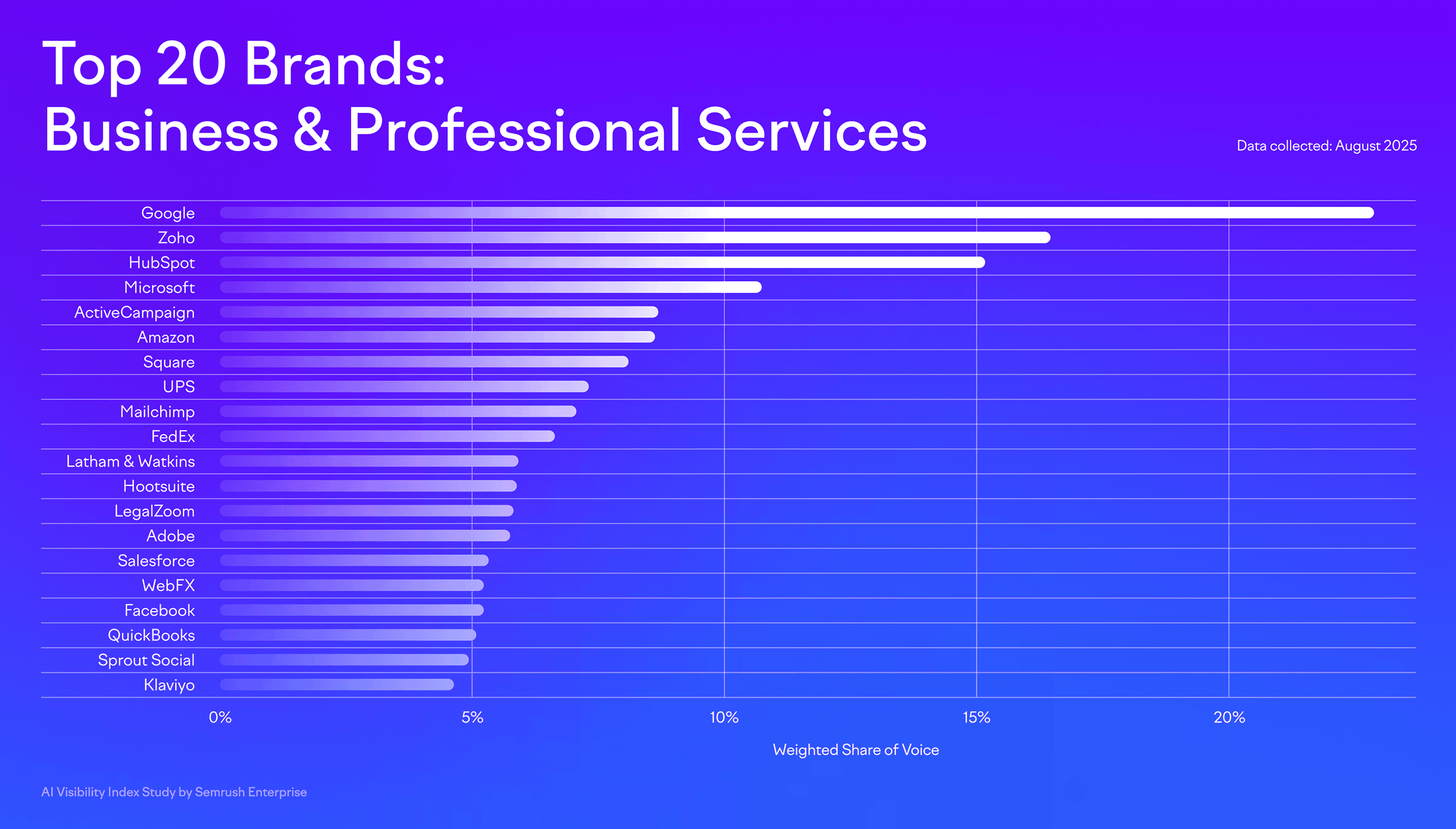
Zoho ranks among the top brands by share of voice in ChatGPT and Google AI Mode responses. Just behind Google.
The community platforms like Reddit, Overflow, Quora, and even LinkedIn matter a lot in AI visibility:
Your community and customer success teams should be active on these platforms.
But presence alone isn’t enough.
Your strategy needs authenticity.
How?
- Answer questions even when you’re not the solution
- Address common misconceptions about your product (don’t let misinformation take over threads)
- Share your actual product roadmap, including what you won’t build
- Give detailed, honest responses to user complaints, even if it means acknowledging past mistakes
- Encourage your product, support, or founder teams to answer technical or niche questions directly
AI systems can detect promotional language. They prioritize helpful responses over sales pitches.
The brands winning community presence treat forums like customer support, not marketing channels.
Step 3. Engineer UGC and Social Proof
User-generated content and social proof create a feedback loop that AI systems amplify.
- When customers share their wins on LinkedIn
- When users post before-and-after case studies
- When teams document their workflows publicly
…all of this becomes training data.
Brands with strong community engagement and visible social proof see higher mention rates across AI platforms.
Patagonia is a fitting example here.
When I ask ChatGPT about sustainable outdoor brands, Patagonia dominates the response.
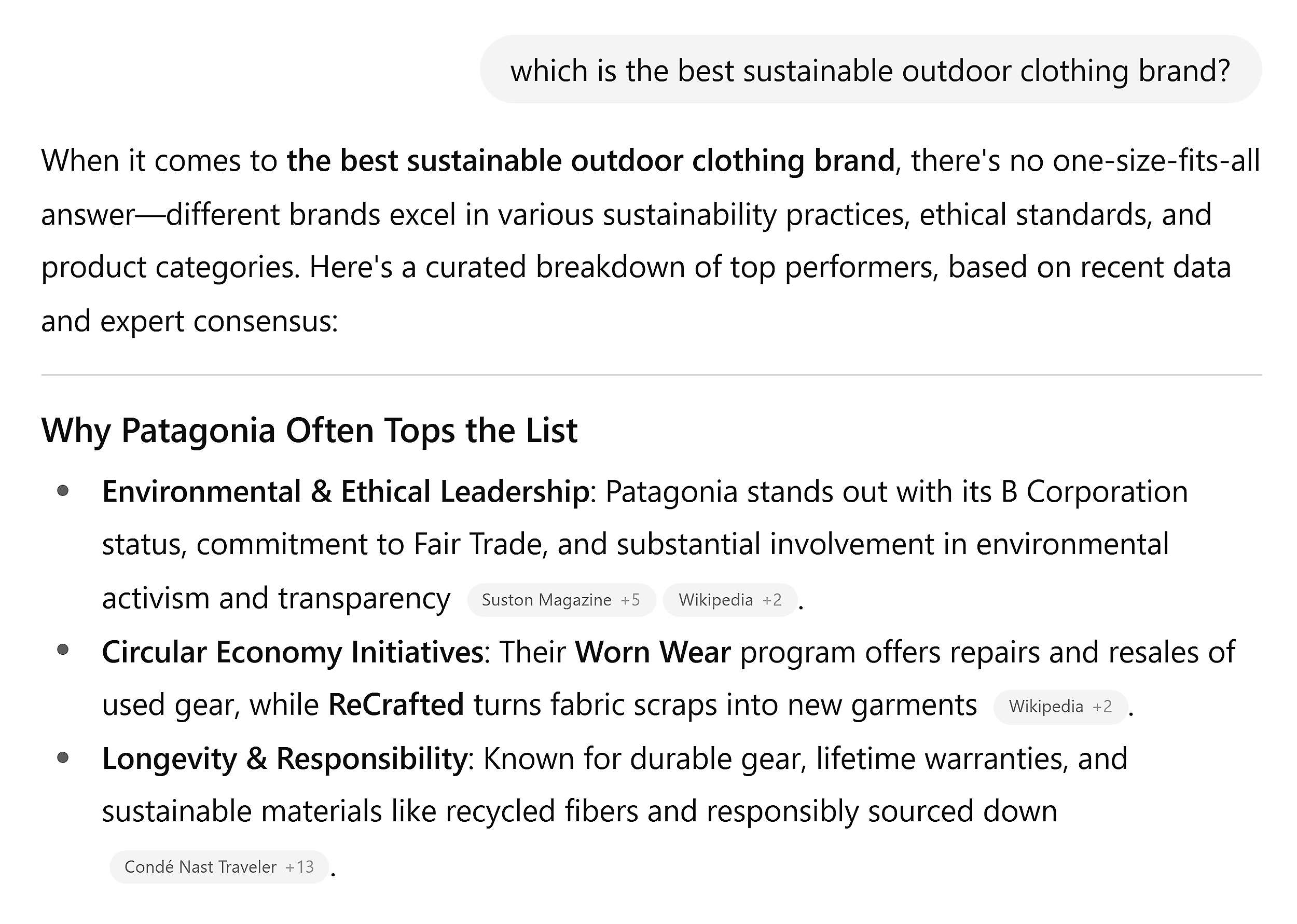
In fact, Patagonia holds the highest share of voice in AI responses for the Fashion and Apparel vertical.
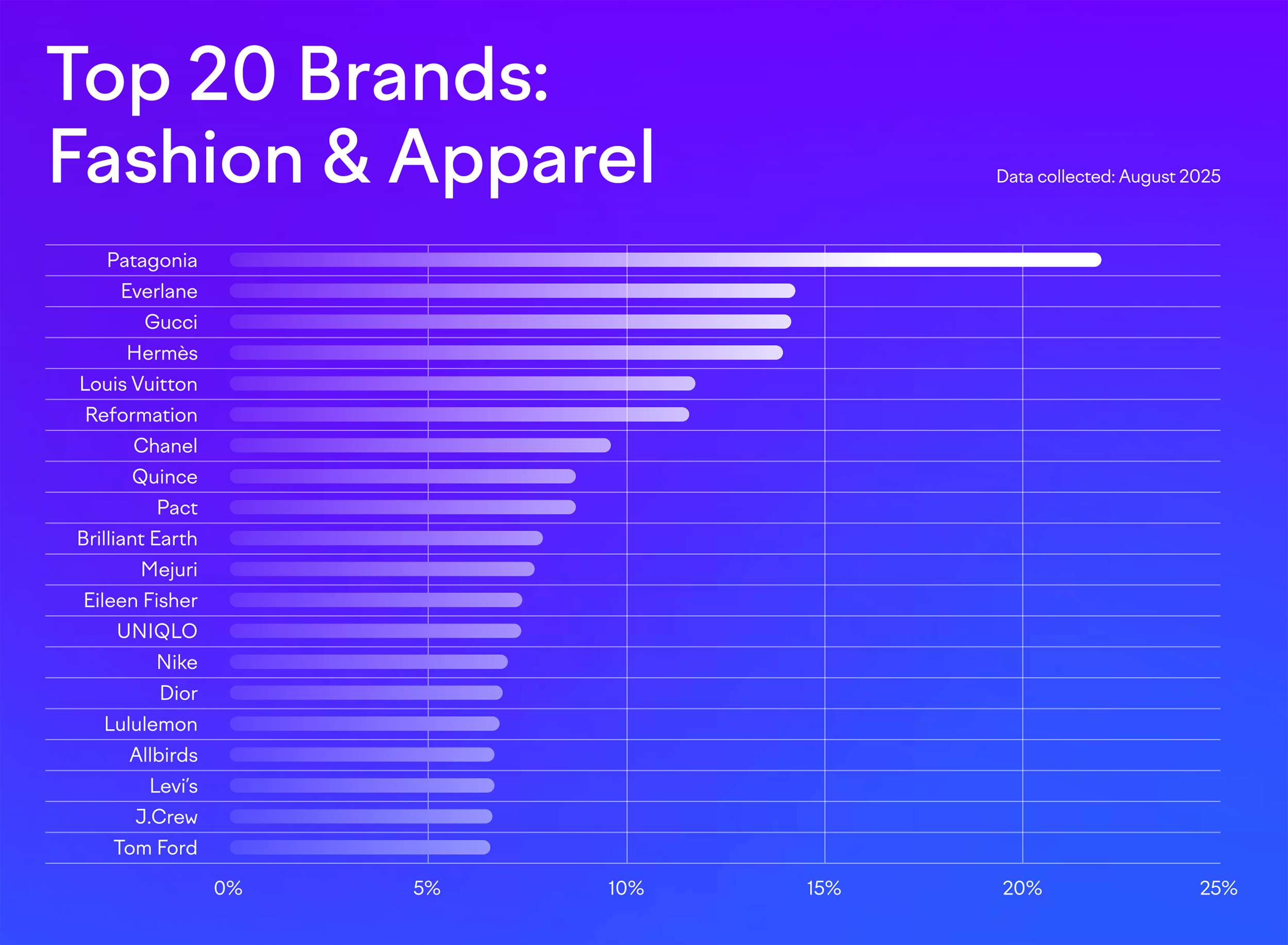
They consistently appear in discussions around “ethical fashion” and “sustainable brands.”
Not because they advertise, but because customers evangelize. And that advocacy is visible everywhere.
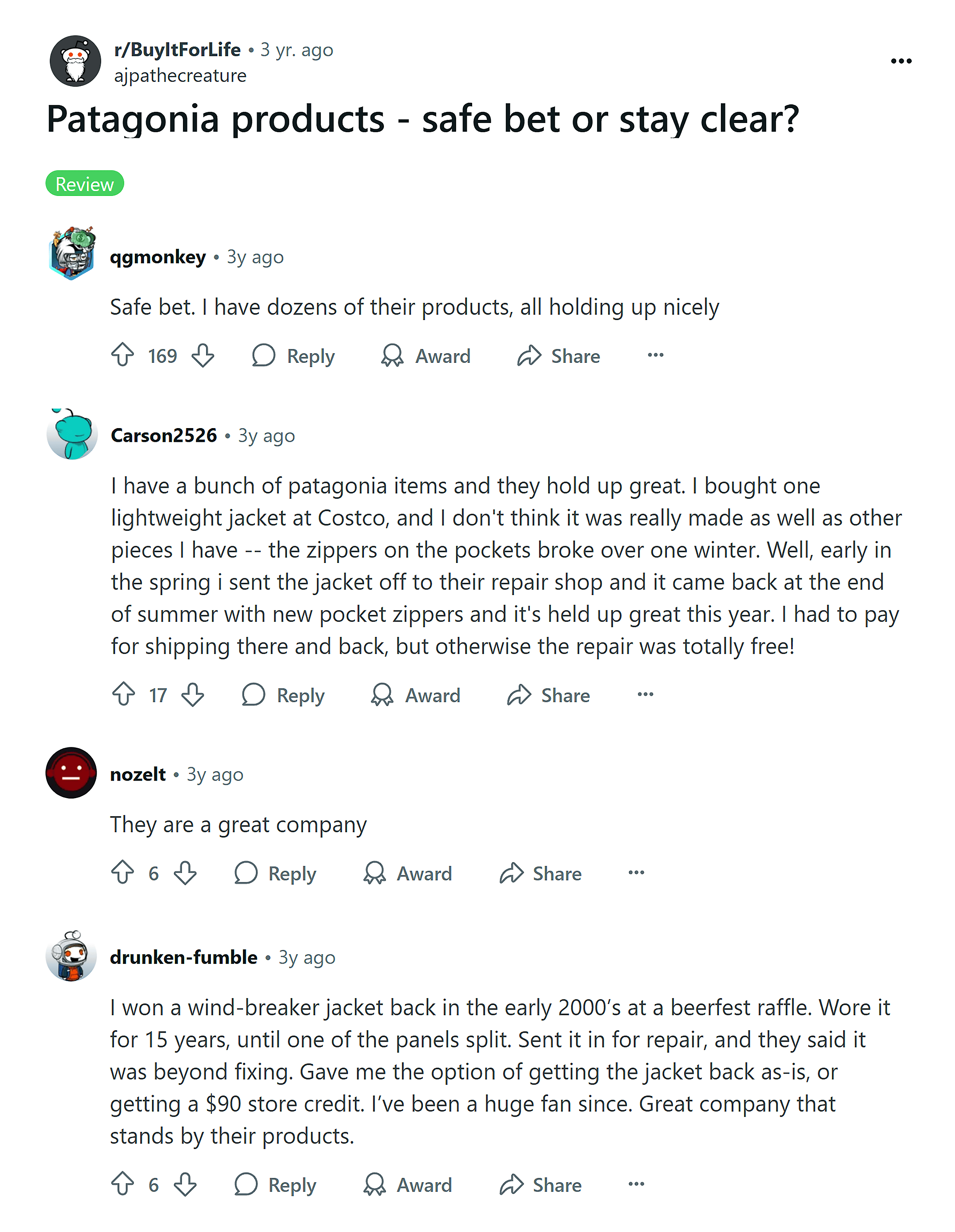
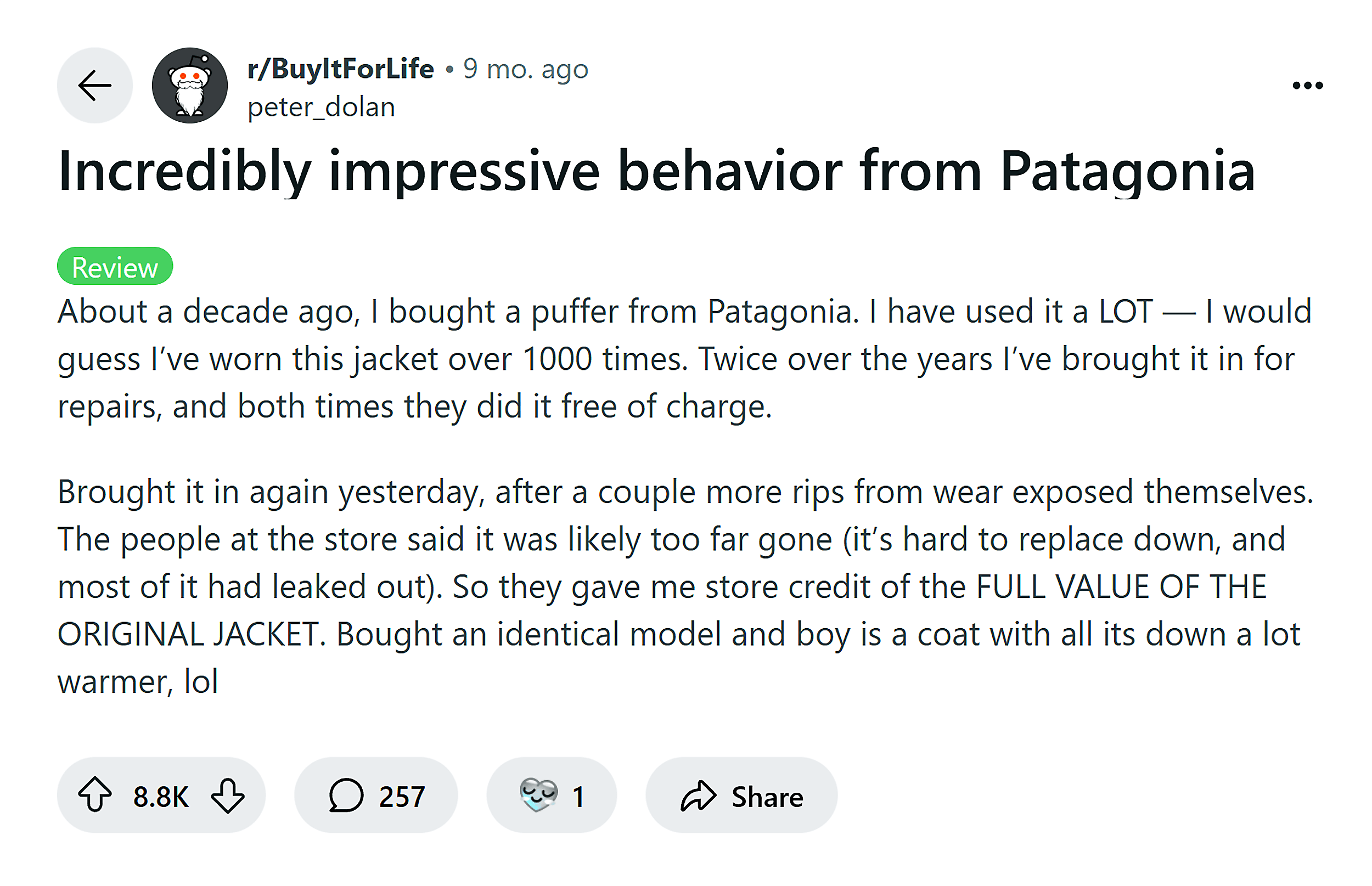
Customers regularly mention their positive experience with Patagonia’s exchange policy.
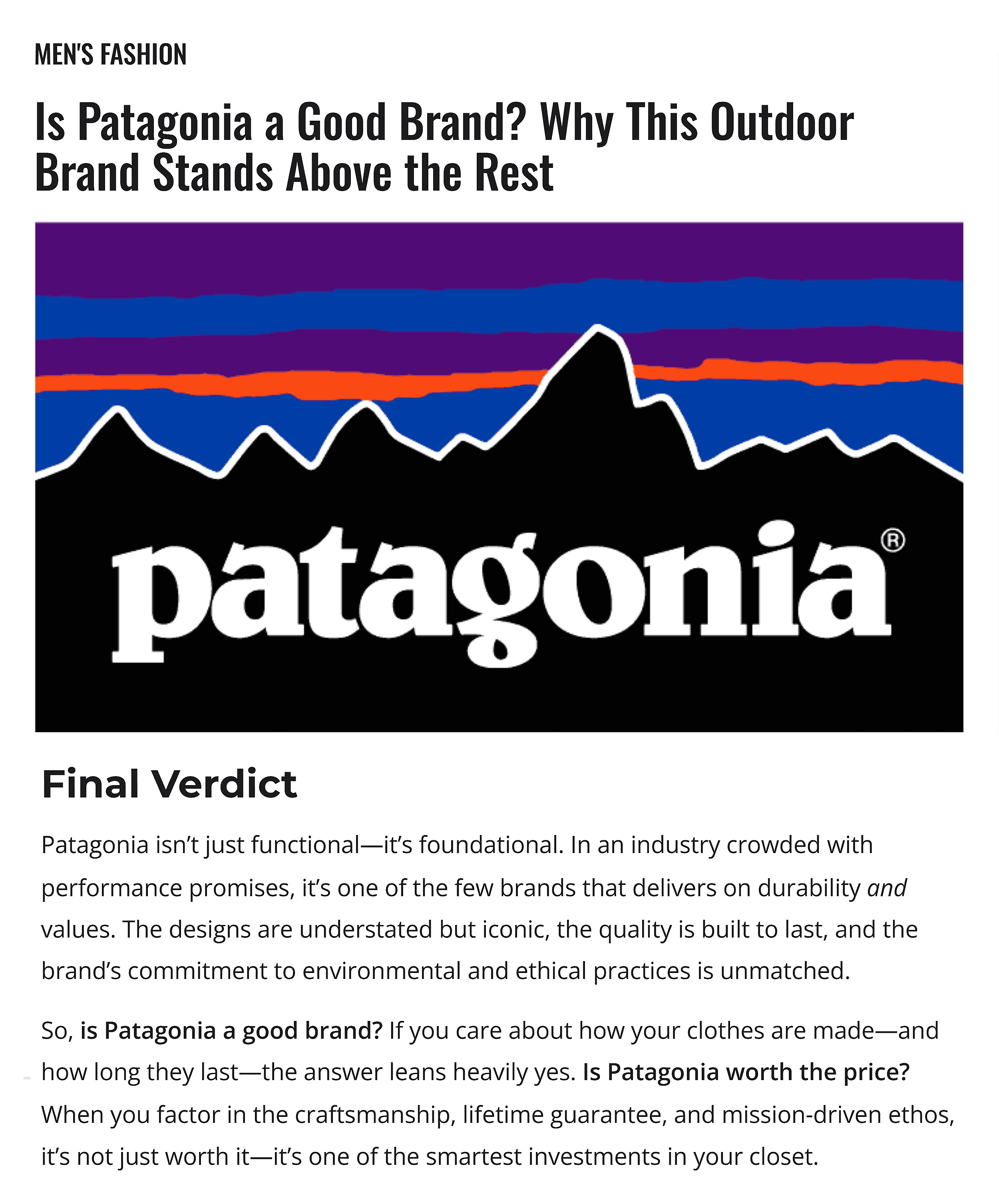
There are countless positive articles written on third-party platforms about their products.
And on social platforms like Instagram.

These real-world endorsements are the kind of social proof AI recognizes and amplifies.
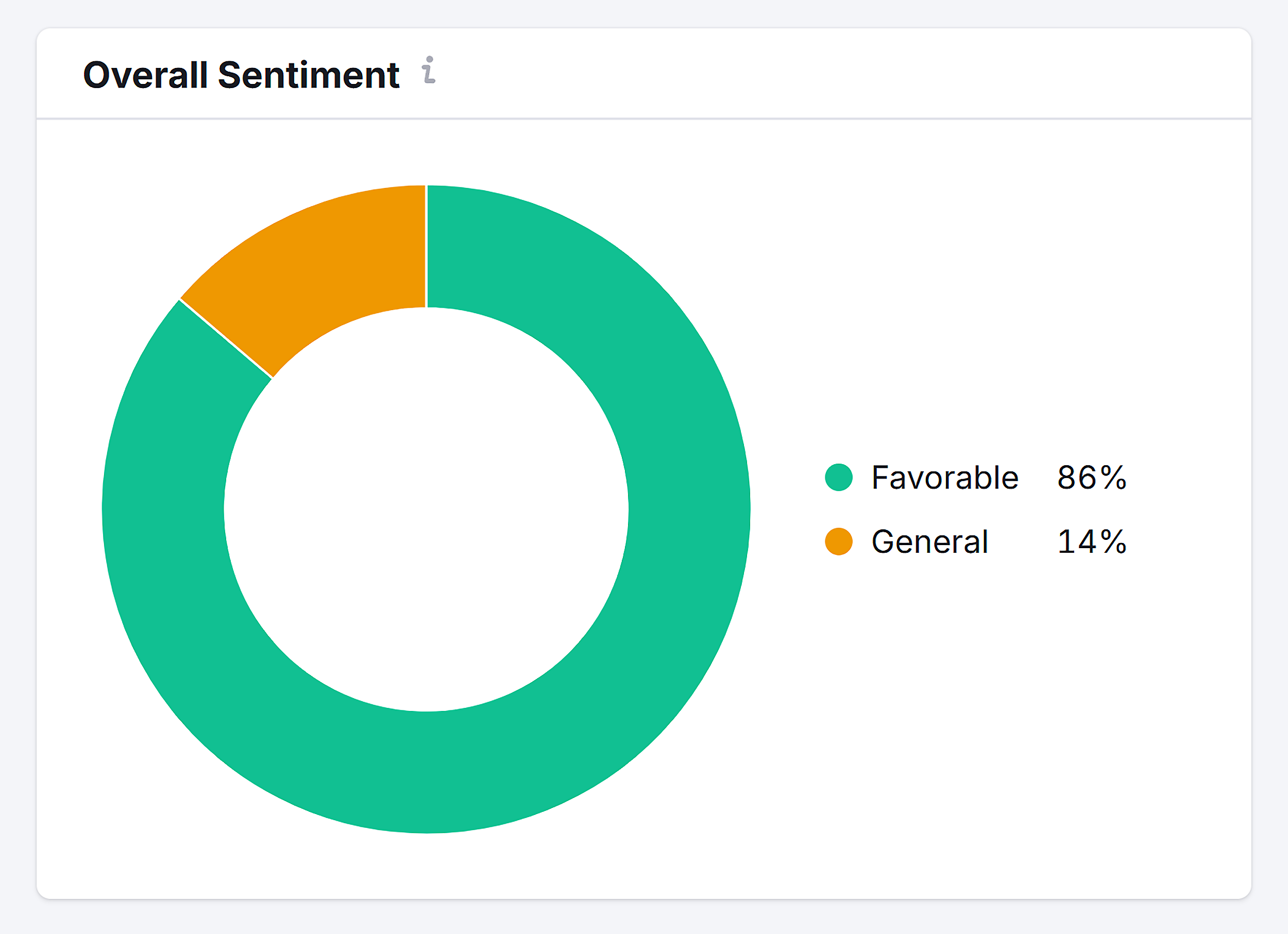
No wonder Patagonia has a highly favorable sentiment score (according to the “Perception” report of the AI SEO Toolkit).
So, how do you get people creating content (and proof) that AI pays attention to?
- Encourage customers to leave ratings on trusted third-party sites
- Partner with micro-influencers to share authentic product stories, tips, and reviews in their own voice
- Invite users to post before-and-after results or creative use cases
- Design features or experiences users want to show off (like Spotify Wrapped)
- Reward customers who share feedback or use cases publicly (early access, shoutouts, or swag)
- Reply to every public mention or tag because AI recognizes visible engagement
The mistake most brands make?
Asking for just testimonials instead of conversations.
Don’t ask customers to “share their success story.” Ask them to help others solve the same problem they faced.
The resulting content is authentic, detailed, and exactly what AI systems look for.
Step 4. Secure “Best of” List Inclusions
Comparison articles and ‘best of’ lists are key sources for AI citations.
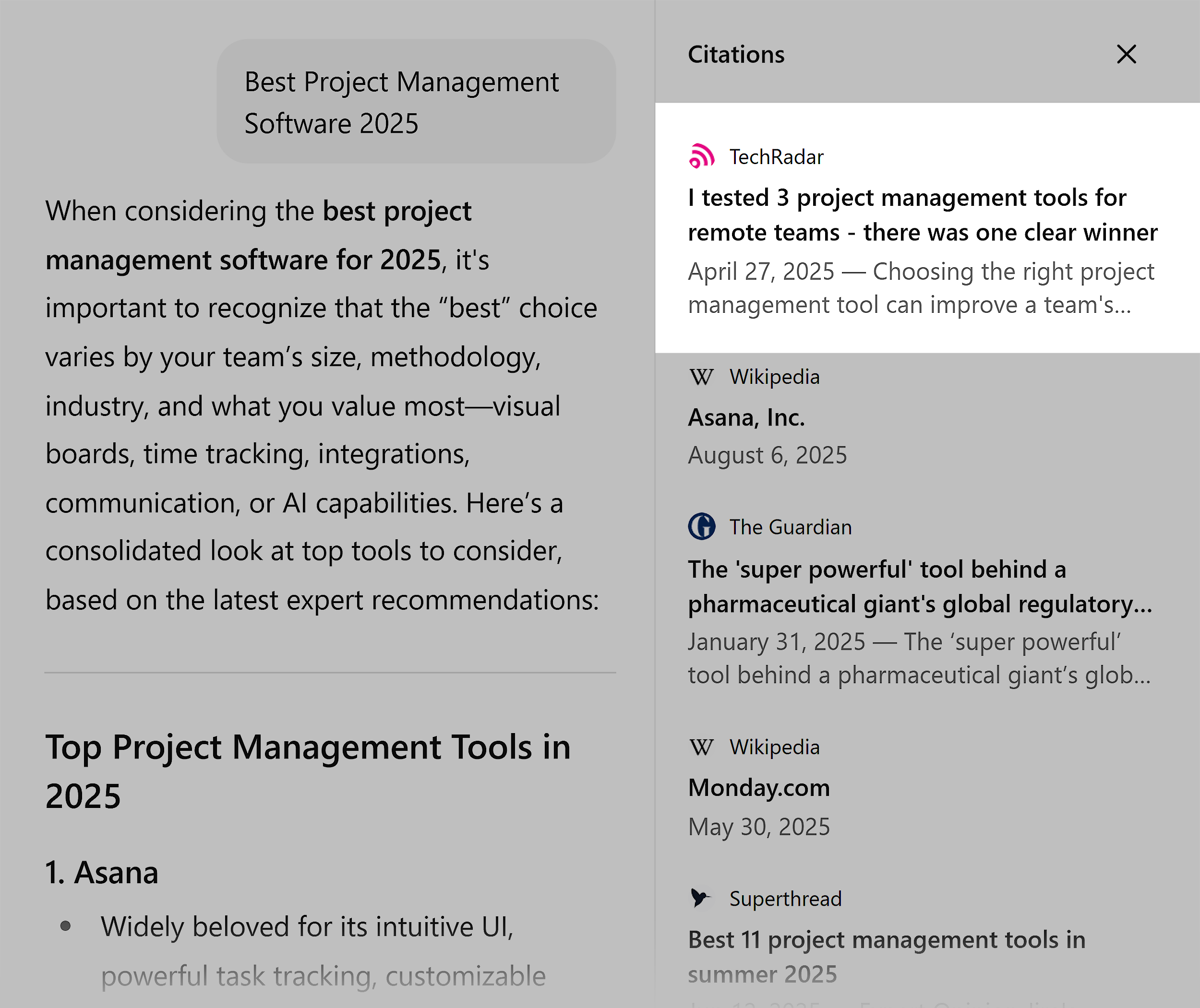
When TechRadar publishes an article on top “Project Management Tools for Remote Teams,” that article becomes source material for hundreds of AI responses.
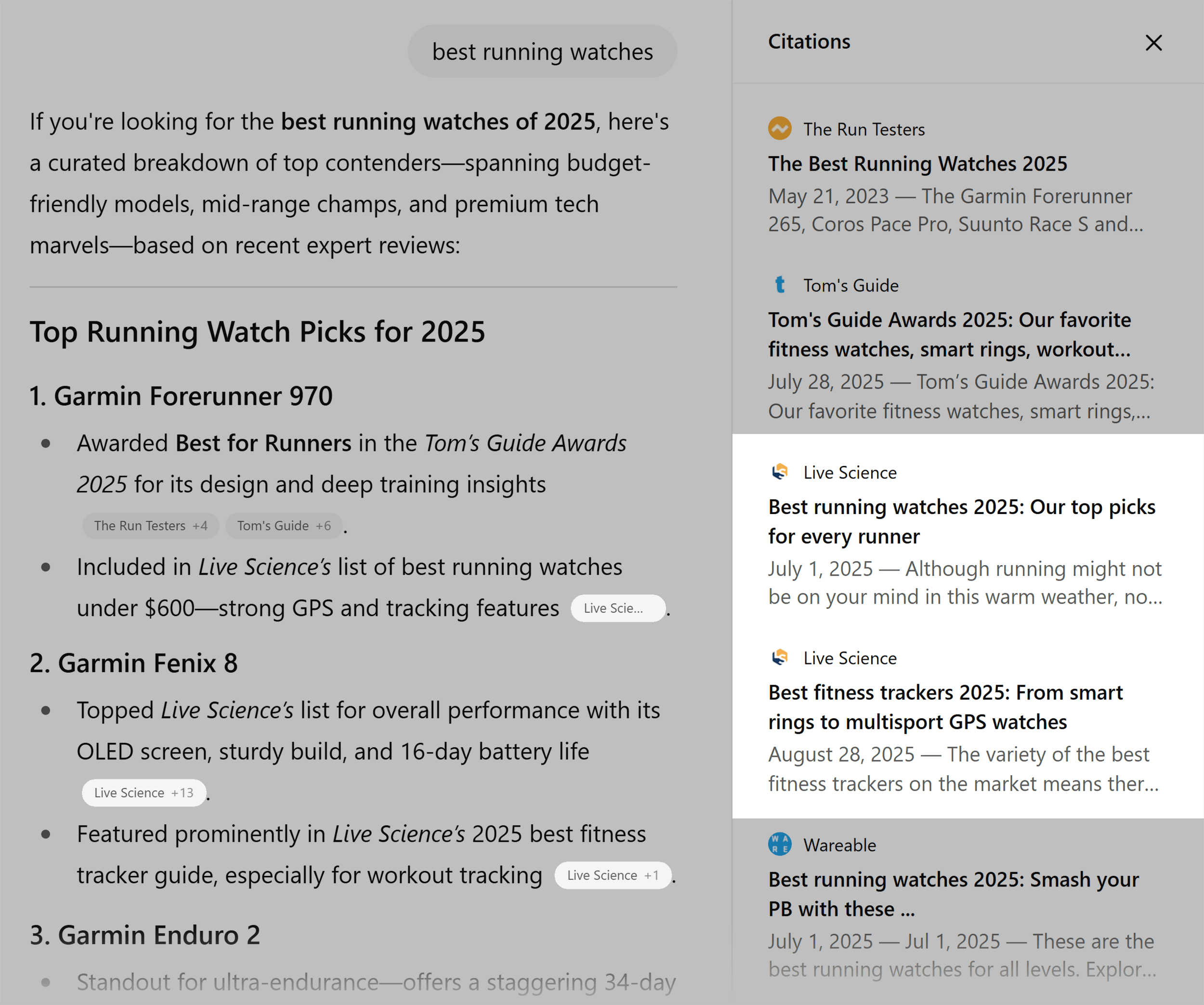
When Live Science reviews running watches, those comparisons train AI’s product recommendations.
These third-party validations carry more weight than your own content ever could.
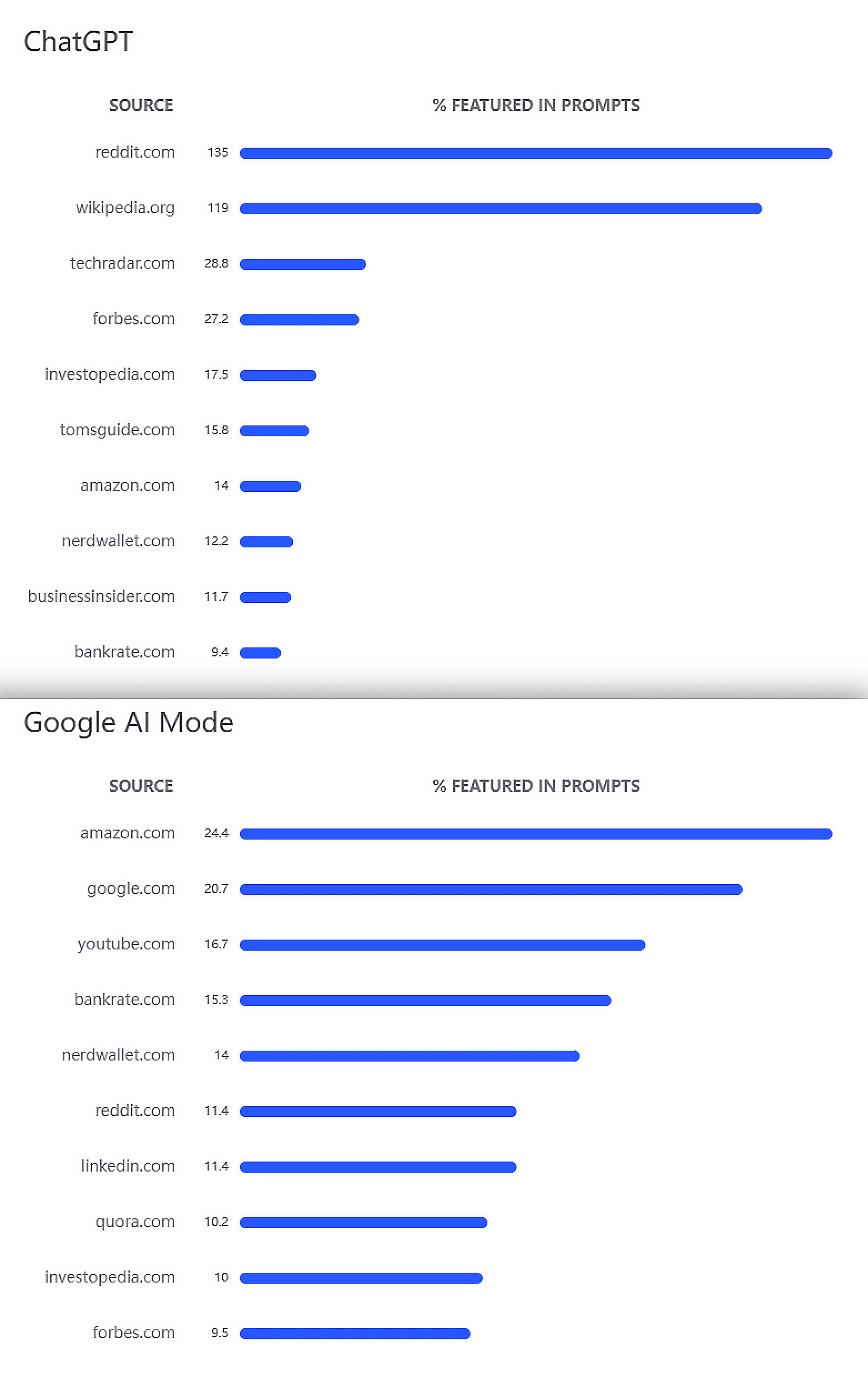
In fact, sites that publish “best of” listicles consistently appear as top sources for AI platforms — including Forbes, Business Insider, NerdWallet, and Tech Radar.
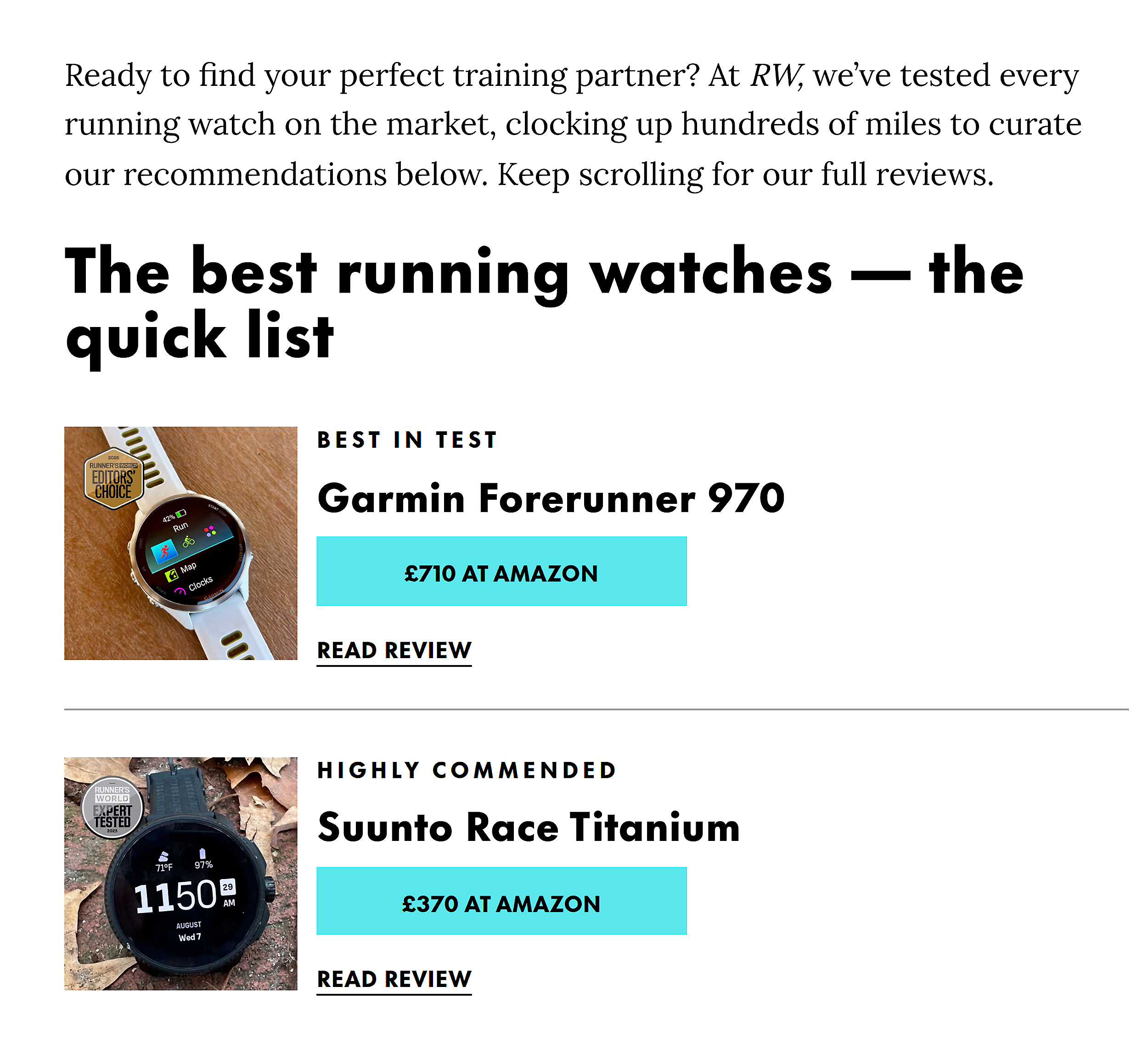
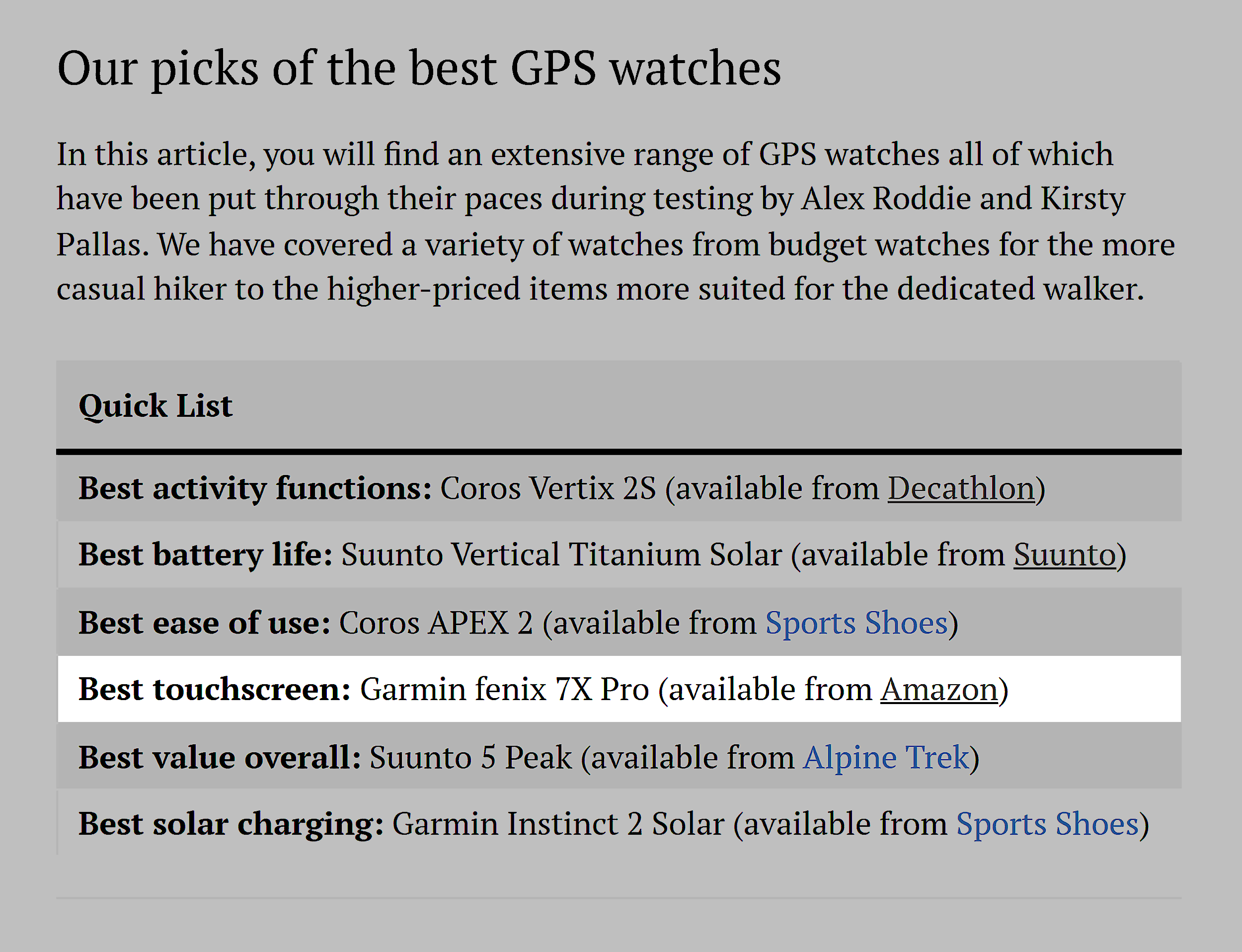
Garmin is a perfect example.
Their products appear in virtually every “best GPS watch” article across running, cycling, and outdoor publications.
Like in this Runner’s World article:
Or this piece in The Great Outdoors:
But what makes their strategy work is consistency across platforms.
Yes, the specs are the same by nature.
But what stands out is how consistently those specs, features, and images appear across independent sites.
That repetition reinforces trust for AI systems, which see the same details confirmed again and again.
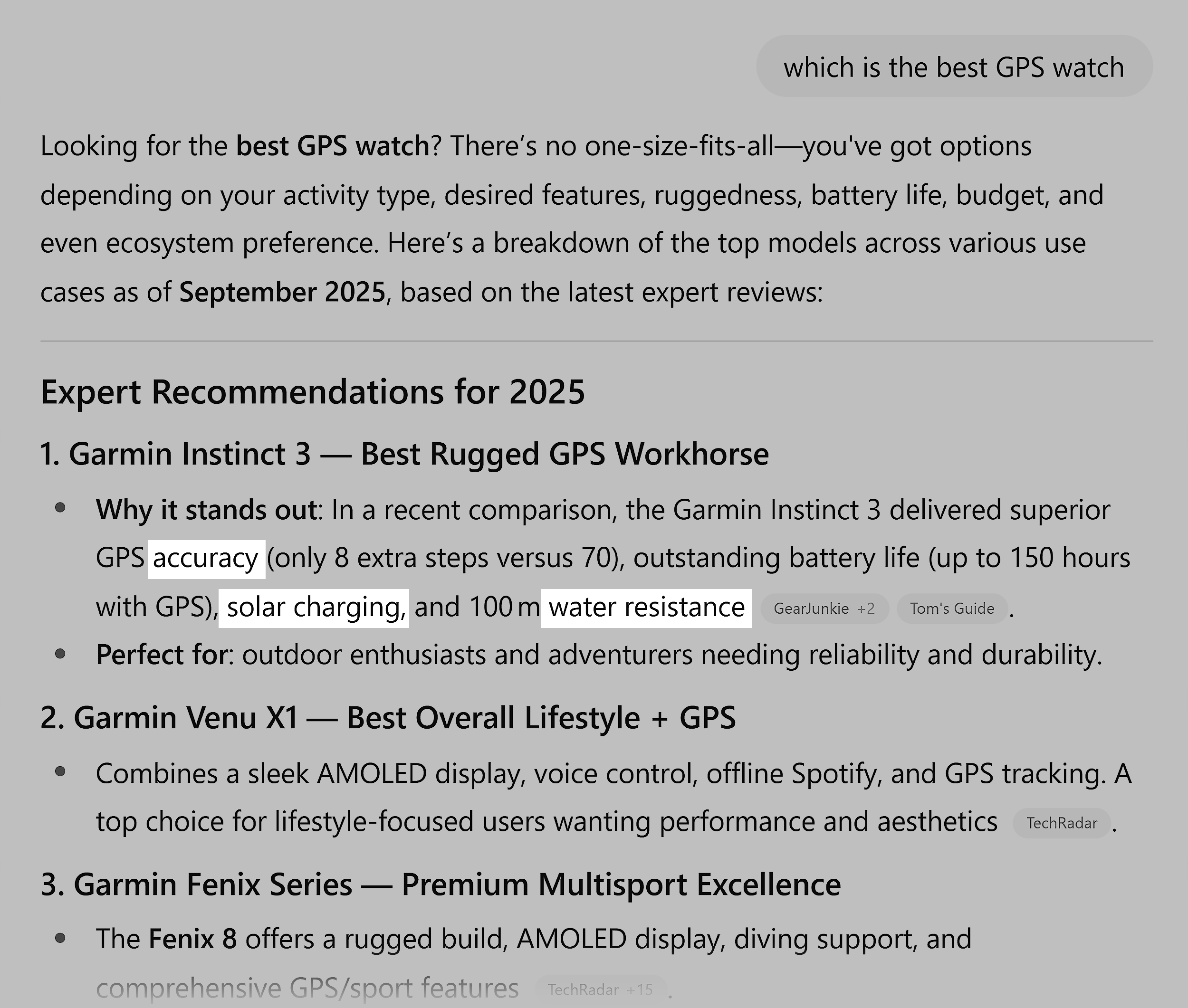
So, when I ask ChatGPT, “Which is the best GPS watch?” it mentions Garmin.
And it doesn’t stop there. It highlights features that other third-party articles emphasize, like battery life, accuracy, solar charging, and water resistance.
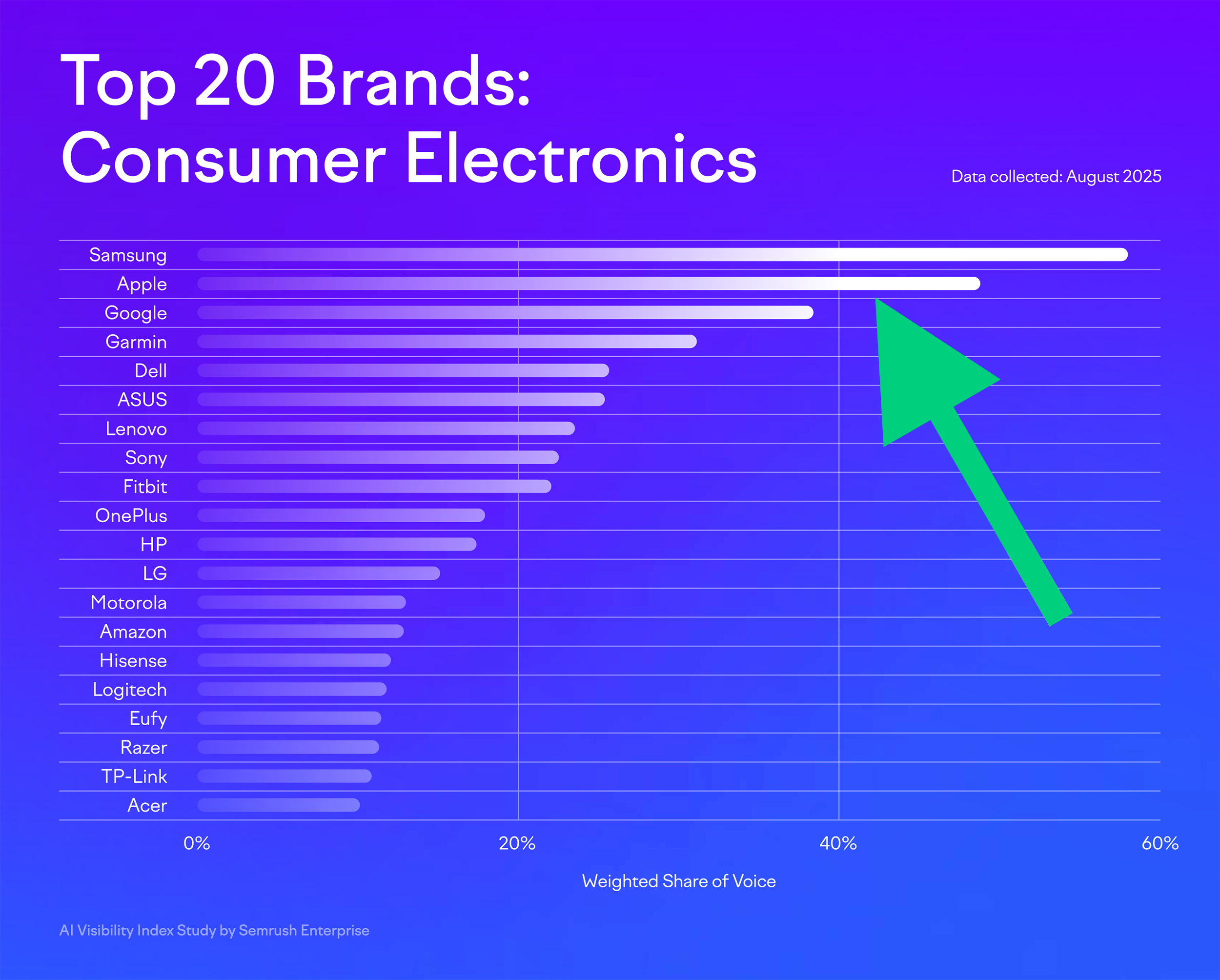
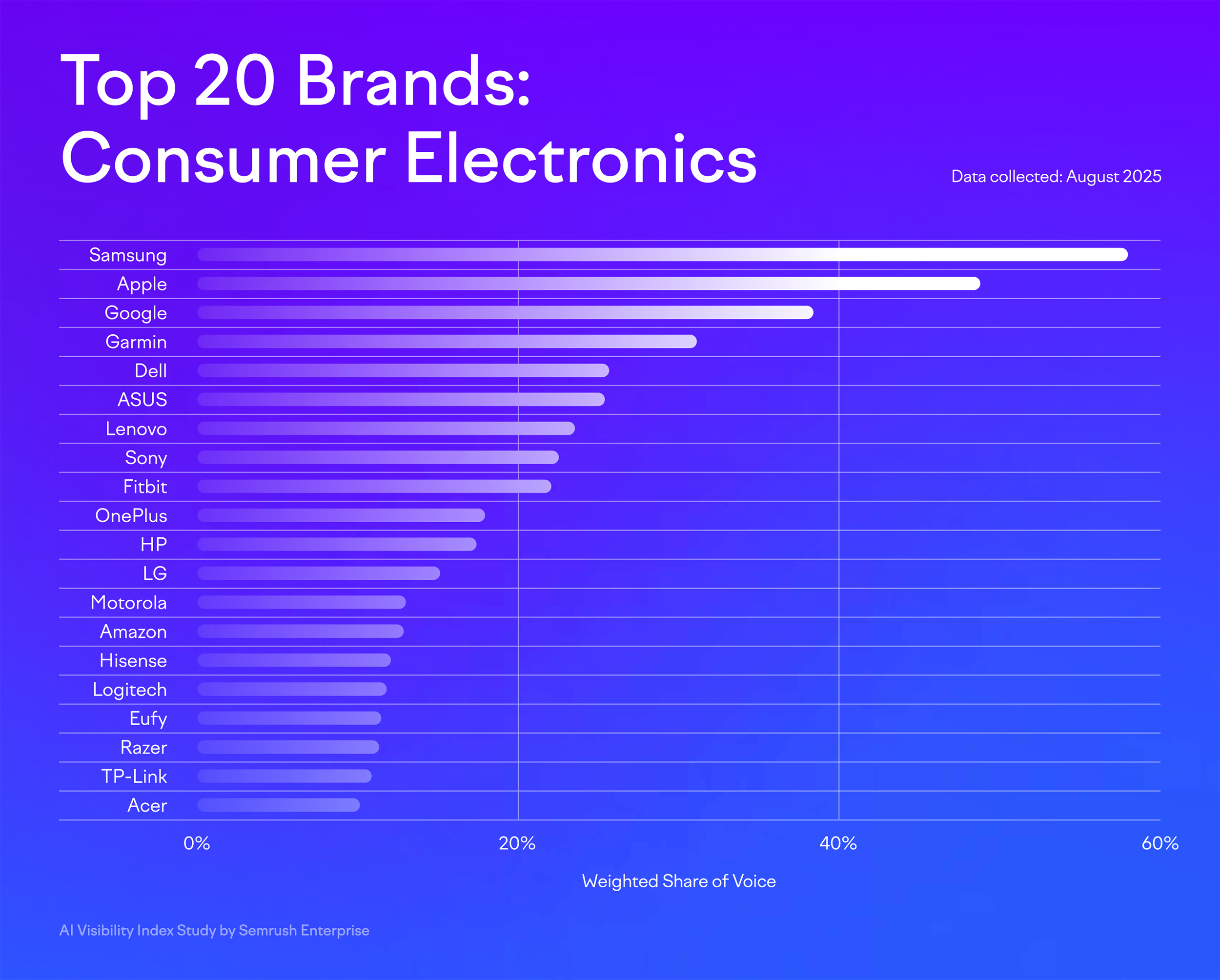
This consistency across independent sources is why Garmin holds one of the highest shares of voice in ChatGPT and Google AI Mode responses for the Consumer Electronics vertical.
So, how do you land in these “best of” lists?
It starts with a great product. Without that, no list will save you.
That aside, you need to make journalists’ jobs easier. Most writers work under tight deadlines and will choose brands that provide ready-to-use assets over those that make them hunt.
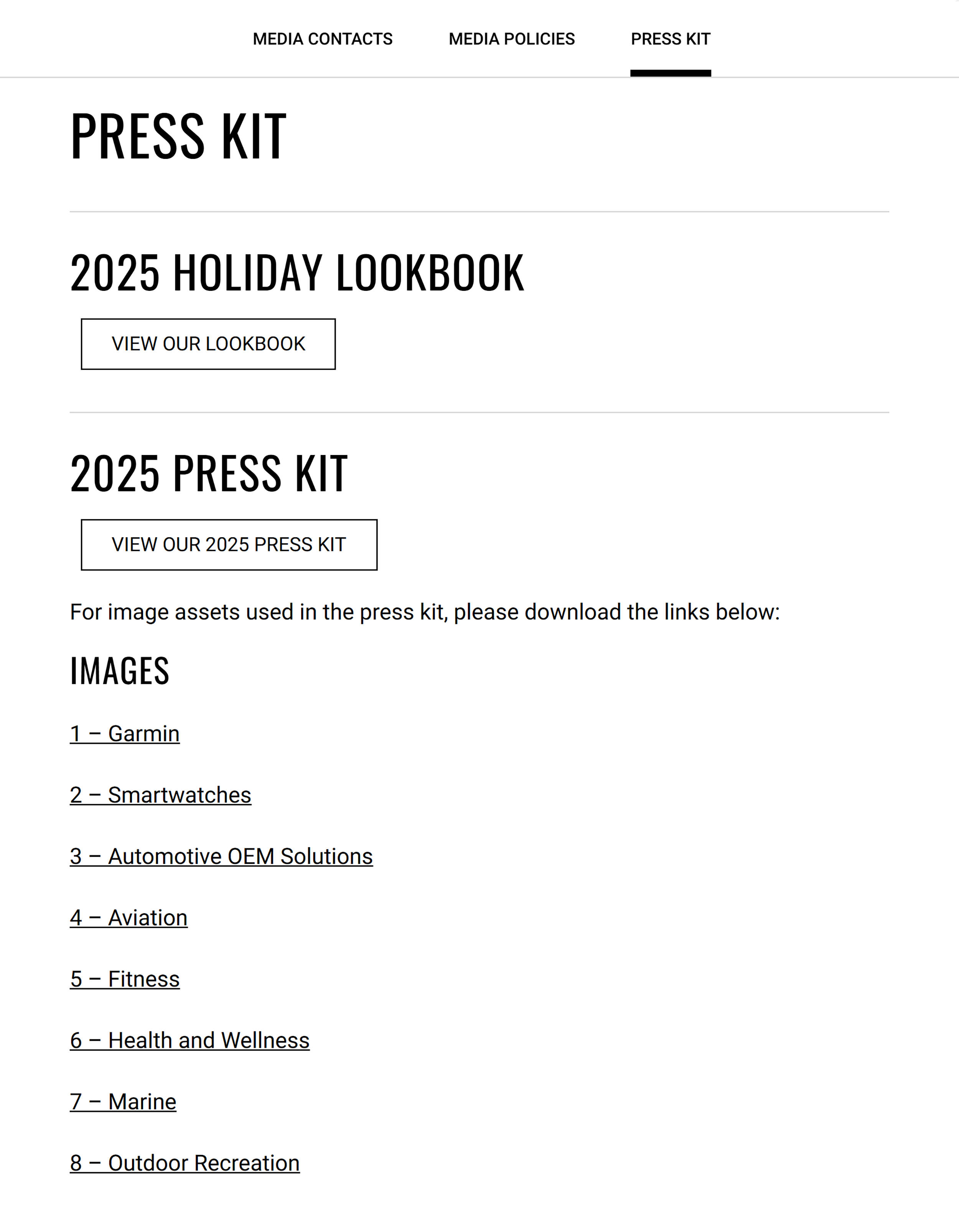
So build a dedicated press kit page with specs, pricing, high-res images, and other assets.
Like Garmin does here:
Next, reach out to journalists and niche publications. Don’t wait for them to find you.
Timing matters a lot as well.
Most “best of” lists update annually. So, pitch your updates a few months before refreshes.
Also, don’t just target obvious lists. Focus on category expansion.
For instance, Garmin doesn’t just appear in “best GPS watch” roundups. They also feature in broader outdoor and fitness lists that cover running, cycling, and multisport gear.
That reach multiplies the mentions AI systems can cite.
The bottom line: AI visibility favors the brands that keep showing up in independent comparisons.
Secure those “best of” inclusions, and you increase your chances of being mentioned in AI answers.
Playbook 2 – How to Be Trusted (The Authority Game)
Getting mentioned is half the battle. Getting cited is the other half.
When AI systems cite your content, they’re not just naming you. They’re using you as evidence to support their answers.
Look at any ChatGPT or Google AI Mode response.
At the bottom or side, you’ll see a list of sources. These citations are what AI considers trustworthy enough to reference.
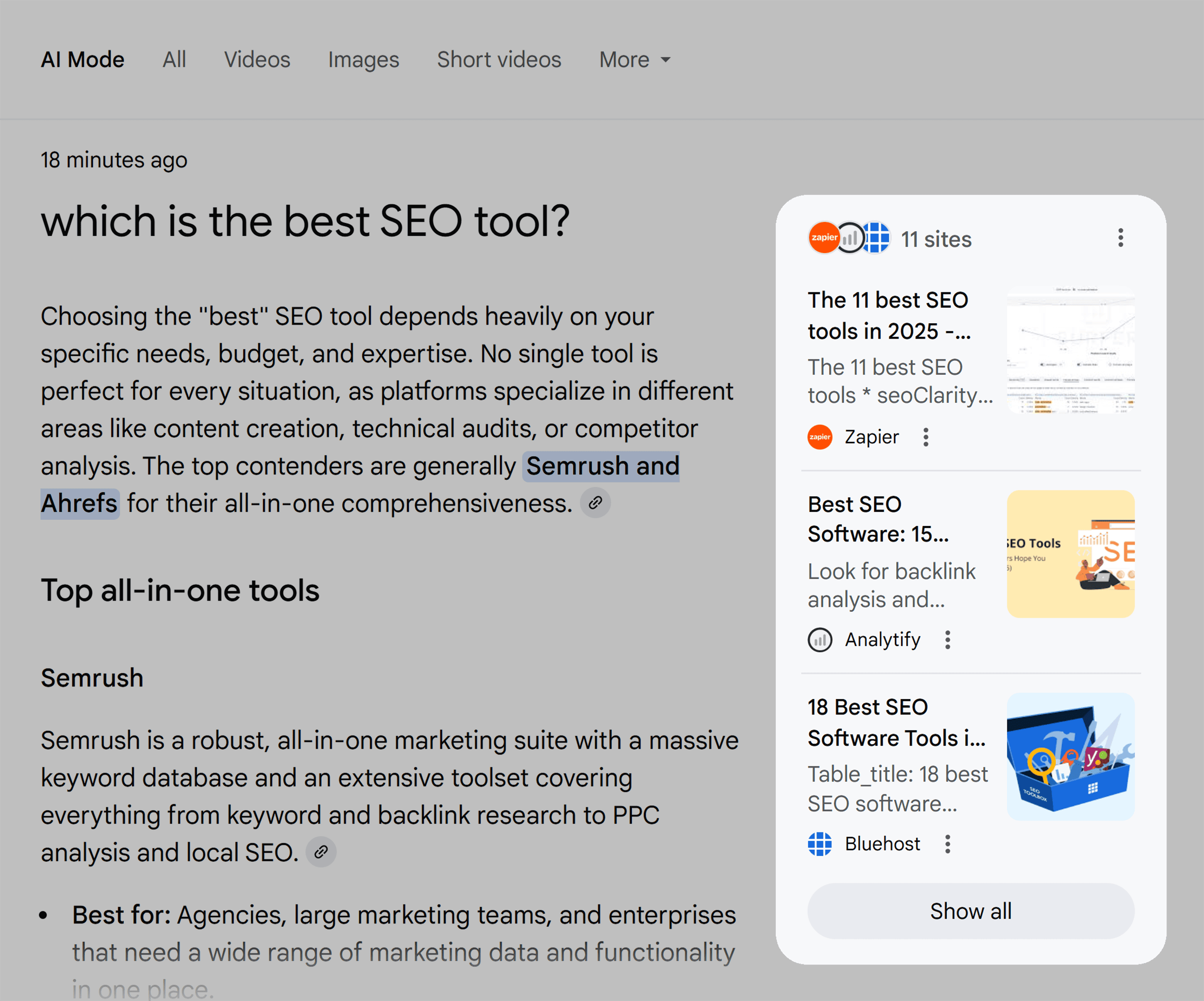
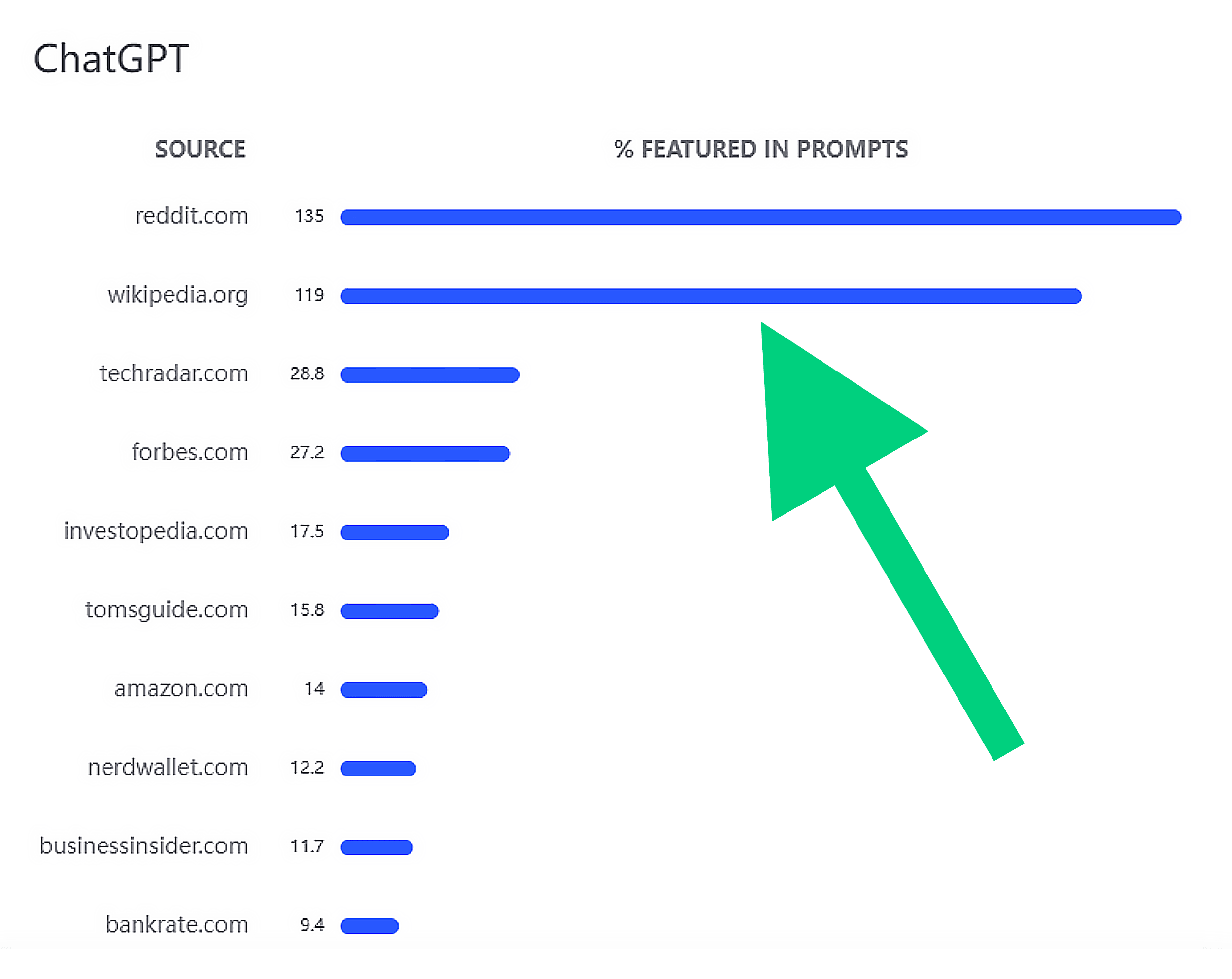
According to Semrush’s AI Visibility Index, certain sources dominate AI citations across industries. Like Wikipedia, Reddit, Forbes, TechRadar, Bankrate, and Tom’s Guide.
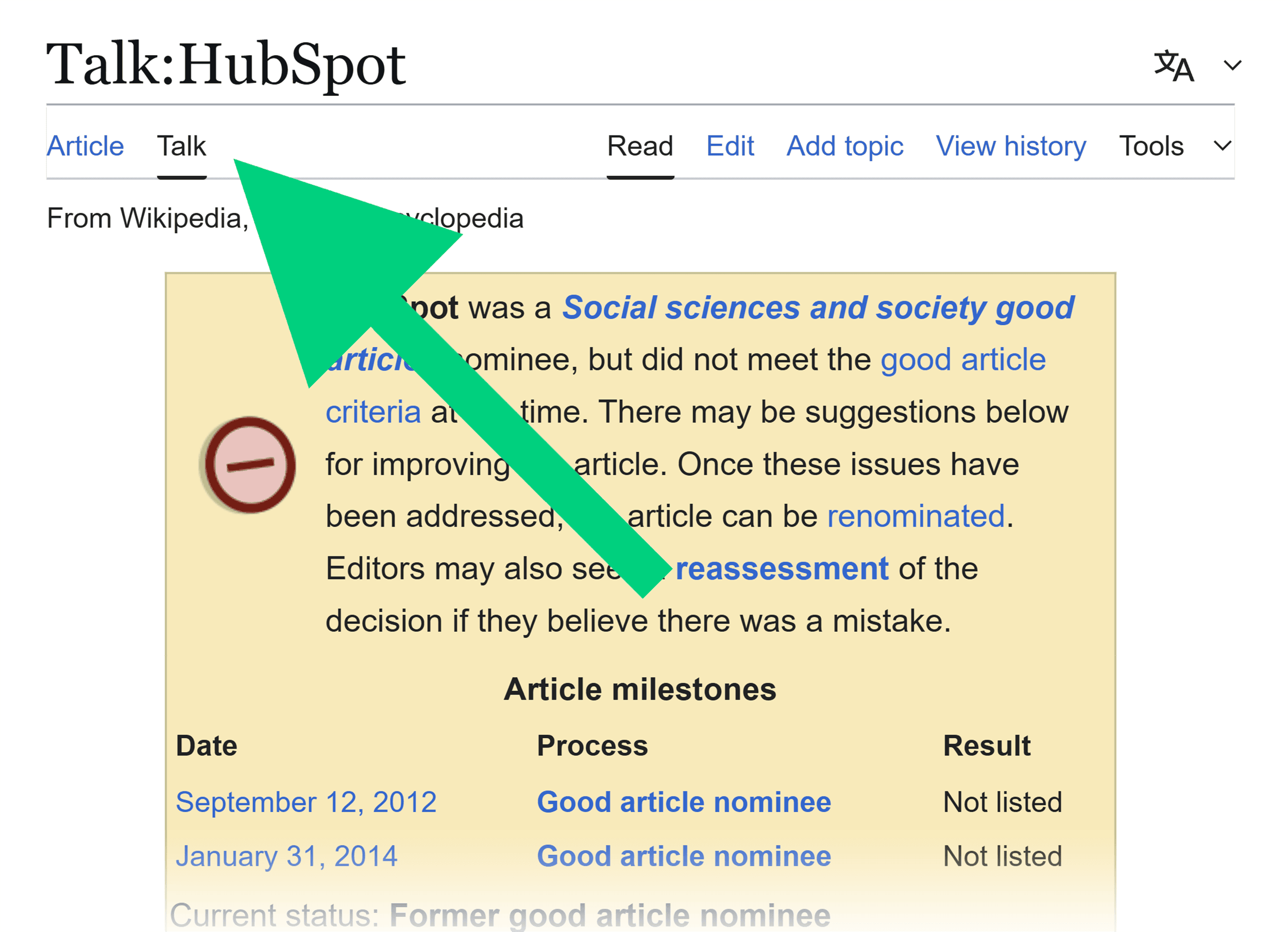
They have achieved, what I call, the “Citation Core” status.
Why do these platforms get cited so often?
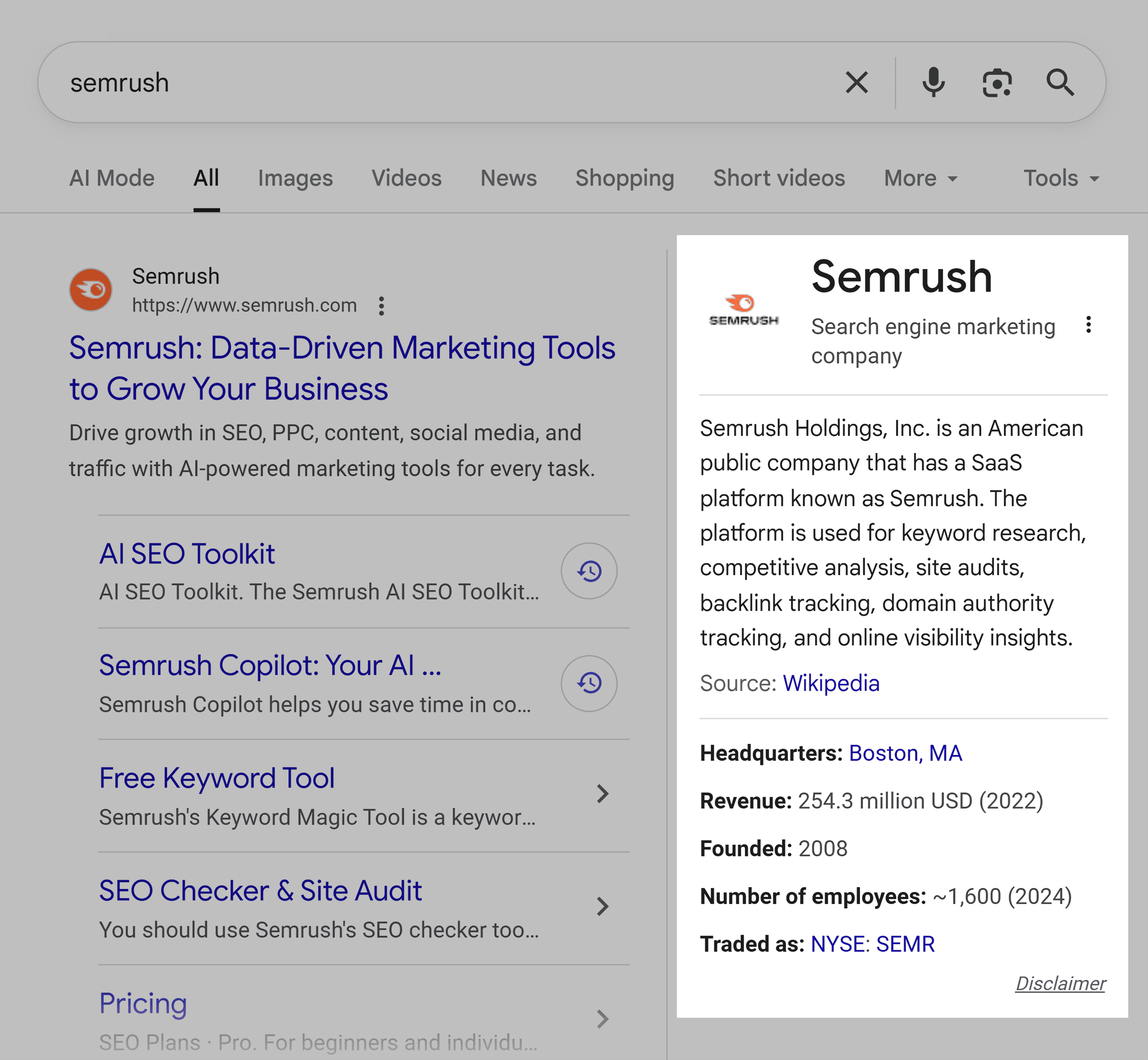
AI systems trust sources with verified information, structured data, and established credibility. They need confidence in what they’re citing.
This is the authority game.
You’ve earned mentions through the sentiment battle. Now you need to build the trust that also earns you citations.
This is how you maximize your AI visibility.
Here are five ways to build that authority.
Step 1. Optimize Your Official Site for AI
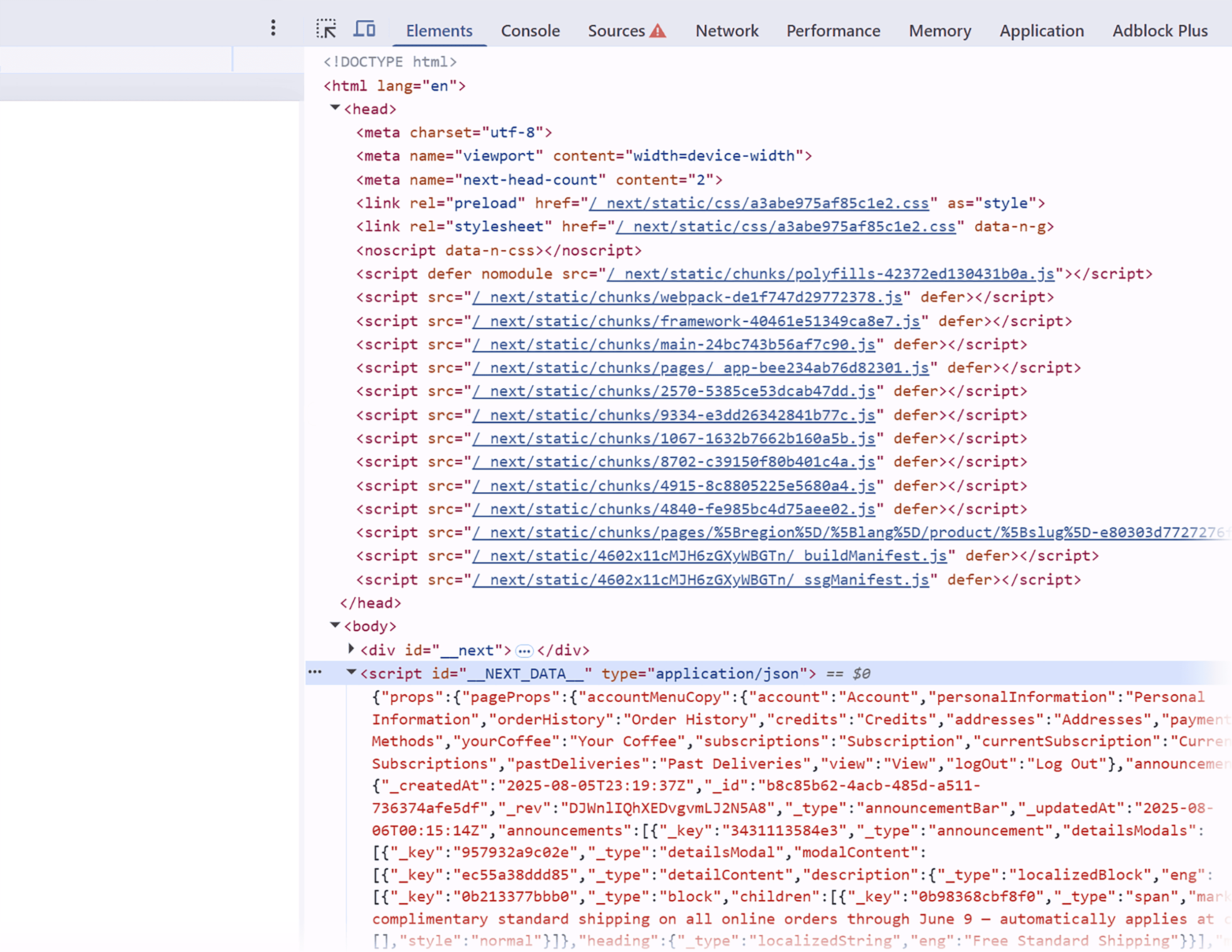
AI platforms can only cite what they can crawl, parse, and understand.
If your details aren’t exposed in clean, readable code, you’re invisible. No matter how good your content is.
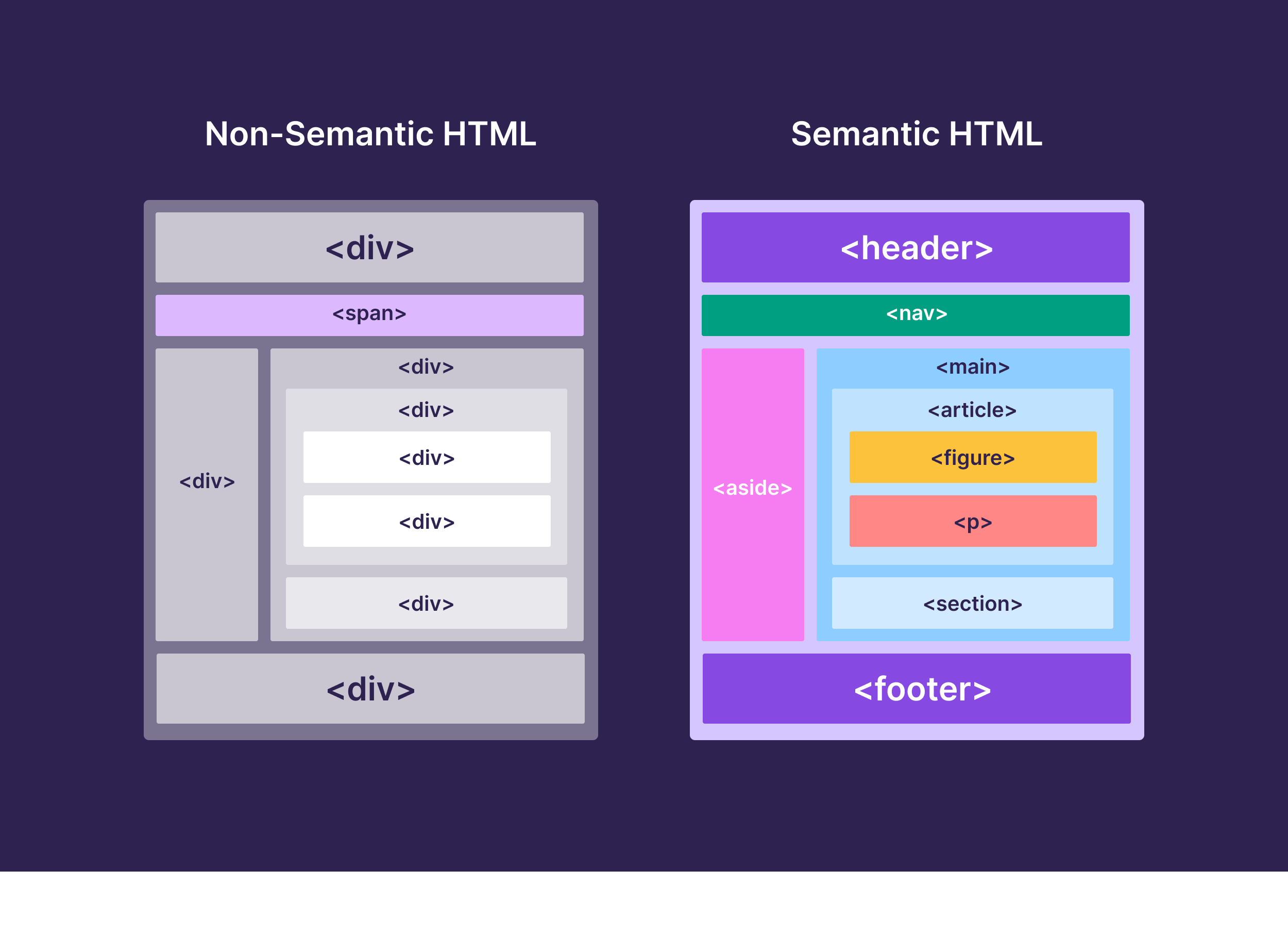
Use semantic HTML to structure your content.
That means marking up pricing tables, product specs, and feature lists with tags like