BDG LifeSciences | Bioinformatics CRO & Life Sciences Training (original) (raw)


 02 Jun , 2026
Precision Molecular Docking
Precision Molecular Docking & Hybrid Drug Discovery 2026
Lorem ipsum dolor sit amet consectetur adipisicing elit.
 25 May , 2026
Excel Vs Python
Stop Using Excel for Genomic Data: Why Python Rules in 2026 | BDG
Lorem ipsum dolor sit amet consectetur adipisicing elit.
 11 May , 2026
AI & Reverse Vaccinology
Beyond the 100-Day Mission: How AI and Reverse Vaccinology are Pre-empting Future Pandemics
Lorem ipsum dolor sit amet consectetur adipisicing elit.
 05 May , 2026
The Most In-Demand Skill in Biotech for 2026: Why the "Dry Lab" is the New Front Line
Why You Must Learn Bioinformatics in 2026: The Ultimate Career Pivot Guide
Lorem ipsum dolor sit amet consectetur adipisicing elit.
 29 Apr , 2026
Why Your Next Lead Compound Should Be Discovered in Silicon, Not the Wet Lab
From Silicon to Synthesis: A Beginner’s Guide to Computer-Aided Drug Design (CADD)
Lorem ipsum dolor sit amet consectetur adipisicing elit.
 16 Apr , 2026
Epigenetic Silencing
Beyond the Cut: Why Epigenetic Silencing is the Next Chapter for CRISPR in 2026
Lorem ipsum dolor sit amet consectetur adipisicing elit.
 14 Apr , 2026
Key Pillars of Integrated Analysis (Genotype to Phenotype)
Why Multi-Omic Integration is the New Standard for 2026
Lorem ipsum dolor sit amet consectetur adipisicing elit.
 03 Apr , 2026
How Generative AI is Slashing Drug Discovery Timelines
Beyond the Hype: How Generative AI is Slashing Drug Discovery Timelines by 40%
Lorem ipsum dolor sit amet consectetur adipisicing elit.
 13 Nov , 2025
In Silico mRNA Vaccine Design: Tools, Techniques & Training
In Silico mRNA Vaccine Design: Complete Guide to Codon Optimization, RNA Structure, LNP Delivery & Immunogenicity Tools
Lorem ipsum dolor sit amet consectetur adipisicing elit.
 10 Nov , 2025
Top 14 Drug Discovery Tools for Students, Researchers & Professionals
Top 14 Drug Discovery Tools for Students, Researchers & Professionals
Lorem ipsum dolor sit amet consectetur adipisicing elit.
 22 Oct , 2025
Bioinformatics Research Projects for Career Advancement | BDG Lifesciences
High Value Bioinformatics Projects: Global Publication, Hands-On Skills & Career Boost
Lorem ipsum dolor sit amet consectetur adipisicing elit.
 28 Apr , 2025
Hottest Bioinformatics and Biotechnology Research Trends in 2025
Hottest Research Areas in Bioinformatics
Lorem ipsum dolor sit amet consectetur adipisicing elit.
 26 Feb , 2025
Essential Bioinformatics Training to Land Top Biotech Jobs
Bioinformatics Training for Biotech Jobs
Lorem ipsum dolor sit amet consectetur adipisicing elit.
 21 Feb , 2025
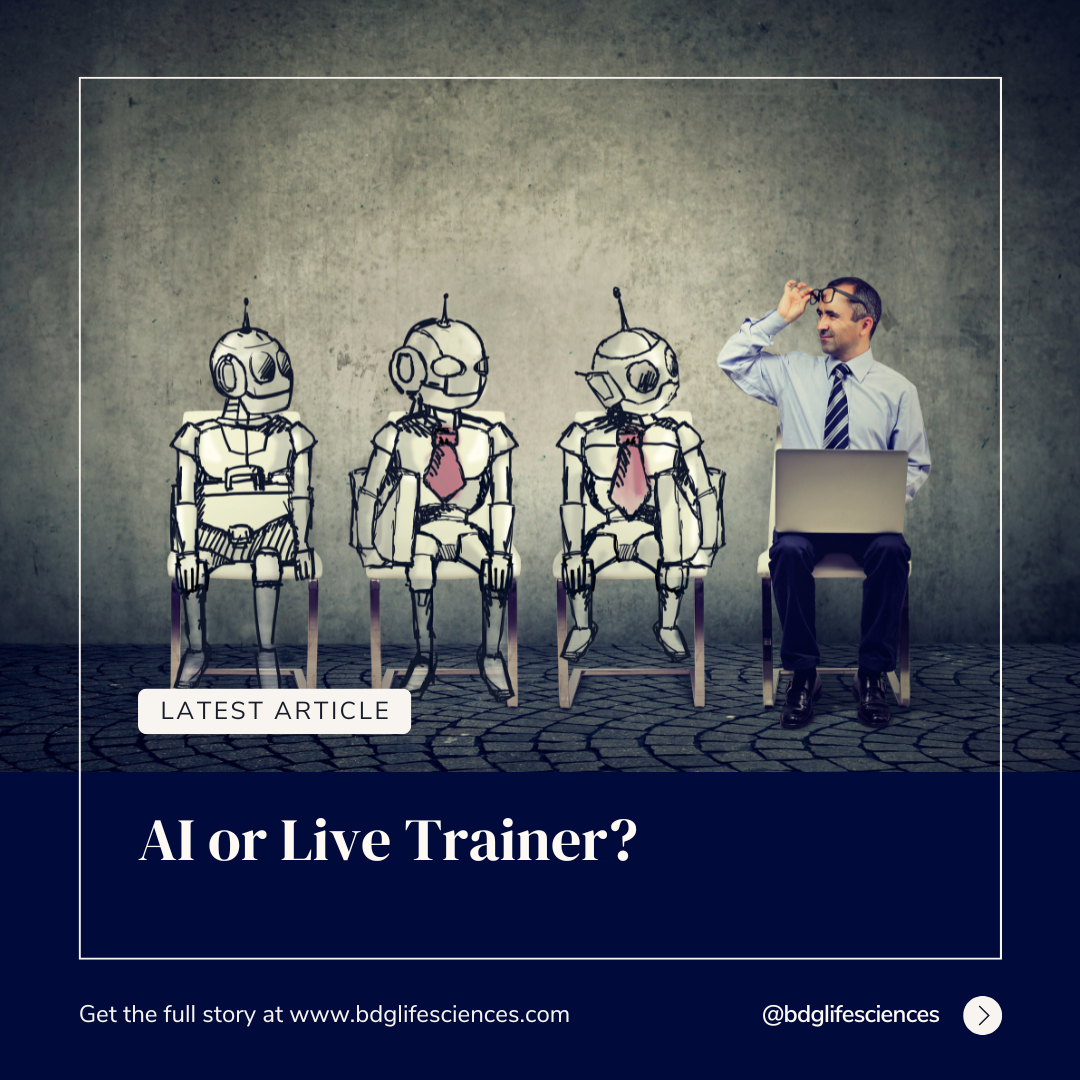
Why Live Trainers Outperform AI in Bioinformatics Training for Biotech Careers
What You Can Learn from a Live Trainer That AI Models Cannot Teach
Lorem ipsum dolor sit amet consectetur adipisicing elit.
 12 Feb , 2025
Biotechnology Innovations Transforming Healthcare & Pharma
Top Biotechnology Innovations Reshaping Healthcare and Drug Discovery in 2025 & Beyond
Lorem ipsum dolor sit amet consectetur adipisicing elit.
 31 Jan , 2025
Next-Gen Virtual Screening: How AI and Machine Learning are Transforming Drug Discovery
Discover how cutting-edge virtual screening techniques are reshaping drug discovery and creating new opportunities in the biotech industry
Lorem ipsum dolor sit amet consectetur adipisicing elit.
 21 Jan , 2025
Bioinformatics Trends
Top Trends in Bioinformatics: Expert Insights for 2025
Lorem ipsum dolor sit amet consectetur adipisicing elit.
 13 Jan , 2025
Stop Paying Twice to Learn Once: Invest in BDG Lifesciences and Get It Right the First Time!
Boost Your Biotech Career with BDG Lifesciences: High-Quality Bioinformatics Training for Top Jobs in the Industry
Lorem ipsum dolor sit amet consectetur adipisicing elit.
 23 Dec , 2024
Why Live Training is better than any other online learning
Why Learning from Live Trainers is the Ultimate Key to Career Success
Lorem ipsum dolor sit amet consectetur adipisicing elit.
 19 Dec , 2024
Biotechnology Jobs to Watch in 2025-26
Top Biotechnology Jobs Poised to Boom in 2025-26: Skills & Opportunities You Need to Know
Lorem ipsum dolor sit amet consectetur adipisicing elit.
 12 Dec , 2024
Why Learn Bioinformatics? Boost Your Career in Life Sciences
Why Learn Bioinformatics? Boost Your Career in Life Sciences
Lorem ipsum dolor sit amet consectetur adipisicing elit.
 02 Dec , 2024
Artificial Intelligence
How Generative AI is Revolutionizing Drug Design and Accelerating New Medicines
Lorem ipsum dolor sit amet consectetur adipisicing elit.
 13 Nov , 2024
Metagenomics
Unlocking the Power of Metagenomics: Transforming Microbiome Research and Environmental Conservation
Lorem ipsum dolor sit amet consectetur adipisicing elit.
 10 Nov , 2024
Single Cell Genomics
Exploring Single-Cell Genomics and Transcriptomics: Unlocking Cellular Secrets for Precision Medicine
Lorem ipsum dolor sit amet consectetur adipisicing elit.
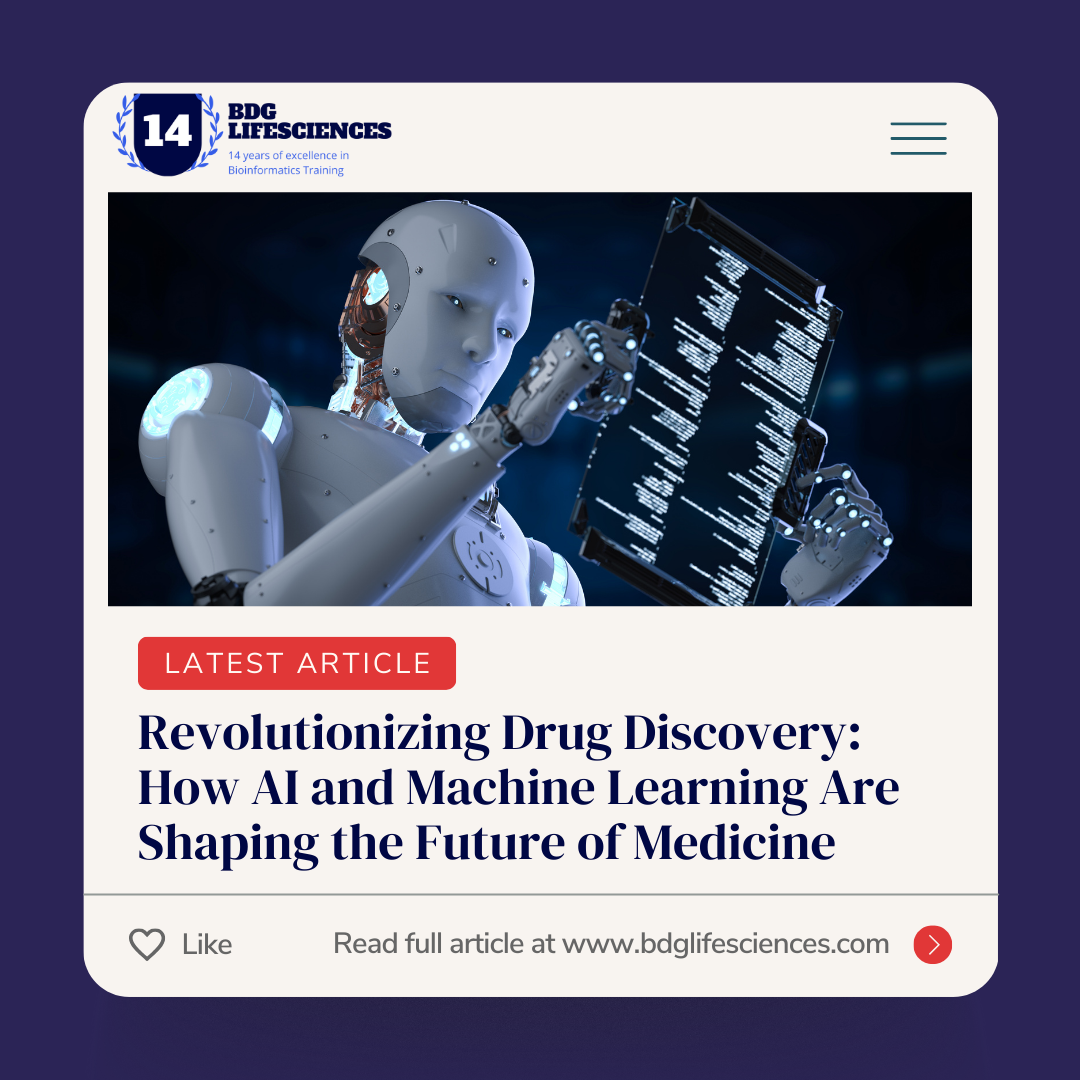 08 Nov , 2024
Artificial Intelligence
Revolutionizing Drug Discovery: How AI and Machine Learning Are Shaping the Future of Medicine
Lorem ipsum dolor sit amet consectetur adipisicing elit.
 05 Nov , 2024
For Biotechnology & Bioinformatics Jobs
Top Skills for High-Paying Biotechnology & Bioinformatics Jobs: A Complete Guide for Graduates
Lorem ipsum dolor sit amet consectetur adipisicing elit.
 01 Nov , 2024
Bioinformatics
Revolutionizing Science: The Top 15 Bioinformatics Breakthroughs of 2023 & 2024
Lorem ipsum dolor sit amet consectetur adipisicing elit.
 31 Oct , 2024
Biotechnology Jobs
Role of Research and Publications in Biotechnology to get good jobs
Lorem ipsum dolor sit amet consectetur adipisicing elit.
 31 Oct , 2024
Bioinformatics
What to learn in Bioinformatics?
Lorem ipsum dolor sit amet consectetur adipisicing elit.
Latest News & Blogs
Our Latest News
02 Jun , 2026
Precision Molecular Docking
Precision Molecular Docking & Hybrid Drug Discovery 2026
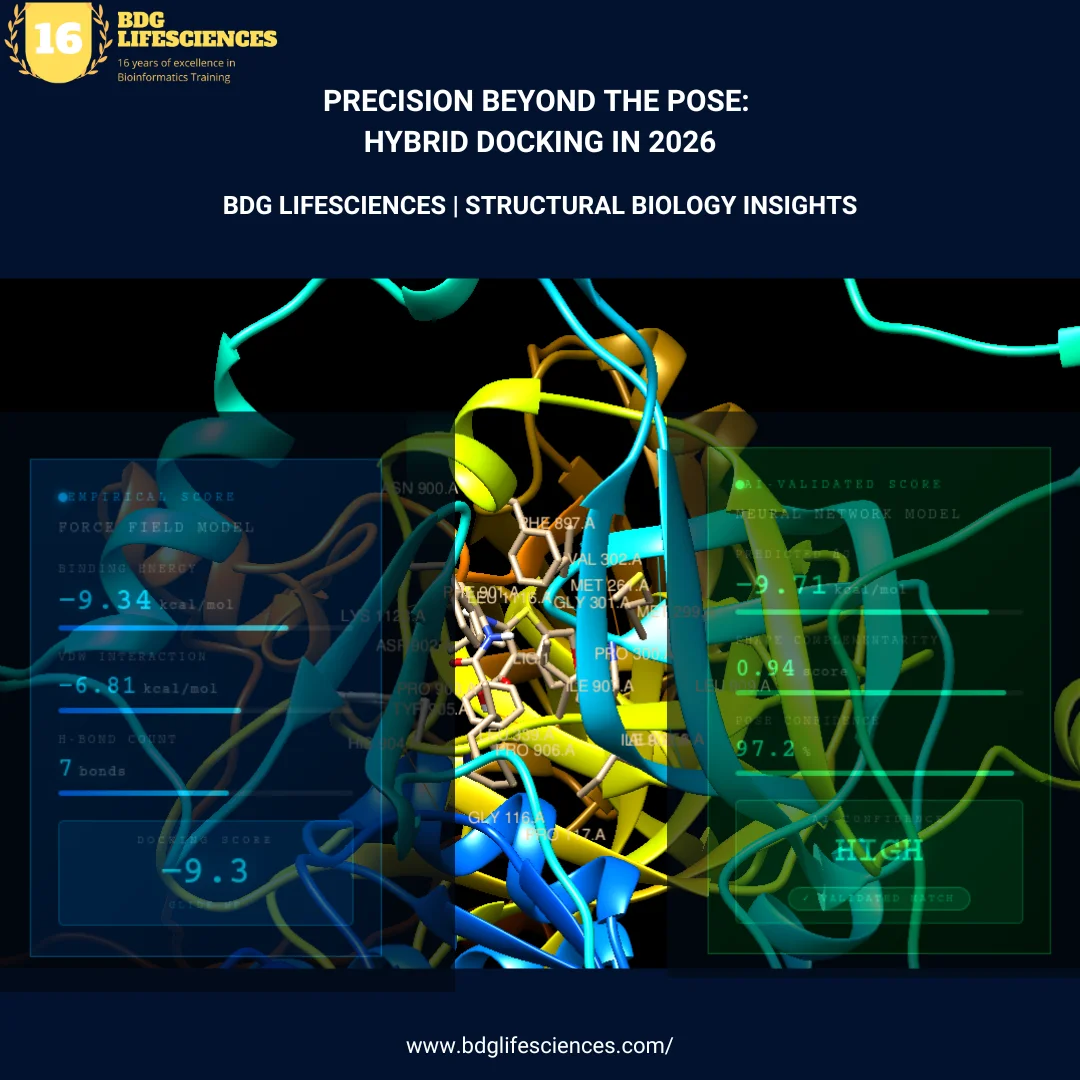
In the hierarchy of drug discovery, Molecular Docking remains the bridge between a theoretical hit and a biological reality. However, the methodology of 2026 is a far cry from the rigid-body approximations of the last decade.
The challenge in contemporary docking isn't just "finding a pose"—it’s accurately predicting the binding free energy (ΔG) in a way that correlates with in vitro IC50 values. At BDG LifeSciences, we are witnessing a paradigm shift: the rise of Hybrid Virtual Screening.
The 2026 Technical Stack: Physics Meets AI
The industry has moved beyond relying on a single scoring function. Today’s gold standard involves a three-tiered pipeline:
High-Throughput Virtual Screening (HTVS): Utilizing optimized engines like AutoDock Vina or Glide to screen libraries of 107 compounds. The focus here is on speed and geometric complementarity.
AI-Driven Rescoring: Traditional empirical scoring functions often struggle with "false positives." We are now integrating AI foundation models like Boltz-2 and ArtiDock. These models, trained on the massive PLINDER dataset, have shown a 30% increase in ROC-AUC values by learning the nuances of protein-ligand interactions that physics-based equations sometimes miss.
Molecular Dynamics (MD) Validation: A docking pose is a snapshot; biology is a movie. To confirm stability, we subject top "hits" to GROMACS simulations to observe the Induced Fit and ensure the ligand remains within the binding pocket under physiological conditions.
The Breakthrough: Induced Fit & Protein Flexibility
One of the most significant advancements this year is the democratization of Flexible Receptor Docking. Previously computationally prohibitive, new GPU-accelerated algorithms allow us to model side-chain flexibility in real-time. This is crucial for "undruggable" targets where the binding pocket is cryptic or highly dynamic.
Why Accuracy Matters
In 2026, the cost of a failed wet-lab synthesis is higher than ever. By utilizing a Consensus Scoring approach—combining classical physics, machine learning rescoring, and ADMET prediction—BDG Lifesciences helps researchers reduce "dry-lab to wet-lab" attrition rates by up to 50%.
Is your docking pipeline producing too many false positives? Join our Molecular Docking Certificate Online Workshop of 10 Days which we are conducting since 2012\. Register now for expert insights into hybrid virtual screening and the next generation of structure-based drug design.
25 May , 2026
Excel Vs Python
Stop Using Excel for Genomic Data: Why Python Rules in 2026 | BDG
If you are still trying to open a 5GB FASTQ file or a massive VCF in Microsoft Excel, you’ve likely seen the dreaded "Not Responding" message more times than you’d care to admit.
In the early days of bioinformatics, coding was a niche skill. But as we move through 2026, the sheer volume of biological data has outpaced the capabilities of traditional spreadsheets. At BDG LifeSciences, we’ve seen a 40% increase in job descriptions that list Python as a primary requirement—even for traditional wet-lab roles.
The "Excel Trap" in Modern Research
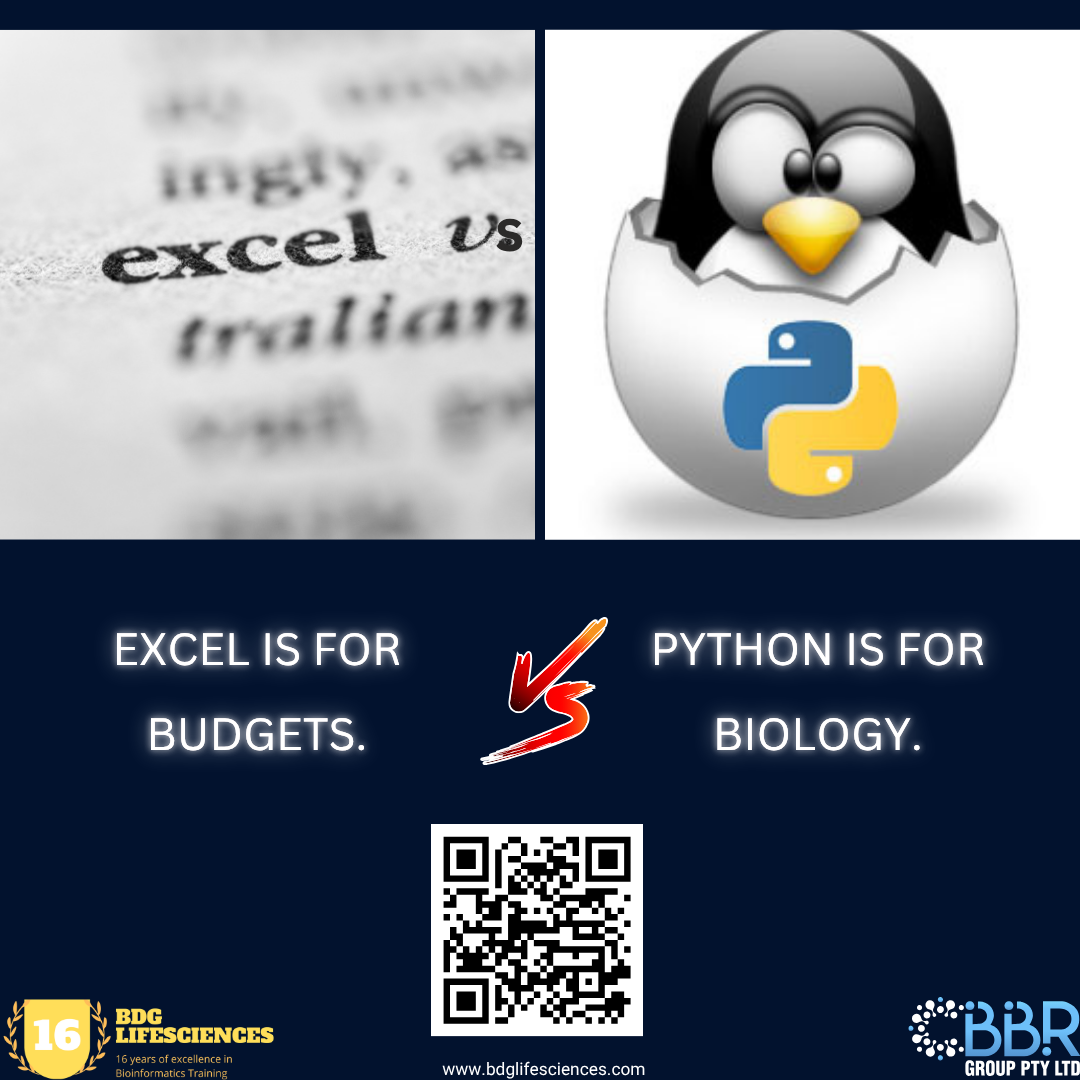
Excel is great for budgets, but it was never designed for the complexity of the human genome. Beyond the frequent crashes, Excel is prone to manual "copy-paste" errors and, famously, has even renamed human genes (like SEPT6 becoming September 6). In a high-stakes clinical environment, these aren't just inconveniences—they are liabilities.
The Python Power-Stack for 2026:
To transition from a "Data Consumer" to a "Data Architect," these are the 4 libraries we recommend mastering this year:
Polars (The Speed Demon): While Pandas was the king for a decade, Polars has become the 2026 standard for high-performance data processing. It handles billions of rows of sensor or genomic data on a standard laptop without breaking a sweat.
BioPython: This remains the "Swiss Army Knife" for biologists. Whether you need to transcribe DNA sequences, parse complex biological file formats, or access the NCBI databases programmatically, BioPython is your foundation.
PyTorch: As generative AI moves into everyday research, PyTorch has become the bedrock for scientists fine-tuning Small Language Models (SLMs) for medical compliance or protein folding.
Streamlit: Want to show your results to a non-coding PI? Streamlit allows you to turn a Python script into an interactive web app in minutes, making your data accessible to everyone.
Reproducibility: The Gold Standard
The most significant advantage of Python isn't speed—it's reproducibility. A Python script is a permanent record of every filter, calculation, and visualization you performed. When it’s time to publish or audit a clinical trial, you don’t have to "remember" what you did in a spreadsheet; you simply run the code.
At BDG Lifesciences, we believe coding is the new "microscope." It’s the tool that allows you to see the patterns hidden in the noise of big data.
Ready to move beyond the spreadsheet? Follow BDG Lifesciences for our upcoming "Python for Biologists" bootcamp and start automating your research today.
11 May , 2026
AI & Reverse Vaccinology
Beyond the 100-Day Mission: How AI and Reverse Vaccinology are Pre-empting Future Pandemics
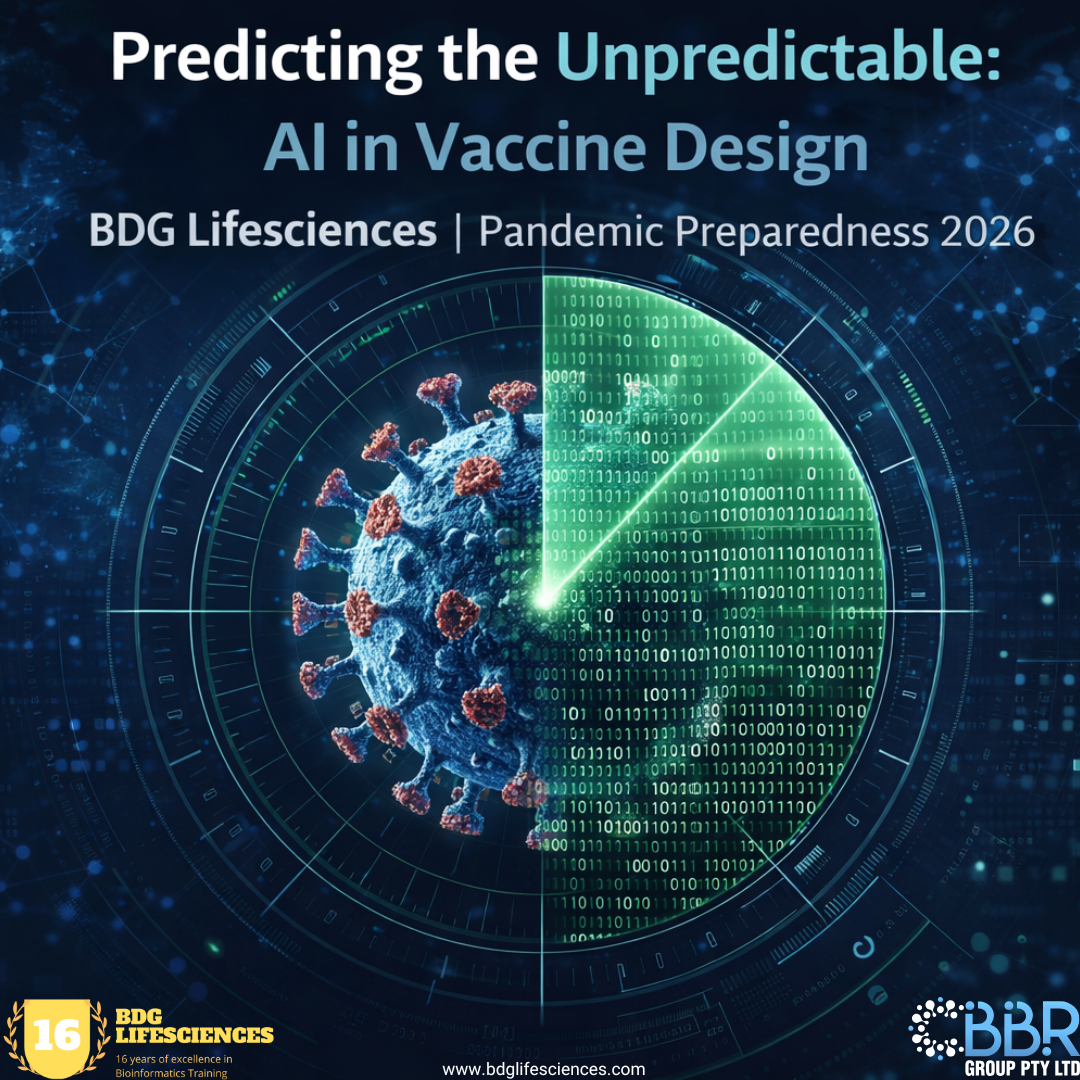
The COVID-19 pandemic taught the world a hard lesson: we cannot afford to be reactive. In the past, vaccine development was a race against a clock that had already started. But as we move through 2026, the goalposts have shifted. We aren't just trying to catch up to viruses; we are trying to meet them at the finish line before they even emerge.
At the heart of this shift is Immunoinformatics—the powerhouse intersection of immunology, computer science, and big data.
The Shift to Reverse Vaccinology 2.0
Traditional vaccinology relied on growing pathogens in the lab—a slow, dangerous, and often hit-or-miss process. Reverse Vaccinology (RV) flipped the script by starting with the genome. Today, we’ve entered the era of RV 2.0, where we don't just scan genomes; we use Generative AI to design synthetic immunogens that never existed in nature but provide broader protection than any natural infection could.
How We Are Staying One Step Ahead:
Predicting "Immune Escape": Using tools like EVEscape and R-DELF (Deep Evolutionary Learning), researchers can now model how a virus is likely to mutate months before the mutation appears in the population. This allows us to create "variant-proof" vaccines that target the parts of a virus that cannot change without killing it.
Epitope Mapping at Scale: Identifying which part of a virus triggers the strongest immune response (the epitope) used to take years of wet-lab work. Immunoinformatics algorithms now predict B-cell and T-cell epitopes with 99%+ accuracy in seconds.
The Rise of "Inverse Vaccinology": In 2026, we are seeing the first "inverse" designs—where AI defines the desired immune outcome first, and then works backward to engineer the exact molecular structure needed to achieve it.
The Global Vaccine Library
One of the most ambitious projects of 2026 is the creation of a Global Vaccine Library. By using computational biology to pre-design vaccine candidates for all 25 known virus families that infect humans, we are essentially "pre-loading" our defenses. If a new pathogen emerges, we won't start from scratch; we’ll pull the blueprint from the digital shelf.
At BDG Lifesciences, we are committed to training the scientists who will manage these digital arsenals. The next pandemic isn't an "if"—it's a "when"—and for the first time in history, we have the tools to be ready before it begins.
The future of global health is being built on data. Follow BDG Lifesciences to stay updated on the latest breakthroughs in Biosafety, Immunoinformatics, and the AI-driven battle against infectious diseases.
05 May , 2026
The Most In-Demand Skill in Biotech for 2026: Why the "Dry Lab" is the New Front Line
Why You Must Learn Bioinformatics in 2026: The Ultimate Career Pivot Guide
If you are a Life Sciences professional in 2026, the traditional boundaries of your career are vanishing. The "wet lab" isn't going away, but it is being fundamentally reshaped by data.
We are currently seeing a paradox in the job market: While some entry-level lab roles are consolidating due to automation, the demand for Bioinformatics Scientists and Computational Biology Engineers has surged by over 25% year-over-year.
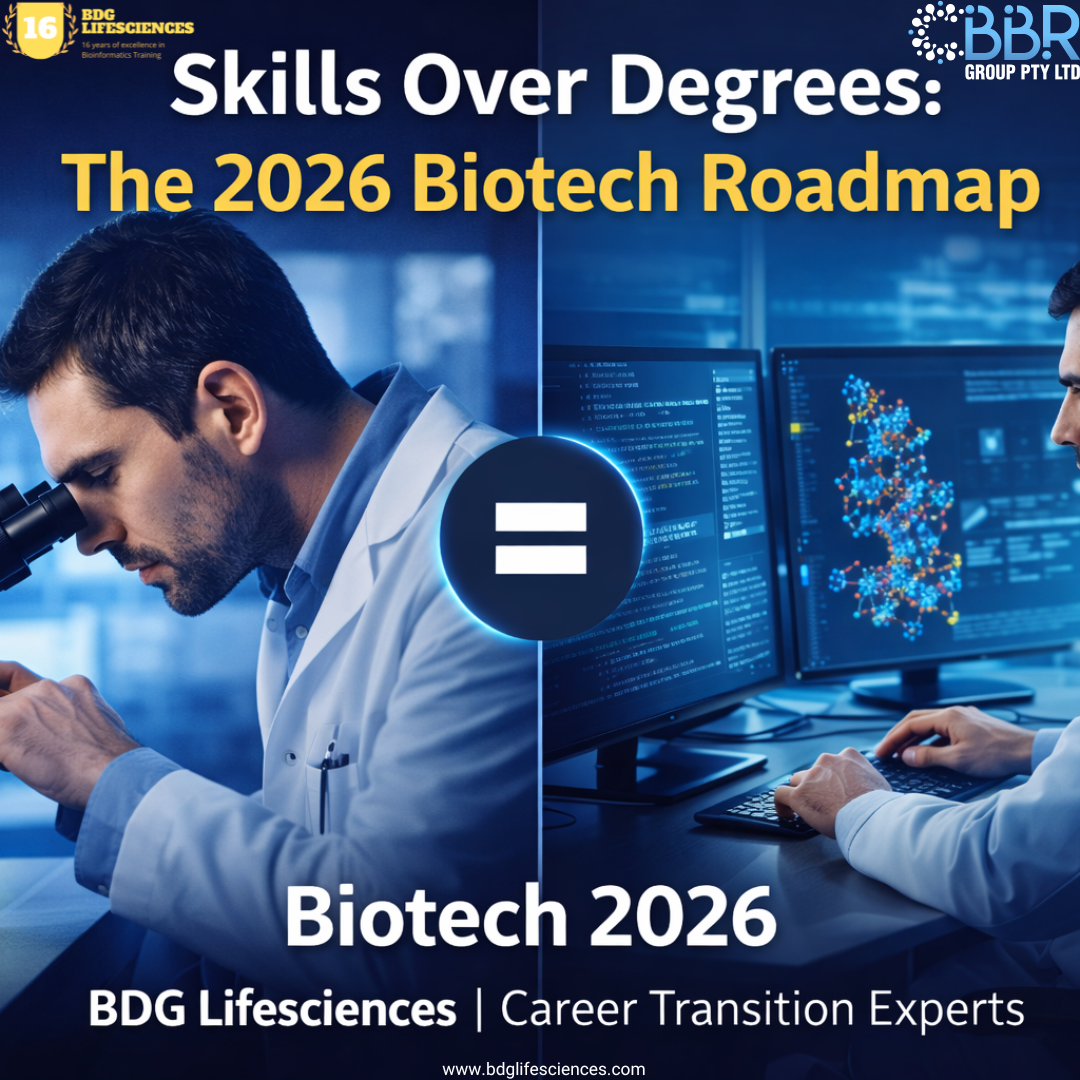
The Reality of the 2026 Job Market Hiring managers at top-tier Pharma and CDMOs (Contract Development and Manufacturing Organizations) are no longer just looking for "Biologists." They are looking for "Bilingual Scientists"—professionals who can speak the languages of both DNA and Python.
The 4 "Must-Have" Skills to Future-Proof Your Resume:
Programming Proficiency (Python & R): Excel is no longer a data tool; it's a bottleneck. Mastery of Python (for machine learning pipelines) and R (for statistical genomics) is now a non-negotiable requirement for senior research roles.
Next-Generation Sequencing (NGS) Analysis: As sequencing costs hit all-time lows, the data "tsunami" is here. Companies need people who can interpret functional annotations and genetic variants, not just run the machines.
Cloud-Native Fluency: In 2026, data doesn't live on hard drives. Familiarity with AWS HealthOmics or Google Cloud's Life Sciences API is the "hidden" skill that separates top candidates from the rest.
AI Governance & Ethics: With Generative AI now embedded in R&D, understanding how to validate AI-derived results is becoming a critical "High-Level" competency.
The BDG Advantage At BDG Lifesciences, we’ve observed that the most successful career pivots happen when scientists move from being "data consumers" to "data creators." Our certification programs are designed to take you from a wet-lab background to an industry-ready computational profile in months, not years.
The biotech boom of the late 2020s belongs to those who can bridge the gap between biological insight and computational execution.
Is your resume ready for the 2026 shift? Follow BDG LifeSciences for daily career roadmaps and upskilling opportunities.
29 Apr , 2026
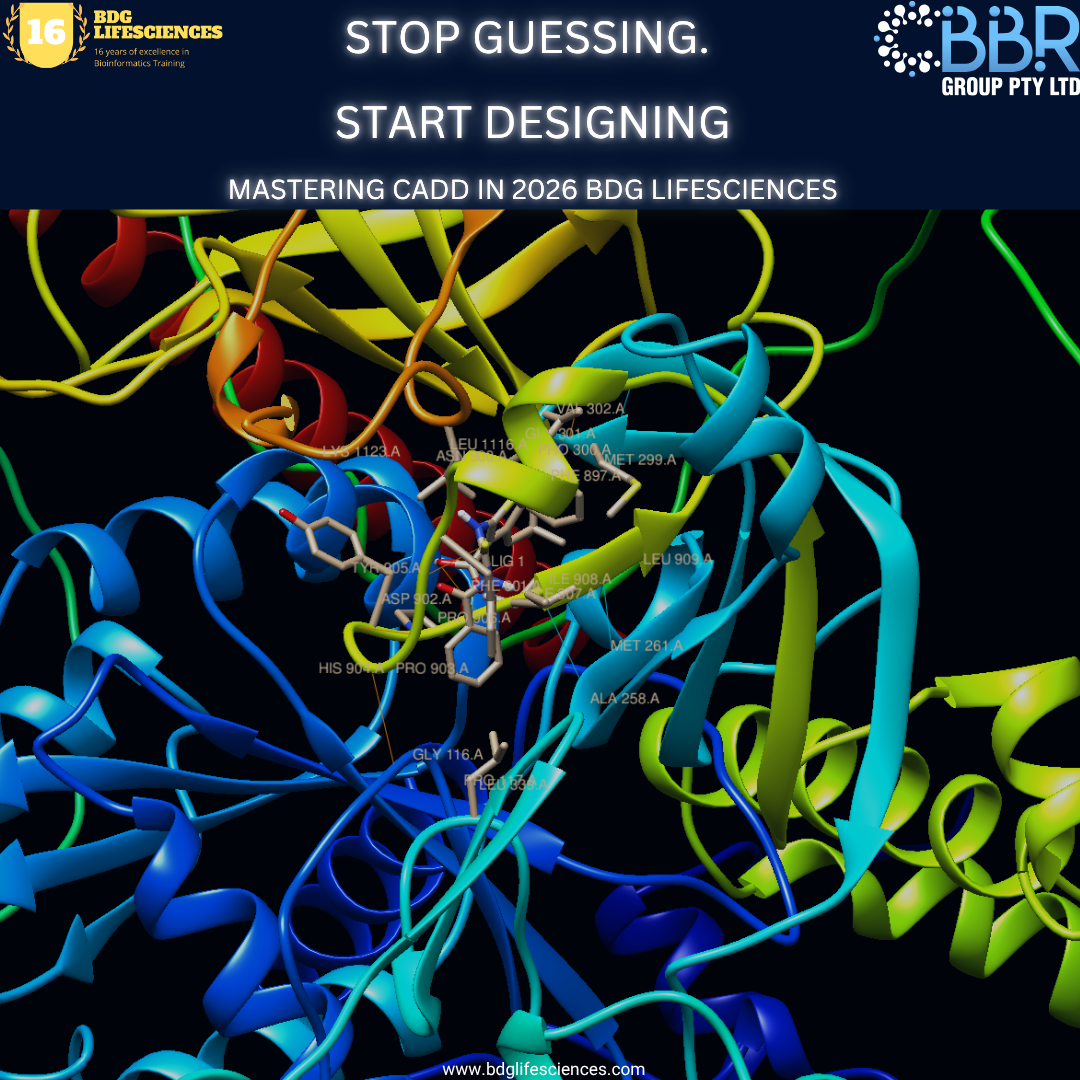
Why Your Next Lead Compound Should Be Discovered in Silicon, Not the Wet Lab
From Silicon to Synthesis: A Beginner’s Guide to Computer-Aided Drug Design (CADD)
The days of "spray and pray" drug discovery are over. Traditionally, identifying a single "hit" compound required the physical screening of millions of chemicals—a process that costs millions of dollars and months of laboratory time.
As we progress through 2026, Computer-Aided Drug Design (CADD) has transitioned from a supporting tool to the primary driver of pharmaceutical R&D. If you aren't using computational modeling before you pick up a pipette, you’re already behind.
The CADD Advantage: Efficiency by Design
CADD allows researchers to virtually "dock" millions of potential drugs into a target protein’s binding pocket. It’s not just about speed; it’s about rationality. Instead of guessing which molecules might work, we use physics and AI to predict which ones will work.
The Two Pillars of Modern CADD:
1\. Structure-Based Drug Design (SBDD): When the 3D structure of a target (like a viral protein) is known, we use SBDD. With the recent release of AlphaFold 3 and enhanced Molecular Dynamics (MD) simulations, we can now see how a drug behaves in a moving, "breathing" biological system—not just a static image.
2\. Ligand-Based Drug Design (LBDD): If the target’s structure is a mystery, we look at known successful drugs (ligands) and use Pharmacophore Mapping. We find the "common denominator" that makes those drugs work and design new, more potent molecules based on that blueprint.
Breaking the Synthesis Bottleneck
One of the biggest trends this year is the integration of Retrosynthesis AI. It’s one thing to design a "miracle molecule" on a computer; it’s another to actually build it. Modern CADD tools now tell us exactly how to synthesize the molecule in the lab, ensuring that our virtual designs are commercially and chemically viable.
Why BDG LifeSciences?
The barrier to entry for CADD used to be high-performance computing (HPC) costs. Today, cloud-native platforms have democratized this. At BDG, we empower the next generation of researchers to master tools like AutoDock Vina, GROMACS, and PyMOL, bridging the gap between computational theory and real-world therapeutic results.
16 Apr , 2026
Epigenetic Silencing
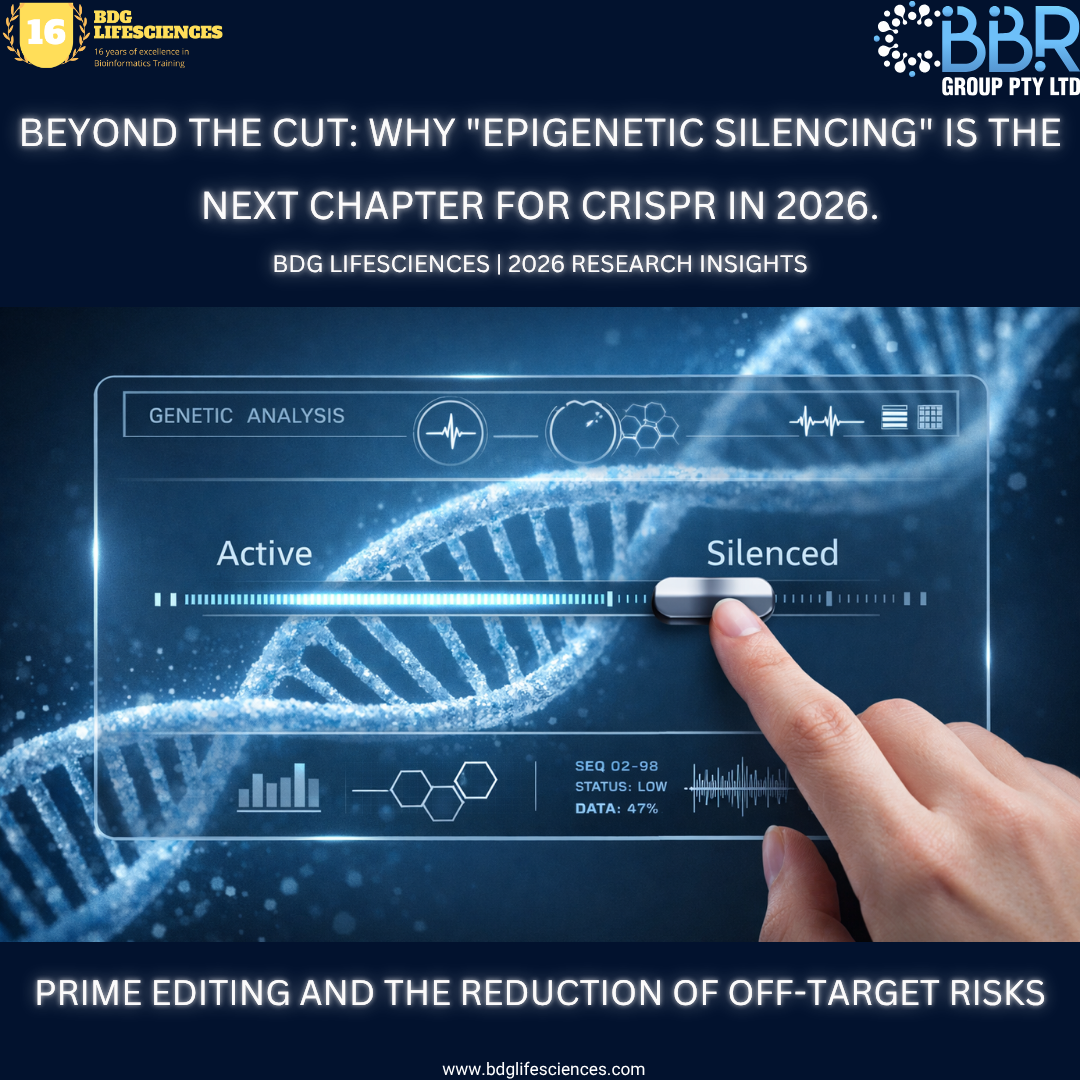
Beyond the Cut: Why Epigenetic Silencing is the Next Chapter for CRISPR in 2026
In late 2023, the world watched in awe as the first CRISPR therapy was approved. But in the fast-moving world of biotech, that was just the "dial-up" phase.
As we move through February 2026, the conversation has shifted. We are no longer just talking about "cutting" DNA (which can cause unintended double-strand breaks); we are talking about Prime Editing and Epigenetic Silencing.
The Breakthrough: One-Shot Cures for Common Diseases Just this month, clinical updates have shown that CRISPR can now be used to "switch off" the genes responsible for high cholesterol (PCSK9 and ANGPTL3) directly in the liver. We are moving away from treating only rare genetic disorders and toward solving global health crises like heart disease with a single infusion.
The CRISPR 2.0 Toolkit:
1\. Prime Editing: Think of it as "Search and Replace" for the genome. It allows for precise insertions or deletions without breaking the double helix, significantly reducing "off-target" risks.
2\. Epigenetic Editing: Instead of changing the DNA sequence, we are now learning to "dim" or "brighten" gene expression. This offers a potentially reversible way to treat diseases—a massive safety leap.
3\. In Vivo Delivery: The biggest hurdle has always been delivery. In 2026, Lipid Nanoparticle (LNP) technology has matured, allowing us to send CRISPR machinery directly to specific organs like the liver or lungs without complex outside-the-body cell processing.
The Ethics: Where Do We Draw the Line? With great power comes the "Slippery Slope." As CRISPR becomes more accessible, the bioethics community is grappling with two major themes:
1\. The Access Gap: Will these $2M+ "one-shot cures" only be available to the ultra-wealthy, widening the global health divide?
2\. Therapy vs. Enhancement: While switching off a cholesterol gene is therapeutic, where is the boundary for traits like muscle density, cognitive performance, or longevity?
At BDG LifeSciences, we believe the future of CRISPR lies in Responsible Innovation. We aren't just teaching the tools; we are fostering the ethical framework that will govern the next century of human biology.
The CRISPR revolution is accelerating. Are you staying ahead of the regulatory and technical curve? Follow BDG Lifesciences for the latest updates on Gene Editing breakthroughs and Bioethics.
14 Apr , 2026
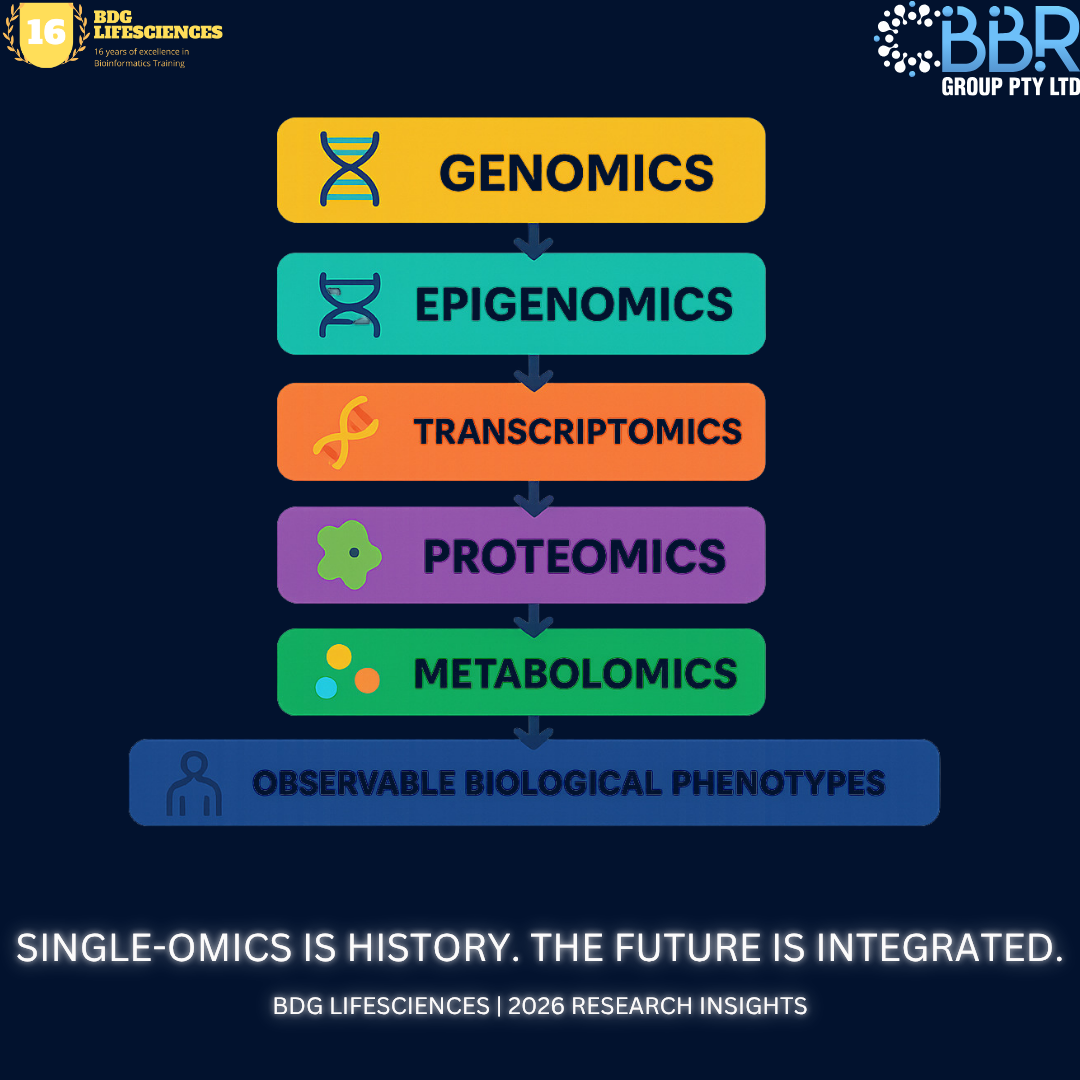
Key Pillars of Integrated Analysis (Genotype to Phenotype)
Why Multi-Omic Integration is the New Standard for 2026
For years, the "Genomic Revolution" was the North Star of biotech. We believed that if we could just map the DNA—the blueprint of life—we could solve every disease.
But as we enter 2026, the industry is reaching a consensus: The blueprint is not the building.
DNA tells us what might happen. To understand what is actually happening in a patient’s body, we must look at the dynamic layers above it: the Transcriptome, the Proteome, and the Metabolome.
The Limitation of "Siloed" Data Single-omics studies are like looking at a single frame of a movie. You might see a character holding a key (a genetic mutation), but you don’t know if they are going to unlock a door or throw it away. Multi-omics provides the full film.
How BDG LifeSciences is Bridging the Omics Gap:
1\. Connecting Genotype to Phenotype: By integrating Genomics with Proteomics, we can see if a genetic risk factor actually results in a dysfunctional protein. This is critical for validating drug targets and reducing the "90% failure rate" in clinical trials.
2\. Single-Cell Precision: 2025 saw a massive leap in single-cell multi-omics. We can now analyze how individual cells in the same tumor behave differently, allowing for "Ultra-Precision" oncology.
3\. Real-Time Metabolomics: While DNA is static, metabolites change in minutes. Integrating metabolomic data allows us to monitor how a patient is responding to a drug in real-time, enabling truly personalized dosing.
The 2026 Challenge: Data Harmony The biggest bottleneck isn't getting the data; it’s making it talk to each other. Multi-omics datasets are massive and heterogeneous. At BDG, we are utilizing Graph-based AI algorithms to transform these siloed "data lakes" into unified molecular maps.
The future of medicine isn't just "precision"—it’s integrated.
Is your research still stuck in a single-omics silo? Follow BDG LifeSciences for the latest strategies in Multi-Omic data integration and bioinformatics.
03 Apr , 2026
How Generative AI is Slashing Drug Discovery Timelines
Beyond the Hype: How Generative AI is Slashing Drug Discovery Timelines by 40%
The promise of Artificial Intelligence in drug discovery has been a hot topic for years, often clouded by overzealous predictions. But at BDG LifeSciences , we're moving beyond the hype and into a new era where Generative AI isn't just a buzzword – it's a game-changer.
Traditionally, identifying a promising drug candidate is a labyrinthine process. It involves countless iterations of chemical synthesis, experimental testing, and often, significant delays. This "trial and error" approach can stretch timelines, consume vast resources, and ultimately mean longer waits for life-saving medicines to reach patients.
Enter Generative AI.
This cutting-edge technology, powered by sophisticated algorithms and neural networks, is revolutionizing how we approach lead optimization and target identification. Instead of simply analyzing existing data, Generative AI models can create novel molecular structures with desired properties from scratch.
Here’s how BDG Lifesciences is leveraging this power:
- 1\. Accelerated Target Identification: Using advanced models akin to what we've seen with tools like AlphaFold 3 (for protein structure prediction), Generative AI can predict the most likely druggable targets within complex biological systems with unprecedented accuracy. This dramatically narrows down the focus, allowing our researchers to concentrate on the most promising avenues.
- 2\. De Novo Drug Design: Imagine designing a molecule specifically tailored to interact with a particular disease pathway, rather than sifting through libraries of existing compounds. Generative AI makes this possible. It can propose millions of novel chemical entities, optimizing for factors like potency, selectivity, and even manufacturability, before any synthesis even begins.
- 3\. Rapid Lead Optimization: Once a potential lead compound is identified, Generative AI speeds up the optimization phase. It can quickly predict how small modifications to a molecule's structure will affect its properties, guiding chemists to synthesize the most effective and safest version, minimizing time spent on less viable candidates.
The impact? We're seeing tangible results, with projects where Generative AI has slashed typical drug discovery timelines by up to 40%. This isn't just about efficiency; it's about bringing innovative therapies to market faster, addressing urgent medical needs, and ultimately, improving patient outcomes worldwide.
At BDG LifeSciences, we believe the future of pharmaceuticals isn't just about discovering drugs, but intelligently designing them. The age of "predict and validate" is here, and Generative AI is leading the charge.
Follow BDG LifeSciences for weekly insights into AI-driven biotech and the future of healthcare innovation.
13 Nov , 2025
In Silico mRNA Vaccine Design: Tools, Techniques & Training
In Silico mRNA Vaccine Design: Complete Guide to Codon Optimization, RNA Structure, LNP Delivery & Immunogenicity Tools
Introduction to mRNA Vaccines
mRNA vaccines represent one of the most transformative breakthroughs in modern biomedical science. Unlike traditional vaccines that use weakened pathogens, mRNA vaccines deliver genetic instructions that program human cells to produce harmless antigenic proteins—activating a powerful immune response.
Basics of mRNA Vaccine Technology
mRNA vaccine technology relies on:
- Synthesizing messenger RNA encoding the target antigen
- Protecting it using delivery systems such as Lipid Nanoparticles (LNPs)
- Facilitating translation of the encoded protein inside host cells
- Training the immune system to recognize and neutralize the pathogen
This technology became globally recognized after the success of COVID-19 vaccines such as Pfizer-BioNTech and Moderna.
Advantages in Modern Medicine
mRNA vaccines are:
- Highly customizable – sequences can be rapidly designed
- Fast to develop – <12 weeks from design to preclinical testing
- Safe – do not integrate into host DNA
- Scalable – straightforward manufacturing pipelines
Their applications now extend to infectious diseases, cancer immunotherapy, autoimmune modulation, and personalized medicine.
mRNA Sequence Design
Principles of Codon Optimization
Codon optimization ensures the mRNA sequence uses codons preferred by the host organism, boosting:
- Translation efficiency
- Protein yield
- mRNA stability
Choosing the right codons affects expression levels dramatically, especially for vaccine antigens.
Designing for Stability & Expression
Key considerations include:
- GC content balance
- Avoiding inhibitory motifs
- Enhancing signal peptides
- Including proper start and stop codons
Tools like GeneArt, IDT Codon Optimization Tool, and OPTIMIZER streamline this process.
Secondary Structure Prediction
The structure of mRNA affects its folding, translation efficiency, and degradation rate.
Why Secondary Structure Matters
Poorly structured regions may:
- Hinder ribosome binding
- Form inhibitory hairpins
- Reduce protein expression
Using Computational Models
Tools like ViennaRNA (RNAfold) analyze:
- Minimum free energy structures
- Base-pairing probabilities
- Structural accessibility
This ensures the mRNA remains translatable, stable, and efficient.
Immunogenicity Assessment
Designing an mRNA vaccine requires evaluating which regions of the encoded protein will generate strong immune responses.
Identifying Immunogenic Epitopes
Epitope prediction tools identify:
- B-cell epitopes
- T-cell epitopes
- MHC class I & II binding peptides
Tools like IEDB, NetMHCpan, and SYFPEITHI allow in silico screening before wet-lab validation.
Predicting Immune Response
In silico platforms assess:
- Antigenicity
- Allergenicity
- Toxicity
- Population-wide HLA coverage
This computational step greatly accelerates vaccine discovery.
mRNA Modification & Optimization
Chemical Modifications
Chemical modifications enhance:
- RNA stability
- Translation efficiency
- Reduced innate immune activation
Common modifications include:
- Ψ (pseudouridine)
- m1Ψ (N1-methyl pseudouridine)
UTR Optimization
UTRs regulate translation and stability. Tools like UTR Designer assist in:
- Optimizing 5' UTR for ribosomal binding
- Enhancing 3' UTR for stability
- Avoiding silencing motifs
Delivery Systems for mRNA Vaccines
Lipid Nanoparticles (LNPs)
LNPs protect mRNA from degradation and help it enter cells efficiently. Features include:
- Ionizable lipids
- Cholesterol
- PEG-lipids
- Helper lipids
Computational Evaluation of Delivery Vehicles
Simulations using MATLAB or dedicated LNP databases allow:
- Particle size prediction
- Charge optimization
- Stability modeling
Choosing the right delivery system is as important as choosing the right mRNA sequence.
Hands-On Training with Computational Tools
Software & Online Tools Used in Vaccine Design
Below is a complete breakdown of beginner vs. professional use + the benefit of each tool.
1\. Codon Optimization Tools
GeneArt / IDT Codon Optimization Tool
- Beginner Use: Auto-optimize sequences with presets
- Professional Use: Fine-tune codon bias, remove restriction sites
- Benefit: High protein yield in human cell systems
OPTIMIZER Server
- Beginner: Simple sequence upload
- Professional: Advanced codon usage algorithms
- Benefit: Control over codon adaptation index (CAI)
2\. Secondary Structure Prediction
ViennaRNA (RNAfold)
- Beginner: Predict simple MFE structures
- Professional: Evaluate ensemble diversity & structural constraints
- Benefit: Ensures best mRNA folding for stability
RNAfold Web Server
- Beginner: Web-based, no installation
- Professional: Detailed dot-bracket analysis
- Benefit: Fast, accurate folding predictions
3\. Immunogenic Epitope Prediction Tools
IEDB
- Beginner: Auto epitope prediction
- Professional: Multi-algorithm immune modeling
- Benefit: Comprehensive immune response analysis
NetMHCpan / SYFPEITHI
- Beginner: Easy peptide submission
- Professional: Population-wide HLA predictions
- Benefit: Predicts global vaccine effectiveness
4\. Translation Efficiency Tools
TIsigner Server
- Beginner: One-click translation prediction
- Professional: Ribosome binding modeling
- Benefit: Ensures efficient protein synthesis
5\. mRNA Modification Tools
mRNA Mod Calculator
- Beginner: Simple chemical modification suggestions
- Professional: Extensive stability simulation
- Benefit: Reduces degradation, improves shelf life
6\. Delivery Vehicle Analysis
MATLAB Simulation / LNP Databases
- Beginner: Pre-built LNP parameter sets
- Professional: Multi-layer nanoparticle modeling
- Benefit: Predicts LNP efficiency before lab testing
7\. Sequence Design & Visualization
SnapGene
- Beginner: Visual sequence maps
- Professional: Full annotation workflows
- Benefit: Intuitive interface for complex plasmid work
Benchling
- Beginner: Cloud-based sequence builder
- Professional: Full CRISPR, cloning, and analysis suite
- Benefit: Industry-standard collaborative environment
8\. Protein Expression Simulation
Rosetta RNA Tools
- Beginner: Basic folding
- Professional: Predictive modeling and docking
- Benefit: High-accuracy structural simulation
RNAComposer
- Beginner: Auto-generate 3D RNA models
- Professional: Full RNA tertiary modeling
- Benefit: Essential for 3D vaccine structure analysis
Case Studies & Real-World Applications
COVID-19 mRNA Vaccine Success
The rapid development of Pfizer and Moderna vaccines showcased:
- Speed of mRNA design
- Power of computational biology
- Importance of stable delivery systems
Future Prospects
Advancements in:
- AI-based codon optimization
- Predictive immunology
- Automated LNP design
- Personalized vaccine design
will define the next decade of mRNA science.
10 Nov , 2025
Top 14 Drug Discovery Tools for Students, Researchers & Professionals
Top 14 Drug Discovery Tools for Students, Researchers & Professionals
Introduction
The world of drug discovery and design is advancing faster than ever before. With computational biology, artificial intelligence, and molecular modeling redefining pharmaceutical research, scientists today rely heavily on bioinformatics and cheminformatics tools.
Whether you’re a beginner exploring molecular docking or a professional designing novel therapeutics, mastering the right tools can transform your research. This article highlights the 14 best tools for drug discovery and design — essential for students, researchers, and professionals aiming to make meaningful contributions to modern drug development.
1\. AutoDock Tools
Overview:
AutoDock Tools (ADT) is an open-source graphical interface used for preparing and visualizing docking simulations with the AutoDock suite.
Benefits:
- Ideal for ligand and receptor preparation.
- Helps in setting grid boxes and defining docking parameters easily.
Beginner Use: User-friendly for visualizing protein-ligand interactions and understanding the docking process.
Professional Use: Allows for complex grid map configuration, energy evaluation, and advanced parameter optimization.
Why It’s Useful:
AutoDock Tools serves as the backbone of computational docking, providing the groundwork for accurate binding affinity predictions.
2\. AutoDock Vina
Overview:
AutoDock Vina is an enhanced, faster docking engine that improves binding accuracy and speed using advanced optimization algorithms.
Benefits:
- Extremely fast and efficient docking results.
- Compatible with various file formats (PDBQT).
Beginner Use: Great for students performing their first docking projects.
Professional Use: Supports high-throughput docking and advanced scripting for large-scale projects.
Why It’s Useful:
It’s one of the most cited docking tools in academia and industry, offering reliable, reproducible docking results.
3\. Chimera
Overview:
UCSF Chimera is a powerful visualization tool for analyzing molecular structures and docking outcomes.
Benefits:
- High-quality 3D molecular visualization.
- Integrates with AutoDock and PyMOL.
Beginner Use: Useful for viewing protein-ligand complexes interactively.
Professional Use: Ideal for structure-based drug design, electrostatic visualization, and publication-ready molecular figures.
Why It’s Useful:
A must-have tool for molecular modeling and analysis — visually intuitive and scientifically robust.
4\. PyRx
Overview:
PyRx is an integrated virtual screening software that simplifies docking using AutoDock and AutoDock Vina engines.
Benefits:
- Combines structure visualization, docking, and ligand management in one platform.
- Easy to use with built-in libraries.
Beginner Use: Excellent for academic projects or small docking studies.
Professional Use: Supports batch docking, making it ideal for large-scale virtual screening.
Why It’s Useful:
PyRx saves time by combining multiple docking steps in a single workflow.
5\. PyMOL
Overview:
PyMOL is a molecular visualization tool widely used for analyzing and rendering 3D protein and ligand structures.
Benefits:
- Publication-quality molecular graphics.
- Supports molecular dynamics trajectory visualization.
Beginner Use: Helps visualize hydrogen bonds, active sites, and docking poses.
Professional Use: Advanced users can script animations and analyze molecular dynamics simulations.
Why It’s Useful:
PyMOL bridges science and art — perfect for presentation, education, and publication.
6\. Discovery Studio Visualizer
Overview:
Developed by BIOVIA, Discovery Studio Visualizer is a professional-grade platform for molecular modeling, visualization, and simulation.
Benefits:
- Comprehensive tools for ligand design and protein modeling.
- Seamless integration with MD simulations.
Beginner Use: Provides an intuitive interface for exploring interactions.
Professional Use: Enables complex structure refinement and pharmacophore modeling.
Why It’s Useful:
A go-to tool for both academic and industrial drug discovery teams.
7\. GROMACS
Overview:
GROMACS (GROningen MAchine for Chemical Simulations) is a high-performance tool for molecular dynamics simulations.
Benefits:
- Extremely fast for large biomolecular systems.
- Free and open-source.
Beginner Use: Learn basic MD workflows and force field setup.
Professional Use: Perform advanced simulation studies of protein-ligand complexes.
Why It’s Useful:
Essential for understanding molecular motion, stability, and binding energetics in drug design.
8\. SwissParam
Overview:
SwissParam generates topologies and parameters for small organic molecules compatible with the CHARMM force field.
Benefits:
- Converts ligand data for MD simulations.
- Supports seamless integration with GROMACS and CHARMM.
Beginner Use: Ideal for parameter generation without coding.
Professional Use: Helps experts in refining complex simulation systems.
Why It’s Useful:
Saves hours of manual parameterization work during MD preparation.
9\. VMD (Visual Molecular Dynamics)
Overview:
VMD is a visualization and analysis tool for molecular dynamics simulations.
Benefits:
- Handles large biomolecular trajectories.
- Integrates analysis plugins for distance, RMSD, and hydrogen bonding.
Beginner Use: Learn trajectory visualization easily.
Professional Use: Advanced users can automate analyses through Tcl/Python scripting.
Why It’s Useful:
VMD brings data-driven molecular visualization to life.
10\. QtGrace
Overview:
QtGrace is a modern version of Xmgrace for plotting scientific data, such as docking scores and MD simulation graphs.
Benefits:
- High-quality, customizable graph generation.
- Easy export for publications.
Beginner Use: Simple for visualizing RMSD, RMSF, and energy plots.
Professional Use: Ideal for automated plotting of multi-system data.
Why It’s Useful:
Perfect for visualizing complex simulation data with precision.
11\. Xmgrace
Overview:
Xmgrace is a 2D plotting tool often used for MD and docking analysis.
Benefits:
- Lightweight and precise for scientific data plotting.
- Supports multiple datasets and annotations.
Beginner Use: Suitable for simple graph plotting.
Professional Use: Useful in generating comparative analyses and reports.
Why It’s Useful:
A must-have for any scientist managing molecular dynamics output data.
12\. SwissADME
Overview:
SwissADME predicts ADME (Absorption, Distribution, Metabolism, and Excretion) properties of small molecules.
Benefits:
- Web-based and user-friendly.
- Predicts drug-likeness, solubility, and pharmacokinetic profiles.
Beginner Use: Understand basic pharmacokinetic concepts.
Professional Use: Used in virtual screening pipelines for candidate filtering.
Why It’s Useful:
Essential for evaluating compound suitability before experimental validation.
13\. ProTox-III
Overview:
ProTox-III is a web tool for predicting the toxicity of chemical compounds based on machine learning models.
Benefits:
- Provides LD50 values and toxicity class.
- Predicts organ-specific and immunotoxic effects.
Beginner Use: Simple web interface for checking compound safety.
Professional Use: Helps in toxicity filtering during drug candidate selection.
Why It’s Useful:
Ensures safer compound design and regulatory compliance.
14\. SwissTargetPrediction
Overview:
SwissTargetPrediction predicts potential protein targets for bioactive small molecules using 2D and 3D similarity principles.
Benefits:
- Identifies possible drug targets efficiently.
- Integrates chemical and biological databases.
Beginner Use: Learn target identification for a given compound.
Professional Use: Supports target-based drug design and hypothesis generation.
Why It’s Useful:
A vital resource for identifying off-target effects and potential repurposing opportunities.
Conclusion
Mastering these 14 essential tools empowers researchers to perform end-to-end drug discovery workflows, from virtual screening and docking to molecular dynamics and ADME analysis.
At BDG Lifesciences, we offer live, hands-on training programs covering these tools under Computational Drug Discovery and Molecular Docking Workshops — ensuring you not only learn but also apply them to real-world research.
22 Oct , 2025
Bioinformatics Research Projects for Career Advancement | BDG Lifesciences
High Value Bioinformatics Projects: Global Publication, Hands-On Skills & Career Boost
Introduction
In today’s data-driven life sciences and biotech industry, engaging in authentic research projects is far more than a resume add-on—it’s a game changer. The BDG Lifesciences Research Project Training Program gives participants the rare chance to work on novel bioinformatics research, publish internationally, and gain practical experience in advanced technologies that employers and academia value. BDG Lifesciences
Since its inception in 2010, BDG Lifesciences has delivered high-quality research project mentorship with more than 88 completed and published projects globally. BDG Life Sciences Whether you’re a final-year student, early-career researcher, or aiming for PhD or industry roles, this initiative bridges the gap between textbook theory and real-world applications.
What It Is
The program is a four-month, structured online training initiative focused on an end-to-end computational pipeline—from transcriptomics to RNA structure prediction to RNA-ligand docking—for therapeutic pursuit. BDG Life Sciences
Participants learn to:
1\. Retrieve RNA sequences from public datasets (GEO, SRA, Ensembl)
2\. Predict RNA secondary & tertiary structures using tools like ViennaRNA and RNAComposer
3\. Assess the “druggability” of RNA targets via docking with AutoDock Vina
4\. Execute the project based on real-world case studies (viral RNA, lncRNAs, etc.) BDG Life Sciences
The program includes live sessions, hands-on practicals, video recordings, weekly tasks, final presentation and publishing support. BDG Life Sciences
With only 5 seats available for each cohort of the “Mapping Druggable RNA Landscapes” project, the training offers personalized mentoring, live-trainer interaction, and credentials like certificate, LinkedIn title (“Research Associate at BDG Lifesciences”) and recommendation letter. BDG Life Sciences
What Are the Benefits?
1\. Hands-on skills: Gain practical experience in real-world bioinformatics pipelines, bridging sequence analysis, structure modeling and small-molecule docking.
2. Publication & credibility: Stand out by contributing to international publications or presenting your mini-project. This is a strong differentiator for graduate admissions or biotech jobs BDG Lifesciences
3. Career-boosting experience: Listing a “Research Project Trainee” role from BDG Lifesciences adds real-world experience to your CV/LinkedIn, making you more competitive for jobs in biotech, bioinformatics and pharma.
4. Flexible and global: Fully online, choose your session timings, avoid travel/accommodation costs but still access global-standard training and credentials BDG Lifesciences
5\. Expert mentorship & network: Work under professionals and join peer groups of globally dispersed researchers—ideal for networking and future collaborations.
6\. Future-ready skillset: Learn in-demand skills (RNA therapeutics, docking, structure prediction) aligned with emerging biotech trends.
What’s the Future Scope?
The demand for professionals who can operate at the interface of transcriptomics, structural biology, and computational drug design is growing rapidly. RNA-based therapeutics (lncRNAs, riboswitches, viral RNA) are emerging as key targets beyond proteins. Training programs like this one prepare you for roles such as RNA Drug Discovery Scientist, Computational Biologist, Bioinformatics Specialist in pharma, or academic research fellow.
Real-world experience in such pipelines significantly improves your chance of securing grants, academic fellowships (PhD, Postdoc) or high-level positions in biotech companies.
With more biotech companies investing in RNA-therapeutics, structure-based drug design, in-silico screening and data-driven biologics, having published projects and hands-on computational skills puts you ahead of the curve.
Why Choose BDG Lifesciences?
1\. Established since 2010, BDG Lifesciences is a recognized leader in bioinformatics training and research projects BDG Lifesciences
2\. Proven record: 80+ completed research projects, globally recognized publications and consistent tracking of outcomes BDG Lifesciences
3\. Practical-first methodology: Live trainers, hands-on sessions, project-based learning, use of open-source tools, and realistic workflows BDG Lifesciences
4\. Flexible delivery: Entirely online, suited to international participants, with recordings, global schedule and strong support.
5\. Career orientation: Focuses on building profiles for jobs, higher studies, publishing and real-world roles.
How to Get Started
- Visit the Research Projects page
28 Apr , 2025
Hottest Bioinformatics and Biotechnology Research Trends in 2025
Hottest Research Areas in Bioinformatics
Hottest Research Topics in Bioinformatics and Biotechnology You Should Know in 2025
The biotechnology and bioinformatics industries are evolving at an explosive pace. As technology advances, so do the opportunities for innovation, new biotech jobs, and groundbreaking discoveries. Whether you're a researcher, student, or professional aiming for a career in biotech, understanding the hottest research topics is crucial for staying competitive.
Here’s an overview of the top bioinformatics and biotechnology research trends making waves in 2025:
1\. Artificial Intelligence (AI) and Machine Learning (ML) in Bioinformatics
AI and ML are revolutionizing bioinformatics by enabling faster, more accurate predictions in protein structure (beyond AlphaFold), genomics, drug discovery, and more.
Key Focus Areas:
-
Generative AI for drug and protein design
-
Self-supervised learning models for biological sequences
-
Predictive modeling for personalized medicine
2\. Single-cell Omics and Spatial Transcriptomics
Single-cell technologies allow researchers to analyze gene expression at the level of individual cells, providing incredible insights into disease mechanisms.
Key Focus Areas:
-
Single-cell RNA sequencing (scRNA-seq)
-
Spatial transcriptomics: mapping gene expression within tissue structures
-
Cancer research and immunology applications
3\. Synthetic Biology and Genome Editing
With CRISPR, base editing, and prime editing becoming mainstream, bioinformatics is vital in modeling and predicting editing outcomes.
Key Focus Areas:
-
Computational design of CRISPR systems
-
Predictive analytics for synthetic biological circuits
4\. Multi-Omics Data Integration
Multi-omics combines genomics, transcriptomics, proteomics, and metabolomics to build comprehensive biological models.
Key Focus Areas:
-
Integrative bioinformatics platforms
-
Data fusion for personalized healthcare and diagnostics
5\. Metagenomics and Microbiome Analysis
The study of entire microbial communities is unlocking secrets of human health, agriculture, and climate change.
Key Focus Areas:
-
Functional prediction from microbial DNA
-
Gut microbiome and human disease
6\. Epigenomics and 3D Genomics
Understanding how the physical arrangement of DNA in the nucleus affects gene expression is becoming increasingly important.
Key Focus Areas:
-
Chromatin accessibility (scATAC-seq)
-
3D genome mapping (Hi-C technologies)
7\. Quantum Computing Applications (Emerging Field)
Though still at an early stage, quantum computing holds potential for breakthroughs in sequence alignment and drug discovery algorithms.
Why This Matters for Biotech Careers
If you're aiming for a role in biotech jobs, biotechnology research, or bioinformatics careers, aligning yourself with these trends can significantly increase your job prospects and academic visibility.
At BDG Lifesciences, we offer cutting-edge training programs, workshops, and certifications in bioinformatics, biotechnology, artificial intelligence, drug discovery, and multi-omics technologies. With over a decade of global experience, our hands-on technical courses are designed to equip you with the real-world skills needed to excel in the hottest research areas and thrive in the evolving biotech industry. Whether you are a beginner or a professional, BDG Lifesciences can help you bridge the gap between education and innovation.
26 Feb , 2025
Essential Bioinformatics Training to Land Top Biotech Jobs
Bioinformatics Training for Biotech Jobs
Comprehensive Guide to Bioinformatics Training, Innovations, and Career Pathways
Introduction
The field of bioinformatics has emerged as a critical intersection of biology, computer science, and data analysis, driving advancements in genomics, drug discovery, and personalized medicine. With biotechnology evolving rapidly, groundbreaking innovations such as AI-driven gene analysis, genetically developed vaccines, and rDNA technology are reshaping healthcare and pharmaceuticals.
As demand for skilled professionals grows, individuals often grapple with questions about necessary training, career pathways, and financial prospects. In this article we address 4 important questions
1\. What Training is Needed for Bioinformatics?
2\. Can I Learn Bioinformatics by Myself?
3\. How Do I Become a Bioinformatician?
4\. Is Bioinformatics a High-Paying Job?
1\. What Training is Needed for Bioinformatics?
Essential Training for Bioinformatics
Foundational Concepts in Biological Data Analysis
Bioinformatics training must begin with an understanding of biological databases, sequence alignment, and structural bioinformatics. For example, the 10-Day Technical Hands-on Certificate Online Training in Bioinformatics by BDG Lifesciences introduces participants to essential tools like NCBI, PDB, and SWISSPROT, ensuring learners can analyze genetic sequences and protein structures with confidence.
Advanced Computational Techniques
Competency in sequence alignment algorithms (e.g., BLAST), phylogenetic analysis (using MEGAX), and genome visualization (UCSC Genome Browser) is crucial. BDG Lifesciences’ advanced modules include real-world case studies, such as COVID-19 genome analysis, ensuring learners can navigate complex datasets and derive meaningful insights.
Specialized Domains
Emerging areas like CRISPR-based gene editing, mRNA vaccine design, and epigenetic regulation demand specialized training. BDG Lifesciences offers focused programs such as the 5-Day Technical Online Training in CRISPR-based Gene Therapy, providing step-by-step guidance on experimental design and computational modeling.
Emerging Innovations in Bioinformatics and Biotechnology
1\. Fast-Mutating Viral Disease Pandemics
Advancements in real-time genomic sequencing enable early detection and response strategies, crucial for addressing rapidly evolving pathogens like COVID-19.
2\. Genetically Developed Vaccines
mRNA vaccines have transformed disease prevention. BDG Lifesciences’ training on genome editing and vaccine design prepares professionals for this cutting-edge field.
3\. DNA Database Tracking
DNA databases are essential for personalized medicine and forensic investigations, with BDG Lifesciences offering tools for genetic data analysis and diagnostics.
4\. DNA Chips and AI Integration
AI-driven DNA chips facilitate large-scale genetic screening, with BDG Lifesciences providing courses on AI in Genomics to enhance diagnostic accuracy.
5\. Gene-Based Pharmaceuticals
Tailored drug development based on genetic makeup offers fewer side effects and higher efficacy. BDG Lifesciences’ Drug Discovery & Design Training helps learners understand these personalized approaches.
6\. AI and Robotics in Genome Sequencing
AI-powered tools and robotic automation accelerate genome sequencing. BDG Lifesciences addresses these innovations through AI-focused training sessions.
7\. Using rDNA for Making Spike Proteins
rDNA technology used in COVID-19 vaccine development highlights the potential of genetic engineering, a key component of BDG Lifesciences’ curriculum.
2\. Can I Learn Bioinformatics by Myself?
Self-Learning vs. Guided Training in Bioinformatics
While self-learning through resources like textbooks and open-access platforms is possible, it lacks structured progression and hands-on training. BDG Lifesciences bridges this gap by offering:
- 100% practical, hands-on sessions
- Pre-recorded training videos for self-paced learning
- Live mentorship ensuring personalized guidance
Explore BDG Lifesciences Training Programs for industry-recognized certifications and real-world applications.
3\. How Do I Become a Bioinformatician or Bioinformatics Analyst?
Pathways to Becoming a Bioinformatician
Academic and Skill-Based Requirements
A typical pathway involves a bachelor’s degree in biology or computer science, followed by specialized training. BDG Lifesciences offers certifications recognized by academic and industrial employers, such as:
- 3-10 Day Training Programs
- 1- 10 Day Basics to Advanced Bioinformatics Tools Training
- Novel Research Project with publication to strengthen your profile.
Industry-Ready Competency
Employers prioritize candidates proficient in both biological research and computational workflows. BDG Lifesciences’ emphasis on real-world case studies ensures participants are job-ready.
4\. Is Bioinformatics a High-Paying Job?
Bioinformatics as a High-Paying Career
ABSOLUTELY
The field of bioinformatics offers lucrative opportunities in the biotech industry, with professionals earning competitive salaries, often exceeding $100,000 annually for top roles. The demand for skilled bioinformaticians is driven by sectors like next-generation sequencing (NGS), which is projected to grow at a CAGR of 18.4% through 2030. To meet this demand, BDG Lifesciences offers specialized training programs such as the NGS & RNA-Seq Data Analysis Training, preparing learners for these high-demand roles.
Continuous learning and strategic upskilling are essential for advancing in this field. BDG Lifesciences provides workshops on cutting-edge topics like:
- AI in Genomics and Immunology (AI-Focused Training Programs)
- CAR T Cell Therapy (New Training Program Launch)
- Quantum Mechanics (QM) Calculations (New Training Program Launch)
Additionally, advanced workshops on Molecular Dynamics Simulations and Epigenetics ensure that professionals remain ahead of industry trends and competitive in the global job market. With globally recognized certifications and a focus on practical, hands-on experience, BDG Lifesciences equips professionals with the skills necessary to thrive in this high-paying, dynamic field.
How BDG Lifesciences Facilitates Bioinformatics Excellence
Comprehensive Training Ecosystem
With over 1,000 training programs, BDG Lifesciences offers:
- Live sessions via Google Meet/Zoom
- Recorded content for flexible learning
- Lifetime access to resources, including software tutorials and research templates
Global Recognition and Support
Certified by the Government of India’s MSME ministry, BDG Lifesciences programs are globally recognized, providing access to international job markets.
Bridging Academia and Industry
Programs like the one on Molecular Docking which is of 10 days and 10-Day Technical Online Training in Bioinformatics simulate real-world research environments, ensuring graduates are industry-ready from day one.
Conclusion
Bioinformatics training demands a blend of theoretical rigor and practical expertise, achievable through structured programs like those offered by BDG Lifesciences. By prioritizing hands-on experience, aligning curricula with emerging technologies, and providing globally recognized certifications, BDG Lifesciences empowers professionals to thrive in this dynamic field, ensuring they remain at the forefront of biomedical innovation.
Previous Events & Testimonials
Gain insight into our past trainings:
- Video Feedback: Visit our YouTube channel for testimonials.
- Upcoming Training Programs: Explore other upcoming events here.
- Upcoming Online Workshops: Explore other upcoming events here.
To get regular updates on Upcoming Job opportunities, Research Projects, Courses, Training and Trainings, kindly join our WhatsApp Channel / Telegram
21 Feb , 2025
Why Live Trainers Outperform AI in Bioinformatics Training for Biotech Careers
What You Can Learn from a Live Trainer That AI Models Cannot Teach
For Bioinformatics Training: What You Can Learn from a Live Trainer That AI Models Cannot Teach
Introduction
Bioinformatics training has become increasingly popular due to the growing importance of computational methods in biological research. With the advancement of AI-driven learning tools, many learners question whether they should rely solely on AI models for learning or seek guidance from live trainers. While AI models can provide structured information, automate calculations, and generate quick responses, they still lack several human-centric attributes that are essential for effective learning, particularly in complex fields like bioinformatics.
This article highlights the critical aspects that only a live trainer can teach in bioinformatics training, followed by a comparison between human trainers and AI models.
Why Live Trainers Are Essential in Bioinformatics Training
-
Conceptual Clarity & Deep Understanding
AI models can provide definitions and summarize concepts, but they often lack the ability to assess a learner’s unique comprehension level. A live trainer can explain bioinformatics concepts in a way that aligns with the learner’s background, making it easier to grasp intricate topics like sequence alignment, genome annotation, and molecular docking. -
Real-World Applications & Problem-Solving
Bioinformatics is not just about learning theories; it's about solving real-world biological problems. A human trainer can provide insights from their practical experiences and guide students through real case studies that AI might not contextualize effectively. -
Personalized Learning & Adaptive Teaching
Every learner has a different pace and learning style. Live trainers can adapt their teaching methods, provide additional explanations, and modify their approach based on student feedback—something AI models cannot effectively do. -
Critical Thinking & Research Approach
AI can provide facts but does not encourage critical thinking the way a trainer does. Bioinformatics involves research, hypothesis generation, and troubleshooting, which require human insight and analytical skills to guide learners. -
Practical Hands-on Experience
Many bioinformatics tools require hands-on practice, which is best facilitated by a live trainer. AI can guide users through predefined instructions, but it cannot oversee and correct errors in real-time, especially when unexpected problems arise. -
Interdisciplinary Integration
Bioinformatics combines biology, computer science, and statistics. A human trainer can help bridge gaps between these disciplines by providing relevant examples, ensuring learners understand how different fields integrate within bioinformatics. -
Customized Feedback & Mentorship
AI provides standardized responses, but live trainers can give personalized feedback, pointing out specific mistakes and suggesting improvements. Trainers also act as mentors, helping students build careers in bioinformatics. -
Soft Skills & Collaborative Learning
Communication, teamwork, and collaboration are crucial in bioinformatics research. A live trainer fosters discussions, encourages group work, and enhances interpersonal skills—something AI cannot replicate effectively. -
Understanding Unstructured Data & Ambiguities
Biological data is often noisy and unstructured. A trainer can guide students in handling complex data sets, making judgments on ambiguous results, and choosing the best analysis approach, whereas AI relies on predefined algorithms that may not consider nuances. -
Ethical Considerations & Professional Insights
Bioinformatics research involves ethical concerns, data privacy issues, and responsible data handling. A live trainer can discuss these topics from a real-world perspective, which AI cannot adequately address.
How BDG Life Sciences Enhances Bioinformatics Training
BDG Life Sciences has been providing bioinformatics training since 2010, focusing on personal attention and hands-on practical sessions. Here’s how BDG Life Sciences can help learners gain an edge in bioinformatics:
-
Expert Guidance: Trainers with real-world experience provide in-depth explanations and insights into complex bioinformatics topics.
-
Hands-on Learning: Practical sessions ensure learners gain proficiency in using bioinformatics tools, analyzing datasets, and troubleshooting errors in real-time.
-
Personalized Attention: With small batch sizes, BDG Life Sciences tailors training to individual learning needs, ensuring better concept retention.
-
Real-World Case Studies: The training includes industry-relevant case studies, preparing learners for practical applications in research and industry.
-
Interdisciplinary Approach: Courses bridge biology, computational science, and statistics, helping learners integrate knowledge across multiple fields.
-
Career Mentorship: Trainers guide students in career paths, helping them understand industry trends and job opportunities in bioinformatics.
-
Soft Skills Development: Workshops encourage discussions, presentations, and collaborations, enhancing teamwork and communication skills.
-
Practical Troubleshooting: Trainers help learners navigate real-life data complexities and make informed decisions when working with biological datasets.
-
Certification & Recognition: BDG Life Sciences provides globally recognized certification, boosting career prospects in the bioinformatics field.
-
Ongoing Support: Post-training support ensures that learners can continue to develop their skills and get help with challenges they face in bioinformatics.
Comparison Table: Live Trainers vs. AI Models in Bioinformatics Training
| Aspect | Live Trainer | AI Model |
|---|---|---|
| Conceptual Clarity | Can assess and adapt explanations based on student needs | Provides predefined answers, often without depth |
| Real-World Applications | Shares personal experience, case studies | Limited to existing databases and general examples |
| Personalized Learning | Adjusts teaching style and pace | Offers the same content to all learners |
| Critical Thinking | Encourages discussion and independent thought | Provides information without fostering reasoning |
| Hands-on Experience | Provides real-time corrections and troubleshooting | Can guide but not supervise live practice |
| Interdisciplinary Integration | Explains how biology, coding, and statistics interact | Lacks the ability to synthesize concepts from different disciplines |
| Customized Feedback | Gives individual feedback, corrections, and mentorship | Offers generalized answers without insight |
| Soft Skills & Collaboration | Encourages teamwork and discussions | Cannot facilitate group interactions |
| Handling Unstructured Data | Helps interpret noisy and ambiguous data | Processes data algorithmically without context |
| Ethical & Professional Insights | Discusses real-world ethics and professional challenges | Limited to predefined ethical guidelines |
Conclusion
While AI models are powerful tools that can assist in bioinformatics learning, they cannot replace the depth, adaptability, and mentorship provided by live trainers. A combination of AI-driven resources and human-led training is the best approach for a well-rounded education in bioinformatics. BDG Life Sciences, with its focus on personalized training, hands-on practice, and real-world applications, is an excellent choice for learners seeking comprehensive bioinformatics training.
12 Feb , 2025
Biotechnology Innovations Transforming Healthcare & Pharma
Top Biotechnology Innovations Reshaping Healthcare and Drug Discovery in 2025 & Beyond
The Future of Biotechnology: Emerging Innovations in Genetic Research and Disease Prevention
Introduction
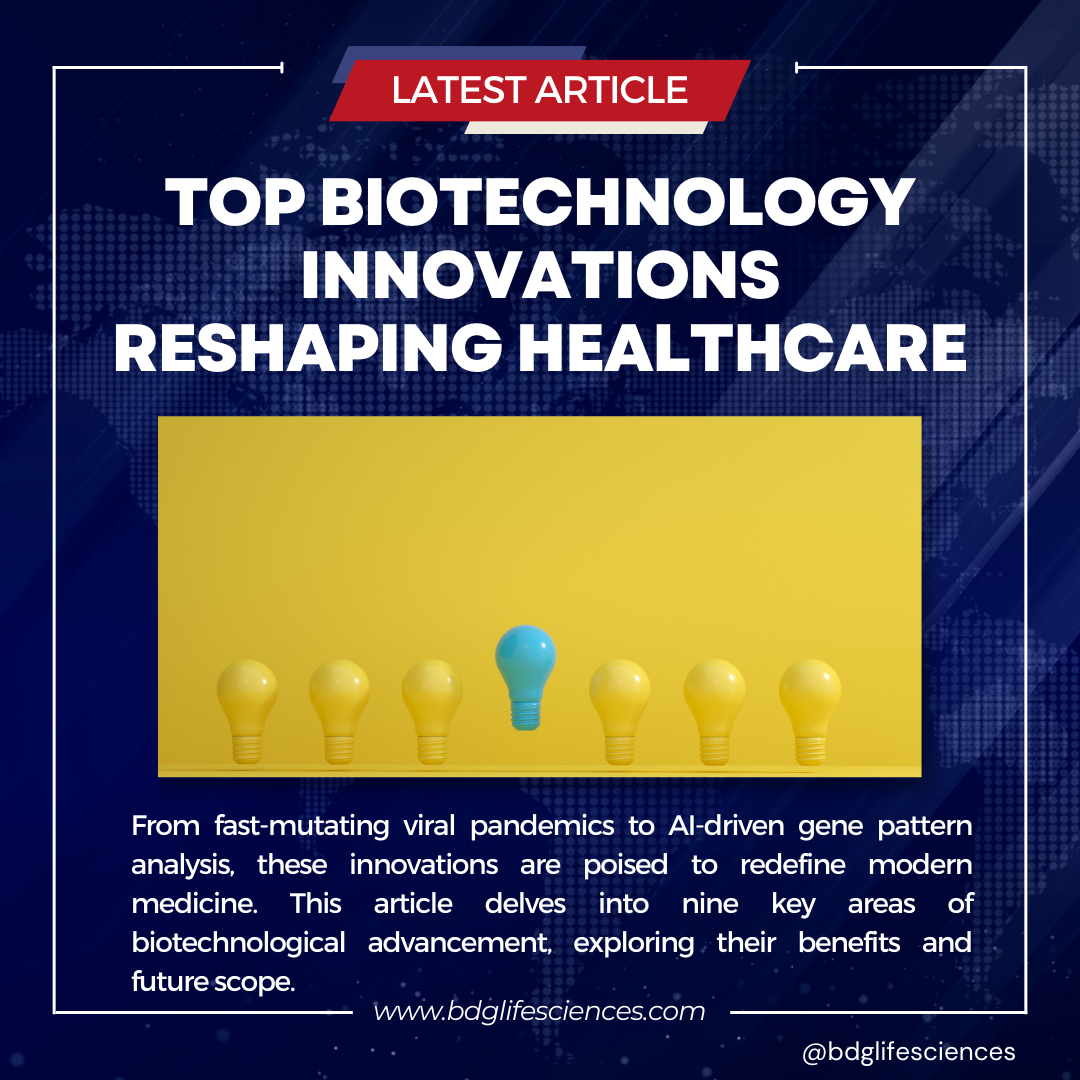
Biotechnology is evolving at an unprecedented pace, with groundbreaking advancements reshaping healthcare, pharmaceuticals, and disease management. From fast-mutating viral pandemics to AI-driven gene pattern analysis, these innovations are poised to redefine modern medicine. This article delves into nine key areas of biotechnological advancement, exploring their benefits and future scope.
1\. Fast Mutating Viral Disease Pandemics
What it is: Fast-mutating viral diseases, such as COVID-19 and influenza, constantly evolve, making them difficult to control with conventional treatments. These viruses adapt rapidly, leading to new variants that can evade immunity.
Benefits:
- Drives rapid vaccine development
- Encourages global health surveillance and preparedness
- Enhances antiviral drug research
Future Scope: Advancements in real-time genomic sequencing will enable early detection and response strategies, minimizing pandemic impact.
2\. Genetically Developed Vaccines
What it is: Genetically developed vaccines, such as mRNA vaccines, use genetic material to instruct cells to produce an immune response against pathogens.
Benefits:
- Faster development compared to traditional vaccines
- Higher efficacy and adaptability
- Lower production costs
Future Scope: Personalized vaccines targeting specific genetic profiles will revolutionize disease prevention.
3\. DNA Database Tracking
What it is: DNA databases store genetic information to identify individuals, study diseases, and assist in forensics.
Benefits:
- Aids in personalized medicine
- Enhances forensic investigations
- Assists ancestry and genealogy research
Future Scope: Wider adoption in healthcare for predictive diagnostics and disease prevention.
4\. DNA Chips
What it is: DNA chips, or microarrays, allow the analysis of thousands of genetic sequences simultaneously for disease detection and genetic research.
Benefits:
- High-speed genetic analysis
- Enables early disease detection
- Assists in personalized treatments
Future Scope: AI-driven DNA chips will enhance diagnostic accuracy and facilitate widespread genetic screening.
5\. Gene-Based Pharmaceuticals
What it is: Gene-based pharmaceuticals involve creating drugs tailored to an individual's genetic makeup.
Benefits:
- Personalized treatment plans
- Higher efficacy and fewer side effects
- Targeted approach to chronic and rare diseases
Future Scope: Expanded applications in cancer therapy, rare diseases, and neurodegenerative disorders.
6\. Transmitting Genetic Instructions for a Disease Process
What it is: This involves delivering genetic instructions to cells to either combat or study disease processes.
Benefits:
- Enables gene therapy for inherited disorders
- Enhances understanding of disease progression
- Facilitates regenerative medicine
Future Scope: Potential applications in correcting genetic defects and treating complex diseases.
7\. Artificial Intelligence to Determine Gene Patterns
What it is: AI-powered tools analyze large genetic datasets to detect patterns linked to diseases and drug responses.
Benefits:
- Speeds up genetic research
- Improves accuracy of disease prediction
- Enhances drug discovery efficiency
Future Scope: AI integration in healthcare will revolutionize diagnostics, personalized medicine, and treatment planning.
8\. Robots for Genome Sequencing
What it is: Automation using robotic systems for genome sequencing accelerates research and reduces human errors.
Benefits:
- Faster genome sequencing
- Cost-effective and scalable
- Enhances research reproducibility
Future Scope: Widespread use in clinical diagnostics, agriculture, and evolutionary studies.
9\. Using rDNA for Making Spike Proteins
What it is: Recombinant DNA (rDNA) technology is used to create spike proteins for vaccine development, such as those in COVID-19 vaccines.
Benefits:
- Accelerates vaccine development
- Enhances immune response efficacy
- Enables rapid response to emerging pathogens
Future Scope: Expanding to new vaccine platforms for a range of infectious diseases and cancer therapies.
Conclusion
The convergence of biotechnology with AI, robotics, and genetic engineering is opening new frontiers in medicine and pharmaceuticals. As these innovations continue to evolve, BDG Lifesciences is committed to equipping professionals with cutting-edge skills through live training sessions, hands-on workshops, Novel Research Projects, and expert-led discussions. Join our programs to stay ahead in the rapidly growing biotech industry.
To get regular updates on Upcoming Job opportunities, Research Projects, Latest News, Courses, Training and Trainings, kindly join our WhatsApp Channel / Telegram
31 Jan , 2025
Next-Gen Virtual Screening: How AI and Machine Learning are Transforming Drug Discovery
Discover how cutting-edge virtual screening techniques are reshaping drug discovery and creating new opportunities in the biotech industry
Introduction
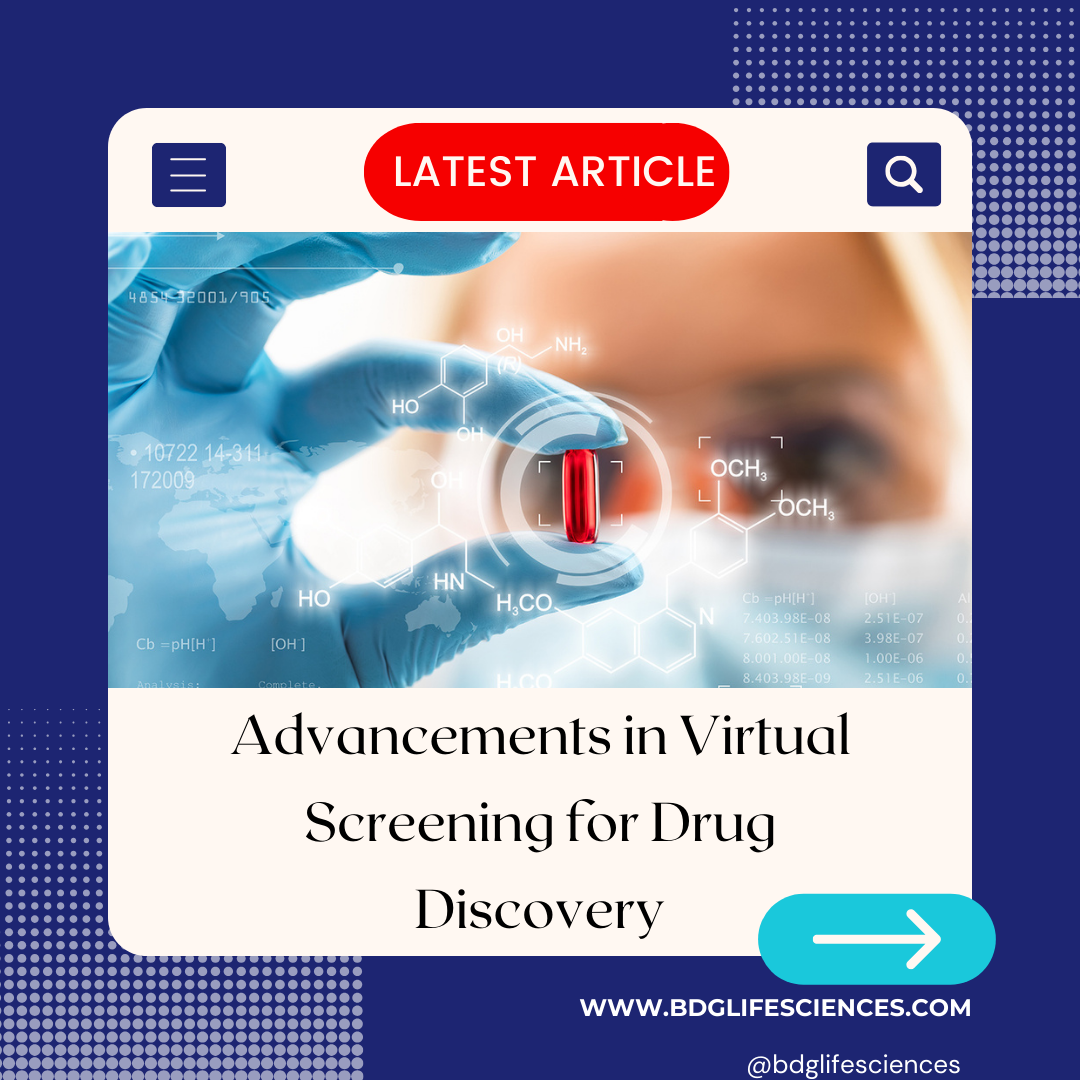
Drug discovery is a complex, time-consuming, and expensive process that requires identifying new compounds with therapeutic potential. Virtual screening (VS) has emerged as a transformative computational technique within computer-aided drug design (CADD), allowing researchers to efficiently analyze large chemical libraries to identify promising drug candidates. With rapid advancements in artificial intelligence (AI), machine learning (ML), high-performance computing, and quantum mechanics, virtual screening techniques have evolved significantly, enhancing accuracy, scalability, and efficiency.
This article explores the latest developments in virtual screening, its applications in drug discovery, and the impact of cutting-edge technologies in shaping the future of pharmaceutical research.
Overview of Virtual Screening
Virtual screening employs computational methods to predict which molecules have the potential to bind effectively to biological targets, accelerating the early stages of drug discovery. The two primary approaches in virtual screening are:
- Structure-Based Virtual Screening (SBVS): Utilizes the 3D structure of a target protein to predict binding affinities of potential drug candidates using molecular docking.
- Ligand-Based Virtual Screening (LBVS): Uses known active molecules to identify similar compounds based on chemical structures or pharmacophore models.
Recent Advancements in Virtual Screening
1\. AI and Machine Learning in Virtual Screening
The integration of AI and ML has significantly improved the accuracy and efficiency of virtual screening. AI-driven techniques contribute to:
- Predicting molecular interactions with high precision
- Enhancing Quantitative Structure-Activity Relationship (QSAR) models
- Generating novel drug-like molecules using generative adversarial networks (GANs) and variational autoencoders (VAEs)
- Identifying off-target effects and toxicity predictions
- Implementing transfer learning to optimize pre-trained models for specific drug discovery tasks
2\. Deep Learning Models for Improved Screening
Deep learning models such as Convolutional Neural Networks (CNNs) and Graph Neural Networks (GNNs) have improved SBVS and LBVS methodologies by:
- Extracting hidden patterns from large datasets
- Enhancing docking accuracy in molecular dynamics simulations
- Improving virtual screening workflows for rare or challenging targets
3\. High-Throughput Virtual Screening (HTVS)
High-performance computing (HPC) and cloud-based platforms have enabled HTVS, allowing researchers to screen millions of compounds rapidly. Techniques like GPU acceleration and parallel computing have further optimized the speed and scalability of screening.
Cloud computing has also revolutionized VS by providing:
- Access to large-scale computational resources without expensive infrastructure
- Real-time collaboration for global research teams
- Cloud-based AI tools for rapid data analysis
4\. Quantum Mechanics-Based Virtual Screening
Quantum mechanics (QM) approaches, such as Density Functional Theory (DFT), have enhanced VS by improving the understanding of molecular interactions. This has led to:
- More accurate predictions of binding affinities
- Better characterization of electronic structures in drug-target interactions
- Increased reliability in selecting potential drug candidates
5\. Integration of Multi-Omics Data
Modern virtual screening techniques increasingly incorporate multi-omics data (genomics, proteomics, metabolomics) to improve target identification and validation. This comprehensive approach ensures drug candidates are biologically relevant and effective.
6\. Hybrid Approaches for Enhanced Screening Accuracy
Combining multiple virtual screening techniques has proven effective in improving accuracy and minimizing false positives. Hybrid approaches integrate:
- AI-driven QSAR models with molecular docking
- Pharmacophore modeling with ligand-based screening
- Molecular dynamics simulations to refine docking results
Applications of Virtual Screening in Drug Discovery
Virtual screening techniques have been widely applied in various therapeutic areas, including:
- Oncology: Identifying novel anti-cancer agents targeting specific proteins.
- Infectious Diseases: Developing antiviral and antibacterial drugs, including those for COVID-19.
- Neurological Disorders: Discovering new compounds for neurodegenerative diseases.
- Rare Diseases: Accelerating drug repurposing efforts.
Case Studies and Success Stories
- COVID-19 Drug Discovery: Virtual screening played a crucial role in identifying repurposed drugs like remdesivir and baricitinib during the pandemic.
- Cancer Therapeutics: AI-driven virtual screening has led to the discovery of novel inhibitors for challenging targets like KRAS and MYC.
Challenges and Future Directions
Despite its advancements, virtual screening faces challenges such as false positives, the limited availability of high-quality data, and the necessity for experimental validation. Future research aims to address these challenges through:
- Developing more robust AI-driven models
- Integrating quantum computing for complex molecular simulations
- Establishing collaborative platforms for sharing screening data and computational tools
- Advancing personalized medicine by tailoring virtual screening to individual patients
Conclusion
Virtual screening has transformed drug discovery, making the process faster, more cost-effective, and efficient. With continued advancements in AI, deep learning, high-throughput computing, and quantum mechanics, virtual screening will play an increasingly vital role in pharmaceutical innovation.
BDG Lifesciences offers specialized training programs in Computer-Aided Drug Design (CADD) and virtual screening techniques. Our hands-on workshops provide practical exposure to cutting-edge drug discovery tools, equipping researchers, students, and professionals with essential skills to excel in this dynamic field.
21 Jan , 2025
Bioinformatics Trends
Top Trends in Bioinformatics: Expert Insights for 2025
The field of bioinformatics is witnessing rapid advancements due to technological innovations, the growing availability of biological data, and the increasing demand for personalized healthcare solutions. Industry experts have identified several key trends that are shaping the future of bioinformatics and transforming research and healthcare outcomes.
1.Understanding Bioinformatics
Bioinformatics is an interdisciplinary field that combines biology, computer science, and statistics to analyze and interpret biological data. It focuses on managing and studying large datasets, such as DNA sequences, protein structures, and gene expression profiles. Common applications include genome sequencing, evolutionary studies, drug discovery, and personalized medicine. Bioinformatics enables researchers to make sense of complex biological processes using computational tools and algorithms.
2.Artificial Intelligence and Machine Learning
AI and ML in Bioinformatics play a crucial role in analyzing and interpreting complex biological data. Here’s a brief overview of their contributions:
1\. Genome Analysis
- AI models help identify genes, regulatory elements, and mutations in genome sequences.
2\. Protein Structure Prediction
- AI-powered tools, such as AlphaFold, have revolutionized the prediction of 3D protein structures from amino acid sequences, aiding drug design and functional studies.
3\. Gene Expression Analysis
- ML algorithms identify patterns in gene expression data, helping to detect disease-related biomarkers and regulatory networks.
4\. Drug Discovery and Repurposing
- AI models predict drug-target interactions, accelerating the identification of new drugs and repurposing existing ones.
5\. Medical Genomics and Personalized Medicine
- AI and ML enable the integration of genomic data with clinical data, supporting precision medicine by predicting individual responses to treatments.
6\. Evolutionary and Phylogenetic Studies
- ML models analyze large-scale evolutionary data, helping to infer phylogenetic relationships and evolutionary trends.
7\. Image Analysis
- AI techniques are used to analyze biological images, such as histopathological slides, for detecting diseases like cancer.
8\. Systems Biology
- AI and ML help model complex biological systems, such as metabolic and signaling pathways, to understand cellular functions and interactions.
Key Benefits:
- Efficiency: Automates labor-intensive tasks, speeding up research.
- Accuracy: Reduces errors in biological data analysis.
- Scalability: Handles large-scale datasets generated by modern high-throughput technologies.
3.Next-Generation Sequencing (NGS)
Next-Generation Sequencing (NGS) in Bioinformatics refers to high-throughput sequencing technologies that generate massive amounts of DNA or RNA sequence data. NGS enables researchers to study genomes, transcriptomes, and epigenomes at an unprecedented scale and speed.
Role of NGS in Bioinformatics
- Genome Assembly
- Reconstructs whole genomes from sequencing reads, enabling the study of new or complex organisms.
- Variant Detection
- Identifies genetic variations, such as SNPs, insertions, deletions, and structural variants, crucial for disease research and personalized medicine.
- Transcriptomics
- Quantifies RNA expression levels (RNA-Seq) to understand gene activity, alternative splicing, and non-coding RNA functions.
- Epigenomics
- Studies DNA methylation and chromatin modifications using specialized NGS-based assays like ChIP-Seq and bisulfite sequencing.
- Metagenomics
- Analyzes microbial communities by sequencing mixed samples from environments, such as soil or human gut.
- Single-Cell Sequencing
- Profiles gene expression and genome variation at the single-cell level, enabling insights into cellular heterogeneity in tissues.
Key Benefits
- High accuracy and resolution for detecting genetic and regulatory elements.
- Scalability for large-scale studies, such as population genomics or cancer genomics.
- Cost-effectiveness compared to traditional Sanger sequencing for large datasets.
4.Precision Medicine
Bioinformatics plays a key role in precision medicine by enabling personalized treatments based on genetic and molecular profiles.
- Genomic Analysis: Identifies genetic variants linked to diseases and drug responses.
- Biomarker Discovery: Finds genetic and molecular markers for diagnosis and targeted therapies.
- Pharmacogenomics: Predicts individual drug responses to optimize treatment and dosage.
- Cancer Therapy: Guides personalized cancer treatments by analyzing tumor mutations.
- Clinical Decision Support: Develops AI-driven tools to aid clinicians in treatment decisions.
- Multi-Omics Integration: Combines genomic, transcriptomic, and proteomic data for comprehensive insights.
- Risk Prediction: Uses genetic data to predict disease risk and support preventive care.
5.Integration of Omics Data
Integration of Omics Data in Bioinformatics involves combining data from various omics fields—such as genomics, transcriptomics, proteomics, metabolomics, and epigenomics—to gain a comprehensive understanding of biological systems and disease mechanisms.
Key Roles
- Holistic Insights: Provides a multi-dimensional view of cellular processes by linking genetic information with gene expression, protein activity, and metabolic pathways.
- Biomarker Discovery: Identifies complex biomarker signatures by integrating data across different omics layers.
- Disease Mechanisms: Helps uncover detailed mechanisms underlying diseases by connecting molecular changes across omics levels.
- Personalized Medicine: Facilitates more accurate disease diagnosis, prognosis, and therapy selection by considering multiple omics factors.
6.Ethical Considerations
Ethical Considerations in Bioinformatics involve addressing privacy, data sharing, consent, and fairness when handling sensitive biological data, especially genetic information.
Role of Ethical Considerations
- Data Privacy: Ensures protection of personal genetic information to prevent misuse.
- Informed Consent: Requires clear consent from individuals before collecting or using their biological data.
- Data Sharing: Promotes responsible data sharing while safeguarding participants’ identities.
- Equity: Prevents biases in research and ensures that benefits of bioinformatics advancements are accessible to all populations.
Regulatory Compliance: Ensures adherence to ethical guidelines and legal frameworks like GDPR and HIPAA.
13 Jan , 2025
Stop Paying Twice to Learn Once: Invest in BDG Lifesciences and Get It Right the First Time!
Boost Your Biotech Career with BDG Lifesciences: High-Quality Bioinformatics Training for Top Jobs in the Industry
Why Quality Matters: Understanding the True Value of BDG Lifesciences Training Programs
In today’s competitive world, it is natural for individuals to seek cost-effective solutions when it comes to professional training. Many aspiring students and professionals in the fields of biotechnology and bioinformatics often explore various training programs, focusing primarily on cost as the deciding factor. However, as feedback from 90% of our participants reveals, there’s more to a training program than just its price.
At BDG Lifesciences, we have been providing specialized training programs since 2010\. Over the years, we have noticed a recurring trend: participants who initially chose other, more affordable programs often found themselves unsatisfied with the quality of learning and the overall experience. When they finally decided to enroll in one of our programs, their perspective completely changed.
The Learning Gap
Many participants shared how they attended at least 3-4 training programs elsewhere before discovering BDG Lifesciences or they found it cheap and registered there. While these programs may have appeared cost-effective, they often fell short in delivering practical insights, hands-on experience, and cutting-edge knowledge. Participants often found themselves grappling with incomplete or outdated content, leaving them with a superficial understanding of critical concepts.
When they joined a BDG program, they quickly realized what they had been missing. The difference was not just in the depth of content but in the approach. Our programs are meticulously designed, combining theoretical knowledge with practical applications to ensure a comprehensive learning experience.
The Value of Expertise
One of the key reasons BDG programs stand out is the unique way of teaching, considering only 10 participants in each program (sometimes less) the focus is given to every single participant and obviously the expertise of our trainers. With over a decade of experience in conducting onsite and online training, our team comprises industry experts who are passionate about imparting knowledge. Because of limited number, the participants often highlight the interactive sessions, personalized guidance is given, and real-world case studies are addressed and solved with discussions which is some of the most valuable aspects of our training.
Moreover, our programs focus on equipping participants with skills that are immediately applicable in their academic and professional pursuits. This hands-on approach not only enhances understanding but also builds confidence in tackling real-world challenges.
Why Are BDG Programs Expensive?
Many participants admitted that they initially hesitated to register for our programs due to the higher cost. However, after experiencing the quality of training, they understood the value behind the pricing. Unlike low-cost alternatives, BDG programs invest heavily in:
- Advanced Curriculum: Regularly updated content to reflect the latest advancements in biotechnology and bioinformatics. We were the first to launch a workshop and training course (Online & Onsite) on CRISPR/Cas 9 in May 2017 and since then doing it successfully. Now advancing in the technology we have launched a 5-day complete hands-on Online Training Program in CRISPR GENE THERAPY. We have launched at least 8 training programs on the use of Artificial Intelligence in Life sciences to pace up with the technology.
- State-of-the-Art Tools: Access to premium software, tools, and resources used in the industry.
- Expert Trainers: Highly qualified professionals with years of experience.
- Comprehensive Support: Dedicated support before, during, and after the training to ensure participants achieve their learning goals. We still get queries from people who joined our programs in 2010 and we solve them happily.
Participants often remark that the cost of our programs is an investment in their future. The skills and knowledge they gain not only help them excel academically but also open doors to better career opportunities.
A Learning Experience Worth the Investment
Ultimately, the feedback we receive is a testament to our commitment to quality. Participants consistently describe our programs as a game-changer, with many saying it was the best decision they made for their professional growth.
At BDG Lifesciences, we firmly believe that education is not just about ticking boxes or cutting corners. It’s about empowering individuals with the knowledge, skills, and confidence to make a real difference in their fields. While our programs may not be the cheapest, they are undeniably among the most impactful and rewarding.
To those considering their options, we encourage you to look beyond the price tag. Consider the long-term benefits, the depth of knowledge, and the quality of support you’ll receive. As many of our participants have discovered, the value of a BDG program far outweighs the initial investment.
Let us help you transform your learning journey—because when it comes to your future, quality should never be compromised.
23 Dec , 2024
Why Live Training is better than any other online learning
Why Learning from Live Trainers is the Ultimate Key to Career Success
Why Learning from a Live Trainer Outshines Other Online Resources
Introduction
In today’s digital world, the availability of online resources has made learning more accessible than ever before. From video tutorials to e-books and pre-recorded courses, the options for self-paced education are endless. These tools promise flexibility and convenience, allowing learners to study at their own pace. However, while these resources are useful, they often lack the dynamic and interactive qualities necessary for mastering complex topics or building hands-on expertise.
Live training, on the other hand, stands apart by offering an unparalleled level of engagement and personalization. Imagine having an experienced trainer who not only explains concepts but also answers your questions in real time and adapts the content to your specific needs. This kind of direct interaction ensures that you’re not just passively consuming information but actively participating in the learning process. With live training, learning becomes more than just acquiring knowledge—it transforms into a tailored, enriching experience.
For professionals and students in fields like biotechnology, bioinformatics, or any rapidly evolving industry, live training offers unique advantages. The ability to interact with an expert, receive instant feedback, and work through practical demonstrations prepares learners for real-world challenges. Unlike static online resources, live trainers often act as mentors, providing guidance that extends beyond the classroom and into your career. This article dives into why live training remains the gold standard for anyone serious about mastering new skills and excelling in their field.
1\. Personalized Learning Experience
A live trainer tailors the content to meet your specific learning needs. They can adapt to your pace, focus on areas where you struggle, and align the training with your goals. This level of personalization is impossible to achieve with static, pre-recorded materials.
2\. Real-Time Interaction
The opportunity to ask questions and receive immediate feedback is invaluable. Whether you need clarification on a concept or additional examples to grasp the topic fully, a live trainer ensures your queries are addressed instantly, preventing misunderstandings or gaps in knowledge.
3\. Practical Demonstrations and Hands-On Learning
Live trainers excel at providing practical demonstrations and guiding learners through hands-on exercises. For fields like biotechnology, bioinformatics, or IT, where practical skills are critical, live training ensures you gain real-world competencies.
4\. Enhanced Engagement and Accountability
Learning with a live trainer fosters an engaging environment. The interactive nature of sessions keeps learners motivated and focused. Additionally, the accountability of showing up for scheduled sessions ensures consistency—something self-paced resources often lack.
5\. A Mentor Beyond the Training
Live trainers often become mentors, offering guidance beyond the course. Their industry experience, insights, and personalized advice can shape your career trajectory, providing a support system that static resources cannot replicate.
6\. Networking Opportunities
Group live training sessions also open doors for networking with peers. Collaborating, sharing experiences, and learning together enhance the overall educational experience and build connections beneficial for career growth.
7\. Keeps You Updated with Industry Trends
Live trainers stay updated with the latest industry advancements and incorporate them into their teaching. This ensures you’re not just learning the basics but staying ahead with current trends and tools.
Conclusion
While pre-recorded courses and online resources provide convenience, the value of a live trainer is unmatched. By combining real-time interaction, practical demonstrations, and personalized mentorship, live training offers a comprehensive learning experience that equips you with both knowledge and confidence. If you’re serious about excelling in your field, investing in live training is the key to unlocking your potential.
BDG Lifesciences takes live learning to the next level by combining expert-led sessions with practical, hands-on training and the convenience of recorded content. Our workshops and training programs are designed to bridge the gap between theoretical knowledge and real-world application. By participating in live sessions, learners not only interact directly with seasoned trainers but also gain practical experience through step-by-step demonstrations and exercises tailored to their field of interest.
To ensure continuous learning and reference, we provide video recordings of sessions, enabling participants to revisit the material at their own pace. Whether you are a beginner or a seasoned professional in biotechnology, bioinformatics, or related domains, BDG Lifesciences equips you with the skills, insights, and mentorship you need to excel. With our commitment to excellence and a learner-first approach, we empower you to achieve your educational and career goals effectively.
How To Register
To secure your spot:
- 1\. Go to Online Workshops or Training Page, Click on the workshop or training which you want to attend.
- 2\. Read the details, Click on Register Now button and proceed.
- 3\. Check the confirmation email which you have got and go through the details.
- 4\. For any further queries, feel free to email us at [\[email protected\]](/cdn-cgi/l/email-protection)
Previous Events & Testimonials
Gain insight into our past trainings:
- Video Feedback: Visit our YouTube channel for testimonials.
- Upcoming Training Programs: Explore other upcoming events here.
- Upcoming Online Workshops: Explore other upcoming events here.
To get regular updates on Upcoming Job opportunities, Research Projects, Courses, Training and Trainings, kindly join our WhatsApp Channel / Telegram
19 Dec , 2024
Biotechnology Jobs to Watch in 2025-26
Top Biotechnology Jobs Poised to Boom in 2025-26: Skills & Opportunities You Need to Know
Biotechnology Jobs That Are Set to Boom in 2025-26
The biotechnology industry is on the brink of a major expansion, driven by advancements in genetic engineering, personalized medicine, and sustainable agriculture. Here are some of the top biotech jobs projected to thrive in 2025-26, along with insights on why these roles are crucial, who should pursue them, and the skills required.
List of Biotech Jobs to Watch
1- Genomic Data Scientists
2- CRISPR Technicians and Genetic Engineers
3- Bioinformatics Specialists
4- Synthetic Biologists
5- Regenerative Medicine Researchers
6- AI Specialists in Biotech
7- Clinical Trials Data Managers
8- Agricultural Biotechnologists
9- Biotech Product Development Specialists
10- Biopharmaceutical Process Engineers
Why These Jobs?
The biotech industry is growing at an unprecedented rate due to breakthroughs in gene editing tools like CRISPR, the increasing demand for sustainable agriculture, and the integration of artificial intelligence in drug discovery and development. These roles are critical to meeting the global demand for innovative healthcare solutions, enhanced food security, and environmentally friendly bioproducts.
For Whom Are These Jobs?
These opportunities are ideal for individuals with a background in life sciences, molecular biology, genetics, biochemistry, data science, or engineering. Whether you’re a graduate, master’s student, Ph.D. candidate, or an experienced professional, there’s a place for you in this dynamic sector.
List of Biotech Jobs to Watch
1\. Genomic Data Scientists
Why? With the increasing availability of high-throughput sequencing technologies, interpreting vast genomic datasets is crucial for personalized medicine and precision agriculture.
For Whom? Graduates or professionals with expertise in bioinformatics, genomics, or computational biology.
Skills Required: Proficiency in programming (Python, R), statistical analysis, machine learning, and genomics databases like Ensembl and UCSC Genome Browser.
2\. CRISPR Technicians and Genetic Engineers
Why? The demand for gene-editing solutions in therapeutics, agriculture, and biotechnology has skyrocketed due to the versatility of CRISPR technology.
For Whom? Biologists, molecular scientists, and engineers passionate about genetic research.
Skills Required: Expertise in CRISPR-Cas9 systems, Gene Therapy, molecular cloning, cell culture techniques, and regulatory knowledge for genetic modifications.
3\. Bioinformatics Specialists
Why? As biology becomes increasingly data-driven, bioinformatics is indispensable in analyzing genetic, transcriptomic, and proteomic data.
For Whom? Biologists, computer scientists, or IT professionals interested in life sciences.
Skills Required: Knowledge of sequencing analysis, databases (NCBI, EMBL), and software like BLAST and Galaxy. Programming in R or Python is essential.
4\. Synthetic Biologists
Why? Synthetic biology is revolutionizing biotech with applications in biofuel production, synthetic vaccines, and engineered microorganisms.
For Whom? Molecular biologists, engineers, and chemists focused on innovation in biomaterials.
Skills Required: Gene circuit design, DNA synthesis, metabolic pathway engineering, and knowledge of synthetic biology tools like SBOL or BioBricks.
5\. Regenerative Medicine Researchers
Why? Advances in stem cell therapy and tissue engineering are driving innovations in healthcare and disease management.
For Whom? Biologists, medical researchers, and tissue engineers.
Skills Required: Expertise in cell differentiation, 3D bioprinting, biomaterials, and clinical trial management.
6\. AI Specialists in Biotech
Why? AI is transforming how biotech companies analyze data, predict drug interactions, and optimize processes.
For Whom? Data scientists, AI professionals, or biologists with an interest in machine learning.
Skills Required: Knowledge of AI tools (TensorFlow, PyTorch), predictive modeling, and integration of AI into drug discovery and bioinformatics.
7\. Clinical Trials Data Managers
Why? The growing complexity of clinical trials for new therapeutics requires efficient data management and regulatory compliance.
For Whom? Biostatisticians, data analysts, or clinical researchers.
Skills Required: Familiarity with clinical data standards (CDISC), statistical tools (SAS, SPSS), and regulatory protocols.
8\. Agricultural Biotechnologists
Why? The need for sustainable food production and climate-resistant crops is driving agricultural biotechnology.
For Whom? Plant biologists, geneticists, and agronomists.
Skills Required: Knowledge of genetic engineering, plant breeding, and biotechnology tools like Agrobacterium-mediated transformation.
9\. Biotech Product Development Specialists
Why? Bringing innovative biotech products to market requires specialized knowledge in product development and commercialization.
For Whom? Professionals in R&D, business, or regulatory affairs.
Skills Required: Project management, knowledge of product lifecycle, regulatory compliance, and market analysis.
10\. Biopharmaceutical Process Engineers
Why? Developing efficient biomanufacturing processes is essential for producing biologics, vaccines, and cell therapies at scale.
For Whom? Chemical engineers, biochemists, and microbiologists.
Skills Required: Process optimization, bioreactor design, cGMP compliance, and downstream purification techniques.
Conclusion: How BDG Lifesciences Can Help You Master These Skills
BDG Lifesciences is committed to equipping you with the essential skills to thrive in the dynamic fields of biotechnology and bioinformatics. Our meticulously designed workshops and training programs offer hands-on experience with cutting-edge tools, technologies, and methodologies. Whether you aim to excel in genomic data analysis, genetic engineering, or AI applications in biotech, our programs provide a solid foundation and advanced techniques to enhance your expertise.
By engaging with industry-relevant case studies, expert guidance, and practical applications, BDG Lifesciences helps bridge the gap between academic knowledge and real-world requirements. Join us to build your competitive edge, boost your employability, and prepare for the booming biotech job market of 2025-26.
Invest in your future with BDG Lifesciences and take a decisive step toward becoming a sought-after professional in the biotech and bioinformatics industries.
How To Register
To secure your spot:
- 1\. Go to Online Workshops or Training Page, Click on the workshop or training which you want to attend.
- 2\. Read the details Click on Register Now button and proceed.
- 3\. Check the confirmation email which you have got and go through the details.
- 4\. For any further queries, feel free to email us at [\[email protected\]](/cdn-cgi/l/email-protection)
Previous Events & Testimonials
Gain insight into our past trainings:
- Video Feedback: Visit our YouTube channel for testimonials.
- Upcoming Training Programs: Explore other upcoming events here.
- Upcoming Online Workshops: Explore other upcoming events here.
To get regular updates on Upcoming Job opportunities, Research Projects, Courses, Training and Trainings, kindly join our WhatsApp Channel / Telegram
12 Dec , 2024
Why Learn Bioinformatics? Boost Your Career in Life Sciences
Why Learn Bioinformatics? Boost Your Career in Life Sciences
Why Learn Bioinformatics and Its Benefits for Future Opportunities
Introduction
In a world driven by technology and data, bioinformatics stands at the intersection of biology, computer science, and data analysis, unlocking new pathways for scientific discoveries. For those in the fields of life sciences, biotechnology, and data science, learning bioinformatics is not just an option—it’s a necessity for staying relevant in the rapidly evolving job market.
What is Bioinformatics?
Bioinformatics involves the use of computational tools and techniques to analyze biological data. It plays a pivotal role in genomics, proteomics, drug discovery, and personalized medicine. This interdisciplinary field empowers scientists to solve complex biological problems by managing and interpreting vast datasets.
Reasons to Learn Bioinformatics
-
Increasing Demand Across Industries
The demand for bioinformatics professionals is skyrocketing as industries like pharmaceuticals, biotechnology, and healthcare adopt data-driven approaches. Organizations require experts who can handle big data, analyze genomes, and predict protein structures. -
Relevance in Cutting-Edge Research
Bioinformatics has become a cornerstone for advancements in areas like gene editing (CRISPR), cancer research, and vaccine development. Learning bioinformatics opens the door to contributing to groundbreaking research projects. -
Job Versatility
Bioinformatics expertise can lead to diverse roles such as data analyst, computational biologist, bioinformatics scientist, and software developer in life sciences. -
Global Career Opportunities
Countries worldwide are heavily investing in genomics and biotechnology research. Skills in bioinformatics enhance your eligibility for opportunities in prestigious labs, research institutions, and top biotech firms globally. -
Contributions to Personalized Medicine
With the rise of precision medicine, bioinformatics is central to tailoring treatments based on individual genetic profiles. Proficiency in bioinformatics makes you indispensable in this revolutionary shift in healthcare.
Benefits of Bioinformatics Skills
-
Enhanced Problem-Solving Abilities
Bioinformatics teaches how to interpret biological data, derive insights, and solve problems—skills highly valued in any scientific field. -
Improved Technical Proficiency
Learning programming languages (e.g., Python, R), databases, and tools like BLAST or Galaxy equips you with technical capabilities applicable to multiple industries. -
Increased Employability
Employers prioritize candidates with bioinformatics expertise due to the critical role it plays in drug discovery, agricultural innovation, and disease prevention. -
Competitive Edge in Academia and Industry
Whether you aim for a Ph.D. or a corporate career, bioinformatics expertise sets you apart from peers, reflecting your readiness to tackle modern scientific challenges.
Conclusion
Bioinformatics is not just a skill; it's an investment in your career. As industries evolve, the need for experts who can bridge biology and data science will continue to grow. By mastering bioinformatics, you position yourself at the forefront of innovation, securing a future filled with exciting opportunities.
02 Dec , 2024
Artificial Intelligence
How Generative AI is Revolutionizing Drug Design and Accelerating New Medicines
Generative AI: Revolutionizing Drug Design
The field of drug design has witnessed transformative advancements with the advent of Generative AI, a subset of artificial intelligence that uses sophisticated algorithms to create novel data patterns. In pharmaceutical research, generative AI holds immense potential for accelerating drug discovery, reducing costs, and enhancing the precision of therapeutic design.
Understanding Generative AI in Drug Design
Generative AI operates using machine learning models, such as generative adversarial networks (GANs) and variational autoencoders (VAEs), to produce new data similar to the data it was trained on. When applied to drug design, these models can generate novel chemical structures, predict their properties, and optimize lead compounds more efficiently than traditional methods.
How Generative AI Works in Drug Discovery
-
Data Collection and Training:
The process begins with training AI models on extensive datasets of known molecular structures, biological activity data, and pharmacokinetics. -
Molecular Generation:
Once trained, the AI model can propose novel molecular structures with specific desired properties, such as high efficacy or low toxicity. -
Validation and Optimization:
The generated compounds are validated through simulations and experimental testing, and AI tools are used iteratively to refine the structures.
Key Applications in New Drug Design
-
Designing Novel Molecules:
Generative AI can create drug candidates from scratch, proposing entirely new chemical entities with therapeutic potential. -
Predicting Drug-Like Properties:
AI models evaluate pharmacokinetic and pharmacodynamic properties, such as solubility and bioavailability, early in the design process. -
Repurposing Existing Drugs:
Generative models can identify new therapeutic uses for existing drugs, accelerating the pipeline for drug repurposing. -
Reducing Costs and Time:
By automating complex tasks, such as molecular docking and activity prediction, AI reduces the time and resources required to develop new drugs.
Recent Success Stories
Generative AI has already demonstrated significant impact:
- Antibiotic Discovery: In 2020, researchers used AI to discover Halicin, a novel antibiotic capable of tackling multidrug-resistant bacteria.
- COVID-19 Research: Generative AI has been pivotal in identifying potential compounds for combating SARS-CoV-2, the virus responsible for COVID-19.
- Targeted Therapies: AI-generated drugs are advancing precision medicine by tailoring treatments to specific genetic profiles.
Challenges and Future Prospects
Despite its potential, generative AI in drug design faces challenges, including:
- Data Quality: Generative AI relies on high-quality datasets; errors or biases in data can lead to suboptimal outcomes.
- Regulatory Hurdles: Approvals for AI-generated drugs require clear frameworks to ensure safety and efficacy.
- Interpretability: AI models often function as "black boxes," making it difficult to interpret their decisions.
As technology evolves, these challenges are expected to diminish. Integrating generative AI with techniques like quantum computing and advanced simulations may further enhance its efficacy in drug discovery.
Conclusion
Generative AI is reshaping the landscape of drug design, offering unprecedented capabilities to innovate and optimize pharmaceutical development. By embracing this technology, researchers and organizations can unlock new therapeutic possibilities, addressing unmet medical needs and transforming global healthcare.
Interested in learning more about AI applications in life sciences? Stay tuned to our blog for the latest updates and insights.
Since 2017 BDG Lifesciences is conducting 2 Certificate Training programs Artificial Intelligence in Drug Discovery & Design and Machine Learning in Drug Discovery, now we have combined these two programs and made one as 3 Day Technical Hands-on Certificate Online Training in Artificial Intelligence & Machine Learning in Drug Discovery, Check out from here and learn this amazing technology for a better future.
Regards
13 Nov , 2024
Metagenomics
Unlocking the Power of Metagenomics: Transforming Microbiome Research and Environmental Conservation
Metagenomics for Microbiome and Environmental Research: Unlocking the World of Microbial Communities
The field of metagenomics has revolutionized the way we study microorganisms, unveiling the complexity and diversity of microbial communities that reside in various environments. From human health to ecosystem conservation, metagenomics has become a powerful tool, allowing scientists to analyze genetic material directly from environmental samples without the need for traditional culturing methods. This article explores the impact of metagenomics on microbiome research and environmental science, and why it’s critical to advancing our understanding of both human health and the planet.
What is Metagenomics?
Metagenomics is the study of the collective genome of microorganisms in a particular environment, often referred to as a “microbiome.” This approach involves extracting and sequencing DNA directly from environmental samples, such as soil, water, or human body sites, to identify and analyze the presence of different microbial species and their genetic functions.
With advancements in next-generation sequencing (NGS) technologies, metagenomics has enabled scientists to gain unprecedented insights into complex microbial ecosystems, including those in the human gut, marine environments, soil ecosystems, and extreme environments like deep-sea hydrothermal vents.
Importance of the Microbiome: Human Health and Disease
The human microbiome, particularly the gut microbiome, is now recognized as a critical component of human health. It plays essential roles in digestion, immunity, and even mental health. Imbalances in the microbiome, known as dysbiosis, have been linked to a range of diseases, including obesity, diabetes, autoimmune disorders, and mental health conditions.
Key areas where metagenomics contributes to microbiome research in human health include:
- Disease Mechanisms: By identifying specific microbes linked to health or disease, researchers can better understand conditions like inflammatory bowel disease (IBD) and Crohn's disease.
- Antibiotic Resistance: Metagenomics helps monitor the spread of antibiotic-resistant genes in microbial communities, providing insight into the emergence of drug-resistant infections.
- Probiotic Development: Understanding the composition and functions of healthy microbiomes allows for targeted development of probiotics that promote beneficial bacterial populations.
Metagenomic analysis enables the identification of microbial strains that might produce therapeutic compounds or aid in the development of new treatments for microbial imbalances, offering great potential for personalized medicine.
Environmental Research: A Window into Ecosystems
In environmental science, metagenomics is used to study microbial communities in natural settings, which are fundamental to ecosystem functions like nutrient cycling, carbon sequestration, and pollution breakdown. Key applications in this area include:
-
Biodiversity and Conservation: Metagenomics provides a more comprehensive understanding of microbial diversity in different environments, helping scientists assess biodiversity loss and ecosystem health. This is particularly useful in assessing the impact of pollution and climate change on fragile ecosystems like coral reefs and rainforests.
-
Soil Health and Agriculture: Soil microbiomes play a vital role in plant growth and soil fertility. Metagenomic studies reveal how different agricultural practices affect soil microbial diversity, enabling more sustainable farming practices by promoting beneficial microbes that support plant health and reduce reliance on chemical fertilizers and pesticides.
-
Environmental Pollution: Certain microorganisms can degrade pollutants, making metagenomics a valuable tool for environmental bioremediation. By identifying microbial communities capable of breaking down contaminants, scientists can devise strategies to clean up oil spills, plastic waste, and other environmental pollutants.
Metagenomics Techniques and Advancements
Metagenomic techniques primarily involve:
- Shotgun Sequencing: This approach sequences all DNA present in a sample, providing comprehensive information on microbial composition and genetic functions.
- 16S rRNA Sequencing: Commonly used to identify bacterial species, 16S sequencing targets a specific gene present in all bacteria, allowing for a quick assessment of microbial diversity.
- Functional Metagenomics: Functional analysis focuses on the genetic potential of microbial communities, identifying genes involved in specific processes like metabolism, antibiotic resistance, and bioremediation.
The advent of AI and machine learning has further enhanced metagenomic studies by analyzing massive data sets to identify patterns and correlations that might be missed with traditional methods. These technologies help predict microbial behavior, optimize environmental interventions, and personalize medical treatments based on individual microbiomes.
Challenges in Metagenomics
While metagenomics has transformed microbiome and environmental research, several challenges remain:
- Data Complexity: The vast amount of data generated requires significant computational resources and expertise to analyze.
- Contamination: Environmental samples can easily be contaminated, which can skew results and complicate analysis.
- Functional Unknowns: Many genes in microbial communities remain uncharacterized, limiting our understanding of microbial functions and interactions.
Continued advances in sequencing technology, bioinformatics, and data-sharing platforms are expected to address these challenges, allowing metagenomics to reach its full potential.
The Future of Metagenomics: New Frontiers
The potential applications of metagenomics are expanding rapidly. Some exciting future directions include:
- Human-Microbiome Interface: Continued research on the human microbiome will provide new insights into how our microbiota influence health, enabling tailored probiotic and prebiotic therapies.
- Planetary Health: Understanding microbial ecosystems across different environments will be crucial in tackling global challenges like climate change, food security, and pollution.
- Synthetic Biology: Metagenomics enables the discovery of new genes and metabolic pathways that can be engineered into synthetic organisms, potentially leading to breakthroughs in biofuel production, sustainable agriculture, and medicine.
Conclusion
Metagenomics is a powerful tool for uncovering the hidden world of microorganisms that play crucial roles in both human health and environmental sustainability. From shaping the future of personalized medicine to helping us tackle environmental challenges, metagenomics offers remarkable potential for scientific advancements. As research continues, this field will undoubtedly yield new insights and applications that can help improve health outcomes, enhance environmental conservation efforts, and ensure a more sustainable future.
This article aims to provide an in-depth look at metagenomics and its broad applications in health and environmental research. By better understanding these complex microbial communities, we can unlock new ways to protect and enhance life on Earth.
10 Nov , 2024
Single Cell Genomics
Exploring Single-Cell Genomics and Transcriptomics: Unlocking Cellular Secrets for Precision Medicine
Unveiling Cellular Mysteries: A Dive into Single-Cell Genomics and Transcriptomics
Single-Cell Genomics and Transcriptomics are transforming our understanding of biology by allowing researchers to explore the genetic and transcriptomic makeup of individual cells. This revolutionary approach has opened up new avenues for studying cellular heterogeneity, disease progression, and cellular functions that were previously undetectable with bulk analysis methods. By focusing on individual cells, researchers can identify rare cell types, track cell lineages, and unravel complex cell behaviors in development, immunity, cancer, and beyond.
A Brief History and Importance of Single-Cell Genomics
The field of single-cell genomics emerged in response to the limitations of traditional bulk sequencing methods, which average out data across thousands or millions of cells. As early as the 1980s, scientists explored ways to analyze DNA from single cells, but advances in next-generation sequencing (NGS) and microfluidics in the 2000s finally made it possible to profile individual cells at a large scale. Today, single-cell genomics has become a cornerstone of modern biology, providing insights that are reshaping areas like developmental biology, cancer research, and regenerative medicine.
The Difference Between Single-Cell Genomics and Transcriptomics
- Single-Cell Genomics: Focuses on analyzing the DNA within a single cell. By sequencing the genome of individual cells, researchers can identify genetic mutations, structural variations, and unique genetic profiles. This is particularly valuable in fields like cancer research, where tumors are composed of genetically diverse cells.
- Single-Cell Transcriptomics: Focuses on measuring the RNA transcripts in a single cell. Since RNA reflects gene expression in real-time, single-cell transcriptomics is a powerful tool for understanding cell function, behavior, and response to external stimuli.
Together, these techniques provide a comprehensive view of cellular identity and function at an unprecedented resolution.
Emerging Techniques in Single-Cell Analysis
The rapid development of single-cell technologies has given rise to a variety of innovative tools and methods:
-
Droplet-based Single-Cell RNA Sequencing (scRNA-seq): Uses microfluidic devices to isolate single cells into droplets for sequencing. This method is highly scalable and allows for the profiling of thousands of cells simultaneously.
-
Single-Cell ATAC-seq: Measures chromatin accessibility to identify regulatory elements in the genome. This technique provides insight into gene regulatory networks by analyzing regions of open chromatin within individual cells.
-
Spatial Transcriptomics: Combines gene expression analysis with spatial information, enabling researchers to map gene expression patterns within tissues. This technique helps in understanding the spatial organization of cells and how it affects function.
-
CRISPR-based Perturb-seq: Integrates CRISPR technology with scRNA-seq to observe gene function at a single-cell level by perturbing specific genes. This allows researchers to investigate causal relationships between genes and cell behaviors.
Data Analysis Challenges in Single-Cell Genomics and Transcriptomics
While single-cell techniques provide valuable insights, they also present unique data analysis challenges:
- High Dimensionality: Single-cell datasets are massive, with thousands of genes measured across tens of thousands of cells. Analyzing these high-dimensional data requires sophisticated algorithms and substantial computational resources.
- Batch Effects: Differences in experimental conditions across batches can introduce variability in single-cell data. Researchers must account for these batch effects to avoid biased results.
- Dropout Events: In single-cell RNA sequencing, low-abundance transcripts may go undetected, resulting in “dropout” events. Correcting for these missing values is essential for accurate interpretation of the data.
- Complexity of Cell Clustering: Identifying and classifying cell types within single-cell data is challenging due to cellular heterogeneity. Advanced clustering algorithms and machine learning methods are often employed to tackle this complexity.
Applications of Single-Cell Genomics and Transcriptomics in Disease Research
The impact of single-cell technologies spans various fields, from understanding immune responses to uncovering cancer heterogeneity:
-
Cancer Research Single-cell genomics allows researchers to dissect tumor heterogeneity by identifying diverse subpopulations within a tumor. This is particularly valuable in precision oncology, as it enables the identification of drug-resistant clones and provides insights into how cancers evolve and respond to treatment.
-
Neuroscience The brain is composed of numerous specialized cell types, each with unique functions. Single-cell transcriptomics helps scientists map cell types in the brain, leading to a better understanding of neurological diseases like Alzheimer’s and Parkinson’s.
-
Immunology Immune responses are highly dynamic, with various immune cell types responding differently to pathogens. Single-cell technologies enable researchers to track immune cell behavior, providing insights into autoimmune diseases, allergies, and vaccine responses.
-
Developmental Biology By studying individual cells at various stages of development, researchers can map cell lineage trajectories, understanding how a single fertilized egg develops into a complex organism. This has broad implications for regenerative medicine and stem cell research.
Recent Discoveries Enabled by Single-Cell Analysis
Recent studies have highlighted the power of single-cell genomics and transcriptomics in revealing novel insights:
- Mapping Cellular Diversity in Tumors: A study published in Nature utilized single-cell RNA sequencing to map cellular diversity within different tumor types, uncovering unique cell populations associated with resistance to chemotherapy.
- Immune Cell Dynamics in COVID-19: Single-cell analysis has been instrumental in understanding immune responses to COVID-19\. Researchers used scRNA-seq to profile immune cells from infected patients, identifying cell types and pathways associated with severe outcomes.
- Human Cell Atlas: The Human Cell Atlas project aims to map every cell type in the human body using single-cell technologies, providing an invaluable reference for understanding human health and disease.
Challenges and Limitations of Single-Cell Technologies
Despite their power, single-cell technologies come with several limitations:
- Technical Noise: Single-cell experiments are prone to technical noise, making data normalization and interpretation challenging.
- Cost and Accessibility: Single-cell sequencing is still relatively expensive, limiting access for smaller labs and research institutions.
- Complexity of Multi-Omics Integration: Integrating data from multiple omics layers (e.g., genomics, transcriptomics, proteomics) is challenging but essential for a complete understanding of cellular functions.
Ethical Considerations in Single-Cell Research
As single-cell technology advances, ethical considerations emerge:
- Data Privacy: Single-cell data can be highly specific to individuals, raising concerns about data privacy, especially in human health research.
- Consent in Cell Atlas Projects: Projects like the Human Cell Atlas require informed consent from participants, particularly when cells are derived from patient samples.
- Clinical Applications and Equity: As single-cell techniques move toward clinical applications, ensuring equitable access to these advanced technologies is crucial to avoid healthcare disparities.
Future Directions in Single-Cell Genomics and Transcriptomics
The future of single-cell analysis holds exciting possibilities:
- Integration with CRISPR for Functional Genomics: Combining CRISPR screens with single-cell sequencing will allow scientists to test the effects of gene disruptions in specific cell types.
- Advancements in Spatial Transcriptomics: Emerging spatial methods will make it possible to visualize cellular interactions in greater detail, providing insights into tissue architecture and disease microenvironments.
- Single-Cell Multi-Omics: By measuring multiple layers of information—such as DNA, RNA, and proteins—in individual cells, researchers can gain a holistic view of cellular function and regulation.
- AI and Machine Learning Integration: Leveraging AI in single-cell data analysis can uncover hidden patterns, assisting in more accurate cell type identification, disease stratification, and personalized treatment approaches.
Conclusion
Single-cell genomics and transcriptomics are rapidly advancing our understanding of cellular diversity and complexity. By providing unprecedented insights into individual cells, these technologies are reshaping biomedical research and paving the way for precision medicine. Although challenges remain in data analysis, cost, and technical noise, the continued development of single-cell methods promises to unlock new discoveries in health and disease. As we look to the future, single-cell analysis will likely become even more integrated with other technologies, creating a multidimensional view of biology that holds transformative potential for science and medicine.
08 Nov , 2024
Artificial Intelligence
Revolutionizing Drug Discovery: How AI and Machine Learning Are Shaping the Future of Medicine
Transforming Drug Discovery with AI and Machine Learning
Artificial Intelligence (AI) and Machine Learning (ML) are revolutionizing the field of drug discovery by drastically enhancing the speed and accuracy of identifying new drug candidates. Historically, drug discovery involved a labor-intensive and costly process that could take over a decade from initial screening to market. With AI-driven methods, researchers can now streamline drug development, accelerating breakthroughs in various medical fields and addressing previously untreatable conditions.
The Evolution of AI in Drug Discovery
AI’s role in drug discovery has evolved significantly over the past few decades. Early computational approaches focused primarily on molecular modeling, simulations, and structure-based drug design. However, with the advent of big data and advances in AI and ML, particularly deep learning, AI is now capable of processing large datasets, predicting molecular interactions, and optimizing clinical trials. This evolution is transforming AI from a supportive tool to an integral part of the drug discovery pipeline.
How AI and ML Are Transforming Each Stage of Drug Discovery
-
Target Identification and Validation AI algorithms analyze vast datasets—ranging from genetic information to protein-protein interactions—to identify potential drug targets. AI can detect patterns in the data that point to proteins or genes likely associated with disease, significantly narrowing down the list of viable targets for further testing.
-
Hit Identification and Lead Optimization Traditional drug discovery involves screening millions of compounds to identify molecules that bind effectively to the target protein. Machine learning algorithms can rapidly analyze compound libraries and predict which molecules are most likely to succeed as drug candidates, saving time and resources. Lead compounds can then be optimized using ML models to enhance their potency, bioavailability, and safety.
-
Preclinical Studies and Toxicity Prediction Before human trials, compounds must undergo rigorous testing to ensure their safety. AI helps in predicting adverse effects by analyzing biological data from preclinical studies, including animal models and in vitro assays. Toxicity prediction models assess the likelihood of side effects, reducing the risk of failure in later stages.
-
Clinical Trial Design and Patient Recruitment Clinical trials are a costly and time-consuming phase of drug development. AI plays a critical role in optimizing trial design and recruiting suitable patient populations. By analyzing patient data, including genetic and phenotypic information, AI can improve patient stratification, reduce trial costs, and increase the chances of success.
Case Studies: Success Stories of AI in Drug Discovery
-
Atomwise’s Virtual Screening for Ebola Treatment Atomwise, an AI-driven drug discovery company, used deep learning algorithms to screen millions of compounds and identify those with the potential to treat Ebola. Their AI models were able to find promising molecules within weeks, significantly faster than traditional drug discovery methods.
-
BenevolentAI’s Discovery of Baricitinib for COVID-19 BenevolentAI employed its AI platform to repurpose existing drugs to treat COVID-19\. The platform suggested Baricitinib, originally developed for rheumatoid arthritis, which was later approved as a COVID-19 treatment. This success underscored AI's ability to identify potential therapies swiftly in response to urgent medical needs.
-
Insilico Medicine’s AI-Designed Drug for Fibrosis Insilico Medicine developed an AI platform that generated a novel compound targeting fibrosis within 18 months—a fraction of the traditional time required. This breakthrough highlighted AI's potential to generate first-in-class molecules, reducing drug development timelines.
AI Algorithms and Tools in Drug Discovery
Several advanced algorithms and tools have become popular in AI-driven drug discovery:
- Generative Adversarial Networks (GANs): Used to design novel compounds by learning from known drug molecules.
- Reinforcement Learning: Allows AI models to optimize compounds iteratively, fine-tuning chemical structures based on desired characteristics.
- Autoencoders: Employed for dimensionality reduction in high-throughput screening, capturing essential features of complex datasets.
Popular platforms include TensorFlow and PyTorch for ML model development, while specialized platforms like DeepChem and BioSymphony offer frameworks tailored to molecular data analysis and drug discovery applications.
Challenges in AI-Driven Drug Discovery
While AI offers remarkable potential, challenges remain:
-
Data Quality and Availability: AI models require vast amounts of high-quality data. However, obtaining clean, consistent, and sufficiently detailed biological data can be challenging, especially across different sources and institutions.
-
Model Interpretability: Many AI models, especially deep learning ones, operate as "black boxes," making it difficult for researchers to understand how predictions are generated. This lack of transparency can hinder regulatory approval and the scientific community’s trust in AI-driven decisions.
-
Scalability and Integration: Implementing AI systems across all stages of drug discovery requires significant computational power and seamless integration with existing workflows. Small to mid-sized companies may find this transition financially and logistically challenging.
Ethical and Regulatory Considerations
The rapid adoption of AI in drug discovery raises important ethical and regulatory questions:
- Data Privacy: Patient data used for AI model training must be handled with strict adherence to privacy regulations, such as GDPR and HIPAA, to prevent misuse.
- Bias and Fairness: AI models trained on biased datasets may yield results that do not generalize well across diverse populations. Ensuring equitable representation in datasets is essential to avoid introducing bias in drug efficacy and safety.
- Regulatory Approval: Regulatory bodies like the FDA are still adapting to AI-driven drug discovery methods. Demonstrating the reliability and safety of AI predictions is necessary for gaining regulatory acceptance.
The Future of AI in Drug Discovery
As AI technology advances, it is expected to unlock new possibilities in drug development:
- Personalized Medicine: AI will play a crucial role in tailoring treatments based on individual genetic and phenotypic profiles, leading to more effective and personalized therapies.
- Combination Therapies: AI can help identify potential combinations of drugs that could work synergistically, offering new treatment strategies for complex diseases.
- De Novo Drug Design: Future AI systems might be capable of designing drugs from scratch with minimal human intervention, optimizing them in real-time based on computational feedback loops.
Conclusion
AI and machine learning are fundamentally reshaping drug discovery, transforming it from a slow, high-risk endeavor to a faster, data-driven process with immense potential. With continuous advancements in AI technology and growing data availability, we are witnessing a new era where innovative treatments could be developed more quickly and efficiently than ever before. However, to fully realize this potential, the field must address key challenges related to data quality, interpretability, and ethical considerations. AI promises a future where personalized medicine and rapid drug discovery become the standard, benefiting patients and healthcare systems worldwide.
05 Nov , 2024
For Biotechnology & Bioinformatics Jobs
Top Skills for High-Paying Biotechnology & Bioinformatics Jobs: A Complete Guide for Graduates
Bioinformatics has emerged as a key field at the intersection of biology, computer science, and data analysis. With the increasing need for bioinformatics in research institutions, healthcare, pharmaceuticals, and biotechnology companies, a strong skill set is critical for new graduates aiming to establish themselves in the field. Here’s a guide to the skills and knowledge areas that can help you land a great bioinformatics job.
1\. Strong Foundation in Biological Sciences
- Molecular Biology and Genetics: Core knowledge of molecular biology, cell biology, and genetics is essential. Understanding DNA, RNA, proteins, gene expression, and genetic variation provides the foundation for most bioinformatics analyses.
- Biostatistics and Population Genetics: Proficiency in biostatistics and familiarity with concepts like genetic linkage, association studies, and population genetics are increasingly relevant for roles focused on genomics and evolution.
2\. Computational Skills
- Programming Languages: Proficiency in programming is indispensable. Key languages in bioinformatics include:
- Python: Widely used due to its versatility and robust libraries for data manipulation (e.g., pandas, NumPy) and visualization (e.g., matplotlib, seaborn).
- R: Essential for statistical analysis and visualization, especially popular in genomics and transcriptomics.
- Perl: Although less commonly used now, some bioinformatics legacy tools rely on Perl scripts.
- SQL and Database Management: Many bioinformatics projects involve managing large datasets stored in relational databases. SQL helps in querying and organizing biological data efficiently.
- Linux/Unix Command Line: Many bioinformatics tools and pipelines run on Linux/Unix-based systems. Basic command-line proficiency is a must, including familiarity with shell scripting for automating tasks.
3\. Knowledge of Bioinformatics Tools and Pipelines
- Genomic Analysis Tools: Familiarity with tools for DNA sequencing and analysis, such as BLAST, BWA, SAMtools, and GATK, is often expected. These are fundamental for anyone working with Next-Generation Sequencing (NGS) data.
- Protein Analysis Tools: Tools like BLASTp, PDB, and PyMOL are valuable for protein structure and function analysis.
- Data Analysis and Visualization Software: Bioconductor in R, Cytoscape for network analysis, and Matplotlib in Python are essential for data analysis and visualizations.
- Cloud Computing and High-Performance Computing (HPC): Many bioinformatics tasks require extensive computing resources, so knowledge of cloud platforms like AWS, Google Cloud, or Microsoft Azure, and familiarity with HPC concepts can be an advantage.
4\. Data Science and Machine Learning
- Data Manipulation and Cleaning: Bioinformatics data often requires cleaning and transformation before analysis. Skills in handling and cleaning large datasets are crucial, especially using tools like pandas in Python or dplyr in R.
- Machine Learning (ML) Techniques: ML applications are expanding in bioinformatics, particularly in areas like genomic predictions, disease modeling, and drug discovery. Proficiency in ML libraries like scikit-learn in Python and familiarity with methods such as clustering, classification, and dimensionality reduction is beneficial.
5\. Knowledge of Bioinformatics Databases
- Familiarity with major bioinformatics databases is essential for data retrieval, integration, and analysis:
- GenBank and NCBI for sequence data.
- UniProt for protein sequences and functional information.
- Ensembl for genome data, annotations, and variant databases.
- TCGA and GTEx for cancer genomics and tissue expression data.
- Skills in integrating data from different databases can be critical for many projects, particularly in research-driven roles.
6\. Statistical Analysis and Experimental Design
- Statistical Software: Advanced knowledge of R and/or SAS for statistical testing, linear models, and survival analysis is often required in research-oriented bioinformatics roles.
- Understanding of Experimental Design: Bioinformatics often involves processing experimental data, so knowing how experiments are designed, the sources of potential biases, and how to analyze the results appropriately is vital.
7\. Genomics and Transcriptomics
- Knowledge in Next-Generation Sequencing (NGS) analysis is a significant asset, as NGS is extensively used in genomics, transcriptomics, and epigenomics studies.
- Skills in RNA-seq, DNA-seq, ChIP-seq, and Single-Cell Sequencing data analysis are commonly sought in various bioinformatics positions.
- Familiarity with genome assembly, variant calling, differential expression analysis, and pathway enrichment analysis is advantageous.
8\. Interpersonal and Communication Skills
- Scientific Writing: Writing skills are essential for presenting findings in publications, reports, or presentations. Being able to communicate technical information effectively to non-specialists is often required in industry roles.
- Collaborative Skills: Bioinformatics professionals work in interdisciplinary teams. Being able to communicate with biologists, computer scientists, and healthcare professionals is essential for success in collaborative research environments.
9\. Project Management and Organizational Skills
- Bioinformatics projects can be complex, requiring good organizational skills for managing timelines, meeting milestones, and ensuring data is well-organized and documented.
- Knowledge of project management tools (e.g., Trello, JIRA) and familiarity with version control systems like Git for tracking code changes can enhance productivity and facilitate teamwork.
10\. Continuous Learning and Adaptability
- Bioinformatics is a rapidly evolving field with constant advancements in technology and methods. A willingness to learn new tools, algorithms, and methodologies is crucial.
- Staying up-to-date with the latest research and bioinformatics software developments through journals, conferences, and online courses (from BDG Lifesciences) can provide a competitive edge.
Wrapping Up
To succeed in bioinformatics, you need a blend of biological knowledge, computational skills, and data analysis capabilities. It’s a field that demands versatility, with a balance between core competencies and a continuous learning mindset. Acquiring and refining these skills through internships, projects, and courses can open the door to a rewarding and impactful career in bioinformatics.
01 Nov , 2024
Bioinformatics
Revolutionizing Science: The Top 15 Bioinformatics Breakthroughs of 2023 & 2024
Top 15 Bioinformatics Discoveries of 2023 & 2024
The past two years have been transformative for bioinformatics, pushing forward discoveries in genomics, molecular biology, and artificial intelligence. Here’s a look at the top 15 bioinformatics discoveries of 2023 and 2024, showcasing the cutting-edge research shaping the future of science and medicine.
1\. AI-Enhanced Protein Folding and Drug Discovery
Building on AlphaFold’s success, bioinformatics in 2023 and 2024 witnessed advancements in AI-driven protein folding, with AI tools now predicting complex protein-protein and protein-ligand interactions. This has accelerated drug discovery by highlighting molecular targets with high precision, paving the way for quicker development of therapeutic compounds.
2\. Comprehensive Human Pangenome Unveiled
The release of the Human Pangenome Reference in 2023 revolutionized our understanding of human genetic diversity. By mapping a broader range of human genomes, researchers have identified unique gene variants across populations, providing insights into personalized medicine and human evolution.
3\. Single-Cell Sequencing Redefining Oncology
Single-cell RNA sequencing (scRNA-seq) has deepened insights into tumor biology, uncovering rare cell populations within cancers that contribute to drug resistance. Bioinformatics tools have facilitated the identification and targeting of these cells, leading to more effective, personalized cancer treatments.
4\. Quantum Computing Applied to Bioinformatics
Quantum computing’s entry into bioinformatics has enabled faster data processing for complex tasks like protein structure prediction, genetic sequence alignment, and large-scale data analysis. While still in early stages, quantum applications are providing glimpses of future capabilities in tackling massive datasets.
5\. Metagenomic Discovery of Novel Microbes
Leveraging metagenomics, researchers have unearthed previously unknown microbial species with unique metabolic capabilities in 2023 and 2024\. The discovery of these microbes, especially within human and environmental microbiomes, has implications for health, disease, and even sustainable bioengineering applications.
6\. Advances in CRISPR Tools for Precision Editing
New CRISPR variants have expanded the precision and efficiency of gene editing in 2024, with developments in CRISPR-Cas12 and CRISPR-Cas13 enabling more accurate edits with fewer off-target effects. These improvements have enhanced applications in genetic disease treatment and gene therapy.
7\. Epigenetic Clocks for Predicting Disease Onset
Using bioinformatics to analyze DNA methylation patterns, scientists have developed epigenetic clocks that accurately predict biological age and disease susceptibility. This technology allows for early intervention strategies in aging and age-related diseases, making preventive medicine more personalized.
8\. Large-Scale Multi-Omics Integration for Disease Modeling
The integration of genomics, proteomics, transcriptomics, and metabolomics data has yielded powerful insights into complex diseases like cancer, Alzheimer’s, and autoimmune disorders. Bioinformatics tools that correlate these datasets provide holistic views of disease pathways, improving precision diagnosis and therapy design.
9\. Breakthroughs in Spatial Transcriptomics
Spatial transcriptomics, which maps gene expression within tissue contexts, has led to major discoveries about cellular organization in complex tissues such as the brain and tumor environments. These insights are helping researchers understand neurological disorders and cancer progression on a cellular level.
10\. AI-Powered Drug-Target Interaction Predictions
AI models in 2023 and 2024 have dramatically improved the prediction of drug-target interactions, making it possible to screen and optimize drugs faster and more accurately. By predicting binding affinities and toxicities, these tools streamline drug discovery and reduce reliance on costly laboratory testing.
11\. Epigenome Editing for Reversible Gene Therapy
2024 saw advances in epigenome editing, allowing reversible modification of gene expression without altering the DNA sequence itself. This approach is promising for conditions like cancer and neurodegeneration, where precise, reversible control of gene activity can have therapeutic benefits.
12\. Precision Biomarkers for Neurodegenerative Diseases
Bioinformatics-driven biomarker discovery has led to significant progress in diagnosing and treating neurodegenerative diseases. AI tools have identified biomarkers for early detection of conditions like Alzheimer’s and Parkinson’s, facilitating earlier intervention and potentially slowing disease progression.
13\. Whole Genome Sequencing for Infectious Disease Surveillance
Whole-genome sequencing has become critical for tracking the spread and evolution of infectious pathogens. In 2023 and 2024, bioinformatics tools enhanced the accuracy of identifying viral mutations, helping health organizations monitor and respond more quickly to emerging infectious threats.
14\. Pan-Cancer Gene Signatures for Universal Diagnostics
Bioinformatics analyses of multi-cancer datasets have revealed gene signatures shared across multiple cancer types. These universal markers are streamlining cancer diagnostics, offering a potential for more efficient, broad-spectrum screening tools applicable across diverse cancer forms.
15\. De Novo Genome Assembly for Biodiversity Conservation
Bioinformatics techniques for de novo genome assembly have helped sequence endangered species with higher precision, providing critical genetic insights to aid in conservation efforts. These genome assemblies are instrumental in understanding species resilience and informing conservation strategies amid climate and environmental challenges.
Conclusion
The years 2023 and 2024 have underscored bioinformatics’ role as a transformative field, advancing the understanding of biology and medicine. From AI-driven protein folding to conservation genomics, these breakthroughs are enhancing human health, preserving biodiversity, and expanding our knowledge of life at the molecular level. As bioinformatics continues to evolve, we can anticipate even greater discoveries and their applications across diverse scientific disciplines.
31 Oct , 2024
Biotechnology Jobs
Role of Research and Publications in Biotechnology to get good jobs
In the dynamic landscape of biotechnology, the nexus between research, publication, and career opportunities is unequivocal. For students venturing into this field, engagement in research and subsequent publication plays a pivotal role in shaping not just their academic journey but also in unlocking a myriad of doors for career advancements.
Biotechnology, a multidisciplinary domain amalgamating biology, chemistry, engineering, and technology, thrives on innovation. Research serves as the cornerstone in pushing the boundaries of this field, be it in pharmaceuticals, agriculture, environmental conservation, or healthcare. Hence, students' involvement in research during their academic tenure is instrumental in honing their skills, fostering critical thinking, and fostering innovation.
One of the fundamental reasons why research and publication are crucial for biotechnology students is the sheer breadth of areas it encompasses. From genomics and molecular biology to bioinformatics, biomedical engineering, and biopharmaceuticals, the field presents a rich tapestry of opportunities. Engaging in research allows students to delve deeper into these areas, contributing to the knowledge pool and potentially addressing real-world problems.
Moreover, publication acts as a beacon, illuminating the path towards career advancement. When students publish their research findings in esteemed journals or present them at conferences, it showcases their expertise, dedication, and contribution to the scientific community. This not only adds credibility to their academic profile but also demonstrates their potential as future leaders and innovators in the field.
Research and publication significantly augment the chances of securing good jobs for biotechnology students. Employers in this field often seek candidates who possess a strong research background, as it indicates the ability to tackle complex problems, think critically, and innovate. Companies engaged in biopharmaceuticals, genetic engineering, bioinformatics, or agricultural biotechnology value individuals with a demonstrated capacity for research and a track record of publications.
Key research areas in biotechnology that hold immense promise for students include:
- Drug Discovery & Design: Drug discovery research in biotechnology is paramount as it pioneers new treatments, saving lives, and reshaping healthcare landscapes worldwide
- NGS: Next Generation Sequencing research revolutionizes biotechnology by decoding genetic information swiftly, enabling breakthroughs in medicine, agriculture, and personalized treatments.
- Genetic Engineering and Synthetic Biology: Manipulating genetic material for applications in medicine, agriculture, and industry.
- Biopharmaceuticals: Researching and developing biologically derived pharmaceutical drugs.
- Bioinformatics: Utilizing computational tools to analyze biological data, especially in genomics and proteomics.
- Stem Cell Research: Exploring the potential of stem cells in regenerative medicine and therapeutic applications.
- Environmental Biotechnology: Developing solutions for environmental issues through biological processes, like waste management and bioremediation.
- Industrial Biotechnology: Using biological systems for industrial processes like fermentation, biofuels, and biomaterials production.
- Medical Biotechnology: Innovating in diagnostics, personalized medicine, and medical devices.
Students delving into these areas through research projects gain valuable insights, practical experience, and the chance to make impactful contributions to these burgeoning fields.
Furthermore, research and publication amplify networking opportunities. Engaging in research often involves collaborations with professors, fellow students, and industry experts. This collaboration not only facilitates learning but also expands professional networks, opening doors to internships, job offers, or even entrepreneurial ventures.
In today's competitive job market, where academic qualifications often serve as the baseline, research and publication set candidates apart. They not only demonstrate a deep understanding of the subject matter but also display the capacity for independent thinking, problem-solving, and innovation – qualities highly sought after by employers in biotechnology and related industries.
Additionally, research experience enhances skill sets crucial for success in the job market. These skills include experimental design, data analysis, critical thinking, and effective communication – all essential in both academic and industrial settings.
To maximize the impact of research and publication on career prospects, students should consider:
- Choosing Relevant Research Topics: Aligning research interests with current industry needs and trends can make their work more relevant and attractive to potential employers.
- Seeking Mentorship: Building relationships with professors or professionals in the field can provide guidance, resources, and potential opportunities.
- Presenting at Conferences: Sharing findings at conferences not only disseminates knowledge but also enhances visibility within the scientific community.
- Networking: Actively engaging with peers, professors, and industry professionals can lead to valuable connections and opportunities.
In conclusion, for biotechnology students, the significance of research and publication cannot be overstated. Beyond academic fulfillment, these endeavors serve as catalysts for securing promising career paths. They enhance knowledge, skills, visibility, and networking opportunities, paving the way for a successful and impactful journey in the ever-evolving realm of biotechnology.
Enhance your career prospects through impactful publications. The Research Project Training Program by BDG LifeSciences Pvt. Ltd. offers novel research projects in Bioinformatics, aligning with current trends, employing unique teaching methods, and facilitating flexible online training, leading to internationally published outcomes—a valuable addition for job opportunities or academic advancement. You can view all the completed projects here. To view the video feedback of our previous events kindly visit our YouTube Channel. To view, the teams for current projects click here
31 Oct , 2024
Bioinformatics
What to learn in Bioinformatics?
Embarking on a bioinformatics journey is exciting! To guide your learning, here's a roadmap with suggested courses, progressing from foundational concepts to advanced applications:
1\. Foundational Knowledge: Basics
- Molecular Biology: This lays the groundwork, covering DNA, RNA, proteins, and cellular processes. Cell biology, genetics, molecular biology basics.
- Programming for Bioinformatics: Python is a popular choice. Start with beginner-friendly courses. Python or R Programming: These languages are widely used in bioinformatics.
- Statistics and Probability: Understanding data analysis is crucial. Courses like "Introduction to Statistics" or "Biostatistics" will equip you with essential skills.
- Linux Basics: Familiarity with the Linux operating system is common in bioinformatics. Explore courses like "Introduction to Linux" or "Linux Command Line for Beginners."
- Bioinformatics Basics: Overview of databases, sequence alignment, and molecular evolution
2\. Advanced:
- Structural Bioinformatics: Study protein structure prediction, Molecular Docking, Molecular Modeling, and Molecular Simulations
- Systems Biology: Understand biological systems at a holistic level, integrating data from various omics disciplines.
- Machine Learning in Bioinformatics: Apply ML techniques for analyzing biological data, predicting protein structure.
- Artificial Intelligence in Drug Discovery: AI revolutionizes drug discovery by swiftly analyzing vast biological data, predicting molecular interactions, and expediting the identification of potential drug candidates, accelerating the development of innovative treatments for various diseases.
- Metagenomics and Next-Generation Sequencing: Focus on analyzing complex microbial communities and understanding NGS data. RNASeq Transcriptome Analysis, Variant Analysis, Exome Sequencing Analysis, ChIP Sequencing Analysis are some other important sequencing data anlaysis.
- NGS in Healthcare: Next-Generation Sequencing revolutionizes healthcare by swiftly decoding genomes, aiding in precision medicine, diagnosing genetic diseases, and customizing treatment plans based on individual genetic profiles, fostering more effective and personalized patient care.
3\. Specializations:
Cancer Genomics or Pharmacogenomics:
Dive deeper into specific areas of interest within genomics.
- Clinical Bioinformatics: Apply bioinformatics in clinical settings, focusing on personalized medicine, diagnostics, etc.
- Bioinformatics Tools and Software Development: Learn to develop bioinformatics tools or contribute to existing software.
- Quantum Computing in Bioinformatics: Quantum computing is a red hot field. It is widely believed that quantum computers “will soon leave the Earth’s fastest supercomputers in the dust.” There is a huge scope for quantum computing in Bioinformatics.
- CRISPR: Clustered Regularly Interspaced Short Palindromic Repeats is a revolutionary gene-editing tool used to precisely modify DNA sequences, offering applications in diverse fields, from medicine (treating genetic diseases) to agriculture (developing crops with enhanced traits) and diagnostics.
- CAR T-Cell Therapy: CAR T-cell therapy involves modifying a patient's immune cells to target and destroy cancer cells, offering a personalized treatment approach that harnesses the body's immune system to fight cancer effectively.
- EPIGENETICS: Epigenetics explores how external factors influence gene expression without altering the DNA sequence, playing a crucial role in understanding diseases, development, and the impact of the environment on genetics across generations.
- Vaccine Design & mRNA based Vaccines: Vaccine Design involves tailoring antigens to prompt the immune system, fostering specific protection against pathogens, while mRNA-based vaccines leverage genetic material to instruct cells in producing harmless proteins, training the immune system to recognize and combat infectious agents effectively.
- Network Analysis: Learn how to analyze biological networks.
Best of Luck
--
Regards
BDG Lifesciences
