Neurotransmitters: The Chemical Messengers of the Brain (original) (raw)
Neurotransmitters are the unsung heroes of our nervous system, playing a crucial role in every thought, emotion, and action we experience. These tiny chemical messengers are the backbone of neural communication, allowing our brains to function with remarkable precision and complexity. In this comprehensive guide, we’ll delve deep into the world of neurotransmitters, exploring their types, functions, and the profound impact they have on our daily lives.
From the rush of dopamine that accompanies a successful achievement to the calming effects of serotonin, neurotransmitters shape our experiences in ways both subtle and profound. Whether you’re a student of neuroscience, a healthcare professional, or simply curious about the inner workings of the brain, this article will provide you with a thorough understanding of these essential chemical compounds.
- What Are Neurotransmitters?
- Synthesis of Neurotransmitters
- Transport and Release of Neurotransmitters
- Discovery of Neurotransmitters
- Types of Neurotransmitters
- Neurotransmitter Function and Signaling
- Neurotransmitter Imbalances and Associated Disorders
- Neurotransmitters and Behavior
- Neurotransmitter Research and Future Directions
- Neurotransmitters in Everyday Life
- Challenges in Neurotransmitter Research
- Conclusion
What Are Neurotransmitters?
Neurotransmitters are chemical substances produced by neurons (nerve cells) to communicate with other neurons or target cells across synapses. These synapses are the tiny gaps between neurons where information is passed from one cell to another. When a neuron is activated, it releases neurotransmitters into the synapse, which then bind to specific receptors on the receiving cell, triggering a response.
Key Features of Neurotransmitters
- Synthesis: Neurotransmitters are synthesized within neurons from precursor molecules, often amino acids.
- Storage: They are stored in synaptic vesicles at the axon terminals of neurons.
- Release: Upon neuronal activation, neurotransmitters are released into the synaptic cleft.
- Binding: They bind to specific receptors on the postsynaptic cell.
- Removal: After signaling, neurotransmitters are either reabsorbed by the presynaptic neuron (reuptake) or broken down by enzymes.
Understanding these basic principles is crucial for grasping how neurotransmitters function and influence our nervous system.
Synthesis of Neurotransmitters
The synthesis of neurotransmitters is a complex and highly regulated process that occurs within neurons. Different neurotransmitters have distinct synthesis pathways, often involving a series of enzymatic reactions. Let’s explore the synthesis of some key neurotransmitters:
a. Acetylcholine Synthesis
Acetylcholine, found in both the central and peripheral nervous systems, plays crucial roles in muscle activation, attention, and memory. Its synthesis involves two main components:
- Choline: Neurons take up choline from the extracellular fluid through specific transporters.
- Acetyl Coenzyme A (Acetyl-CoA): This molecule is derived from glucose metabolism in the mitochondria.
The synthesis occurs in a single step:
- Choline + Acetyl-CoA → Acetylcholine
- This reaction is catalyzed by the enzyme choline acetyltransferase (ChAT).
b. Catecholamine Synthesis
Catecholamines are a group of neurotransmitters that include dopamine, norepinephrine (also known as noradrenaline), and epinephrine (also known as adrenaline). Their synthesis follows a common pathway with branching points:
- Tyrosine → L-DOPA (catalyzed by tyrosine hydroxylase)
- L-DOPA → Dopamine (catalyzed by DOPA decarboxylase)
- Dopamine → Norepinephrine (catalyzed by dopamine β-hydroxylase)
- Norepinephrine → Epinephrine (catalyzed by phenylethanolamine N-methyltransferase)
Each step is catalyzed by a specific enzyme, allowing for precise regulation of neurotransmitter levels.
c. Serotonin Synthesis
Serotonin, a neurotransmitter involved in mood regulation, sleep, and appetite, is synthesized from the amino acid tryptophan:
- Tryptophan → 5-Hydroxytryptophan (5-HTP) (catalyzed by tryptophan hydroxylase)
- 5-HTP → Serotonin (catalyzed by aromatic L-amino acid decarboxylase)
d. GABA Synthesis
GABA (γ-Aminobutyric acid), the primary inhibitory neurotransmitter in the brain, is synthesized from glutamate:
- Glutamate → GABA (catalyzed by glutamic acid decarboxylase)
e. Nitric Oxide Synthesis
Nitric oxide (NO) is an atypical neurotransmitter with a unique synthesis pathway:
- L-Arginine → Nitric Oxide + L-Citrulline (catalyzed by nitric oxide synthase)
Unlike other neurotransmitters, NO is not stored in vesicles but is produced on demand and immediately released.
Transport and Release of Neurotransmitters
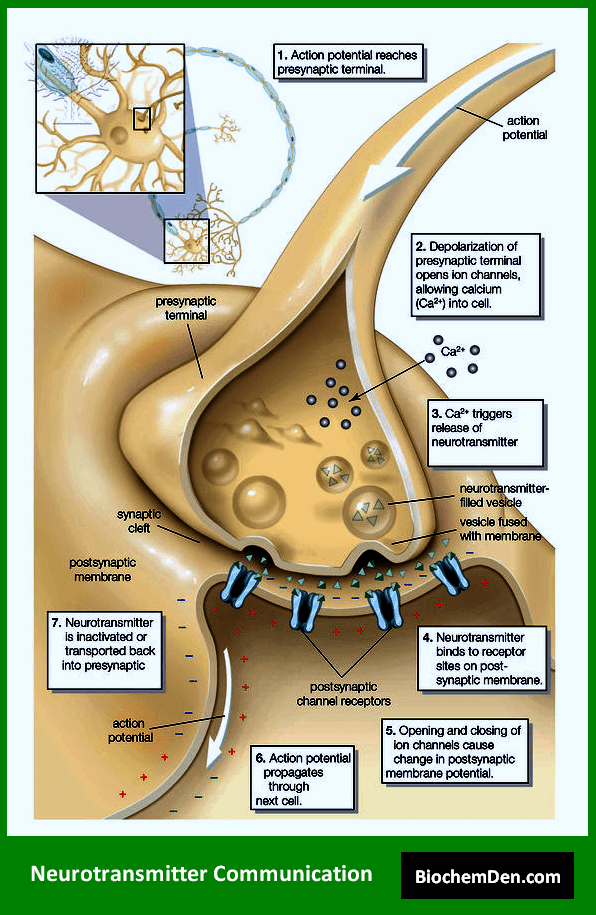
The journey of a neurotransmitter from its site of synthesis to its release into the synaptic cleft is a carefully orchestrated process:
a. Axonal Transport
- Synthesis: Most neurotransmitters are synthesized in the cell body or axon terminals of neurons.
- Packaging: Neurotransmitters are packaged into small membrane-bound organelles called synaptic vesicles.
- Transport: These vesicles are then transported down the axon to the axon terminal. This process involves:
- Fast axonal transport: Vesicles move along microtubules using motor proteins like kinesin.
- Slow axonal transport: Some components of the synaptic machinery move more slowly.
b. Storage at the Axon Terminal
Once at the axon terminal, synaptic vesicles are stored in several pools:
- Readily Releasable Pool: Vesicles docked at the active zone, ready for immediate release.
- Recycling Pool: Vesicles that replenish the readily releasable pool during moderate stimulation.
- Reserve Pool: A larger pool of vesicles mobilized during intense stimulation.
c. Neurotransmitter Release
The release of neurotransmitters is triggered by the arrival of an action potential at the axon terminal:
- Calcium Influx: The action potential causes voltage-gated calcium channels to open, allowing Ca²⁺ to enter the axon terminal.
- Vesicle Fusion: The increase in intracellular Ca²⁺ triggers the fusion of synaptic vesicles with the presynaptic membrane through a process called exocytosis.
- Neurotransmitter Release: As the vesicle fuses with the membrane, it releases its contents (neurotransmitters) into the synaptic cleft.
d. Special Case: Nitric Oxide
Nitric oxide (NO) follows a different release mechanism:
- On-Demand Synthesis: NO is synthesized as needed, rather than being stored in vesicles.
- Immediate Diffusion: Due to its gaseous nature, NO simply diffuses out of the neuron immediately after synthesis.
- Target Cell Entry: NO can freely pass through cell membranes to enter target cells.
- Second Messenger Activation: In the target cell, NO typically activates enzymes involved in second messenger production, such as guanylyl cyclase, which produces cyclic GMP.
This unique mechanism allows NO to act as both an intracellular and intercellular signaling molecule, with effects that can spread beyond the immediate synaptic connection.
Understanding these processes of synthesis, transport, and release is crucial for comprehending how neurons communicate and how various drugs and disorders can affect neurotransmitter function. The intricate regulation at each step provides multiple points for therapeutic intervention in neurological and psychiatric disorders.
Discovery of Neurotransmitters
The concept of neurotransmitters, now fundamental to our understanding of brain function, was not always known. The discovery of these chemical messengers marked a pivotal moment in neuroscience, challenging the prevailing belief that neural communication was purely electrical.
a. Otto Loewi’s Groundbreaking Experiment
In 1921, Austrian scientist Otto Loewi conducted an experiment that would revolutionize our understanding of neural communication. Interestingly, the idea for this experiment came to Loewi in a dream, demonstrating the sometimes-serendipitous nature of scientific discovery. He is one of the Nobel prize laureates in 1936.
b. The Two-Heart Experiment
Loewi’s experimental setup was elegantly simple yet profoundly insightful:
- Preparation: Loewi used two frog hearts in his experiment. The first heart (Heart A) remained connected to its vagus nerve, while the second heart (Heart B) was isolated.
- Setup: Heart A was placed in a saline-filled chamber. This chamber was connected to a second chamber containing Heart B, allowing fluid to flow from the first chamber to the second.
- Stimulation: Loewi electrically stimulated the vagus nerve connected to Heart A.
- Observation: Upon stimulation, Heart A’s rate slowed down, as expected. However, the key observation was that after a short delay, Heart B also slowed down, despite having no direct nerve connection.
c. Interpreting the Results
Loewi’s brilliant insight was to recognize that this effect couldn’t be explained by electrical signals alone. He hypothesized that the electrical stimulation of the vagus nerve must have released a chemical substance into the fluid surrounding Heart A. This substance then flowed to the chamber containing Heart B, causing it to slow down as well.
The Birth of “Vagusstoff”
Loewi named this unknown chemical substance “Vagusstoff,” meaning “vagus substance” in German. This was the first identified neurotransmitter, although the term “neurotransmitter” itself hadn’t been coined yet.
From Vagusstoff to Acetylcholine
Further research revealed that Loewi’s “Vagusstoff” was, in fact, acetylcholine, a neurotransmitter we now know plays crucial roles in both the central and peripheral nervous systems. Acetylcholine is involved in muscle activation, attention, arousal, and memory, among other functions.
Impact on Neuroscience
Loewi’s discovery was revolutionary for several reasons:
- Chemical Transmission: It provided the first evidence for chemical transmission of nerve impulses, challenging the dominant “electrical-only” theory of neural communication.
- New Research Avenue: It opened up an entirely new field of study in neuroscience, leading to the discovery of many other neurotransmitters.
- Medical Implications: Understanding chemical neurotransmission paved the way for developing new treatments for neurological and psychiatric disorders.
- Interdisciplinary Approach: It highlighted the importance of combining physiology, chemistry, and biology in neuroscience research.
For his groundbreaking work, Otto Loewi was awarded the Nobel Prize in Physiology or Medicine in 1936, sharing it with Henry Dale, who had independently reached similar conclusions.
This pivotal discovery laid the foundation for our current understanding of neurotransmitters and their crucial role in brain function. As we delve deeper into the world of neurotransmitters, it’s important to appreciate the ingenuity and significance of Loewi’s two-heart experiment, which opened up a new chapter in neuroscience.
Neurotransmitters can be categorized into several groups based on their chemical structure and function. Let’s explore the major types:
1. Amino Acids
Amino acid neurotransmitters are the most abundant in the central nervous system.
Glutamate
- Function: Primary excitatory neurotransmitter in the brain
- Role: Involved in learning, memory, and synaptic plasticity
- Associated disorders: Excitotoxicity in conditions like stroke and epilepsy
GABA (Gamma-Aminobutyric Acid)
- Function: Primary inhibitory neurotransmitter
- Role: Reduces neuronal excitability, promotes relaxation
- Associated disorders: Anxiety disorders, epilepsy
Glycine
- Function: Inhibitory neurotransmitter in the spinal cord and brainstem
- Role: Involved in motor and sensory processing
- Associated disorders: Hyperekplexia (startle disease)
2. Monoamines
Monoamines are derived from aromatic amino acids and play crucial roles in mood, attention, and arousal.
Dopamine
- Function: Involved in reward, motivation, and motor control
- Role: Influences pleasure, reinforcement learning, and executive functions
- Associated disorders: Parkinson’s disease, schizophrenia, and addiction
Serotonin
- Function: Regulates mood, appetite, and sleep
- Role: Influences emotional well-being and circadian rhythms
- Associated disorders: Depression, anxiety, obsessive-compulsive disorder
Norepinephrine
- Function: Involved in arousal and alertness
- Role: Modulates attention, enhances memory formation and retrieval
- Associated disorders: ADHD, depression
Epinephrine (Adrenaline)
- Function: Stress response and “fight or flight” reactions
- Role: Increases heart rate, blood pressure, and energy supplies
- Associated disorders: Stress-related disorders, phobias
3. Peptides
Neuropeptides are larger molecules composed of short chains of amino acids.
Endorphins
- Function: Natural pain relief and pleasure
- Role: Reduce pain perception, induce feelings of euphoria
- Associated disorders: Chronic pain conditions
Oxytocin
- Function: Social bonding and trust
- Role: Facilitates childbirth, breastfeeding, and social attachment
- Associated disorders: Social anxiety, autism spectrum disorders
4. Others
Acetylcholine
- Function: Neuromuscular junction signaling, cognitive functions
- Role: Muscle activation, attention, arousal, memory
- Associated disorders: Myasthenia gravis, Alzheimer’s disease
Nitric Oxide
- Function: Atypical gaseous neurotransmitter
- Role: Vasodilation, synaptic plasticity
- Associated disorders: Cardiovascular diseases, neurological disorders
Neurotransmitter Function and Signaling
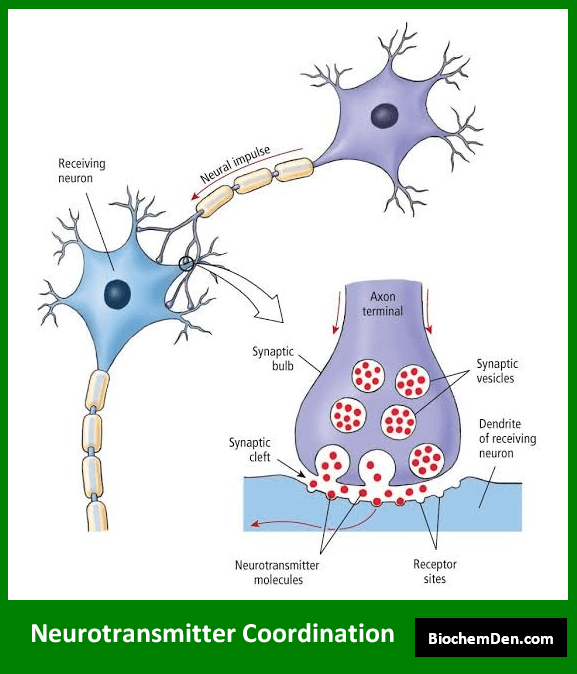
The process of neurotransmitter signaling, known as synaptic transmission, is a complex and precisely regulated sequence of events. Understanding this process is key to grasping how neurotransmitters influence brain function and behavior.
Steps in Neurotransmitter Signaling
- Synthesis: Neurotransmitters are produced in the cell body or axon terminals of neurons from precursor molecules. For example, dopamine is synthesized from the amino acid tyrosine through a series of enzymatic reactions.
- Storage: Once synthesized, neurotransmitters are packaged into synaptic vesicles—small membrane-bound organelles – at the axon terminal. These vesicles protect the neurotransmitters and prepare them for release.
- Release: When an action potential (electrical signal) reaches the axon terminal, it triggers the influx of calcium ions. This calcium influx causes the synaptic vesicles to fuse with the presynaptic membrane, releasing the neurotransmitters into the synaptic cleft.
- Receptor Binding: The released neurotransmitters diffuse across the synaptic cleft and bind to specific receptors on the postsynaptic neuron. There are two main types of receptors:
- Ionotropic receptors: Directly linked to ion channels
- Metabotropic receptors: Coupled to G-proteins and second messenger systems
- Postsynaptic Effect: The binding of neurotransmitters to receptors can have either excitatory or inhibitory effects on the postsynaptic neuron, depending on the type of receptor and neurotransmitter involved.
- Termination of Signaling: The action of neurotransmitters is terminated through several mechanisms:
- Reuptake: Neurotransmitters are taken back into the presynaptic neuron by transporter proteins
- Enzymatic degradation: Specific enzymes break down neurotransmitters in the synaptic cleft
- Diffusion: Neurotransmitters diffuse away from the synapse
Factors Influencing Neurotransmitter Function
Several factors can influence the function and efficacy of neurotransmitter signaling:
- Neurotransmitter Concentration: The amount of neurotransmitter released into the synapse affects the strength of the signal.
- Receptor Density: The number and distribution of receptors on the postsynaptic neuron influence the cell’s responsiveness to neurotransmitters.
- Receptor Sensitivity: Receptors can become more or less sensitive to neurotransmitters through processes like desensitization or sensitization.
- Reuptake Efficiency: The rate at which neurotransmitters are removed from the synaptic cleft affects the duration of their action.
- Enzymatic Activity: The presence and activity of enzymes that degrade neurotransmitters can modulate signaling strength and duration.
Understanding these factors is crucial for developing treatments for neurological and psychiatric disorders that involve neurotransmitter imbalances.
Neurotransmitter Imbalances and Associated Disorders
Neurotransmitter imbalances can lead to a wide range of neurological and psychiatric disorders. The complex interplay between different neurotransmitter systems means that an imbalance in one can have far-reaching effects on brain function and behavior.
a. Depression
Depression is often associated with imbalances in several neurotransmitter systems:
- Serotonin: Low levels of serotonin are linked to depressed mood, anxiety, and sleep disturbances.
- Norepinephrine: Reduced norepinephrine activity may contribute to lack of energy and motivation.
- Dopamine: Decreased dopamine signaling can lead to anhedonia (inability to feel pleasure).
Treatment often involves selective serotonin reuptake inhibitors (SSRIs) or other antidepressants that modulate neurotransmitter levels.
b. Anxiety disorders
Anxiety disorders are characterized by excessive fear and worry, often related to neurotransmitter imbalances:
- GABA: Reduced GABA activity can lead to increased neuronal excitability and anxiety.
- Serotonin: Dysregulation of serotonin signaling is implicated in various anxiety disorders.
Treatments may include benzodiazepines (which enhance GABA activity) or SSRIs.
c. Parkinson’s Disease
Parkinson’s disease is primarily associated with a loss of dopamine-producing neurons in the substantia nigra:
- Dopamine: Decreased dopamine levels lead to motor symptoms such as tremors, rigidity, and bradykinesia.
- Acetylcholine: Relative increase in cholinergic activity due to dopamine depletion contributes to some symptoms.
Treatment typically involves dopamine replacement therapy or drugs that mimic dopamine’s effects.
d. Schizophrenia
Schizophrenia is a complex disorder involving multiple neurotransmitter systems:
- Dopamine: The “dopamine hypothesis” suggests excessive dopamine activity in certain brain regions.
- Glutamate: Dysfunction in glutamate signaling may contribute to cognitive symptoms and negative symptoms.
- Serotonin: Alterations in serotonin signaling may play a role in some symptoms.
Antipsychotic medications primarily target dopamine receptors, with newer drugs also affecting serotonin signaling.
e. Alzheimer’s Disease
Alzheimer’s disease involves progressive neurodegeneration and neurotransmitter imbalances:
- Acetylcholine: Significant loss of cholinergic neurons leads to cognitive decline.
- Glutamate: Excessive glutamate activity may contribute to excitotoxicity and neuronal death.
Current treatments mainly focus on enhancing cholinergic transmission to improve cognitive function.
f. Epilepsy
Epilepsy is characterized by recurrent seizures due to abnormal neuronal activity:
- GABA: Reduced inhibitory GABA signaling can lead to excessive neuronal excitation.
- Glutamate: Increased glutamatergic activity can contribute to seizure generation.
Antiepileptic drugs often work by enhancing GABA activity or reducing glutamate signaling.
Neurotransmitters and Behavior
Neurotransmitters play a crucial role in shaping human behavior, influencing everything from our moods and emotions to our cognitive abilities and social interactions. Understanding the relationship between neurotransmitters and behavior is key to unraveling the complexities of the human mind.
a. Mood Regulation
Several neurotransmitters are involved in mood regulation:
- Serotonin: Often called the “feel-good” neurotransmitter, serotonin helps regulate mood, anxiety, and happiness. Imbalances in serotonin levels are linked to mood disorders like depression.
- Dopamine: This neurotransmitter is involved in the brain’s reward system. It contributes to feelings of pleasure and satisfaction, playing a role in motivation and reinforcement of behaviors.
- Norepinephrine: Involved in arousal and alertness, norepinephrine also influences mood. Low levels are associated with depression, while high levels can contribute to anxiety.
b. Cognitive Functions
Neurotransmitters are essential for various cognitive processes:
- Acetylcholine: It is crucial for learning and memory formation. It plays a significant role in attention and arousal.
- Glutamate: The brain’s primary excitatory neurotransmitter, glutamate, is involved in learning, memory formation, and synaptic plasticity.
- Dopamine: Besides its role in mood, dopamine is important for executive functions like working memory, decision-making, and attention.
c. Sleep-Wake Cycle
The sleep-wake cycle is regulated by a complex interplay of neurotransmitters:
- GABA: Promotes sleep by inhibiting wake-promoting areas of the brain.
- Serotonin: It is involved in regulating the onset of sleep and influencing the depth of sleep.
- Norepinephrine and Histamine: These neurotransmitters promote wakefulness and arousal.
d. Appetite and Eating Behavior
Several neurotransmitters influence our eating habits:
- Serotonin: Helps regulate appetite and can contribute to feelings of fullness.
- Dopamine: It is involved in the rewarding aspects of eating, especially for palatable foods.
- Norepinephrine: Can suppress appetite, especially during stress.
e. Social Behavior
Neurotransmitters play a significant role in social interactions:
- Oxytocin: Often called the “love hormone,” oxytocin is involved in social bonding, trust, and empathy.
- Serotonin: Influences social behavior, with low levels associated with increased aggression and social withdrawal.
- Dopamine: It is important for social reward processing and motivation for social interaction.
f. Stress Response
The body’s response to stress involves several neurotransmitters:
- Norepinephrine and Epinephrine: Key players in the “fight or flight” response, increasing alertness and preparing the body for action.
- Cortisol: While not a neurotransmitter itself, this stress hormone interacts with various neurotransmitter systems to influence behavior during stress.
g. Addiction and Reward
Understanding the role of neurotransmitters in addiction is crucial for developing effective treatments.
- Dopamine: Plays a central role in the brain’s reward system and is heavily involved in addiction processes.
- GABA and Glutamate: Imbalances in these neurotransmitters contribute to the development and maintenance of addictive behaviors.
- Endogenous Opioids: These naturally occurring peptides are involved in pain relief and pleasure, and play a role in opioid addiction.
Neurotransmitter Research and Future Directions
The field of neurotransmitter research is continually evolving, with new discoveries and technologies pushing the boundaries of our understanding. As we delve deeper into the complexities of the brain, several exciting areas of research are emerging:
a. Neuroplasticity and Neurotransmitters
Researchers are exploring how neurotransmitters influence neuroplasticity – the brain’s ability to form new neural connections throughout life. Understanding this relationship could lead to new therapies for brain injuries, cognitive decline, and mental health disorders.
b. Gut-Brain Axis
The gut-brain axis, which involves the bidirectional communication between the gastrointestinal tract and the central nervous system, is an area of intense study. Researchers are investigating how gut microbiota influence neurotransmitter production and how this affects brain function and behavior.
c. Precision Medicine in Psychiatry
Advances in genetic research and neuroimaging are paving the way for personalized treatments based on individual neurotransmitter profiles. This approach could revolutionize the treatment of psychiatric disorders by tailoring interventions to each patient’s unique neurochemistry.
d. Novel Drug Targets
Researchers are identifying new molecular targets for drug development, focusing on specific receptor subtypes or signaling pathways. This could lead to more effective treatments with fewer side effects for various neurological and psychiatric disorders.
e. Optogenetics and Chemo-Genetics
These cutting-edge techniques allow researchers to control specific neurons or neurotransmitter systems with unprecedented precision. This technology is providing new insights into how neurotransmitters influence behavior and could lead to innovative therapeutic approaches.
f. Artificial Intelligence and Big Data
The integration of AI and big data analytics is revolutionizing neurotransmitter research. These tools are enabling scientists to:
- Analyze vast datasets from neuroimaging studies, genetic sequencing, and clinical trials.
- Identify patterns and correlations that may not be apparent through traditional research methods.
- Predict drug responses based on individual neurotransmitter profiles.
- Develop more sophisticated models of neurotransmitter function and interaction.
This data-driven approach is accelerating the pace of discovery and opening up new avenues for understanding and treating neurological disorders.
g. Neurotransmitter Imaging Techniques
Advancements in neuroimaging are providing unprecedented insights into neurotransmitter activity in the living brain:
- Positron Emission Tomography (PET): Allows visualization of neurotransmitter receptor density and occupancy.
- Functional Magnetic Resonance Imaging (fMRI): While not directly measuring neurotransmitters, fMRI can reveal patterns of brain activity associated with neurotransmitter function.
- Magnetic Resonance Spectroscopy (MRS): Enables measurement of certain neurotransmitter concentrations in specific brain regions.
These techniques are crucial for understanding how neurotransmitter systems function in health and disease, and for monitoring the effects of therapeutic interventions.
h. Neuromodulation and Neurotransmitters
The field of neuromodulation, which involves altering nerve activity through targeted delivery of electrical or pharmaceutical agents, is closely tied to neurotransmitter research:
- Deep Brain Stimulation (DBS): Used to treat conditions like Parkinson’s disease, DBS is thought to work in part by modulating neurotransmitter release and activity.
- Transcranial Magnetic Stimulation (TMS): This non-invasive technique can influence neurotransmitter systems and is being explored for treating depression and other disorders.
- Optogenetics: This technique allows precise control of specific neurons, offering new ways to study and potentially treat neurotransmitter-related disorders.
Understanding the interplay between neuromodulation techniques and neurotransmitter systems is crucial for developing more effective and targeted therapies.
Neurotransmitters in Everyday Life
While much of our discussion has focused on the scientific and medical aspects of neurotransmitters, it’s important to recognize their role in our daily lives. Understanding how neurotransmitters influence our experiences can provide valuable insights into our behaviors and well-being.
a. Sleep and Wakefulness
The cycle of sleep and wakefulness is heavily influenced by neurotransmitters:
- Melatonin: While technically a hormone, melatonin acts as a neurotransmitter to regulate our sleep-wake cycle.
- Adenosine: Builds up during waking hours, promoting sleepiness. Caffeine works by blocking adenosine receptors.
- Orexin: Promotes wakefulness and regulates the sleep-wake cycle.
Understanding these mechanisms can help in developing better sleep habits and addressing sleep disorders.
b. Diet and Neurotransmitters
What we eat can significantly impact our neurotransmitter levels:
- Tryptophan: Found in foods like turkey and milk, it’s a precursor to serotonin.
- Tyrosine: Present in protein-rich foods, it’s essential for dopamine production.
- Omega-3 Fatty Acids: Found in fish and some nuts, they support overall brain health and neurotransmitter function.
A balanced diet that supports neurotransmitter production can contribute to better mood and cognitive function.
c. Exercise and Neurotransmitters
Physical activity has profound effects on our neurotransmitter systems:
- Endorphins: Released during exercise, contributing to the “runner’s high.”
- Serotonin and Norepinephrine: Levels increase with regular exercise, potentially alleviating symptoms of depression and anxiety.
- BDNF (Brain-Derived Neurotrophic Factor): While not a neurotransmitter, this protein increases with exercise and supports neurotransmitter function.
Regular exercise can be a powerful tool for maintaining mental health and cognitive function.
d. Social Interactions and Neurotransmitters
Our social experiences are intimately tied to neurotransmitter activity:
- Oxytocin: is released during positive social interactions, promoting bonding and trust.
- Dopamine: is activated by social rewards, reinforcing social behaviors.
- Serotonin: is influenced by social status and belonging, affecting mood and self-esteem.
Understanding these connections can help us appreciate the importance of social relationships for our mental well-being.
Challenges in Neurotransmitter Research
Despite significant advancements, the field of neurotransmitter research faces several challenges:
- Complexity of the Brain: The human brain contains billions of neurons with trillions of connections, making it challenging to isolate the effects of specific neurotransmitter systems.
- Individual Variability: Neurotransmitter function can vary significantly between individuals due to genetic, environmental, and lifestyle factors.
- Limitations of Animal Models: While animal studies provide valuable insights, translating these findings to human brain function is not always straightforward.
- Ethical Considerations: Studying neurotransmitter function in living human brains often involves ethical constraints, limiting certain types of research.
- Technological Limitations: Current imaging techniques may not have the resolution or specificity to capture all aspects of neurotransmitter function.
- Multifactorial Nature of Disorders: Many neurological and psychiatric disorders involve complex interactions between multiple neurotransmitter systems and other factors, making it difficult to develop targeted treatments.
Addressing these challenges will be crucial for advancing our understanding of neurotransmitters and developing more effective treatments for neurological and psychiatric disorders.
Conclusion
Neurotransmitters are the fundamental units of communication in our nervous system, playing crucial roles in every aspect of our mental and physical functioning. From regulating our moods and emotions to controlling our movements and cognitive processes, these chemical messengers are at the heart of what makes us human.
As we’ve explored in this comprehensive guide, the world of neurotransmitters is complex and multifaceted. Each neurotransmitter has its own unique properties and functions, yet they all work together in an intricate balance to maintain our brain’s health and functionality. Understanding this balance—and what happens when it’s disrupted—is key to unlocking new treatments for a wide range of neurological and psychiatric disorders.
The field of neurotransmitter research is rapidly evolving, with new technologies and approaches constantly pushing the boundaries of our knowledge. From advanced imaging techniques that allow us to see neurotransmitters in action, to cutting-edge genetic studies that reveal how individual variations affect neurotransmitter function, we are continually gaining new insights into these crucial chemical messengers.
Moreover, the study of neurotransmitters extends far beyond the laboratory. It has practical implications for our daily lives, influencing everything from our diet and exercise habits to our social interactions and sleep patterns. By understanding the role of neurotransmitters in these everyday experiences, we can make informed choices that support our brain health and overall well-being.
As we look to the future, the field of neurotransmitter research holds immense promise. With continued advancements in technology and our understanding of brain function, we can anticipate more targeted and effective treatments for neurological and psychiatric disorders. We may also see new applications in fields like artificial intelligence, as our understanding of neurotransmitter systems informs the development of more sophisticated neural networks.
In conclusion, neurotransmitters are not just a subject for scientific study they are the very essence of our thoughts, feelings, and actions. As we continue to unravel their mysteries, we gain not only a deeper understanding of our brains but also of ourselves as human beings. The journey of discovery in the world of neurotransmitters is ongoing, and each new finding brings us closer to unlocking the full potential of the human mind.
Discover more from Biochemistry Den
Subscribe to get the latest posts sent to your email.