Programmatic SEO — Getting It Right (original) (raw)
Programmatic SEO uses automation to create and optimize large volumes of web pages, helping businesses scale their organic search traffic efficiently. Key benefits include rapid content scaling, improved ROI, and the ability to target long-tail keywords at scale.
![→ Download Now: SEO Starter Pack [Free Kit]](https://no-cache.hubspot.com/cta/default/53/1d7211ac-7b1b-4405-b940-54b8acedb26e.png) ](
](But is programmatic SEO one heck of a challenge or something marketers can master in three hours? Do they need a specific toolkit, or will a basic understanding of Google Sheets suffice? And most importantly, how do marketers tackle programmatic SEO if they’ve never done it before?
To get started, define target topics, build a structured database, choose the right tools (like HubSpot Content Hub or Breeze AI), and create high-quality content templates. Monitor results and refine your approach to avoid common pitfalls like thin or duplicate content.
This guide will provide answers to the questions above, programmatic SEO tools, examples of the strategy in action, and pitfalls to avoid. Plus, a step-by-step process of how to begin with programmatic SEO.
Table of Contents
- What is programmatic SEO?
- Programmatic SEO Tools
- How to Do Programmatic SEO
- Programmatic SEO Examples
- Programmatic SEO Success Patterns
- Common Programmatic SEO Pitfalls and How to Avoid Them
- Frequently Asked Questions About Programmatic SEO
What is programmatic SEO?
Programmatic SEO is an automated approach to creating and optimizing large numbers of web pages. With programmatic SEO (or pSEO), marketing teams create hundreds to thousands of keyword-targeted pages using templates and data.
To do this, automated systems fetch data and use pre-programmed rules to guide content. Think of it as SEO at scale. Instead of manually crafting each page, marketers build a system that generates them automatically.
Programmatic SEO differs from traditional SEO by scaling content creation through automation instead of manual publishing. Traditional SEO may mean a team writes 10 blog posts a month. Programmatic SEO lets them launch 10,000 pages targeting specific long-tail keywords, all based on a single template.
Ready to scale your SEO? Start free with HubSpot’s programmatic content tools.
Pro tip: For teams looking to dive into programmatic marketing, read Programmatic Ads 101: The Plain-English Guide to Programmatic Advertising.
Benefits of Programmatic SEO
When done well, pSEO strengthens topical authority, improves internal linking at a structural level, and scales content operations at an insane pace — especially compared to traditional operations.
However, it usually takes several weeks to gain traction and three to six months to produce meaningful results. Search engines need time to crawl and understand large batches of new pages, evaluate their quality, and fit them into the existing search landscape.
The speed of results depends on:
- Domain authority.
- Depth of your data.
- How well templates are structured.
- Whether the content genuinely satisfies user intent.
Well-executed pSEO often shows its earliest wins through long-tail impressions and incremental conversions before traffic scales. Below are the top three benefits of a programmatic SEO strategy, according to Elie Berreby, senior SEO strategist.
1. Programmatic SEO builds topical authority at scale.
Search engines and large language models increasingly reward brands that demonstrate complete subject coverage. As Berreby explains, “Search engines, and now large language models, favor websites that can answer the majority of questions within a specific industry.”
This reflects how humans build trust: “We tend to trust the brand or person that has most of the answers, not just some of them.”
Programmatic SEO makes it possible to cover an entire topical area with depth and breadth. According to Berreby, pulling proprietary data from internal systems to create content can effectively blanket an entire niche.
This shift turns a brand from a contributor into what he calls “the owner of the conversation” (also known as topical authority).
2. Programmatic SEO transforms internal linking into a scalable advantage.
Internal linking becomes exponentially more useful when driven by logic rather than manual effort.
Internal links serve as pathways that guide users from one section to the next. Instead of manually connecting these sections, programmatic SEO allows teams to apply rules that scale instantly. For example, Berreby says, “If a customer is looking at a red shirt, automatically show them red pants.”
These rules create what he calls a “spiderweb” of connections across a site. This structure makes navigation easier for users and helps web and AI crawlers discover pages quickly, ultimately strengthening a site’s architecture and authority distribution.
3. Programmatic SEO makes brands infinitely more scalable.
Scalability is one of the strongest long-term benefits of programmatic SEO. Berreby explains that pSEO becomes limitless when user-generated content enters the system.
He points to Reddit as the ideal example, where “the developers build the platform, but the users build the pages.” When users create content within a programmatic structure, according to Berreby, “there is no limit to depth or topic coverage because every user brings a unique perspective.”
This concept applies beyond communities. In ecommerce and SaaS, Berreby notes that teams can “programmatically inject images, videos, and product data from different databases into a single template.”
With this approach, one template can easily become 10,000 unique URLs. Each of these URLs can provide targeted, high-intent value for users searching for solutions or products.
Bottom line: Programmatic SEO essentially transforms the brand’s content engine into a scalable system rather than a series of manual outputs.
When to Use Programmatic SEO
As Berreby says, “Good programmatic SEO is simply a strategy that uses large datasets to create or update a large number of pages at once.” Programmatic SEO works best when marketers have:
- Scalable data. Large datasets like product catalogs, location listings, or integration combinations.
- Search demand patterns. Keywords following templates like “[tool] alternatives” or “best [product] in [city].”
- Clear user intent. Searches where users want specific, data-driven answers.
Companies using programmatic SEO can generate thousands of targeted landing pages. And when it comes to AI SEO, programmatic SEO strategies can be insanely helpful — but only when done correctly.
Here’s the caveat:
- Quality still matters.
- Pages still need to provide genuine value and meet Google’s helpful content standards.
- Teams should avoid programmatic SEO if they’re simply trying to game search engines or create doorway pages.
- The content needs to genuinely help users find what they’re looking for.
When teams prioritize substance over shortcuts, programmatic SEO becomes a growth engine for both search performance and long-term authority.
Product-Led SEO vs. Programmatic SEO
“Many people confuse product-led SEO with programmatic SEO,” says Kevin Indig, author of Growth Memo. Indig is also a growth advisor and ex-director of SEO at Shopify. He says the confusion makes sense. These concepts do overlap.
Indig says product-led SEO involves a company that exposes a part of its inventory to drive organic traffic. A good example is Instacart, which allows Google to index all of its category and product pages.
“Programmatic SEO, on the other hand, is a set of pages created by a company that doesn’t have an exposable inventory,” says Indig.
He points to Workable as an example, which lists job descriptions on its site. Job descriptions are not part of the company’s product inventory. However, the content fits well with the product, so the team created pages with the same layout and content pattern.
“To do pSEO, identify query patterns related to your product and build pages with the same pattern around them,” Indig advises.
Programmatic SEO tools include HubSpot CMS, Breeze AI, and WordPress plugins. Programmatic SEO becomes dramatically easier — and far more scalable — when marketers have the right tools in place.
While pSEO doesn’t require a developer-heavy tech stack, it does require systems that help marketing teams store data, generate content, sync fields, and publish pages at scale. Below are some of the most commonly used tools teams rely on, broken down into no-code options and enterprise-friendly platforms.
1. HubSpot Content Hub
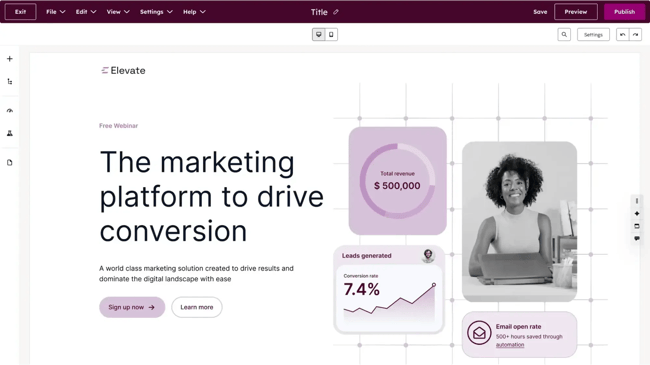
HubSpot Content Hub enables programmatic content creation and management. The platform gives marketers an end-to-end workflow for programmatic SEO — without writing code or stitching together multiple plugins.
Many modern pSEO teams rely on a CMS, a content database, and an AI generation layer. Content Hub brings all three together in a single place, making it one of the most efficient options for marketers scaling content quickly.
The real advantage is speed and unification. Marketers can store structured content inputs, build templates, generate AI-assisted copy, and publish pages — all inside one platform. For leaders who prioritize immediate impact, fast execution, and tools that “just work,” this matters.
Key Features
- AI page generation. Automatically create templated pages at scale using structured data.
- CMS + content database built in. No need for separate Airtable or Google Sheets unless teams prefer it.
- Dynamic content fields. Map data into repeatable templates to produce hundreds of pages consistently.
- SEO recommendations baked in. Helps ensure programmatic pages meet search and helpful-content standards.
- Powerful integrations. Syncs with CRM data, product catalogs, and metadata for even more advanced pSEO use cases.
Best for: Recommended for most teams.
Pricing: Content Hub has several HubSpot packages. Starter is 15peruser/month.ScalingtofullprogrammaticworkflowstypicallyrequirestheProfessionalplan(15 per user/month. Scaling to full programmatic workflows typically requires the Professional plan (15peruser/month.ScalingtofullprogrammaticworkflowstypicallyrequirestheProfessionalplan(500/month) or Enterprise plan ($1,500/month).
2. Airtable
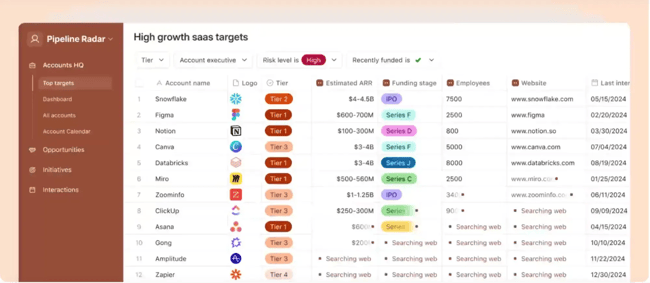
Airtable is one of the most popular no-code databases for programmatic SEO. It gives marketers a flexible way to store data, build templates, and sync fields into a CMS. Many of the examples in this article (including PorterMetrics’ workflow) use Airtable as the central “content brain.”
Key Features
- Highly flexible relational database.
- Visual views for managing templates, fields, and parameters.
- API connections to CMS tools, ChatGPT, Make, or Whalesync.
- Easy collaboration for teams.
Best for: Teams who want a no-code option
Pricing
- Free plans are available.
- Paid plans start at $20 per user per month.
- Enterprise pricing is available for large teams.
3. Whalesync
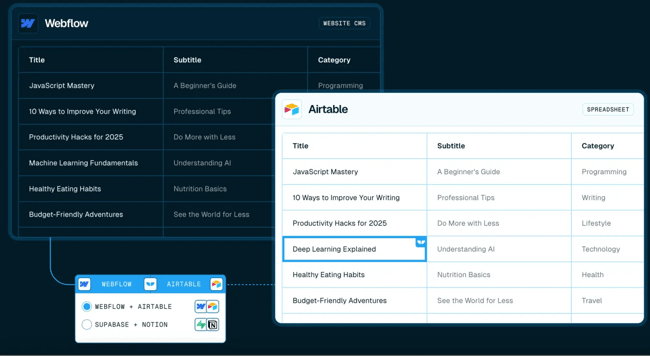
Whalesync is a popular tool for syncing Airtable or Google Sheets data directly into CMS platforms like WordPress or Webflow — perfect for teams managing large programmatic databases. It removes most of the manual work involved in importing or updating fields.
Key Features
- Point-and-click sync between databases and website builders.
- Real-time updates to CMS pages.
- Supports Airtable, Webflow, WordPress, and Notion.
Automatic schema for structured content fields.
Best for: Teams who want a no-code option
Pricing
- Starts at 5/monthandscalesto5/month and scales to 5/monthandscalesto200/month.
- Higher-tier plans available for large-volume syncing
4. GPT for Sheets & Slides
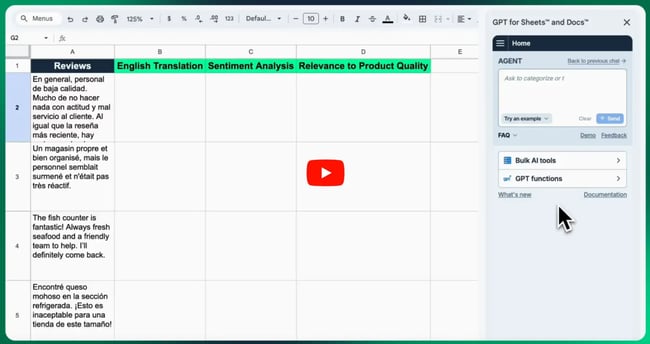
For teams who want to use Google Sheets as their content engine, GPT for Sheets is a lightweight way to generate programmatic copy, meta descriptions, headings, or translations at scale. Many pSEO teams use this alongside Sheets formulas to populate entire templates at once.
Key Features
- AI generation directly inside Google Sheets.
- Works with structured prompts and dynamic fields.
- Good for generating headings, descriptions, intros, and variations.
- Useful for multilingual pSEO setups.
Best for: Teams who want a no-code option
Pricing
- Free version available.
- Paid usage varies based on OpenAI API costs.
5. WordPress + Elementor
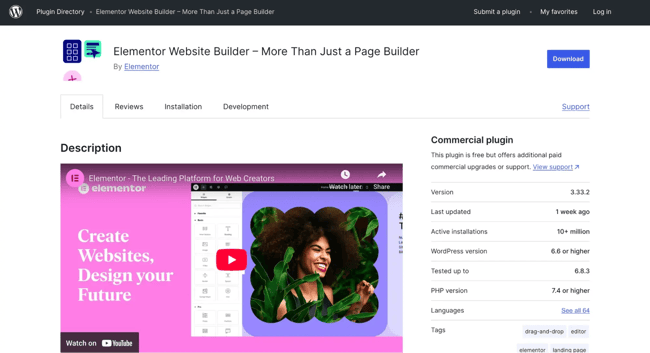
A classic enterprise-friendly combination, WordPress paired with Elementor is commonly seen in programmatic SEO setups. Teams of all sizes can use WordPress plus dynamic Elementor templates to generate thousands of pages.
Key Features
- Robust CMS with a wide plugin ecosystem.
- Elementor’s dynamic fields can pull data from Airtable or Sheets.
- Supports massive site structures and large content catalogs.
- Easy to customize page templates.
Best for: Enterprise teams
Pricing
- WordPress: Free (open source).
- Elementor: Paid plans begin at $59/year.
6. Webflow
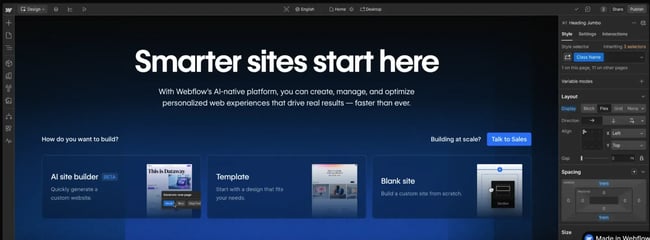
Webflow offers a more design-forward CMS that includes strong dynamic content structures. For pSEO teams that care deeply about visual layouts, filtering systems, or gallery-type templates, Webflow is often the platform of choice.
Key Features
- CMS collections for storing programmatic content.
- Dynamic page creation with field-based templating.
- API for syncing data programmatically.
- Built-in visual design tools.
Best for: Enterprise teams
Pricing
- CMS plans start around $23/month, billed annually.
- Enterprise pricing available for large-scale sites.
7. Make (formerly Integromat)
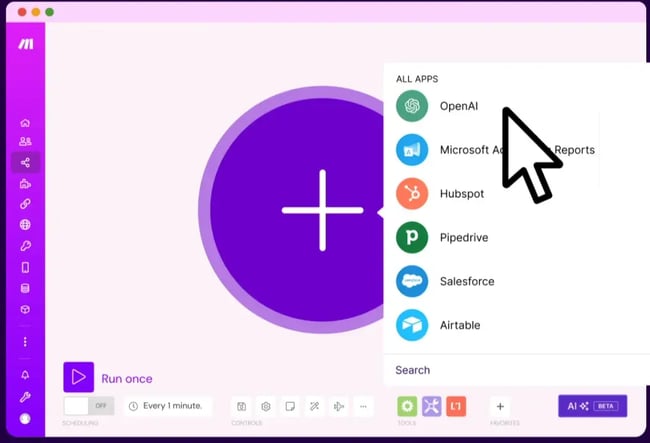
Make is frequently used in enterprise setups to automate syncing, AI generation, data cleanup, and publishing workflows. It’s more flexible — and more complex — than no-code sync tools, but gives teams total control.
Key Features
- Automate multi-step generation workflows.
- Connects CMS systems, databases, and AI tools.
- Allows conditional logic for more advanced pSEO rules.
- Supports bulk content creation and structured automation.
Best for: Enterprise teams
Pricing
- Free plan available.
- Paid plans start around 10–10–10–30/month, depending on usage.
How to Do Programmatic SEO
Programmatic SEO delivers faster content scaling and improved organic traffic when implemented correctly. Every company will have a unique programmatic SEO that’s tailored to its business. However, most pSEO programs have a similar foundation.
Marketing teams will need to:
- Define the programmatic SEO program strategy.
- Clean up available data.
- Outline relevant content clusters.
- Create rules for generated content.
To discuss the complete process, we’ll draw insights from Juan Bello, founder of PorterMetrics, and Filippo Irdi, a growth marketing manager at Unmuted.
Step 1: Choose your programmatic SEO strategy.
When devising a pSEO strategy, consider one of the following three or mix them up to scale team efforts:
- A vertical approach, which targets a specific niche deeply.
- A horizontal approach, which captures traffic across multiple industries.
- An ABM approach, which targets specific accounts that match the customer persona.
A vertical approach focuses on a specific niche or industry. With the vertical approach, marketers attempt to cover every topic of interest for that specific community. On the other hand, the horizontal approach involves positioning content to capture traffic from different business types, targeting a wider audience.
Account-Based Marketing (ABM) takes an even more targeted approach. This strategy involves creating a list of partners or developing landing pages dedicated to prospective accounts and highlighting the benefits of a potential collaboration. The goal is to encourage a specific company to make a purchase.
Once teams understand their strategy, they can then dive deep into SEO.
Step 2: Find your keyword opportunities.
The magic of programmatic SEO lies in finding keyword patterns. Here’s how Juan Bello from PorterMetrics approaches it.
- Mine your data: Use Google Search Console to find keywords you already rank for.
- Analyze patterns: Look for templates like “{tool} + {use case}” or “{service} in {location}.”
- Validate demand: Check search volumes — even 10–50 monthly searches add up at scale.
- Study competitors: Scan their sitemaps to understand their programmatic structure.
Here’s what that looks like for horizontal and vertical programmatic SEO strategies.
HubSpot’s SEO Marketing Software can help with this step of the process.
Finding Keywords With the Vertical Approach
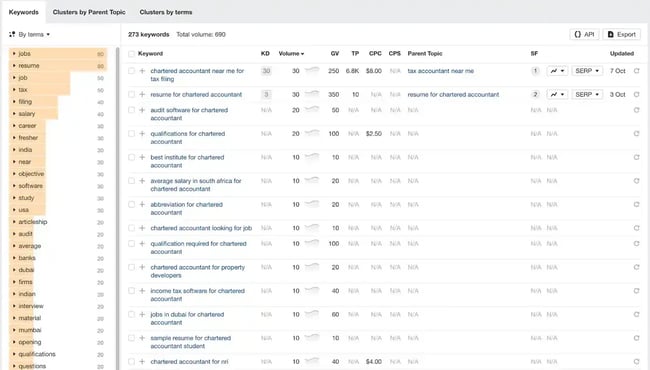
If a team has a CRM designed for accountants, they would create content that ranks for keywords related to that profession. For example, if a marketer searched for “Software for accountants” in Ahrefs, this is the first result that comes up:

The two terms, “audit software for chartered accountants” and “accounting software for a chartered accountant,” have decent search volumes and the same structure: {accountant need} + for chartered accountant.
Given the search volumes and the keyword difficulty (KD), it’s worth deepening the research. The search result for “for a chartered accountant” has 273 terms with a similar structure. Here, marketers can use programmatic SEO to generate a landing page to target each of these keywords.
Pro tip: Don’t overlook keywords with low search volume. These can be hidden gems that provide unique opportunities to target specific niches.
Horizontal Approach
If a company offers booking software, marketers can aim to target niches that need that service. In the case of booking tools, teams could think of terms structured like “booking tool for + {profession}.”
Following the same method, they can search on Ahrefs for something along the lines of “booking software for.” Here, the pattern is even easier to spot. All 499 keywords have the same structure: “booking software + {business type}.”
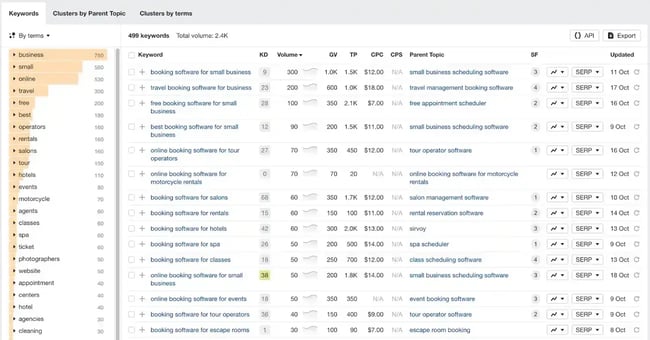
Pro tip: This is a great strategy if your product is highly adaptable and usable across industries.
Step 3: Build your content database.
Next, visualize potential topic clusters. According to Juan Bello of PorterMetrics, tables are an excellent way to do so. He then recommends the following layout:
- Rows with the use cases or topics to be covered.
- Columns with the “parameters” or elements of the content (e.g., H1, Title, text, images, etc.).
- A table that covers a specific angle or cluster.
“The use cases or topics are every piece of content you’ll create for a specific angle or category. These topics are determined by your business model,” Bello says. For example, take a look at the table below.
| Company | Category | Angle | Clusters | Page example |
|---|---|---|---|---|
| PorterMetrics | Marketing reporting software | Use cases | Report template | Social Media report template PPC report template Agency report template |
| PorterMetrics | Marketing reporting software | Integrations | Dashboard software | Social media dashboard software PPC dashboard software Agency dashboard software |
| Booking | Hotels listings | Cities | Best hotels | NY best hotels Boston best hotels Toronto best hotels |
| Yelp | Restaurants listings | Cities, neighborhoods | Best restaurants | NY best restaurants Boston best restaurants Toronto best hotels |
| HubSpot | CRM software | Use cases | Software/tool | CRM software Sales software Service software |
| Ecommerce store example | Ecommerce | Color | Shoes | White shoes Black shoes Red shoes |
Step 4: Set up your tech stack.
Programmatic SEO doesn’t require a dedicated team of developers. Modern no-code tools make pSEO accessible. For example, HubSpot users can use Content Hub to create programmatic SEO pages using AI. Other essential tools include:
- A CMS.
- A place to store the content database, like Airtable or Google Sheets.
- Content generation tools, like Content Hub, ChatGPT API, or manual templates.
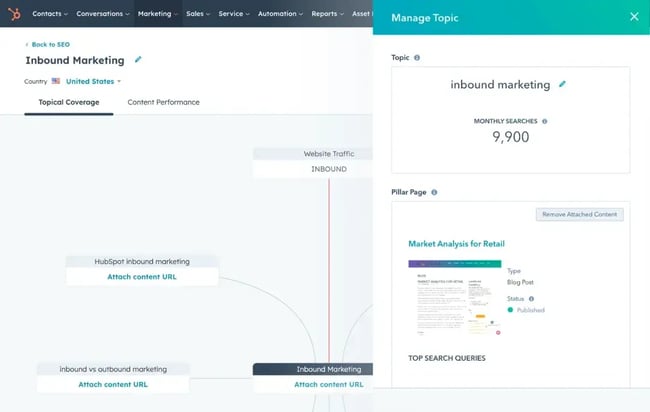
Bello’s team uses programmatic SEO to scale product pages and template gallery pages. This is the tech stack that Bello uses at Porter:
- WordPress + Elementor.
- Airtable.
- Google Sheets.
- ChatGPT (through the add-on GPT for Sheets and Slides).
- Whalesync or WPSync.
- Content Management System (CMS) like WordPress or HubSpot CMS.
- Meta description generator by HubSpot.
Step 5: Create and deploy your pages.
With the right tech pieces set up and a thoughtful strategy in place, teams can start creating content for their programmatic SEO initiatives. To create the content, teams must:
- Decide what content to cover by mapping topic clusters.
- Build content pages.
- Create the content itself.
- And create rules that can scale the initiative.
Here’s how.
Use case mapping to outline topic clusters.
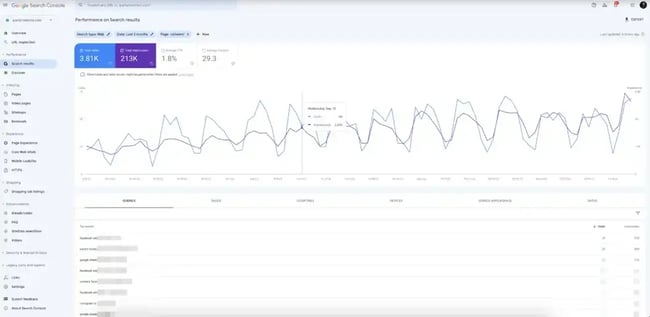
To cherry-pick the topics without keyword research but with real interest from prospective customers, PorterMetrics follows these four steps. Bello provided both the steps and the images of conducting this process.
Use Google Search Console to grab the keywords you’re ranking for. Categorize them or tag them into general topics to build use case maps.
Collect customer questions or topics from customer service chats, calls, or emails to find the most urgent, common use cases people are trying to solve.
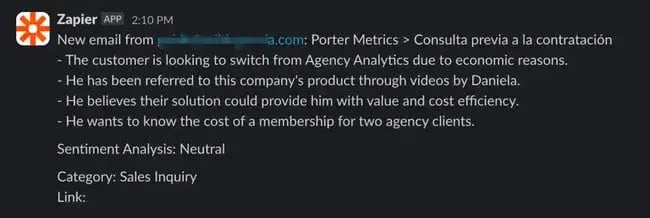
Use ChatGPT to analyze and summarize these conversations.
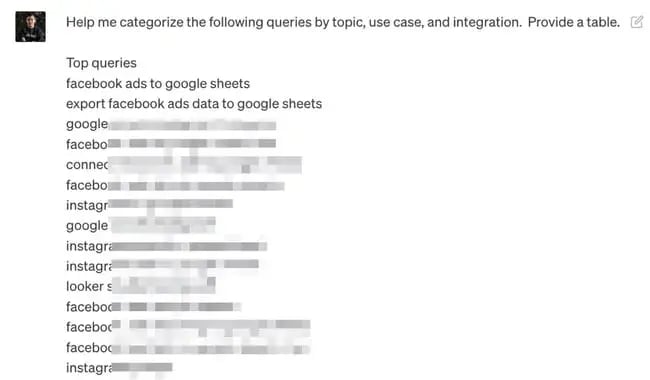
Scan competitors’ and other websites’ robots.txt and sitemaps.xml to see how they structure their websites.
In Bello’s example, he learned how ClickUp structured their template pages by use case and then user type, ending up with +5K programmatic pages.
Make the most of content filling.
By following Porter’s pSEO example, create a table (or database) on Airtable.
Then, use WP Sync or Whalesync to sync the Airtable data on WordPress. These plugins let marketers import the table to WordPress in a single click.
Every row creates a new WordPress page. Elementor lets marketers add dynamic elements so they can pull their Airtable columns as parameters on the webpage builder.
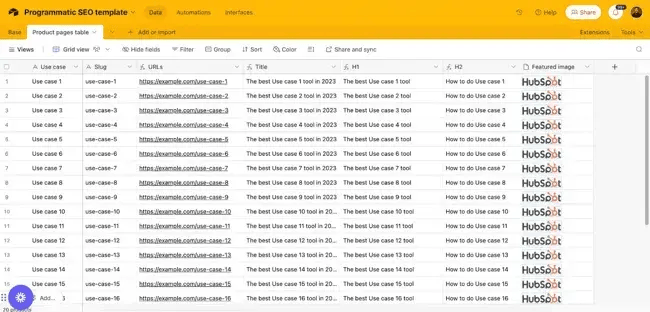
Click on the live Airtable template for content filling to replicate the structure.
Create the content for pSEO pages.
To fill the table with content, use three methods:
- Create formulas for headings such as “{Integration name} + reporting tool” (e.g., Facebook Ads reporting tool).
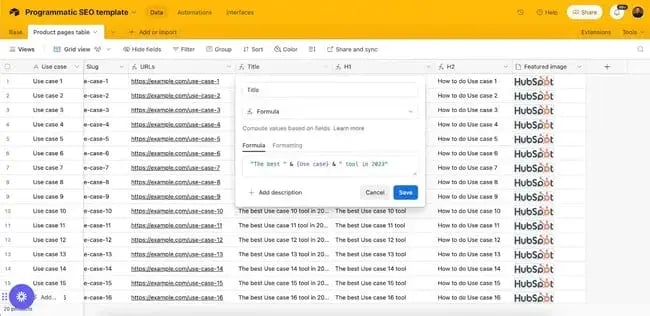
- ChatGPT: Create dynamic prompts (e.g., “Create a description for an {integration name} reporting software…”). For this, Porter used the tools Data Fetcher or GPT for Sheets to connect ChatGPT to Airtable and Google Sheets, respectively.
- Manually: When the copy isn’t standard to use formulas, or ChatGPT can’t provide contextual answers, fill pages manually.
- Translation: They used ChatGPT to generate translations of every parameter and text into other languages (Spanish, Portuguese), making it relatively easy to make their content multilingual.
Programmatic SEO Examples
The best way to understand programmatic SEO is to see it in action. Below are real-world examples from well-known brands.
1. Userpilot produces tool-by-tool comparison articles for zero and low-search-volume keywords.
Userpilot uses programmatic content to target extremely bottom-of-funnel patterns like “{tool} alternatives,” “best {use case} tools,” and “{tool1} vs {tool2}.” While these pages don’t drive most of the site’s traffic, their conversion efficiency makes them far more profitable than traditional blogs.
Outcomes & ROI:
- 274 programmatic posts created in ~1 year.
- These posts convert 3× higher than Userpilot’s regular posts.
- Traffic is <1% of total site traffic (high intent, low volume).
- Average cost per pSEO post: $97.
- Average cost per traditional post: $275.09.
“We have produced 274 posts in nearly a year using programmatic SEO, which are converting at a 3x higher rate than our regular posts. You can see all the posts produced this way under our Tools category,” says Emilia Korczynska, head of marketing at Userpilot.

Korczynska says that these posts target the bottom of the funnel with keyword combinations like:
- Best {use case} tools/software.
- {Tool1} alternatives and competitors.
- What is…{use case} + Question (e.g., how to {verb} {use case}).
- [N] Best {use case} tactics that actually work.
- Best {use case} services/agencies for your business / {industry}.
- {tool1} vs {tool2} vs {tool3} for {use case}.
“The top benefit is that these posts convert at a much higher rate, and it’s not a traffic play. They drive relatively little traffic (less than 1% of our traffic),” Korczynska says.
Now, how does it work from the technical side? Korczynska shares her working process. Her team uses post templates (a different template for every keyword pattern) built in Google Sheets, and two databases are also built in Google Sheets.
“The VLOOKUP and HLOOKUP formulas fetch info from the databases for each tool/use case and weave them into the template to produce a blog post. We then upload a CSV file with all the blog posts into our WP,” Korczynska explains.
2. ClickUp uses programmatic SEO to publish over 1,000 pages per month.
ClickUp validated its programmatic strategy in small batches of 20–30 keywords before expanding into large-scale production. This phased approach allowed them to refine their patterns, templates, and structure before deploying at massive volume.
Outcomes & ROI:
- Started with 25 programmatic pages.
- Scaled to thousands of pages per month.
- Followed an iterative validation approach to ensure content–market fit.
- No traffic or revenue figures reported.

Programmatic SEO can trip up SEO experts for two reasons, Mason Yu, SEO product and AI advisor at ClickUp, says.
“[One,] they cringe at the thought of thousands of duplicate content adding no value to the internet,” Yu says. “They can’t find a keyword pattern that feels worthy of a programmatic campaign.”
According to Yu, programmatic campaigns should take an iterative, agile approach. Marketing teams don’t have to start with ambitious plans to launch 10,000 pages at once, he says. Instead, validate that there are enough reasons to pursue a programmatic keyword set with maybe 20–30 keywords.
“That will safeguard you from sending a bunch of useless pages into the void and test your programmatic prototype for content-market fit,” Yu shares. “Once you have the foundations in place and users find the content valuable, you can always expand your keyword list.”
Yu’s team at ClickUp followed this approach.
“Each time we expanded our campaigns, our results came very close to our projects because we had enough learnings to get buy-in for further expansion,” Yu says.
3. Tango builds how-to guides with programmatic SEO at scale.
Tango uses programmatic SEO to populate a dynamic gallery of step-by-step guides using categories, software filters, and multi-select tags. While Tango’s team notes the initiative is still early, it demonstrates a creative use of programmatic content tied directly to the product’s value proposition.
Outcomes & ROI:
- Early-stage campaign.
- No traffic, conversion, or revenue data available.
- Programmatically creates filtered galleries of how-to workflows.
Hal Zeitlin’s B2B marketing agency Candid Leap scales content marketing production for Tango with pSEO. Let’s walk through its workflow.
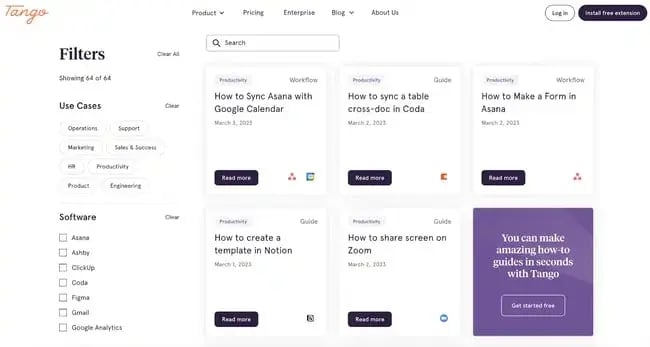
The “Created with Tango” gallery campaign is in its early days. However, it’s a great example of how a brand can show off its product’s value prop in a unique way when driven by a researched SEO strategy.
Let’s see what visitors can get in this gallery.
- Multiple categories to filter with multi-select (Use Case and Software).
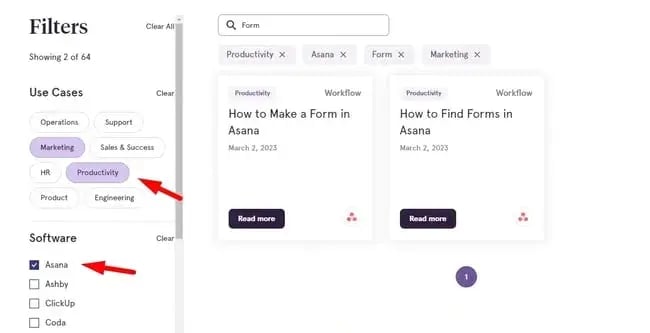
- Tags showing what the visitor has filtered for, with x buttons.
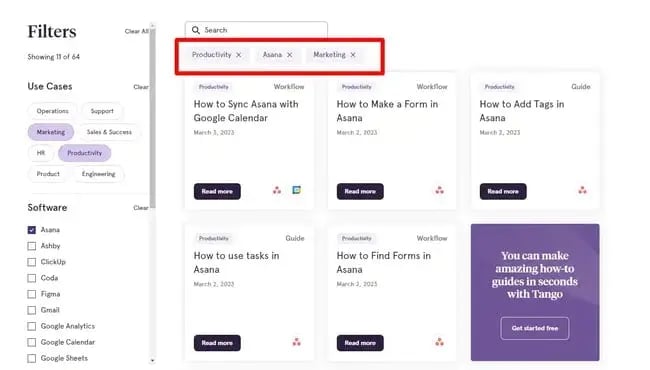
- Call-to-action inside the content grid.
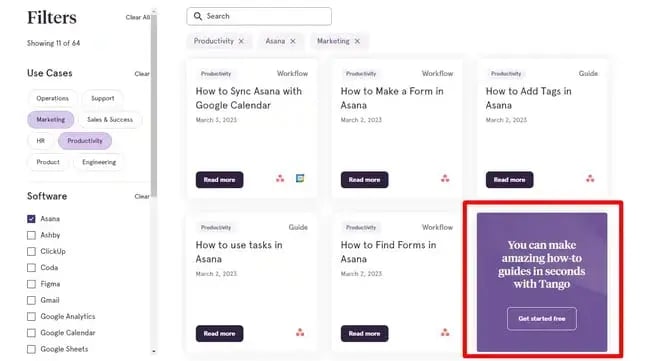
Zeitlin’s team showcases pieces of content for different filters, making the most of programmatic SEO.
4. Flying Cat published 1,700 integration pages programmatically in 3 months, which led to 45% of all their demo requests.
Flying Cat Marketing deployed a large-scale programmatic strategy for a hospitality tech client offering middleware integrations. By identifying three scalable content patterns (partner pages, partner-integration pages, and how-to pages), they generated high-intent traffic that directly influenced revenue-generating demos.
Outcomes & ROI
- 1,700 programmatic pages created.
- 45% of all demo requests from organic came from these programmatic pages.
- Cost per programmatic page: ~$57.
- Cost per traditional SEO page: >$400.
- 86,000 organic pageviews in 12 months.
- Average session duration: 4 minutes, 50 seconds.
Usman Akram, head of SEO growth strategy at Flying Cat Marketing, integrates programmatic SEO into clients’ SEO growth strategies. Together with the team, they achieve astonishing results in terms of conversions and ROI.
Akram describes one client in the hospitality technology sector, which offers a middleware solution that links various tools to facilitate smooth operations. Think of Zapier, but specifically for the hospitality sector.
“While our client’s website featured pages for direct integrations, our analysis using Hotjar’s session recordings revealed something intriguing,” he says. “Visitors to these integration pages were keen to understand not just the individual integrations but also how they worked together as a system.”
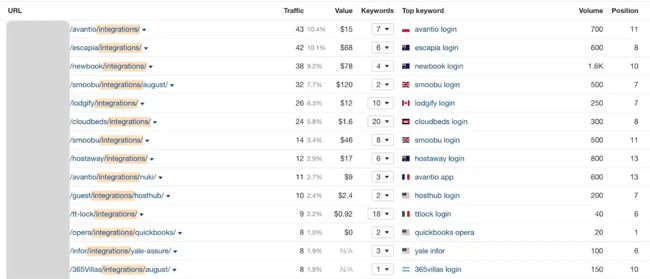
“The execution of this programmatic SEO campaign wasn’t a challenge: We created some template pages with custom variables, created a large database for all variables, and pushed them live using a CSV import plugin in WordPress,” Akram says.
However, Akram notes, ideation and planning were the real challenges.
“We were charting an unconventional path with our research, as there was no existing search volume data for any of the 1,700 pages we aimed to create,” Akram says. “However, with a deep understanding of the customer, we were confident that these content ideas would meet the users’ needs.”
Programmatic SEO Success Patterns
| Company / Example | Scale of Pages Produced | Strategy Type | Notable Results & ROI | Traffic / Conversions Data (Only What’s Provided) |
|---|---|---|---|---|
| Userpilot | 274 posts in ~1 year | BOFU content: alternatives, comparisons, tool lists | Programmatic posts convert 3× higher than regular posts; cost per programmatic post: 97vs.97 vs. 97vs.275.09 traditional | Traffic <1% of Userpilot’s total traffic (high intent, low volume) |
| ClickUp | Scaled from 25 pages to thousands per month | Iterative, agile expansion of keyword sets | Validated campaigns with small batches before expanding; no cost or traffic figures reported | No traffic, conversion, or revenue data included |
| Tango (Candid Leap) | Early-stage gallery of programmatic guides | Programmatic gallery driven by filters and use cases | No performance metrics yet; demonstrates value-based content tied to product use | No traffic or conversion data available |
| Flying Cat / Hospitality Tech Client | 1,700 programmatic pages | Integration pages, partner pages, how-to workflows | Programmatic pages drove 45% of all demo requests from organic; cost per page ~$57 vs. >$400 typical SEO | 86,000 organic pageviews in 12 months; avg session duration 4:50 |
Common Programmatic SEO Pitfalls and How to Avoid Them
Programmatic SEO can be incredibly powerful, but only if marketers avoid the traps that commonly derail large-scale content programs. Common pitfalls of programmatic SEO are thin content, duplicate pages, and poor data structure. Below are the biggest pitfalls marketers face when generating thousands of pages at once, plus clear ways to prevent them.
Pitfall: Producing Low-Quality or Duplicated Content at Scale
Because programmatic SEO relies on templates and structured inputs, it’s easy to accidentally generate large volumes of thin or repetitive content.
Aleyda Solis, international SEO consultant and founder at Orainti, warns that teams often “generate low-quality, spammy, or just not well-differentiated content that won’t fulfill users’ search needs.” This can lead to internal cannibalization and weaken the site as a whole.
Solution: Validate search demand and establish clear page criteria.
To prevent this, Solis recommends validating search demand and checking what already ranks before generating anything.
She notes that teams should “define the rules to generate and index their programmatic pages to ensure content quality and relevance,” such as requiring a minimum number of insights, examples, or data points before a page is allowed to publish.
Pitfall: Letting Programmatic Pages Live in Isolation
Even if content quality is strong, programmatic pages often get built without a navigational structure. Solis points out that when pages are created in a silo and “don’t integrate or cross-link well with the rest of your site,” it prevents users from continuing their journey and weakens the content’s overall impact.
Solution: Build a cross-linking strategy into your templates.
Solis recommends defining how pages should connect before generating them. She encourages teams to consider “how these pages are going to link to each other and to the other type and level of the site content,” and ensure navigation supports the next step of the funnel.
Pitfall: Not Automating Structured Data for Thousands of Pages
Structured data helps search engines understand programmatic pages, but applying it manually becomes impossible at scale. Aman Ghataura, founder and head of growth at NUOPTIMA, stresses the importance of setting up a dynamic system that “automatically adds structured data (Schema.org markup) to pages based on their content type.”
Solution: Use dynamic JSON-LD templates that auto-update.
Ghataura advises using JSON-LD templates that pull in real-time database values. As he explains, CMS logic should “fill in the template with real-time data,” and regenerate the schema whenever underlying content changes. This keeps pages clean, accurate, and optimized without manual work.
Pitfall: Misjudging How Many Pages You’ll Actually Generate
Marketers often underestimate or overestimate the actual volume of content a programmatic setup will produce. Emilia Korczynska built a combination calculator after seeing how easily teams miscalculated. However, if a team’s data inputs only produce around 15–30 templated pages, pSEO likely isn’t the best option.
Solution: Estimate output using a combinations calculator.
Korczynska recommends calculating page volume before building templates, so teams know whether programmatic SEO is worth the investment. This helps determine whether they’re looking at dozens, hundreds, or thousands of pages — and whether they have the bandwidth to maintain them.
Pitfall: Missing Technical Errors After Deploying at Scale
Technical issues often multiply once hundreds or thousands of pages are live. Tejaswi Suresh, director of SEO at Botpresso, notes that programmatic initiatives frequently contain “truncated meta descriptions, incorrect schema markup, technical bugs leading to 4XX or 5XX errors,” simply because teams can’t manually monitor everything.
Solution: Implement automated monitoring and alerts.
Suresh recommends using tools like Quickblink, Testomato, or Little Warden to routinely scan pages and send alerts when inconsistencies appear. This makes it easier to maintain site health and resolve small issues before they spread across the entire program.
Pitfall: Using Tools That Don’t Scale With the Program
Many teams begin with Google Sheets or rigid databases, but struggle once the initiative grows. Hal Zeitlin points out that Sheets tends to be a “make it once, upload it, don’t touch it solution,” and formal databases are often too complex for marketing teams.
Solution: Use a flexible, marketer-friendly database like Airtable.
Zeitlin’s team leans heavily on Airtable because it’s easier to maintain, update, and scale. As he explains, it supports the agility programmatic SEO requires, especially as templates expand or as teams add new content types and languages.
Frequently Asked Questions About Programmatic SEO
What does programmatic SEO mean?
Programmatic SEO (pSEO) is a strategy where marketers create a large number of keyword-targeted pages using templates, structured data, and automation. Instead of writing each page manually, teams use a content database and predefined rules to generate hundreds or thousands of pages that follow a consistent pattern.
How do I create programmatic SEO?
Most programmatic SEO workflows follow a similar process. You identify repeatable keyword patterns, structure your content into a template, store data in a database, and use a CMS or automation tool to generate pages. You also need rules for quality, internal linking, and structured data. Many teams use tools like HubSpot Content Hub, Airtable, WordPress, or Webflow to build the system.
What is the difference between programmatic SEO and traditional SEO?
Traditional SEO focuses on creating individual pages by hand, often aiming for depth and nuance on a smaller number of topics. Programmatic SEO focuses on scale. It uses data to produce large volumes of pages that target long-tail or structured keyword variations. Traditional SEO is manual and selective. Programmatic SEO is templated and automated.
What are the 4 types of SEO?
The four core types of SEO are on-page SEO, which covers content, keyword targeting, and HTML elements; off-page SEO, which includes backlinks and brand authority; technical SEO, which focuses on crawling, indexing, and site performance; and local SEO, which helps businesses appear in geographically relevant searches.
Is programmatic SEO right for small businesses?
Programmatic SEO can be right for small businesses, but only if the business has enough structured data or keyword patterns to justify it. Programmatic SEO makes sense when you have many variations of similar topics, such as use cases, locations, products, or service categories. If a business only needs 15 to 30 pages, programmatic methods may be unnecessary.
How much does programmatic SEO cost?
Costs vary depending on the size of the program and the tools used. Some teams can build small systems using affordable tools like Airtable or Google Sheets. Larger programs that involve thousands of pages may require a CMS with dynamic content fields or enterprise-grade automation. The main variables are tool costs, content generation, QA, and ongoing maintenance.
Generate organic search traffic efficiently with programmatic SEO.
Programmatic SEO isn’t a shortcut — it’s a system. When executed well, it allows teams to scale high-quality, intent-driven content by combining structured data, smart templates, and automation. The brands succeeding with pSEO aren’t chasing volume for its own sake; they’re validating demand, prioritizing user value, and building internal linking and quality controls directly into their templates.
The right tools make all the difference. Platforms like HubSpot Content Hub simplify programmatic SEO by bringing your CMS, content database, AI-assisted creation, and SEO best practices into one unified workflow. Instead of juggling spreadsheets, plugins, and fragile integrations, marketers can move faster, test ideas sooner, and scale with confidence.
Most importantly, programmatic SEO doesn’t require a massive leap on day one. Start small, prove value, and expand iteratively. With a strong foundation and the right system in place, pSEO becomes more than a growth tactic — it becomes a durable engine for long-term authority, efficiency, and impact.