Instagram and Snapchat: A Full Comparison to Help Your Decision-Making (original) (raw)
Should our business be on Instagram or Snapchat? Or both?
With Instagram and Snapchat becoming increasingly similar, many social media managers find themselves asking these questions.
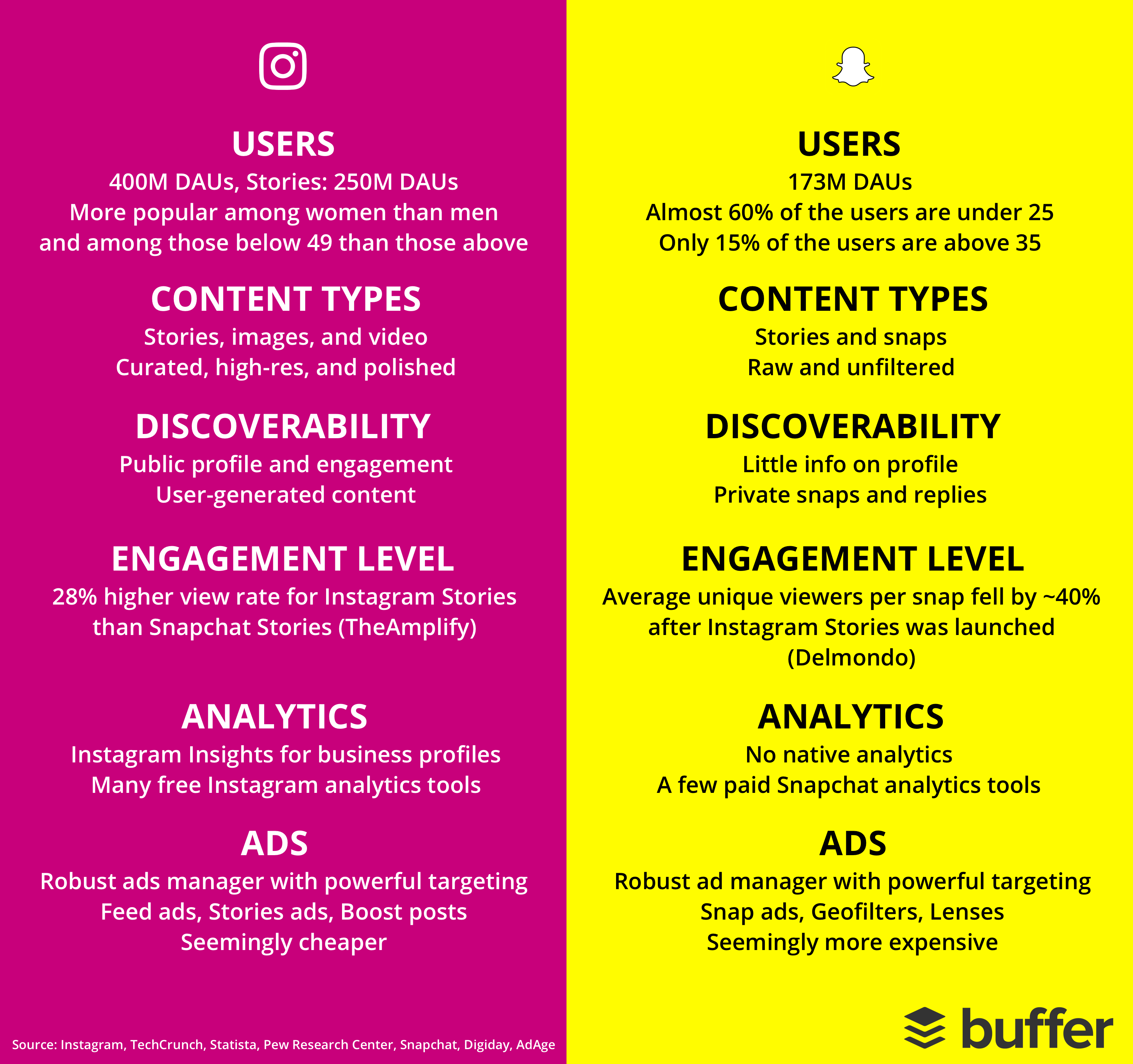
To help you figure out which platform — Instagram or Snapchat — is more suitable for your business, we decided to analyze the differences between the two platforms. We compared six key aspects of the two platforms:
What we found is this (and you might know it already) is that it greatly depends on your business. Snapchat is great for some businesses and Instagram for others…and for some, the best solution is both.
But which is the best fit for your business?
Read on to find out…
6 questions to consider
Here’s a list of criteria you could consider when comparing Instagram and Snapchat:
- Are your target audience and customers on the platform?
- Which content type (e.g. stories, images, or videos) suits your business best?
- Do you prefer having a public profile that is easily discoverable and to interact with your followers in public? Or do you prefer a private profile and build close one-to-one relationships with your followers?
- Is your target audience more engaged on Instagram or Snapchat?
- Do you want analytics to measure your performance?
- Do you want to boost existing posts or run ads on the platform?
At Buffer, we choose Instagram over Snapchat (but that’s not necessarily the best more for you).
Here’s how we came to the decision, according to Brian Peters, our Digital Marketing Strategist:
For a long time we were on posting unique content to both Snapchat and Instagram at Buffer.
What we found over time is that the quality of conversations we were having on Instagram with our target audience (marketers and social media managers) was much higher than on Snapchat.
Since we are a small team with limited resources, we decided to post exclusively to Instagram so that we could continue to focus on developing meaningful relationships and creating quality content. Since the decision, we’ve grown our Instagram account by more than 20,000 followers and increased engagement by nearly 300%.
Furthermore, the ability to get in-depth analytics on how our content is performing across our feed, Stories, and Live is a major value-add.
Not to mention the platform is approaching a billion monthly active users!
If you would like to learn more about our comparison of Instagram and Snapchat for businesses, we’ve unpacked our analysis below.

1. Users
The Instagram user base is larger and slightly older.
Size
Let’s first look at the size of the user base of the two platforms¹.
In terms of active users, more than 400 million people use Instagram daily (and more than 700 million use it monthly). In comparison, 173 million people use Snapchat every day.
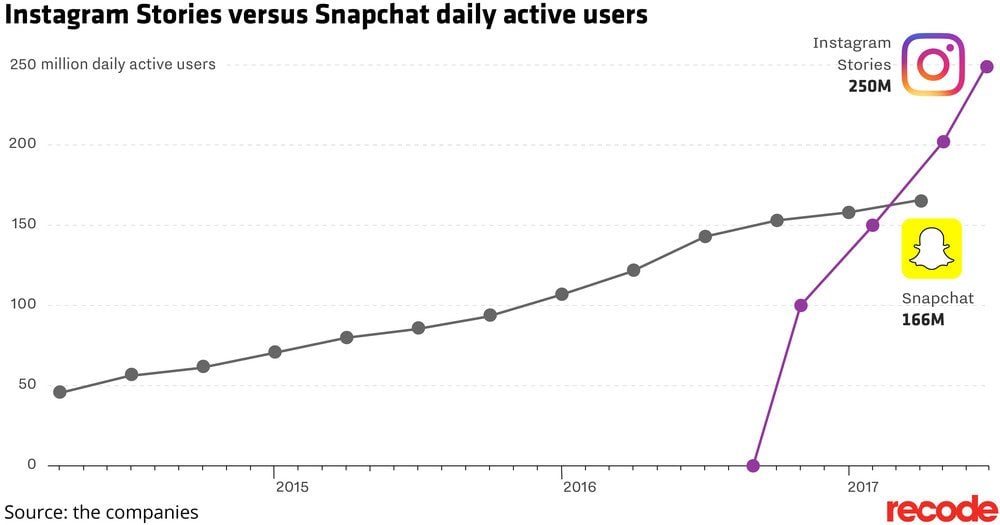
In terms of Stories, over 250 million people use Instagram Stories daily. That far exceeds the 173 million people who use Snapchat every day.
This chart by Recode shows the rise of Instagram Stories and the slow growth of Snapchat:
In terms of user growth rate, Instagram has been growing steadily while Snapchat’s growth seems to have slowed down. Here’s how the user growth of the two platforms look like (with the data from Statista):
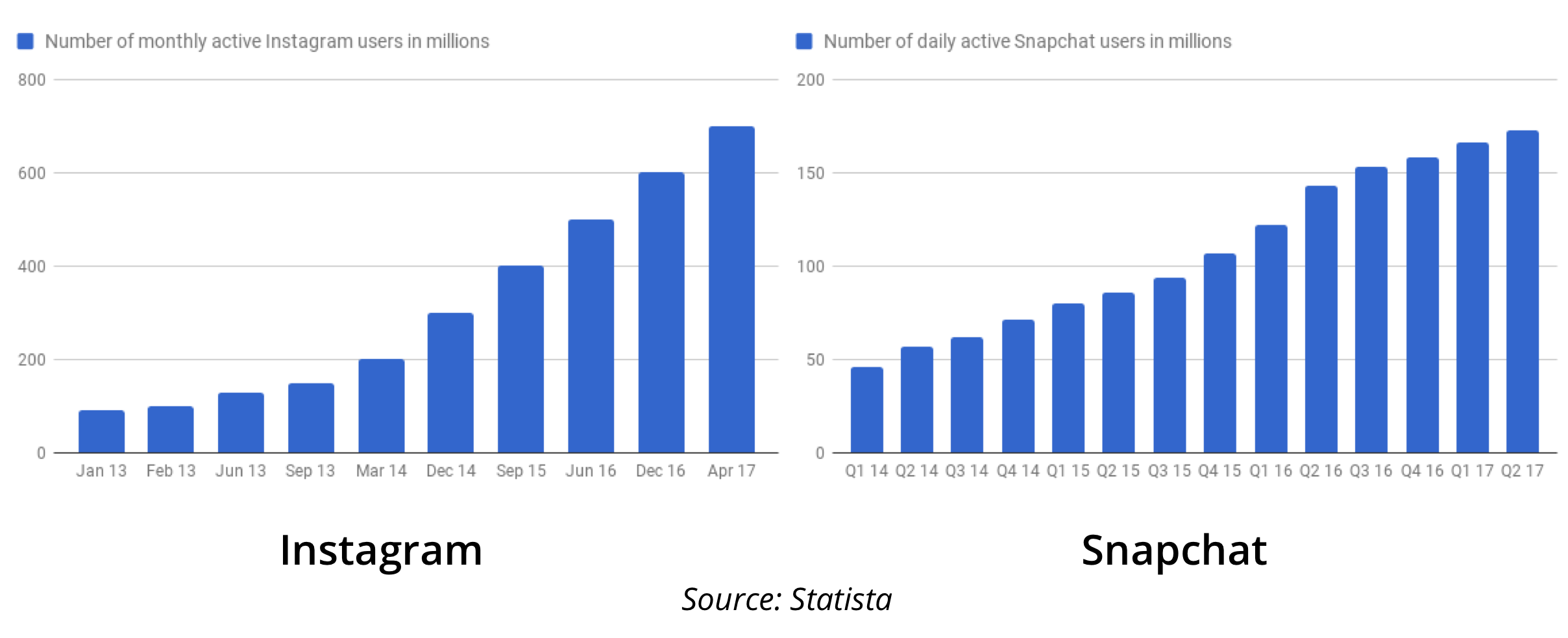
Note: The graph for Instagram shows monthly active users while the graph for Snapchat shows daily active users. Even though they are different metrics, I believe the number of monthly active users and the number of daily active users correlate with each other.
Demographics
In 2016, Pew Research Center did a study of the demographics of American users on the most popular social media platforms.
Here are some highlights of their study for Instagram:
- A bigger percentage of women (38 percent) than men (26 percent) in the U.S. use Instagram.
- Instagram is most popular among online Americans between the age of 18 and 29.
- A third of online Americans between the age of 30 and 49 use Instagram.
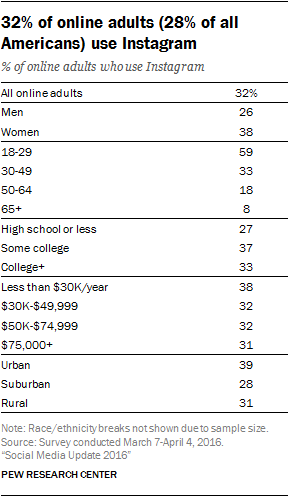
It seems that Instagram is more popular among women than men and among online Americans below the age of 49 than those above.
On the other hand, Snapchat has a much younger user base.
- Almost 60 percent of the users are under the age of 25.
- People between the age of 18 and 24 forms the bulk of Snapchat’s user base (36 percent).
- Only 15 percent of the users are above the age of 35.
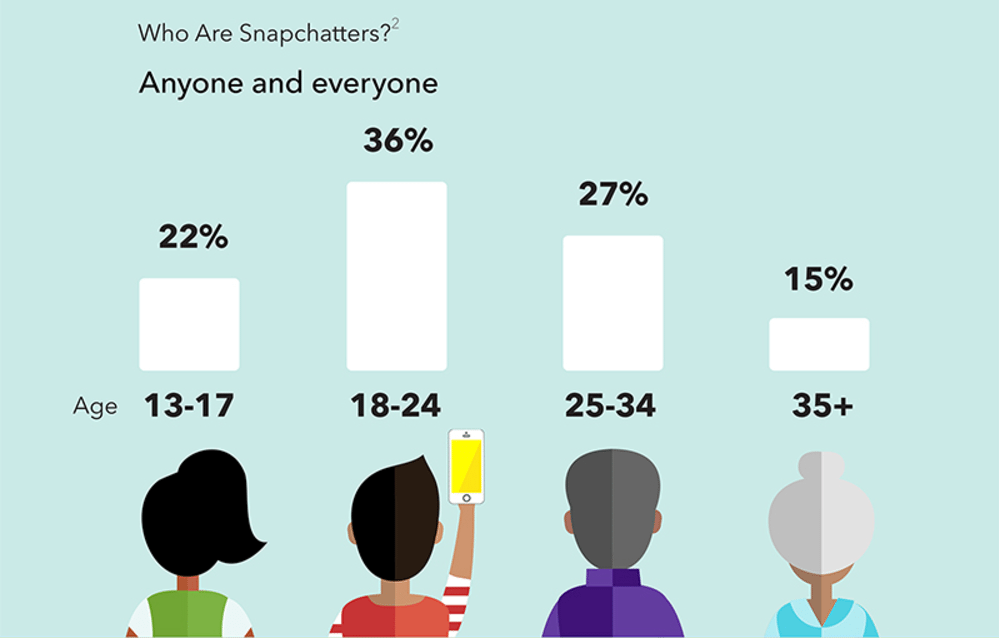
Note: For Instagram, the percentages show the percentage of people in each category that uses Instagram. For example, 59 percent of online American between the age of 18 and 29 use Instagram. For Snapchat, the percentages show the percentage of Snapchat users in each category. For example, 22 percent of Snapchat users are between the age of 13 and 17.
Others
Here are some other interesting insights about Instagram’s and Snapchat’s user bases.
- The most popular topics among young adults on Instagram are fashion/beauty, food, TV/films, hobbies, and music, according to a Facebook survey.
- Instagram users like to follow celebrities, get DIY inspiration, and look at travel photos, according to a Facebook study.
Snapchat
- The majority of Snapchat users (71 percent) use Snapchat only or mostly for peer-to-peer messaging, according to a survey by Defy Media for Variety.
- Nearly 60 percent of interactions on Snapchat are made between close friends, according to a study commissioned by Snap, as reported by Mashable.
- 46 percent of Snapchat users in the U.S. don’t use Instagram, according to App Annie. The percentage is 37 in the U.K.
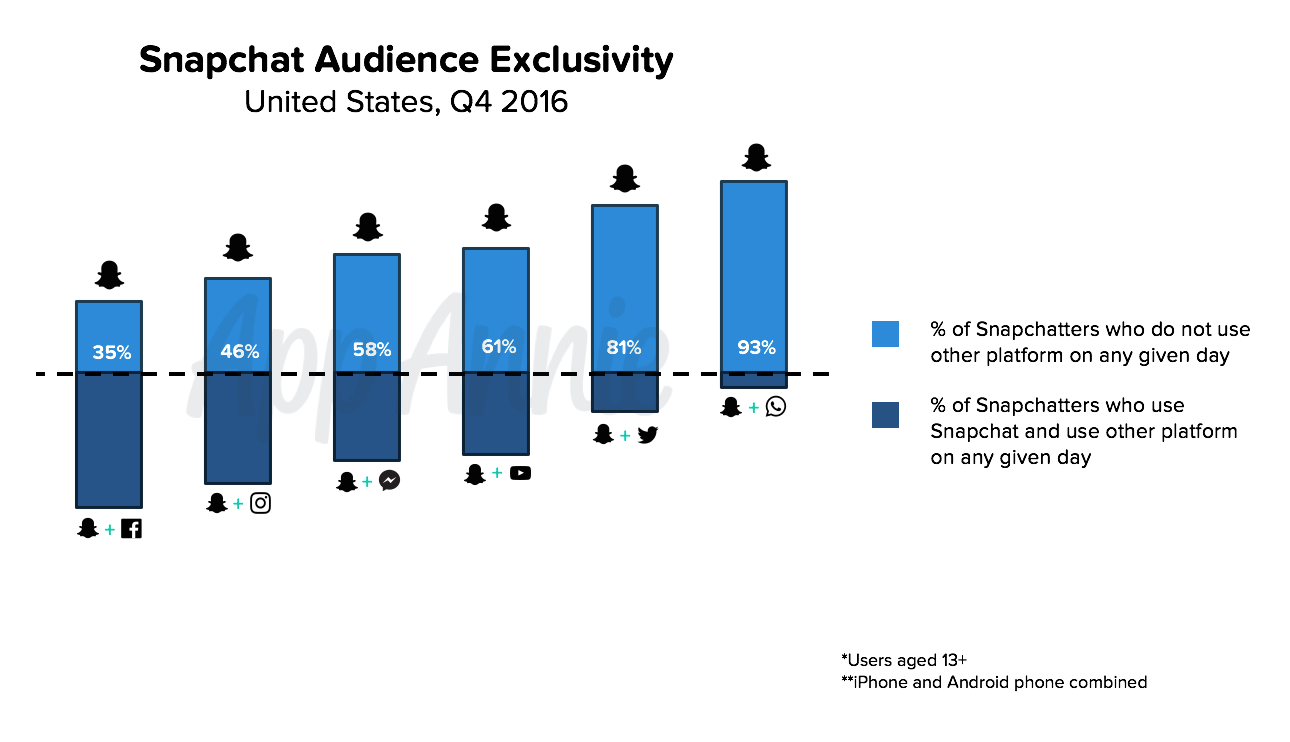
When deciding between Instagram and Snapchat, I personally think that the user base is the most important. If your target audience is not on one of the platforms, it may not be worth investing in that platform.
Consideration: Is your target audience on the platform?
If your target audience is on both platforms (yay!), here are a few other things to consider:
2. Content types
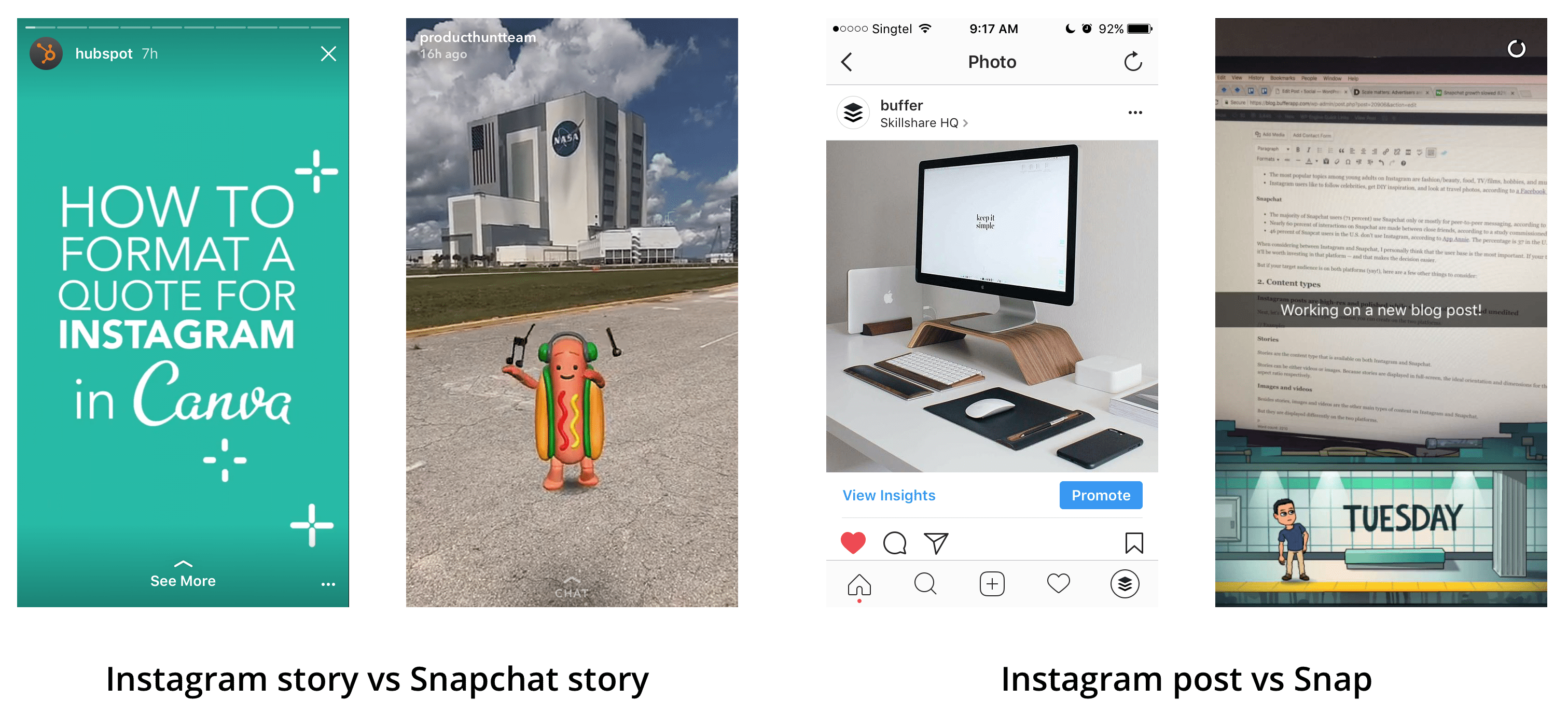
Instagram posts are high-res and polished; snaps are often raw and unedited.
Next, let’s take a look at the types of content you can create on the two platforms.
Stories
Stories are available on both Instagram and Snapchat.
Stories can be either videos or images. Because stories are displayed in full-screen, the ideal orientation and dimensions for the stories are horizontal (i.e. portrait) and a 9:16 aspect ratio respectively.
Images and videos
Besides stories, images and videos are the other main types of content on Instagram and Snapchat.
But they are displayed differently on the two platforms.
- Images and videos are published as posts on Instagram and snaps on Snapchat.
- Instagram posts are public (unless your account is private). Snaps are mostly private between two accounts.
- Instagram posts can be horizontal, square, or vertical. Snaps are usually vertical (since they are displayed in full-screen).
- Instagram posts will stay on your feed and profile, whereas Snaps dissappear after 24hrs.
Content quality
In general, people like to post high-resolution, (usually) edited content on Instagram and raw, unfiltered content on Snapchat.
That said, with the introduction of Instagram Stories, people are also posting more unedited content on Instagram through Stories.
Consideration: Which content type (i.e. stories, images, or videos) suits your business better?
3. Discoverability
Your brand will be more discoverable on Instagram.
In terms of discoverability, there are three areas to look at:
Profile
On Instagram, you can have a public profile which shows your follower count and all your Instagram posts. Instagram suggests profiles to follow and curates relevant posts in Discover, which helps people to find your Instagram profile.
On Snapchat, your profile can only be viewed by your friends and people who have added you. There’s little information on your Snapchat profile as the snaps and stories you post on Snapchat disappears after 24 hours.
Engagement
On Instagram, likes and comments on your posts can be seen by everyone while direct messages can only be seen by you.
On Snapchat, only you can see who has replied to your snaps or stories.
User-generated content
On Instagram, people (including yourself) can find posts that mention you. Through hashtags and @-mention tags, people can discover and check out your Instagram profile.
Hence, user-generated content is a common Instagram marketing strategy as it can help you grow your Instagram account and increase your brand reach.
On Snapchat, snaps or stories that mention your brand can only be seen by the friends of the person who posted them.
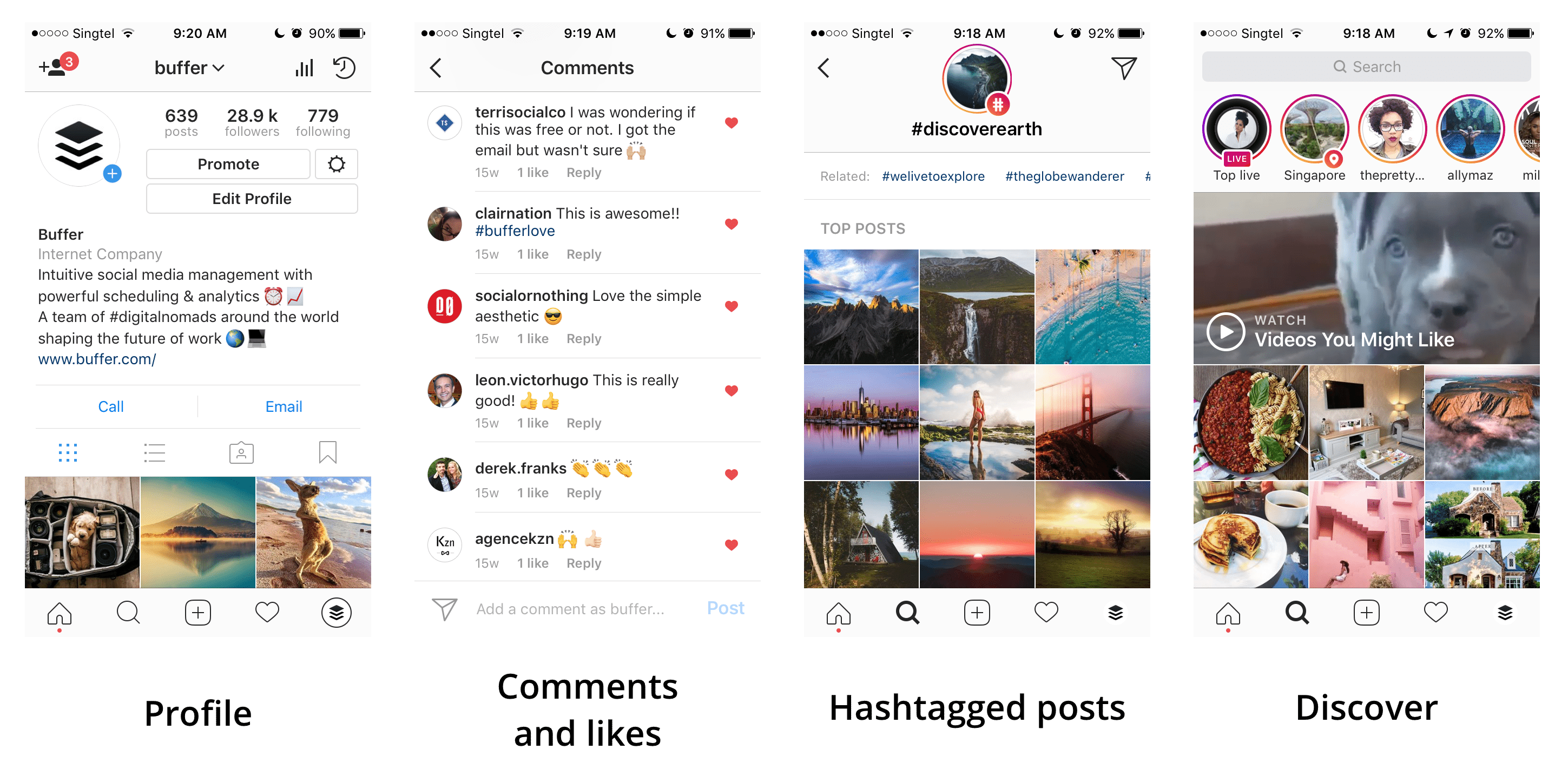
Your brand will be more discoverable on Instagram than on Snapchat. This is great if you want to raise the awareness of your brand on social media and use social proof to build your brand.
That said, many brands like the privacy with Snapchat as that allows them to build meaningful one-to-one relationships with their followers.
Consideration: Do you prefer having a public profile that is easily discoverable and to interact with your followers in public? Or do you prefer a private profile and build close one-to-one relationships with your followers?
4. Engagement level
Engagement seems to be higher on Instagram than Snapchat.
Comparing engagement levels on the two platforms can be tricky since the forms of engagement on the two are different. On Instagram, people like, comment, and watch a video. On Snapchat, people view a snap and reply privately.
While I can’t compare engagement levels as a whole between the two platforms, I thought it might be worthwhile to look at engagement level of stories since stories are available on both platforms and are very similar.
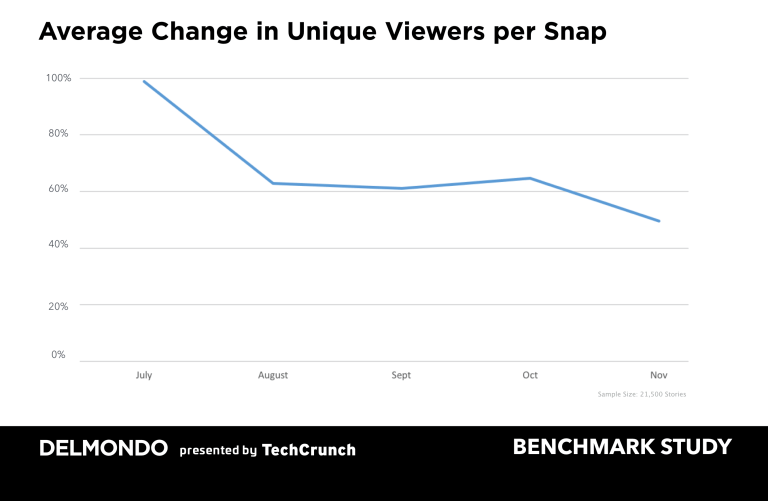
As reported by TechCrunch, businesses are seeing better engagement with Instagram Stories than Snapchat Stories.
- An analysis of 21,500 Snapchat Stories by Delmondo found that the average unique viewers per Snapchat Stories fell by about 40 percent in 2016 after Instagram Stories was launched.
- On the other hand, the influencer community of TheAmplify was seeing 28 percent higher view rate for Instagram Stories than Snapchat Stories.
For us at Buffer, we were seeing higher-quality conversations with our target audience (marketers and social media managers) on Instagram than on Snapchat before we stop posting on Snapchat.
Consideration: Is your target audience more engaged on Instagram or Snapchat? (You’ll have to try both platforms to get a good sense of this.)
5. Analytics
You can get Instagram data more easily than Snapchat data.
Being able to measure and analyze your social media performance can help you improve your social media marketing.
Natively, Instagram provides business profiles with Instagram Insights, an in-app analytics for posts, stories, ads, and followers.
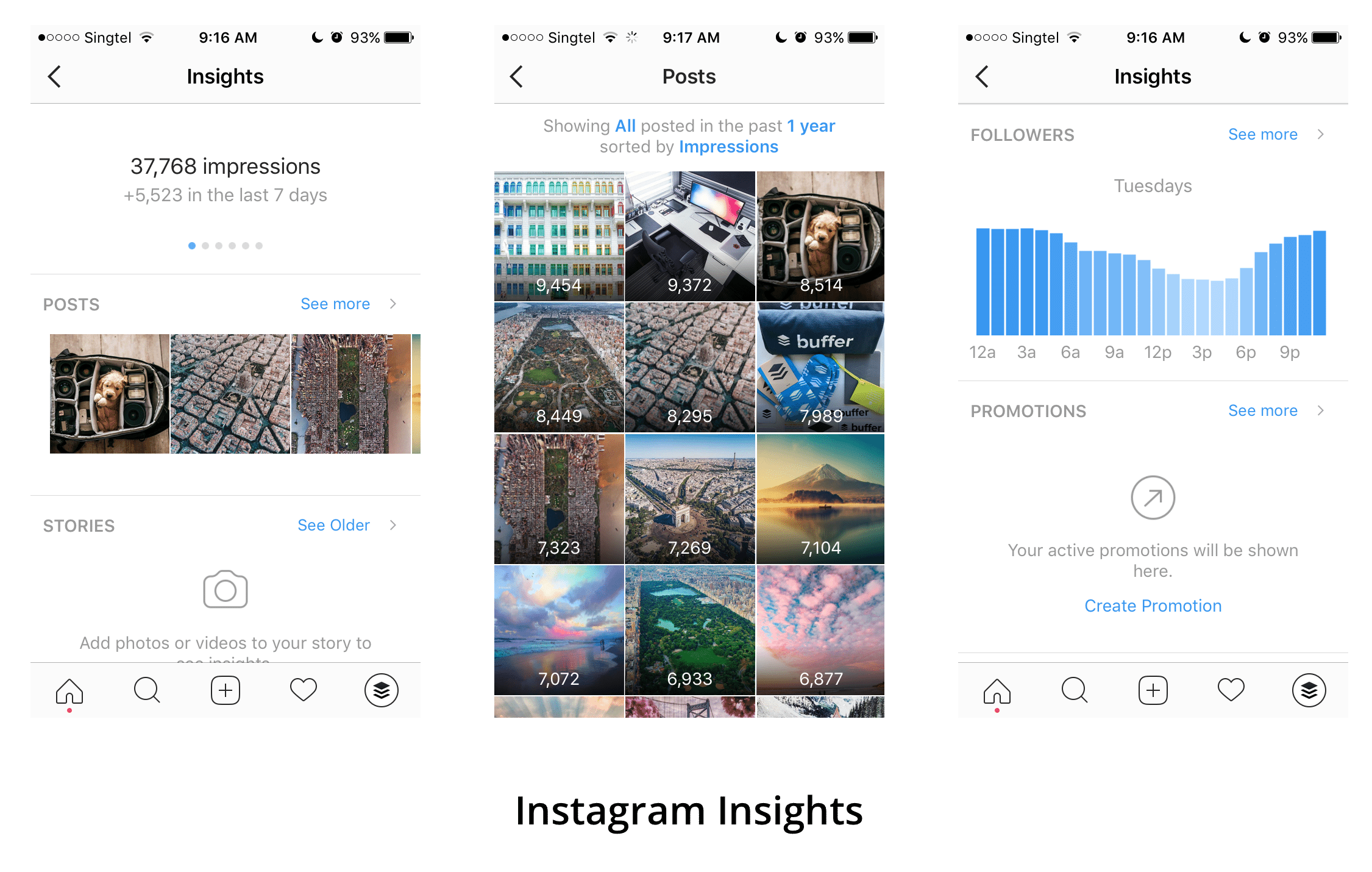
Snapchat does not provide any analytics (except for ads), and most marketers have been tracking their Snapchat marketing manually.
In terms of third-party tools, there are many free Instagram analytics tools available, such as Websta, Union Metrics’s free Instagram account checkup, and Keyhole.
There seem to be much fewer Snapchat analytics tools and they are not free. For example, Snaplytics, a popular Snapchat analytics tool, costs $19 per Snapchat account per month for very basic metrics — views, screenshots, and completion rate.
Considerations: Do you want analytics to measure your performance? Or are you all right with manually tracking your performance?
6. Ads
Both offer powerful targeting and several ad formats.
Since Instagram launched ads on its platform in late 2015, the number of businesses who advertise on the platform has grown to over a million. With Instagram being part of Facebook, these businesses have been able to easily create Instagram ads using the robust Facebook Ads Manager.
Snapchat advertising used to be quite inaccessible to most businesses. Other than Snapchat geofilters, businesses that want to advertise on Snapchat had to purchase ads from Snapchat’s ad partners (and they often cost a lot). Fortunately, Snapchat launched its self-serve Snapchat Ad Manager this year, making it easier for businesses to run ads on Snapchat themselves.
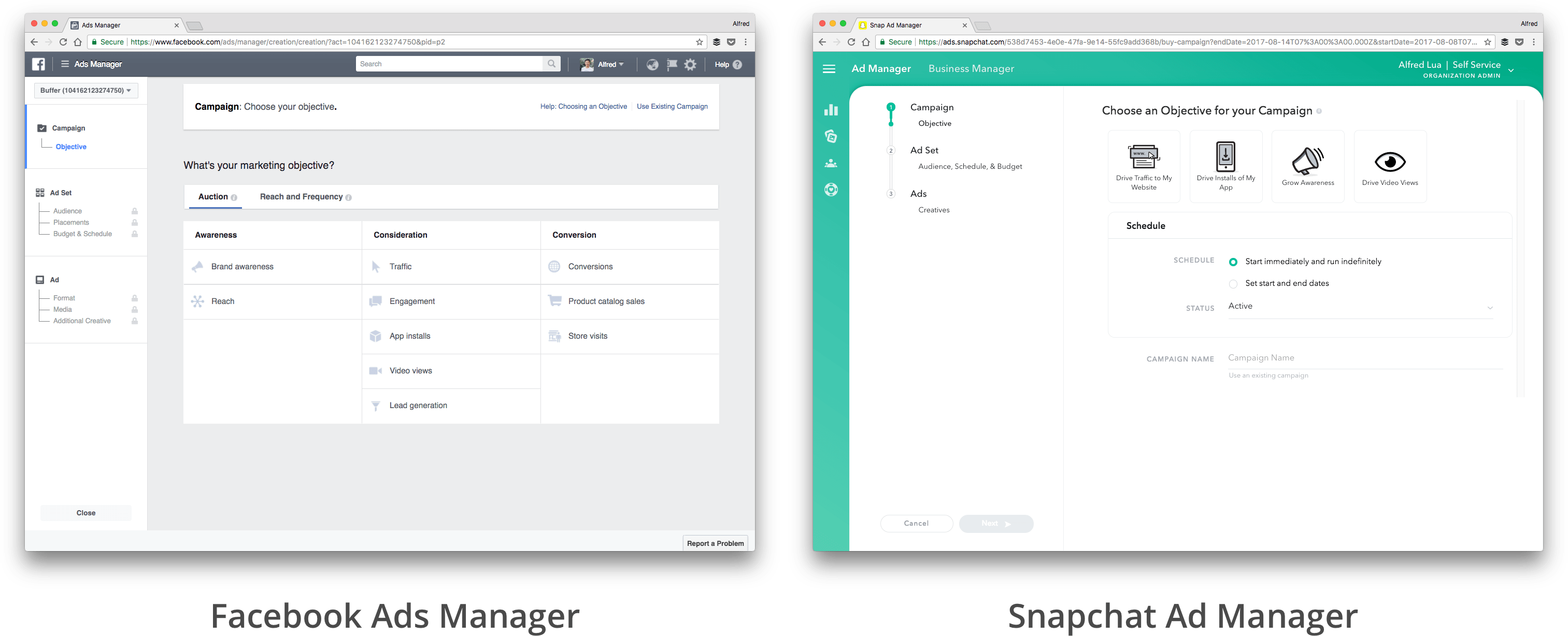
Let’s take a look at three key aspects of advertising on these two platforms, namely audience targeting, ad formats, and costs.
Targeting
The two ads managers are quite similar in terms of their powerful targeting ability.
Using either of the ads managers, you can create a target audience for your ads with factors such as demographics, interests, and behaviors.
On top of that, you can also reach people using your own data (e.g. people who have interacted with your business) and the platform’s data (e.g. users who look like your customers).
Ad formats
Both Instagram and Snapchat offer a variety of ad formats. Here’s an overview of the ad formats each of them offers:
- Feed ads
- Stories ads
- Boost existing posts
- Snap ads
- Geofilters
- Lenses
Apart from Instagram Stories ads and Snap ads (which are quite similar), Instagram and Snapchat offers quite different ad options.
I believe Instagram ads are easier to create than Snapchat ads at the moment. While Snap ads can be easily created using the Snapchat Ad Manager, creating Snapchat geofilters requires some design know-how and creating sponsored lenses requires you to work with a Snapchat partner (and it seems to cost hundreds of thousands of dollars now).
Cost
It’s a little tricky to compare the advertising costs of the two platforms as it can be quite dependent on the quality of the ads and the target audience created.
In general, it seems to be cheaper to advertise on Instagram than Snapchat at the moment.
Here are some numbers I’ve found from Digiday and AdAge:
- Buyers say Instagram Stories ads are about 3to3 to 3to4 CPMs (and completion rates are between two and three times higher on Instagram than Snapchat).
- Instagram Feed ads cost a little more than Stories ads, between 5and5 and 5and7 CPMs.
- Instagram Stories ads can cost half the price of Snapchat ads, at 4CPMs(priceper1,000impressions)versus4 CPMs (price per 1,000 impressions) versus 4CPMs(priceper1,000impressions)versus8.50 for Snapchat.
- Snap Lenses’ minimum price has also dropped since they can now be targeted — but they’re still pricey, costing upward of $300,000 for one day.
- Snap Geofilters can be bought for as little as 5viaself−serve,andCPMscanbeaslowas27cents(forgeofiltersincrowdedareas)toashighas5 via self-serve, and CPMs can be as low as 27 cents (for geofilters in crowded areas) to as high as 5viaself−serve,andCPMscanbeaslowas27cents(forgeofiltersincrowdedareas)toashighas48.
With the launch of Snapchat Ad Manager, perhaps the cost of Snapchat advertising will gradually be lowered.
If you are interested to learn more about advertising on Instagram and Snapchat, here are two guides you might like:
- The Complete Guide to Instagram Ads: A Step-by-Step Guide to Advertising on Instagram
- The Complete Guide to Creating Effective Snap Ads with Snapchat Ad Manager
Consideration: Do you want to boost existing posts or run ads on the platform?
Which platform are you using?
While Instagram seems to be better than Snapchat in most aspects of the comparison, it’s important to consider which platform your target audience prefers.
For example, if your target audience is students, teenagers, and young adults, you might be able to reach them more effectively on Snapchat than Instagram.
Also, a huge percentage of Snapchat users aren’t on Instagram as App Annie has found. So being on Snapchat might be the only way to reach them.
I hope you have found the analysis of the two platforms useful for your decision-making. Once you have made your decision, I would love to hear from you.
Which platform did you choose? What were your main considerations?
—
Image credit:
- The feature image is via Unsplash.
- The graphic on Snapchat user base is via Snapchat.
- The graphic on Snapchat audience exclusivity is via App Annie.
- The chart on the change in average unique viewers per snap is via TechCrunch.
Footnote:
¹ The statistics for user base were taken from Instagram, TechCrunch (Instagram monthly active users, Instagram Stories daily active users), and Statista.