News Archives - CLINT - Climate Intelligence (original) (raw)


AI to Strengthen Climate Resilience Across Europe
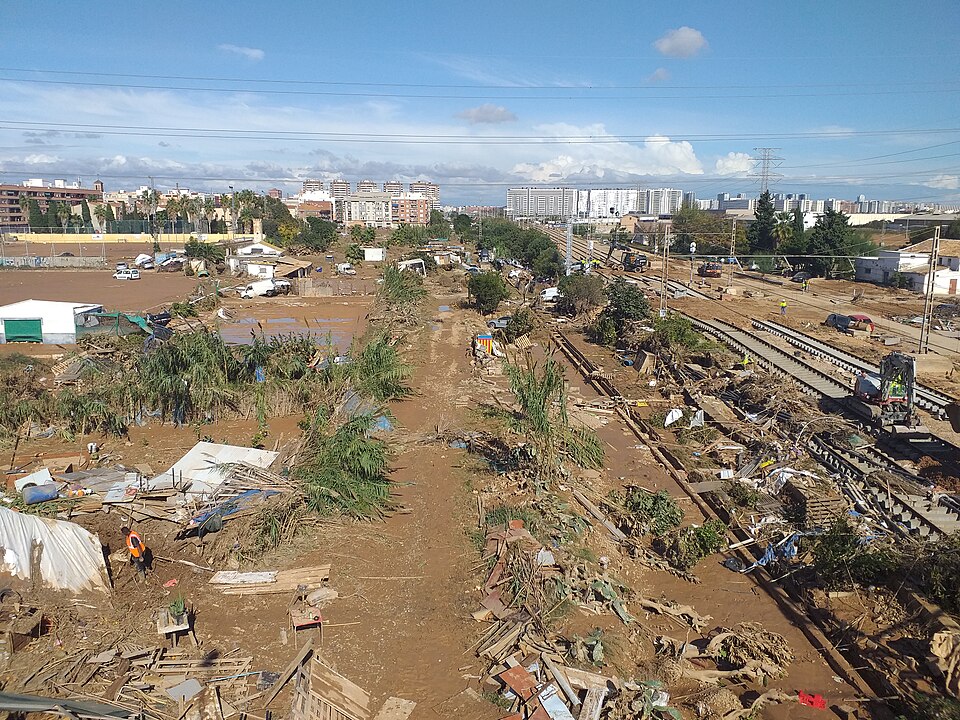
The EU-funded CLINT (Climate Intelligence) project has released a new policy brief showing how Artificial Intelligence (AI) for climate resilience can transform Europe’s capacity to anticipate, prevent, and manage the growing impacts of climate change across the water–energy–food (WEF) nexus....

Unraveling the Atmospheric Drivers of 2023’s Record Marine Heatwaves
The summer of 2023 was extraordinary for the world’s oceans. Across the North Atlantic and Mediterranean, marine heatwaves (MHWs) reached record-breaking intensity, persistence, and spatial extent, contributing to the highest global surface air and sea surface temperatures on record. A...

Rewriting the Weather: From Probabilities to Storylines
When a devastating heatwave, flood, or hurricane strikes, the question inevitably arises: was this caused by climate change? For decades, climate scientists hesitated to answer. The atmosphere is chaotic; extreme events have multiple causes. The best they could offer was...
Empowering Decision-Making with Climate Services Information Systems
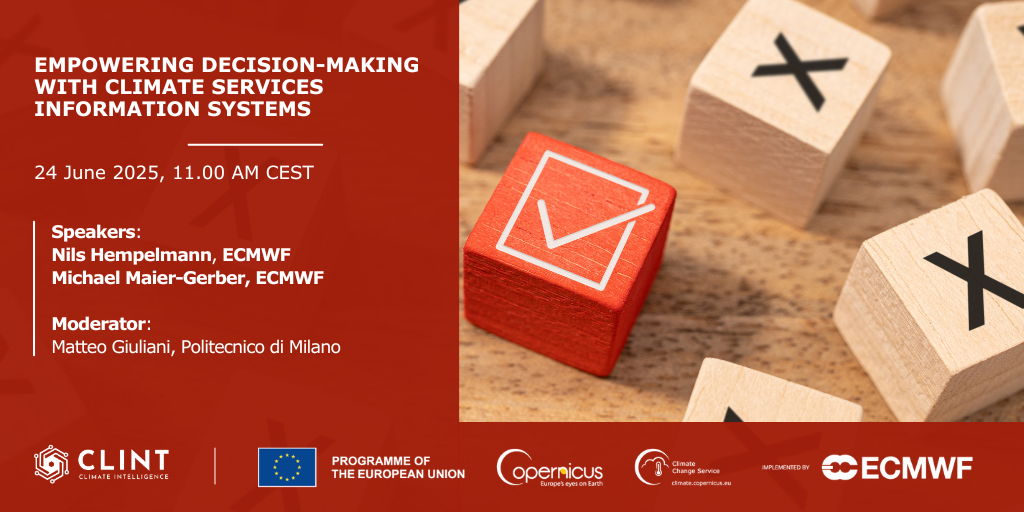
24 June 2025, 11:00 AM CEST Speakers: Nils Hempelmann, ECMWF, and Michael Maier-Gerbe, ECMWF. Moderator: Matteo Giuliani, Politecnico di Milano. Access the live stream here: https://cmcc-it.zoom.us/j/86399557322?pwd=MnFGaJ4jMbrfaA1dc3iabdejavAR57.1 Passcode (if needed): 298137 Several policy initiatives over the last three decades have been...


When the River Runs Dry: Rethinking Drought Through Nature’s Lens
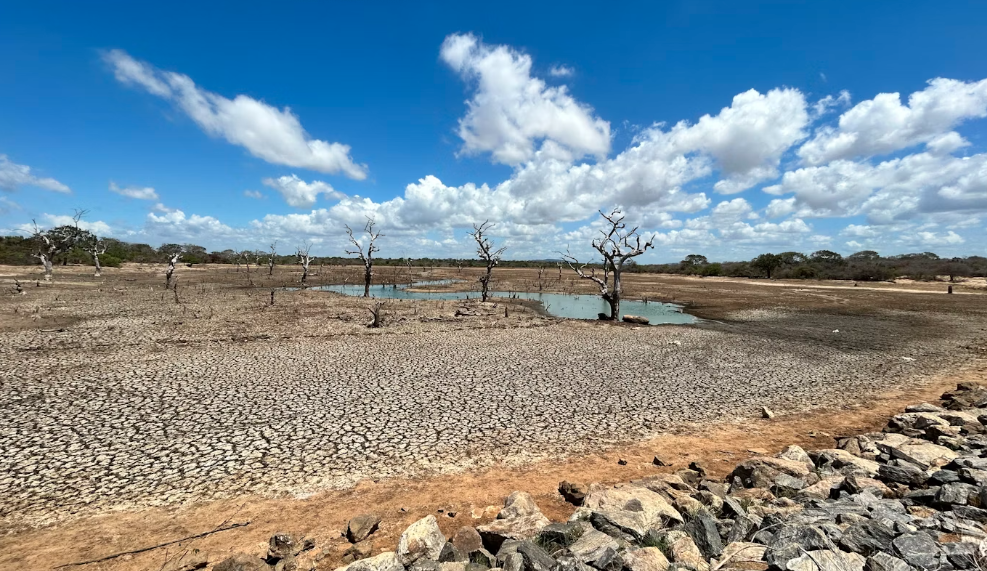
A new global review led by Celia Ramos-Sánchez and colleagues raises critical concerns about how freshwater ecosystems are addressed in drought risk management. The study, published in Environmental Research Letters, analyzed 26 drought management instruments across 25 countries, revealing a...
Harnessing AI for Hydrology: Enhancing Streamflow Predictions Across Europe
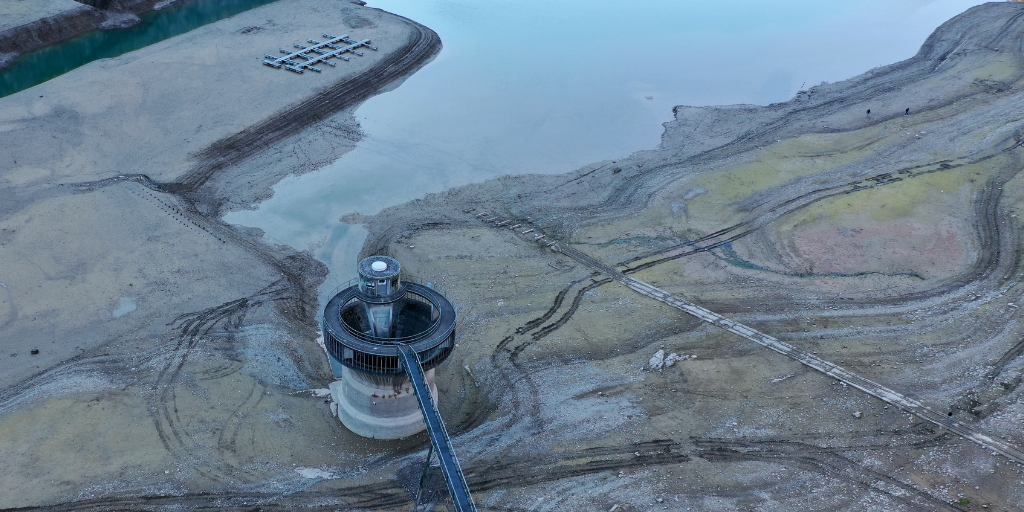
Hydrological models and services are essential for water management, flood and droughtpreparedness, and ecosystem protection. However, large-scale process-based models oftenstruggle with local-scale accuracy due to the complexity of hydrological processes, uncertaintiesin meteorological inputs, and human interventions.This webinar dives into how...

The Role of AI in Understanding and Predicting Extreme Weather Events
Extreme weather events, including floods, droughts, wildfires, and heatwaves, are increasing in frequency and severity, posing critical threats to human livelihoods, biodiversity, and economic stability. Understanding and predicting these events is essential for developing effective mitigation and adaptation strategies. Artificial...