25 Best Disaster Movies of All Time, Ranked (original) (raw)

Characters from A Night to Remember, Threads, and The Towering Inferno
Image by Federico Napoli

Published May 12, 2025, 5:10 PM EDT
Jeremy has more than 2500 published articles on Collider to his name, and has been writing for the site since February 2022. He's an omnivore when it comes to his movie-watching diet, so will gladly watch and write about almost anything, from old Godzilla films to gangster flicks to samurai movies to classic musicals to the French New Wave to the MCU... well, maybe not the Disney+ shows.
His favorite directors include Martin Scorsese, Sergio Leone, Akira Kurosawa, Quentin Tarantino, Werner Herzog, John Woo, Bob Fosse, Fritz Lang, Guillermo del Toro, and Yoji Yamada. He's also very proud of the fact that he's seen every single Nicolas Cage movie released before 2022, even though doing so often felt like a tremendous waste of time. He's plagued by the question of whether or not The Room is genuinely terrible or some kind of accidental masterpiece, and has been for more than 12 years (and a similar number of viewings).
When he's not writing lists - and the occasional feature article - for Collider, he also likes to upload film reviews to his Letterboxd profile (username: Jeremy Urquhart) and Instagram account.
He has achieved his 2025 goal of reading all 13,467 novels written by Stephen King, and plans to spend the next year or two getting through the author's 82,756 short stories and 105,433 novellas.
Sign in to your Collider account
The disaster genre is an easy one to define, since disaster movies are all about showcasing disasters, be they natural or caused by humans in some way… or, for a third option, the way humans react to natural disasters might well make them more, you know, disastrous. These movies are usually thrillers, but they can also qualify as action films, melodramas, or even works of horror, depending on what kind of tone/feel the filmmakers want to go for.
Disaster movies are often noteworthy for the spectacle they offer, and can be effective ways to showcase groundbreaking special effects, sometimes even at the expense of character development. Depending on the film, prioritizing the former over the latter might even be acceptable, though the very best disaster films tend to offer a bit of both. And going over some of the best disaster films is what the following ranking intends to do, starting with the pretty good and ending with the all-time greats.
25 'The Wave' (2015)
Directed by Roar Uthaug
 Image via Magnolia Pictures
It might not quite be the definitive tsunami movie it might well want to be, judging by its title, but The Wave still proves worth shouting out. It’s a Norwegian film that stands as one of the better disaster movies of the 21st century so far, having a no-nonsense approach to depicting the devastation wreaked by a tsunami, the result of a mountain pass collapsing.
The Wave is decently thrilling and not without action by any means, but it’s probably most successful as a drama, and does a better-than-average job, by disaster movie standards, of developing its core characters. You get out of it pretty much what you'd expect, but that’s okay, since it hits all the beats it needs to and works in a non-pretentious/direct sort of way.

The Wave
Release Date
August 28, 2015
Runtime
104 minutes
Cast

Kristoffer Joner
Kristian Eikjord
Ane Dahl Torp
Idun Karlsen
24 'Greenland' (2020)
Directed by Ric Roman Waugh

Gerard Butler with scars on his face in Greenland
Image via STX Entertainment
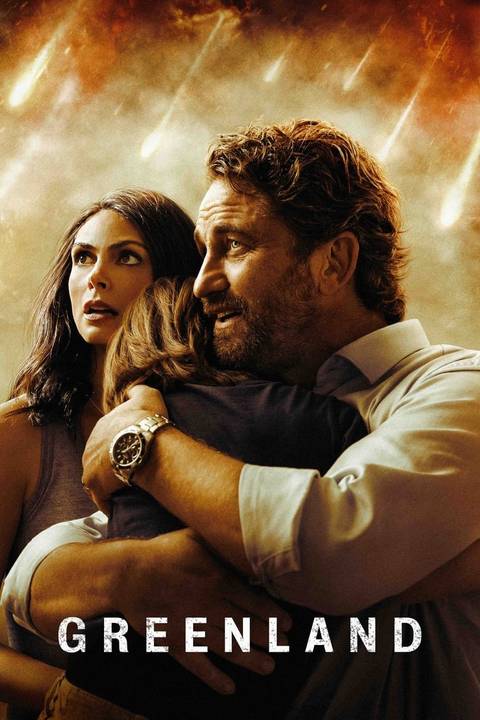
“Better than you might expect” is a phrase that can be applied to Greenland quite easily, since it’s a disaster movie starring Gerard Butler that, on the surface, looks a little generic. It’s one of many disaster films to revolve around a comet hurtling toward the Earth, but it’s a well-worn premise that still proves engaging, especially since it’s the kind of situation that would really screw over the entire planet (setting it apart from a tsunami, earthquake, tornado, etc.).
Successfully being a little more grounded and authentic than you might expect, Greenland largely works, and was enough of a hit to warrant the announcement of a sequel. You don’t get a sense of perfect realism here, but there’s enough here to ensure you can take the film relatively seriously, and it’s also moderately entertaining stuff. It's not quite great, but it is pretty good.
Greenland
Release Date
December 18, 2020
Runtime
120 minutes
23 'When Worlds Collide' (1951)
Directed by Rudolph Maté
 Image via Paramount Pictures
One of the movies mentioned in the opening song of The Rocky Horror Picture Show, When Worlds Collide is, unsurprisingly, a B-movie, but it’s one of the better ones of its era for sure. It works as both a science fiction movie and a disaster film, being about a star that’s on track to collide with Earth, which will inevitably result in all life being wiped out.
But wait! There’s a planet that orbits that star, and so that creates the possibility of some humans evacuating the Earth and landing on that new planet, which will allow some of humanity to survive (just go with it). It’s far-fetched stuff without a doubt, but you can kind of give it a pass when the movie itself is so old, and When Worlds Collide earns additional points for being earnest and, admittedly, quite creative in parts.

When Worlds Collide
Release Date
November 15, 1951
Runtime
83 Minutes
Cast
Richard Derr
David Randall
Barbara Rush
Joyce Hendron
Peter Hansen
Dr. Tony Drake
22 'Don't Look Up' (2021)
Directed by Adam McKay
 Image via Netflix
Sure, it’s so on-the-nose that it’s occasionally deeply annoying, and a lot of it seems overly keen to provoke, but there is still something about Don’t Look Up that’s hard to shake. It is a very broad look at an only slightly heightened 21st-century world reacting – or failing to react – to a comet that’s hurtling towards Earth, and is big enough that the resulting collision would spell death for everyone on the planet.
Some people want to do something about it all, while others deny the comet will cause the sort of damage predicted, and want to go on with business as usual. You can read it as a commentary on climate change or maybe even representative of some of the division/confusion caused by the COVID-19 pandemic. It’s more about the reaction to a disaster than it is about depicting the disaster itself, but that approach is interesting, and Don’t Look Up holds some value while also being, at times, frustrating in its bluntness.
21 'Twister' (1996)
Directed by Jan de Bont

Helen Hunt and Bill Paxton have a close encounter with a tornado in Twister (1996).
Image via Warner Bros.
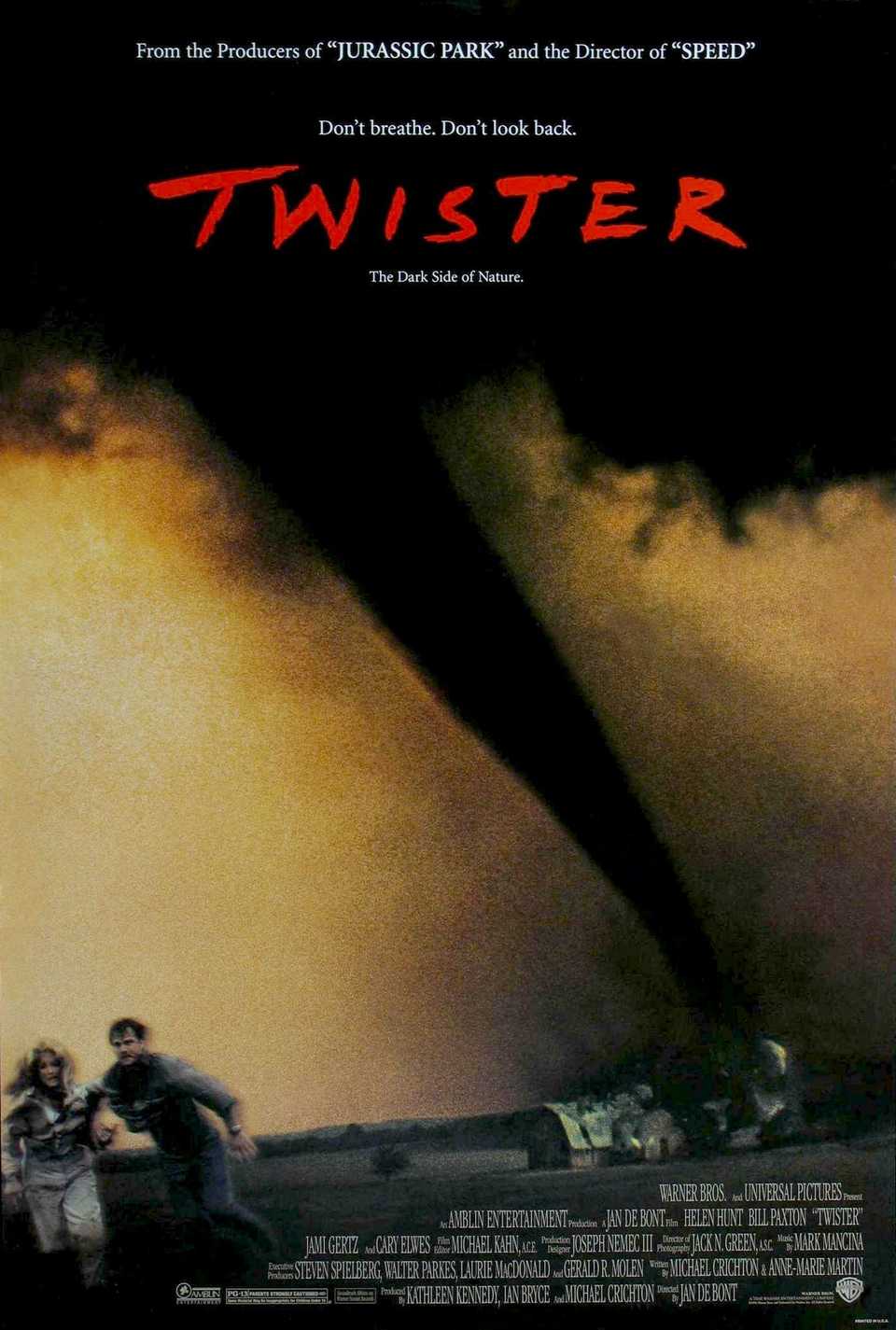
For better or worse, Twister is an intensely 1990s movie in look, feel, and tone. It was one of a handful of movies that marked a new wave of sorts for the disaster genre, which seemed to peak in the 1990s in a way it hadn’t quite since the 1970s, which probably remains the golden era for the genre, at least as far as scale and popularity go.
It’s all about tornadoes and a group of people who pursue them, principally in the interest of releasing a device within a tornado that will help make future tornadoes easier to predict. So, yes, Twister is quite silly, but if you can roll with that kind of story and tolerate some annoying side characters, there’s a charm to the spectacle on offer here, with the film overall looking quite good for its time.
Twister
Release Date
May 10, 1996
Runtime
113 minutes
20 'The Day After' (1983)
Directed by Nicholas Meyer

A person running away down a long road as a nuclear mushroom cloud booms behind them in The Day After.
Image via ABC
Noteworthy for being a TV movie that traumatized a whole bunch of (mostly) young people who might not have otherwise been exposed to it, had it been a theatrical release, The Day After is all about the destruction a nuclear war could cause. This was a pretty popular sort of disaster to tackle in the 1980s, given the intense Cold War paranoia that was causing anxiety around the globe at the time.
So it is also a war movie, kind of, and will hopefully always feel like science fiction, too, but nuclear war would nonetheless be disastrous, and so The Day After can be counted as a disaster movie. It’s effectively downbeat and strives for realism, showing a bunch of ordinary people having their lives upturned by something that could feasibly happen. The Cold War technically ending didn’t make nuclear weapons go away entirely, after all.

The Day After
Release Date
November 20, 1983
Runtime
127 Minutes
Director
Writers
Edward Hume
Cast
Jason Robards
Dr. Russell Oakes
JoBeth Williams
Nurse Nancy Bauer
Steve Guttenberg
Stephen Klein
19 'Miracle Mile' (1988)
Directed by Steve De Jarnatt

Anthony Edwards standing in a riot in 'Miracle Mile'
Image via Hemdale Film Corporation
Continuing on with the whole terrifying nuclear war-related thing, here’s Miracle Mile, which somehow manages to be a romantic comedy of sorts while also being a downbeat disaster film. It’s an undeniably odd blend of genres, exploring how people might cope with the knowledge that the world is going to end in a matter of hours, owing to the outbreak of World War III.
It’s gritty and weirdly entertaining; a disaster movie that’s also an almost-disastrous blending of genres… but emphasis on “almost,” because Miracle Mile kind of works, somehow.
The two main characters have just met, and are in love, but are separated due to all the chaos happening around them, and become determined to spend their last moments alive together. It’s gritty and weirdly entertaining; a disaster movie that’s also an almost-disastrous blending of genres… but emphasis on “almost,” because Miracle Mile kind of works, somehow. Or, at the very least, it’s too fascinating and distinctive to overlook.

Miracle Mile
Release Date
May 19, 1988
Runtime
88 Minutes
Cast

Anthony Edwards
Harry Washello
18 'Contagion' (2011)
Directed by Steven Soderbergh

Matt Damon standing next to a group of individuals wearing face masks in Contagion
Image via Warner Bros.
Playing out with little that could be called “action” in the traditional sense, Contagion might well be the most realistic major Hollywood disaster movie in recent memory, and certainly one of the most stripped-back to have such an impressive cast. It’s all about the outbreak of an airborne virus with a frighteningly high mortality rate, and the desperate attempts to contain said virus and hastily develop some kind of cure.
Unsurprisingly, it became more relevant than ever almost a decade on from its 2011 release, thanks to the COVID-19 pandemic that, while not quite as deadly, was nonetheless disruptive to life in general and had an impact felt around the world. You can read Contagion as a warning of sorts, and something that was also eerily ahead of its time. Even without the accidental foreshadowing of COVID, it’s effectively chilling and intense stuff, on a filmmaking front.

Contagion
Release Date
September 8, 2011
Runtime
106 minutes
17 'War of the Worlds' (2005)
Directed by Steven Spielberg

Ray (Tom Cruise) carrying Rachel (Dakota Fanning) while looking up in War of the Worlds (2005)
Image via Paramount Pictures
Steven Spielberg’s the kind of filmmaker who can do pretty much anything, disaster movies included. He did one with a sci-fi slant in 2005, with War of the Worlds, which was a new take on the 1898 H. G. Wells story of the same name. It takes place very much in the 21st century, and has its extraterrestrial invasion seen mostly from the point of view of a father trying to protect his two children.
By looking at such a monumental event from the ground level, War of the Worlds feels surprisingly realistic for a movie that’s principally about an alien invasion, and it’s that approach that also gives it the feel of a disaster movie. It’s all made very efficiently and with a degree of polish, as one would expect from (the majority of) Spielberg’s work.
16 'Deepwater Horizon' (2016)
Directed by Peter Berg

Mark Wahlberg in 'Deepwater Horizon'
Image via Lionsgate
Deepwater Horizon was released just six years on from the disaster it dramatizes, making it one of the more immediate “historical” movies out there. Its name comes from the offshore drilling rig that exploded in 2010, with the ensuing fight for survival on board the rig, and an exploration of the damage caused, being the main things that Deepwater Horizon focuses on.
It also forms part of an odd thematic trilogy of sorts, with three films released between 2013 and 2016 starring Mark Wahlberg and directed by Peter Berg, all focusing on real-life events from the early 21st century (the others being Patriots Day and Lone Survivor). Deepwater Horizon is the only disaster movie of the three, though, and it fulfills what you'd want out of that genre quite proficiently.