10 Greatest Marvel Superhero Movies, According to Roger Ebert (original) (raw)

Published Jul 24, 2025, 9:30 PM EDT
Liam Gaughan is a film and TV writer at Collider. He has been writing film reviews and news coverage for ten years. Between relentlessly adding new titles to his watchlist and attending as many screenings as he can, Liam is always watching new movies and television shows.
In addition to reviewing, writing, and commentating on both new and old releases, Liam has interviewed talent such as Mark Wahlberg, Jesse Plemons, Sam Mendes, Billy Eichner, Dylan O'Brien, Luke Wilson, and B.J. Novak. Liam aims to get his spec scripts produced and currently writes short films and stage plays. He lives in Allentown, PA.
Roger Ebert was writing reviews during the birth of superhero cinema, as he gave perfect scores to both Superman: The Movie and Superman II, which are among the very first in the genre. Although Ebert was a critic who tended to give every movie a fair shot, he was often critical of some of the Marvel films that other pundits seemed to enjoy; Ebert wrote negatively about Marvel adaptations such as Spider-Man, X-Men, Thor, X-Men: First Class, and X2: X-Men: United.
Ebert did not live long enough to see the emergence of the modern superhero fanfare, and his fans have often speculated about what he would have thought about films like Guardians of the Galaxy, Captain America: The Winter Soldier, Deadpool, Avengers: Endgame, Spider-Man: No Way Home, and Logan among many others. Here are the ten Marvel movies that Roger Ebert loved.
10 ‘Blade’ (1998)
Ebert’s score: 3 out of 4 stars

Wesley Snipes as Blade smiles and holds up a double-sided throwing weapon in Blade.
Image via New Line Cinema
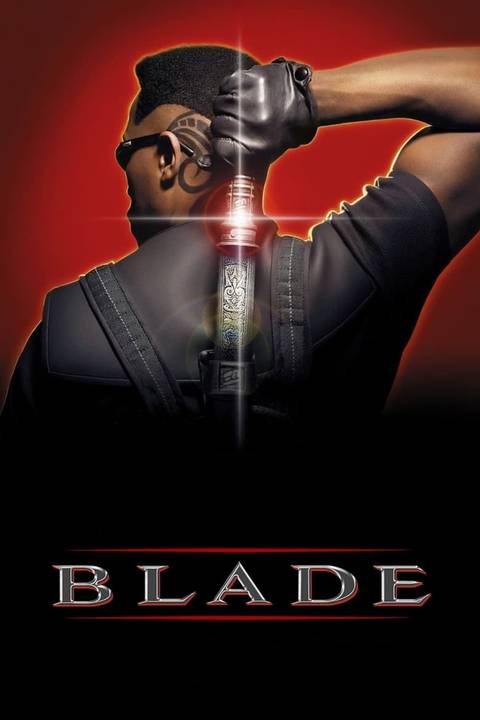
Bladewas the first real Marvel superhero film, as it had only been predated by the 1990 Captain America disaster, the horrendous Howard the Duck film produced by George Lucas, and the version of The Punisher that starred Dolph Lundgren.
Ebert said that “movies based on comic books represent one of the last best hopes for visionary filmmaking,” and expressed enthusiasm for where he thought the future of the genre could go. In addition to praising the performance by Wesley Snipes as the titular character, Ebert complimented the “visceral imagery” of the film, and seemed to appreciate that it had no issues about being a violent, R-Rated action thriller that was aimed at a somewhat older audience. Ebert was often far more praiseworthy towards horror films than some of his contemporaries, so it makes sense that he seemed to enjoy a superhero film that got genuinely scary at times.
Release Date
August 21, 1998
Runtime
120 Minutes
Director
Stephen Norrington
Writers
David S. Goyer, Marv Wolfman, Gene Colan
Producers
Peter Frankfurt, Robert Engelman, Wesley Snipes
Sequel(s)
Franchise(s)
Blade
Blade, a half-human, half-vampire "daywalker," dedicates his life to hunting vampires. Discovering a plot by the ambitious vampire Deacon Frost to awaken the blood god La Magra, Blade must confront his past and face Frost in a deadly battle. With the help of Dr. Karen Jenson, he battles to prevent Frost from unleashing chaos.
9 ‘Daredevil’ (2003)
Ebert’s score: 3 out of 4 stars

Matt Murdock reaching out to touch Elektra's face in Daredevil
Image via 20th Century Studios
Daredevilwas mocked by many critics and earned Ben Affleck a “Razzie” award for Worst Actor, but Ebert was one of the rare detractors that came to the film’s defense. He stated that “Affleck and Garner probe for the believable corners of their characters,” and complimented the visual design of the film. Although he noted that he had grown tired of some of the cliches that were common within origin movies, Ebert called Daredevil “the fun we deserved.”
Daredevil has earned somewhat more attention in recent years, as Colin Farrell’s performance as Bullseye is something that even the harshest critics tended to praise as being a standout. However, Ebert’s enthusiasm for Daredevil did not carry over into the spinoff Elektra that starred Jennifer Garner, which he absolutely decimated in one of the nastiest reviews he ever wrote for a film based off of a comic book.
8 ‘Captain America: The First Avenger’ (2011)
Ebert’s score: 3 out of 4 stars

Captain America and Bucky standing at a railing in Captain America: The First Avenger.
Image via Marvel Studios
Captain America: The First Avengerwas among the most important films in the Marvel Cinematic Universe, as it had the task of setting up a character that would be very easy to completely dismiss as being “old-fashioned” or “silly.” Although it was released the same year as Thor, an MCU film that Ebert did not enjoy, he expressed relief that Captain America: The First Avenger was “a real movie, not a noisy assembly of incomprehensible special effects.”
Ebert was often looking out for great villains, as he felt that no superhero film was complete without a menacing bad guy. Ebert was highly praiseworthy of Hugo Weaving’s performance as Red Skull, the Hydra agent that developed research into evil technology. Ebert said that “when it comes to movie villains, you can’t do better than Nazis,” which isn’t a surprise given how much he adored the Indiana Jones films.

7 ‘Hulk’ (2003)
Ebert’s score: 3 out of 4 stars

Hulk looking dirty and bruised in San Francisco in Ang Lee's Hulk (2003).
Image via Universal Pictures
Hulkis among the more controversial comic book movies ever made, as while it was derided by many critics during its initial release, many have grown to appreciate the strange approach that Ang Lee took to the material. In the same tradition of the original comic books, Hulk is much more of a monster movie than it is a traditional superhero origin story.
Ebert said that Hulk “is not so much about a green monster as about two wounded adult children of egomaniacs,” and analyzed the Oedipal complex that made Eric Bana’s interpretation of Bruce Banner such an interesting approach to the character. His graciousness did not extend to the MCU film The Incredible Hulk, which he dismissed as being lackluster, and not nearly as ambitious as what Lee did to “actually deal with the issues in the story of the Hulk, instead of simply cutting to brainless special effects.”

Hulk
Release Date
June 19, 2003
6 ‘Iron Man 2’ (2010)
Grade: 3 out of 4 stars

Ivan Vanko, played by Mickey Rourke, smiles in Iron Man 2.
Image via Marvel Studios
Iron Man 2is often ranked low within the Marvel Cinematic Universe by fans of the franchise, but Ebert said that it was “a polished, high-octane sequel,” even if it was “not as good as the original.” Although he admitted that “the superhero genre doesn’t necessarily require good acting,” he was incredibly praiseworthy of Robert Downey Jr.’s performance as Tony Stark.
Ebert was engaged in the story arc of the film, which centered around Tony coming to terms with the fact that he is dying. While Ebert admitted that some of the action was routine, he praised the use of CGI in the final fight scene, in which Tony and Colonel James Rhodes (Don Cheadle) teamed up to face off with Ivan Vanko (Mickey Rourke). Ebert said that “Rourke gives us all the Ivan Vanko we could possibly wish for,” but also praised Sam Rockwell’s work as Justin Hammer.

5 ‘The Avengers’ (2012)
Ebert’s score: 3 out of 4 stars
 Image by Federico Napoli
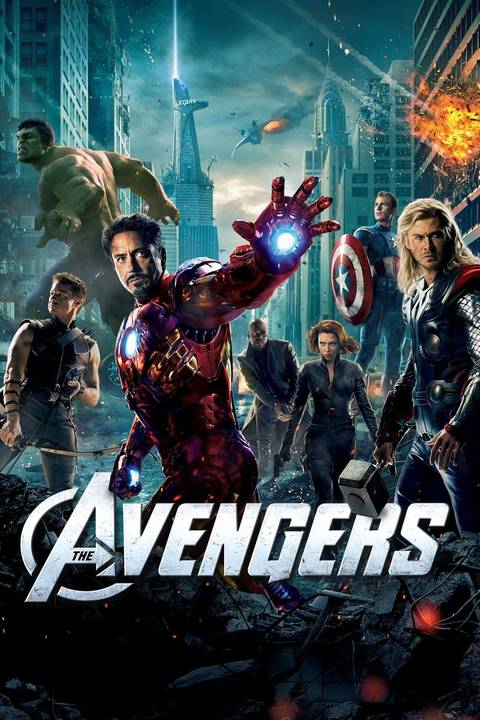
The Avengerswas one of the rare Marvel films that got rave reviews from critics, but Ebert was slightly more restrained within his appreciation. Although he stated that The Avengers was “much, much more of the same,” he also admitted that it “provides its fans with exactly what they desire.”
Ebert was slightly confused about some of the characters, as he was mystified on whether or not Natasha Romanoff (Scarlett Johansson) was intended to have actual superpowers. Although he did repeat some jokes about fans of comic book films that were made by the critic David Edelstein from the New York Magazine, Ebert stated that Joss Whedon made the film “with style and energy,” even if he did not feel like it was as emotionally grounded as some of the other films within the Marvel Cinematic Universe that had been more focused.
4 ‘The Amazing Spider-Man’ (2012)
Ebert’s score: 3.5 out of 4 stars
 Image via Sony Pictures Releasing
The Amazing Spider-Manis a somewhat divisive film among comic book fans, as many people that enjoyed what Sam Raimi did with his trilogy found that Marc Webb’s film was far too similar. However, Ebert found that The Amazing Spider-Manwas “a more thoughtful film” with action scenes that were “easier to follow in space and time.”
Ebert said that The Amazing Spider-Man was “probably the second best” film in the franchise, as he rated it higher than the original Spider-Man and Spider-Man 3. Ebert did not share the belief that the film spent too much time on the origin story, as he liked seeing a more grounded story, since he thought that “CGI superhero films often go on autopilot during their big action climaxes.” Although he was critical of Rhys Ifans as The Lizard, he stated that Emma Stone’s Gwen Stacy was “a well-grounded female” character.
3 ‘Blade II’ (2002)
Ebert’s score: 3.5 out of 4 stars

Legendary vampire hunter Blade fends off a mob of hungry assailants with duel pistols.
Image via New Line Cinema
Blade IIwas a film that Ebert described as “a really rather brilliant vomitorium of viscera, a comic book with dreams of becoming a textbook for mad surgeons,” and found it superior to the first film, which he had already enjoyed.
Ebert’s praise for the film revolved around his admiration for Guillermo del Toro, who he had reviewed favorably in the past for his work on The Devil’s Backbone. Ebert said that del Toro “doesn’t depend on computers to get him through a movie and impress the kids with fancy fight scenes,” and found that his use of special effects was far more creative than what he perceived to be “technical exercises” in the Resident Evil films. After stating that “the Reapers are the masterpieces of this movie,” Ebert suggested that it was del Toro’s visual design that made the sequel so satisfying.
2 ‘Iron Man’ (2008)
Ebert’s score: 4 out of 4 stars

Robert Downey Jr. as Iron Man without his helmet in ‘Iron Man’.
Image via Marvel Studios
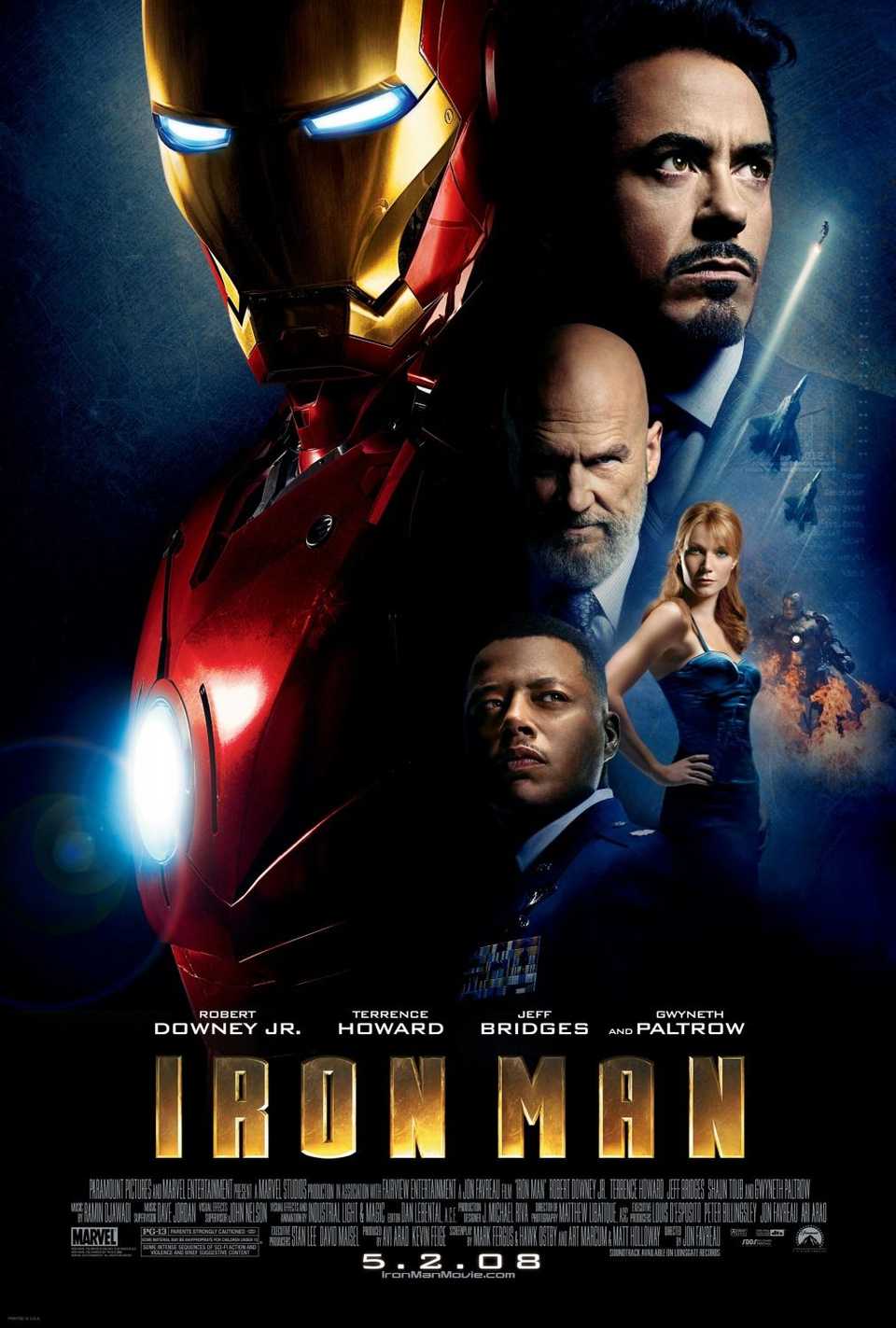
Iron Manwas one of the few superhero films that Ebert gave a perfect score to, as he felt that Robert Downey Jr.’s “performance is intriguing, and unexpected” because his persona was “irreverent, quirky, self-deprecating, wise-cracking.” While Ebert noted that many superheroes were defined by their powers and physical abilities, Tony Stark was an interesting character because Jon Favreau had allowed Downey to infuse his own personality with that of the character.
Ebert admired the themes of the film, as the “enemy is not a conspiracy or spy organization,” but “the reality in our own world today.” He found it “unique” that Tony’s goal was to disarm military organizations and rid them of their weapons, which is exactly the opposite of what he expected to see in a superhero film. It’s unfortunate that Ebert did not live long enough to see how Tony’s story ended in Avengers: Endgame.
1 ‘Spider-Man 2’ (2004)
Ebert’s score: 4 out of 4 stars
 Image via Sony Pictures Releasing
Spider-Man 2was named by Ebert as one of the best films of 2004, as it called it “the best superhero movie since the modern genre was launched with Superman.” Instead of being “camp and nostalgic,” Ebert found that Raimi’s sequel was “simply and poignantly a realization that being Spider-Man is a burden that Peter Parker is not entirely willing to bear.”
Ebert praised all of the emotional arcs, as he felt that “the film gives full weight to all of its elements” and even spoke favorably about the romance, as he said that Kirsten Dunst “depth and heart to a girlfriend role that in lesser movies would be conventional.” Although he admitted to having a “weakness” for the superhero genre, Ebert proclaimed that Spider-Man 2 was “a real movie, full-blooded and smart, with qualities even for those who have no idea who Stan Lee is.”
KEEP READING: 10 James Bond Movies That Are Good, Not Great