13 Film Noir Movies That Are Perfect From Start to Finish (original) (raw)

Updated May 13, 2024, 1:18 PM EDT
Samuel is Collider's List Flex Editor (previously Lead List Editor), which means he's pretty much always hovering around Collider's List department. A writing and editing automaton based in Nashville, Tennessee, and sometimes Los Angeles, Samuel has been working in entertainment journalism for over 10 years.
Samuel is the guy who talked to Betty White about vodka and hot dogs. Chaz Ebert once pinched Samuel's cheeks after a screening of Beyond the Valley of the Dolls, when Samuel told her that Roger was and forever is his hero. William Friedkin once jokingly called Samuel "dad" at a screening of Samuel's favorite movie, The Babadook. Forbes once called Samuel a "sneering critic" because he disliked Don't Look Up.
Two major brands have trusted Samuel with curating their respective lists of the 100 Best Movies of All Time. Samuel wrote one of these lists in its entirety.
Other career highlights include appearing on KCRW and meeting Joe Morgenstern, and also spending 50 minutes talking to Tommy Wiseau on a landline (which was awesome).
Samuel loves his job and is rarely actively not doing it.
Sign in to your Collider account
Simply translated to "black film" or "dark film" in meaning, the film noir genre has been a staple of cinema since the silent era. Any cinephile will know the genre has many elements that are often if not always present in combination: aesthetics like shadow and exaggeration, morally murky material like antiheroes and complicated narratives (often told in a non-linear-fashion, via hardboiled voiceover)— and of course, femme fatales.
There are some textbook, pure classic noirs like Double Indemnity and The Maltese Falcon that are essential staples of the genre's history and makeup, but the noir genre often merges with others like romance, spy film, action, and horror—sometimes to artistically astounding effect. The following are noirs and neo-noirs that are simply flawless from start to finish. These indispensable films from classic Hollywood to New Hollywood to more modern times remind dedicated film fans and even noir novices why this genre is so uniquely intoxicating.
13 'The Night of the Hunter' (1955)
Directed by Charles Laughton

Robert Mitchum as Harry Powell, Billy Chapin as John Harper, and Sally Jane Bruce as Pearl Harper in The Night of the Hunter
Image Via United Artists
A haunting and visually breathtaking blend of psychological thriller, crime film and pure Gothic horror with fairytale undertones, classic Hollywood's iconic nightmare stars Robert Mitchum as one of cinema's most iconic and terrifying villains: "Reverend" Harry Powell, a fraudulent man of the cloth who seeks a cash fortune in the possession of two young children.
This was the only feature ever directed by esteemed actor Charles Laughton, and in its day it was generally dismissed or outright reviled. Like another resplendent but grim and brutal career ruiner Peeping Tom, it is now recognized as ahead of its time. This is all at once one of the most beautiful, most frightening, and strangest films ever made. Silent movie star Lillian Gish is as valuable as Mitchum to the film as his foil, an unremittingly tough woman of faith, and protector of lost children. The Night of the Hunter haunts like no other motion picture.
Release Date
July 27, 1955
Runtime
92 Minutes
Director
Charles Laughton
Writers
Davis Grubb, James Agee, Charles Laughton
A self-proclaimed preacher marries a gullible widow whose young children are reluctant to tell him where their real dad hid the $10,000 he'd stolen in a robbery.
12 'L.A. Confidential' (1997)
Directed by Curtis Hanson

Kim Basinger as Lynn Bracket looking stoic in L.A. Confidential.
Image via Warner Bros. Pictures
Concisely yet masterfully adapted from James Ellroy's sprawling novel, Curtis Hanson's timeless police story follows two seemingly mismatched lawmen (Russell Crowe and Guy Pearce) who must team up to take down a web of corruption that goes all the way to the top of the food chain in 1950s Los Angeles.
So many of the films on this list live in the shadows; L.A. Confidential is largely a bright, sunny affair on the surface. It's all too effective in contrasting a world of sick, selfish and violent corruption that's just underneath the city of angels, a city of dreams where many dreams have died. L.A. Confidential establishes a time and place as well as it elicits an enormous emotional response. In addition to being as engrossing a crime story as you'll ever see on screen, it's one of the best movies about friendship between men as well as a flawlessly acted love story. Kim Basinger won a damn well-deserved Academy Award here, playing a flawed but highly sympathetic character that, figuratively speaking, hurls preconceived notions about the femme fatale straight out of a high-rise window.

Release Date
September 19, 1997
Runtime
138 minutes
Director
Curtis Hanson
Writers
James Ellroy, Brian Helgeland, Curtis Hanson
Cast


Set against the backdrop of 1950s Los Angeles, a trio of detectives with vastly different styles and motivations investigates a series of crimes that reveal the depth of corruption in their own police force. Their quest for justice leads them through a labyrinth of deception and betrayal in the glittering world of Hollywood.
Main Genre
Crime
Cinematographer
Dante Spinotti
Producer
Arnon Milchan, Curtis Hanson, Michael G. Nathanson
Production Company
New Regency Productions, Warner Bros., The Wolper Organization
Budget
$35 million
11 'The Maltese Falcon' (1941)
Directed John Huston
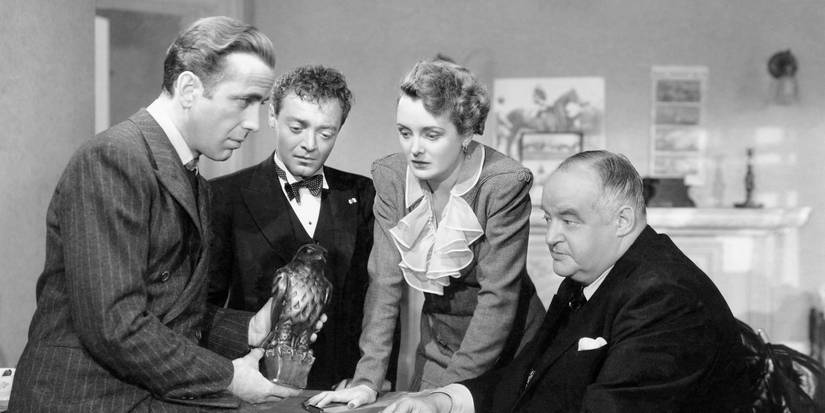
Brigid O'Shaughnessy (Mary Astor), Sam Spade (Humphrey Bogart), and others huddled in The Maltese Falcon
Image via Warner Bros.
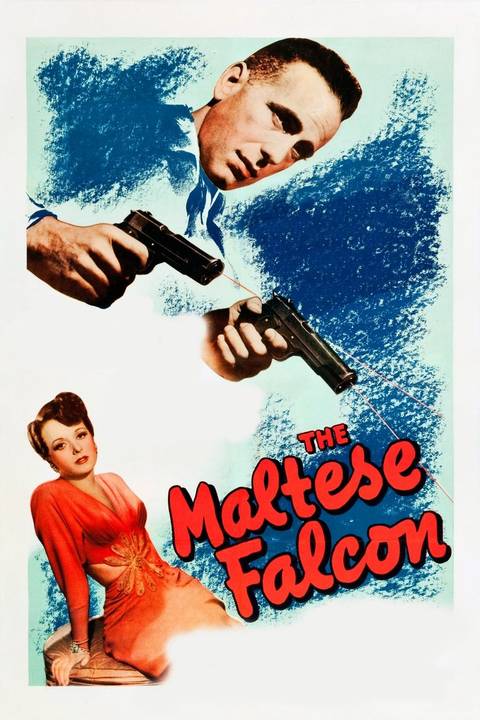
Though it's really important to mention The Big Sleep and other noirs opposite Laurent Bacall, Humphrey Bogart's most iconic appearance in the genre is undeniably as Sam Spade in John Huston's directorial debut, The Maltese Falcon. The incomparably cool actor stars opposite Mary Astor and Peter Lorre in a potboiler about the hysteria surrounding the eponymous MacGuffin, a dazzling and mystifying statuette. Really, though, The Maltese Falcon is all about greed and its soul-consuming futility.
Huston's film is, in fact, a remake. A lighter but racier 1931 version is worth seeking out; its initial success was greatly squandered by the Hays Code of censorship, which stood until 1968. The 1941 film is widely considered the best detective movie ever, one of the first 25 movies preserved by the Library of Congress's National Film Registry.
Release Date
October 18, 1941
Runtime
100 minutes
Director
Cast

Humphrey Bogart
Samuel Spade
Mary Astor
Brigid O'Shaughnessy
San Francisco private detective Sam Spade takes on a case that involves him with three eccentric criminals, a gorgeous liar and their quest for a priceless statuette, with the stakes rising after his partner is murdered.
Writers
John Huston
Main Genre
Mystery
Studio(s)
10 'Drive' (2011)
Directed by Nicholas Winding Refn

For all the movie receipts and publicity that came with Barbie, it's perfectly likely, with cinephiles at least, that Drive will go down as Ryan Gosling's most iconic role. Often silent but exuding an imposing, threatening, often rather romantic and dreamy presence (all of that could be said of the film itself), he's flawless as Driver, a driver (really), who gets tangled up with criminals, along with a young widow (Carey Mulligan) he must protect.
Much like Pulp Fiction, Drive tells an unremarkable crime story, but it's the telling, the staging of it all, that makes it a masterpiece. Nicholas Winding Refn would stumble with the mindless Lynch-lite The Neon Demon and the baffling Only God Forgives, but_Drive_ will be midnight movie heaven for time infinitum. There are undeniably echoes of another essential noir, Taxi Driver, in here, but Gosling's presence and the romantic chemistry make this a far more tender affair, beneath the set pieces and gore, that is.

Release Date
September 16, 2011
A mysterious Hollywood action film stuntman gets in trouble with gangsters when he tries to help his neighbor's husband rob a pawn shop while serving as his getaway driver.
Runtime
100 minutes
Director
Nicolas Winding Refn
Writers
Hossein Amini
9 'Sunset Boulevard' (1950)
Directed by Billy Wilder

Gloria Swanson gesturing dramatically in Sunset Boulevard
Image via Paramount Pictures
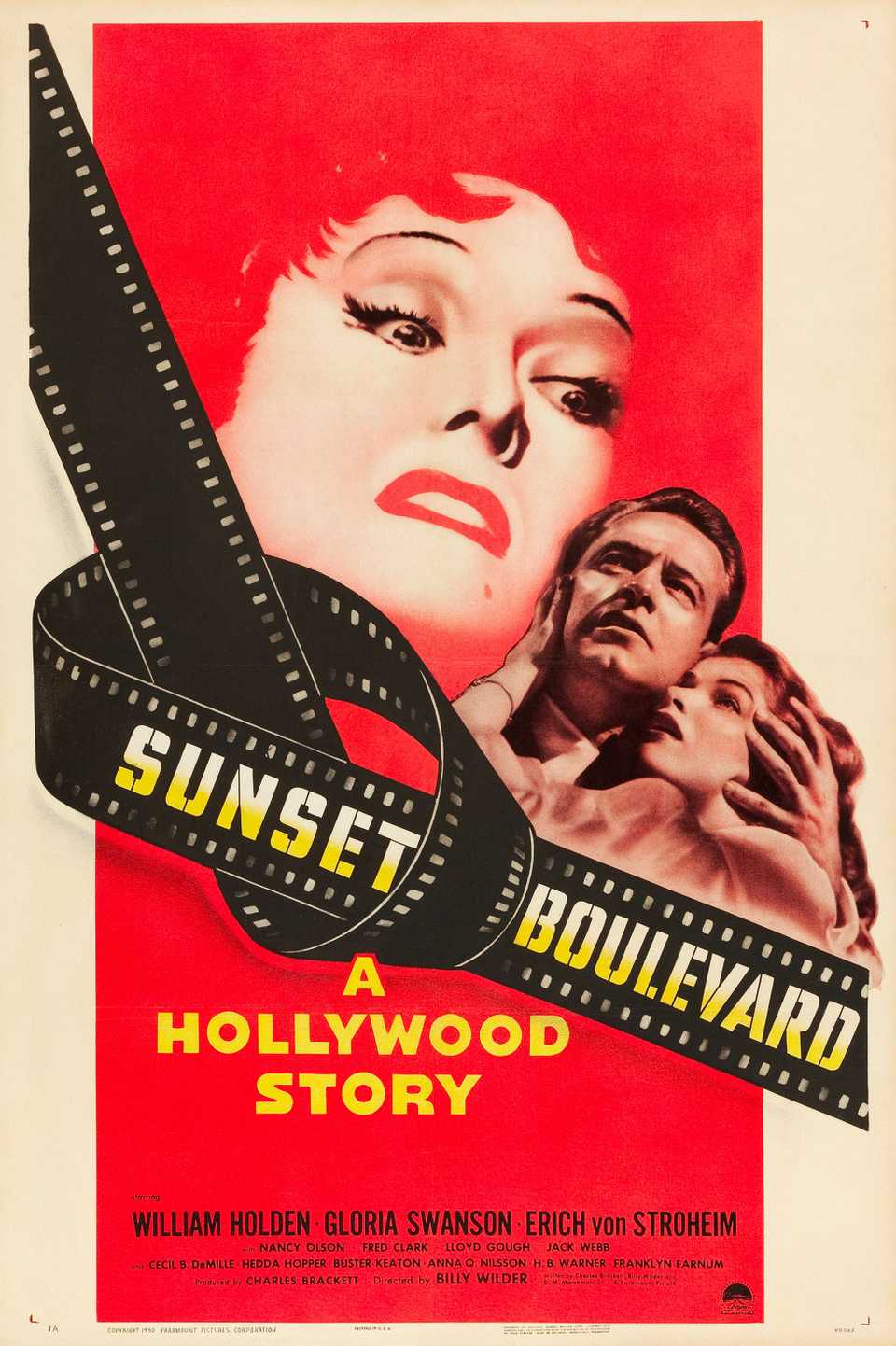
A few years after he made the film that defines film noir to this day (more on that in a bit), classic Hollywood master of all genres Billy Wilder made another that's just as revered, this one a Hollywood satire that satirizes Hollywood. It's still the industry's very best movie about itself. Gloria Swanson and William Holden star in the smoky, glamorous and often quite funny yarn about a troubled former film star, and aspiring screenwriter and their fatally flawed, delusional shot at glory.
The Academy Awards of 1951 were an all-timer for the category of Best Actress. Bette Davis and Anne Baxter of All About Eve were both nominated in the lead category at the latter's insistence in a case of life imitating art. Swanson was nominated as well. The astoundingly close race seemingly split the votes, resulting in a shock win for newcomer Judy Holliday in Going My Way. All three of the aforementioned performances are for the history books in a way that's less ephemeral than an Oscar win, however.
Release Date
August 10, 1950
Runtime
110 Minutes
Director
Billy Wilder
Cast
William Holden
Joe Gillis
Gloria Swanson
Norma Desmond
Writers
Charles Brackett, Billy Wilder, D.M. Marshman Jr.
Main Genre
Film Noir
8 'Laura' (1944)
Directed by Otto Preminger
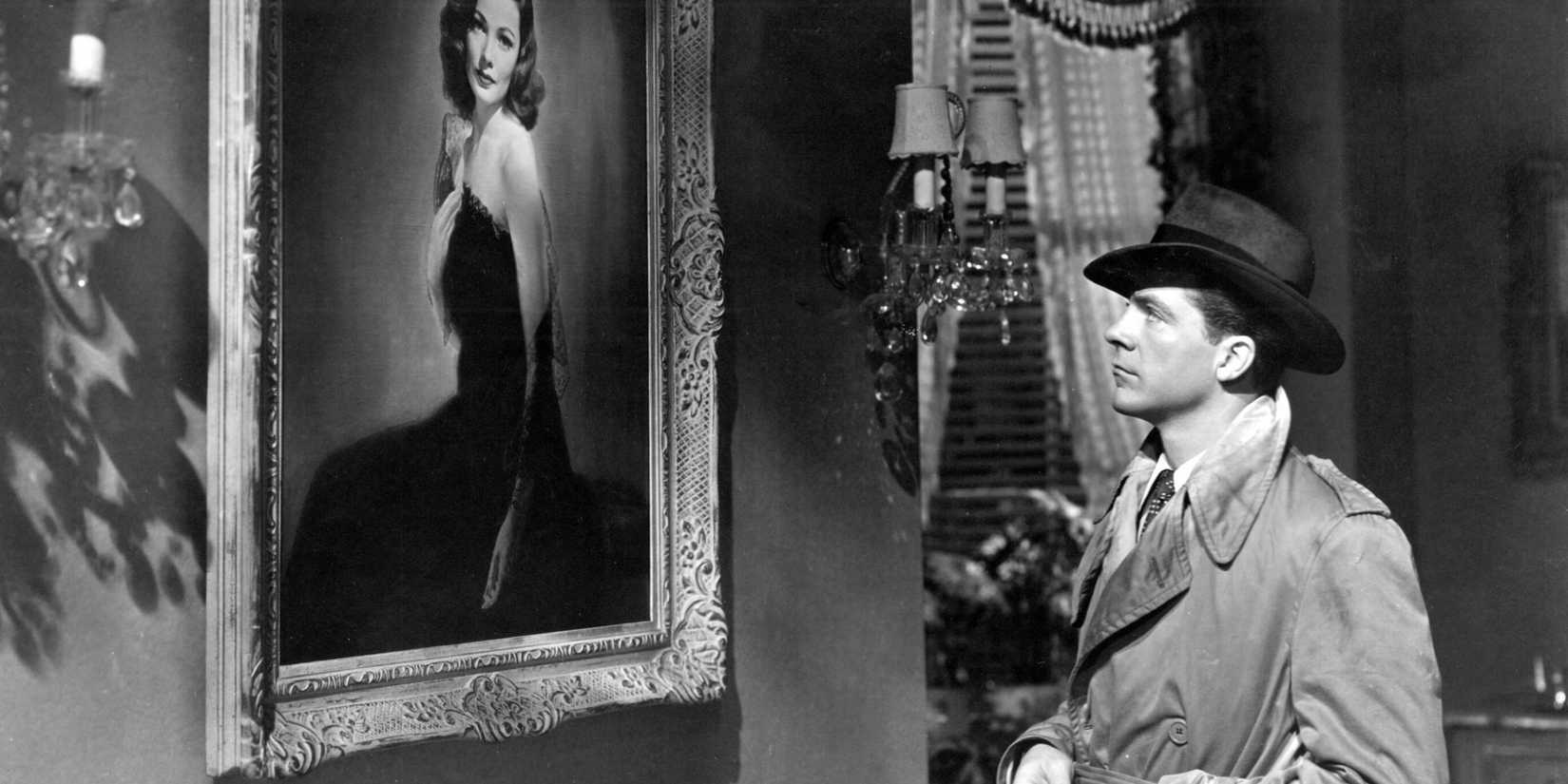
Dana Andrews looking at a portrait of Gene Tierney in 'Laura'.
Image via 20th Century Studios
The noir genre is known for its convoluted plots (see The Maltese Falcon for reference), but Otto Preminger's Laura stands apart in this regard. It's as much a triumph of style over substance as it is a triumph of style over sanity. Dana Andrews stars opposite Vincent Price and Clifton Webb, as a detective who finds himself falling in love with a dead executive (Gene Tierney) whose murder he's investigating.
Laura, released the same year as film noir sovereign Double Indemnity, received an Oscar for its black-and-white photography. It's an earnest love story, and a ghost story in the way Hitchcock's timeless Rebecca is a ghost story. It's been preserved in the National Film Registry since 1999, and its reputation has only grown over time. There was a 1968 TV remake co-written by Truman Capote that was lambasted and is hard to even track down these days. Stick with the superlative original.

Release Date
October 11, 1944
Runtime
88 Minutes
Director
Otto Preminger, Rouben Mamoulian
Cast
Dana Andrews
Det. Lt. Mark McPherson
A police detective falls in love with the woman whose murder he is investigating.
7 'Blue Velvet' (1986)
Directed by David Lynch
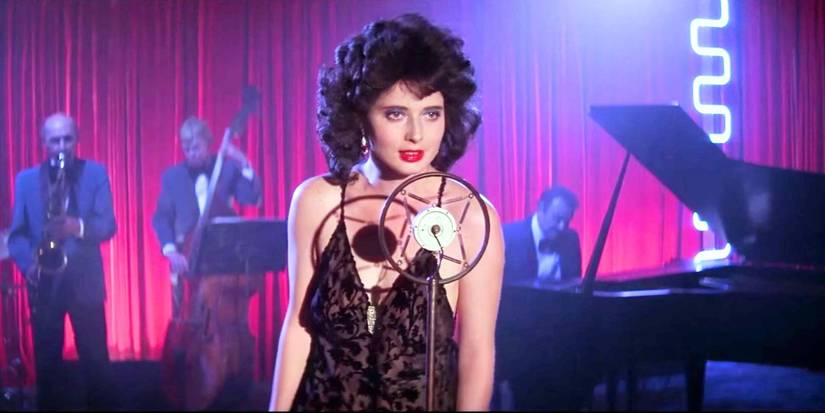
Isabella Rossellini as Dorothy singing on stage in Blue Velvet.
Image via De Laurentiis Entertainment Group
So many filmmakers have tried their hand at emulating the style of David Lynch to underwhelming, often bewildering results. There really only is one David Lynch. Along with the likes of Mulholland Dr., Eraserhead and the best of Twin Peaks, this '80s landmark represents the most fully realized and rewarding work that made "Lynchian" worth adding to the Oxford Dictionary. The crime film, about an idealistic college student who falls in with a criminal underworld after finding a severed ear, stars Kyle MacLachlan, Isabella Rossellini, and Dennis Hopper (unforgettable as hyper-sexualized villain Frank Booth).
Just for the record, not every Lynch movie is quite this disturbing or uncanny. The Elephant Man is a straightforward drama that's oddly at home with the rest of the canon, and Lynch further proved his range with the sweet, simply perfect family film The Straight Story in 1999.

Release Date
September 19, 1986
Runtime
120 minutes
Director
David Lynch
The discovery of a severed human ear found in a field leads a young man on an investigation related to a beautiful, mysterious nightclub singer and a group of psychopathic criminals who have kidnapped her child.
6 'Notorious' (1946)
Directed by Alfred Hitchcock

Cary Grant and Ingrid Bergman sitting somberly in Alfred Hitchcock's 'Notorious'
Image via RKO Radio Pictures
Alfred Hitchcock's most iconic noir is in color, and it's a film called Vertigo (you know, the movie that's on every list on the best movies ever made, sometimes at the top). It's really important to remember Notorious is just as good. Roger Ebert famously called it "the most elegant expression of the master's visual style." Cary Grant, Ingrid Bergman and Claude Rains are at their very best in a dark, sometimes cynical, ultimately profoundly romantic spy story about a deadly love triangle in the immediate aftermath of WWII.
Notorious is ageless, only a little better than that. It just gets fresher and more urgent over time. **Ben Hecht'**s script looks at a toxic romance and alcoholism with a bluntness that was ahead of its time, at least on film. Shot with an expertly gliding camera and silky shades of silver that could make a viewer question if movies ever needed color, Notorious is a chilly but humanistic film that climaxes with some of the most romantic gestures and dialogue ever committed to film.
5 'The Last Seduction' (1994)
Directed by John Dahl
Not unlike the exasperating bureaucratic exclusion of Essie Davis for her work in The Babadook 20 years later, Linda Fiorentino wasn't eligible for a much-deserved Oscar nomination because The Last Seduction aired on premium cable TV around the same time it received a limited theatrical release. What a damn shame; this was one of the most gripping turns in an uncommonly strong year for Hollywood and international cinema.
In John Dahl's tense, low-budget erotic thriller, the actress (who'd memorably co-star in Men In Black soon after) plays a femme fatale who runs away with her husband's drug money before planning her next big con. For all the attention Sharon Stone received for Basic Instinct two years prior (her performance was better than the rather goofy movie), Fiorentino is the true successor to Barbara Stanwyck's Phyliis Dietrichson as a chilling, sometimes funny, utterly ruthless and indeed diabolical zenith of the archetype.
4 'Collateral' (2004)
Directed by Michael Mann

Tom Cruise as Vincent in Nightclub Scene From Michael Mann's Collateral
Image via Dreamworks Pictures
Tom Cruise has always been one of the best actors on the planet, a better actor than he ever gets credit for. Many will point to Magnolia as his best dramatic performance, but it's really worth considering Collateral here too. He's animalistic, undeniably wolf-like in Michael Mann's action-heavy neo-noir about a hitman who ropes an innocent cabbie (Jamie Foxx) into a night of hit after hit.
Drenched in neon, high lights and low shadows, this is Mann's first movie shot almost entirely on digital. Collateral is the best, most accurate and most effective movie ever made about Los Angeles at night. From a short but rather magnificent scene a of coyote prowling the urban streets to a nightclub shootout that's among the best ever filmed by a director who's the master of that kind of thing, Collateral is as much an examination of an enormous, impersonal city as it is about the morality play happening in the taxi.

Release Date
August 6, 2004
Runtime
120 minutes
Director
Michael Mann