10 Darkest Gangster Movies, Ranked (original) (raw)

A group of characters from The Godfather: Part II on the movie's poster
Image via Paramount Pictures

Published Jul 20, 2024, 2:15 PM EDT
Jeremy has more than 2600 published articles on Collider to his name, and has been writing for the site since February 2022. He's an omnivore when it comes to his movie-watching diet, so will gladly watch and write about almost anything, from old Godzilla films to gangster flicks to samurai movies to classic musicals to the French New Wave to the MCU... well, maybe not the Disney+ shows.
His favorite directors include Martin Scorsese, Sergio Leone, Akira Kurosawa, Quentin Tarantino, Werner Herzog, John Woo, Bob Fosse, Fritz Lang, Guillermo del Toro, and Yoji Yamada. He's also very proud of the fact that he's seen every single Nicolas Cage movie released before 2022, even though doing so often felt like a tremendous waste of time. He's plagued by the question of whether or not The Room is genuinely terrible or some kind of accidental masterpiece, and has been for more than 12 years (and a similar number of viewings).
When he's not writing lists - and the occasional feature article - for Collider, he also likes to upload film reviews to his Letterboxd profile (username: Jeremy Urquhart) and Instagram account.
He has achieved his 2025 goal of reading all 13,467 novels written by Stephen King, and plans to spend the next year or two getting through the author's 82,756 short stories and 105,433 novellas.
Sign in to your Collider account
Within the crime genre, one can suggest or imply that a life of crime doesn’t pay, or one can rub the audience’s face in the notion that engaging in crime is a terrible idea. Plenty of the time, movies aren’t subtle about this, and it does lead to some films – particularly those about gangsters and organized crime – getting pretty dark thematically, and appropriately bleak while conveying a message.
The following gangster movies demonstrate this especially well, and can all count themselves as some of the darkest and least hopeful in the genre. It’s hard to rank such films, but they’re intended to get a little more harrowing and downbeat as they go along, with bonus points for instances where the viewer may feel a little sorry for the criminals, or perhaps feel exceedingly bad for their victims... maybe even a bit of both.
10 'Scarface' (1983)
Director: Brian De Palma

A bruised and bloody Tony Montana, played by actor Al Pacino, brandishes a gun with his arm in a sling in Scarface.
Image via Universal Pictures
Scarface is an interesting example of a dark gangster movie, because the protagonist, Tony Montana, does kind of get what was coming to him, and orchestrates his own downfall. He’s a loud, determined, and overblown small-time criminal turned drug kingpin, and the film very neatly tracks his rise and fall. Along the way, he brings down plenty of people with him, in the style of an old tragedy.
Still, it’s the fact Scarface pushes so hard and feels so relentlessly determined to be classically tragic that you do have to acknowledge it’s dark and downbeat, even if some people got something along the lines of what they deserved. It’s worth watching for that story, and for all the style the film oozes, much of it thanks to Al Pacino’s lead performance and Brian De Palma’s stylish direction.
Release Date
December 9, 1983
Runtime
170 minutes
Director
Brian De Palma
9 'Killing Them Softly' (2012)
Director: Andrew Dominik

Ray Liotta sitting at a table in Killing Them Softly
Image via The Weinstein Company
Hearing or reading the words “an Andrew Dominik film” ought to tip you off that you're in for a likely feel-bad time, and so it’s not too surprising that his spin on the gangster genre, Killing Them Softly, will just so happen to softly kill your hopes and dreams of a happy end. That’s not to say the film isn't engaging, or even darkly funny at times. It’s more just that everyone is morally compromised in some way, and there’s never any chance of things being resolved peacefully.
Much of Killing Them Softly is about the aftermath of a card game robbery that was supposed to be Mob-protected (clearly, the perpetrators hadn’t seen The Sopranos episode with a similar setup and series of consequences). It’s a film that's dark, grungy, and very compelling stuff, though even with the entertainment value provided, you’re unlikely to come away from it feeling in any way sunny.
Release Date
December 13, 2012
Runtime
97minutes
Director
Andrew Dominik
8 'City of God' (2002)
Directors: Fernando Meirelles, Kátia Lund

Douglas Silva holding a gun in City of God
Image via Globo Filmes
There are a great number of characters in City of God, with the film also taking place over a long enough period of time that some characters are played by different actors at two different ages. It takes place in the slums of Rio de Janeiro, and can most easily be summarized by saying that there’s one significant character who wants to escape the crime and chaos around him as he grows up, while another finds he flourishes in such an environment.
Disaster doesn’t befall everyone in City of God, but many characters suffer, die, or find themselves locked into a seemingly unending cycle of violence and revenge. In offering some faint hope, City of God can’t be called the absolute grimmest film concerning organized crime and gang warfare, but it’s pretty harrowing at times and doesn’t pull too many punches when it comes to exploring certain hardships.
Release Date
February 13, 2004
Runtime
129 minutes
Director
Fernando Meirelles
7 'The Public Enemy' (1931)
Director: William A. Wellman
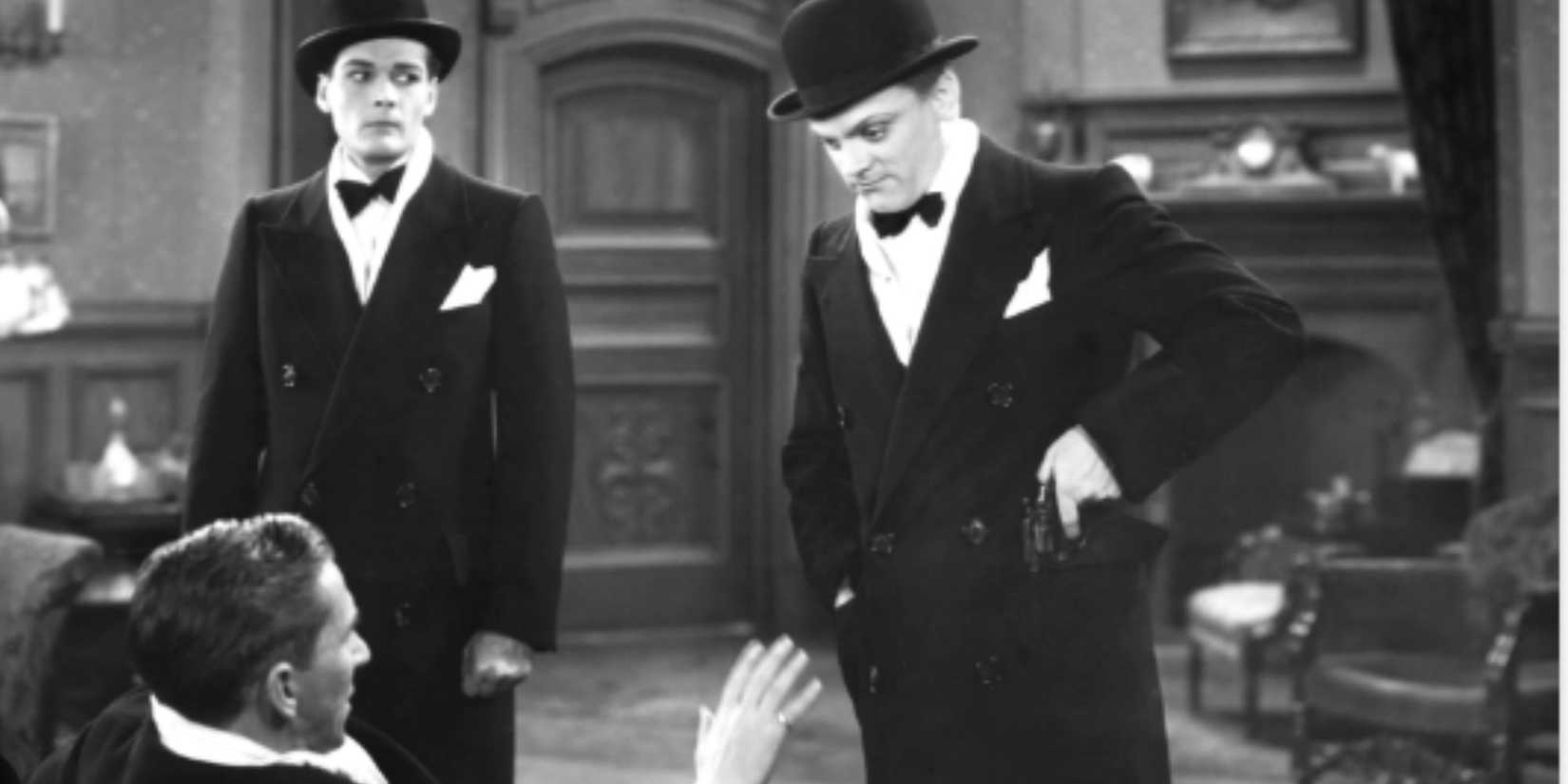
A well-dressed man being intimidating and towering over another while holding a gun
Image via Warner Bros.
If you watch enough gangster movies from Hollywood’s Golden Age, they do start to feel a bit familiar after a while. Plenty concern strict rise-and-fall narratives, increasing this sense that as soon as things start getting good for the central character, you can start counting the minutes until things ultimately get turned around, and they begin their financial/moral/physical decline, often ending with death.
The Public Enemy hits these beats and stands as a great – and definitive – gangster movie from this era, largely helped by having the always great James Cagney in the lead role. It has a particularly cruel ending that goes one step further than most gangster movies of its time. Again, they all end badly for the main character. They had to, thanks to moral standards at the time (and the Hays Code, which came into effect around this time). But the way The Public Enemy chooses to punish the protagonist and anyone who might've had a little sympathy for him is particularly brutal.
The Public Enemy follows the rise of two young men, Tom Powers and Matt Doyle, from a life of poverty in Chicago to becoming notorious bootleggers and criminals. As their illicit activities draw attention from law enforcement and rival gangs, they face mounting challenges that test their loyalty and survival.
Release Date
April 23, 1931
Runtime
84 Minutes
Director
William A. Wellman
Main Genre
Crime
6 'King of New York' (1990)
Director: Abel Ferrara

Christopher Walken in King Of New York standing in front of a window with a city reflected
Image via New Line Cinema
King of New York feels bleak because the primary character seems to want to redeem himself, but finds that’s easier said than done, especially when his status as a drug lord has made him so many enemies. His mission involves taking down his competitors while redistributing his wealth to those who need it, an already gargantuan task that gets progressively more difficult as King of New York stretches on.
It's one of Abel Ferrara’s strongest directorial efforts, and is also a good argument towards the notion that Christopher Walken should’ve played even more gangster/criminal characters during his career. Its New York City setting gives it an appropriately dark and sometimes dirty feel, and though it’s stylish and compelling, it’s also a bit of a downer, in the end. That’s just how it is, sometimes.
Release Date
July 18, 1990
Runtime
103 minutes
Director
Abel Ferrara
5 'Once Upon a Time in America' (1984)
Director: Sergio Leone
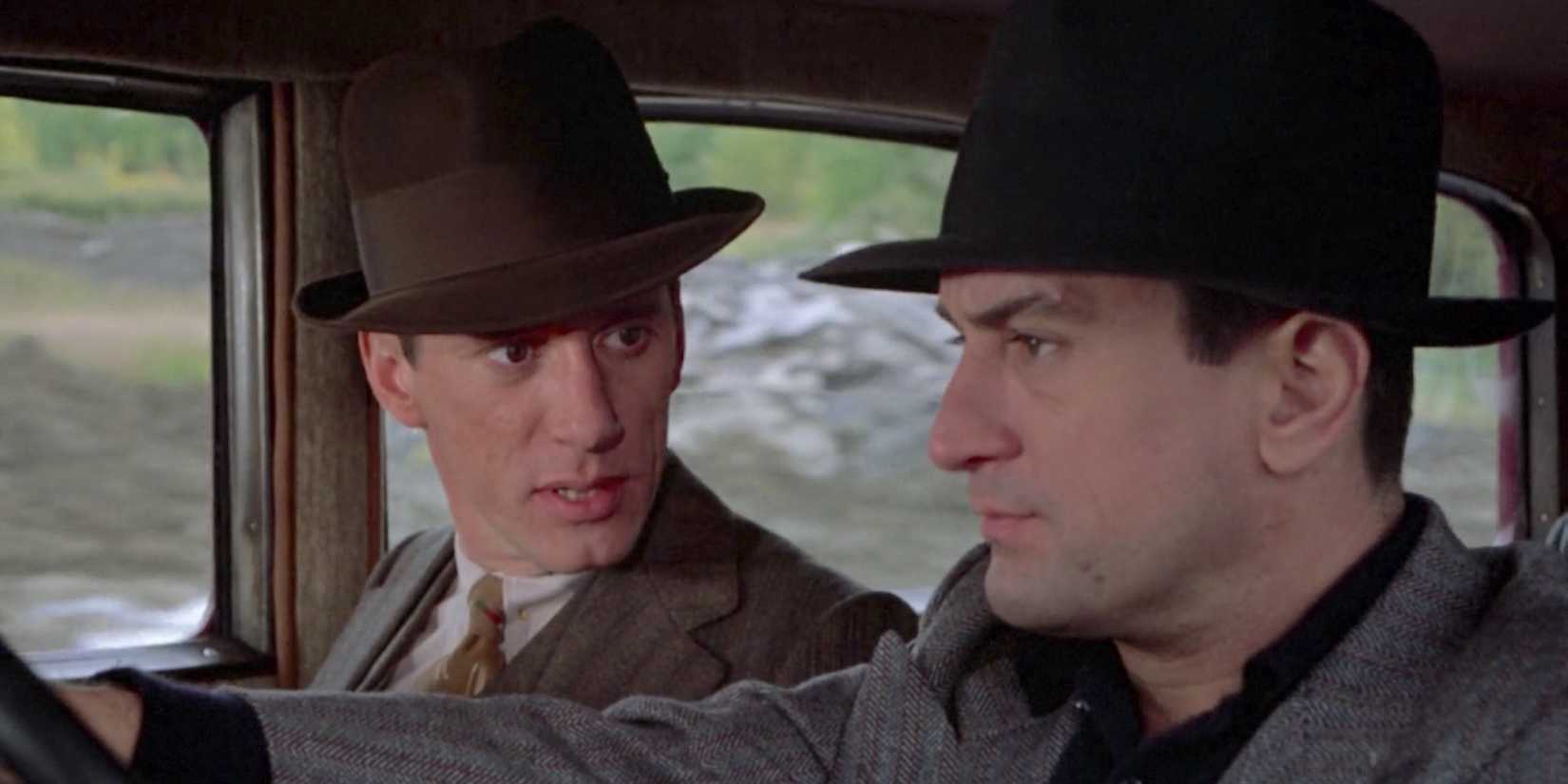
Robert De Niro and James Woods in Sergio Leone's Once Upon a Time in America
Image via Warner Bros.
The darkness of _Once Upon a Time in America_’s story is matched by its length; it’s both exceedingly downbeat/cynical and extremely long, running for almost four hours. It has a good deal of ground to cover, so it earns that runtime, in all honesty, following a gang of young boys who go from small-time criminals to bootleggers as young adults, and then become bitter/regretful old men many decades later.
It's not correct to say you should feel sorry for the main characters of Once Upon a Time in America, but it’s not really a film that finds catharsis in punishing them, either. They bring about misery for themselves and those around them, leading to a sense of despair and sadness in old age, none of which is shied away from. It strips away any romanticism from the gangster genre narratively and thematically… though it does ultimately have beautiful visuals and music, the latter courtesy of Ennio Morricone at the height of his composing powers.
4 'Casino' (1995)
Director: Martin Scorsese
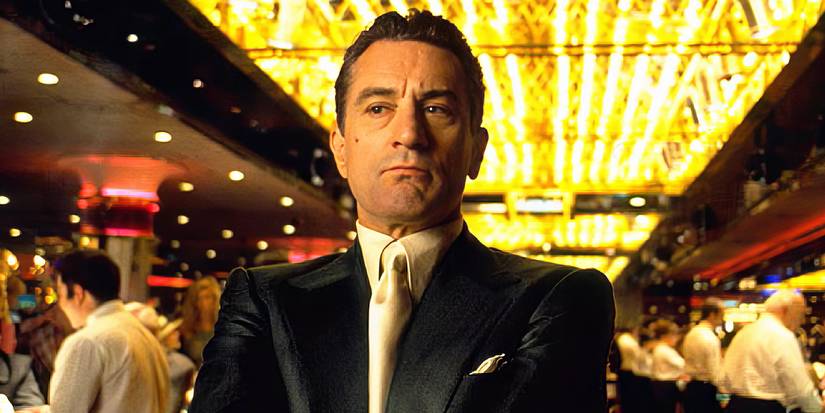
Robert De Niro in Casino standing proudly in his casino
Image via Universal Pictures
When breaking down the two fast-paced gangster epics Martin Scorsese directed in the 1990s, it’s safe to call them both – Goodfellas and Casino – quite brutal and relatively unromanticized. However, Goodfellas feels like a walk in the park compared to Casino, which is far more cynical, contains a good deal more explicit violence and language, and has characters almost entirely without redeeming qualities (a handful in Goodfellas, while not good fellas, had some slight/occasional positive qualities).
Much of the violence, anger, and terror comes from Joe Pesci’s fiery performance, but things are also so much bigger than him, with Las Vegas as a whole painted as a violent and corrupt city, all because the mob could run the place through owning so many casinos. It’s nearly three hours of betrayals, beatings, whackings, arguments, threats, and robberies. It is relentless, but Casino is supposed to be, and it’s possible to call it one of Scorsese’s absolute grimmest.
Release Date
November 22, 1995
Runtime
179 minutes
Director
3 'Gomorrah' (2008)
Director: Matteo Garrone

Two teenagers shooting guns in Gomorrah - 2008
Image Via RAI
Gomorrah is one of the best international gangster movies ever made, and a contender for one of the best crime movies of the 21st century so far. It takes place in Italy and has several different stories, all focused on different people of different ages and different affiliations with organized crime, though each segment does look at how people are affected by the gangs in the areas they live in.
Overall, Gomorrah is pretty aggressive in pushing a “crime doesn’t pay” message, so it’s unsurprising, then, that a good many of the stories don’t end well for those involved. Gomorrah paints a somber portrait of a place where organized crime can affect just about anyone. It’s very well-made and well-acted throughout, but is enough of a downer that some may find it hard to get through in one sitting.
Release Date
June 5, 2008
Runtime
63 minutes
2 'The Irishman' (2019)
Director: Martin Scorsese
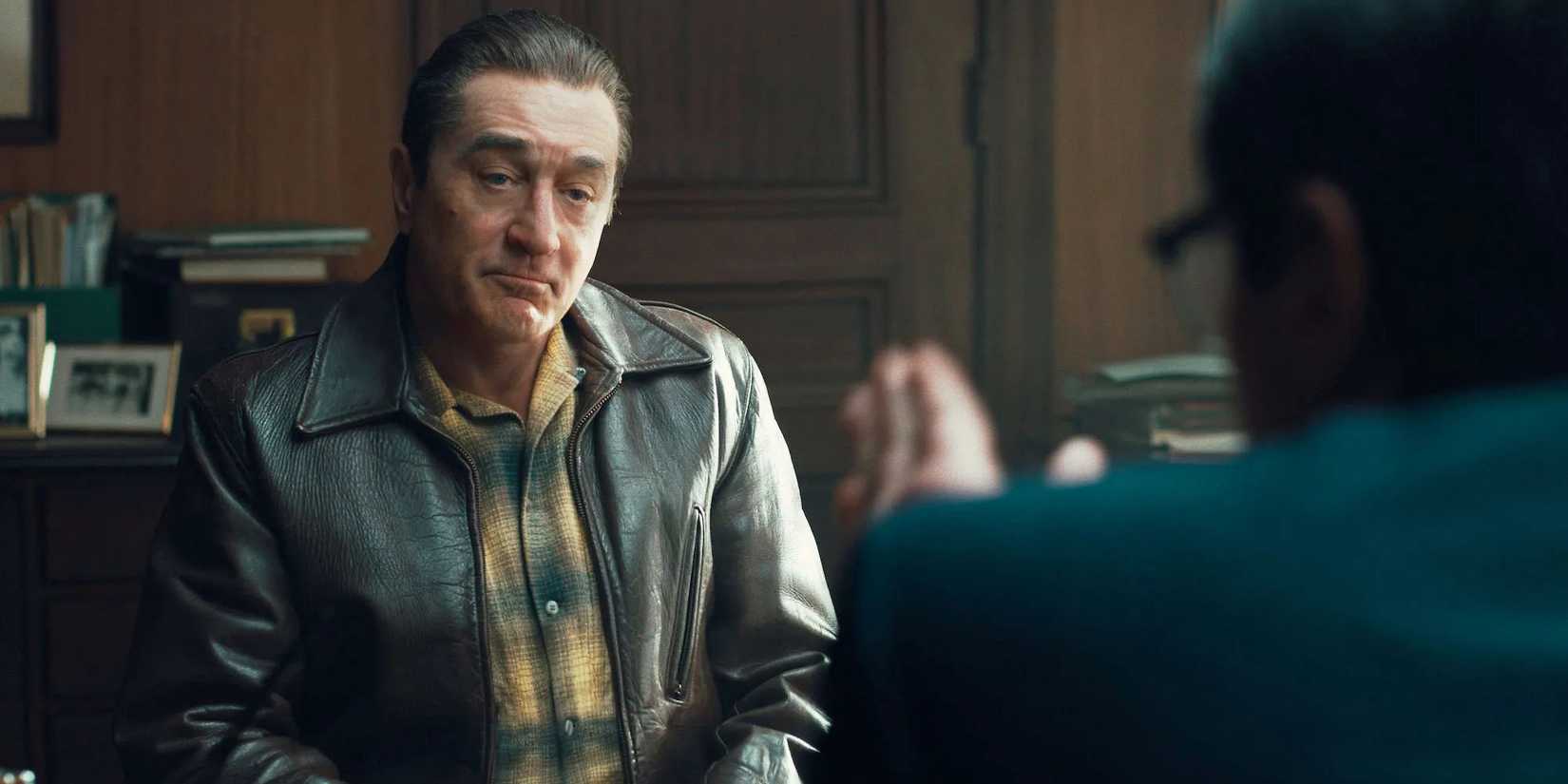
Robert De Niro in The Irishman (2019), directed by Martin Scorsese
Image via Netflix
Age has made Martin Scorsese a better filmmaker, in many ways, but it’s also led to his films getting more realistic and emotionally brutal, perhaps even to the point that some might say they’re pessimistic. Killers of the Flower Moon could be his most harrowing in recent years, but that one’s not really a gangster movie, meaning it’s better to look toward The Irishman and dub that as potentially his darkest, as far as his gangster films go.
It pushes things further than Once Upon a Time in America when looking at a criminal aging and looking back on the most violent and life-changing events from his past, usually with regret. Robert De Niro and Joe Pesci are both here, but their characters grow old and near brutally sad ends as their lives come to a close. The final half-hour or so of The Irishman is particularly concerned with such things, and it’s a definite downer.
Release Date
November 27, 2019
Runtime
210 minutes
Director
1 'The Godfather: Part II' (1974)
Director: Francis Ford Coppola
When The Godfather ends, it’s not all sunshine and rainbows by any means, but it still feels lighter in comparison to The Godfather: Part II. There was heartbreak, murder, and some moral compromises to be found in that first film, but there remained a warmth when it came to the family side of the Corleone family empire. The Godfather: Part II strips away any remaining positivity, ultimately being about the moral death of Michael Corleone.
He does not die physically, but seems to die in just about every other (metaphorical) way throughout The Godfather: Part II, losing friends, family, and much by way of hope of becoming legitimate. The epic-length film also contrasts Michael’s failures with his father’s successes in building the Corleone empire, all told through flashbacks. It’s ambitious and extremely effective filmmaking, being an all-time great gangster movie and potentially the most downbeat one within the entire genre.
The Godfather: Part II
Release Date
December 20, 1974
Runtime
200 minutes
Director
Francis Ford Coppola