People Thought This Bond Girl Actually Died During Filming (original) (raw)

Published Apr 6, 2024, 12:45 PM EDT
Liam Gaughan is a film and TV writer at Collider. He has been writing film reviews and news coverage for ten years. Between relentlessly adding new titles to his watchlist and attending as many screenings as he can, Liam is always watching new movies and television shows.
In addition to reviewing, writing, and commentating on both new and old releases, Liam has interviewed talent such as Mark Wahlberg, Jesse Plemons, Sam Mendes, Billy Eichner, Dylan O'Brien, Luke Wilson, and B.J. Novak. Liam aims to get his spec scripts produced and currently writes short films and stage plays. He lives in Allentown, PA.
Summary
- Sean Connery is often recognized as being one of the best James Bonds.
- Eaton's portrayal as Jill in "Goldfinger" left a lasting mark, inspiring a conspiracy theory about her death which she later debunked.
- "Goldfinger" changed the James Bond franchise forever, setting precedents for gadgets, humor, and the cinematic interpretation of Bond.
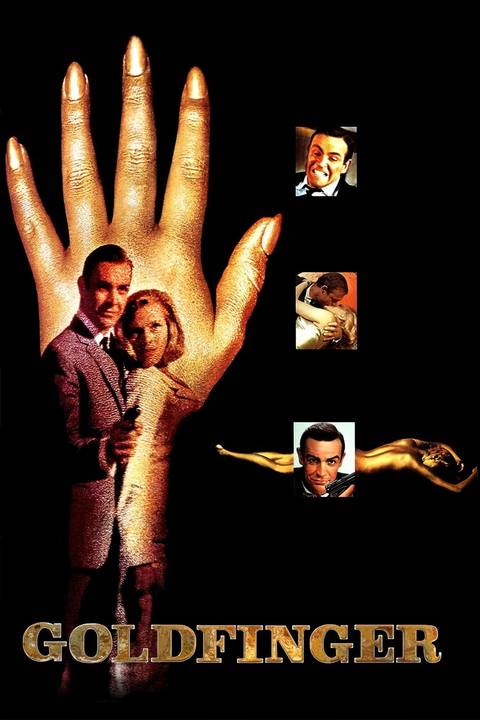
The James Bond franchise has been a staple of Hollywood action filmmaking for well over six decades. With 27 films based on the character and updates of a new actor (maybe Aaron Taylor-Johnson?) taking on the role hopefully coming soon, the Bond franchise has shown no signs of slowing down. Each actor who has occupied the main role has done something new with the character, but part of the series’ success has been its ability to pull off shocking twists and turns. While it is now remembered as one of the franchise’s most iconic moments, the death of a Bond girl in 1964’s Goldfingeractually inspired a conspiracy theory about the actress’ actual demise.
Release Date
September 20, 1964
Runtime
110 minutes
Director
Guy Hamilton
Writers
Paul Dehn, Ian Fleming, Richard Maibaum, Berkely Mather
Producers
Harry Saltzman, Albert R. Broccoli
Cast

Gert Fröbe
Auric Goldfinger
‘Goldfinger’ Has an Iconic Death Sequence
Dr. No and From Russia With Love had established the potential that Sean Connery had as 007, but **Goldfinger**leaned into the sensationalism and romanticism that would become intrinsic to the Bond franchise.Based on Ian Fleming’s novel of the same name, Goldfinger picks up with Bond shortly after he thwarts a group of Latin American terrorists from establishing a drug factory. Bond is once again dispatched to face off against the agents of SPECTRE, as the criminal agency is working with the bullion dealer Auric Goldfinger (Gert Fröbe) to launch an attack on the United States Bullion Depository in Fort Knox. By destroying this important institution, Goldfinger believes he can cripple the United States’ economy and become one of the most powerful men in the world.
Amidst his adventure, Bond begins investigating Goldfinger’s gambling activities alongside the covert secret agent Jill Masterson (Shirley Eaton). Upon recognizing that Goldfinger had rigged his own games to lean in his favor, Bond and Jill team up to expose the haughty billionaire and blackmail him into losing. Although it initially appears that he’s been bested, Goldfinger does not let his enemies emerge from the conflict unscathed. After he is nearly killed in a fight with Goldfinger’s henchman, Oddjob (Harold Sakata), Bond awakes to discover that Jill has been plastered in gold and subsequently died of “skin suffocation.” The image of Jill’s golden corpse became one of the most striking images in the entire Bond franchise.
While the Bond series would eventually grow darker thanks to the films in the Timothy Dalton and Daniel Craig eras of the saga, Jill’s death was a fairly shocking moment for audiences in 1964. The strong chemistry between Eaton and Connery suggested that Jill may be his primary love interest in the film, particularly because of her involvement with the MI6 investigation. Although Bond eventually finds a different lover in the film when he unites with Pussy Galore (Honor Blankman), the moment shows just how petty and ruthless Goldfinger could be. The notion that he would strike out so violently for a perceived slight against his honor is why Goldfinger is often cited as one of the greatest Bond villains of all-time.
What Happened to Shirley Eaton After ‘Goldfinger'?

Sean Connery and Shirley Eaton on the set of Goldfinger.
Image via MGM
Even though Goldfinger was a massive hit and became one of the most successful films of 1964, Eaton remained out of the public eye for much of the immediate aftermath. Due to how plausible Bond’s explanation of her “skin suffocation” seemed, an urban legend grew thatEaton had actually died during the filming of Goldfinger. While obviously untrue, the conspiracy remained quite popular within the pre-Internet era due to the lack of information about the film’s production given to the public. Eaton returned to finally debunk the rumor in a 2003 episode of Mythbusters where she discussed her experiences making the film.
 Related
While she never earned another role quite like Jill, Eaton had a very successful career following her performance in Goldfinger. The image of Jill encased in gold was heavily incorporated within both the film’s surrealistic opening title card sequence and extravagant marketing campaign. Eaton later donned the cover of LIFE magazine in 1964 to promote the film. Her later roles included the 1965 adaptation of the Agatha Christie novel Ten Little Indians, the science fiction adventure film Around the World Under the Sea, and the British comedy Carry On. Although she temporarily retired at the end of the 20th century, Eaton’s memoir, Golden Girl, was released to critical acclaim in 1999, and subsequently inspired her to return to acting full time.
‘Goldfinger’ Changed James Bond Forever
While both Dr. No and From Russia With Love had been moderately successful, Goldfinger set many of the precedents that became intrinsic to the Bond franchise. Dr. No and From Russia With Love had aired closer to the gritty tone of Fleming’s novels, reflecting a version of spycraft that felt believable within the context of the Cold War. However, Goldfinger was unafraid to embrace a light-hearted sense of superficiality and add tongue-in-cheek jokes about Bond’s adventures. Bond’s womanizing nature, the series of idiosyncratic gadgets, an eccentric villain, and the insertion of a prolonged pre-title action sequence all have their roots in Goldfinger. It’s cited as the film where the cinematic interpretation of Bond truly transcended the source material and became its own unique entity.
Goldfinger represented the peak of Connery’s role as Bond. While the film’s action would eventually be outdone by later installments in the series, it remains a classic because of Connery’s inherent charisma and strong chemistry with both Eaton and Frobe. Goldfinger set a high bar for the Bond franchise to top. Subsequent films Thunderball and You Only Live Twice certainly had their moments, though Connery felt less engaged compared to how enthusiastic his Goldfinger performance was. The subsequent film On Her Majesty’s Secret Service was hailed for its more serious tone, but George Lazenby’s performance as Bond couldn’t help but suffer in comparison to the groundbreaking work that Connery had done.
Goldfinger is available to watch on Max in the U.S.