20 Best Movies With No Plot (and "Not Much Happens") (original) (raw)

Updated Oct 10, 2024, 6:00 PM EDT
Jeremy has more than 2500 published articles on Collider to his name, and has been writing for the site since February 2022. He's an omnivore when it comes to his movie-watching diet, so will gladly watch and write about almost anything, from old Godzilla films to gangster flicks to samurai movies to classic musicals to the French New Wave to the MCU... well, maybe not the Disney+ shows.
His favorite directors include Martin Scorsese, Sergio Leone, Akira Kurosawa, Quentin Tarantino, Werner Herzog, John Woo, Bob Fosse, Fritz Lang, Guillermo del Toro, and Yoji Yamada. He's also very proud of the fact that he's seen every single Nicolas Cage movie released before 2022, even though doing so often felt like a tremendous waste of time. He's plagued by the question of whether or not The Room is genuinely terrible or some kind of accidental masterpiece, and has been for more than 12 years (and a similar number of viewings).
When he's not writing lists - and the occasional feature article - for Collider, he also likes to upload film reviews to his Letterboxd profile (username: Jeremy Urquhart) and Instagram account.
He has achieved his 2025 goal of reading all 13,467 novels written by Stephen King, and plans to spend the next year or two getting through the author's 82,756 short stories and 105,433 novellas.
One of the best things about watching a movie is having the experience of taking in a great story. As a film plays out, you get to directly see a narrative unfold, through the characters, their interactions, and the events they need to deal with. Beautiful visuals, inventive editing, and great music are all things that can make that story more powerful and emotionally resonant.
But then again, some films aren't as concerned with showing viewers a direct story play out from A to B. Films like this can still have great characters and still work on an emotional level, but it's the experience of watching them that sticks with the audience, rather than the story that was told. Films like these do have a narrative, but favor exploring characters or making viewers feel something over-focusing on a plot. Even if some can be slow at points, they all prove to be rewarding experiences that show how the medium of film is so much more than just another way to tell a story.
20 'My Neighbor Totoro' (1988)
Directed by Hayao Miyazaki

Mei Kusakabe, the younger daughter from My Neighbor Totoro, with totoro
Image via Studio Ghibli
My Neighbor Totoro is one of many classic anime films directed by Hayao Miyazaki, as well as arguably his calmest and most soothing. It’s genuinely just a nice and gentle piece of animation to fall into, with its family-friendly premise being rather simple, on account of it following two young sisters moving to the countryside with their father, and discovering magical beings in a nearby forest.
Narrative isn't always front and center when it comes to Miyazaki, but there is a little more going on narratively in works like Spirited Away and The Boy and the Heron. My Neighbor Totoro does have heart and memorable characters – both human and fantastical – which prove to be more than enough to make it compelling, with the simpleness of the story being in no way detrimental to the film’s quality.
Release Date
April 16, 1988
Runtime
86 minutes
Director
19 'Portrait of a Lady on Fire' (2019)
Directed by Céline Sciamma

Adèle Haenel as Héloïse at the beach in Portrait of a Lady on Fire
Image via Camera Film
Keeping things small and intimate, Portrait of a Lady on Fire has very few characters and largely focuses on two women. One’s a painter who’s assigned with creating a portrait of the other, with the two gradually realizing they have feelings for each other. In time, they start up a passionate affair, but it’s one that’s ultimately not going to last.
It focuses on a same-sex romance at a time in history when such a thing was seen as taboo, and that’s part of the tragedy inherent to the film. Portrait of a Lady on Fire is incredibly romantic, quietly moving, and beautifully shot/made overall, with a seemingly simple story about love proving complex because of the feelings it explores, and the undeniably bittersweet ways it explores them.
Release Date
September 18, 2019
Runtime
120 minutes
Director
Céline Sciamma
18 'In the Mood for Love' (2000)
Directed by Wong Kar-wai

Maggie Chung as Su Li-zhen waltching Tony Liu as Mo-wan lighting a cigarrette in In the Mood for Love
Image via Block 2 Pictures
One of the defining arthouse movies of the 21st century so far, In the Mood for Love touches upon similar themes and emotions to the aforementioned Portrait of a Lady on Fire. Here, the premise involves two people in relationships who both find out their significant others have begun affairs, which in turn makes them wonder whether they should also give in and become intimate.
Even though that’s the premise, In the Mood for Love doesn’t play out the way you'd expect, with drama between characters being downplayed. In its place is – as the title suggests – a focus on mood, as well as the internal feelings of the two main characters. Much of it’s a little vague while also feeling relatable, and it’s a unique movie tonally on top of being a gorgeous one visually.
Release Date
March 9, 2001
Runtime
98 Minutes
Director
Kar-Wai Wong
17 'Good Morning' (1959)
Directed by Yasujirō Ozu
Yasujirō Ozu tends to focus on characters more than stories throughout many of his films (and certainly not in a bad way, by any means), but Good Morning takes this to another level. It’s a fairly lightweight film by Ozu’s standards, being a light comedy about family instead of a more full-on drama, with the premise involving two young brothers who find ways to protest when their parents don’t want to buy the family a television set.
Good Morning is all about family dynamics, like many Yasujirō Ozu movies, but in a way that feels much less tragic than some of his more hard-hitting dramas. It’s a largely charming movie and just a pleasant one to let wash over you for 90-ish minutes, and sometimes, that ends up being more than enough.
16 'Perfect Days' (2023)
Directed by Wim Wenders

A man and woman ride bicycles on a street in a city in Perfect Days.
Image via Neon
A pretty much perfect movie about a wonderfully calm lifestyle, Perfect Days has some drama and personal conflicts present, but less of an emphasis on such stuff than many other films. It’s even more soothing and low-key than most slice-of-life movies, centering on a man who lives by himself in Tokyo and gets by in life by cleaning toilets.
As such, a good chunk of Perfect Days involves a man going from public toilet to public toilet, meeting and connecting with some people along the way while always being grounded and living in the present. It’s very calm and also surprisingly moving, all backed with some amazing music (a Wim Wenders staple) and some very striking cinematography throughout. It’s a movie that, in essence, makes the seemingly mundane feel beautiful.
Release Date
December 22, 2023
Runtime
124 Minutes
Director
Wim Wenders
Main Genre
15 'Drive My Car' (2021)
Directed by Ryûsuke Hamaguchi

A woman drives a car with a man in the back seat in Drive My Car.
Image via Janus Films
One of the most critically acclaimed films of 2021 is Drive My Car, an almost three-hour-long movie that spends most of its runtime on a group of characters preparing and rehearsing a stage play of Russian writer Anton Chekhov's**Uncle Vanya**. The focus is on the play's director and his personal driver, and the unique friendship of sorts that grows between them.
The opening half-hour is quite plot-heavy and dramatic, and after that, the rest of the film deals with its fallout. It has a contemplative tone and numerous scenes that go on for a long time, but the effect becomes hypnotic and surprisingly engaging as the film goes on. Drive My Car uses its three hours to explore grief, loneliness, and the process of creating art, Drive My Car might not be for everyone, but it has a lot to offer for those willing to engage with it.
Release Date
November 24, 2021
Runtime
179 minutes
Director
Ryusuke Hamaguchi
14 ‘Nomadland’ (2020)
Directed by Chloé Zhao

Frances McDormand walking through a field with a lamp, in front of a sunset in Nomadland.
Image via Searchlight Pictures
Winning Best Picture at the 2021 Academy Awards, **Nomadland**is a very easy movie to summarize. It's essentially a year or so in the life of a woman living in America as a nomad; a person who doesn't have a home, and instead lives life in a freer, less predictable way.
What made the film resonate with viewers (besides things like Frances McDormand's lead performance and the beautiful cinematography) was how down-to-earth and naturalistic it felt. Part of that was thanks to many cast members being non-professional actors, and some of it was thanks to the loose, sometimes meandering structure of the film. It helps those who watch it get a taste for how the nomad lifestyle would feel, and as such achieves a great deal without having a more structured narrative.
Release Date
February 19, 2021
Runtime
107 minutes
Director
Main Genre
13 'Drive' (2011)
Directed by Nicolas Winding Refn

Ryan Gosling sits in a car at night and looks pensive in Drive.
Image via FilmDistrict
Decidedly not at all like a Fast & Furious movie, Drive does focus on a lonely man who's a stuntman by day and a getaway driver for robbers at night, but is arguably less about that and more about being an exercise in style.
The movie lives and breathes the grimier aspects of the neon-drenched 80s. Drive's a beautiful-looking movie and paired with the memorably moody synth-wave soundtrack, it's a great movie to experience. Instead of focusing on the criminal aspects of the driver's (Ryan Gosling) life, it's arguably more concerned about the romance that develops between the driver and Irene (Carey Mulligan) characters... at least between the sporadic bursts of graphic violence that are there to remind viewers they're ultimately watching a crime film.
Release Date
September 16, 2011
Runtime
100 minutes
Director
Nicolas Winding Refn
12 'Paterson' (2016)
Directed by Jim Jarmusch

Adam Driver sits alone on a bench outside in Paterson.
Image via Bleecker Street Media
Paterson features one of Adam Driver's best performances in a career that's already full of great ones. In it, he plays a young bus driver with a simple, very structured life, and viewers follow him as he works, talks with his partner, walks his dog, visits his local bar, and writes poetry in his notebook.
That's all there is to Paterson, really, but the gentleness of how it feels and the acting of Adam Driver ensure it's very engaging. It's a pleasant film that reminds viewers to enjoy the smaller things in life that they might otherwise take for granted, and it might struggle to get this message across so well if a pesky plot got in the way.
Release Date
December 28, 2016
Runtime
118 Minutes
Director
Jim Jarmusch
Main Genre
11 'Days of Heaven' (1978)
Directed by Terrence Malick
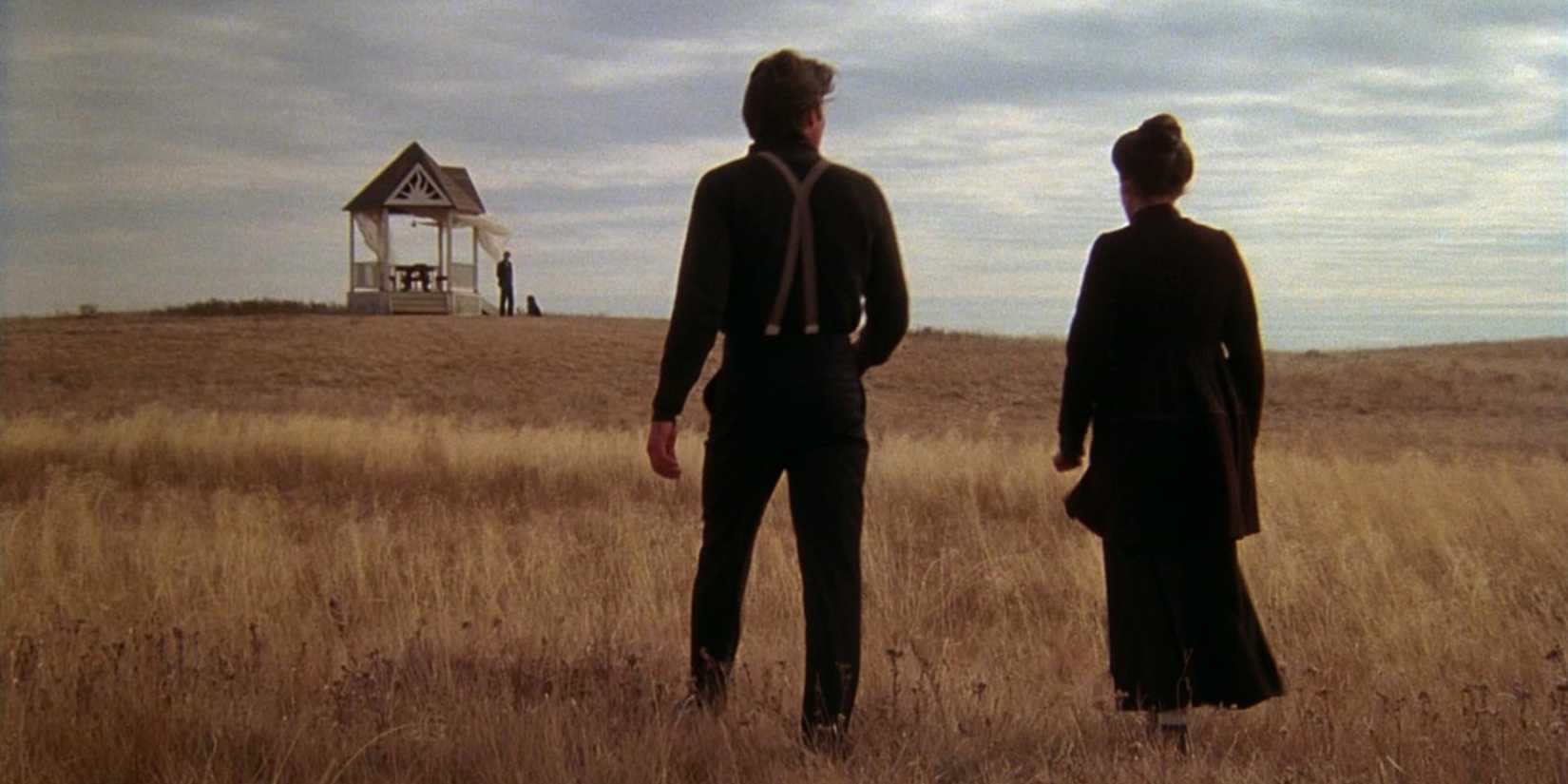
Richard Gere and Brooke Adams in Terrence Malick's Days of Heaven (1978)
Image Via Paramount Pictures
Days of Heaven is the second film from acclaimed director Terrence Malick, and arguably still his best. Plot-wise, it's very simple: it involves a love triangle between a fugitive on the run, his girlfriend who pretends to be his sister, and the rich but terminally ill farmer they work for.
There's a plot to inherit the farmer's wealth through a sham marriage, but it takes a backseat to the beautiful outdoor scenery (many scenes were shot either just before sunrise or just after sunset, which helped the American Society of Cinematographers select it as one of the best-shot films of all time), and Ennio Morricone's beautiful score. It's complemented with some improvised, poetic narration, and it all adds up to an amazing experience, even while the story hits some very familiar beats, and at times feels like it's not hugely important.
Release Date
September 13, 1978
Runtime
94 minutes
Director
Terrence Malick
Main Genre