10 Heaviest Epic Movies of All Time, Ranked (original) (raw)

Cillian Murphy looking pensive at the end of 'Oppenheimer'
Image via Universal Pictures

Published Dec 6, 2025, 5:00 PM EST
Jeremy has more than 2500 published articles on Collider to his name, and has been writing for the site since February 2022. He's an omnivore when it comes to his movie-watching diet, so will gladly watch and write about almost anything, from old Godzilla films to gangster flicks to samurai movies to classic musicals to the French New Wave to the MCU... well, maybe not the Disney+ shows.
His favorite directors include Martin Scorsese, Sergio Leone, Akira Kurosawa, Quentin Tarantino, Werner Herzog, John Woo, Bob Fosse, Fritz Lang, Guillermo del Toro, and Yoji Yamada. He's also very proud of the fact that he's seen every single Nicolas Cage movie released before 2022, even though doing so often felt like a tremendous waste of time. He's plagued by the question of whether or not The Room is genuinely terrible or some kind of accidental masterpiece, and has been for more than 12 years (and a similar number of viewings).
When he's not writing lists - and the occasional feature article - for Collider, he also likes to upload film reviews to his Letterboxd profile (username: Jeremy Urquhart) and Instagram account.
He has achieved his 2025 goal of reading all 13,467 novels written by Stephen King, and plans to spend the next year or two getting through the author's 82,756 short stories and 105,433 novellas.
Sign in to your Collider account
Any movie can be heavy, even comedies, when you think about it. Action movies can be fun, sure, but some of them are also pretty grim, and then when you get to epics, that’s a genre that’s obviously going to be a bit more serious-minded than most. Hell, even relatively exciting epic movies also manage to feel intense or emotional at times (see Seven Samurai and The Great Escape).
As for the following films? They all go above and beyond when it comes to dealing with intense thematic content and, overall, feeling exceptionally heavy. They're also all epic movies, with runtimes that exceed three hours, so not only do they deal with difficult things, but they force the viewer to sit with such difficult ideas, stories, and emotions for exceptionally long periods of time, too.
10 'Once Upon a Time in America' (1984)
 Image via Warner Bros.
The final film Sergio Leone directed wasn’t a Western, and was, instead, a gargantuan gangster movie: Once Upon a Time in America. This one had an even broader scope – and arguably more ambition – than the likes of The Good, the Bad and the Ugly and Once Upon a Time in the West, playing out over many decades and featuring a core group of characters at differing stages of their lives.
All along the way, Once Upon a Time in America feels heavy for different reasons, but it is phenomenal and very much worth devoting four-ish hours to.
When they're young, they're desperate, when they get older, they become ruthless and greedy, and then in old age, they're faced with mortality and the idea of having lived terrible lives. So, all along the way, Once Upon a Time in America feels heavy for different reasons, but it is phenomenal and very much worth devoting four-ish hours to, so long as you have some idea what you're in for.
9 'The Brutalist' (2024)

Adrien Brody and Guy Pearce in The Brutalist.
Image via A24
The Brutalist was a lot to take in, and would’ve felt like a bit of an endurance test had it only been about 115 minutes long, rather than 215. Still, much of it is impressive, and it largely earns its, well, large runtime, being about an architect who moves to America after the end of World War II, and chases the American Dream, finding it in some regards, but then also colliding with certain unforeseen difficulties, too.
Though there aren’t too many characters to keep track of in The Brutalist, it is still a movie about quite a lot of things thematically, and events play out over a fairly long period of time, too. It’s an impressive filmmaking achievement, and also effectively despairing when it wants to be. Some of it’s moving and stirring, but much of it will leave you feeling empty and despondent. But hey, not every movie that makes you want to feel such things is successful at that, so give it up for The Brutalist and its unique sense of misery.
8 'The Deer Hunter' (1978)
 Image via Universal Pictures
Most movies about the Vietnam War tend to showcase it (and America's involvement in it specifically) in a pretty negative light, to say the least, and The Deer Hunter is no exception. Here, though, it aims to be more devastating than a mere look at the experience of fighting in said conflict by spending a great deal of time on the main characters both before and after they serve America during the war in question.
That does mean the opening hour or so of The Deer Hunter feels quite slow and meandering, but the decision regarding the structure and pace of it all makes sense once the film starts to conclude in the devastating manner it does. Sure, it’s technically an epic war movie, but it’s probably more accurate to call it the epic movie equivalent of a psychological drama; one that just so happens to feature some combat in the second of its three acts.
7 'Babylon' (2022)
 Image via Paramount Pictures
For a good chunk of its runtime, Babylon is pretty funny, albeit with the focus being on dark comedy, alongside some gross-out stuff, for good measure. It paints a portrait of the 1920s, mainly centering on the film industry at the time, as one filled with debauchery and partying, at least when business was booming. But then things shift for various actors and other film-related individuals nearer to the end of the decade, when talkies start becoming a thing.
After that point, Babylon gets a good deal heavier, and though some feel the film contradicts itself and is messy tonally, that might well be the point; like, movies are wonderful, but making movies and asking so much of certain people? That can be horrible. Where the line is, who knows? Damien Chazelle explored that well in Whiplash, and did so effectively here as well, only fewer people appreciated it when done on such a scale, for whatever reason.
6 'The Emigrants' (1971) & 'The New Land' (1972)

Liv Ullmann wearing a headscarf in 'The Emigrants'
Image via SF-Produktion
This could be cheating a little, since The Emigrants and The New Land are technically two movies, but if you only want to have one here, flip a coin. No, seriously. They're both very heavy movies, albeit for different reasons, and they both also count as epics in their own right, seeing as The Emigrants runs for 191 minutes, and The New Land clocks in at 202 minutes.
The first part of this duology involves a Swedish family making a trip to America in search of a better life around the middle of the 19th century, and then the second part involves the struggles that come with attaining that desired (but potentially elusive) better life. The Emigrants and The New Land both make for tough watches, but they are excellent movies that add up to one phenomenal (and justifiably celebrated/awarded) whole.
5 'The Godfather Part II' (1974)
The Godfather was already a pretty somber movie, as even though it was sympathetic toward some characters and maybe slightly romantic in its depiction of life in the mob (at least shedding light on the idea that there was some honor involved), there was, nonetheless, a certain harshness captured about that lifestyle. But the darkness there paled in comparison to the overall sense of bleakness found in The Godfather Part II.
Even if you don’t think the sequel was better here, you can probably agree that it was darker. Michael Corleone’s downfall is the focus of this film, and his fall is contrasted with a series of flashbacks that show his father’s rise. It’s a patient and emotionally brutal movie about a man losing whatever soul he once might’ve had and, in turn, losing just about everyone who used to care about him. It’s a real gut-punch of a gangster movie, but also one of the best ever made, for sure.
4 'Killers of the Flower Moon' (2023)
The cinematography in The Killers of the Flower Moon
Image via Paramount Pictures
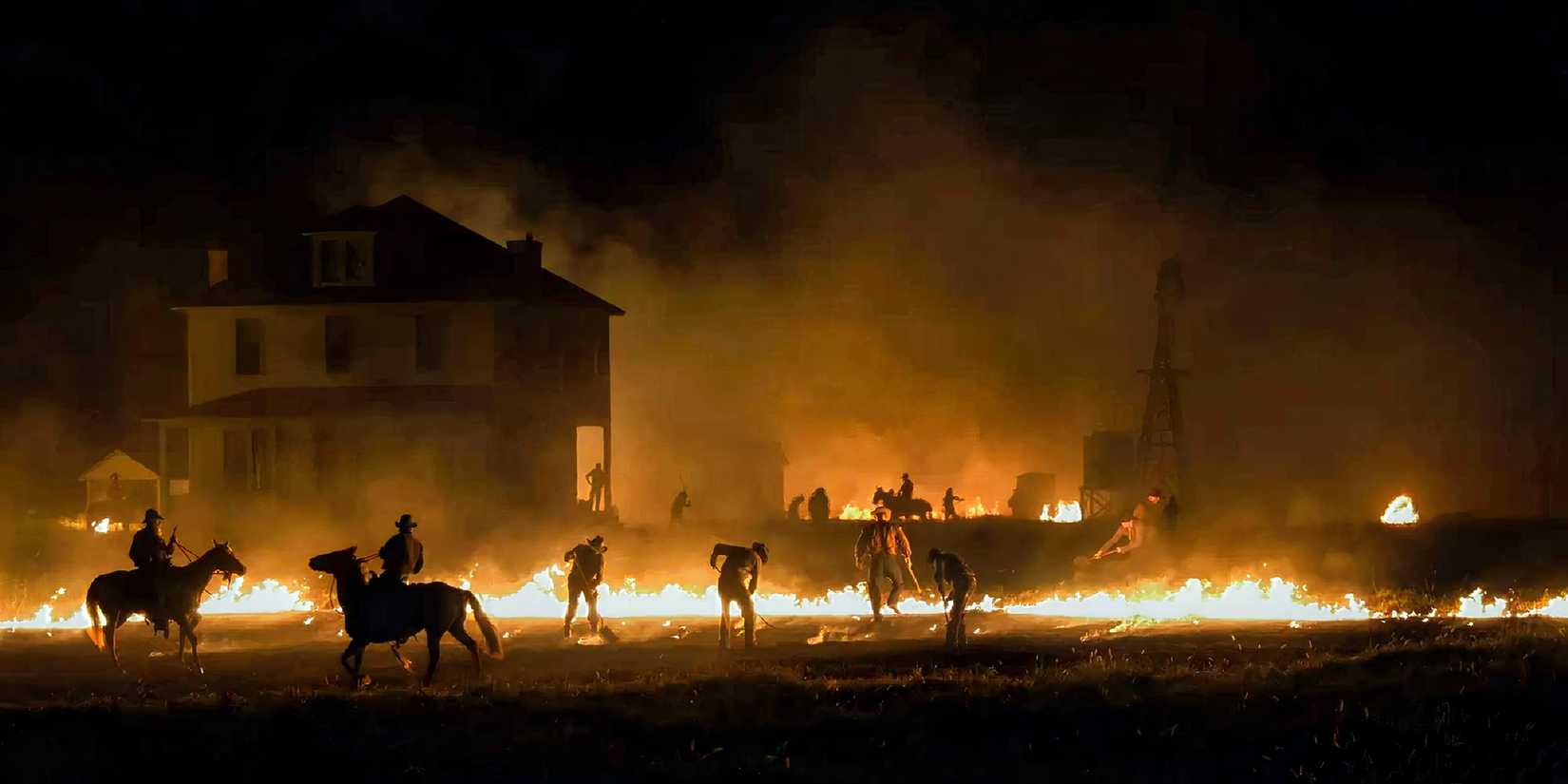
Martin Scorsese has directed some of the best epic movies of the past few decades, and Killers of the Flower Moon is among them. Before the 21st century, Scorsese was no stranger to exploring heavy topics in his films, by any means, but there’s something extra harrowing about Killers of the Flower Moon, since the violence here is done with a real coldness, and a series of murders are treated in a very flippant way by those who carry them out.
And, like with so many crime stories, it’s all about greed here, and the film does focus more on the perpetrators who are doing what they do out of a desire for more money, land, power, and control… or maybe something else, too. It’s dark. That’s an understatement. It’s dark for a very long time. It’s a challenging film. Killers of the Flower Moon is far from rewatchable, unlike some other Scorsese pictures. But it is, for the most part, pretty damn close to a masterpiece.
3 'Oppenheimer' (2023)
Cillian Murphy as J. Robert Oppenheimer, standing outside in Oppenheimer (2023).
Image via Universal Pictures
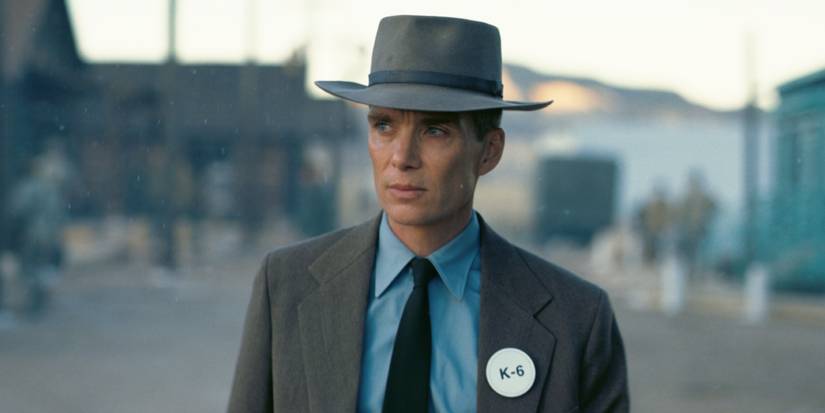
Not the first World War II epic to win Best Picture, but Oppenheimer might well be the heaviest, eclipsing even Schindler’s List, which was harrowing for much of its runtime, but did foreground hope and heroism in parts, especially near the end. Oppenheimer, in contrast, starts off feeling high stakes and more than a little unsettling, and then it aims to leave you feeling anything but hope by the end.
It's got one of the darkest movie endings in recent memory, but it has to, considering nuclear weapons still exist and continue to represent an existential threat to all of humanity. Oppenheimer finds room to do more than just instill this fear throughout, but it is always in one’s mind while the movie trudges along, and then it’s what sticks out most of all (perhaps regrettably so, if you're after a peaceful night’s sleep) once – and after – the end credits roll.
2 'The Irishman' (2019)
Joe Pesci and Robert De Niro in The Irishman
image via Netflix
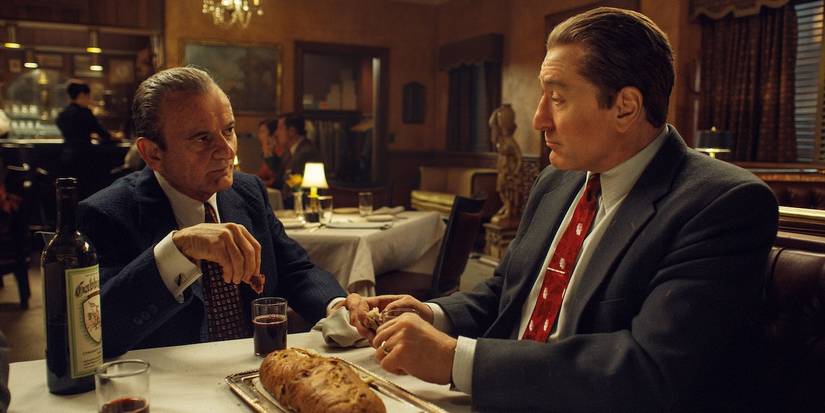
At the time of writing, The Irishman is Martin Scorsese’s most recent gangster film, and it seems likely it’ll continue to stand as his final one. It feels like the filmmaker making one final statement on the sub-genre he’s most often associated with, having a story about murder, betrayal, and organized crime, sure, but also one about getting old, dying of comparatively mundane things, and feeling deep regret for what was done in the past.
In that sense, The Irishman could well be Scorsese’s most mature film, and very much one that he likely couldn’t have made any earlier in his directing career. It’s technically a little more entertaining than Killers of the Flower Moon, since some of The Irishman is very funny, but you're left with a comparably strong feeling of despair once it’s older. Also, it feels like the kind of film that’ll just get heavier the more time passes, and the older one gets, potentially – for better or worse – relating to some (hopefully not all) of the things explored in The Irishman more and more.
1 'The Human Condition' (1959-1961)
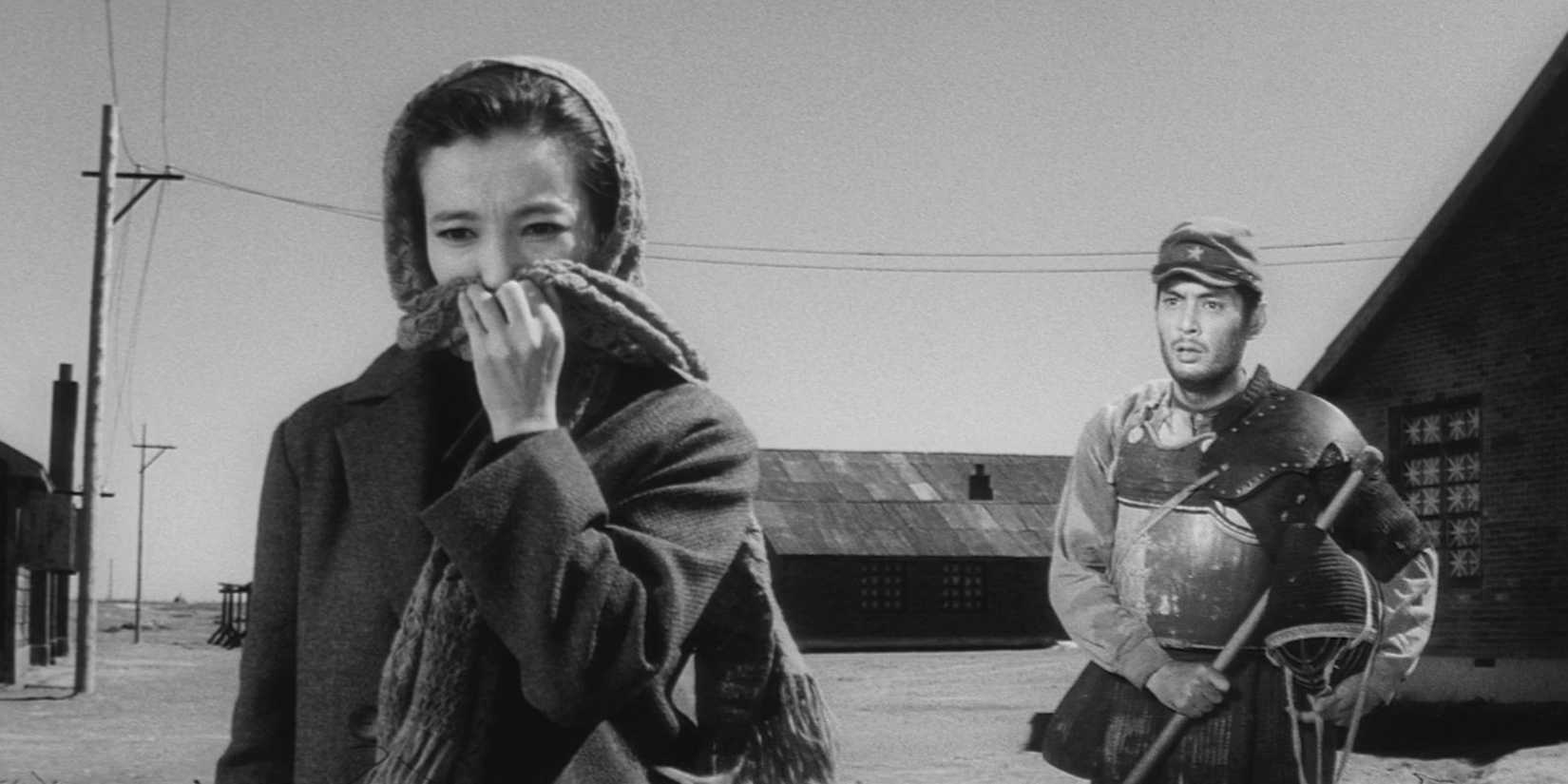 Image via Shochiku
It’s no easy task to say that one World War II movie feels more realistic and grounded than any other, but if you had to argue for a single one being just that, you might as well go with The Human Condition. Though, truth be told, this is kind of three movies in one, but they all play out like a single one that’s all about the same story, which focuses on a pacifist getting wrapped up in the Second World War.
If it’s a trilogy, then it’s among the best ever made, and if it’s a single film, then it’s also phenomenal on that front, too. With The Human Condition, you get a grueling runtime of about 10 hours, time spent before, during, and after a war, and an epic scope that’s coupled expertly with a very personal and intimate character study. It’s both hard to fault and hard to watch, and easily one of the heaviest films in cinema history.