10 Most Divisive Oscar Wins, Ranked (original) (raw)

Tom Hanks as the title character in Forrest Gump, winning an Oscar
Image by Federico Napoli

Published Jul 5, 2024, 5:00 PM EDT
Jeremy has more than 2500 published articles on Collider to his name, and has been writing for the site since February 2022. He's an omnivore when it comes to his movie-watching diet, so will gladly watch and write about almost anything, from old Godzilla films to gangster flicks to samurai movies to classic musicals to the French New Wave to the MCU... well, maybe not the Disney+ shows.
His favorite directors include Martin Scorsese, Sergio Leone, Akira Kurosawa, Quentin Tarantino, Werner Herzog, John Woo, Bob Fosse, Fritz Lang, Guillermo del Toro, and Yoji Yamada. He's also very proud of the fact that he's seen every single Nicolas Cage movie released before 2022, even though doing so often felt like a tremendous waste of time. He's plagued by the question of whether or not The Room is genuinely terrible or some kind of accidental masterpiece, and has been for more than 12 years (and a similar number of viewings).
When he's not writing lists - and the occasional feature article - for Collider, he also likes to upload film reviews to his Letterboxd profile (username: Jeremy Urquhart) and Instagram account.
He has achieved his 2025 goal of reading all 13,467 novels written by Stephen King, and plans to spend the next year or two getting through the author's 82,756 short stories and 105,433 novellas.
Sign in to your Collider account
No matter what, an Academy Awards ceremony is never going to make everyone happy. Perhaps that makes the whole ordeal frustrating, both on the night of the ceremony and in the weeks/months leading up to it, or maybe that divisiveness is what makes Oscar night interesting. If everyone agreed on what the best movie of any year was, there would be no need for the Oscars, other awards shows, or any personal ranking to exist, really.
Yet sometimes, Oscar winners prove particularly unexpected, divisive, or even controversial. The following ranking focuses on Best Picture winners, with these films thereby tending to win in other categories, too. Some are good movies released during competitive years when various other films could’ve – or debatably should’ve – won, while other winners proved surprising for ultimately dethroning the potential winner everyone was expecting. They’re divisive to different extents, but yes, including them here could itself be divisive. You may not be happy to see some of these called divisive. Divisiveness leads to more division. Not the circle of life, but the circle of discourse and outrage. Welcome.
10 'The King's Speech' (2010)
Director: Tom Hooper

Colin Firth sitting down on a sofa in The King's Speech.
Image via Paramount Pictures
The Best Picture race for 2010 came down to two biographical films: one quite cynical and about something relatively recent (The Social Network), and the other more idealistic and set further back in history (The King’s Speech). The former centered on the origins of Facebook with Mark Zuckerberg as its flawed protagonist, while the latter centered on King George VI, and the way he overcame a speech impediment shortly before World War II broke out.
Anyway, The King’s Speech isn’t technically awful, but it is a bit Oscar-baity, and some of its unconventional/quirky visual choices look a whole lot worse in a post-Cats world (people seemed to tolerate that Tom Hooper style more when the story was more grounded). Beyond The Social Network, 2010 also had other Best Picture nominees that were more deserving of the win, including the likes of Toy Story 3 (yes, really), Black Swan, and True Grit.
Release Date
November 26, 2010
Runtime
118 minutes
Director
9 'Ordinary People' (1980)
Director: Robert Redford

Donald Sutherland and Mary Tyler Moore sitting on a couch in Ordinary People (1980)
Image via Paramount Pictures
Robert Redford’s first movie as director, Ordinary People, also saw him win an Oscar for Best Director, and the movie itself won Best Picture. It is a well-made family drama, and does prove suitably moving, not to mention very well-acted by everyone in its main cast… though of the four main actors, Donald Sutherland wasn’t Oscar-nominated, quite surprisingly.
Still, it came out the same year as Raging Bull, and though Robert De Niro earned a deserved Oscar for his terrifying lead performance, _Ordinary People_’s win can be seen as something of an upset, with it representing Martin Scorsese’s best direction up until that point. Redford’s a very good actor and a solid director, but him and his movie winning over Scorsese and his movie is a little surprising. Maybe divisive. To stress again, if you disagree, that’s okay.
8 'Dances with Wolves' (1990)
Director: Kevin Costner
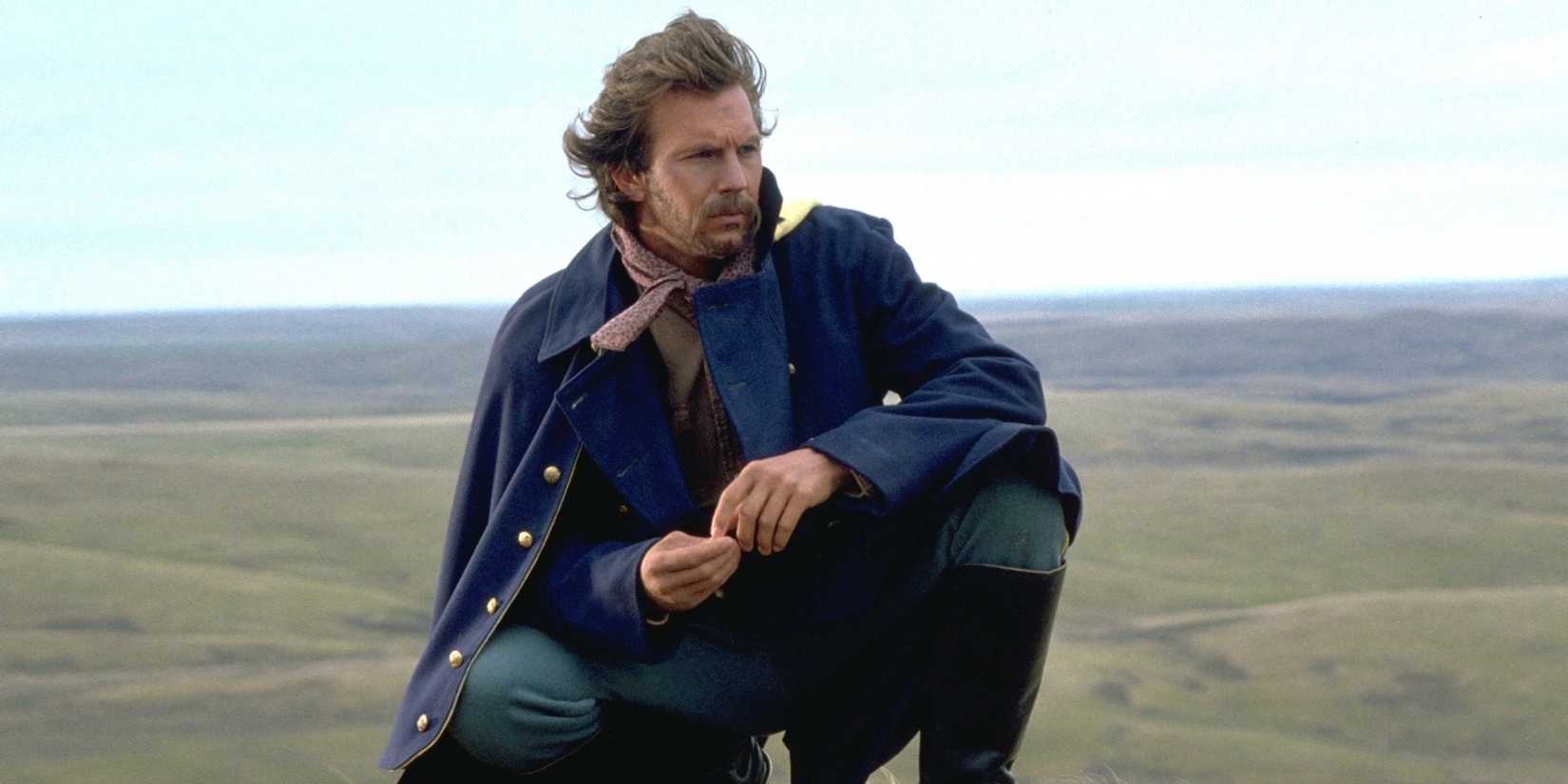
John Dunbar keenling in the desert and looking to the distance in Dances with Wolves.
Image via Orion Pictures
Once more, here’s a movie that won the same year one of Scorsese’s best was released. The year in question was 1990, and the winner of Best Picture was the Kevin Costner Western, Dances with Wolves, not Goodfellas, which might well stand to date as the single greatest film Martin Scorsese has ever made.
Also, like with Ordinary People, Dances with Wolves saw an actor (Kevin Costner) winning Best Director for the first feature film he ever made, which just feels wild when Scorsese was in the running with one of his best efforts: a perfectly cast, slick, and engrossing gangster movie. Like Robert Redford, Costner has definite skills behind the camera, but doesn’t have anything on Scorsese. Dances with Wolves is a good epic, but you’re unlikely to see it as a contender for the title of greatest Western of all time. Goodfellas, on the other hand, might well represent the best of what gangster movies have to offer.
Release Date
November 21, 1990
Runtime
181 minutes
Director
7 'The Greatest Show on Earth' (1952)
Director: Cecil B. DeMille

Charlton Heston as Brad Braden and Betty Hutton as Holly, looking at each other and hugging in The Greatest Show on Earth
Image via Paramount Pictures
Hearing the words “the greatest show on earth” nowadays will probably make one think of The Sopranos or something, but back in 1952, it was the name of a movie that went on to win Best Picture at the Oscars. Admittedly, it’s a term also associated with circuses, which are beyond old-fashioned at this point, and The Greatest Show on Earth kind of just feels like seeing circus performances for 2.5 hours, and not much else.
There’s drama between certain performers, all being soap opera-ish at best, with the only exciting moment – an extended train crash sequence – ultimately being referenced in Steven Spielberg’s The Fabelmans. So that was some good that came out of The Greatest Show on Earth. If 1952 had been a lousy year for cinema, the win wouldn’t seem so controversial or puzzling, but the all-time great Revisionist Western, High Noon, came out that year, and won various other Oscars. Why it didn’t take home the top prize is a mystery.
The Greatest Show on Earth
Release Date
May 1, 1952
Runtime
152 minutes
Director
Cecil B. DeMille
6 'Gigi' (1958)
Director: Vincente Minnelli

A man and woman dressed fancily sitting together in Gigi (1958)
Image via Metro-Goldwyn-Mayer
If Gigi had fluked a Best Picture win yet not obtained that much more by way of trophies, perhaps it wouldn’t be worth highlighting here. Yet that’s not what happened at the Oscars ceremony intended to award releases from 1958. Instead, Gigi decimated the Oscars like few films have before or since, winning all nine of its nominations. To put that into perspective, there are only six other films in Academy Award history to have won nine or more trophies.
And it did all this while being a just okay musical at best, and certainly not nearly one of Vincente Minelli’s very best efforts (1951’s An American in Paris also won Best Picture, and is a good deal better). Still, what’s probably the best film of 1958, Vertigo, wasn’t even nominated for Best Picture that year. Cat on a Hot Tin Roof and The Defiant Ones were, though, and both would’ve been more deserving winners.
Release Date
June 25, 1958
Runtime
115 Minutes
Director
Vincente Minnelli, Charles Walters
5 'Forrest Gump' (1994)
Director: Robert Zemeckis

Tom Hanks running across a field in Forrest Gump.
Image via Paramount Pictures
Unlike the Best Picture category for 1958, the category for 1994 was stacked, given the year was an overall fantastic one for cinema. Forrest Gump ultimately won, and while it is a good movie that certainly has its charms, its competition included The Shawshank Redemption and Pulp Fiction. The former is considered one of the best and most emotionally fulfilling movies of all time, and the latter could well be the greatest thing Quentin Tarantino’s ever made (which is saying something).
Perhaps more surprising than the win for Best Picture was the win for Tom Hanks in the category of Best Actor, considering he’d won the previous year for Philadelphia, and that was probably the stronger performance. John Travolta’s turn in Pulp Fiction was one of the greatest actor comebacks ever, and he deserved some Oscar recognition for it. Consider Forrest Gump doubly divisive for winning both Best Picture and Best Actor over Pulp Fiction, then… but again, it is, at worst, still a pretty good movie.
Release Date
July 6, 1994
Runtime
142 minutes
Director
Robert Zemeckis
4 'Shakespeare in Love' (1998)
Director: John Madden

Lord Wessex bowing before Queen Elizabeth I
Image via Miramax
A good many movies based on William Shakespeare's texts end unhappily, but Shakespeare in Love, which fictionalizes the man’s life as he wrote Romeo and Juliet, is intentionally flowery and crowd-pleasing. It’s a somewhat novel romantic comedy, given the setting and the characters, but it’s pretty lightweight stuff overall, with its Best Picture win proving particularly contentious.
Essentially, Shakespeare in Love was up against one of the most acclaimed war movies of all time, Saving Private Ryan. That Steven Spielberg film was expected to win, and become the second Spielberg movie to win Best Picture, after the also World War II-set Schindler’s List (1993). Spielberg won Best Director, with some additional technical wins going to Saving Private Ryan, but Shakespeare in Love controversially won Best Picture; a decision that still feels odd to this day.
Release Date
December 11, 1998
Runtime
123 minutes
Director
3 'Driving Miss Daisy' (1989)
Director: Bruce Beresford
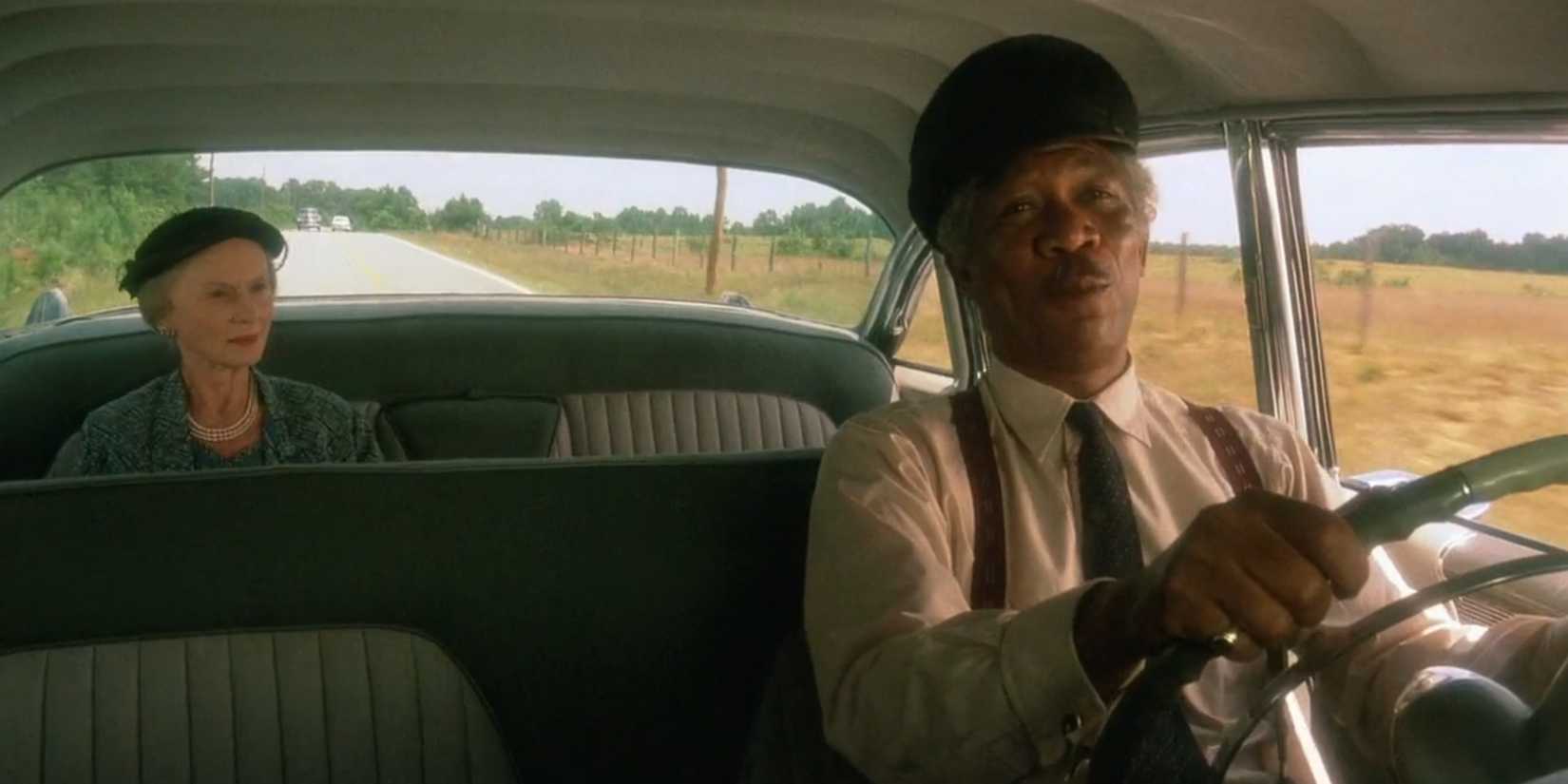
Hoke (Morgan Freeman) and Daisy (Jessica Tandy) chatting inside a car in Driving Miss Daisy
Image via Warner Bros. Pictures
1989 is a year that can be compared to 1958, given the best movie of each respective year wasn’t nominated for Best Picture. In the case of 1989, that film was Spike Lee’s Do the Right Thing, which earned a screenplay and supporting actor nomination, but nothing by way of Best Picture. The award in question went, rather questionably, to Driving Miss Daisy.
That winner also deals with themes regarding race and prejudice, but in a very shallow and disappointingly safe manner. It doesn’t aim to challenge or do anything thought-provoking, while Do the Right Thing does feel forceful and appropriately angry. Time has been much kinder to Lee’s film than it has been to Driving Miss Daisy, and it’s clear now which is the better 1989 dramedy about race.
Release Date
December 15, 1989
Runtime
99 minutes
Director
Bruce Beresford
2 'Green Book' (2018)
Director: Peter Farrelly

Viggo Mortsensen and Mahershala Ali as Tony and Don talking and having a snack at a picnic table.
Image via Universal Pictures
Nearly 30 years on from the Driving Miss Daisy win, history kind of repeated itself. More than one movie that dealt with race in some way or another was up for Best Picture, and the safest/least deserving one of the bunch won. For this year, that winner was the Peter Farrelly-directed Green Book, and another Spike Lee movie, BlacKkKlansman, was snubbed.
At least Spike Lee earned a Best Director nomination, BlacKkKlansman itself was nominated for Best Picture, and Lee won for co-writing the screenplay… but it would’ve been more deserving and just overall cooler if the film had won over the bland and somewhat forgettable Green Book. Even Black Panther would’ve been a better win than Green Book, with it featuring a predominantly Black cast and being a cut above most superhero movies… though it wasn’t meant to be, for whatever reason.
Release Date
November 16, 2018
Runtime
130 minutes
Director
Peter Farrelly
1 'Crash' (2004)
Director: Paul Haggis

John holding a crying Christine in Crash
Image via Lionsgate Films
Crash has an impressive ensemble cast, sure, but not much else going for it. It tells various stories that interconnect in some ways over the course of its runtime, broadly dealing with racial issues yet doing so very clunkily. Its Best Picture win was baffling, and one that numerous polled Academy members said they would change if asked to vote again.
The clearer winner, then and now, is Brokeback Mountain, the Ang Lee-directed film that feels like one of the most powerful romance movies of the 21st century so far. But honestly, Crash is bad enough (yes, it’s outright bad) that any other movie up for Best Picture that year would’ve been a more worthy winner. Seriously, just go ahead and take your pick out of Brokeback Mountain, Capote, Good Night, and Good Luck, and Munich.