6 Must-Read Stephen King Books If You Love 'Stranger Things' (original) (raw)
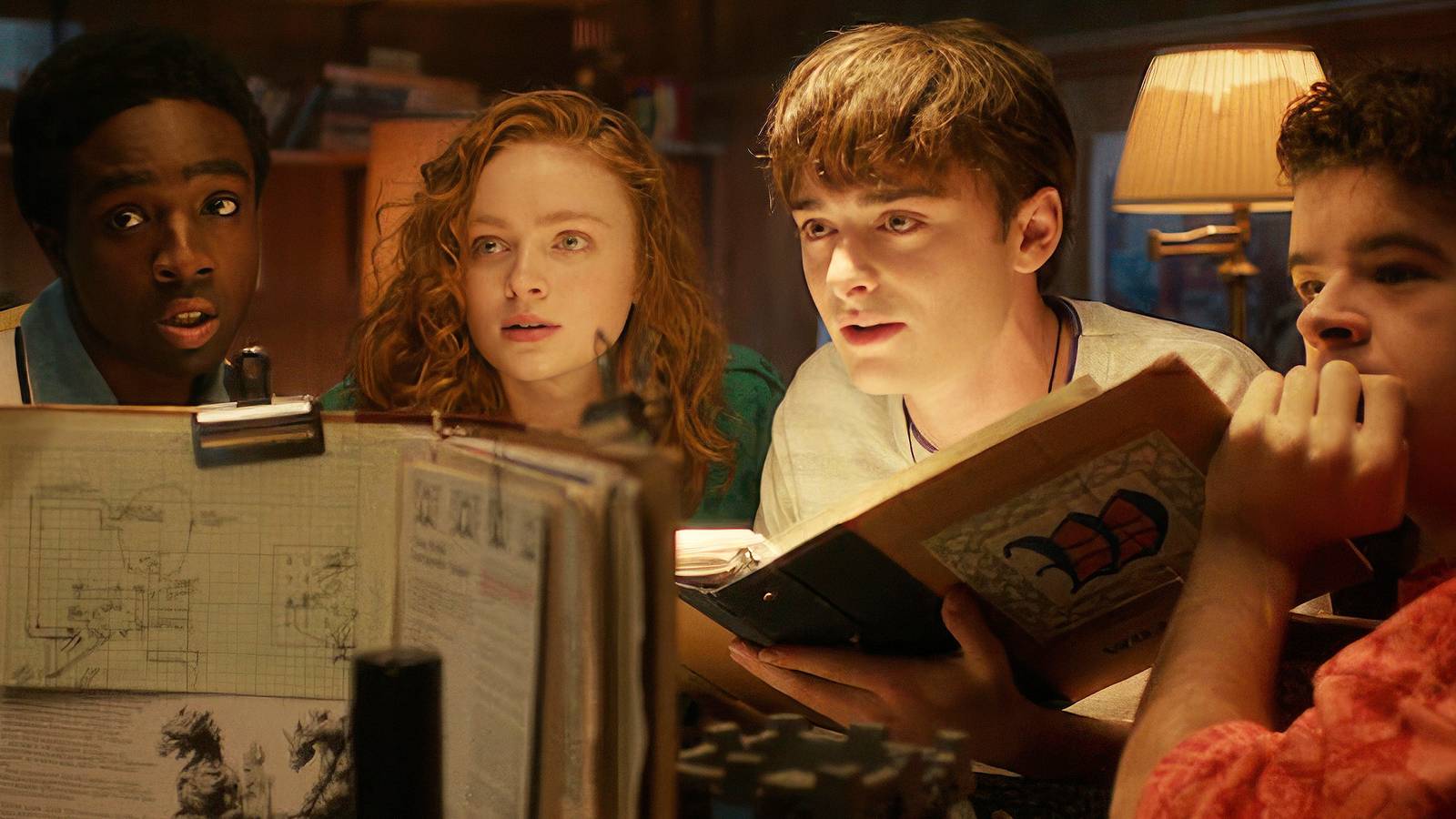
Cast of Stranger Things in a scene from the finale.
Image via Netflix

Published Jun 14, 2026, 6:21 PM EDT
Tania Hussain is an Executive Editor at Collider responsible for creative, editorial, and managerial duties. In addition to leading content ideation and development, she works to generate innovative and compelling ideas for feature articles and reviews with her editorial team across Features, Lists, Reviews, and Interviews. She also serves as the primary editor overseeing Collider’s Signature Series profiles, spotlighting some of the most influential voices in film and television. Tania has helped cover and ideate content for major events for Collider, including the Toronto International Film Festival. She has also conducted more than 100 interviews since her start in the business more than 15 years ago. Some favorites include Joel McHale, Charlie Cox, Jennifer Garner, Tina Fey, Kate Winslet, Bob Odenkirk, Andy Richter, Jordan Schlansky, Jamie Dornan, Yeardley Smith, Rafe Spall, Esther Smith, and a reasonable toss-up between Cookie Monster and Kermit the Frog. She has covered set visits, in-person junkets, and red carpets for several films and TV shows, including most recently, The Sheep Detectives, Masterchef, and Star Trek: Starfleet Academy.
Sign in to your Collider account
Stranger Things is one of the most iconic shows in the streaming age of television. Using '80s pop culture as an inspiration, the series deftly harnessed the comfort of nostalgia to tell an original serialized story. It was a good decade to pull from, because the '80s saw the dominance of creators like John Carpenter, Steven Spielberg, and, of course, Stephen King.
King's influence can be felt across Stranger Things in everything from the opening titles, the setting of a small town faced with cosmic horrors, and the defining traits of the show's heroes. In celebration of the upcoming final season, we'll take a look at some of the best Stephen King books to read that pair nicely with Stranger Things. The titles aren't ranked in any particular order, but they're all perfect to crack open after or before the "kids" from Stranger Things take their final bows.
'The Body' (1982)
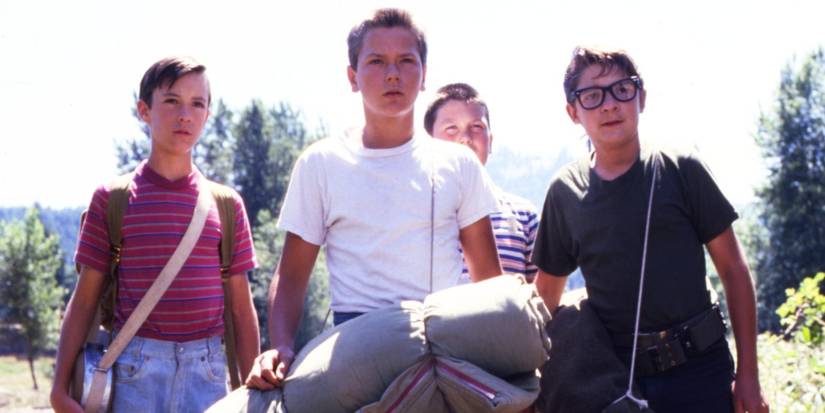
Wil Wheaton as Gordie, Corey Feldman as Teddy, Jerry O'Connell as Vern, and River Phoenix as Chris in Stand by Me
Image via Columbia Pictures
Friendship, fate, and the loss of innocence are explored in King's novella, The Body. Originally published as part of the collection Different Seasons, The Body follows four boys as they enter the nearby woods to find the dead body of someone rumored to be hit by a train. Along the way, the quartet will learn more about one another's fears or traumas, gaining a deeper understanding of their friends and themselves. Over the course of their adventure, they will face threats from dogs, trains, and a gang of older boys with violent tendencies. The coming-of-age story was critically well-received and later adapted into the film Stand By Me.
Although The Body isn't a horror story, the plot centers around adolescents in a small town, similar to our group of heroes in Stranger Things. Horror and science fiction play a large role in Stranger Things, but the series also wouldn’t resonate with viewers if it were not for the relationships between the children and how their friendship and loyalty are tested in the face of supernatural threats. Often, Stranger Things feels like a King story because of the character development and not despite it, as the reason many King film adaptations fail is due to a focus on horror over relationship building. The Body is a profound coming-of-age story, and although the boys in the novella don't stop to play Dungeons and Dragons in their time together, it's easy to imagine the Stranger Things characters going on a similar quest.
'Carrie' (1974)
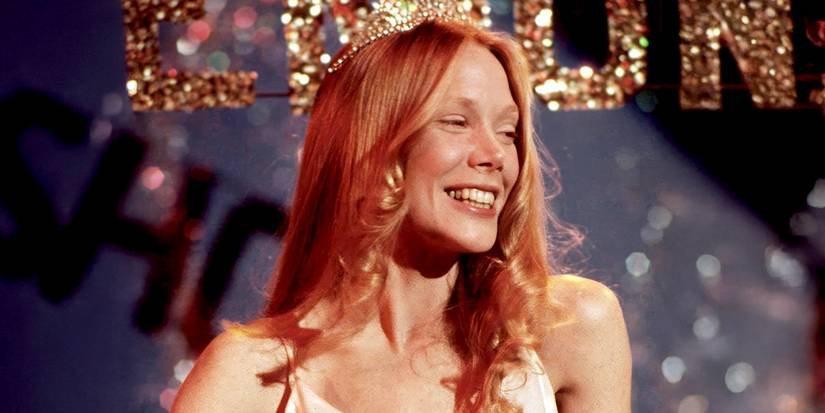
Sissy Spacek in a still from Carrie.
Image via United Artists
King's first novel is still remembered as a modern horror classic. Carrie follows teenager Carrie White, a teenager who lives a lonely existence as an outcast at school, frequently bullied by the other students. Her home life offers no solace, as Carrie's deeply religious mother treats her daughter as an abomination, a physical piece of evidence of sin she previously fell weak to. When Carrie's body reaches the next stage of puberty, she finds telekinetic powers awakening within her as well. These powers are a secret source of strength for Carrie, but they will be a curse for everyone who has hurt her.
If Eleven (Millie Bobby Brown) had never found the calming power of Eggo waffles, Stranger Things could have easily gone down the Carrie route. Admittedly, the storylines of Stranger Things and Carrie drastically differ, but the main characters are remarkably similar. Although Carrie was raised in a home by her mother, her upbringing was far from warm, which lines up with Eleven's troubled developmental years growing up in the secret facility. Each teen feels isolated because of their powers, struggling to relate to other people their age, with an implied shame around abilities they see as a burden. Possibly most importantly, Eleven and Carrie each possess a deep level of rage, which we see in Stranger Things when Eleven attacks her bully in the skating rink, and in Carrie when she… murders everyone.
'The Talisman' (1984)

Shattered glass with text on the book cover for The Talisman by Stephen King and Peter Straub.
Image via Viking Press/Stephen King/Peter Straub
The Talisman, a novel co-written by King and Peter Straub, combines fantasy and horror in a way that holds strong similarities to Stranger Things. Twelve-year-old Jack Sawyer is willing to do anything to save his mother, Lily, who is dying from cancer. In his quest to find a cure, Jack is introduced to a parallel world called "the Territories" that looks similar to the existence the boy knows, but containing magic and alternate versions of people in the other world known as twinners. Jack explores the territories, braving creatures and physically daunting trials while searching for the Talisman, the key to saving his mother's life.
The Talisman is one of the rare works King was involved in that has never received an adaptation, a surprising feat when considering even The Lawnmower Man was optioned into a movie, however unrecognizable it may be to the original work. It was announced that the Stranger Things creators, the Duffer brothers, were planning a Netflix adaptation of The Talisman, but news has been sporadic regarding the project. Steven Spielberg has long shown interest in bringing the story of The Talisman to the big screen, but the efforts were stuck in development hell for decades. All of this means the best bet to enjoy The Talisman's story would involve picking up a copy of the book and finding a quiet place to read it, because a live-action version may take some time before getting made.
'The Institute' (2019)
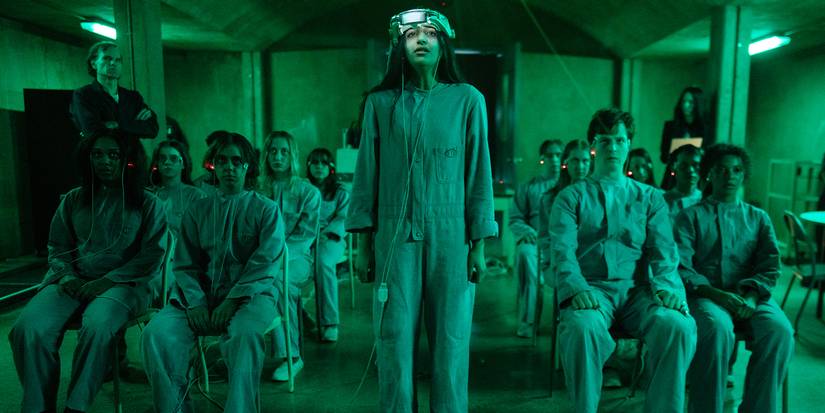
A child with a headset on stands among others in the evil lab of the Stephen King series The Institute.
Image via MGM+
A sinister organization imprisons children with special powers in The Institute. The story begins with Luke Ellis' parents being murdered and the boy finding himself trapped in a sterile lab-like containment center known as the Institute. It's there that Luke meets other young people with various powers, all of them being regularly subjected to tests that determine the scope of their abilities. With no understanding of why he's there or why the Institute exists, Luke begins devising a plan to escape his prison and expose his captors.
The Institute and Stranger Things have many similarities, especially regarding Eleven's time being experimented on in the secret lab. The viewer gets a taste of the awful life of being a test subject, but The Institute takes a deep dive into the helplessness of being a prisoner, and the desperation it inspires to find an escape. Much like Stranger Things, the novel focuses on children with psychic powers, and even though they have powerful gifts, their age and lack of real-world experience keep them vulnerable to the doctors who exploit those weaknesses to their advantage. The novel has been adapted into a TV series of the same name on MGM+, starring Ben Barnes and Mary-Louise Parker, but reading the novel will allow for a deeper understanding of the characters.
Collider Exclusive · Sci-Fi Survival Quiz Which Sci-Fi World Would You Survive? The Matrix · Mad Max · Blade Runner · Dune · Star Wars
Five universes. Five completely different ways the future went wrong — or sideways, or up in flames. Only one of them is the world your instincts were built for. Eight questions will figure out which dystopia, galaxy, or desert wasteland you'd actually make it out of alive.
💊The Matrix
🔥Mad Max
🌧️Blade Runner
🏜️Dune
🚀Star Wars
TEST YOUR SURVIVAL →
01
You sense something is deeply wrong with the world around you. What do you do? The first instinct is often the truest one.
APull on every thread until I understand the system — then figure out how to break it. BStop asking questions and start stockpiling — food, fuel, weapons. Questions don't keep you alive. CKeep my head down, observe carefully, and trust no one until I know who's pulling the strings. DStudy the patterns. Every system has a rhythm — learn it, and you learn how to survive it. EFind the people fighting back and join them. You can't fix a broken galaxy alone.
NEXT QUESTION →
02
In a world of scarcity, what resource do you guard most fiercely? What we protect reveals what we believe survival actually requires.
AKnowledge. If you understand the system, you don't need resources — you can generate them. BFuel. Everything else — movement, power, escape — runs on it. CTrust. In a world of fakes and informants, a truly reliable ally is rarer than any commodity. DWater. And after water, information — the two things empires are truly built on. EShips and credits. The galaxy is big — you survive it by being able to move through it freely.
NEXT QUESTION →
03
What kind of threat keeps you up at night? Fear is useful data — if you're honest about what you're actually afraid of.
AThat reality itself is a lie — that everything I experience has been constructed to keep me compliant. BA raid. No warning, no mercy — just the roar of engines and then nothing left. CBeing identified. Once someone with power decides you're a problem, you're already out of time. DBeing outmanoeuvred — losing a political game I didn't even know I was playing. EThe Empire tightening its grip until there's nowhere left to run.
NEXT QUESTION →
04
How do you deal with authority you don't trust? Every dystopia has a power structure. Your approach to it determines everything.
ASubvert it from the inside — learn its rules well enough to weaponise them against it. BIgnore it and stay out of its reach. The further from any power structure, the better. CAppear to comply while doing exactly what I need to do. Visibility is the enemy. DManoeuvre within it carefully. You can't beat a system you refuse to understand. EResist openly when I have to. Some things are worth the risk of being seen.
NEXT QUESTION →
05
Which environment could you actually endure long-term? Survival isn't just tactical — it's physical, psychological, and very much about where you are.
AUnderground bunkers and server rooms — cramped, artificial, but with access to everything that matters. BOpen wasteland — brutal sun, no shelter, constant movement. At least the threat is honest. CA dense, rain-soaked city where you can disappear into the crowd and nobody asks questions. DMerciless desert — extreme heat, no water, and something enormous living beneath the sand. EThe fringe — backwater planets and busy spaceports where the Empire's attention rarely reaches.
NEXT QUESTION →
06
Who do you want in your corner when things fall apart? The company you keep is the clearest signal of who you actually are.
AA tight crew of believers who've seen behind the curtain and have nothing left to lose. BOne or two people I'd trust with my life. Any more than that and someone talks. CNobody, ideally. Alliances are liabilities. I work alone unless I have no choice. DA community bound by shared hardship and mutual survival — people who need each other to last. EA ragtag team with wildly different skills and total commitment when it counts.
NEXT QUESTION →
07
Where do you draw the line — if you draw one at all? Every survivor eventually faces a moment that tests what they're actually made of.
AI won't harm the innocent — even the ones who'd report me without hesitation. BI do what I have to to protect the people I've chosen. Everything else is negotiable. CThe line shifts depending on who's asking and what's at stake. DI draw a long-term line — nothing that compromises my people's future, even if it'd help now. ESome lines, once crossed, can't be uncrossed. I know which ones they are.
NEXT QUESTION →
08
What would actually make survival worth it? Staying alive is one thing. Having a reason to is another.
AWaking others up — dismantling the illusion so no one else has to live inside it. BFinding somewhere — or someone — worth protecting. A reason to keep moving. CAnswers. Understanding what I am, what any of this means, before time runs out. DLegacy — shaping the future in a way that outlasts me by generations. EFreedom — for myself, for others, for every world still living under someone else's boot.
REVEAL MY WORLD →
Your Fate Has Been Calculated You'd Survive In…
Your answers point to the world your instincts were built for. This is the universe your temperament, your survival instincts, and your particular brand of stubbornness were made for.
The Matrix
You took the red pill a long time ago — probably before anyone offered it to you. You're a systems thinker who can't help but notice the seams in things.
- You're drawn to understanding how the system works before figuring out how to break it.
- You'd find the Resistance, or it would find you — your instinct for spotting constructed realities is the machines' worst nightmare.
- You function best when you have access to information and the freedom to act on it.
- The Matrix built an airtight prison. You'd be the one probing the walls for the door.
Mad Max
The wasteland doesn't reward the clever or the well-connected — it rewards those who are hard to kill and harder to break. That's you.
- You don't need comfort, community, or a cause larger than the next horizon.
- You need a vehicle, a clear threat, and enough fuel to outrun it — and you're good at all three.
- You are unsentimental enough to survive that world, and decent enough — just barely — to be something more than another raider.
- In the wasteland, that distinction is everything.
Blade Runner
You'd survive here because you know how to exist in moral grey areas without losing yourself completely.
- You read people accurately, keep your circle small, and ask the questions others prefer not to answer.
- In a city where humanity is a legal designation rather than a feeling, you hold onto something that keeps you functional.
- You're not a hero. But you're not lost, either.
- In Blade Runner's world, that distinction is everything.
Dune
Arrakis is the most hostile environment in the known universe — and you are precisely the kind of person it rewards.
- Patience, discipline, and political awareness are your core strengths — and on Arrakis, they're survival tools.
- You understand that the long game matters more than any single victory.
- Others come to Dune and are consumed by it. You'd learn its logic and earn its respect.
- In time, you wouldn't just survive Arrakis — you'd begin to reshape it.
Star Wars
The galaxy far, far away is vast, loud, and in a constant state of violent political upheaval — and you wouldn't have it any other way.
- You find meaning in being part of something larger than yourself — a cause, a crew, a rebellion.
- You'd gravitate toward the Rebellion, or the fringes, or whatever pocket of the galaxy still believes the Empire's grip can be broken.
- You fight — not because you have to, but because standing aside isn't something you're capable of.
- In Star Wars, that willingness is what makes all the difference.
↻ RETAKE THE QUIZ
'It' (1986)
A group of children, each suffering through their own losses or pains, must band together to fight an ancient evil in It. Told between two different time periods, It follows seven childhood friends, Bill, Richie, Beverly, Mike, Eddie, and Stan, who take a blood oath to kill a monster who appears as their worst fears. When their efforts as children don't permanently end the monster's threats, they reluctantly return to their hometown of Derry as adults, facing their fears for hopefully the last time. Over the course of the story, the friends will confront longstanding traumas, discover hidden truths about things from their past, and find closure that leads to peace.
It and Stranger Things carry so many of the same traits without copying each other's story. Fans of Stranger Things should, without a doubt, love reading It, even if they've seen the movies and think they have a full grasp on the story. It is one of King's crowning achievements, loaded with emotional weight, a rich sense of history, and gothic cosmic horror in a way only King can deliver. It remains one of King's scariest novels, an epic accomplishment that examines the core nature of fear and the ability to overcome it by relying on others for support.
'Firestarter' (1980)
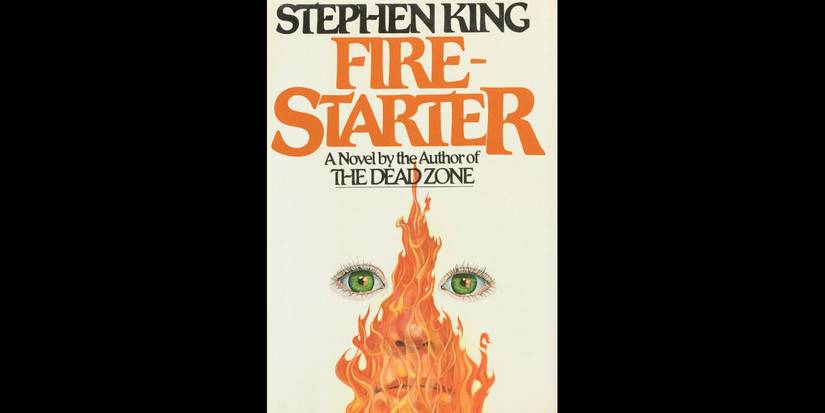
Firestarter - book cover - 1980 - Stephen King
Image via Viking Press/Stephen King
A young girl with extraordinary powers is hunted by a secret government agency in Firestarter. Young Charlie McGee has pyrokinetic powers, able to create large and intense fires using her mind. Charlie is not inherently a threat to others, but the government institute indirectly responsible for her powers, known simply as "The Shop," wants Charlie in their custody. Andy, Charlie's dad, stays one step ahead of the ruthless agency, but they will stop at nothing to make sure Charlie is under their control, if that's even possible.
Even though there have been two different Firestarter film adaptations, Stranger Things has done the best job of capturing the essence of its story. The father-daughter bond is strengthened while always looking over their shoulder in fear of a shadowy government organization, a young girl with powers so deadly that they can decimate crowds of people if not controlled — it's all there in Stranger Things. Eleven and Jim Hopper (David Harbour) have established a relationship that is as strong as a blood connection, and seeing Hopper's fiercely protective attitude towards her is reminiscent of the heart of Firestarter's story.

Firestarter
Release Date
May 11, 1984
Runtime
115 Minutes
Cast

Drew Barrymore
Andrew McGee
David Keith
Charlie McGee
Freddie Jones
Dr. Joseph Wanless
Heather Locklear
Vicky McGee
Director
Mark L. Lester
Writers
Stanley Mann
Producers
Dino De Laurentiis
Main Genre
Budget
15000000.0
Studio(s)
Dino De Laurentiis Company, Universal Pictures
IMDb ID
tt0087262
TMDB User Rating
6 .336