What Movies Like 'The Little Things' Get Wrong About Serial Killers (original) (raw)

Jodie Foster looking at Anthony Hopkins behind the glass of his cell in Silence of the Lambs
Image via MGM

Published Apr 21, 2024, 11:30 AM EDT
Lloyd 'Happy Trails' Farley: the man, the myth, the legend. What can be said about this amazing - and humble - man that hasn't been said before? Or, more accurately, what can be said in public? Born in Calgary, Alberta, Canada, Lloyd is a master of puns and a humorist, who has authored one pun book to date - Pun and Grimeish Mint - and is working on a second. His time with Collider has allowed Lloyd's passion for writing to explode, with nearly 1,000 articles to his name that have been published on the site, with his favorite articles being the ones that allow for his sense of humor to shine. Lloyd also holds fast to the belief that all of life's problems can be answered by The Simpsons, Star Wars, and/or The Lion King. You can read more about Lloyd on his website, or follow his Facebook page and join the Llama Llegion. Happy trails!
Sign in to your Collider account
Summary
- Movies make serial killers like Hannibal Lecter into geniuses when the reality is serial killers typically have average intelligence.
- There isn't a specific serial killer "type". In reality, serial killers are diverse and don't fit a specific mold.
- Serial killers aren't loners with high-profile jobs. Statistically, they often have families and blend into society.
Hollywood has a long history of glamorizing serial killers on film, starting with serial child murderer Hans Beckert (Peter Lorre) in Fritz Lang's 1931 crime drama masterpiece M. And over the course of that history, a generalized stereotype of the serial killer on film has developed. They are lone predators with intricate plans to catch their victims, fostered by a fierce intellect. They're skilled, charming when they need to be, and pick their targets to taunt police. And it’s a lie. The truth is that Hollywood has only ever had a handful of films that accurately portray what we know about serial killers, and the majority – including some of Hollywood’s most famous on-screen baddies – don’t even come close.
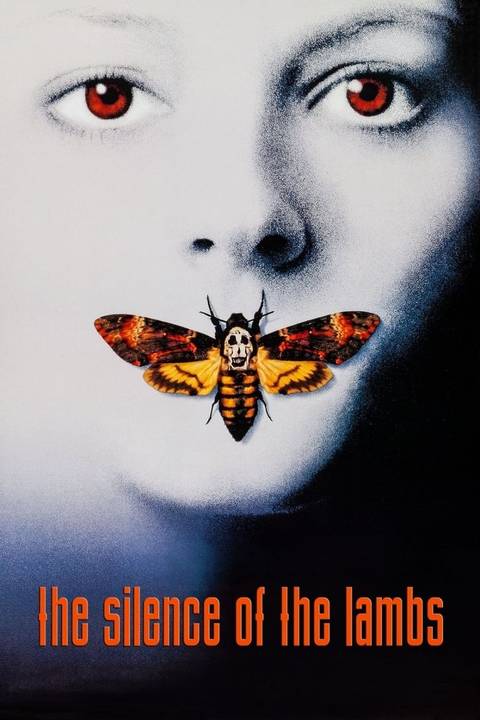
Release Date
February 14, 1991
Runtime
119 minutes
Director
Jonathan Demme
A young F.B.I. cadet must receive the help of an incarcerated and manipulative cannibal killer to help catch another serial killer, a madman who skins his victims.
Writers
Ted Tally, Thomas Harris
Serial Killers Actually Don't Have Genius Intellects Like Hannibal Lecter
Anthony Hopkin's Academy Award-winning performance as Dr. Hannibal Lecter in The Silence of the Lambs is bone-chilling. The thin, wispy smirk. The emotionless cold of his unblinking stare. The disparity between Lecter's appreciation for culture and art and the remorseless, vicious beast that hides behind that stare, is utterly animalistic when unleashed. His speech is precise, tinged with taunting disdain for those he deems beneath his intellect, with only Clarice Starling (Jodie Foster) seemingly close enough to engage with. It's that criminal genius intellect that is at odds with the reality of the serial killer. Se7en's John Doe (Kevin Spacey) has the same disconnect with reality. Doe outsmarts authorities as he plays out his grand plan to stage murders that represent Christianity's seven deadly sins: pride, greed, wrath, envy, lust, gluttony, and sloth.
Doe's planning is intricately planned out, with the sloth victim having been emaciated for exactly one year, and he has the wherewithal to stage the film's iconic ending, pushing Mills (Brad Pitt) to become his wrath victim with the precise arrival of his wife's head in a box at a secluded location. The reality is that serial killers do not have unique or genius-level intellect, which is often evident with communications rife with spelling and grammar mistakes (Zodiac is an excellent example of this). The IQ of serial killers is on par with the public, lying between borderline and slightly above average. Canadian Robert Pickton is more indicative of the typical intellect of a serial killer, appearing on the very low end of average.
There Isn't One Specific Serial Killer "Type"
The serial killers of film, in general, have a type. They can be charming, like Robert Mitchum's Harry Powell from The Night of the Hunter. Sophisticated, like Jack (Matt Dillon) from The House That Jack Built. Unhinged, like Scorpio (Andy Robinson) from Dirty Harry, and/or almost impossibly good-looking, like Stuntman Mike (Kurt Russell) in Death Proof. They all have a traumatic childhood, like the aforementioned Hannibal Lecter, whose serial killer ways date back to his tragic life in Lithuania as a youth, as seen in Hannibal Rising, and their area of operation could be anywhere. The infamous Ted Bundy, who is accurately portrayed by Zac Efron in Extremely Wicked, Shockingly Evil and Vile, certainly checked those boxes in real life. However, Bundy is an outlier, a serial killer that is atypical of the majority.
While serial killers do have some identifiable personality traits, it's almost impossible to break them down into a specific type, or even a reason why someone becomes a serial killer. The racial diversity of serial killers is much the same as the general population. Unlike Bundy, who took his murders interstate, most serial killers operate in a "comfort zone" around an anchor point, as per the FBI. Serial killers are manipulative, off-putting and egotistical braggarts, lacking the charm and sophistication of their on-screen kin. They aren't all motivated by sex, and the idea that a serial killer can't stop is another Hollywood falsity, with the FBI citing the example of Dennis Rader, the BTK killer, whose period of activity stopped abruptly in 1991, with no other victims between then and his capture in 2005.
Most disturbing is the fact that there isn't a single factor, a watershed moment, that turns one into a serial killer. Dr. Louis Schlesinger, a professor of forensic psychology, sums up how childhood trauma and abuse is rarely a correlation, saying, "Thousands of people have had horrible childhoods. They don't go around killing people in a series." In that same article, Schlesinger also states how serial killers are not legally insane — not normal, but not crazy, either - and reiterates how there's no formula that applies to all.
Serial Killers Aren't Loners With High-Profile Jobs

Christian Bale as Patrick Bateman wielding an axe in a fancy apartment in American Psycho
Image via Lionsgate
American Psycho, the 2000 adaptation of the 1991 novel from Bret Easton Ellis, brings Christian Bale to the screen as serial killer Patrick Bateman, a man with the skill to kill and a fanatical devotion to Huey Lewis and the News. His murders in the film are graphic and darkly comical (a personal favorite is the running chainsaw dropped down the stairwell), as befits its plaudits as satire. Bateman lives a double life; a young and wealthy New York City investment banker on one side, a vicious serial killer on the other. The double life aspect of the character isn't uncommon, but what is uncommon is his career. An investment banker is a much higher profile job than the ones that serial killers tend to move towards. Jobs like automobile upholsterer, truck driver, or gas station attendant allow serial killers to keep a low profile and divert attention to themselves. The TV series Dexter isn't as far-fetched as one might assume it to be either, with a career in the police force another common job among serial killers, like former police officer Joseph James DeAngelo, the Golden State Killer.
This leads to the next point: serial killers are not social misfits who live alone. In Red Dragon, Ralph Fiennes plays Francis Dolarhyde, aka "The Tooth Fairy" thanks to his penchant for biting his victims. Dolarhyde was born with a cleft lip and palate, which disfigured his face and left him with a speech impediment. He also suffered abuse as a child by family members (which is something that can be a commonality among serial killers), and by the time we are introduced to Dolarhyde, he is incredibly shy due to his appearance and lives alone. Albert Sparma (Jared Leto) of The Little Things is another eccentric social outcast, who is set up as the killer even though he likely is not. The majority of serial killers, as cited in the FBI article, often have families, and homes, and blend in as normal members of society, which is why the trope of "I never would have known they were a murderer" exists.
The True Victims of Serial Killers Are Often Not Represented in Hollywood

John Carroll Lynch as Arthur Leigh Allen in 'Zodiac' (2007)
Image via Warner Bros. Pictures
The same can't be said for the typical victims of serial killers: the marginalized. People of color, queer people, sex workers, people on the outskirts of society who are lonely and abused, people that are easy targets that won't generate the same level of attention that victims of a higher profile would. The victims of serial killers on film are usually noticed quickly, and certainly much quicker than in real life, when the reality is that a serial killer can avoid detection for years by preying on those in a marginalized group.
There are many other examples of the serial killer stereotype that aren't true, just as there are parts that do ring true, like heartlessness and a lack of empathy. Nevertheless, Hollywood will continue to roll out serial killers that can be spotted a mile away, because the truth that you could be sitting next to one is simply far more frightening than what's on the screen.
The Little Things is available to stream in the U.S. on Netflix.