10 Underrated Spy Movies That Can Be Called Masterpieces (original) (raw)
 Image via Miramax Films

Published Jun 15, 2026, 6:32 AM EDT
Sign in to your Collider account
Spy cinema gets reduced to tuxedos, gadgets, rooftop chases, and clean victories way too often. And Men in Black’s popularity is probably to be blamed for it. The deeper corner of the genre, however, is much colder than that. It is people lying for countries that will deny them, loving people they might have to use, and carrying secrets that slowly turn their own faces unreadable.
These films deserve louder respect because they understand espionage as pressure on the soul. Some are dry and bitter. Some are romantic in a way that feels dangerous. Some are almost cruel in how calmly they watch people disappear into missions, causes, rooms, and files. If you’re about uncovering that deeper end of espionage, scroll down slowly.
10 'The Tailor of Panama' (2001)
 Image via Columbia Pictures
The Tailor of Panama follows Harry Pendel (Geoffrey Rush), who is a charming British tailor in Panama, dressing politicians, bankers, diplomats, and crooks while quietly drowning in debt. Then Andrew Osnard (Pierce Brosnan), a disgraced MI6 operative with sweat, ego, and appetite written all over him, realizes Harry’s access can be turned into intelligence. Harry panics, invents sources, invents plots, and suddenly his little survival stories start moving governments.
That is the nasty brilliance of the film. It treats espionage as a marketplace where bad information becomes valuable once the right men want it. Rush makes Harry lovable and pathetic in the same breath, a man lying partly from fear and partly from the strange thrill of being listened to. Brosnan is even sharper as Osnard, and uses a Bond-like charm. Panama, in this film, therefore, becomes a place where colonial arrogance, money, sex, and fantasy all start feeding the same machine. The masterpiece angle sits in that ugly joke: a fake spy story can still create real damage.
9 'Confessions of a Dangerous Mind' (2002)

Chuck Barris sits on a plane with a spy contact in Confessions of a Dangerous Mind.
Image via Miramax
A game-show host claiming he lived a secret life as a CIA assassin sounds like a drunk Hollywood dare, which is exactly why Confessions of a Dangerous Mind has such a strange pull. Chuck Barris (Sam Rockwell) creates trashy television, chases fame, cheats on the woman who loves him, and keeps insisting that behind the silliness of The Dating Game and The Gong Show sat a second life of covert killings. The film never asks the viewer to relax into one clean truth.
That uncertainty gives the whole thing its sting. Rockwell makes Chuck restless and needy, someone who wants attention so badly that even guilt starts looking like another spotlight. George Clooney’s CIA recruiter slips into his life with deadpan menace, while Penny (Drew Barrymore) keeps representing the ordinary love Chuck is too damaged and self-mythologizing to receive properly. The spy material has guns, hotel rooms, dead drops, and paranoia, yet the deeper mystery is Chuck himself. Maybe he killed people. Maybe he turned fame, shame, and self-loathing into the most dramatic story he could tell about his own emptiness.
8 'The Ipcress File' (1965)

Michael Caine with a machine gun in 'The Ipcress File'
Image via Rank Film Distributors
The Ipcress File follows Harry Palmer (Michael Caine) who feels like the spy who got stuck doing paperwork after everyone else took the glamorous assignments. He is working-class, sarcastic, near-sighted, and surrounded by British intelligence offices that look more like miserable civil-service rooms than fantasy headquarters. When kidnapped scientists begin returning with their minds damaged, Palmer gets pulled into a case involving brainwashing, interdepartmental politics, surveillance, and a word that sounds harmless until it starts breaking people: IPCRESS.
The pleasure here comes from how stubbornly unromantic the film is. Palmer cooks, shops, complains, watches, listens, and survives through attention. And yes, that was a thing before Kingsmen: The Secret Service. The canted angles, cramped rooms, tape recorders, files, handlers, and office rivalries make espionage feel like a job where boredom and danger share the same desk. The brainwashing material gives the story its sci-fi edge, but the lasting flavor is pure Cold War fatigue. Every superior seems to know half the truth, and Palmer has to keep his own mind intact while men above him trade human beings like departmental assets. This film is definitely underrated.
7 'The Spy Who Came in from the Cold' (1965)

Richard Burton and Claire Bloom in 'The Spy Who Came in from the Cold' (1965)
Image via Paramount Pictures
The Spy Who Came in from the Cold circles the story of Alec Leamas (Richard Burton). He is a British agent burned out by years on the Berlin front, then Control sends him into one last operation designed to make East German intelligence believe he is ready to defect. Liz Gold (Claire Bloom), a young communist librarian who cares about him, gets pulled into the machinery of the plan, and that is where the film starts becoming genuinely painful.
Alec looks exhausted before the mission even properly begins, which tells you almost everything about this world. Alec drinks, snaps, waits, and lets himself look broken because the performance needs to convince enemies and allies alike. The genius is how little romance the movie gives to sacrifice. Spycraft here is meetings, traps, staged disgrace, ideological theater, and people used as pressure points. It’s an excellent watch.
6 'Decision Before Dawn' (1951)
 Image via 20th Century-Fox
Decision Before Dawn is the kind of war-spy film that sneaks up on you because its heroism feels so frightened and human. Near the end of World War II, American intelligence recruits German prisoners to go back behind enemy lines and gather information. One of them, nicknamed Happy (Oskar Werner), is a young German soldier who has lost faith in the Nazi cause and chooses to risk his life against the country that raised him.
That premise gives the film a moral tension most wartime thrillers would simplify. Happy is useful to the Allies, distrusted by almost everyone, and walking through Germany with the face and language of the enemy while carrying a choice that could get him killed from either side. The ruined streets, checkpoints, uniforms, false papers, train movements, and whispered contacts make the danger feel practical and the film never lets bravery feel easy so that whole thing is a nice hook.
5 'The Deadly Affair' (1967)

Two men and a woman talking and smiling at each other in The Deadly Affair
Image via Columbia Pictures
The Deadly Affair makes betrayal look middle-aged, tired, and humiliating. That sounds familiar until you zero-in and realise that most spy films make betrayal look exciting. It foll;ows Charles Dobbs (James Mason) as a British intelligence officer investigating the supposed suicide of a Foreign Office official, and the case drags him through old acquaintances, Cold War suspicion, and a private life that is already hurting him. His wife Ann (Harriet Andersson) is emotionally elsewhere, and Dobbs keeps chasing professional truth while his own home life keeps telling him things he does not want to hear.
That bruised domestic pain gives the mystery its real texture. Mason carries Dobbs with a quiet sadness that feels heavier than anger. He is intelligent enough to read lies in a case file and wounded enough to miss or tolerate lies in his marriage. The investigation moves through interviews, theater-world connections, old ideological loyalties, and people whose manners keep covering rot. The color-grading too, has this gray, drained feeling, as if the spy game has sucked glamour out of every room. Its greatness sits in how personal the coldness becomes. Dobbs solves pieces of the case while losing the comfort of thinking truth will make him whole.
4 'The Kremlin Letter' (1970)
 Image via 20th Century Fox
The Kremlin Letter feels like espionage with the lights turned off and the rulebook burned. That’s epic. The premise basically is that a secret letter threatens to expose a dangerous arrangement involving American and Soviet intelligence, so a group of operatives is assembled to retrieve it from Moscow. They are less a noble spy team than a collection of specialists, predators, survivors, and compromised people who know exactly how filthy this work can get.
The film’s power comes from how little moral oxygen it gives anyone. The film is helmed by John Huston and he builds this world of blackmail, seduction, coded loyalty, torture, double-crossing, and professional cruelty where every conversation sounds like someone testing the floor for traps. The characters use charm, sex, language, family ties, and fear as tools, then look almost bored by what those tools do to other people. That emotional dryness is the point. The spy genre often sells control as elegance. This film sees control as contamination. Once people enter the operation, they start becoming part of a system that can digest almost any conscience and still ask for another favor.
3 'Army of Shadows' (1969)
 Image via Valoria Films
Resistance stories often get polished into clean courage, and Army of Shadows refuses that comfort at every turn. That identity is what gives it a hook. That identity is why it sits at #3 on this list. In this film, Philippe Gerbier (Lino Ventura) is part of the French Resistance during Nazi occupation, moving through arrests, escapes, safe houses, coded messages, and missions where a single mistake can destroy an entire network. His comrades are brave, but their bravery lives inside dread, secrecy, exhaustion, and decisions that would ruin a person in any normal life.
The film hurts because every act of loyalty seems to demand another sacrifice. Gerbier’s escape is tense, yet the quieter scenes stay even longer: men waiting in rooms, a traitor being executed by people who hate that the task has fallen to them, Mathilde (Simone Signoret) carrying impossible responsibility while knowing the Germans can reach her through her daughter. These people fight fascism without the luxury of feeling heroic all the time. They simply keep moving, and the cost gathers in their faces.
Collider Exclusive · Action Hero Quiz Which Action Hero Would Be
Your Perfect Partner? Rambo · James Bond · Indiana Jones · John McClane · Ethan Hunt
Five legends. Five completely different ways of getting out alive — with style, with muscle, with charm, with luck, or with a plan so intricate it probably shouldn't work. Ten questions will reveal which action hero was built to have your back.
🎖️Rambo
🍸James Bond
🏺Indiana Jones
🔧John McClane
🎭Ethan Hunt
FIND YOUR PARTNER →
01
You're dropped into a dangerous situation with no warning. What do you need most from a partner? The first few seconds tell you everything about who belongs beside you.
ASomeone who already has three contingency plans running and is calmly working through all of them. BSomeone who reads the terrain instinctively and knows exactly how to use it against the enemy. CSomeone who keeps their nerve and their sense of humour when everything is falling apart. DSomeone who knows the history of wherever we are and what we're walking into. ESomeone with the right contact, the right cover identity, and the right exit already arranged.
NEXT QUESTION →
02
You have to get somewhere dangerous, fast. How do you travel? How you get there is half the mission.
AOn foot through terrain no one else would attempt — I move where vehicles can't follow. BOn a motorcycle, a cargo plane, or anything else that gets me there before I think too hard about it. CIn something that belongs to someone else — borrowed, stolen, or improvised under fire. DFirst class, with a cover identity and a gadget that does something I won't explain until it's needed. EBy whatever means are available — I've driven, flown, and once arrived by camel. The destination matters, not the method.
NEXT QUESTION →
03
You're pinned down and outnumbered. What does your ideal partner do? This is when you find out what someone is really made of.
ADisappears into the environment, flanks them silently, and ends it before I've reloaded. BCracks a one-liner, grabs a fire extinguisher or a chair, and improvises something that somehow works. CProduces a gadget specifically designed for this exact scenario and uses it with infuriating precision. DPulls out a whip, a pistol, and an archaeological insight that somehow gets us out alive. ENeutralises the threat with maximum efficiency and minimum words — they were already three moves ahead.
NEXT QUESTION →
04
The mission is paused. You have one evening to decompress. What does your partner suggest? Who someone is when the pressure drops is who they actually are.
AA bar with terrible lighting, cold beer, and absolutely no questions about feelings. BThe finest restaurant in the city, a bottle of something expensive, and a conversation that is equal parts brilliant and exhausting. CA local dig site, a museum after hours, or a long story about why that particular artefact matters to human civilisation. DPizza. Bad TV. Falling asleep halfway through a movie neither of you were watching anyway. EA debrief that turns into three hours of contingency planning that somehow becomes the most fun you've had all week.
NEXT QUESTION →
05
How do you prefer your partner to communicate mid-mission? Good communication is the difference between partners and a liability.
APrecise and minimal — tell me what I need to know and nothing else. Every word has a cost. BDeadpan and dry — keeping it light keeps me sharp, even when everything is on fire. CEnthusiastic and slightly chaotic — but always with useful information buried somewhere in the noise. DCalm and controlled through an earpiece, with a plan that covers every variable I haven't thought of yet. EBarely at all — silence is a language and they speak it fluently.
NEXT QUESTION →
06
Your enemy is powerful, well-resourced, and has the upper hand. How should your partner approach them? The approach to the enemy defines the partnership.
AInfiltrate their inner circle, learn everything, and dismantle them from inside out before they know we're there. BStudy the historical pattern — every villain of this type has a weakness written somewhere in the past. CGet them talking. The more they monologue, the more time I have to figure out how to beat them. DGo through them. Directly. With as much force as the terrain allows. EFind the one thing they haven't accounted for — there's always one thing — and make sure we're holding it.
NEXT QUESTION →
07
Things go badly wrong and you're captured. What do you trust your partner to do? Who someone is when you need them most is the only thing that matters.
ACome in alone, quietly, and get me out before anyone knows they were there. BHave already been working on the extraction since the moment I disappeared — the plan is already running. CCome in loud, come in fast, and worry about the collateral damage later — I'd do the same for them. DUse every resource, every contact, and bend every rule until I'm out — they don't leave people behind. ECharm their way in somehow, bluff through the hard part, and still manage to look good doing it.
NEXT QUESTION →
08
What does your ideal partner bring to the table that you couldn't replace? A great partner fills the gap you didn't know you had.
ATechnology that shouldn't exist yet and the training to use it under any conditions. BSurvival instinct so refined it borders on supernatural — and the scars to prove it's been tested. CKnowledge of history, language, and culture that makes them invaluable in places where force is useless. DThe ability to walk into any room in the world and immediately become the most trusted person in it. EStubbornness that refuses to accept a situation is hopeless — and the improvisational skill to back it up.
NEXT QUESTION →
09
Every partnership has a cost. Which of these can you live with? No one comes without baggage. The question is whether you can carry it together.
AA partner who never fully switches off — always watching exits, always calculating threats, even at dinner. BA partner who gets the job done brilliantly but has the emotional availability of a locked filing cabinet. CA partner who makes everything ten times more complicated than it needs to be — but who always comes through. DA partner who gets personally attached to every relic, ruin, and artefact we encounter, which slows everything down. EA partner who was not built for this and knows it — but shows up anyway, every time, without being asked.
NEXT QUESTION →
10
It's the final moment. Everything is on the line. What do you need from your partner right now? The last question is the most honest one.
AOne line. Absolutely dry. Delivered like the world isn't ending. Then we move. BNothing said at all — just a look that means we both already know what has to happen. CA plan I don't fully understand that somehow accounts for everything, delivered in thirty seconds flat. DA piece of historical context that reframes the entire situation and tells us exactly what to do next. ESomeone who steps forward instead of back — because that's who they've always been.
REVEAL MY PARTNER →
Your Partner Has Been Assigned Your Perfect Partner Is…
Your answers have pointed to one action hero above all others. This is the person built to have your back — for better or considerably, spectacularly worse.
Rambo
Your partner doesn't talk much, doesn't need to, and will have assessed every threat in your immediate environment before you've finished your first sentence. John Rambo is not a man of plans or politics — he is a force of nature shaped by survival, loyalty, and a capacity for endurance that goes beyond anything training can produce. He will not leave you behind. He has never left anyone behind who deserved to come home. What you get with Rambo is the most capable, most quietly ferocious partner imaginable — one who has been through things that would have broken anyone else, and who chose to keep going anyway. You'll never need to ask if he has your back. You'll just know.
James Bond
Your partner will arrive perfectly dressed, perfectly briefed, and with a cover story so convincing it'll take you a moment to remember what's actually true. James Bond is the most professionally dangerous person in any room he enters — and the most disarmingly charming, which is the point. He operates in a world of layers, where nothing is what it appears and every advantage is used without apology. You'll never be bored. You'll occasionally be furious. But when it matters — when the mission is genuinely on the line and the margin for error has collapsed to nothing — Bond is exactly the partner you want. He has survived things that have no business being survivable. He does it with style. That is not nothing.
Indiana Jones
Your partner will know the history, the language, the cultural context, and exactly why the thing everyone else is ignoring is actually the most important thing in the room. Indiana Jones is brilliant, reckless, and occasionally impossible — but he is also one of the most resourceful, most genuinely knowledgeable partners you could find yourself beside. He approaches every situation with a scholar's eye and a brawler's instinct, which is an unusual combination and a remarkably effective one. He hates snakes and gets personally attached to objects of historical significance, both of which will slow you down at least once. It doesn't matter. What Indy brings is irreplaceable — and the adventures you'll have together will be the kind people write books about. Assuming you survive them.
John McClane
Your partner was not supposed to be here. He does not have the right equipment, the right information, or anything approaching the right odds. He has a sarcastic remark and an absolute refusal to accept that the situation is as bad as it looks. John McClane is the greatest accidental hero in the history of action cinema — a man whose superpower is stubbornness, whose contingency plan is improvisation, and whose capacity to absorb punishment and keep moving would be alarming if it weren't so useful. He will complain the entire time. He will make it significantly more chaotic than it needed to be. And he will absolutely, unconditionally, without question come through when it counts. Yippee-ki-yay.
Ethan Hunt
Your partner has already run seventeen scenarios by the time you've finished reading the briefing, and the plan he's settled on involves at least two things that should be physically impossible. Ethan Hunt operates at the absolute edge of human capability — technically, physically, and intellectually — and he brings the same relentless precision to protecting his partners that he brings to dismantling organisations that shouldn't exist. He is not easy to know and he will never fully tell you everything. But he will carry the weight of the mission so completely, so absolutely, that your job is simply to trust him — and the remarkable thing is that trusting him always turns out to be the right call. The mission will be impossible. He will complete it anyway.
↻ RETAKE THE QUIZ
2 'Lust, Caution' (2007)
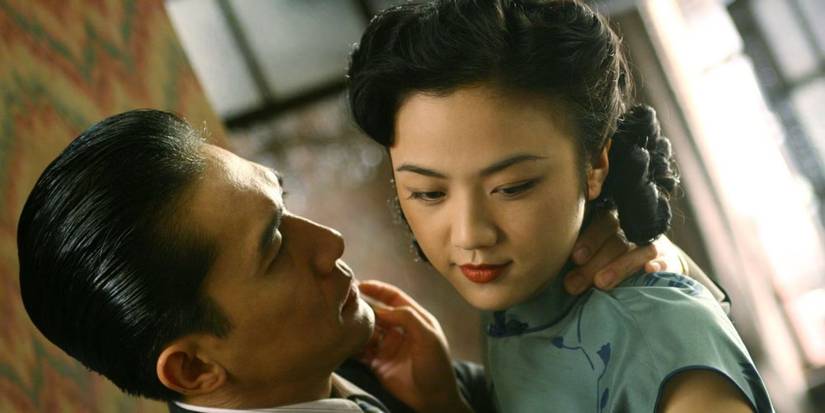
Image via Focus Features
Lust, Caution is exactly what the title is. The first time Wong Chia Chi (Tang Wei) understands how deeply she has entered the role, the film becomes almost unbearable. She begins as a student in Japanese-occupied China, drawn into a resistance plot to assassinate Mr. Yee (Tony Leung Chiu-wai), a powerful collaborator. Her assignment is to pose as a married woman, get close to him, and help lure him into a position where the group can kill him. The mission depends on performance, and the performance begins eating her life.
Wong is asked to use desire as a weapon, yet Mr. Yee is also a man trained by danger to distrust every tenderness offered to him. Their encounters are disturbing because power, fear, attraction, and suspicion keep changing places. The mahjong rooms, jewelry shop, resistance meetings, brutal intimacy, and occupied-city atmosphere all press on Wong until the mission stops feeling separable from her body. This is spy cinema at its most devastating because the secret operation does not merely risk death. It asks a young woman to become someone else so completely that returning to herself may no longer be possible.
1 'Tinker Tailor Soldier Spy' (2011)
Smiley (Oldman) sitting at the head of the Circus's office in Tinker Tailor Soldier Spy
Image via StudioCanal
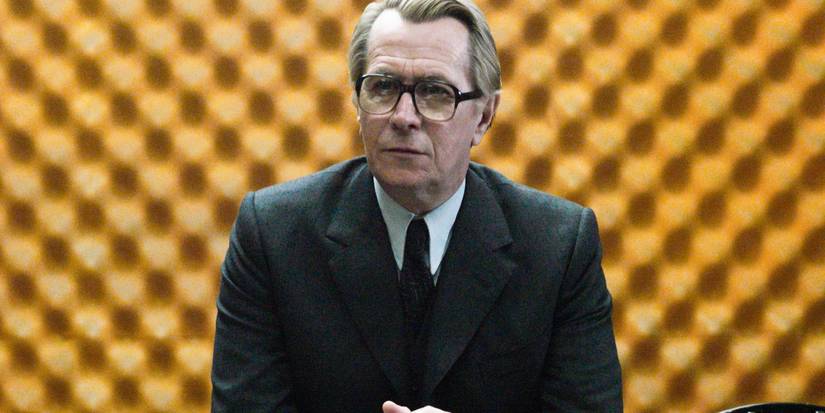
You can feel the silence of this movie watching people back. Tinker Tailor Soldier Spy follows George Smiley (Gary Oldman) as a retired British intelligence officer brought back after Control’s failed operation suggests a Soviet mole has been living near the top of the Circus, the British Secret Service. The suspects are senior men with old loyalties, old resentments, and enough history with Smiley to make every glance feel loaded. Nobody runs through the street shouting secrets. They sit in rooms and let decades of betrayal rot the air between them.
That restraint is exactly why the film is so gripping. Smiley listens more than he speaks, and Oldman makes that stillness feel active, almost predatory in its patience. Peter Guillam (Benedict Cumberbatch)’s sacrifice, Ricki Tarr (Tom Hardy)’s doomed romance with Irina, Jim Prideaux (Mark Strong) carrying the wound of the botched mission, Control’s paranoia, and Bill Haydon (Colin Firth)’s charm all feed into a mystery about friendship as much as treason. The mole hunt is brilliant, but the ache underneath it is even sharper. These men gave their lives to institutions that trained them to distrust love, then acted shocked when betrayal learned to speak their language.