Field Pennycress - Edible Weed, Soil Helper, Floral Filler (original) (raw)
Field pennycress (Thlaspi arvense) may not be the flashiest plant in the garden, but it thrives where others struggle. This cool-season annual from the mustard family is easy to overlook — but it’s worth a second glance.
In this edition of the Weekly Weeder, we’ll take a closer look at how to identify field pennycress and how to use it.
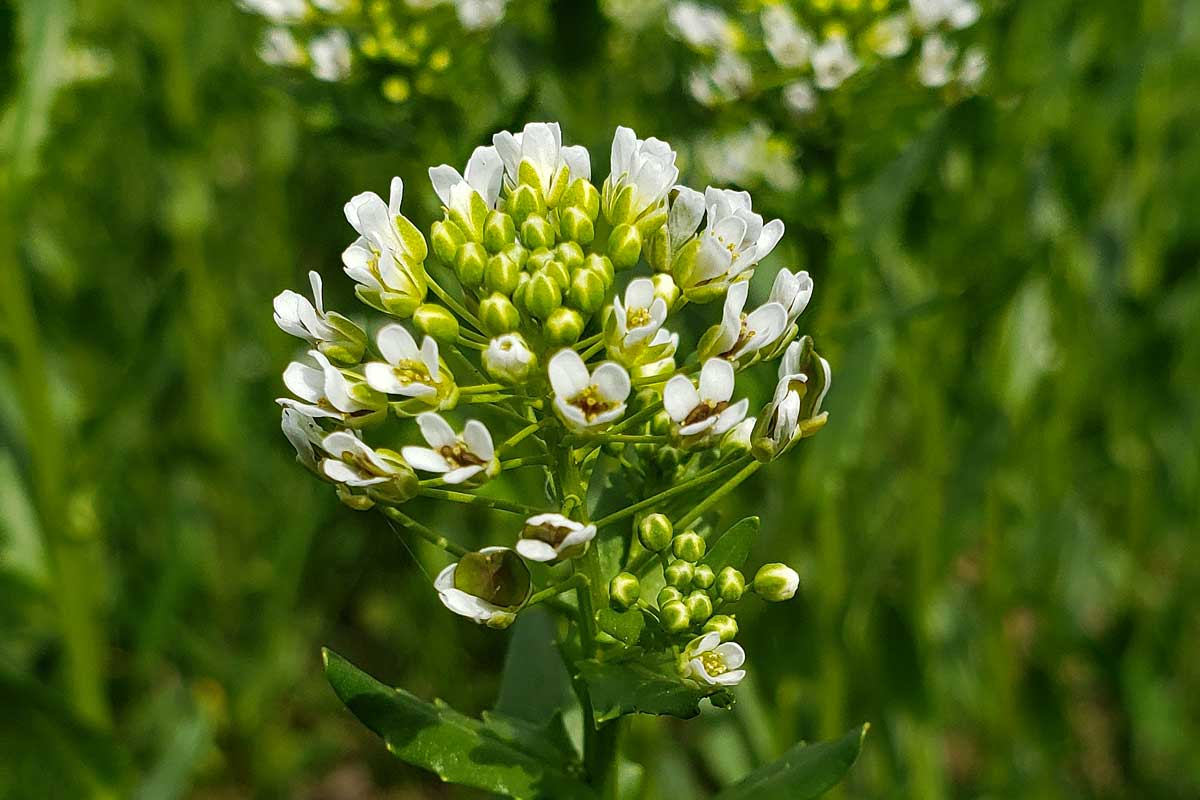
Table of contents
- How to Identify Field Pennycress (Thlaspi arvense)
- Edible, Practical, and Decorative Uses of Field Pennycress
How to Identify Field Pennycress (Thlaspi arvense)
Field pennycress is a member of the Brassicaceae (mustard) family. This means it’s a cousin to familiar crops like cabbage and radish. Pennycress is native to Eurasia, near the Mediterranean, but has spread around much of the world. The USDA plant database shows it throughout most of the US and Canada.
It prefers open, sunny areas and often shows up in early spring or fall. You can find it in disturbed soils, along roadsides, and throughout gardens and pastures. Our friends had an amazing crop show up when their lawn was torn up during construction.
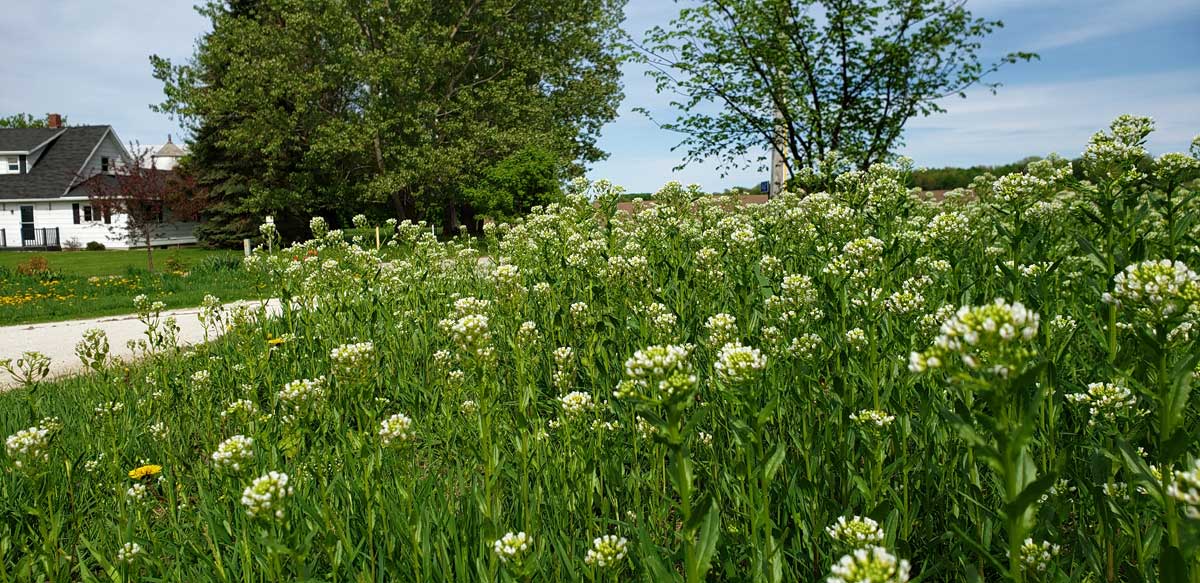
The plant is a winter annual. Planted in fall, it overwinters to produce seeds in late spring/early summer. This contributes to its potential as a biofuel. (See below.)
Key Identification Features:
Growth Habit: A cool-season annual, typically 12–24 inches tall. It grows a basal rosette of leaves early on, then sends up a flowering stalk.
Leaves:
- Basal leaves are slightly toothed and stalked.
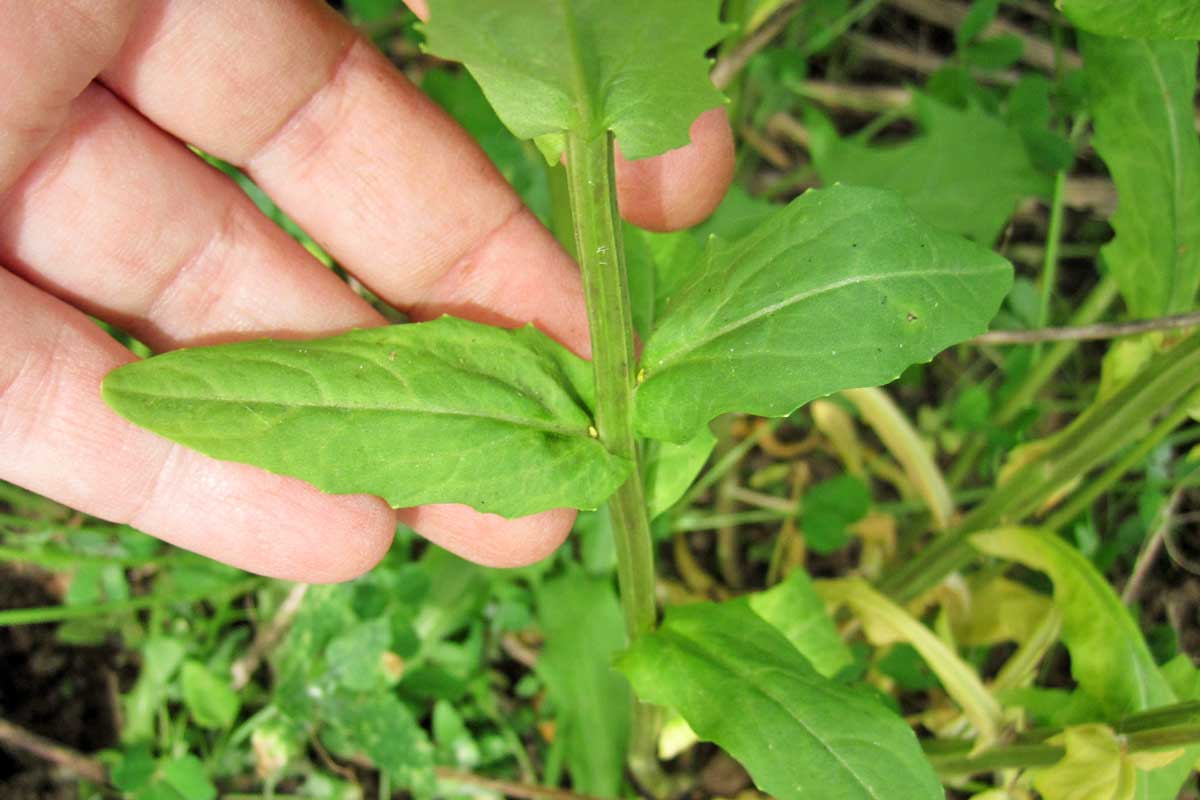
- Upper leaves clasp the stem and are arrow-shaped or heart-shaped at the base. They alternate up the stem.
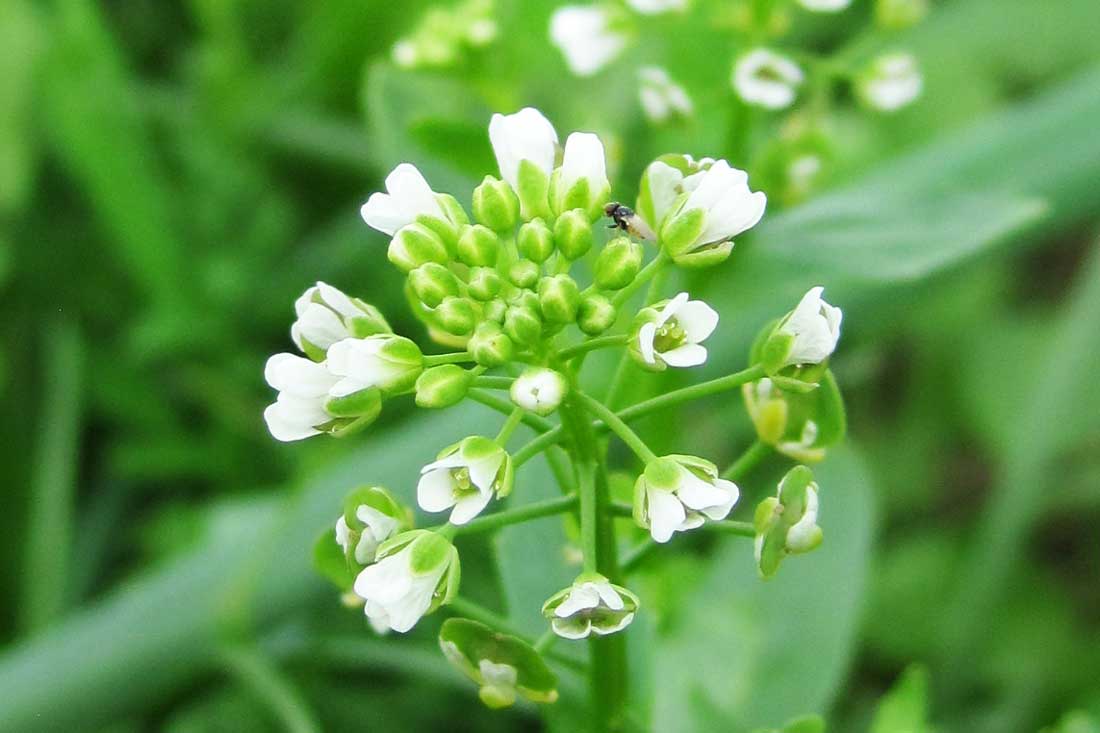
Flowers: Tiny white, four-petaled flowers bloom in dense clusters at the top of the stem in spring.
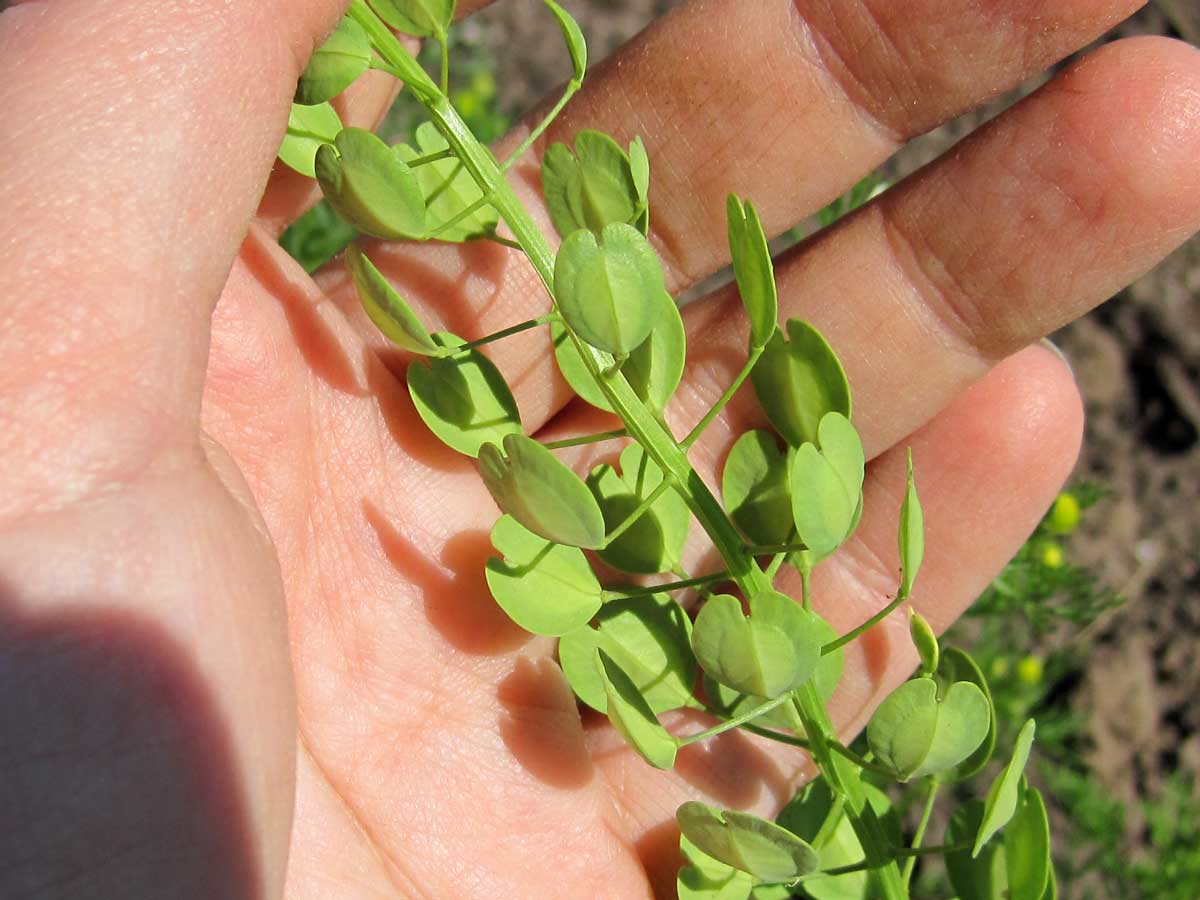
Seedpods: One of the easiest ways to ID pennycress is by its distinctive, flat, round seedpods. They are about the size of a pencil eraser (¼–½ inch), with a notch at the tip. They resemble miniature silver dollars, hence the common name.
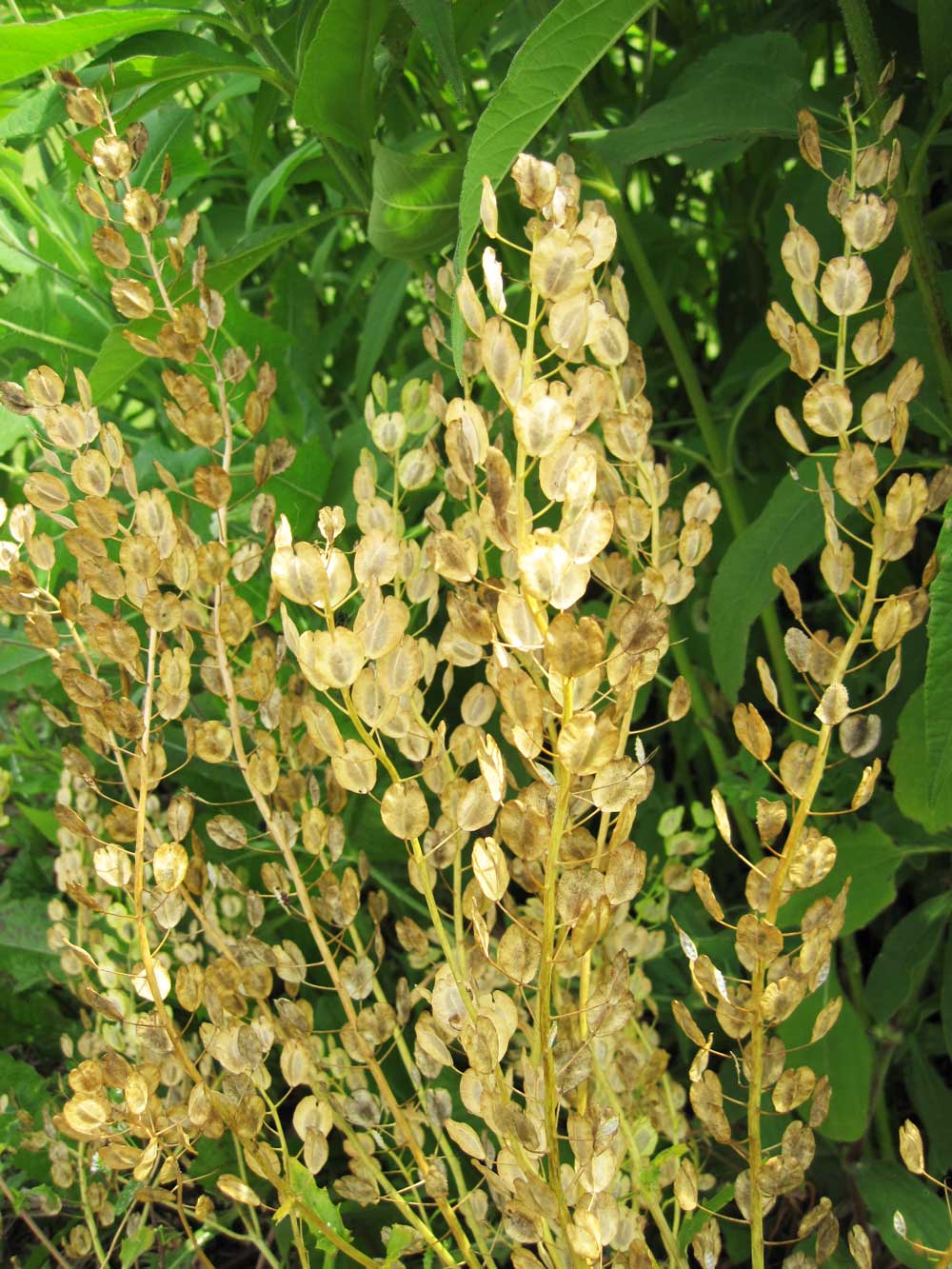
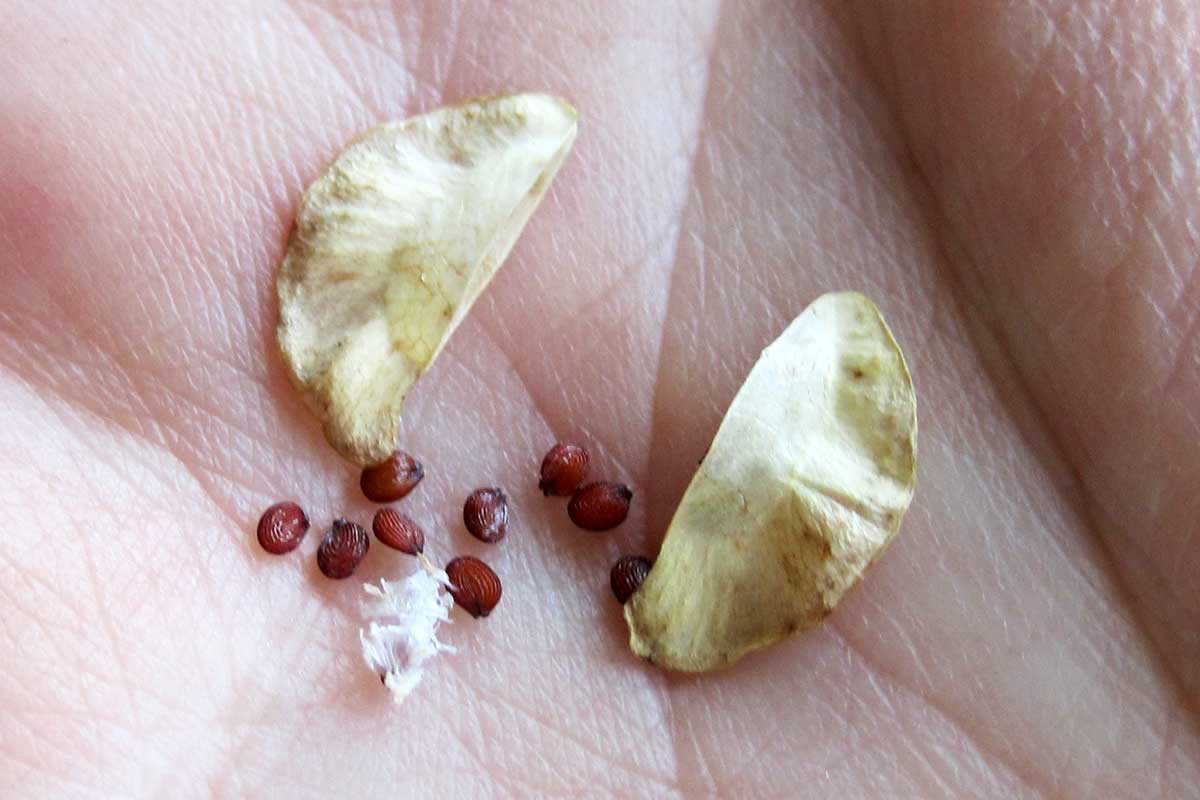
Seeds: The seeds are dark brown, oval, with a point at one end. They have an interesting swirl pattern on them that reminds me of a fingerprint. In the seed pods I broke open, I found 12 seeds, six on each side, divided into two compartments by a papery membrane. The seed pods break right in half to spew seeds all over the place.
Smell: Like many mustards, it has a strong, somewhat unpleasant smell when crushed — think “garlicky cabbage.”
Lookalikes: It may be confused with shepherd’s purse or other wild mustards, but the round seedpods of pennycress are unique.
Edible, Practical, and Decorative Uses of Field Pennycress
Field pennycress may be humble, but it’s surprisingly versatile. From food to fuel to floral design, this unassuming plant has more to offer than meets the eye.
Edible Use (With Moderation)
The young leaves and shoots are edible raw or cooked, with a mustardy, peppery kick. However, the plant contains glucosinolates and other bitter compounds. It’s best used sparingly — more of a wild accent than a main course. Older leaves can be quite pungent and may upset sensitive stomachs.
Tips for Eating:
- Harvest young leaves in early spring or fall.
- Try small amounts mixed into salads or sautéed with milder greens.
- Eat the seedpods young and tender, somewhat like radish pods. (Radish lovers, this is a great wild plant for you to try!)
- Grind the seeds to use as a mustard substitute, or sprout to add to salads.
⚠️ Caution: As with other mustards, avoid large quantities raw, especially if you have thyroid concerns or digestive sensitivities.
Oilseed and Biofuel Research
Pennycress has gained attention as a potential oilseed crop. Its seeds are rich in oils suitable for biofuel production. Researchers are even working on breeding less bitter varieties for broader agricultural use.
At the beginning of their life cycle, plants start out with a basal rosette, i.e., a ring of leaves at ground level. This can act as a winter ground cover to protect the soil and prevent erosion. In spring, growth resumes and the plants set seed. When harvested in late May, this allows time for planting a soybean crop on the same soil.
The Pennycress Project states: “Pennycress has fewer chemical and energy inputs and produces twice the oil per acre as soybeans.” That sounds like a very promising biofuel crop to me.
Soil Health and Pollinators
Though often dismissed as a weed, field pennycress can play a useful role in regenerative systems:
- Early nectar source for pollinators and beneficial insects.
- Living mulch that protects soil over winter.
- Dynamic accumulator: like many brassicas, pennycress draws nutrients from deeper soil layers. They can contribute to long-term soil health when chopped and dropped or composted.
Floral Design and Arrangements
Field pennycress has also become a popular choice in floral arrangements — especially among DIY florists and wildflower lovers. Its silvery, coin-like seedpods and branching stems add texture and movement to bouquets, wreaths, and seasonal centerpieces. Use the plant as a budget-friendly filler, either fresh or dried.
- Harvest when seedpods are still green for fresh arrangements.
- Let them dry naturally if you prefer the pale, papery look for fall or winter displays.
- Pair with other wildflowers or herbs like yarrow, lavender, or goldenrod for a rustic feel.
Traditional and Historic Medicinal Use
Field pennycress has a history of use in European folk remedies. Like many members of the mustard family, it has stimulating and purifying properties.
Historical Uses:
- Diuretic and detox support: Pennycress was once used to promote urination and flush out excess fluids and waste.
- Liver and gallbladder complaints: It was used to aid digestion and support liver function.
- Poultices for sores and wounds: The crushed leaves were applied topically to help draw out infection and speed healing. Its strong-smelling oils were believed to have antimicrobial effects.
- Respiratory support: Less commonly, pennycress was included in herbal formulas for coughs or mild bronchial irritation.
While it’s no longer widely used medicinally, it was once part of a community’s healing toolkit.
Note: Field pennycress contains compounds that can irritate the digestive tract in large amounts. Team up with a knowledgeable herbalist if you want to use it internally for medicine.
A Lesson in Resilience, Abundance, and Unexpected Beauty
Field pennycress may never take center stage in a vegetable bed or flower border. Instead, it quietly earns its keep — feeding pollinators, covering soil, adding zest to foraged meals, and even filling out floral arrangements with its silvery seedpods. It grows in poor soil, handles neglect with ease, and still manages to be both useful and lovely in its own right.
In a world that focuses on what’s big, bold, or expensive, pennycress reminds us that resilience often shows up in small, persistent ways – and that we can find abundance in even the most overlooked corners of the landscape.
Let it inspire you to notice what’s already thriving, and to find beauty and value in the unexpected.
This article is part of the Weekly Weeder series, where we learn how to identify, use, and manage wild plants.

This article is written by Laurie Neverman. Laurie was raised on a small dairy farm in northwest Wisconsin, where she gathered wildflowers from the woods and pastures. She and her family now live in northeast Wisconsin, where they combine intentional plantings and semi-wild areas. Every season is a new opportunity to learn more about working with wild plants.
Originally published in 2014, last updated in 2025.