Heath Aster - Useful for Wildlife and Medicine (original) (raw)
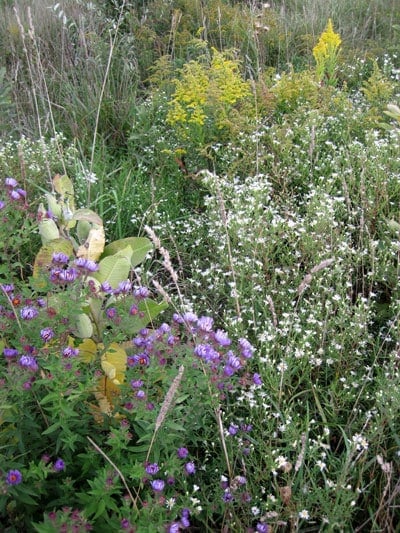
Heath aster is a tough, late-season bloomer that lights up prairies, roadsides, and gardens with clouds of tiny white flowers. If you’ve ever walked through a field in September and seen what looked like a drift of stars scattered across the plants, you may have met heath aster.
This native perennial thrives in poor soils where other plants struggle, making it a great choice for low-maintenance pollinator gardens. It’s also an important nectar source when many other flowers have finished blooming.
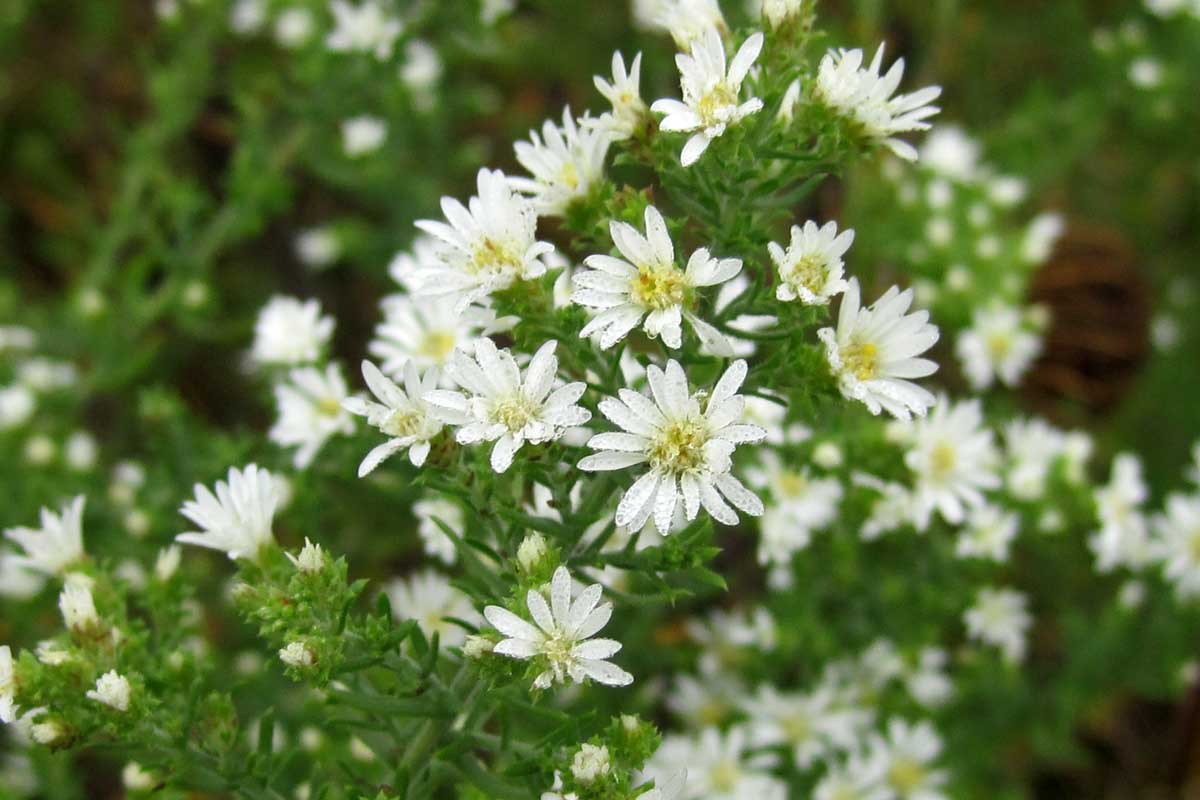
Table of Contents
Where to Find Heath Aster (Symphyotrichum ericoides)
Note: Symphyotrichum ericoides was formerly known as Aster ericoides.
Heath aster is perennial, native to the North America. It occurs from Maine to southern Saskatchewan, south to Virginia, Texas, northern Mexico and southeast Arizona. (see map). It’s a prairie plant, preferring full sun and dry conditions.
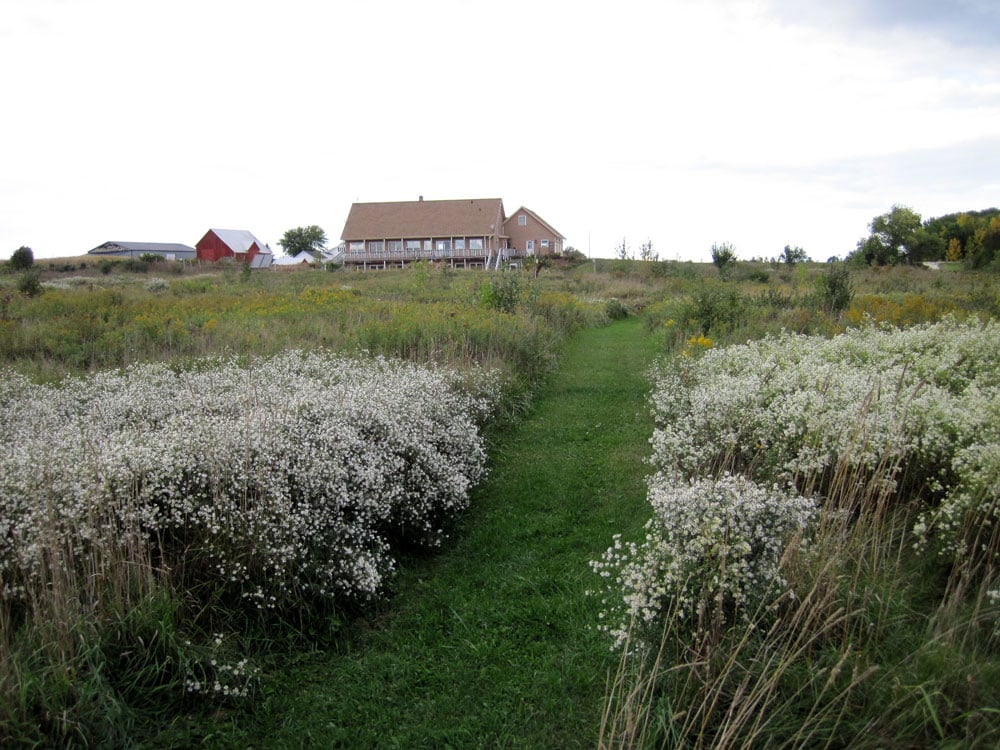
The image below is from the semi-wild areas of our homestead, taken in September 2012. You can see the native wildflowers surrounding the path.
How to Identify Heath Aster
Height: 1 to 3 feet tall, sometimes taller in rich soil.
Leaves: Narrow, stiff, and bristle-like — often compared to heath or heather, which inspired the name. Lower leaves are longer; upper leaves are small and scale-like. They attach in an alternating pattern up the stem.
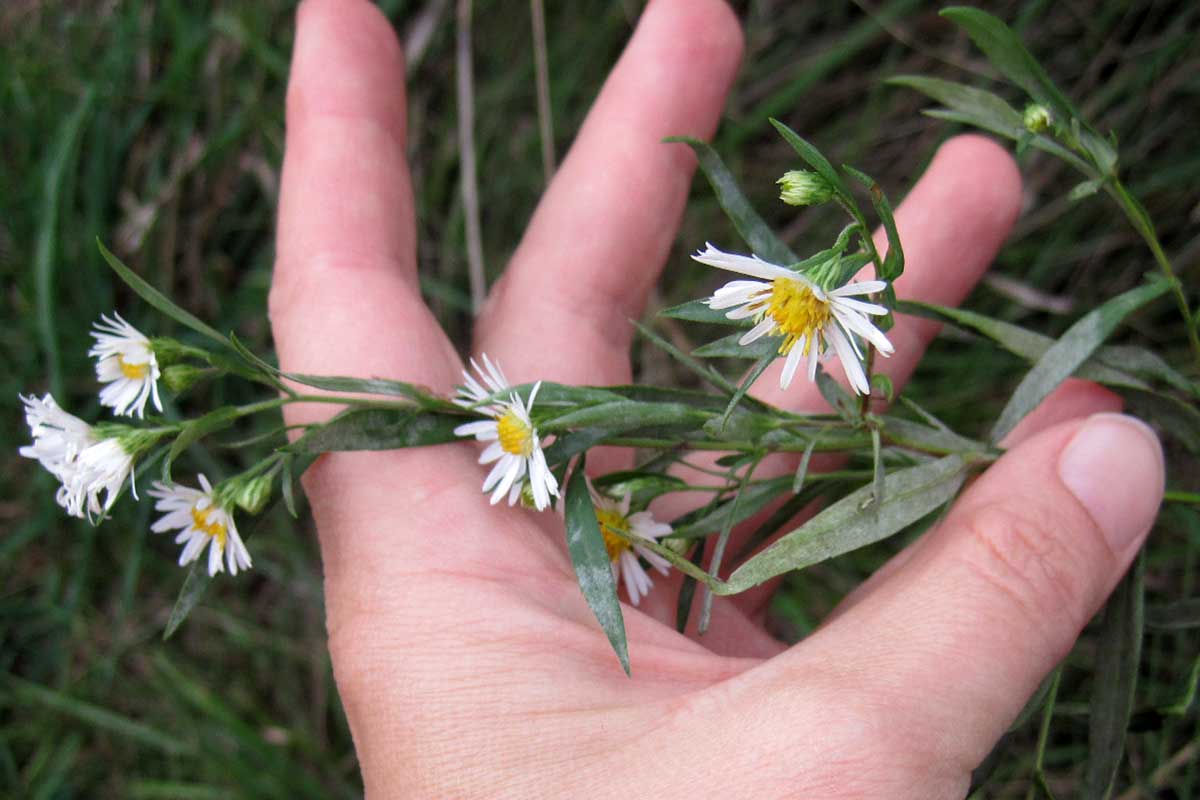
Stems: Usually stiff, often branching, forming rounded clumps. Lower leaves die off as the plant matures, and the stems turn from green to brown. The plant is just a little bit fuzzy, not outright hairy.
Flowers: Tiny daisy-like blooms (about ½ inch across) with white to pale lavender rays and yellow centers that turn reddish with age. Blooms appear in dense clusters from late summer into fall.
A single plant can produce over 100 flowers, which are clustered near the top of the plant. They have a compound flower, like the ox-eye daisy, made up of tiny florets, and measuring under 1/2 inch across. (You can use my hand for a rough scale). There are 8-20 rays (petals) surrounding a center disk that turns from yellow to brown as the flower matures.
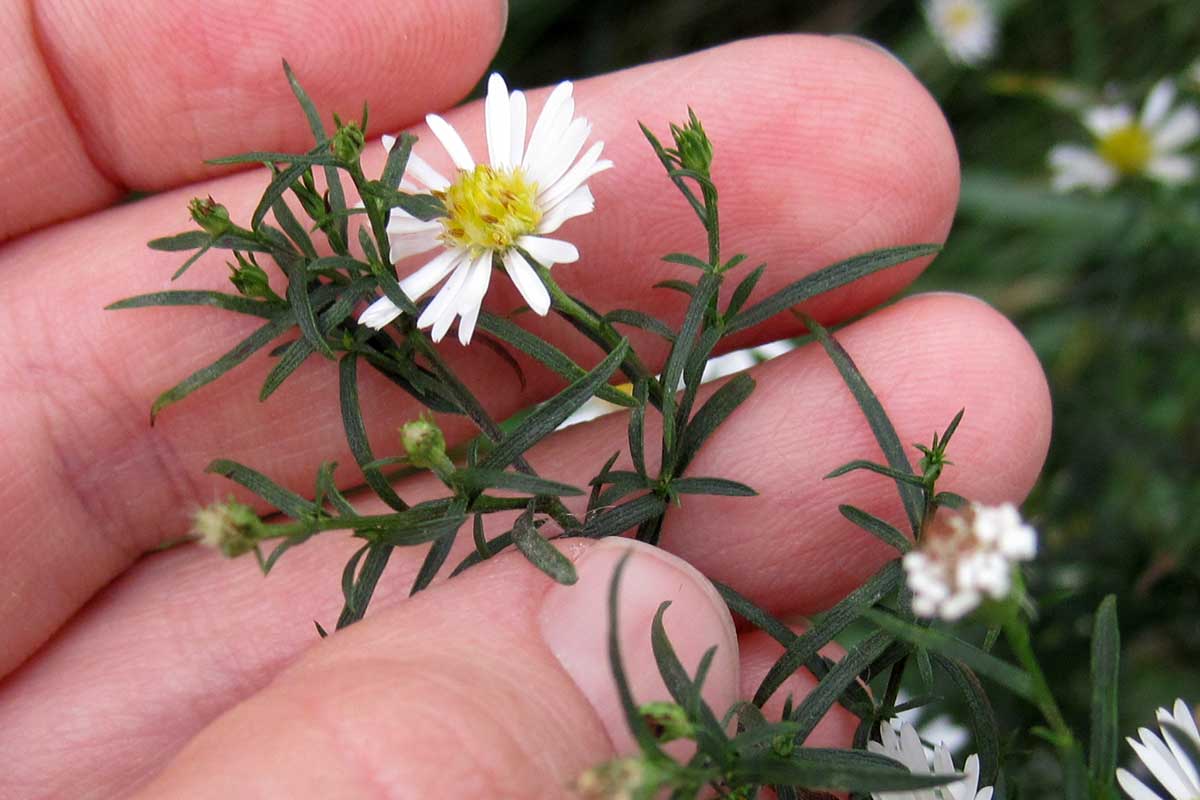
Bloom time: Typically August through October, sometimes into November depending on your location. They provide nectar when many other plants have already finished blooming. Our meadows are humming.
Propagation: The roots are rhizomes, so they tend to spread in clumps, but the seeds are also carried on the wind. Once the flowers fade, the seed heads get tufts of white hairs, which allow them to be spread on the wind.
Look-alikes: Several other native asters bloom in late summer. Heath aster is distinguished by its small, crowded flowers and fine, bristle-like foliage.
Here’s a nice area in our yard where you can see health aster, New England aster , milkweed and goldenrod.
Growing Conditions and Care
Heath aster is one of the hardiest asters, thriving in places where many ornamentals fail.
- Soil: Adapts to poor, sandy, or rocky soils. Prefers well-drained sites.
- Sunlight: Full sun is best, though it tolerates light shade.
- Water: Very drought-tolerant once established.
- Maintenance:
- Can self-seed freely and spread by rhizomes. Thin clumps if they become too aggressive.
- Deadhead or cut back after flowering to manage spread.
- Divide every few years to keep plants vigorous.
This resilience makes it ideal for naturalized plantings and prairie gardens.
Is heath aster invasive?
It’s not technically invasive, since it’s a native plant, but it can spread aggressively in rich soils. Thin or cut back if needed.
Wildlife and Pollinator Value
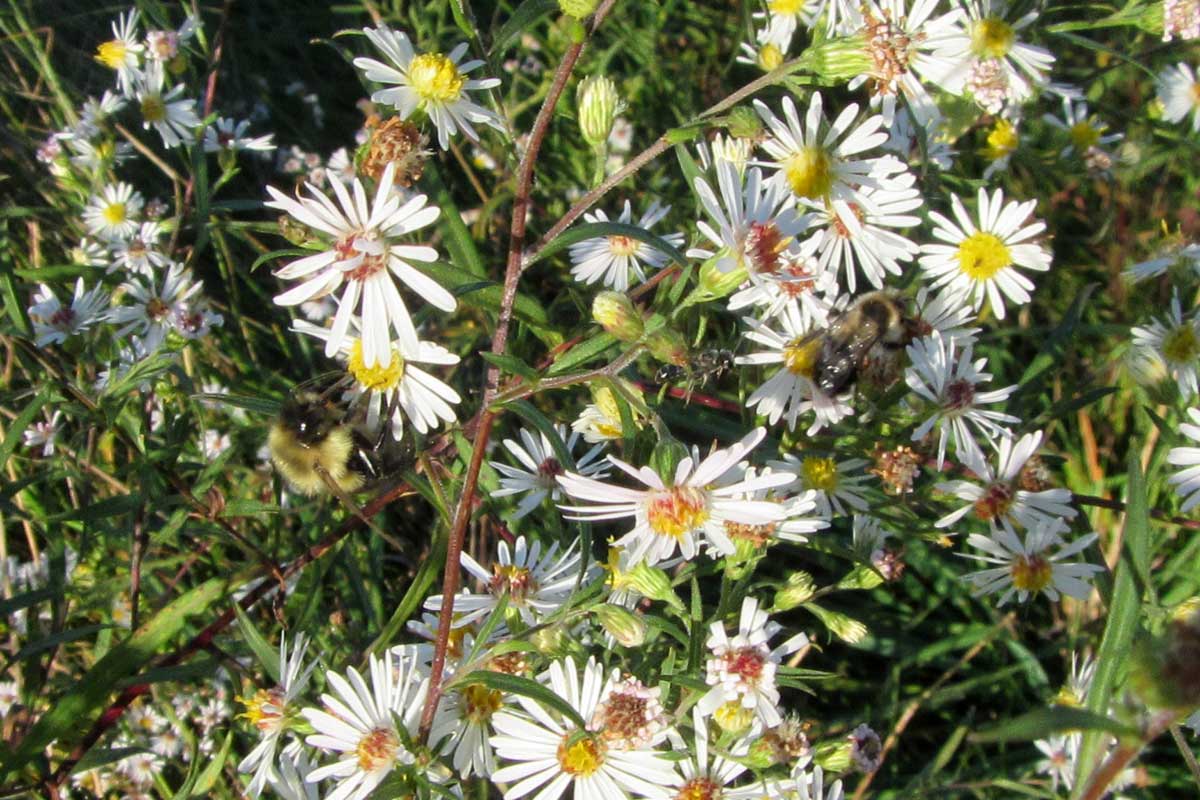
- Bees: Heath aster is a valuable late-season nectar and pollen source for native bees and honeybees.
- Butterflies & moths: Attracts monarchs and other fall-migrating butterflies, as well as moth caterpillars that use it as a host plant.
- Birds: Goldfinches and other seed-eaters enjoy the dried seed heads in winter.
- Mammals: White-tailed deer and rabbits may eat the young growth, but largely ignore mature plants.
When most flowers are fading, heath aster keeps pollinators fed until frost.
Medicinal Uses
Native Americans used various aster species for medicine, including teas for coughs and poultices for skin issues. The Navajo used this aster to make teas and lotions used for curing snake bites. Other groups used these asters in steam lodges, laying branches on the hot rocks to create herbal steam. White heath aster was also used medicinally to revive unconscious patients.
No dosage recommendations were readily available. Always exercise caution when using any wild plants. Make sure you have positively identified the plant and are not allergic.
Other Names
Other names for heath aster include:
- White Aster
- Awl-aster
- Subulate-bracted Aster
- Hairy Aster
- Soft Aster
- Squarrose White Aster
- White Prairie Aster
- Heath White Aster
- Many-flowered Aster
- Tufted White Prairie Aster.
More Herbal Resources
This article is part of the Weekly Weeder series, where we learn how to identify, use, and manage wild plants.
You may also enjoy other related articles, including:
- My Favorite Foraging & Wildcrafting Books
- Harvesting and Using Dandelion Roots for Food & Medicine
- How to Make Elderberry Syrup with Fresh or Dried Berries

This article is written by Laurie Neverman. Laurie was raised on a small dairy farm in northwest Wisconsin, where she gathered wildflowers from the woods and pastures. She and her family now live in northeast Wisconsin, where they combine intentional plantings and semi-wild areas. Every season is a new opportunity to learn more about working with wild plants.
Originally published in 2012, last updated in 2025.