Extension Grants (original) (raw)
OAuth defines an extensibility point called extension grants.
Extension grants allow adding support for non-standard token issuance scenarios, e.g.
- Token transformation
- SAML to JWT, or Windows to JWT
- Delegation or impersonation
- Federation
- Encapsulating custom input parameters
You can add support for additional grant types by implementing the IExtensionGrantValidator interface.
The OAuth Token Exchange specification (RFC 8693) describes a general purpose mechanism for translating between token types. Common use cases are creating tokens for impersonation and delegation purposes - but it is not limited to that.
You can leverage the extension grant feature to implement your preferred token exchange logic.
Some of the logic is boilerplate:
- Read and validate incoming protocol parameters
- Validate incoming token
- Using the built-in token validator if the token was issued by the same token service
- Using a token type specific library if the token is coming from a trusted (but different) token service
- Read contents of token to apply custom logic/authorization if needed
- Create response
Here’s a simple implementation of the above steps:
public class TokenExchangeGrantValidator : IExtensionGrantValidator

{

    private readonly ITokenValidator _validator;

    public TokenExchangeGrantValidator(ITokenValidator validator)

    {

        _validator = validator;

    }

    // register for urn:ietf:params:oauth:grant-type:token-exchange

    public string GrantType => OidcConstants.GrantTypes.TokenExchange;

    public async Task ValidateAsync(ExtensionGrantValidationContext context, CancellationToken cancellationToken)

    {

        // default response is error

        context.Result = new GrantValidationResult(TokenRequestErrors.InvalidRequest);

        // the spec allows for various token types, most commonly you return an access token

        var customResponse = new Dictionary<string, object>

        {

            { OidcConstants.TokenResponse.IssuedTokenType, OidcConstants.TokenTypeIdentifiers.AccessToken }

        };

        // read the incoming token

        var subjectToken = context.Request.Raw.Get(OidcConstants.TokenRequest.SubjectToken);

        // and the token type

        var subjectTokenType = context.Request.Raw.Get(OidcConstants.TokenRequest.SubjectTokenType);

        // mandatory parameters

        if (string.IsNullOrWhiteSpace(subjectToken))

        {

            return;

        }

        // for our impersonation/delegation scenario we require an access token

        if (!string.Equals(subjectTokenType, OidcConstants.TokenTypeIdentifiers.AccessToken))

        {

            return;

        }

        // validate the incoming access token with the built-in token validator

        var validationResult = await _validator.ValidateAccessTokenAsync(subjectToken, null, cancellationToken);

        if (validationResult.IsError)

        {

            return;

        }

        // these are two values you typically care about

        var sub = validationResult.Claims.First(c => c.Type == JwtClaimTypes.Subject).Value;

        var clientId = validationResult.Claims.First(c => c.Type == JwtClaimTypes.ClientId).Value;

        // add any custom logic here (if needed)

        // create response

    }

}
You then register your grant validator with the service provider:
idsvrBuilder.AddExtensionGrantValidator<TokenExchangeGrantValidator>();
And configure your client to be able to use it:
client.AllowedGrantTypes = { OidcConstants.GrantTypes.TokenExchange };
Token Exchange For Impersonation And Delegation
Section titled “Token Exchange For Impersonation And Delegation”
One of the primary use cases of the token exchange specification is creating tokens for identity delegation and impersonation scenarios. In these scenarios you want to forward certain token and identity information over multiple hops in a call chain.
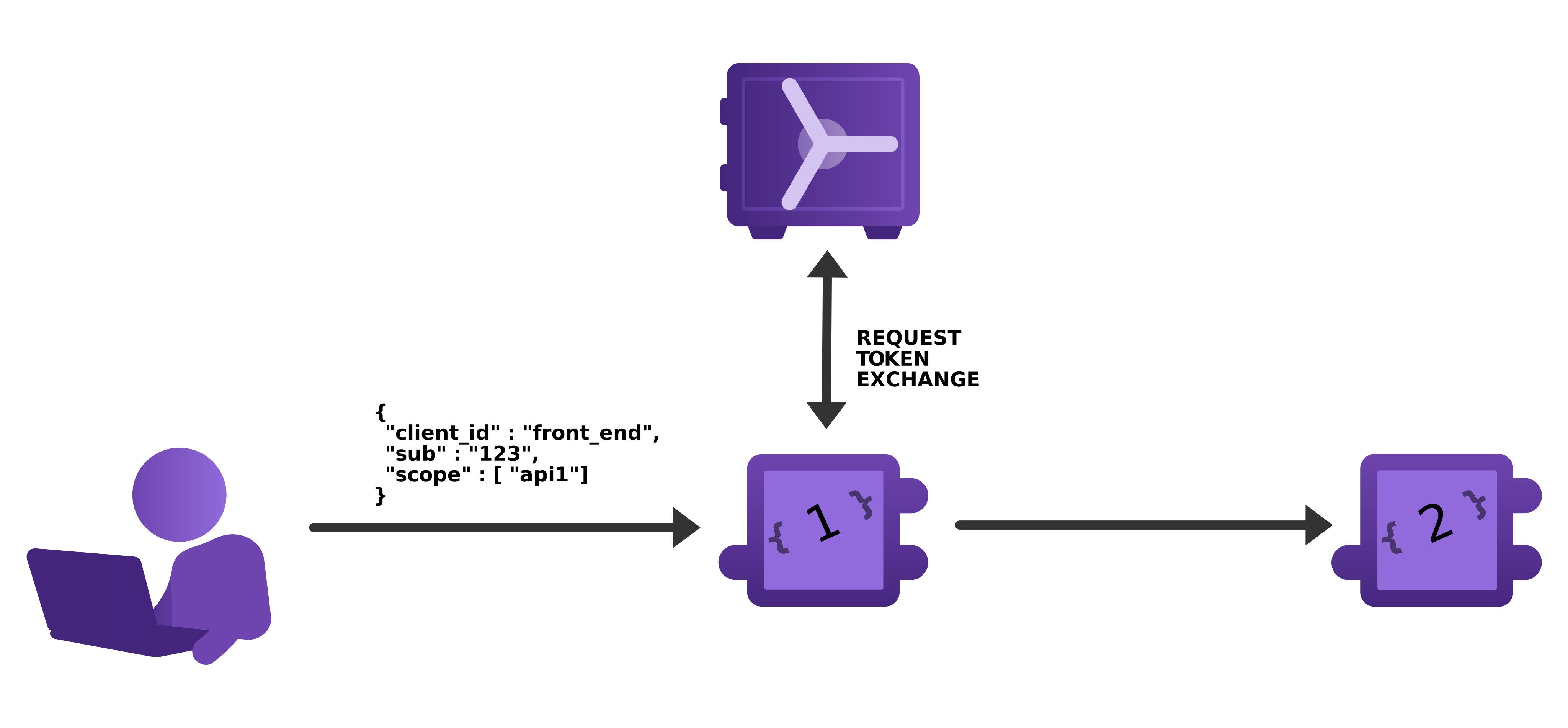
In the impersonation use case, API 1 doing the token exchange becomes “invisible”. For API 2 it looks like as if the front end is doing a direct call. The token would look like this (simplified):
{

  "client_id": "front_end",

  "sub": "123",

  "scope": [

    "api2"

  ]

}
Add the following code to the above validator to create an impersonation response:
// set token client_id to original id

context.Request.ClientId = clientId;

// create impersonation response

context.Result = new GrantValidationResult(

    subject: sub,

    authenticationMethod: GrantType,

    customResponse: customResponse);
In the delegation use case, the call chain is preserved using the act claim, e.g.:
{

  "client_id": "front-end",

  "act": {

    "client_id": "api1"

  },

  "sub": "123",

  "scope": [

    "api2"

  ]

}
For API 2 it still looks like that the front-end is making the call, but by inspecting the act claim, the API can learn about the traversed call chain.
The following code adds the act claim to the response:
// set token client_id to original id

context.Request.ClientId = clientId;

// create actor data structure

var actor = new

{

    client_id = context.Request.Client.ClientId

};

// create act claim

var actClaim = new Claim(JwtClaimTypes.Actor, JsonSerializer.Serialize(actor), IdentityServerConstants.ClaimValueTypes.Json);

context.Result = new GrantValidationResult(

    subject: sub,

    authenticationMethod: GrantType,

    claims: new[] { actClaim },

    customResponse: customResponse);
To emit the act claim into outgoing tokens, your profile service must know about it. The following simple profile service emits the act claim if the token request is in the context of a token exchange operation:
public class ProfileService : IProfileService

{

    public override async Task GetProfileDataAsync(ProfileDataRequestContext context, CancellationToken cancellationToken)

    {

        // add actor claim if needed

        if (context.Subject.GetAuthenticationMethod() == OidcConstants.GrantTypes.TokenExchange)

        {

            var act = context.Subject.FindFirst(JwtClaimTypes.Actor);

            if (act != null)

            {

                context.IssuedClaims.Add(act);

            }

        }

        // rest omitted

    }

    // rest omitted

}
See here for the full sample source code.