Associations between serum 25-hydroxyvitamin D and bone mineral density and proximal femur geometry in Koreans: the Korean National Health and Nutrition Examination Survey (KNHANES) 2008–2009 (original) (raw)
Abstract
Summary
The association between 25-hydroxyvitamin D (25(OH)D) levels and bone mineral density (BMD) and proximal femur bone geometry was examined in the Korean population. A positive relationship between skeletal health and 25(OH)D levels was observed. However, there were no significant differences in skeletal health between the groups with 25(OH)D level of 50–75 nmol/L and greater than 75 nmol/L.
Introduction
Vitamin D plays an important role in calcium and phosphate homeostasis and normal mineralization of bone. However, the optimal level of vitamin D for skeletal health has not been clearly established. We analyzed the associations between serum 25(OH)D and BMD and proximal femur bone geometry and determined the optimal 25(OH)D level.
Methods
This was a cross-sectional study of 10,062 participants (20–95 years, 4,455 men, 5,607 women) in the Fourth Korea National Health and Nutrition Examination Surveys (KNHANES IV) conducted from 2008 to 2009. Participants were divided into groups according to 25(OH)D level (<25, 25–50, 50–75, and ≥75 nmol/L). BMD and proximal femur geometric indices were measured.
Results
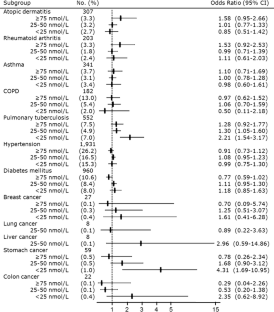
The group with 25(OH)D levels of 50–75 nmol/L had greater bone density values, with the exception of the lumbar spine, and also had greater femur neck cortical thickness, cross-sectional area, and cross-sectional moment of inertia, as well as a lesser buckling ratio than the groups with 25(OH)D level of 25–50 nmol/L and less than 25 nmol/L. However, there were no significant differences in BMD and proximal femur geometry properties between the groups with 50–75 nmol/L and greater than 75 nmol/L of 25(OH)D.
Conclusion
The skeletal outcomes, including BMD and proximal femur geometric indices observed in this study, suggest that serum 25(OH)D levels of 50 to <75 nmol/L are optimal for skeletal health.
Access this article
Subscribe and save
- Starting from 10 chapters or articles per month
- Access and download chapters and articles from more than 300k books and 2,500 journals
- Cancel anytime View plans
Buy Now
Price excludes VAT (USA)
Tax calculation will be finalised during checkout.
Instant access to the full article PDF.
Fig. 1
Abbreviations
BMD:
Bone mineral density
BR:
Buckling ratio
CSA:
Cross-sectional area
CSMI:
Cross-sectional moment of inertia
CT:
Cortical thickness
FN:
Femur neck
HSA:
Hip structure analysis
IOM:
Institute of Medicine
KNHANES:
Korean National Health and Nutrition Examination Surveys
NN:
Narrow neck
PTH:
Parathyroid hormone
RCTs:
Randomized controlled trials
References
- Rosen CJ (2011) Clinical practice. Vitamin D insufficiency. N Engl J Med 364:248–254
Article CAS PubMed Google Scholar - World Health Organization (WHO) Scientific Group on Prevention and Management of Osteoporosis (2003) Prevention and management of osteoporosis: report of a WHO scientific group. WHO, Geneva
Google Scholar - Bischoff-Ferrari HA, Giovannucci E, Willett WC, Dietrich T, Dawson-Hughes B (2006) Estimation of optimal serum concentrations of 25-hydroxyvitamin D for multiple health outcomes. Am J Clin Nutr 84:18–28
CAS PubMed Google Scholar - Holick MF (2007) Vitamin D deficiency. N Engl J Med 357:266–281
Article CAS PubMed Google Scholar - Hanley DA, Cranney A, Jones G, Whiting SJ, Leslie WD, Cole DE et al (2010) Vitamin D in adult health and disease: a review and guideline statement from osteoporosis Canada. CMAJ 182:E610–618
Article PubMed Central PubMed Google Scholar - Dawson-Hughes B, Mithal A, Bonjour JP, Boonen S, Burckhardt P, Fuleihan GE et al (2010) IOF position statement: vitamin D recommendations for older adults. Osteoporos Int 21:1151–1154
Article CAS PubMed Google Scholar - Ross AC, Manson JE, Abrams SA, Aloia JF, Brannon PM, Clinton SK et al (2011) The 2011 report on dietary reference intakes for calcium and vitamin D from the Institute of Medicine: what clinicians need to know. J Clin Endocrinol Metab 96:53–58
Article CAS PubMed Central PubMed Google Scholar - Bischoff-Ferrari HA, Dietrich T, Orav EJ, Dawson-Hughes B (2004) Positive association between 25-hydroxy vitamin D levels and bone mineral density: a population-based study of younger and older adults. Am J Med 116:634–639
Article CAS PubMed Google Scholar - Melhus H, Snellman G, Gedeborg R, Byberg L, Berglund L, Mallmin H et al (2010) Plasma 25-hydroxyvitamin D levels and fracture risk in a community-based cohort of elderly men in Sweden. J Clin Endocrinol Metab 95:2637–2645
Article CAS PubMed Google Scholar - Kuchuk NO, Pluijm SM, van Schoor NM, Looman CW, Smit JH, Lips P (2009) Relationships of serum 25-hydroxyvitamin D to bone mineral density and serum parathyroid hormone and markers of bone turnover in older persons. J Clin Endocrinol Metab 94:1244–1250
Article PubMed Google Scholar - Ensrud KE, Taylor BC, Paudel ML, Cauley JA, Cawthon PM, Cummings SR et al (2009) Serum 25-hydroxyvitamin D levels and rate of hip bone loss in older men. J Clin Endocrinol Metab 94:2773–2780
Article CAS PubMed Central PubMed Google Scholar - Bischoff-Ferrari HA, Shao A, Dawson-Hughes B, Hathcock J, Giovannucci E, Willett WC (2010) Benefit-risk assessment of vitamin D supplementation. Osteoporos Int 21:1121–1132
Article CAS PubMed Central PubMed Google Scholar - Priemel M, von Domarus C, Klatte TO, Kessler S, Schlie J, Meier S et al (2010) Bone mineralization defects and vitamin D deficiency: histomorphometric analysis of iliac crest bone biopsies and circulating 25-hydroxyvitamin D in 675 patients. J Bone Miner Res 25:305–312
Article CAS PubMed Google Scholar - Yoon YS, Oh SW, Baik HW, Park HS, Kim WY (2004) Alcohol consumption and the metabolic syndrome in Korean adults: the 1998 Korean National Health and Nutrition Examination Survey. Am J Clin Nutr 80:217–224
CAS PubMed Google Scholar - Uusi-Rasi K, Semanick LM, Zanchetta JR, Bogado CE, Eriksen EF, Sato M et al (2005) Effects of teriparatide [rhPTH (1 – 34)] treatment on structural geometry of the proximal femur in elderly osteoporotic women. Bone 36:948–958
Article CAS PubMed Google Scholar - Beck TJ, Looker AC, Ruff CB, Sievanen H, Wahner HW (2000) Structural trends in the aging femoral neck and proximal shaft: analysis of the Third National Health and Nutrition Examination Survey dual-energy X-ray absorptiometry data. J Bone Miner Res 15:2297–2304
Article CAS PubMed Google Scholar - Choi HS, Oh HJ, Choi H, Choi WH, Kim JG, Kim KM et al (2011) Vitamin D insufficiency in Korea—a greater threat to younger generation: the Korea National Health and Nutrition Examination Survey (KNHANES) 2008. J Clin Endocrinol Metab 96:643–651
Article CAS PubMed Google Scholar - Lips P, Wiersinga A, van Ginkel FC, Jongen MJ, Netelenbos JC, Hackeng WH et al (1988) The effect of vitamin D supplementation on vitamin D status and parathyroid function in elderly subjects. J Clin Endocrinol Metab 67:644–650
Article CAS PubMed Google Scholar - Malabanan A, Veronikis IE, Holick MF (1998) Redefining vitamin D insufficiency. Lancet 351:805–806
Article CAS PubMed Google Scholar - Peacock M (1998) Effects of calcium and vitamin D insufficiency on the skeleton. Osteoporos Int 8(Suppl 2):S45–51
Article CAS PubMed Google Scholar - Chapuy MC, Preziosi P, Maamer M, Arnaud S, Galan P, Hercberg S et al (1997) Prevalence of vitamin D insufficiency in an adult normal population. Osteoporos Int 7:439–443
Article CAS PubMed Google Scholar - Krall EA, Sahyoun N, Tannenbaum S, Dallal GE, Dawson-Hughes B (1989) Effect of vitamin D intake on seasonal variations in parathyroid hormone secretion in postmenopausal women. N Engl J Med 321:1777–1783
Article CAS PubMed Google Scholar - Bischoff-Ferrari HA, Dietrich T, Orav EJ, Hu FB, Zhang Y, Karlson EW et al (2004) Higher 25-hydroxyvitamin D concentrations are associated with better lower-extremity function in both active and inactive persons aged > or =60 y. Am J Clin Nutr 80:752–758
CAS PubMed Google Scholar - Lips P, Hosking D, Lippuner K, Norquist JM, Wehren L, Maalouf G et al (2006) The prevalence of vitamin D inadequacy amongst women with osteoporosis: an international epidemiological investigation. J Intern Med 260:245–254
Article CAS PubMed Google Scholar - Choi HS (2013) Vitamin D status in Korea. Endocrinol Metab 28:12–16
Article Google Scholar - Kamen D, Aranow C (2008) Vitamin D in systemic lupus erythematosus. Curr Opin Rheumatol 20:532–537
Article CAS PubMed Google Scholar - Wilkinson RJ, Llewelyn M, Toossi Z, Patel P, Pasvol G, Lalvani A et al (2000) Influence of vitamin D deficiency and vitamin D receptor polymorphisms on tuberculosis among Gujarati Asians in west London: a case-control study. Lancet 355:618–621
Article CAS PubMed Google Scholar - Laaksi I, Ruohola JP, Tuohimaa P, Auvinen A, Haataja R, Pihlajamaki H et al (2007) An association of serum vitamin D concentrations <40 nmol/L with acute respiratory tract infection in young Finnish men. Am J Clin Nutr 86:714–717
- Forman JP, Giovannucci E, Holmes MD, Bischoff-Ferrari HA, Tworoger SS, Willett WC et al (2007) Plasma 25-hydroxyvitamin D levels and risk of incident hypertension. Hypertension 49:1063–1069
Article CAS PubMed Google Scholar - Giovannucci E, Liu Y, Hollis BW, Rimm EB (2008) 25-hydroxyvitamin D and risk of myocardial infarction in men: a prospective study. Arch Intern Med 168:1174–1180
Article CAS PubMed Central PubMed Google Scholar - Pittas AG, Lau J, Hu FB, Dawson-Hughes B (2007) The role of vitamin D and calcium in type 2 diabetes. A systematic review and meta-analysis. J Clin Endocrinol Metab 92:2017–2029
Article CAS PubMed Central PubMed Google Scholar - Mattila C, Knekt P, Mannisto S, Rissanen H, Laaksonen MA, Montonen J et al (2007) Serum 25-hydroxyvitamin D concentration and subsequent risk of type 2 diabetes. Diabetes Care 30:2569–2570
Article CAS PubMed Google Scholar - Giovannucci E, Liu Y, Rimm EB, Hollis BW, Fuchs CS, Stampfer MJ et al (2006) Prospective study of predictors of vitamin D status and cancer incidence and mortality in men. J Natl Cancer Inst 98:451–459
Article CAS PubMed Google Scholar - Jenab M, Bueno-de-Mesquita HB, Ferrari P, van Duijnhoven FJ, Norat T, Pischon T et al (2010) Association between pre-diagnostic circulating vitamin D concentration and risk of colorectal cancer in European populations:a nested case-control study. BMJ 340:b5500
Article PubMed Central PubMed Google Scholar - Shin D, Kim S, Kim KH, Lee K, Park SM (2014) Association between insulin resistance and bone mass in men. J Clin Endocrinol Metab 99:988–995
Article CAS PubMed Google Scholar
Acknowledgments
This work was supported by the National Research Foundation of Korea grant funded by the Korea government (No. 20110001024) and the Dongguk University Research Fund 2011.
Conflicts of interest
None.
Author information
Authors and Affiliations
- Division of Endocrinology and Metabolism, Department of Internal Medicine, Yonsei University College of Medicine, 50 Yonsei-ro, Seodaemun-gu, Seoul, 120-752, South Korea
S. Hwang, Y. Rhee & S. K. Lim - Division of Endocrinology and Metabolism, Department of Internal Medicine, Dongguk University Ilsan Hospital, Dongguk University College of Medicine, Goyang, 410-773, South Korea
H. S. Choi - Division of Endocrinology and Metabolism, Department of Internal Medicine, Seoul National University Bundang Hospital, Seoul National University College of Medicine, Seongnam, 463-707, South Korea
K. M. Kim
Authors
- S. Hwang
- H. S. Choi
- K. M. Kim
- Y. Rhee
- S. K. Lim
Corresponding author
Correspondence toS. K. Lim.
Additional information
S. Hwang and H. S. Choi contributed equally to this article.
Rights and permissions
About this article
Cite this article
Hwang, S., Choi, H.S., Kim, K.M. et al. Associations between serum 25-hydroxyvitamin D and bone mineral density and proximal femur geometry in Koreans: the Korean National Health and Nutrition Examination Survey (KNHANES) 2008–2009.Osteoporos Int 26, 163–171 (2015). https://doi.org/10.1007/s00198-014-2877-0
- Received: 11 March 2014
- Accepted: 26 August 2014
- Published: 28 September 2014
- Issue date: January 2015
- DOI: https://doi.org/10.1007/s00198-014-2877-0