Restricting the domain allows for weaker independence (original) (raw)
Abstract
Arrow’s classical axiom of independence of irrelevant alternatives may be more descriptively thought of as binary independence. This can then be weakened to ternary independence, quaternary independence, etc. It is known that under the full domain these are not real weakenings as they all collapse into binary independence (except for independence over the whole set of alternatives which is trivially satisfied). Here we investigate whether this still happens under restricted domains. We show that for different domains these different levels of independence may or may not be equivalent. We specify when and to what extent different versions of independence collapse into the same condition.
Access this article
Subscribe and save
- Starting from 10 chapters or articles per month
- Access and download chapters and articles from more than 300k books and 2,500 journals
- Cancel anytime View plans
Buy Now
Price excludes VAT (USA)
Tax calculation will be finalised during checkout.
Instant access to the full article PDF.
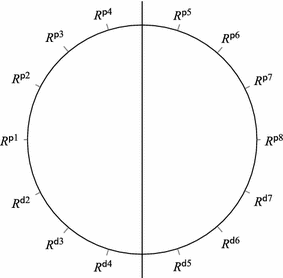
Fig. 1
Notes
- Restricting the domain is a typical approach to impossibilities in social choice theory. Gaertner (2001, 2002) has produced elaborate surveys of the literature.
- Note \({\subset }\) is used for proper set inclusion; \(X\subset Y\) implies \(\left| {X} \right| < \left| {Y} \right| \).
- Note here, as is standard in the literature, “triple” means a subset of alternatives of size three. A triple is said to be free iff every possible ordering over this triple exists within the domain.
- Black (1948) provides the classic reference concerning single peaked domains.
- Preferences were not removed arbitrarily to create this domain. For the remaining preferences, note that the alternatives on either side of the “peak” are balanced; that these alternatives are interspersed as far as possible. Cf. the idea of equidistantly single-peaked domains described by Ozdemir and Sanver (2007).
- Pairwise majority determines the ranking over pairs of alternatives based upon which is preferred by more voters.
- A domain is single-crossing if its preferences can be listed \(R^1,R^2,\dots ,R^t\)—or _placed on a line_—such that, for all x and y, if \(xR^1y\) and \(yR^sx\), then \(xR^iy\) for \(s \le i\le t\). Gans and Smart (1996) provide some economic applications of this property. Rothstein (1991) shows that for any profile on a single-crossing domain there is a representative voter whose (strict) preferences coincide with the (strict) majority relation (though note that he does not use the term single-crossing).
- For all alternatives \(x\ne y\), the set of equivalence classes of \(\sim _4^{xy}\) on \(D_{\mathsf {u}}\) is the following refinement of \(\{D_{\mathsf {L}},D_{\mathsf {R}}\}: \qquad \{ \{ R^{{\mathsf {p}}1}, R^{{\mathsf {p}}2}, R^{{\mathsf {p}}3}, R^{{\mathsf {d}}2}, R^{{\mathsf {p}}3} \}, \{ R^{{\mathsf {p}}6}, R^{{\mathsf {p}}7}, R^{{\mathsf {p}}8}, R^{{\mathsf {d}}6}, R^{{\mathsf {p}}7} \}, \{ R^{{\mathsf {p}}4}\}, \{ R^{{\mathsf {p}}5}\}, \{ R^{{\mathsf {d}}4}\}, \{ R^{{\mathsf {d}}5}\} \} \).
References
- Arrow KJ (1950) A difficulty in the concept of social welfare. J Polit Econ 58(4):328–346
Article Google Scholar - Black D (1948) On the rationale of group decision-making. J Polit Econ 56(1):23–34
Article Google Scholar - Blau JH (1957) The existence of social welfare functions. Econometrica 25(2):302–313
Article Google Scholar - Blau JH (1971) Arrow’s theorem with weak independence. Economica 38(152):413–420
Article Google Scholar - Gaertner W (2001) Domain Conditions in Social Choice Theory. Cambridge University Press, Cambridge
Book Google Scholar - Gaertner W (2002) Domain restrictions. In: Handbook of Social Choice and Welfare, vol. 1. Elsevier, Amsterdam, pp. 131–170
Chapter Google Scholar - Gans JS, Smart M (1996) Majority voting with single-crossing preferences. J Public Econ 59(2):219–237
Article Google Scholar - May KO (1954) Intransitivity, utility, and the aggregation of preference patterns. Econometrica 22(1):1–13
Article Google Scholar - Ozdemir U, Sanver MR (2007) Dictatorial domains in preference aggregation. Soc Choice Welf 28(1):61–76
Article Google Scholar - Rothstein P (1991) Representative voter theorems. Public Choice 72(2–3):193–212
Article Google Scholar
Author information
Authors and Affiliations
- Université Paris-Dauphine, PSL Research University, CNRS, UMR 7243, LAMSADE, 75016, Paris, France
Justin Kruger & M. Remzi Sanver
Authors
- Justin Kruger
- M. Remzi Sanver
Corresponding author
Correspondence toJustin Kruger.
Additional information
Our work is partly supported by the Projects ANR-14-CE24-0007-01 CoCoRICo-CoDec and IDEX ANR-10-IDEX-0001-02 PSL* MIFID. We also wish to thank two anonymous referees for thoughtful reviews which greatly improved the presentation of this paper.
Rights and permissions
About this article
Cite this article
Kruger, J., Sanver, M.R. Restricting the domain allows for weaker independence.Soc Choice Welf 51, 563–575 (2018). https://doi.org/10.1007/s00355-018-1129-1
- Received: 23 June 2017
- Accepted: 04 May 2018
- Published: 22 May 2018
- Version of record: 22 May 2018
- Issue date: October 2018
- DOI: https://doi.org/10.1007/s00355-018-1129-1