Green synthesis and characterization of selenium nanoparticles and its augmented cytotoxicity with doxorubicin on cancer cells (original) (raw)
Abstract
Green synthesis of selenium nanoparticles (SeNPs) was achieved by a simple biological procedure using the reducing power of fenugreek seed extract. This method is capable of producing SeNPs in a size range of about 50–150 nm, under ambient conditions. The synthesized nanoparticles can be separated easily from the aqueous sols by a high-speed centrifuge. These selenium nanoparticles were characterized by UV–Vis spectroscopy, scanning electron microscopy (SEM), Fourier transform infrared spectroscopy (FTIR), X-ray diffraction (XRD), and elemental analysis by X-ray fluorescence spectrometer (XRF). Nanocrystalline SeNPs were obtained without post-annealing treatment. FTIR spectrum confirms the presence of various functional groups in the plant extract, which may possibly influence the reduction process and stabilization of nanoparticles. The cytotoxicity of SeNPs was assayed against human breast-cancer cells (MCF-7). It was found that SeNPs are able to inhibit the cell growth by dose-dependent manner. In addition, combination of SeNPs and doxorubicin shows better anticancer effect than individual treatments.
Access this article
Subscribe and save
- Starting from 10 chapters or articles per month
- Access and download chapters and articles from more than 300k books and 2,500 journals
- Cancel anytime View plans
Buy Now
Price excludes VAT (USA)
Tax calculation will be finalised during checkout.
Instant access to the full article PDF.
Fig. 1
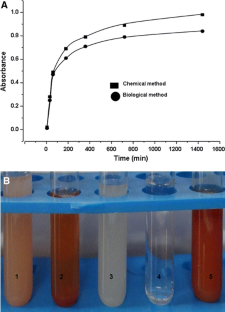
The alternative text for this image may have been generated using AI.
Fig. 2

The alternative text for this image may have been generated using AI.
Fig. 3
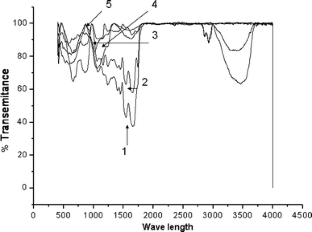
The alternative text for this image may have been generated using AI.
Fig. 4
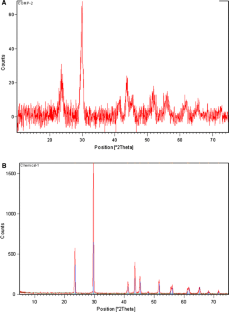
The alternative text for this image may have been generated using AI.
Fig. 5

The alternative text for this image may have been generated using AI.
Fig. 6

The alternative text for this image may have been generated using AI.
Fig. 7

The alternative text for this image may have been generated using AI.
References
- El-Sayed MA (2001) Some interesting properties of metals confined in time and nanometer space of different shapes. Acc Chem Res 34:257–264
Article CAS Google Scholar - McConnell WP, Novak JP, Brousseau LC, Fuierer RR, Tenent RC, Feldheim DL (2000) Electronic and optical properties of chemically modified metal nanoparticles and molecularly bridged nanoparticle arrays. J Phys Chem B 104:8925–8930
Article CAS Google Scholar - Liu C, Zhang ZJ (2001) Size-dependent superparamagnetic properties of Mn spinel ferrite nanoparticles synthesized from reverse micelles. J Chem Mater 13:2092–2096
Article CAS Google Scholar - Moreno-Mañas M, Pleixats R (2003) Formation of carbon–carbon bonds under catalysis by transition-metal nanoparticles. Acc Chem Res 36:638–643
Article Google Scholar - Lanone S, Boczkowski J (2006) Biomedical applications and potential health risks of nanomaterials: molecular mechanisms. Curr Mol Med 6:651–663
Article CAS Google Scholar - Garnett MC, Kallinteri P (2006) Nanomedicines and nanotoxicology: some physiological principles. Occup Med 56:307–311
Article CAS Google Scholar - Sauvaire Y, Baissac Y, Leconte O, Petit P, Ribes G (1996) Steroid saponins from fenugreek and some of their biological properties. Adv Exp Med Biol 405:37–46
Article CAS Google Scholar - Drake EN (2006) Cancer chemoprevention: selenium as a pro-oxidant not an antioxidant. Med Hypotheses 67:318–322
Article CAS Google Scholar - Manna L, Scher EC, Alivisatos AP (2000) Synthesis of soluble and processable rod-, arrow-, teardrop-, and tetrapod-shaped CdSe nanocrystals. J Am Chem Soc 122:12700–12706
Article CAS Google Scholar - Poborchii VV, Kolobov AV, Tanaka K (1999) Photomelting of selenium at low temperature. Appl Phys Lett 74:215–217
Article CAS Google Scholar - Wang G, Yang X, Qian F, Zhang JZ, Li Y (2010) Double-sided CdS and CdSe quantum dot co-sensitized ZnO nanowire arrays for photoelectrochemical hydrogen generation. Nano Lett 10:1088–1092
Article CAS Google Scholar - Leonard KA, Hall JP, Nelen MI, Davies SR, Gollnick SO, Camacho S, Oseroff AR, Gibson SL, Hilf R, Detty MR (2000) A selenopyrylium photosensitizer for photodynamic therapy related in structure to the antitumor agent AA1 with potent in vivo activity and no long-term skin photosensitization. J Med Chem 43:4488–4498
Article CAS Google Scholar - Parnham MJ, Graf E (1991) Pharmacology of synthetic organic selenium compounds. Prog Drug Res 36:4–9
Google Scholar - Sies H, Masumoto H (1997) Ebselen as a glutathione peroxidase mimic and as a scavenger of peroxynitrite. Adv Pharmacol 38:229–246
Article CAS Google Scholar - Zhang JS, Gao XY, Zhang LD, Bao YP (2001) Biological effects of a nano red elemental selenium. BioFactors 15:27–38
Article Google Scholar - Wang H, Zhang J, Yu H (2007) Elemental selenium at nano size possesses lower toxicity without compromising the fundamental effect on selenoenzymes: comparison with selenomethionine in mice. Free Radic Biol Med 42:1524–1533
Article CAS Google Scholar - Tan L, Jia X, Jiang X, Zhang Y, Tang H, Yao S, Xie Q (2009) In vitro study on the individual and synergistic cytotoxicity of adriamycin and selenium nanoparticles against Bel7402 cells with a quartz crystal microbalance. Biosens Bioelectron 24:2268–2272
Article CAS Google Scholar - Chowdhury S, Ahmed H, Chatterjee BP (1987) Purification and characterization of an α-d-galactosyl-binding lectin from Artocarpus lakoocha seeds. Carbohydr Res 159:137–148
Article CAS Google Scholar - Singh J, Gupta K, Arora SK (2002) Changes in the anti-nutritional factors of developing seeds and pod walls of fenugreek (Trigonella foenum graecum L.). Plant Foods Hum Nutr 46:77–84
Article Google Scholar - Huang H, Yuan Q, Yang X (2004) Preparation and characterization of metal-chitosan nanocomposites. Colloids Surf B 39:31–37
Article CAS Google Scholar - Christensen MJ, Nartey ET, Hada AL, Legg RL, Barzee BR (2007) High selenium reduces NF-κB-regulated gene expression in uninduced human prostate cancer cells. Nutr Cancer 58:197–204
Article CAS Google Scholar - Huang G, Zhang Y, Zhang Q, Zhang B, Wen L (2010) Vacuolization and apoptosis induced by nano-selenium in HeLa cell line. Sci China Chem 53:2272–2278
Article CAS Google Scholar
Acknowledgments
The authors acknowledge the Department of Science and Technology (DST), Government of India, New Delhi, India for the financial support in the form DST-FIST. The authors thank Central Instrumentation Facility, Pondicherry University. C. H. Ram expresses his special thanks to CSIR, India for the financial assistance in the form of CSIR, SRF, (Acknowledgement No:09/559/(0084)/2012 EMR-I).
Author information
Authors and Affiliations
- Department of Biochemistry and Molecular Biology, Pondicherry University, Puducherry, 605 014, India
CH. Ramamurthy, K. S. Sampath & C. Thirunavukkarasu - Cancer Genetics and Nanomedicine Laboratory, Department of Biomedical Science, Bharathidasan University, Tiruchirappalli, 620 024, India
P. Arunkumar & K. Premkumar - Centre for Bioinformatics, Pondicherry University, Puducherry, 605 014, India
M. Suresh Kumar - Department of Chemistry, Periyar University, Salem, 636 011, India
V. Sujatha
Authors
- CH. Ramamurthy
- K. S. Sampath
- P. Arunkumar
- M. Suresh Kumar
- V. Sujatha
- K. Premkumar
- C. Thirunavukkarasu
Corresponding author
Correspondence toC. Thirunavukkarasu.
Electronic supplementary material
Rights and permissions
About this article
Cite this article
Ramamurthy, C., Sampath, K.S., Arunkumar, P. et al. Green synthesis and characterization of selenium nanoparticles and its augmented cytotoxicity with doxorubicin on cancer cells.Bioprocess Biosyst Eng 36, 1131–1139 (2013). https://doi.org/10.1007/s00449-012-0867-1
- Received: 03 July 2012
- Accepted: 22 November 2012
- Published: 28 February 2013
- Issue date: August 2013
- DOI: https://doi.org/10.1007/s00449-012-0867-1