Performance evaluation of implicit stochastic reservoir operation optimization supported by long-term mean inflow forecast (original) (raw)
Abstract
This study applies implicit stochastic optimization (ISO) to develop monthly operating rules for a reservoir located in Northeast Brazil. The proposed model differs from typical ISO applications as it uses the forecast of the mean inflow for a future horizon instead of the current-month inflow. Initially, a hundred different 100-year monthly inflow scenarios are synthetically generated and employed as input to a deterministic operation optimization model in order to build a database of optimal operating data. Later, such database is used to fit monthly reservoir rule curves by means of nonlinear regression analysis. Finally, the established rule curves are validated by operating the system under 100 new inflow ensembles. The performance of the proposed technique is compared with those provided by the standard reservoir operating policy (SOP), stochastic dynamic programming (SDP) and perfect-forecast deterministic optimization (PFDO). Different forecasting horizons are tested. For all of them, the results indicate the feasibility of using ISO in view of its lower vulnerability in contrast to the SOP as well as the proximity of its operations with those by PFDO. The results also reveal that there is an optimal choice for the forecasting horizon. The comparison between ISO and SDP shows small differences between both, justifying the adoption of ISO for its simplified mathematics as opposed to SDP.
Access this article
Subscribe and save
- Starting from 10 chapters or articles per month
- Access and download chapters and articles from more than 300k books and 2,500 journals
- Cancel anytime View plans
Buy Now
Price excludes VAT (USA)
Tax calculation will be finalised during checkout.
Instant access to the full article PDF.
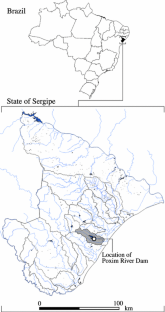
Fig. 1
The alternative text for this image may have been generated using AI.
(Source: Sergipe’s Geospatial Database)
Fig. 2

The alternative text for this image may have been generated using AI.
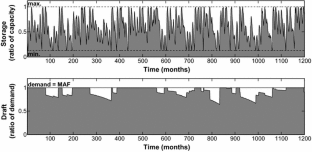
Fig. 3
The alternative text for this image may have been generated using AI.
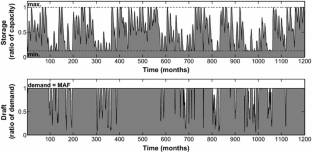
Fig. 4
The alternative text for this image may have been generated using AI.
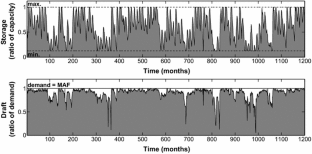
Fig. 5
The alternative text for this image may have been generated using AI.
Fig. 6

The alternative text for this image may have been generated using AI.
Fig. 7
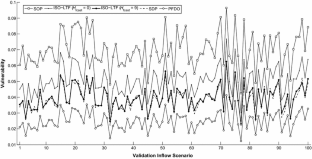
The alternative text for this image may have been generated using AI.
Fig. 8
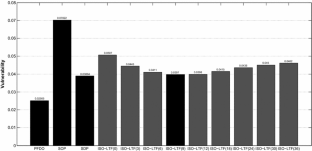
The alternative text for this image may have been generated using AI.
Notes
- For each variable, i.e., release and storage. Optimal reservoir spills are also determined by the optimization model but these data are not used to construct the rule curves.
- Since t varies along the operating horizon of N months. The month of the year \(\tau\) corresponding to t is calculated by \(\tau ={\text {rem}}\left( \tfrac{t}{12}\right)\), which has the meaning that t is divided by 12 and the remainder is taken as the value for \(\tau\). If \(\text {rem}\left( \tfrac{t}{12}\right) =0\), then \(\tau =12\).
- Because of computer limitations at the time, Celeste and Billib (2012) used only 20 scenarios of 20 years each to calibrate/validate their models in contrast to the 100 scenarios of 100-year inflows used here.
References
- Ahmad A, El-Shafie A, Razali SFM, Mohamad ZS (2014) Reservoir optimization in water resources: a review. Water Resour Manag 28(11):3391–3405. doi:10.1007/s11269-014-0700-5
Article Google Scholar - Celeste AB, Billib M (2009) Evaluation of stochastic reservoir operation optimization models. Adv Water Resour 32:1429–1443. doi:10.1016/j.advwatres.2009.06.008
Article Google Scholar - Celeste AB, Billib M (2010) The role of spill and evaporation in reservoir optimization models. Water Resour Manag 24:617–628. doi:10.1007/s11269-009-9468-4
Article Google Scholar - Celeste AB, Billib M (2012) Improving implicit stochastic reservoir optimization models with long-term mean inflow forecast. Water Resour Manag 26(9):2443–2451. doi:10.1007/s11269-012-0025-1
Article Google Scholar - Celeste AB, Curi WF, Curi RC (2009) Implicit stochastic optimization for deriving reservoir operating rules in semiarid Brazil. Pesqui Oper 29(1):223–234. doi:10.1590/S0101-74382009000100011
Article Google Scholar - Fayaed SS, El-Shafie A, Jaafar O (2013) Reservoir-system simulation and optimization techniques. Stoch Environ Res Risk Assess 27(7):1751–1772. doi:10.1007/s00477-013-0711-4
Article Google Scholar - Ghimire BNS, Reddy MJ (2014) Optimization and uncertainty analysis of operational policies for multipurpose reservoir system. Stoch Environ Res Risk Assess 28(7):1815–1833. doi:10.1007/s00477-014-0846-y
Article Google Scholar - Kim T, Heo JH (2000) Application of implicit stochastic optimization in the Han River basin. In: Proceedings 4th international conference on hydro-science and -engineering, Korean society of water resources, Seoul
- Labadie JW (2004) Optimal operation of multireservoir systems: state-of-the-art review. J Water Resour Plan Manag 130(2):93–111. doi:10.1061/(ASCE)0733-9496(2004)130:2(93)
Article Google Scholar - Loucks DP, van Beek E (2005) Water resources systems planning and management: an introduction to methods, models and applications. UNESCO
- Mehta R, Jain SK (2009) Optimal operation of a multipurpose reservoir using neuro-fuzzy technique. Water Resou Manag 23(3):509–529. doi:10.1007/s11269-008-9286-0
Article Google Scholar - Momtahen S, Dariane AB (2007) Direct search approaches using genetic algorithms for optimization of water reservoir operating policies. J Water Resour Plan Manag 133(3):202–209. doi:10.1061/(ASCE)0733-9496(2007)133:3(202)
Article Google Scholar - Mousavi S, Ponnambalam K, Karray F (2007) Inferring operating rules for reservoir operations using fuzzy regression and ANFIS. Fuzzy Sets Syst 158(10):1064–1082. doi:10.1016/j.fss.2006.10.024
Article Google Scholar - Thomas HA, Fiering MB (1962) Mathematical synthesis of stream-flow sequences for the analysis of river basins by simulation. In: Maass A et al (eds) Design of water resource systems. Harvard University Press, Cambridge, pp 459–493
Google Scholar
Acknowledgements
The second author acknowledges the Brazilian National Council for Scientific and Technological Development (CNPq) for the financial support.
Author information
Authors and Affiliations
- Department of Civil Engineering, Federal University of Sergipe, Cidade Universitária Prof. José Aloísio de Campos, Av. Mal. Rondon, S/N, Jardim Rosa Elze, São Cristóvão, SE, 49.100-000, Brazil
Rafael Motta de Santana Moreira & Alcigeimes B. Celeste
Authors
- Rafael Motta de Santana Moreira
- Alcigeimes B. Celeste
Corresponding author
Correspondence toAlcigeimes B. Celeste.
Rights and permissions
About this article
Cite this article
de Santana Moreira, R.M., Celeste, A.B. Performance evaluation of implicit stochastic reservoir operation optimization supported by long-term mean inflow forecast.Stoch Environ Res Risk Assess 31, 2357–2364 (2017). https://doi.org/10.1007/s00477-016-1341-4
- Published: 27 October 2016
- Issue date: November 2017
- DOI: https://doi.org/10.1007/s00477-016-1341-4