Discounting revisited: evolutionary perspectives on competition and coordination in a supply chain with multiple retailers (original) (raw)
- 310 Accesses
- 8 Citations
- Explore all metrics
Abstract
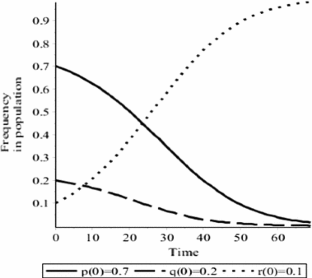
We study the effect of appending regular, wholesale prices with a conventional, single price-break point quantity discount offered by a supplier to multiple retailers engaged in a Cournot–Nash competition. It is commonly observed in real-life supply chains that the retail price does not drop at once to the extent of the wholesale price discount. We capture this inertia with an evolutionary analysis which assumes that not every retailer immediately adopts a discounting strategy. We find that evolutionary dynamics then might alter the expected final outcome of the competition and show that the supplier will not be able to induce simultaneously both perfect coordination and perfect competition regardless of the type of retailers he is dealing with. Moreover, though the profits the supply chain gains are highest when the supplier perfectly coordinates it, we show that the retailers retain a non-zero profit margin in such a case. As a result, the supplier will not necessarily want to coordinate the supply chain, preferring instead to gain the same amount of profit from the perfect competition between the retailers attracted by the discount.
Access this article
Subscribe and save
- Starting from 10 chapters or articles per month
- Access and download chapters and articles from more than 300k books and 2,500 journals
- Cancel anytime View plans
Buy Now
Price excludes VAT (USA)
Tax calculation will be finalised during checkout.
Instant access to the full article PDF.
Fig. 1
References
- Abad PL (1988) Joint price and lot-size determination when the supplier offers incremental quantity discounts. J Oper Res Soc 39:603–607
Article Google Scholar - Bernstein F, Song JS, Zheng X (2008) Bricks-and-mortar vs. clicks-and-mortar: an equilibrium analysis. Eur J Oper Res 187(3):671–690
Article Google Scholar - Blattberg RC, Neslin SA (1990) Sales promotion concepts, methods, and strategies. Prentice Hall, New Jersey
Google Scholar - Cai GS, Zhang Z, Zhang M (2009) Game theoretical perspectives on dual-channel supply chain competition with price discounts and pricing schemes. Int J Prod Econ 117(1):80–96
Article Google Scholar - Chen FR, Federgruen A, Zheng YS (2001) Coordination mechanisms for a distribution system with one supplier and multiple retailers. Manag Sci 47(5):693–708
Article Google Scholar - Cosguner K, Chan TY, Seetharaman S (2014) Dynamic pricing in a distribution channel in the presence of switching costs. SSRN: http://ssrn.com/abstract=2488622 or http://dx.doi.org/10.2139/ssrn.2488622
- Grewal D, Krishnan A, Baker J, Borin N (1998) The effect of store name, brand name and price discounts on consumers’ evaluations and purchase intentions. J Retail 74(3):331–352
Article Google Scholar - Hwang H, Kim KH (1986) Supplier’s discount policy with a single price break point. Eng Costs Prod Econ 10(4):279–286
Article Google Scholar - Ingene CA, Parry ME (1995) Channel coordination when retailers compete. Mark Sci 14(4):360–377
Article Google Scholar - Kennedy DS, Marrs J (2011) No B.S. price strategy: the ultimate no holds barred kick Butt take no prisoner guide to profits, power, and prosperity. Entrepreneur Press, Irvine
Google Scholar - Kim KH, Hwang H (1988) An incremental discount-pricing schedule with multiple customers and single price break. Eur J Oper Res 35:71–79
Article Google Scholar - Krishna A (1991) Effect of dealing patterns on consumer perceptions of deal frequency and willingness to pay. J Mark Res 28:441–451
Article Google Scholar - Lal R, Staelin R (1984) An approach for developing an optimal discount pricing policy. Manag Sci 30(12):1524–1539
Article Google Scholar - Lee HL, Padmanabhan V, Whang S (1997) Information distortion in a supply chain: the bullwhip effect. Manag Sci 43(4):546–558
Article Google Scholar - McKenzie JA (2009) Evolutionary game theory, stanford encyclopedia of philosophy. http://plato.stanford.edu/entries/game-evolutionary/
- Moorthy KS (1987) Managing channel profits: comments. Mark Sci 6:375–379
Article Google Scholar - Munson CL, Rosenblatt MJ (1998) Theories and realities of quantity discounts: an exploratory study. Prod Oper Manag 7(4):352–359
Article Google Scholar - Oliveira FS, Ruiz C, Conejo AJ (2013) Contract design and supply chain coordination in the electricity industry. Eur J Oper Res 227(3):527–537
Article Google Scholar - Qin YY, Tang HW, Guo CH (2007) Channel coordination and volume discounts with price-sensitive demand. Int J Prod Econ 105(1):43–53
Article Google Scholar - Rosenblatt MJ, Lee HL (1985) Improving profitability with quantity discounts under fixed demand. IIE Trans 17(4):388–395
Article Google Scholar - Sarmah SP, Acharya D, Goyal SK (2006) Buyer vendor coordination models in supply chain management. Eur J Oper Res 175(1):1–15
Article Google Scholar - Sinha S, Sarmah SP (2010a) Single-vendor multibuyer discount pricing model: an evolutionary computation based approach. Int J Oper Res 8(1):1–19
Article Google Scholar - Sinha S, Sarmah SP (2010b) Single-vendor multi-buyer discount pricing model under stochastic demand environment. Comput Ind Eng 59(4):945–953
Article Google Scholar - Taylor PD, Jonker LB (1978) Evolutionary stable strategies and game dynamics. Math Biosci 40:145–156
Article Google Scholar - Viswanathan S, Wang QN (2003) Discount pricing decisions in distribution channels with price-sensitive demand. Eur J Oper Res 149(3):571–587
Article Google Scholar - Wang Q (2002) Determination of suppliers’ optimal quantity discount schedules with heterogeneous buyers. Naval Res Logist 49(1):46–59
Article Google Scholar - Wang Q (2004) Coordinating independent buyers with integer-ratio time coordination and quantity discounts. Naval Res Logistics 51(3):316–331. doi:10.1002/nav.10117
Article Google Scholar - Wang Q, Wang R (2005) Quantity discount pricing policies for heterogeneous retailers with price sensitive demand. Naval Res Logist 52(7):645–658
Article Google Scholar - Weng Z (1995) Channel coordination and quantity discounts. Manag Sci 41(9):1509–1522
Article Google Scholar - Xia T, Li X (2010) Consumption inertia and asymmetric price transmission. J Agric Resour Econ 35(2):209–227
Google Scholar - Zeeman EC (1980) Population dynamics from game theory. In: Nitecki ZH, Robinson CR (eds) Global theory of dynamical systems (Evanston, 1979), Lecture Notes in Mathematics, vol 819. Springer, Berlin, pp 471–497
- Zhou Y, Li D-H (2007) Coordinating order quantity decisions in the supply chain contract under random demand. Appl Math Model 31:1029–1038
Article Google Scholar
Author information
Authors and Affiliations
- Department of Management, Bar-Ilan University, 52900, Ramat-Gan, Israel
Konstantin Kogan
Corresponding author
Correspondence toKonstantin Kogan.
Rights and permissions
About this article
Cite this article
Kogan, K. Discounting revisited: evolutionary perspectives on competition and coordination in a supply chain with multiple retailers.Cent Eur J Oper Res 27, 69–92 (2019). https://doi.org/10.1007/s10100-017-0490-y
- Published: 08 September 2017
- Issue date: 07 March 2019
- DOI: https://doi.org/10.1007/s10100-017-0490-y