A composite game of hide and seek (original) (raw)
Abstract
We consider a ‘manhunting’ game in which one player, the Hider, chooses one of several cells to hide and a second player, the Seeker, distributes his resources among the several cells. The cells differ in their characteristics: it may be easier to hide in some cells, or there may be a lower probability of betrayal in others, etc. The Hider’s survival probability depends on the characteristics of the cell chosen, as well as on the amount of resources which the Seeker expends in that cell. The Hider may need to carry out some activity while in his cell. If so, the activity creates a signal which can help the Seeker to locate the Hider. The Seeker must of course try to distinguish between the noise due to the activity and random “white” noise. We obtain a complete analytic solution for the case without signals. Simulation is used to develop good strategies for the case with signals.
Access this article
Subscribe and save
- Starting from 10 chapters or articles per month
- Access and download chapters and articles from more than 300k books and 2,500 journals
- Cancel anytime View plans
Buy Now
Price excludes VAT (USA)
Tax calculation will be finalised during checkout.
Instant access to the full article PDF.
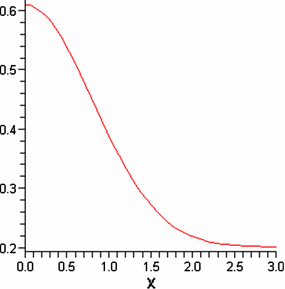
Fig. 1
References
- Brooks RR, Schwier J, Griffin C (2009) Markovian search games in heterogeneous spaces. IEEE Trans Syst Man Cybern B Cybern 39:626–35
Article Google Scholar - Dobbie JM (1975) Search for an avoiding target. SIAM J Appl Math 28:72–86
Article Google Scholar - Fokkink R, Lindelauf R (2013) The application of search games to counter terrorism studies. In: Alpern S, Fokkink R, Gasieniec L, Lindelauf R, Subrahmanian VS (eds) Search theory: a game theoretic perspective. Springer, New York, pp 543–547
Google Scholar - Forman JG (1977) Differential search games with a mobile hider. SIAM J Control Optim 15:841–56
Article Google Scholar - Gal S (1979) Search games with a mobile and immobile hider. SIAM J Control Optim 17:99–122
Article Google Scholar - Halpern B (1969) The robot and the rabbit—a pursuit problem. Am Math Mon 76:140–5
Google Scholar - McCormick GH, Owen G (2010) Manhunting: a simple search game. Int Game Theory Rev 12:293–308
Article Google Scholar - Nakai T (1986) A sequential evasion—search game with a goal. J Oper Res Soc Jpn 29:113–21
Article Google Scholar - Owen G, McCormick GH (2006) Finding a moving fugitive—a game theoretic representation of search. Comput Oper Res 35:1944–62
Article Google Scholar - Thomas LC, Washburn AR (1991) Dynamic search games. Oper Res 39:415–22
Article Google Scholar - Washburn AR (1980) Search evasion game in a fixed region. Oper Res 28:1290–8
Article Google Scholar
Author information
Authors and Affiliations
- Defense Analysis Department, Naval Postgraduate School, Monterey, CA, USA
Gordon McCormick - Department of Mathematics, Naval Postgraduate School, Monterey, CA, USA
Guillermo Owen
Authors
- Gordon McCormick
- Guillermo Owen
Corresponding author
Correspondence toGuillermo Owen.
Electronic supplementary material
Rights and permissions
About this article
Cite this article
McCormick, G., Owen, G. A composite game of hide and seek.Cent Eur J Oper Res 27, 1–14 (2019). https://doi.org/10.1007/s10100-017-0516-5
- Published: 05 January 2018
- Version of record: 05 January 2018
- Issue date: 07 March 2019
- DOI: https://doi.org/10.1007/s10100-017-0516-5