Quantum-inspired immune clonal algorithm for railway empty cars optimization based on revenue management and time efficiency (original) (raw)
Abstract
By proposing the concept of timeline, transform dynamic vehicle scheduling problem into a series of static vehicle scheduling problems. With the objective function of benefit maximization, the cloud preference model of dynamic empty car scheduling is built considering empty car delay time constraint. The non-dominated antibodies are proportionally immune clonal according to their cloud preference, which are defined by their cloud application preferences. It is beneficial to enhance the forecasting accuracy of the immune gene manipulation, and to increase the speed of finding the optimal solution based on the application preference. Experimental results conclusively demonstrate the efficiency and effectiveness of the improving system availability, load balancing deviation and valid time brought by the proposed algorithm in cloud computing environments, conditions and that more close to the reality, empty car scheduling model for specific time was established.
Access this article
Subscribe and save
- Starting from 10 chapters or articles per month
- Access and download chapters and articles from more than 300k books and 2,500 journals
- Cancel anytime View plans
Buy Now
Price excludes VAT (USA)
Tax calculation will be finalised during checkout.
Instant access to the full article PDF.
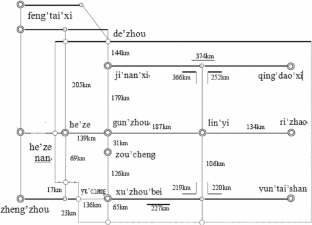
Fig. 1
References
- White, W.W., Bomerault, A.M.: A network algorithm for empty freight car allocation. IBM Syst. J. 8(2), 147–169 (1969)
Article Google Scholar - Milenković, M.S., Bojović, N.J., švadlenka, L., Melichar, V.: A stochastic model predictive control to heterogeneous rail freight car fleet sizing problem. Trans. Res. E 82, 162–198 (2015)
- Joborn, M., Crainic, T.G., Gendreau, M., Holmberg, K.: Economies of scale in empty freight car distribution in scheduled railways. Trans. Sci. 38(2), 121–134 (2004)
Article Google Scholar - Lu, G., Cheng, B., Wang, Y., Lin, Q.: A car-following model based on quantified homeostatic risk perception. Math. Probl. Eng. 2013(6), 165–185 (2013)
Google Scholar - He, B., Song, R., He, S., Xu, Y.: High-speed rail train timetabling problem: a time-space network based method with an improved branch-and-price algorithm. Math. Probl. Eng. 2014(1), 1–15 (2014)
Google Scholar - Bektaş, T., Crainic, T.G., Morency, V.: Improving the performance of rail yards through dynamic reassignments of empty cars. Trans. Res. C 17(3), 259–273 (2009)
Article Google Scholar - Milenković, M., Bojović, N.: A fuzzy random model for rail freight car fleet sizing problem. Trans. Res. C 33(33), 107–133 (2013)
Article Google Scholar - Shi, T., Zhou, X.: A mixed integer programming model for optimizing multi-level operations process in railroad yards. Trans. Res. B 80, 19–39 (2015)
Article Google Scholar - Qiea, I.: Quantum-inspired evolutionary algorithm for continuous space optimization based on multiple chains encoding method of quantum bits. Math. Probl. Eng. 2014(9), 166–183 (2014)
Google Scholar - Yang, S., Wang, M., Jiao, L.: Quantum-inspired immune clone algorithm and multiscale Bandelet based image representation. Pattern Recogn. Lett. 31(13), 1894–1902 (2010)
Article Google Scholar - Dong, W., Liu, X., Li, Y.: Analysis of stiffened penstock external pressure stability based on immune algorithm and neural network. Math. Probl. Eng. 2014(11), 1–11 (2014)
Google Scholar - Wu, T., Hou, R., Chen, Y.: Cloud model-based method for infrared image thresholding. Math. Probl. Eng. 2016(1), 1–18 (2016)
Google Scholar - Gu, J., Gu, M., Gu, X.: A mutualism quantum genetic algorithm to optimize the flow shop scheduling with pickup and delivery considerations. Math. Probl. Eng. 2015, 1–17 (2015)
Google Scholar
Acknowledgements
This study is supported by The National Natural Science Foundation of China (61403022); Supported by Beijing Natural Science Foundation (J160003); Supported by the Fundamental Research Funds for the Central Universities (2017JBM030).
Author information
Authors and Affiliations
- School of Traffic and Transportation, Beijing Jiaotong University, Beijing, 100044, China
Yun Jing, Yingke Liu & Mingkai Bi
Authors
- Yun Jing
- Yingke Liu
- Mingkai Bi
Corresponding author
Correspondence toYun Jing.
Ethics declarations
Conflicts of interest
The authors declare that they have no conflict of interest.
Rights and permissions
About this article
Cite this article
Jing, Y., Liu, Y. & Bi, M. Quantum-inspired immune clonal algorithm for railway empty cars optimization based on revenue management and time efficiency.Cluster Comput 22 (Suppl 1), 545–554 (2019). https://doi.org/10.1007/s10586-017-1292-7
- Received: 28 July 2017
- Revised: 25 September 2017
- Accepted: 26 October 2017
- Published: 16 November 2017
- Issue date: 16 January 2019
- DOI: https://doi.org/10.1007/s10586-017-1292-7