Bactericidal effect of silver nanoparticles against multidrug-resistant bacteria (original) (raw)
Abstract
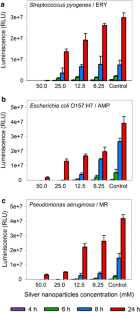
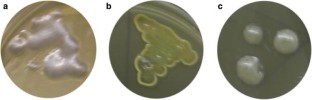
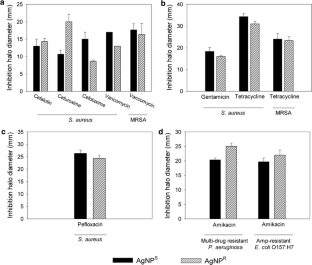
Infections caused by drug-resistant microorganisms result in significant increases in mortality, morbidity, and cost related to prolonged treatments. The antibacterial activity of silver nanoparticles against some drug-resistant bacteria has been established, but further investigation is needed to determine whether these particles could be an option for the treatment and prevention of drug-resistant microbial infections. Hence, we challenged different drug-resistant pathogens of clinical importance (multidrug-resistant Pseudomonas aeruginosa, ampicillin-resistant Escherichia coli O157:H7 and erythromycin-resistant Streptococcus pyogenes) with a suspension of silver nanoparticles. By means of a luciferase-based assay, it was determined that silver nanoparticles (1) inactivate a panel of drug-resistant and drug-susceptible bacteria (Gram positive and Gram negative), (2) exert their antibacterial activity through a bactericidal rather than bacteriostatic mechanism, and (3) inhibit the bacterial growth rate from the time of first contact between the bacteria and the nanoparticles. Additionally, strains with a resistant phenotype to silver nanoparticle were developed and used to explore the bactericidal mode of action of silver nanoparticles. Through a Kirby–Bauer test, it was shown that silver nanoparticles’ general mechanism of bactericidal action is based on inhibition of cell wall synthesis, protein synthesis mediated by the 30s ribosomal subunit, and nucleic acid synthesis. Our data suggest that silver nanoparticles are effective broad-spectrum biocides against a variety of drug-resistant bacteria, which makes them a potential candidate for use in pharmaceutical products and medical devices that may help to prevent the transmission of drug-resistant pathogens in different clinical environments.
Access this article
Subscribe and save
- Starting from 10 chapters or articles per month
- Access and download chapters and articles from more than 300k books and 2,500 journals
- Cancel anytime View plans
Buy Now
Price excludes VAT (USA)
Tax calculation will be finalised during checkout.
Instant access to the full article PDF.
Fig. 1
The alternative text for this image may have been generated using AI.
Fig. 2
The alternative text for this image may have been generated using AI.
Fig. 3
The alternative text for this image may have been generated using AI.
References
- Chopra I (2007) The increasing use of silver-based products as antimicrobial agents: a useful development or a cause for concern? J Antimicrob Chemother 59:587–590
Article CAS Google Scholar - Drake PL, Hazelwood KJ (2005) Exposure-related health effects of silver and silver compounds: a review. Ann Occup Hyg 49:575–585
Article CAS Google Scholar - Dunn K, Edwards-Jones V (2004) The role of Acticoat with nanocrystalline silver in the management of burns. Burns 30(Suppl 1):S1–S9
Article Google Scholar - Elechiguerra JL, Burt JL, Morones JR, Camacho-Bragado A, Gao X, Lara HH, Yacaman MJ (2005) Interaction of silver nanoparticles with HIV-1. J Nanobiotechnology 3:6
Article Google Scholar - French GL (2006) Bactericidal agents in the treatment of MRSA infections—the potential role of daptomycin. J Antimicrob Chemother 58:1107–1117
Article CAS Google Scholar - Gupta LK, Jindal R, Beri HK, Chhibber S (1992) Virulence of silver-resistant mutant of Klebsiella pneumoniae in burn wound model. Folia Microbiol (Praha) 37:245–248
Article CAS Google Scholar - Hoyme UB (1993) Clinical significance of Crede’s prophylaxis in Germany at present. Infect Dis Obstet Gynecol 1:32–36
Article CAS Google Scholar - Ip M, Lui SL, Poon VK, Lung I, Burd A (2006) Antimicrobial activities of silver dressings: an in vitro comparison. J Med Microbiol 55:59–63
Article CAS Google Scholar - Kong H, Jang J (2008) Antibacterial properties of novel poly (methyl methacrylate) nanofiber containing silver nanoparticles. Langmuir 24:2051–2056
Article CAS Google Scholar - Lok CN, Ho CM, Chen R, He QY, Yu WY, Sun H, Tam PK, Chiu JF, Che CM (2006) Proteomic analysis of the mode of antibacterial action of silver nanoparticles. J Proteome Res 5:916–924
Article CAS Google Scholar - Lok CN, Ho CM, Chen R, He QY, Yu WY, Sun H, Tam PK, Chiu JF, Che CM (2007) Silver nanoparticles: partial oxidation and antibacterial activities. J Biol Inorg Chem 12:527–534
Article CAS Google Scholar - Lut L, Sun RW, Chen R, Hui CK, Ho CM, Luk JM, Lau GK, Che CM (2008) Silver nanoparticles inhibit hepatitis B virus replication. Antivir Ther 13:253–262
Google Scholar - Matsumura Y, Yoshikata K, Kunisaki S, Tsuchido T (2003) Mode of bactericidal action of silver zeolite and its comparison with that of silver nitrate. Appl Environ Microbiol 69:4278–4281
Article CAS Google Scholar - McDonnell GE (2007) Chemical disinfection. In: Antisepsis, disinfection, and sterilization, pp 111–115
- Morones JR, Elechiguerra JL, Camacho A, Holt K, Kouri JB, Tapia J, Yacaman MJ (2005) The bactericidal effect of silver nanoparticles. Nanotechnology 16:2346–2353
Article CAS Google Scholar - Pal S, Tak YK, Song JM (2007) Does the antibacterial activity of silver nanoparticles depend on the shape of the nanoparticle? A study of the Gram-negative bacterium Escherichia coli. Appl Environ Microbiol 73:1712–1720
Article CAS Google Scholar - Petica A, Gavriliu S, Lungu M, Buruntea N, Panzaru C (2008) Colloidal silver solutions with antimicrobial properties. Mater Sci Eng 152:22–27
Article CAS Google Scholar - Rai M, Yadav A, Gade A (2009) Silver nanoparticles as a new generation of antimicrobials. Biotechnol Adv 27:76–83
Article CAS Google Scholar - Shrivastava S, Bera T, Roy A, Singh G, Ramachandrarao P, Dash D (2007) Characterization of enhanced antibacterial effects of novel silver nanoparticles. Nanotechnology 18:1–9
Article Google Scholar - Sondi I, Salopek-Sondi B (2004) Silver nanoparticles as antimicrobial agent: a case study on E. coli as a model for gram-negative bacteria. J Colloid Interface Sci 275:177–182
Article CAS Google Scholar - Webb GF, D’Agata EM, Magal P, Ruan S (2005) A model of antibiotic-resistant bacterial epidemics in hospitals. Proc Natl Acad Sci USA 102:13343–13348
Article CAS Google Scholar - World Health Organization (2007) WHO Model of essential medicines. Online source
- Yamanaka M, Hara K, Kudo J (2005) Bactericidal actions of a silver ion solution on Escherichia coli, studied by energy-filtering transmission electron microscopy and proteomic analysis. Appl Environ Microbiol 71:7589–7593
Article CAS Google Scholar
Acknowledgments
The following funding sources supported the data collection process: the Programa de Apoyo a la Investigacion en Ciencia y Tecnologia (PAICyT) from the Universidad Autonoma de Nuevo Leon, Mexico.
Author information
Authors and Affiliations
- Laboratorio de Inmunologia y Virologia, Universidad Autonoma de Nuevo Leon, Edificio C, 3er piso, Facultad de Ciencias Biologicas, Ave. Pedro de Alba S/N, Ciudad Universitaria, C.P. 66451, San Nicolás de los Garza, Nuevo León, Mexico
Humberto H. Lara, Nilda V. Ayala-Núñez, Liliana del Carmen Ixtepan Turrent & Cristina Rodríguez Padilla
Authors
- Humberto H. Lara
- Nilda V. Ayala-Núñez
- Liliana del Carmen Ixtepan Turrent
- Cristina Rodríguez Padilla
Corresponding author
Correspondence toHumberto H. Lara.
Additional information
Humberto H. Lara and Nilda V. Ayala-Núñez made equal contributions to this study.
Rights and permissions
About this article
Cite this article
Lara, H.H., Ayala-Núñez, N.V., Ixtepan Turrent, L.d.C. et al. Bactericidal effect of silver nanoparticles against multidrug-resistant bacteria.World J Microbiol Biotechnol 26, 615–621 (2010). https://doi.org/10.1007/s11274-009-0211-3
- Received: 09 June 2009
- Accepted: 05 October 2009
- Published: 22 October 2009
- Issue date: April 2010
- DOI: https://doi.org/10.1007/s11274-009-0211-3