Weight Regain After Bariatric Surgery: Prevalence, Etiology, and Treatment (original) (raw)
Abstract
Purpose of Review
Obesity is a life-limiting disease that is associated with a number of co-morbidities. Bariatric surgery remains the most efficacious and durable weight loss method available to patients. However, a significant percentage of patients can regain weight resulting in frustration, depression, and return of obesity-related co-morbidities. The present review provides an overview of the most common therapeutic modalities available to combat weigh regain after weight loss surgery.
Recent Findings
Given the high percentage of patients with weight regain after surgery, significant effort has been placed on developing treatment options in the last few years. Tremendous work has taken place in the realm of cognitive behavior therapy, appetite suppressants, and endoscopic procedures with the hope of reducing the need for revision surgery which can be associated with significant complications.
Summary
Weight regain is unfortunately a common phenomenon associated with all weight loss modalities including bariatric surgery. We now have a number of treatment options that can reverse the weight loss trend.
Access this article
Subscribe and save
- Starting from 10 chapters or articles per month
- Access and download chapters and articles from more than 300k books and 2,500 journals
- Cancel anytime View plans
Buy Now
Price excludes VAT (USA)
Tax calculation will be finalised during checkout.
Instant access to the full article PDF.
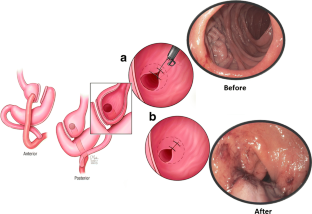
Fig. 1
References
Papers of particular interest, published recently, have been highlighted as: • Of importance •• Of major importance
- • Finkelstein EA, Khavjou OA, Thompson H, et al. Obesity and severe obesity forecasts through 2030. Am J Prev Med. 2012;42(6):563–70. https://doi.org/10.1016/j.amepre.2011.10.026. This manuscript highlights the overall trends in obesity with prediction through 2030.
Article PubMed Google Scholar - Kraschnewski JL, Boan J, Esposito J, Sherwood NE, Lehman EB, Kephart DK, et al. Long-term weight loss maintenance in the United States. Int J Obes. 2010;34(11):1644–54.
Article CAS Google Scholar - Anderson JW, Konz EC, Frederich RC, Wood CL. Long-term weight-loss maintenance: a meta-analysis of US studies. Am J Clin Nutr. 2001;74(5):579–84.
Article CAS Google Scholar - Weiss EC, Galuska DA, Kettel Khan L, Gillespie C, Serdula MK. Weight regain in U.S. adults who experienced substantial weight loss, 1999-2002. Am J Prev Med. 2007;33(1):34–40.
Article Google Scholar - Estimate of Bariatric Surgery Numbers 2011-2016 American Society for Metabolic and Bariatric Surgery. https://asmbs.org/resources/estimate-of-bariatric-surgery-numbers. Accessed May 15, 2018
- •• Sjöström L, Lindroos A-K, Peltonen M, et al. Lifestyle, diabetes, and cardiovascular risk factors 10 years after bariatric surgery. N Engl J Med. 2004;351(26):2683–93. https://doi.org/10.1056/NEJMoa035622. A key landmark study that evaluated the impact of bariatric surgery on various obesity-related co-morbidities showing significant benefits compared to patients who did not undergo surgery.
Article PubMed Google Scholar - • Ikramuddin S, et al. Roux-en-Y gastric bypass vs intensive medical Management for the control of type 2 diabetes, hypertension, and hyperlipidemia: the diabetes surgery study randomized clinical trial. JAMA. 2013;309(21):2240–9. An important study showing impact of bariatric surgery on type 2 diabetes.
Article CAS Google Scholar - • Schauer PR, et al. Bariatric surgery versus intensive medical therapy in obese patients with diabetes. N Engl J Med. 2012;366(17):1567–76. A large randomized control trial that revealed improvement in diabetes control with bariatric surgery including the need for less medication.
Article CAS Google Scholar - Mingrone G, Panunzi S, de Gaetano A, Guidone C, Iaconelli A, Leccesi L, et al. Bariatric surgery versus conventional medical therapy for type 2 diabetes. N Engl J Med. 2012;366(17):1577–85.
Article CAS Google Scholar - Bond DS, Phelan S, Leahey TM, Hill JO, Wing RR. Weight-loss maintenance in successful weight losers: surgical vs non-surgical methods. Int J Obes. 2008;33(1):173–80.
Article Google Scholar - Dayyeh BKA, Lautz DB, Thompson CC. Gastrojejunal stoma diameter predicts weight regain after Roux-en-Y gastric bypass. Clin Gastroenterol Hepatol. 2011;9(3):228–33. https://doi.org/10.1016/j.cgh.2010.11.004.
Article PubMed Google Scholar - Christou NV, Look D, Maclean LD. Weight gain after short- and long-limb gastric bypass in patients followed for longer than 10 years. Ann Surg. 2006;244(5):734–40. https://doi.org/10.1097/01.sla.0000217592.04061.d5.
Article PubMed PubMed Central Google Scholar - Odom J, Zalesin KC, Washington TL, Miller WW, Hakmeh B, Zaremba DL, et al. Behavioral predictors of weight regain after bariatric surgery. Obes Surg. 2010;20(3):349–56. https://doi.org/10.1007/s11695-009-9895-6.
Article PubMed Google Scholar - Rutledge T, Groesz LM, Savu M. Psychiatric factors and weight loss patterns following gastric bypass surgery in a veteran population. Obes Surg. 2009;21(1):29–35. https://doi.org/10.1007/s11695-009-9923-6.
Article PubMed PubMed Central Google Scholar - •• Mitchell JE, Christian NJ, Flum DR, et al. Postoperative behavioral variables and weight change 3 years after bariatric surgery. JAMA Surg. 2016;151(8):752–7. https://doi.org/10.1001/jamasurg.2016.0395. An excellent study analyzing the variables related to weight regain after bariatric surgery.
Article PubMed PubMed Central Google Scholar - Pizato N, Botelho PB, Gonçalves VSS, Dutra ES, Carvalho KMB. Effect of grazing behavior on weight regain post-bariatric surgery: a systematic review. Nutrients. 2017;9(12):1322. https://doi.org/10.3390/nu9121322.
Article PubMed Central Google Scholar - Himes SM, Grothe KB, Clark MM, Swain JM, Collazo-Clavell ML, Sarr MG. Stop regain: a pilot psychological intervention for bariatric patients experiencing weight regain. Obes Surg. 2015;25(5):922–7.
Article Google Scholar - Kalarchian MA, Marcus MD, Courcoulas AP, Cheng Y, Levine MD, Josbeno D. Optimizing long-term weight control after bariatric surgery: a pilot study. Surg Obes Relat Dis. 2012;8(6):710–5, ISSN 1550-7289. https://doi.org/10.1016/j.soard.2011.04.231.
Article PubMed Google Scholar - Sarwer DB, Dilks RJ, West-Smith L. Dietary intake and eating behavior after bariatric surgery: threats to weight loss maintenance and strategies for success. Surg Obes Relat Dis. 2011;7(5):644–51, ISSN 1550-7289. https://doi.org/10.1016/j.soard.2011.06.016.
Article PubMed Google Scholar - Bradley LE, Forman EM, Kerrigan SG, Butryn ML, Herbert JD, Sarwer DB. A Pilot Study of an Acceptance-Based Behavioral Intervention for Weight Regain After Bariatric Surgery. Obes Surg. 2016;26:2433–41. https://doi.org/10.1007/s11695-016-2125-0.
Article PubMed Google Scholar - Bradley LE, Forman EM, Kerrigan SG, Goldstein SP, Butryn ML, Thomas JG, et al. Project HELP: a Remotely Delivered Behavioral Intervention for Weight Regain after Bariatric Surgery. Obes Surg. 2017;27:586–98. https://doi.org/10.1007/s11695-016-2337-3.
Article PubMed Google Scholar - Burke LE, Wang J, Sevick MA. Self-monitoring in weight loss: a systematic review of the literature. J Am Diet Assoc. 2011;111:92–102.
Article Google Scholar - Guerciolini R. Mode of action of orlistat. Int J Obes Relat Metab Disord. 1997;21(Suppl 3):S12–23.
CAS PubMed Google Scholar - Garvey WT, Ryan DH, Look M, Gadde KM, Allison DB, Peterson CA, et al. Two-year sustained weight loss and metabolic benefits with controlled-release phentermine/topiramate in obese and overweight adults (SEQUEL): a randomized, placebo-controlled, phase 3 extension study. Am J Clin Nutr. 2012;95(2):297–308.
Article CAS Google Scholar - Greenway FL, Fujioka K, Plodkowski RA, Mudaliar S, Guttadauria M, Erickson J, et al. Effect of naltrexone plus bupropion on weight loss in overweight and obese adults (COR-I): a multicentre, randomised, double-blind, placebo-controlled, phase 3 trial. Lancet. 2010;376(9741):595–605.
Article CAS Google Scholar - Astrup A, Carraro R, Finer N, Harper A, Kunesova M, Lean ME, et al. Safety, tolerability and sustained weight loss over 2 years with the once-daily human GLP-1 analog, liraglutide. Int J Obes. 2012;36(6):843–54.
Article CAS Google Scholar - Smith SR, Weissman NJ, Anderson CM, Sanchez M, Chuang E, Stubbe S, et al. Multicenter, placebo-controlled trial of lorcaserin for weight management. N Engl J Med. 2010;363(3):245–56.
Article CAS Google Scholar - Jester L, Wittgrove AC, Clark W. Adjunctive use of appetite suppressant medications for improved weight management in bariatric surgical patients. Obes Surg. 1996;6(5):412–5.
Article CAS Google Scholar - Zilberstein B, Pajecki D, Garcia de Brito AC, Gallafrio ST, Eshkenazy R, Andrade CG. Topiramate after adjustable gastric banding in patients with binge eating and difficulty losing weight. Obes Surg. 2004;14(6):802–5.
Article Google Scholar - Stanford FC, Alfaris N, Gomez G, Ricks ET, Shukla AP, Corey KE, et al. The utility of weight loss medications after bariatric surgery for weight regain or inadequate weight loss: a multi-center study. Surg Obes Relat Dis. 2017;13(3):491–500.
Article Google Scholar - Garvey WT, et al. American Association of Clinical Endocrinologists and American College of Endocrinology comprehensive clinical practice guidelines for medical care of patients with obesity. Endocr Pract. 2016;22(Suppl 3):1–203.
Article Google Scholar - Nor Hanipah Z, Nasr EC, Bucak E, Schauer PR, Aminian A, Brethauer SA, et al. Efficacy of adjuvant weight loss medication after bariatric surgery. Surg Obes Relat Dis. 2018;14(1):93–8.
Article Google Scholar - •• Vargas EJ, Bazerbachi F, Rizk M, et al. Transoral outlet reduction with full thickness endoscopic suturing for weight regain after gastric bypass: a large multicenter international experience and meta-analysis. Surg Endosc. 2017:1–8. https://doi.org/10.1007/s00464-017-5671-1. Retrospective evaluation and meta-analysis of the impact of TORe on weight regain after bariatric surgery.
Article Google Scholar - Patel S, Szomstein S, Rosenthal RJ. Reasons and outcomes of reoperative bariatric surgery for failed and complicated procedures (excluding adjustable gastric banding). Obes Surg. 2011;21(8):1209–19. https://doi.org/10.1007/s11695-010-0234-8.
Article PubMed Google Scholar - Kuzminov A, Palmer AJ, Wilkinson S, Khatsiev B, Venn AJ. Re-operations after secondary bariatric surgery: a systematic review. Obes Surg. 2016;26(9):2237–47. https://doi.org/10.1007/s11695-016-2252-7.
Article PubMed Google Scholar - Ferraz ÁAB, de SLT, Filho EN, et al. Revision surgery for treatment of weight regain after Roux-En-Y gastric bypass. Obes Surg. 2014;24(1):2–8. https://doi.org/10.1007/s11695-013-1055-3.
Article PubMed Google Scholar
Author information
Authors and Affiliations
- Division of Endocrinology, Diabetes, Metabolism, and Nutrition, Mayo Clinic, 200 1st Street SW, Rochester, MN, 55905, USA
Saketh R. Velapati, Meera Shah, Aravind R. Kuchkuntla, Ryan T. Hurt & Manpreet S. Mundi - Division of Gastroenterology, Mayo Clinic, Rochester, MN, USA
Barham Abu-dayyeh & Ryan T. Hurt - Department of Psychiatry, Mayo Clinic, Rochester, MN, USA
Karen Grothe - Division of General Internal Medicine, Mayo Clinic, Rochester, MN, USA
Ryan T. Hurt
Authors
- Saketh R. Velapati
- Meera Shah
- Aravind R. Kuchkuntla
- Barham Abu-dayyeh
- Karen Grothe
- Ryan T. Hurt
- Manpreet S. Mundi
Contributions
Manpreet Mundi and Ryan Hurt formulated an outline of the manuscript. Saketh Velapati created the first draft. Manpreet Mundi, Meera Shah, Aravind Kuchkuntla, Karen Grothe, Barham Abu-Dayyeh, and Ryan Hurt critically revised the manuscript. All authors agree to be responsible for its content.
Corresponding author
Correspondence toManpreet S. Mundi.
Ethics declarations
Conflict of Interest
Saketh R. Velapati declares that he has no conflict of interest.
Meera Shah declares that she has no conflict of interest.
Aravind R. Kuchkuntla declares that he has no conflict of interest.
Barham Abu-dayyeh has received research support from Apollo Endosurgery.
Karen Grothe declares that she has no conflict of interest.
Ryan T. Hurt has served as a consultant for Nestlé.
Manpreet S. Mundi declares that he has no conflict of interest.
Human and Animal Rights and Informed Consent
This article does not contain any studies with human or animal subjects performed by any of the authors.
Additional information
This article is part of the Topical Collection on Gastroenterology, Critical Care, and Lifestyle Medicine
Rights and permissions
About this article
Cite this article
Velapati, S.R., Shah, M., Kuchkuntla, A.R. et al. Weight Regain After Bariatric Surgery: Prevalence, Etiology, and Treatment.Curr Nutr Rep 7, 329–334 (2018). https://doi.org/10.1007/s13668-018-0243-0
- Published: 30 August 2018
- Version of record: 30 August 2018
- Issue date: December 2018
- DOI: https://doi.org/10.1007/s13668-018-0243-0