Coherent control of macroscopic quantum states in a single-Cooper-pair box (original) (raw)
- Letter
- Published: 29 April 1999
Nature volume 398, pages 786–788 (1999)Cite this article
- 27k Accesses
- 2347 Citations
- 148 Altmetric
- Metrics details
Abstract
A nanometre-scale superconducting electrode connected to a reservoir via a Josephson junction constitutes an artificial two-level electronic system: a single-Cooper-pair box. The two levels consist of charge states (differing by 2_e_, where e is the electronic charge) that are coupled by tunnelling of Cooper pairs through the junction. Although the two-level system is macroscopic, containing a large number of electrons, the two charge states can be coherently superposed1,2,3,4. The Cooper-pair box has therefore been suggested5,6,7 as a candidate for a quantum bit or ‘qubit’—the basic component of a quantum computer. Here we report the observation of quantum oscillations in a single-Cooper-pair box. By applying a short voltage pulse via a gate electrode, we can control the coherent quantum state evolution: the pulse modifies the energies of the two charge states non-adiabatically, bringing them into resonance. The resulting state—a superposition of the two charge states—is detected by a tunnelling current through a probe junction. Our results demonstrate electrical coherent control of a qubit in a solid-state electronic device.
This is a preview of subscription content, access via your institution
Access options
Subscribe to this journal
Receive 51 print issues and online access
$199.00 per year
only $3.90 per issue
Buy this article
- Purchase on SpringerLink
- Instant access to the full article PDF.
USD 39.95
Prices may be subject to local taxes which are calculated during checkout
Additional access options:
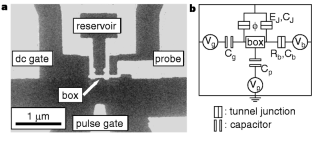
Figure 1: Single-Cooper-pair box with a probe junction.
The alternative text for this image may have been generated using AI.
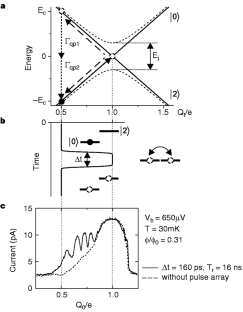
Figure 2: Pulse modulation of quantum states.
The alternative text for this image may have been generated using AI.
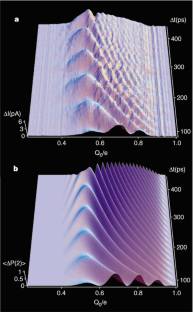
Figure 3: Effect of applying pulses as a function of d.c.-induced charge Q 0 and pulse length Δ_t_.
The alternative text for this image may have been generated using AI.
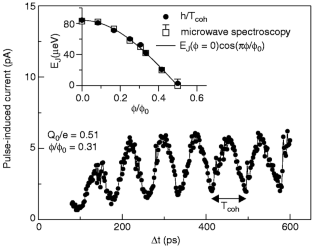
Figure 4: Pulse-induced current as a function of the pulse length Δ_t_.
The alternative text for this image may have been generated using AI.
References
- Bouchiat, V., Vion, D., Joyez, P., Esteve, D. & Devoret, M. H. Quantum coherence with a single Cooper pair. Physica Scripta T 76, 165–170 (1998).
Article ADS Google Scholar - Joyez, P., Lafarge, P., Filipe, A., Esteve, D. & Devoret, M. H. Observation of parity-induced suppression of Josephson tunneling in the superconducting single electron transistor. Phys. Rev. Lett. 72, 2458–2461 (1994).
Article ADS CAS Google Scholar - Flees, D., Han, S. & Lukens, J. Interband transitions and band gap measurements in Bloch transistors. Phys. Rev. Lett. 78, 4817–4820 (1997).
Article ADS CAS Google Scholar - Nakamura, Y., Chen, C. D. & Tsai, J. S. Spectroscopy of energy-level splitting between two macroscopic quantum states of charge coherently superposed by Josephson coupling. Phys. Rev. Lett. 79, 2328–2331 (1997).
Article ADS CAS Google Scholar - Shnirman, A., Schön, G. & Hermon, Z. Quantum manipulation of small Josephson junctions. Phys. Rev. Lett. 79, 2371–2374 (1997).
Article ADS CAS Google Scholar - Averin, D. V. Adiabatic quantum computation with Cooper pairs. Solid State Commun. 105, 659–664 (1998).
Article ADS CAS Google Scholar - Makhlin, Yu., Schön, G. & Shnirman, A. Josephson-junction qubits with controlled couplings. Nature 398, 305–307 (1999).
Article ADS CAS Google Scholar - Shedelbeck, G., Wegscheider, W., Bichler, M. & Abstreiter, G. Coupled quantum dots fabricated by cleaved edge overgrowth: from artificial atoms to molecules. Science 278, 1792–1795 (1997).
Article ADS Google Scholar - Oosterkamp, T. H.et al. Microwave spectroscopy of a quantum-dot molecule. Nature 395, 873–876 (1998).
Article ADS CAS Google Scholar - Bonadeo, N. H.et al. Coherent optical control of the quantum state of a single quantum dot. Science 282, 1473–1476 (1998).
Article CAS Google Scholar - Loss, D. & DiVincenzo, D. P. Quantum computation with quantum dots. Phys. Rev. A 57, 120–126 (1998).
Article ADS CAS Google Scholar - Kane, B. E. Asilicon-based nuclear spin quantum computer. Nature 393, 133–137 (1998).
Article ADS CAS Google Scholar - Leggett, A. J. in Chance and Matter(eds Souletie, J., Vannimenus, J. & Stora, R.) 395–506 (Elsevier, Amsterdam, (1984).
Google Scholar - Tesche, C. D. Can a noninvasive measurement of magnetic flux be performed with superconducting circuits? Phys. Rev. Lett. 64, 2358–2361 (1990).
Article ADS CAS Google Scholar - Neumann, F., Ingold, G.-L. & Grabert, H. Influence of the environment on charge quantization in small superconducting islands. Phys. Rev. B 50, 12811–12819 (1994).
Article ADS CAS Google Scholar - Fulton, T. A., Gammel, P. L., Bishop, D. J., Dunkleberger, L. N. & Dolan, G. J. Observation of combined Josephson and charging effects in small tunnel junction circuits. Phys. Rev. Lett. 63, 1307–1310 (1989).
Article ADS CAS Google Scholar - Averin, D. V. & Aleshkin, V. Ya. Resonant tunneling of Cooper pairs in a system of two small Josephson junctions. JETP Lett. 50, 367–369 (1989).
ADS Google Scholar
Acknowledgements
We thank W. Hattori, M. Baba and H. Suzuki for experimental help and M. Ueda, Y.Kohno, M. H. Devoret and Y. Ootuka for discussions. This work was supported by the Core Research for Evolutional Science and Technology (CREST) of the Japan Science and Technology Corporation (JST).
Author information
Authors and Affiliations
- NEC Fundamental Research Laboratories, Tsukuba, 305-8051, Ibaraki, Japan
Y. Nakamura & J. S. Tsai - CREST, Japan Science and Technology Corporation (JST), Kawaguchi, 332-0012, Saitama, Japan
Yu. A. Pashkin
Authors
- Y. Nakamura
- Yu. A. Pashkin
- J. S. Tsai
Corresponding author
Correspondence toY. Nakamura.
Rights and permissions
About this article
Cite this article
Nakamura, Y., Pashkin, Y. & Tsai, J. Coherent control of macroscopic quantum states in a single-Cooper-pair box.Nature 398, 786–788 (1999). https://doi.org/10.1038/19718
- Received: 26 January 1999
- Accepted: 18 March 1999
- Issue date: 29 April 1999
- DOI: https://doi.org/10.1038/19718
This article is cited by
Entanglement in Resonance Fluorescence
- Juan Camilo López Carreño
- Santiago Bermúdez Feijoo
- Magdalena Stobińska
npj Nanophotonics (2024)
Observation and manipulation of quantum interference in a superconducting Kerr parametric oscillator
- Daisuke Iyama
- Takahiko Kamiya
- Jaw-Shen Tsai
Nature Communications (2024)
Quantum Metrology in the Presence of Quantum Oscillations
- Seyed Mohammad Hosseiny
- Jamileh Seyed-Yazdi
- Fatemeh Irannezhad
International Journal of Theoretical Physics (2024)
Nonlinear feedforward enabling quantum computation
- Atsushi Sakaguchi
- Shunya Konno
- Akira Furusawa
Nature Communications (2023)
Inductively shunted transmons exhibit noise insensitive plasmon states and a fluxon decay exceeding 3 hours
- F. Hassani
- M. Peruzzo
- J. M. Fink
Nature Communications (2023)