An asparaginyl endopeptidase processes a microbial antigen for class II MHC presentation (original) (raw)
- Letter
- Published: 17 December 1998
Nature volume 396, pages 695–699 (1998) Cite this article
- 2209 Accesses
- 338 Citations
- 9 Altmetric
- Metrics details
Abstract
Foreign protein antigens must be broken down within endosomes or lysosomes to generate suitable peptides that will form complexes with class II major histocompatibility complex molecules for presentation to T cells. However, it is not known which proteases are required for antigen processing. To investigate this, we exposed a domain of the microbial tetanus toxin antigen (TTCF) to disrupted lysosomes that had been purified from a human B-cell line. Here we show that the dominant processing activity is not one of the known lysosomal cathepsins, which are generally believed to be the principal enzymes involved in antigen processing, but is instead an asparagine-specific cysteine endopeptidase. This enzyme seems similar or identical to a mammalian homologue1 of the legumain/haemoglobinase asparaginyl endopeptidases found originally in plants2 and parasites3. We designed competitive peptide inhibitors of B-cell asparaginyl endopeptidase (AEP) that specifically block its proteolytic activity and inhibit processing of TTCF in vitro. In vivo, these inhibitors slow TTCF presentation to T cells, whereas preprocessing of TTCF with AEP accelerates its presentation, indicating that this enzyme performs a key step in TTCF processing. We also show that _N_-glycosylation of asparagine residues blocks AEP action in vitro. This indicates that _N_-glycosylation could eliminate sites of processing by AEP in mammalian proteins, allowing preferential processing of microbial antigens.
This is a preview of subscription content, access via your institution
Access options
Subscribe to this journal
Receive 51 print issues and online access
$199.00 per year
only $3.90 per issue
Buy this article
- Purchase on SpringerLink
- Instant access to the full article PDF.
USD 39.95
Prices may be subject to local taxes which are calculated during checkout
Additional access options:
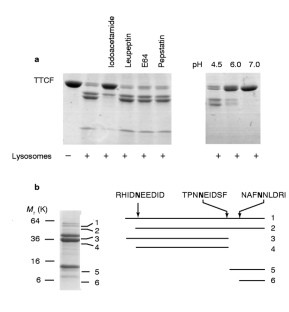
Figure 1: Processing of TTCF by a leupeptin-insensitive cysteine endopeptidase activity.
The alternative text for this image may have been generated using AI.
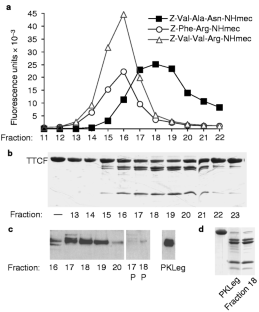
Figure 2: TTCF is processed by an asparaginyl endopeptidase.
The alternative text for this image may have been generated using AI.
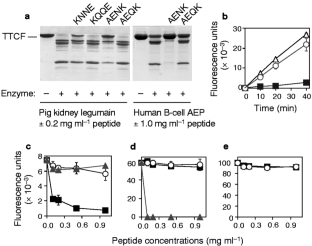
Figure 3: Specific peptide inhibitors of asparaginyl endopeptidase.
The alternative text for this image may have been generated using AI.
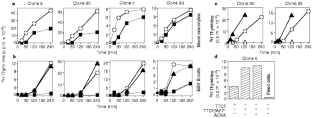
Figure 4: TTCF processing and presentation requires AEP in vivo.
The alternative text for this image may have been generated using AI.
Figure 5: Asparagine _N_-glycosylation blocks asparaginyl endopeptidase action.

The alternative text for this image may have been generated using AI.
References
- Chen, J. M.et al. Cloning, isolation, and characterisation of mammalian legumain, an asparaginyl endopeptidase. J. Biol. Chem. 272, 8090–8098 (1997).
Article CAS Google Scholar - Kembhavi, A. A., Buttle, D. J., Knight, C. G. & Barrett, A. J. The two cysteine endopeptidases of legume seeds: purification and characterization by use of specific fluorometric assays. Arch. Biochem. Biophys. 303, 208–213 (1993).
Article CAS Google Scholar - Dalton, J. P., Hola Jamriska, L. & Bridley, P. J. Asparaginyl endopeptidase activity in adult Schistosoma mansoni. Parasitology 111, 575–580 (1995).
Article CAS Google Scholar - Bennett, K.et al. Antigen processing for presentation by class II major histocompatibility complex requires cleavage by cathespin E. Eur. J. Immunol. 22, 1519–1524 (1992).
Article CAS Google Scholar - Riese, R. J.et al. Essential role for cathepsin S in MHC class II-associated invariant chain processing and peptide loading. Immunity 4, 357–366 (1996).
Article CAS Google Scholar - Rodriguez, G. M. & Diment, S. Role of cathepsin D in antigen presentation of ovalbumin. J. Immunol. 149, 2894–2898 (1992).
CAS PubMed Google Scholar - Hewitt, E. W.et al. Natural processing sites for human cathepsin E and cathepsin D in tetanus toxin: implications for T cell epitope generation. J. Immunol. 159, 4693–4699 (1997).
CAS PubMed Google Scholar - Watts, C. Capture and processing of exogenous antigens for presentation on MHC molecules. Annu. Rev. Immunol. 15, 821–850 (1997).
Article CAS Google Scholar - Chapman, H. A. Endosomal proteases and MHC class II function. Curr. Opin. Immunol. 10, 93–102 (1998).
Article CAS Google Scholar - Fineschi, B. & Miller, J. Endosomal proteases and antigen processing. Trends Biochem. Sci. 22, 377–382 (1997).
Article CAS Google Scholar - Lu, J. & van Halbeek, H. Complete 1H and 13C resonance assignments of a 21-amino acid glycopeptide prepared from human serum transferrin. Carbohydr. Res. 296, 1–21 (1996).
Article CAS Google Scholar - Fearon, D. T. & Locksley, R. M. The instructive role of innate immunity in the acquired immune response. Science 272, 50–54 (1996).
Article ADS CAS Google Scholar - Medzhitov, R. & Janeway, C. A. J. Innate immunity: the virtues of a nonclonal system of recognition. Cell 91, 295–298 (1997).
Article CAS Google Scholar - Wyatt, R.et al. The antigenic structure of the HIV gp120 envelope glycoprotein. Nature 393, 705–711 (1998).
Article ADS CAS Google Scholar - Botarelli, P.et al. N-glycosylation of HIV gp120 may constrain recognition by T lymphocytes. J. Immunol. 147, 3128–3132 (1991).
CAS PubMed Google Scholar - Davidson, H. W., West, M. A. & Watts, C. Endocytosis, intracellular trafficking, and processing of membrane IgG and monovalent antigen/membrane IgG complexes in B lymphocytes. J. Immunol. 144, 4101–4109 (1990).
CAS PubMed Google Scholar - Barrett, A. J. & Kirschke, H. Cathepsin B, cathepsin H and cathepsin L. Methods Enzymol. 80, 535–559 (1981).
Article CAS Google Scholar - Makoff, A. J., Ballantine, S. P., Smallwood, A. E. & Fairweather, N. F. Expression of tetanus toxin fragment C in E. coli: its purification and potential use as a vaccine. Biotechnology 7, 1043–1046 (1989).
CAS Google Scholar - Lane, D. P. & Harlow, E. Antibodies: A Laboratory Manual (Cold Spring Harbor Laboratory Press, 1988).
Google Scholar - Lanzavecchia, A. Antigen-specific interaction between T and B cells. Nature 314, 537–539 (1985).
Article ADS CAS Google Scholar - Pond, L. & Watts, C. Characterization of transport of newly assembled, T cell-stimulatory MHC class II-peptide complexes from MHC class II compartments to the cell surface. J. Immunol. 159, 543–553 (1997).
CAS PubMed Google Scholar
Acknowledgements
We thank M. Ferguson for helpful discussions and advice; E. Smythe and L. Grayson for advice and technical assistance; B. Spruce, A. Knight and the BTS (Ninewells Hospital) for help with blood monocyte preparation; and our colleagues for many helpful comments on the manuscript. This work was supported by the Wellcome Trust and by an EMBO Long-term fellowship to B. M.
Author information
Authors and Affiliations
- Department of Biochemistry, Wellcome Sciences Building, University of Dundee, DD1 5EH, Dundee, UK
Bénédicte Manoury, Eric W. Hewitt & Colin Watts - Department of Biochemistry, MRC Protein Phosphorylation Unit, University of Dundee, DD1 5EH, Dundee, UK
Nick Morrice - Department of Immunology, Medical Research Council Peptidase Laboratory, The Babraham Institute, Babraham Hall, CB2 4AT, Babraham, UK
Pam M. Dando & Alan J. Barrett
Authors
- Bénédicte Manoury
- Eric W. Hewitt
- Nick Morrice
- Pam M. Dando
- Alan J. Barrett
- Colin Watts
Corresponding author
Correspondence toColin Watts.
Rights and permissions
About this article
Cite this article
Manoury, B., Hewitt, E., Morrice, N. et al. An asparaginyl endopeptidase processes a microbial antigen for class II MHC presentation.Nature 396, 695–699 (1998). https://doi.org/10.1038/25379
- Received: 29 September 1998
- Accepted: 03 November 1998
- Issue date: 17 December 1998
- DOI: https://doi.org/10.1038/25379