Feeding the world in the twenty-first century (original) (raw)
- Impacts
- Published: 02 December 1999
Nature volume 402, pages C55–C58 (1999) Cite this article
- 7298 Accesses
- 181 Citations
- Metrics details
The gains in food production provided by the Green Revolution have reached their ceiling while world population continues to rise. To ensure that the world's poorest people do not still go hungry in the twenty-first century, advances in plant biotechnology must be deployed for their benefit by a strong public-sector agricultural research effort.
This is a preview of subscription content, access via your institution
Access options
Subscribe to this journal
Receive 52 print issues and online access
$199.00 per year
only $3.83 per issue
Buy this article
- Purchase on SpringerLink
- Instant access to the full article PDF.
USD 39.95
Prices may be subject to local taxes which are calculated during checkout
Additional access options:
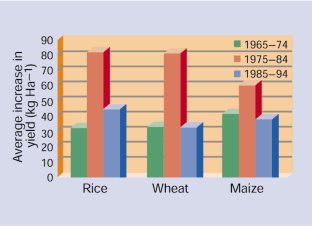
Figure 1
The alternative text for this image may have been generated using AI.
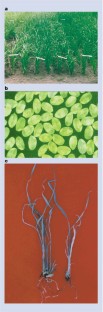
Figure 2: Biotechnology products of value in developing countries.
The alternative text for this image may have been generated using AI.
a, Courtesy of M. Jones; b, Courtesy of I. Potrykus and P. Beyer; c, Courtesy of L. Herrera Estrella.
References
- Pardey, P. G., Alston, J. M., Christian, J. E. & Fan, S. Summary of a Productive Partnership: The Benefits from U.S. Participation in the CGIAR (International Food Policy Research Institute, Washington DC, 1996).
- Conway, G.R. The Doubly Green Revolution: Food for All in the 21st Century (Penguin Books, London/Cornell University Press, Ithaca NY, 1999).
- UNICEF. The State of the World's Children 1998 (Oxford Univ. Press, Oxford/New York, 1998).
- Somer, A. & West, K.P. Vitamin A Deficiency: Health, Survival and Vision (Oxford Univ. Press, New York and Oxford, 1966).
- Mann, C.C. Science 283, 310–314 ( 1999).
Article CAS Google Scholar - Cassman. K.G. Proc. Natl Acad. Sci. USA 96, 5952– 5959 (1999).
Article ADS CAS Google Scholar - Pingali, P. L. & Heisey, P.W. Cereal Productivity in Developing Countries: Past Trends and Future Prospects. CIMMYT Economics Paper 99-03 (CIMMYT, Mexico, 1999).
- Leonard, H.J. in Environment and the Poor: Development Strategies for a Common Agenda (ed. Leonard, H. J.) 3–45 (Overseas Development Council, Washington DC, 1989).
Google Scholar - James, C. Global Review of Commercialized Transgenic Crops: 1998. ISAAA Briefs No. 8. (International Service for Acquisition of Agri-biotech Applications, Ithaca NY, 1998).
- Mann, C.C. Science 283, 314–316 ( 1999).
Article CAS Google Scholar - Ye, X. D. et al. Science (submitted).
- The Royal Society of London. Genetically Modified Plants for Food Use (The Royal Society, London, 1998).
- Nuffield Council on Bioethics. Genetically Modified Crops: The Ethical and Social Issues (Nuffield Council on Bioethics, London, 1999).
- UN Food and Agriculture Organization. Biotechnology and Food Safety. FAO Food and Nutrition Paper 61. (World Health Organization/FAO, Rome, 1996).
- Rissler, J. & Mellon, M. The Ecological Risks of Engineered Crops (MIT Press, Cambridge MA/London, 1996).
- May, R. Genetically Modified Foods: Facts, Worries, Policies and Public Confidence ( http://www.2.dti.gov.uk/ost/ostbusiness/gen.html, 1999).
- Pretty, J. The Biochemist (in the press).
Acknowledgements
We thank M. Lipton, S. Dryden, R. May and colleagues at the Rockefeller Foundation for comments on an earlier draft of this article.
Author information
Authors and Affiliations
- Rockefeller Foundation, New York, 10018, New York, USA
Gordon Conway & Gary Toenniessen
Authors
- Gordon Conway
- Gary Toenniessen
Rights and permissions
About this article
Cite this article
Conway, G., Toenniessen, G. Feeding the world in the twenty-first century.Nature 402 (Suppl 6761), C55–C58 (1999). https://doi.org/10.1038/35011545
- Issue date: 02 December 1999
- DOI: https://doi.org/10.1038/35011545