A triclosan-resistant bacterial enzyme (original) (raw)
- Brief Communication
- Published: 13 July 2000
Microbiology
Nature volume 406, pages 145–146 (2000) Cite this article
- 2945 Accesses
- 238 Citations
- 20 Altmetric
- Metrics details
An Erratum to this article was published on 24 August 2000
Abstract
Triclosan is an antimicrobial agent that is widely used in a variety of consumer products and acts by inhibiting one of the highly conserved enzymes (enoyl-ACP reductase, or FabI) of bacterial fatty-acid biosynthesis. But several key pathogenic bacteria do not possess FabI, and here we describe a unique triclosan-resistant flavoprotein, FabK, that can also catalyse this reaction in Streptococcus pneumoniae. Our finding has implications for the development of FabI-specific inhibitors as antibacterial agents.
This is a preview of subscription content, access via your institution
Access options
Subscribe to this journal
Receive 51 print issues and online access
$199.00 per year
only $3.90 per issue
Buy this article
- Purchase on SpringerLink
- Instant access to the full article PDF.
USD 39.95
Prices may be subject to local taxes which are calculated during checkout
Additional access options:
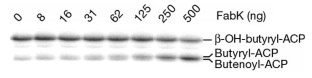
Figure 1: FabK is an enoyl-ACP reductase.
The alternative text for this image may have been generated using AI.
References
- Rock, C. O. & Cronan, J. E. Jr Biochim. Biophys. Acta 1302, 1–16 (1996).
Article Google Scholar - Heath, R. J. & Rock, C. O. J. Biol. Chem. 270, 26538–26542 (1995).
Article CAS Google Scholar - McMurray, L. M., Oethinger, M. & Levy, S. Nature 394, 531–532 (1998).
Article ADS Google Scholar - Heath, R. J. et al. J. Biol. Chem. 273, 30316–30321 (1998).
Article CAS Google Scholar - Heath, R. J. et al. J. Biol. Chem. 274, 11110–11114 (1999).
Article CAS Google Scholar - Levy, C. W. et al. Nature 398, 383–384 (1999).
Article ADS CAS Google Scholar - Rozwarski, D., Grant, G., Barton, D., Jacobs, W. & Sacchettini, J. C. Science 279, 98–102 (1998).
Article ADS CAS Google Scholar - Nagy, M., Lacroute, F. & Thomas, D. Proc. Natl Acad. Sci. USA 89, 8966–8970 (1992).
Article ADS CAS Google Scholar - Schweizer, H. P. Antimicrob. Agents Chemother. 42, 394–398 (1998).
CAS PubMed PubMed Central Google Scholar - Hoang, T. T. & Schweizer, H. P. J. Bacteriol. 181, 5489–5497 (1999).
CAS PubMed PubMed Central Google Scholar - Heath, R. J. & Rock, C. O. J. Biol. Chem. 271, 1833–1836 (1996).
Article CAS Google Scholar - Bhargava, H. N. & Leonard, P. A. Am. J. Infect. Control 24, 209–218 (1996).
Article CAS Google Scholar
Author information
Authors and Affiliations
- Department of Biochemistry, St Jude Children's Research Hospital, Memphis, 38105, Tennessee, USA
Richard J. Heath & Charles O. Rock - Department of Biochemistry, University of Tennessee, Memphis, 38105, Tennessee, USA
Charles O. Rock
Authors
- Richard J. Heath
- Charles O. Rock
Corresponding author
Correspondence toCharles O. Rock.
Rights and permissions
About this article
Cite this article
Heath, R., Rock, C. A triclosan-resistant bacterial enzyme.Nature 406, 145–146 (2000). https://doi.org/10.1038/35018162
- Issue date: 13 July 2000
- DOI: https://doi.org/10.1038/35018162