Effects of household dynamics on resource consumption and biodiversity (original) (raw)
- Letter
- Published: 12 January 2003
Nature volume 421, pages 530–533 (2003) Cite this article
- 4852 Accesses
- 533 Citations
- 19 Altmetric
- Metrics details
Abstract
Human population size and growth rate are often considered important drivers of biodiversity loss1,2,3,4,5,6, whereas household dynamics are usually neglected. Aggregate demographic statistics may mask substantial changes in the size and number of households, and their effects on biodiversity. Household dynamics influence per capita consumption7,8 and thus biodiversity through, for example, consumption of wood for fuel9, habitat alteration for home building and associated activities10,11,12, and greenhouse gas emissions13. Here we report that growth in household numbers globally, and particularly in countries with biodiversity hotspots (areas rich in endemic species and threatened by human activities14), was more rapid than aggregate population growth between 1985 and 2000. Even when population size declined, the number of households increased substantially. Had the average household size (that is, the number of occupants) remained static, there would have been 155 million fewer households in hotspot countries in 2000. Reduction in average household size alone will add a projected 233 million additional households to hotspot countries during the period 2000–15. Rapid increase in household numbers, often manifested as urban sprawl, and resultant higher per capita resource consumption in smaller households15,16,17,18,19 pose serious challenges to biodiversity conservation.
This is a preview of subscription content, access via your institution
Access options
Subscribe to this journal
Receive 51 print issues and online access
$199.00 per year
only $3.90 per issue
Buy this article
- Purchase on SpringerLink
- Instant access to the full article PDF.
USD 39.95
Prices may be subject to local taxes which are calculated during checkout
Additional access options:
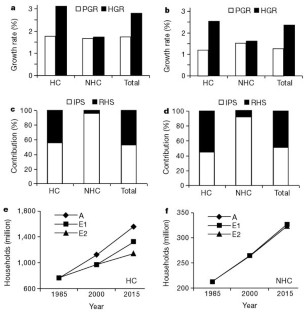
Figure 1: Household dynamics in 76 hotspot countries (HC) and 65 non-hotspot countries (NHC).
The alternative text for this image may have been generated using AI.
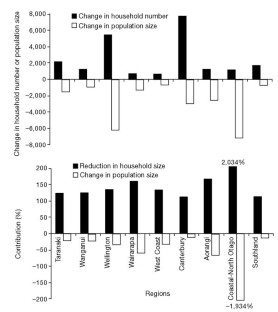
Figure 2
The alternative text for this image may have been generated using AI.
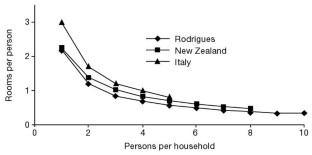
Figure 3
The alternative text for this image may have been generated using AI.
References
- Holdren, J. P. & Ehrlich, P. R. Human population and the global environment. Am. Sci. 62, 282–292 (1974)
ADS CAS Google Scholar - Wilson, E. O. Biodiversity (National Academy of Science, Washington DC, 1988)
Google Scholar - Pimm, S. L., Russell, G. J., Gittleman, H. L. & Brooks, T. M. The future of biodiversity. Science 269, 347–350 (1995)
Article ADS CAS Google Scholar - Thompson, K. & Jones, A. Human population density and prediction of local plant extinction in Britain. Conserv. Biol. 13, 185–189 (1999)
Article Google Scholar - Cincotta, R. P., Wisnewski, J. & Engelman, R. Human population in the biodiversity hotspots. Nature 404, 990–992 (2000)
Article ADS CAS Google Scholar - Dompka, V. Human Population, Biodiversity and Protected Areas: Science and Policy Issues (American Association for the Advancement of Science, Washington DC, 1996)
Google Scholar - Kaul, S. & Liu, Q. Rural household energy use in China. Energy 17, 405–411 (1992)
Article Google Scholar - Sandiford, P., Gorter, A. C., Orozco, J. G. & Pauw, J. P. Determinants of domestic water-use in rural Nicaragua. J. Trop. Med. Hyg. 93, 383–389 (1990)
CAS PubMed Google Scholar - Gardner-Outlaw, T. & Engelman, R. Forest Futures: Population, Consumption and Wood Resources (Population Action International, Washington DC, 1999)
Google Scholar - Friesen, L. E., Eagles, P. F. J. & MacKay, R. J. Effects of residential development on forest dwelling neotropical migrant songbirds. Conserv. Biol. 9, 1408–1414 (1995)
Article Google Scholar - Nilon, C. H., Long, C. N. & Zipperer, W. C. Effects of wildland development on forest bird communities. Landscape Urban Plan. 32, 81–92 (1995)
Article Google Scholar - Kluza, D. A., Griffin, C. R. & DeGraaf, R. M. Housing developments in rural New England: effects on forest birds. Anim. Conserv. 3, 15–26 (2000)
Article Google Scholar - MacKellar, F. L., Lutz, W., Prinz, C. & Goujon, A. Population, households, and CO2 emissions. Pop. Dev. Rev. 21, 849–865 (1995)
Article Google Scholar - Myers, N., Mittermeier, R. A., Mittermeier, C. G., da Fonseca, G. A. B. & Kent, J. Biodiversity hotspots for conservation priorities. Nature 403, 853–858 (2000)
Article ADS CAS Google Scholar - An, L. et al. Simulating demographic and socioeconomic processes on household level and implications for giant panda habitats. Ecol. Mod. 140, 31–50 (2001)
Article Google Scholar - Yousif, H. M. Population, biomass and the environment in central Sudan. Int. J. Sust. Dev. World Ecol. 2, 54–69 (1995)
Article Google Scholar - Lenzen, M. & Murray, S. A. A modified ecological footprint method and its application to Australia. Ecol. Econ. 37, 229–255 (2001)
Article Google Scholar - Ironmonger, D. S., Aitken, C. K. & Erbas, B. Economies of scale in energy use in adult-only households. Energy Econ. 17, 301–310 (1995)
Article Google Scholar - Durrenberger, G., Patzel, N. & Hartmann, C. Household energy consumption in Switzerland. Int. J. Environ. Pollut. 15, 159–170 (2001)
Article CAS Google Scholar - Rutledge, J., Lepcyzk, C., Xie, J. & Liu, J. Spatial and temporal dynamics of endangered species hotspots in the United States. Conserv. Biol. 15, 475–487 (2001)
Article Google Scholar - Liu, J. et al. Ecological degradation in protected areas: The case of Wolong Nature Reserve for giant pandas. Science 292, 98–101 (2001)
Article ADS CAS Google Scholar - Michael, R. T., Fuchs, V. R. & Scott, S. R. Changes in the propensity to live alone: 1950–1976. Demography 17, 39–53 (1980)
Article CAS Google Scholar - Bongaarts, J. The End of the Fertility Transition in the Developed World (The Population Council, New York, 2001)
Google Scholar - Kinsella, K. & Velkoff, V. A. An Aging World: 2001 (US Government Printing Office, Washington DC, 2001)
Google Scholar - Daily, G. C. (ed.) Nature's Services: Societal Dependence on Natural Ecosystems (Island, Washington DC, 1997)
- United Nations Centre for Human Settlements (Habitat) Cities in a Globalizing World: Global Report on Human Settlements 2001 (Earthscan, London, 2001)
Google Scholar - Cincotta, R. P. & Engelman, R. Nature's Place: Human Population and the Future of Biological Diversity (Population Action International, Washington DC, 2000)
Google Scholar - Kitagawa, E. M. Components of a difference between two rates. J. Am. Stat. Assoc. 50, 1168–1194 (1955)
MATH Google Scholar
Acknowledgements
We thank J. Eagle, W. Falcon, M. Feldman, N. Keilman, H. Mooney, R. Naylor, S. Pimm, K. Seto and S. Tuljapurkar for their constructive comments on earlier drafts; P. Langhammer and N. Myers for providing lists of hotspot countries; E. Laurent for technical assistance in producing figures; J. Baca, R. Cincotta, W. Lutz and A. McMillan for providing some references; G. Clarke for providing the housing data of India River County, Florida; and W. W. Taylor and Q. Wang for logistical and moral support. Funding for this project was provided to J.L. by the National Science Foundation (CAREER Award and Biocomplexity in the Environment Program) and the National Institute of Child Health and Human Development.
Author information
Authors and Affiliations
- Department of Fisheries and Wildlife, Michigan State University, E. Lansing, Michigan, 48824, USA
Jianguo Liu - Center for Conservation Biology, Stanford University, Stanford, California, 94305, USA
Gretchen C. Daily, Paul R. Ehrlich & Gary W. Luck
Authors
- Jianguo Liu
- Gretchen C. Daily
- Paul R. Ehrlich
- Gary W. Luck
Corresponding author
Correspondence toJianguo Liu.
Ethics declarations
Competing interests
The authors declare that they have no competing financial interests.
Supplementary information
Rights and permissions
About this article
Cite this article
Liu, J., Daily, G., Ehrlich, P. et al. Effects of household dynamics on resource consumption and biodiversity.Nature 421, 530–533 (2003). https://doi.org/10.1038/nature01359
- Received: 06 September 2002
- Accepted: 12 December 2002
- Published: 12 January 2003
- Issue date: 30 January 2003
- DOI: https://doi.org/10.1038/nature01359