Real-time detection of electron tunnelling in a quantum dot (original) (raw)
- Letter
- Published: 22 May 2003
Nature volume 423, pages 422–425 (2003) Cite this article
- 5232 Accesses
- 388 Citations
- 3 Altmetric
- Metrics details
Abstract
Nanostructures in which strong (Coulomb) interactions exist between electrons are predicted to exhibit temporal electronic correlations1. Although there is ample experimental evidence that such correlations exist2, electron dynamics in engineered nanostructures have been observed directly only on long timescales3. The faster dynamics associated with electrical currents or charge fluctuations4 are usually inferred from direct (or quasi-direct) current measurements. Recently, interest in electron dynamics has risen, in part owing to the realization that additional information about electronic interactions can be found in the shot noise5 or higher statistical moments6,7 of a direct current. Furthermore, interest in quantum computation has stimulated investigation of quantum bit (qubit) readout techniques8,9, which for many condensed-matter systems ultimately reduces to single-shot measurements of individual electronic charges. Here we report real-time observation of individual electron tunnelling events in a quantum dot using an integrated radio-frequency single-electron transistor10,11. We use electron counting to measure directly the quantum dot's tunnelling rate and the occupational probabilities of its charge state. Our results provide evidence in favour of long (10 µs or more) inelastic scattering times in nearly isolated dots.
This is a preview of subscription content, access via your institution
Access options
Subscribe to this journal
Receive 51 print issues and online access
$199.00 per year
only $3.90 per issue
Buy this article
- Purchase on SpringerLink
- Instant access to the full article PDF.
USD 39.95
Prices may be subject to local taxes which are calculated during checkout
Additional access options:
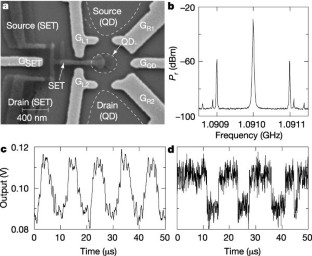
Figure 1: Characterization of RF-SET response.
The alternative text for this image may have been generated using AI.
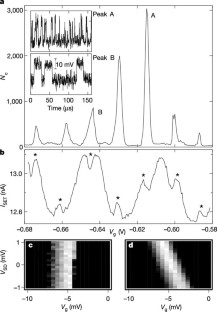
Figure 2: Time-domain analysis of the RF-SET output for S1.
The alternative text for this image may have been generated using AI.
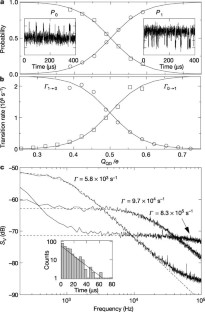
Figure 3: Comparison of a simple one-state model with the RTS near a charge degeneracy point for S1.
The alternative text for this image may have been generated using AI.
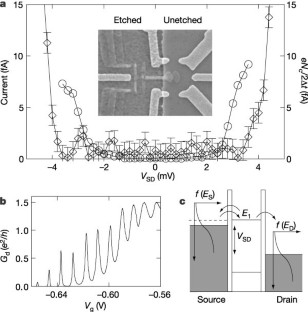
Figure 4: Measurement of non-equilibrium QD charge fluctuations for S2.
The alternative text for this image may have been generated using AI.
References
- Ben-Jacob, E. & Gefen, Y. New quantum oscillations in current driven small junctions. Phys. Lett. A 108, 289–292 (1985)
Article ADS Google Scholar - Delsing, P., Likharev, K. K., Kuzmin, L. S. & Claeson, T. Time-correlated single-electron tunneling in one-dimensional arrays of ultrasmall tunnel junctions. Phys. Rev. Lett. 63, 1861–1864 (1989)
Article ADS CAS Google Scholar - Dresselhaus, P. D., Ji, L., Han, S., Lukens, J. E. & Likharev, K. K. Measurement of single electron lifetimes in a multijunction trap. Phys. Rev. Lett. 72, 3226–3229 (1994)
Article ADS CAS Google Scholar - Berman, D., Zhitenev, N. B., Ashoori, R. C. & Shayegan, M. Observation of quantum fluctuations of charge on a quantum dot. Phys. Rev. Lett. 82, 161–164 (1999)
Article ADS CAS Google Scholar - Blanter, Y. M. & Büttiker, M. Shot noise in mesoscopic conductors. Phys. Rep. 336, 1–166 (2000)
Article ADS CAS Google Scholar - Levitov, L. S. & Lesovik, G. B. Charge-transport statistics in quantum conductors. JETP Lett. 55, 555–559 (1992)
ADS Google Scholar - Levitov, L. S., Lee, H. & Lesovik, G. B. Electron counting statistics and coherent states of electric current. J. Math. Phys. 37, 4845–4866 (1996)
Article ADS MathSciNet Google Scholar - Shnirman, A. & Schön, G. Quantum measurements performed with a single-electron transistor. Phys. Rev. B 57, 15400–15407 (1998)
Article ADS CAS Google Scholar - Loss, D. & DiVincenzo, D. P. Quantum computation with quantum dots. Phys. Rev. A 57, 120–126 (1998)
Article ADS CAS Google Scholar - Schoelkopf, R. J., Wahlgren, P., Kozhevnikov, A. A., Delsing, P. & Prober, D. E. The radio-frequency single-electron transistor (RF-SET): A fast and ultrasensitive electrometer. Science 280, 1238–1242 (1998)
Article ADS CAS Google Scholar - Aassime, A., Johansson, G., Wendin, G., Schoelkopf, R. J. & Delsing, P. Radio-frequency single-electron transistor as readout device for qubits: Charge sensitivity and backaction. Phys. Rev. Lett. 86, 3376–3379 (2001)
Article ADS CAS Google Scholar - Likharev, K. K. Single-electron transistors: Electrostatic analogs of the DC SQUIDS. IEEE Trans. Magn. 23, 1142–1145 (1987)
Article ADS Google Scholar - Fulton, T. A. & Dolan, G. J. Observation of single-electron charging effects in small tunnel junctions. Phys. Rev. Lett. 59, 109–112 (1987)
Article ADS CAS Google Scholar - Kirton, M. J. & Uren, M. J. Noise in solid-state microstructures: A new perspective on individual defects, interface states, and low-frequency (1/f) noise. Adv. Phys. 38, 367–468 (1989)
Article ADS CAS Google Scholar - Fujisawa, T. & Hirayama, Y. Charge noise analysis of an AlGaAs/GaAs quantum dot using transmission-type radio-frequency single-electron transistor technique. Appl. Phys. Lett. 77, 543–545 (2000)
Article ADS CAS Google Scholar - Basseville, M. & Nikiforov, I. V. Detection of Abrupt Changes (Prentice Hall, Englewood Cliffs, 1993)
MATH Google Scholar - Lu, W., Rimberg, A. J., Maranowski, K. D. & Gossard, A. C. A single-electron transistor strongly coupled to an electrostatically defined quantum dot. Appl. Phys. Lett. 77, 2746–2748 (2000)
Article ADS CAS Google Scholar - Folk, J. A., Marcus, C. M. & Harris, J. S. Decoherence in nearly isolated quantum dots. Phys. Rev. Lett. 87, 206802 (2001)
Article ADS CAS Google Scholar - Eisenberg, E., Held, K. & Altshuler, B. L. Dephasing times in closed quantum dots. Phys. Rev. Lett. 88, 136801 (2002)
Article ADS Google Scholar - Altshuler, B. L., Gefen, Y., Kamenev, A. & Levitov, L. S. Quasiparticle lifetime in a finite system: A nonperturbative approach. Phys. Rev. Lett. 78, 2803–2806 (1997)
Article ADS CAS Google Scholar - Beenakker, C. W. J. Theory of Coulomb-blockade oscillations in the conductance of a quantum dot. Phys. Rev. B 44, 1646–1656 (1991)
Article ADS CAS Google Scholar
Acknowledgements
We thank W. L. Wilson, M. Thalakulam, J. Sarkar, R. J. Schoelkopf, D. H. Johnson, D. Natelson, R. M. Westervelt, D. Driscoll and A. C. Gossard for discussions and experimental assistance. This work was supported by the National Science Foundation, the Army Research Office, and the Robert A. Welch Foundation.
Author information
Author notes
- Wei Lu
Present address: Department of Chemistry and Chemical Biology, Harvard University, Cambridge, Massachusetts, 02138, USA
Authors and Affiliations
- Department of Physics and Astronomy, Rice University, Houston, Texas, 77005, USA
Wei Lu, Zhongqing Ji & A. J. Rimberg - Department of Electrical and Computer Engineering, Rice University, Houston, Texas, 77005, USA
A. J. Rimberg - Bell Laboratories, Lucent Technologies, Inc., Murray Hill, New Jersey, 07974, USA
Loren Pfeiffer & K. W. West
Authors
- Wei Lu
- Zhongqing Ji
- Loren Pfeiffer
- K. W. West
- A. J. Rimberg
Corresponding author
Correspondence toA. J. Rimberg.
Ethics declarations
Competing interests
The authors declare that they have no competing financial interests.
Rights and permissions
About this article
Cite this article
Lu, W., Ji, Z., Pfeiffer, L. et al. Real-time detection of electron tunnelling in a quantum dot.Nature 423, 422–425 (2003). https://doi.org/10.1038/nature01642
- Received: 16 January 2003
- Accepted: 07 April 2003
- Issue date: 22 May 2003
- DOI: https://doi.org/10.1038/nature01642