Radioactive 26Al from massive stars in the Galaxy (original) (raw)
- Letter
- Published: 05 January 2006
- Hubert Halloin1,
- Karsten Kretschmer1,
- Giselher G. Lichti1,
- Volker Schönfelder1,
- Andrew W. Strong1,
- Andreas von Kienlin1,
- Wei Wang1,
- Pierre Jean2,
- Jürgen Knödlseder2,
- Jean-Pierre Roques2,
- Georg Weidenspointner2,
- Stephane Schanne3,
- Dieter H. Hartmann4,
- Christoph Winkler5 &
- …
- Cornelia Wunderer6
Nature volume 439, pages 45–47 (2006)Cite this article
- 3410 Accesses
- 680 Citations
- 29 Altmetric
- Metrics details
Abstract
Gamma-rays from radioactive 26Al (half-life ∼7.2 × 10⁵ years) provide a ‘snapshot’ view of continuing nucleosynthesis in the Galaxy1. The Galaxy is relatively transparent to such γ-rays, and emission has been found concentrated along its plane2. This led to the conclusion1 that massive stars throughout the Galaxy dominate the production of 26Al. On the other hand, meteoritic data show evidence for locally produced 26Al, perhaps from spallation reactions in the protosolar disk3,4,5. Furthermore, prominent γ-ray emission from the Cygnus region suggests that a substantial fraction of Galactic 26Al could originate in localized star-forming regions. Here we report high spectral resolution measurements of 26Al emission at 1808.65 keV, which demonstrate that the 26Al source regions corotate with the Galaxy, supporting its Galaxy-wide origin. We determine a present-day equilibrium mass of 2.8 (± 0.8) solar masses of 26Al. We use this to determine that the frequency of core collapse (that is, type Ib/c and type II) supernovae is 1.9 (± 1.1) events per century.
This is a preview of subscription content, access via your institution
Access options
Subscribe to this journal
Receive 51 print issues and online access
$199.00 per year
only $3.90 per issue
Buy this article
- Purchase on SpringerLink
- Instant access to the full article PDF.
USD 39.95
Prices may be subject to local taxes which are calculated during checkout
Additional access options:
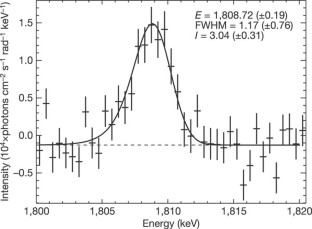
Figure 1: Measurement of the 26 Al line from the inner Galaxy region with SPI/INTEGRAL.
The alternative text for this image may have been generated using AI.
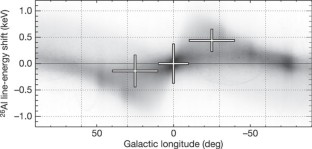
Figure 2: Line position shifts with viewing directions along the inner Galaxy.
The alternative text for this image may have been generated using AI.
References
- Prantzos, N. & Diehl, R. Radioactive 26Al in the Galaxy: observations versus theory. Phys. Rep. 267(1), 1– 69 (1996)
Article ADS CAS Google Scholar - Diehl, R. et al. COMPTEL observations of Galactic 26Al. Astron. Astrophys. 298, 445– 460 (1995)
ADS CAS Google Scholar - MacPherson, G. J., Davis, A. M. & Zinner, E. K. Distribution of 26Al in the early solar system. Meteoritics 30, 365– 386 (1995)
Article ADS CAS Google Scholar - Young, E. D. et al. Supra-canonical 26Al/27Al and the residence time of CAIs in the solar protoplanetary disk. Science 308, 223– 227 (2005)
Article ADS CAS Google Scholar - Lee, T. et al. Protostellar cosmic rays and extinct radioactivities in meteorites. Astrophys. J. 506, 898– 912 (1998)
Article ADS CAS Google Scholar - Ward-Thompson, D. Isolated star formation: from cloud formation to core collapse. Science 295, 76– 81 (2002)
Article ADS CAS Google Scholar - Meyer, B. S. & Clayton, D. D. Short-lived radioactivities and the birth of the Sun. Space Sci. Rev. 92, 133– 152 (2000)
Article ADS CAS Google Scholar - Plüschke, S., et al. in Exploring the Gamma-Ray Universe (4th INTEGRAL Workshop) (eds Gimenez, A., Reglero, V. & Winkler, C.) 55– 58 (ESA Special Publication, ESA-SP 459, Noordwijk, 2001)
Google Scholar - Kretschmer, K., Diehl, R. & Hartmann, D. H. Line shape diagnostics of Galactic 26Al. Astron. Astrophys. 412, L77– L81 (2003)
Article ADS Google Scholar - Knödlseder, J. et al. A multiwavelength comparison of COMPTEL 26Al line data. Astron. Astrophys. 344, 68– 82 (1999)
ADS Google Scholar - Taylor, J. H. & Cordes, J. M. Pulsar distances and the Galactic distribution of free electrons. Astrophys. J. 411, 674– 684 (1993)
Article ADS Google Scholar - Cordes, J. M. & Lazio, T. J. W. NE2001. I. A new model for the Galactic distribution of free electrons and its variability. Preprint at http://arXiv.org/astro-ph/0207156 (2002).
- Robin, A. C., Reylé, C., Derriere, R. & Picaud, S. A synthetic view on structure and evolution of the Milky Way. Astron. Astrophys. 409, 523– 540 (2003)
Article ADS Google Scholar - Asplund, M, Grevesse, N. & Sauval, A. J. in Cosmic Abundances as Records of Stellar Evolution and Nucleosynthesis in Honor of David L. Lambert Vol. 336 25–39 (ASP Conf. Ser., 2005).
- Gilmore, G. The star formation history of the Milky Way. ASP Conf. Proc. 230, 3– 12 (2001)
ADS CAS Google Scholar - Boissier, S. & Prantzos, N. Chemo-spectrophotometric evolution of spiral galaxies—I. The model and the Milky Way. Mon. Not. R. Astron. Soc. 307, 857– 876 (1999)
Article ADS CAS Google Scholar - McKee, C. F. & Williams, J. P. The luminosity function of OB associations in the Galaxy. Astrophys. J. 476, 144– 165 (1997)
Article ADS CAS Google Scholar - Reed, C. B. New estimates of the solar-neighborhood massive star birthrate and the Galactic supernova rate. Astron. J. 130, 1652– 1657 (2005)
Article ADS Google Scholar - Rauscher, T., Heger, A., Hoffman, R. D. & Woosley, S. E. Nucleosynthesis in massive stars with improved nuclear and stellar physics. Astrophys. J. 576, 323– 348 (2002)
Article ADS CAS Google Scholar - Limongi, M. & Chieffi, A. 26Al and 60Fe from massive stars. Nucl. Phys. A 758, 11c– 14c (2005)
Article ADS Google Scholar - Palacios, A. et al. New estimates of the contribution of Wolf Rayet stellar winds to the Galactic 26Al. Astron. Astrophys. 429, 613– 624 (2005)
Article ADS CAS Google Scholar - Kroupa, P. The initial mass function of stars. Science 295, 82– 91 (2002)
Article ADS CAS Google Scholar
Acknowledgements
This paper is based on observations with INTEGRAL, an ESA project with instruments and a science data center funded by ESA member states (especially the PI countries: Denmark, France, Germany, Italy, Switzerland, Spain), Czech Republic and Poland, and with the participation of Russia and the USA. The SPI project has been completed under the responsibility and leadership of CNES/France. The SPI anticoincidence system is supported by the German government. We are grateful to ASI, CEA, CNES, DLR, ESA, INTA, NASA and OSTC for support. We are grateful to Alessandro Chieffi, Nikos Prantzos, and Stan Woosley for discussions of theoretical nucleosynthesis yields.
Author information
Authors and Affiliations
- Max-Planck-Institut für extraterrestrische Physik, D-85748, Garching, Germany
Roland Diehl, Hubert Halloin, Karsten Kretschmer, Giselher G. Lichti, Volker Schönfelder, Andrew W. Strong, Andreas von Kienlin & Wei Wang - Centre d'Etude Spatiale des Rayonnements and Université Paul Sabatier, 31028, Toulouse, France
Pierre Jean, Jürgen Knödlseder, Jean-Pierre Roques & Georg Weidenspointner - DSM/DAPNIA/Service d'Astrophysique, CEA Saclay, 91191, Gif-Sur-Yvette, France
Stephane Schanne - Clemson University, Clemson, South Carolina, 29634-0978, USA
Dieter H. Hartmann - ESA/ESTEC, SCI-SD, 2201 AZ, Noordwijk, The Netherlands
Christoph Winkler - Space Sciences Laboratory, California, 94720, Berkeley, USA
Cornelia Wunderer
Authors
- Roland Diehl
- Hubert Halloin
- Karsten Kretschmer
- Giselher G. Lichti
- Volker Schönfelder
- Andrew W. Strong
- Andreas von Kienlin
- Wei Wang
- Pierre Jean
- Jürgen Knödlseder
- Jean-Pierre Roques
- Georg Weidenspointner
- Stephane Schanne
- Dieter H. Hartmann
- Christoph Winkler
- Cornelia Wunderer
Corresponding author
Correspondence toRoland Diehl.
Ethics declarations
Competing interests
Reprints and permissions information is available at npg.nature.com/reprintsandpermissions. The authors declare no competing financial interests.
Supplementary information
Supplementary Methods (download PDF )
Observations and Data. The INTEGRAL Observatory and its spectrometer instrument have been launched in Oct 2002. Observations are composed of 7130 pointings along the plane of the Galaxy, and sum up to an exposure of 4 Ms at the Galactic Center, from the first two years of the mission. (PDF 158 kb)
Supplementary Methods (download PDF )
Data Analysis and Results. Spectra are determined from independent model fits in 0.5 keV bins. Splitting the sky model into longitude segments allows for spatially-resolved spectroscopy, and obtains Doppler shifts as expected from Galactic rotation. The variability of resulting spectra with different models for the spatial distribution of 26Al emission is modest to small. (PDF 211 kb)
Supplementary Discussion (download PDF )
Doppler Broadening. The width of the observed gamma-ray line depends on the state of the ISM. (PDF 33 kb)
Supplementary Discussion (download PDF )
Galactic Rotation. Different models for the spatial distribution of 26Al emission and rotation curves for the inner Galaxy lead to variations in expected line shifts. (PDF 65 kb)
Supplementary Discussion (download PDF )
Nucleosynthesis Yields. Different models for stellar evolution and supernovae predict somewhat different yields of 26Al. From current models, an assessment is made over the full range of massive stars. (PDF 81 kb)
Supplementary Methods (download PDF )
Deriving a Galactic Star Formation Rate from 26Al Gamma-rays. The determination of the supernova rate follows from the nucleosynthesis yield and its integration over the mass distribution of stars. The conversion to a star formation rate is described. (PDF 91 kb)
Supplementary Discussion (download PDF )
Star Formation Rate (SFR) and Supernova Rate (SNR) Estimates for the Galaxy. The different approaches determining supernova rates or star formation rates for the Galaxy are presented in a Table, with discussion of strengths and weaknesses. The 26Al-based approach is completely independent, and among the less-biased and more accurate methods. (PDF 58 kb)
Rights and permissions
About this article
Cite this article
Diehl, R., Halloin, H., Kretschmer, K. et al. Radioactive 26Al from massive stars in the Galaxy.Nature 439, 45–47 (2006). https://doi.org/10.1038/nature04364
- Received: 28 June 2005
- Accepted: 19 October 2005
- Issue date: 05 January 2006
- DOI: https://doi.org/10.1038/nature04364
This article is cited by
The Positron Puzzle
- Thomas Siegert
Astrophysics and Space Science (2023)
- Thomas Siegert
Underground laboratory JUNA shedding light on stellar nucleosynthesis
- Toshitaka Kajino
Nuclear Science and Techniques (2023)
- Toshitaka Kajino
The contribution of Galactic TeV pulsar wind nebulae to Fermi large area telescope diffuse emission
- Vittoria Vecchiotti
- Giulia Pagliaroli
- Francesco Lorenzo Villante
Communications Physics (2022)
Editorial Summary
Galactic elements
The radioactive isotope aluminium-26 has a short half-life of about 720,000 years, so the fact that we can detect γ-rays characteristic of 26Al is a good indication that nucleosynthesis — the production of new atomic nuclei — is taking place in our Galaxy during the current epoch. Now a γ-ray survey by ESA's INTEGRAL space telescope has provided data of sufficiently high resolution to settle a long-running debate about where this nucleosynthesis takes place. The key finding is that the 26Al sources co-rotate with the Galaxy, supporting an origin from massive stars scattered throughout the Galaxy, rather than in localized star-forming regions.