Interactive and scalable biology cloud experimentation for scientific inquiry and education (original) (raw)
- Careers and Recruitment
- Published: 07 December 2016
- Engin W Bumbacher3,
- Alice M Chung1,
- Honesty Kim1,
- Casey Litton1,
- Ashley D Walter4,
- Sachin N Pradhan4,
- Kemi Jona4,
- Paulo Blikstein3 &
- …
- Ingmar H Riedel-Kruse1
Nature Biotechnology volume 34, pages 1293–1298 (2016)Cite this article
- 2474 Accesses
- 60 Citations
- 52 Altmetric
- Metrics details
Subjects
A real-time interactive, fully automated, low-cost and scalable biology cloud experimentation platform could provide access to scientific experimentation for learners and researchers alike.
This is a preview of subscription content, access via your institution
Relevant articles
Open Access articles citing this article.
Internet-enabled lab-on-a-chip technology for education
- Tyler Sano
- , Mohammad Julker Neyen Sampad
- … Mohammed A. Mostajo-Radji
Scientific Reports Open Access 22 June 2024
CyberSco.Py an open-source software for event-based, conditional microscopy
- Lionel Chiron
- , Matthias Le Bec
- … Pascal Hersen
Scientific Reports Open Access 08 July 2022
Picroscope: low-cost system for simultaneous longitudinal biological imaging
- Victoria T. Ly
- , Pierre V. Baudin
- … Mircea Teodorescu
Communications Biology Open Access 04 November 2021
Access options
Subscribe to this journal
Receive 12 print issues and online access
$259.00 per year
only $21.58 per issue
Buy this article
- Purchase on SpringerLink
- Instant access to the full article PDF.
USD 39.95
Prices may be subject to local taxes which are calculated during checkout
Additional access options:
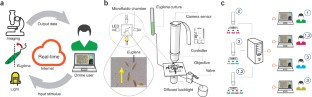
Figure 1: A biology cloud experimentation platform that is real-time interactive and scales cost-effectively to large user numbers and versatile applications.
The alternative text for this image may have been generated using AI.
Figure 2: The cloud lab enables biophysics experiments on timescales from seconds to minutes in live and batch modes.

The alternative text for this image may have been generated using AI.
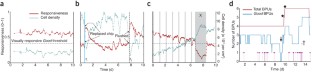
Figure 3: Automonitoring framework and BPU multiplexing enable scaling and robustness of the cloud lab over a timeframe of weeks and demonstrate its potential applicability for long-term microecological studies.
The alternative text for this image may have been generated using AI.
Figure 4: User studies in middle-school and college settings demonstrate utility of platform for face-to-face and online education.

The alternative text for this image may have been generated using AI.
References
- Sia, S.K. & Owens, M.P. Nat. Biotechnol. 33, 1224–1228 (2015).
Article CAS Google Scholar - Corbató, F.J. et al. in Proceedings of the May 1–3, 1962, Spring Joint Computer Conference 335–344 (ACM, 1962).
Google Scholar - Fox, A. Science 331, 406–407 (2011).
Article CAS Google Scholar - Check Hayden, E.C. Nature 516, 131–132 (2014).
Article CAS Google Scholar - Lee, J. et al. Proc. Natl. Acad. Sci. USA 111, 2122–2127 (2014).
Article Google Scholar - Chinn, C.A. & Malhotra, B.A. Sci. Educ. 86, 175–218 (2002).
Article Google Scholar - Pedaste, M. et al. Educ. Res. Rev. 14, 47–61 (2015).
Article Google Scholar - Schweingruber, H. et al. A Framework for K-12 Science Education: Practices, Crosscutting Concepts, and Core Ideas (National Academies Press, 2012).
Google Scholar - Bybee, R.W. Science and Children 50, 7–14 (2013).
Google Scholar - Singer, S., Hilton, M. & Schweingruber, H. (eds.) America's Lab Report: Investigations in High School Science (National Academies Press, 2005).
Google Scholar - de Jong, T., Linn, M.C. & Zacharia, Z.C. Science 340, 305–308 (2013).
Article CAS Google Scholar - Heradio, R. et al. Comput. Educ. 98, 14–38 (2016).
Article Google Scholar - Wieman, C.E., Adams, W.K. & Perkins, K.K. Science 322, 682–683 (2008).
Article CAS Google Scholar - Bonde, M.T. et al. Nat. Biotechnol. 32, 694–697 (2014).
Article CAS Google Scholar - Sauter, M. et al. Distance Educ. 34, 37–47 (2013).
Article Google Scholar - Hossain, Z. et al. in Proceedings of the 33rd Annual ACM Conference on Human Factors in Computing Systems 3681–3690 (ACM, 2015).
Google Scholar - Littleford, R.A. Am. Biol. Teach. 22, 551–559 (1960).
Article Google Scholar - Morimoto, K. et al. J. Res. Sci. Educ. 45, 73–77 (2005).
Google Scholar - Cira, N.J. et al. PLoS Biol. 13, e1002110 (2015).
Article Google Scholar - Lee, S.A. et al. in Proceedings of the 33rd Annual ACM Conference on Human Factors in Computing Systems 2593–2602 (ACM, 2015).
Google Scholar - Iseki, M. et al. Nature 415, 1047–1051 (2002).
Article CAS Google Scholar - Romanczuk, P. et al. Eur. Phys. J. Spec. Top. 224, 1215–1229 (2015).
Article Google Scholar - Romensky, M., Scholz, D. & Lobaskin, V. J. R. Soc. Interface 12, 20150015 (2015).
Article Google Scholar - Krajcˇovicˇ, J., Vesteg, M., & Schwartzbach, S.D. J. Biotechnol. 202, 135–145 (2015).
Article Google Scholar - Ozasa, K., Lee, J., Song, S., Hara, M. & Maeda, M. Lab Chip 13, 4033–4039 (2013).
Article CAS Google Scholar - Etsion, Y. & Tsafrir, D. General purpose timing: the failure of periodic timers. Technical Report 2005–2006 (School of Compututer Science and Engineering, Hebrew University, Jerusalem, 2005).
Google Scholar - Purcell, E.M. Am. J. Phys. 45, 3–11 (1977).
Article Google Scholar - National Research Council. Guide to Implementing the Next Generation Science Standards (Committee on Guidance on Implementing the Next Generation Science Standards, 2015).
- Blikstein, P. in Playful User Interfaces (ed. Nijholt, A.) 317–352 (Springer, 2014).
Book Google Scholar - Levy, S.T. & Wilensky, U. Comput. Educ. 56, 556–573 (2011).
Article Google Scholar - Harward, V.J. et al. Proc. IEEE 96, 931–950 (2008).
Article Google Scholar - Blikstein, P. et al. J. Learn. Sci. 23, 561–599 (2014).
Article Google Scholar - Gobert, J.D. et al. J. Learn. Sci. 22, 521–563 (2013).
Article Google Scholar - Edelson, D.C. J. Learn. Sci. 11, 105–121 (2002).
Article Google Scholar - Hansen, J.D. & Reich, J. Science 350, 1245–1248 (2015).
Article CAS Google Scholar - US Census Bureau. School Enrollment by Sex and Level, Table 226, (2012). http://www2.census.gov/library/publications/2011/compendia/statab/131ed/tables/12s0226.xls.
- Ozcan, A. Lab Chip 14, 3187–3194 (2014).
Article CAS Google Scholar - Goldstein, R.E. Annu. Rev. Fluid Mech. 47, 343–375 (2015).
Article Google Scholar - van Deursen, A. et al. ACM SIGPLAN Not. 35, 26–36 (2000).
Article Google Scholar - Balagaddé, F.K., You, L., Hansen, C.L., Arnold, F.H. & Quake, S.R. Science 309, 137–140 (2005).
Article Google Scholar - Skilton, R.A. et al. Nat. Chem. 7, 1–5 (2015).
Article CAS Google Scholar
Acknowledgements
We are grateful to the members of the Riedel-Kruse and Blikstein Labs, N. Cira, G. Harrison and the teachers and students who participated. This project was supported by an NSF Cyberlearning grant (#1324753) and NSF awards IIS-1216389, OCI-0753324 and DUE-0938075.
Author information
Authors and Affiliations
- Casey Litton and Ingmar H. Riedel-Kruse are in the Department of Bioengineering, Zahid Hossain, Alice M. Chung, Honesty Kim, Stanford University, Stanford, California, USA.,
Zahid Hossain, Alice M Chung, Honesty Kim, Casey Litton & Ingmar H Riedel-Kruse - Zahid Hossain is also in the Department of Computer Science, Stanford University, Stanford, California, USA.,
Zahid Hossain - Engin W. Bumbacher and Paulo Blikstein are in the Graduate School of Education, Stanford University, Stanford, California, USA.,
Engin W Bumbacher & Paulo Blikstein - Ashley D. Walter, Sachin N. Pradhan and Kemi Jona are at Northwestern University, Evanston, Illinois, USA.,
Ashley D Walter, Sachin N Pradhan & Kemi Jona
Authors
- Zahid Hossain
- Engin W Bumbacher
- Alice M Chung
- Honesty Kim
- Casey Litton
- Ashley D Walter
- Sachin N Pradhan
- Kemi Jona
- Paulo Blikstein
- Ingmar H Riedel-Kruse
Corresponding author
Correspondence toIngmar H Riedel-Kruse.
Ethics declarations
Competing interests
The authors declare no competing financial interests.
Supplementary information
Supplementary Texts and Figures (download PDF )
Supplementary Figures 1–10, Supplementary Tables 1–5, Supplementary Notes 1–7 and Supplementary Data (PDF 15592 kb)
Supplementary Movie 1 (download MOV )
Illustration of interactive joystick experiment on the platform: A user visits the cloud lab website and runs a live experiment on a particular BPU ('eug15'). In the live view the user tests euglena response to four LEDs one at a time with a virtual joystick, while watching a live video feed of the actual LED going off. The Euglena exhibits negative phototaxis by swimming away from each LED in turn (compare also to Fig. 4a in main paper). (MOV 1863 kb)
Supplementary Movie 2 (download MOV )
Batch mode experimentation and a workflow on the cloud lab platform from a user's point of view (for example as in user study Figs. 4a,b ):). A user uploads two batch experiments as text scripts (both JSON and CSV formats) at the same time. The system routes these experiments to the best available BPUs, while avoiding the apparently suboptimal ones. The user then downloads the data from a previously run experiment and investigates a preprocessed video where Euglena and their tracks are automatically traced. This video has a corresponding data file in JSON format that can be processed in Matlab through an API that we provide. This API can export track information in a MS Excel format, CSV, for easier manipulation. (MOV 3035 kb)
Supplementary Movie 3 (download MOV )
Examples of Euglena variety of behaviors that can be observed on this platform (passive observation as well as active experimentation): A. Euglena, seen through a 10x objective, responding to all four LED directions applied sequentially. B. Euglena, seen through a 4x objective, responding to all four LED directions applied sequentially. C. Euglena responding to light shone at an angle. D. This clip shows how a Euglena can be virtually controlled to follow a path with our joystick interface. E. The microfluidic chip getting overpopulated as seen through a 10x objective. F. The microfluidic chip getting overpopulated as seen through a 4x objective. G. In some scenarios, the linear motility of the Euglena population tends to decrease while they spin vigorously in response to light. H. Cell division events captured during a time lapse (MOV 2555 kb)
Supplementary Movie 4 (download MOV )
Average orientation (in acute angle, degrees) of Euglena population in response to different LED and no-light conditions: No light stimulus was provided during the first 60s when the Euglena were randomly oriented leading to an average acute angle close to 45°. Each LED was then shone by itself for 30s in sequence, and the Euglenas move away from light every time. The average orientation of all the Euglenas per frame is plotted against time, which shows clear measurable alternating Hill type signals. No light was shone during the last 60s when the cell population converged back to random orientations. We ultimately use this orientation to measure responsiveness of a BPU as discussed in section 2.2. (MOV 3266 kb)
Supplementary Movie 5 (download MOV )
Illustration of modeling interface as used in second study ( Figs. 4c,d ): 7th and 8th grade students investigated three parameters: surge, coupling and roll that drive a model Euglena to follow a predefined path upon light stimulus with a joystick. Only the name of the surge parameter was exposed while the other two were unnamed for students to find out as an exercise. The video demonstrates different combinations of parameters to demonstrate their effects on the model as well as to highlight the overall descriptive power of this model (compare also Supplementary Video 3 for related real behaviors): A. The simulation is run without changing the initial parameter values, which only sets surge to a non-zero number. The model Euglena propels without responding to any light. B. The coupling parameter is set to a positive number (15). This time the model Euglena exhibits positive phototaxis, i.e. move towards light. C. Coupling is set to a negative number (−15), the Euglena exhibits negative phototaxis as expected but does not respond to the “Right” LED because the model Euglena was sampling light only from the left as there was no spin. D. Roll is set to a small positive number (2), which lets Euglena see light in all directions, but the response is slow which results in a wobbly path with large amplitude upon light changes. E. Roll is set to 4 and the surge is decreased which corresponds to a near optimal setting. In this case, the Euglena responds to light stimulus in manner that is consistent with reality. F. Roll is set to 5 and coupling to a large negative number, which makes Euglena to tumble and spin uncontrollably. (MOV 2388 kb)
Supplementary Movie 6 (download MOV )
Illustration of the iLab user study ( Figs. 4e,f ): This video demonstrates how users can operate the cloud lab from a third party education content management website, in this case iLab 6. A student would login with her iLab credentials, and choose one of the tasks assigned by her teacher. A task contains lessons about Euglena and accompanying quizzes. The images used in this lesson were taken from Wikipedia (https://en.wikipedia.org/wiki/Euglena). In page 3 of this lesson, the student uses a simple interface to design an experiment with light stimulus and timing. The student can get an estimate of how long her experiment will take for the cloud lab to run before submitting it as a batch experiment directly to the cloud lab through the iLab interface. iLab will then fetch the data when the experiment is over and annotated the data with light and timing information which the student can investigate and use to answer further test questions. Due to screen recording, the video player view on page 4 had flickering, which was filtered out for the purpose of clarity. The student can run as many experiments as she wants. (MOV 1870 kb)
Rights and permissions
About this article
Cite this article
Hossain, Z., Bumbacher, E., Chung, A. et al. Interactive and scalable biology cloud experimentation for scientific inquiry and education.Nat Biotechnol 34, 1293–1298 (2016). https://doi.org/10.1038/nbt.3747
- Published: 07 December 2016
- Issue date: December 2016
- DOI: https://doi.org/10.1038/nbt.3747