A scorpion neurotoxin increases the potency of a fungal insecticide (original) (raw)
- Brief Communication
- Published: 11 November 2007
Nature Biotechnology volume 25, pages 1455–1456 (2007)Cite this article
- 3262 Accesses
- 226 Citations
- 4 Altmetric
- Metrics details
Abstract
The low virulence of the insecticidal fungus Metarhizium anisopliae has stymied its widespread use in controlling insect pests. We show that high-level expression of an insect-specific neurotoxin from the scorpion Androctonus australis in hemolymph by M. anisopliae increases fungal toxicity 22-fold against tobacco hornworm (Manduca sexta) caterpillars and ninefold against adult yellow fever mosquitoes (Aedes aegypti) without compromising host specificity. Prelethal effects include reduced mobility and feeding of the insects targeted.
This is a preview of subscription content, access via your institution
Access options
Subscribe to this journal
Receive 12 print issues and online access
$259.00 per year
only $21.58 per issue
Buy this article
- Purchase on SpringerLink
- Instant access to the full article PDF.
USD 39.95
Prices may be subject to local taxes which are calculated during checkout
Additional access options:
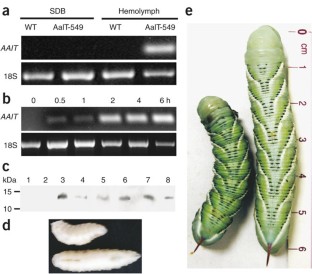
Figure 1: Transgene expression driven by the MCL1 promoter.
The alternative text for this image may have been generated using AI.
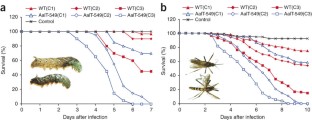
Figure 2: Survival curves of insects infected with WT and AaIT-549.
The alternative text for this image may have been generated using AI.
References
- Hajek, A.E. Adv. Microb. Ecol. 15, 193–249 (1997).
Article Google Scholar - Lawrence, L. Outlooks Pest Manag. 16, 253–254 (2005).
Article Google Scholar - Ritter, S.K. Chem. Eng. News 84, 82–83 (2006).
Article Google Scholar - Thomas, M.B. & Read, A.F. Nat. Rev. Microbiol. 5, 377–383 (2007).
Article CAS Google Scholar - Amsellem, Z., Cohen, B.A. & Gressel, J. Nat. Biotechnol. 20, 1035–1039 (2002).
Article CAS Google Scholar - Zlotkin, E., Fishman, Y. & Elazar, M. Biochimie 82, 869–881 (2000).
Article CAS Google Scholar - Samuels, R.I., Charnley, A.K. & Reynolds, S.E. Mycopathologia 104, 51–58 (1988).
Article CAS Google Scholar - Wang, C. & St. Leger, R.J. Proc. Natl. Acad. Sci. USA 103, 6647–6652 (2006).
Article CAS Google Scholar - Hu, G. & St. Leger, R.J. Appl. Environ. Microbiol. 68, 6383–6387 (2002).
Article CAS Google Scholar - Wang, C. & St. Leger, R.J. Eukaryot. Cell 4, 937–947 (2005).
Article CAS Google Scholar - St. Leger, R.J., Joshi, L., Bidochka, M.J. & Roberts, D.W. Proc. Natl. Acad. Sci. USA 93, 6349–6354 (1996).
Article CAS Google Scholar - Roberts, D.W. & St. Leger, R.J. Adv. Appl. Microbiol. 54, 1–70 (2004).
Article CAS Google Scholar - Freimoser, F.M. et al. Microbiology 149, 239–247 (2003).
Article CAS Google Scholar - Stewart, L.M. et al. Nature 352, 85–88 (1991).
Article CAS Google Scholar - Cory, J.S. et al. Nature 370, 138–140 (1994).
Article Google Scholar
Acknowledgements
We are grateful to A. Read, J. Gressel, M. Thomas and A.K. Charnley for critical readings of this manuscript and to David O'Brochta at the Center for Biosystems Research, University of Maryland Biotechnology Institute for providing the mosquitoes. This work was supported by the National Hi-Tech Program of China 2006AA10A119 and US Department of Agriculture/CSREES grant 2006-03692.
Author information
Authors and Affiliations
- Institute of Plant Physiology and Ecology, Shanghai Institutes for Biological Sciences, Chinese Academy of Sciences, Shanghai, 200032, China
Chengshu Wang - Department of Entomology, University of Maryland, College Park, 20742, Maryland, USA
Raymond J St Leger
Authors
- Chengshu Wang
- Raymond J St Leger
Contributions
C.W. and R.J.S.L. designed and performed the experiments, analyzed the data and wrote the manuscript.
Corresponding authors
Correspondence toChengshu Wang or Raymond J St Leger.
Supplementary information
Rights and permissions
About this article
Cite this article
Wang, C., St Leger, R. A scorpion neurotoxin increases the potency of a fungal insecticide.Nat Biotechnol 25, 1455–1456 (2007). https://doi.org/10.1038/nbt1357
- Received: 05 June 2007
- Accepted: 04 October 2007
- Published: 11 November 2007
- Issue date: December 2007
- DOI: https://doi.org/10.1038/nbt1357
This article is cited by
Genomic Determinants of Entomopathogenic Fungi and Their Involvement in Pathogenesis
- Ravindra P. Vidhate
- Vishal V. Dawkar
- Ashok P. Giri
Microbial Ecology (2023)
Current developments in the resistance, quality, and production of entomopathogenic fungi
- Fernando Méndez-González
- José Miguel Castillo-Minjarez
- Ernesto Favela-Torres
World Journal of Microbiology and Biotechnology (2022)
Genome editing for resistance against plant pests and pathogens
- Cláudia Rato
- Miguel F. Carvalho
- Paula Rodrigues Oblessuc
Transgenic Research (2021)
Beauveria bassiana infection reduces the vectorial capacity of Aedes albopictus for the Zika virus
- Shengqun Deng
- Qiang Huang
- Hongjuan Peng
Journal of Pest Science (2019)