Human-induced global ocean warming on multidecadal timescales (original) (raw)
- Letter
- Published: 10 June 2012
- B. D. Santer1,
- C. M. Domingues2,3,
- D. W. Pierce4,
- T. P. Barnett4,
- J. A. Church3,
- K. E. Taylor1,
- K. M. AchutaRao5,
- T. P. Boyer6,
- M. Ishii7 &
- …
- P. M. Caldwell1
Nature Climate Change volume 2, pages 524–529 (2012) Cite this article
- 3431 Accesses
- 130 Citations
- 117 Altmetric
- Metrics details
Subjects
Abstract
Large-scale increases in upper-ocean temperatures are evident in observational records1. Several studies have used well-established detection and attribution methods to demonstrate that the observed basin-scale temperature changes are consistent with model responses to anthropogenic forcing and inconsistent with model-based estimates of natural variability2,3,4,5. These studies relied on a single observational data set and employed results from only one or two models. Recent identification of systematic instrumental biases6 in expendable bathythermograph data has led to improved estimates of ocean temperature variability and trends7,8,9 and provide motivation to revisit earlier detection and attribution studies. We examine the causes of ocean warming using these improved observational estimates, together with results from a large multimodel archive of externally forced and unforced simulations. The time evolution of upper ocean temperature changes in the newer observational estimates is similar to that of the multimodel average of simulations that include the effects of volcanic eruptions. Our detection and attribution analysis systematically examines the sensitivity of results to a variety of model and data-processing choices. When global mean changes are included, we consistently obtain a positive identification (at the 1% significance level) of an anthropogenic fingerprint in observed upper-ocean temperature changes, thereby substantially strengthening existing detection and attribution evidence.
This is a preview of subscription content, access via your institution
Access options
Subscribe to this journal
Receive 12 print issues and online access
$259.00 per year
only $21.58 per issue
Buy this article
- Purchase on SpringerLink
- Instant access to the full article PDF.
USD 39.95
Prices may be subject to local taxes which are calculated during checkout
Additional access options:
Figure 1: Global mean Δ_T_ (0–700 m) with respect to a 1957–1990 climatology.

The alternative text for this image may have been generated using AI.
Figure 2: Observed and simulated least-squares linear trends in Δ_T_ over 1960–1999.

The alternative text for this image may have been generated using AI.
Figure 3: Observed and simulated variability metrics S5 and S10, which provide information on the combined spatiotemporal variability of five- and ten-year Δ_T_ trends, respectively.

The alternative text for this image may have been generated using AI.
Figure 4: EOF analysis of basin-average upper-ocean temperature changes.

The alternative text for this image may have been generated using AI.
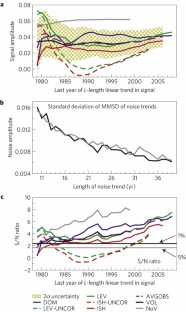
Figure 5: S/N analysis of basin-scale changes in Δ_T_.
The alternative text for this image may have been generated using AI.
References
- Levitus, S., Antonov, J., Boyer, T. & Stephens, C. Warming of the world ocean. Science 287, 2225–2229 (2000).
Article CAS Google Scholar - Barnett, T., Pierce, D. & Schnur, R. Detection of anthropogenic climate change in the world’s oceans. Science 292, 270–274 (2001).
Article CAS Google Scholar - Barnett, T. et al. Penetration of human-induced warming into the world’s oceans. Science 309, 284–287 (2005).
Article CAS Google Scholar - Pierce, D. W. et al. Anthropogenic warming of the oceans: Observations and model results. J. Clim. 19, 1873–1900 (2006).
Article Google Scholar - Palmer, M., Good, S., Haines, K., Rayner, N. & Stott, P. A new perspective on warming of the global oceans. Geophys. Res. Lett. 36, L20709 (2009).
Article Google Scholar - Gouretski, V. & Koltermann, K. How much is the ocean really warming? Geophys. Res. Lett. 34, L01610 (2007).
Article Google Scholar - Domingues, C. et al. Improved estimates of upper-ocean warming and multi-decadal sea-level rise. Nature 453, 1091–1094 (2008).
Article Google Scholar - Ishii, M. & Kimoto, M. Reevaluation of historical ocean heat content variations with time-varying XBT and MBT depth bias corrections. J. Oceanogr. 65, 287–299 (2009).
Article Google Scholar - Levitus, S. et al. Global ocean heat content 1955–2008 in light of recently revealed instrumentation problems. Geophys. Res. Lett. 36, L07608 (2009).
Google Scholar - Ishii, M., Kimoto, M., Sakamoto, K. & Iwasaki, S. Steric sea level changes estimated from historical ocean subsurface temperature and salinity analyses. J. Oceanogr. 62, 155–170 (2006).
Article Google Scholar - Levitus, S., Antonov, J. & Boyer, T. Warming of the world ocean, 1955–2003. Geophys. Res. Lett. 32, L02604 (2005).
Google Scholar - Lyman, J. et al. Robust warming of the global upper ocean. Nature 465, 334–337 (2010).
Article CAS Google Scholar - Gregory, J., Banks, H., Stott, P., Lowe, J. & Palmer, M. Simulated and observed decadal variability in ocean heat content. Geophys. Res. Lett. 31, L15312 (2004).
Article Google Scholar - AchutaRao, K. et al. Variability of ocean heat uptake: Reconciling observations and models. J. Geophys. Res. 111, C05019 (2006).
Article Google Scholar - AchutaRao, K. M. et al. Simulated and observed variability in ocean temperature and heat content. Proc. Natl Acad. Sci. USA 104, 10768–10773 (2007).
Article CAS Google Scholar - Gleckler, P. et al. Krakatoa’s signature persists in the ocean. Nature 439, 675 (2006).
Article CAS Google Scholar - IPCC Special Report on Emissions Scenarios (eds Nakicenovic, N. & Swart, R.) (Cambridge Univ. Press, 2000).
- Arblaster, J., Meehl, G. & Karoly, D. Future climate change in the Southern Hemisphere: Competing effects of ozone and greenhouse gases. Geophys. Res. Lett. 38, L02701 (2011).
Article Google Scholar - Church, J., White, N. & Arblaster, J. Significant decadal-scale impact of volcanic eruptions on sea level and ocean heat content. Nature 438, 74–77 (2005).
Article CAS Google Scholar - Gregory, J. Long-term effect of volcanic forcing on ocean heat content. Geophys. Res. Lett. 37, L22701 (2010).
Article Google Scholar - Santer, B. D. et al. Separating signal and noise in atmospheric temperature changes: The importance of timescale. J. Geophys. Res. 116, D22105 (2011).
Article Google Scholar - Hasselmann, K. in Meteorology of Tropical Oceans (ed. Shawn, D. B.) 251–259 (Roy. Met. Soc., 1979).
Google Scholar - Santer, B. et al. Identification of human-induced changes in atmospheric moisture content. Proc. Natl Acad. Sci. USA 104, 15248–15253 (2007).
Article CAS Google Scholar - Gleckler, P. et al. Krakatoa lives: The effect of volcanic eruptions on ocean heat content and thermal expansion. Geophys. Res. Lett. 33, L17702 (2006).
Article Google Scholar - Gregory, J. et al. Comparison of results from several AOGCMs for global and regional sea-level change 1900-2100. Clim. Dynam. 18, 225–240 (2001).
Article Google Scholar - Gregory, J. M., Lowe, J. A. & Tett, S. F. B. Simulated global-mean sea level changes over the last half-millennium. J. Clim. 19, 4576–4591 (2006).
Article Google Scholar
Acknowledgements
We acknowledge the climate model development groups for providing their simulation output for analysis, PCMDI for collecting and archiving this data and the World Climate Research Programme’s Working Group on Coupled Modelling for organizing the model data analysis activity. The CMIP3 multimodel data set is supported by the Office of Science, US Department of Energy. Work at Lawrence Livermore National Laboratory (by P.J.G., P.M.C., B.D.S. and K.E.T.) was carried out under the auspices of the US Department of Energy under contract DE-AC52-07NA27344. C.M.D. was partly financially supported by a CSIRO Office of the Chief Executive Postdoctoral Fellowship, the Australian Climate Change Science Program and the Australian Academy of Science (Scientific Visit to North America Program). D.W.P. was partially funded by the US Department of Energy's International ad hoc Detection and Attribution Group (IDAG).
Author information
Authors and Affiliations
- Program for Climate Model Diagnosis and Intercomparison, Lawrence Livermore National Laboratory, 7000 East Avenue, Livermore, California 94550, Mail Code L-103, USA
P. J. Gleckler, B. D. Santer, K. E. Taylor & P. M. Caldwell - Antarctic and Climate Ecosystems Cooperative Research Centre, Hobart, Australia
C. M. Domingues - Centre for Australian Weather and Climate Research and Wealth from Oceans Flagship, CSIRO Marine and Atmospheric Research, Hobart, Tasmania 7001, GPO Box 1538, Australia
C. M. Domingues & J. A. Church - Climate Research Division, Scripps Institution of Oceanography, La Jolla 92093, Mail Stop 0224, USA
D. W. Pierce & T. P. Barnett - Indian Institute of Technology, Delhi 110 016, India
K. M. AchutaRao - National Oceanographic Data Center, National Oceanic and Atmospheric Administration, Silver Spring 20910, USA
T. P. Boyer - Climate Research Department, Meteorological Research Institute, 1-1, Nagamine, Tsukuba, Ibaraki 305-0052, Japan
M. Ishii
Authors
- P. J. Gleckler
- B. D. Santer
- C. M. Domingues
- D. W. Pierce
- T. P. Barnett
- J. A. Church
- K. E. Taylor
- K. M. AchutaRao
- T. P. Boyer
- M. Ishii
- P. M. Caldwell
Contributions
P.J.G., B.D.S., D.W.P., T.P.Barnett and K.E.T. designed the research. C.M.D., T.P.Boyer and M.I. contributed new analytic tools. P.J.G., B.D.S., C.M.D., J.A.C., T.P.Boyer, P.M.C. and K.M.A. analysed the data. P.J.G., B.D.S., C.M.D., J.A.C., D.W.P. and K.E.T. wrote the paper.
Corresponding author
Correspondence toP. J. Gleckler.
Ethics declarations
Competing interests
The authors declare no competing financial interests.
Supplementary information
Rights and permissions
About this article
Cite this article
Gleckler, P., Santer, B., Domingues, C. et al. Human-induced global ocean warming on multidecadal timescales.Nature Clim Change 2, 524–529 (2012). https://doi.org/10.1038/nclimate1553
- Received: 11 November 2011
- Accepted: 30 April 2012
- Published: 10 June 2012
- Issue date: July 2012
- DOI: https://doi.org/10.1038/nclimate1553
This article is cited by
Twenty years of ocean observations with China Argo
- Zenghong Liu
- Xiaogang Xing
- Fei Chai
Acta Oceanologica Sinica (2023)
Past and future ocean warming
- Lijing Cheng
- Karina von Schuckmann
- Xiaopei Lin
Nature Reviews Earth & Environment (2022)
Projected engulfment of tropical Indian Ocean by anthropogenical warmpool
- Rameshan Kallummal
Climate Dynamics (2022)
- Rameshan Kallummal
Projected ocean warming constrained by the ocean observational record
- Kewei Lyu
- Xuebin Zhang
- John A. Church
Nature Climate Change (2021)
Scaling through ocean carbon
Nature Geoscience (2021)