Communication of the role of natural variability in future North American climate (original) (raw)
- Perspective
- Published: 26 October 2012
Nature Climate Change volume 2, pages 775–779 (2012) Cite this article
- 15k Accesses
- 816 Citations
- 111 Altmetric
- Metrics details
Subjects
An Erratum to this article was published on 27 November 2012
This article has been updated
Abstract
As climate models improve, decision-makers' expectations for accurate climate predictions are growing. Natural climate variability, however, poses inherent limits to climate predictability and the related goal of adaptation guidance in many places, as illustrated here for North America. Other locations with low natural variability show a more predictable future in which anthropogenic forcing can be more readily identified, even on small scales. We call for a more focused dialogue between scientists, policymakers and the public to improve communication and avoid raising expectations for accurate regional predictions everywhere.
This is a preview of subscription content, access via your institution
Access options
Subscribe to this journal
Receive 12 print issues and online access
$259.00 per year
only $21.58 per issue
Buy this article
- Purchase on SpringerLink
- Instant access to the full article PDF.
USD 39.95
Prices may be subject to local taxes which are calculated during checkout
Additional access options:
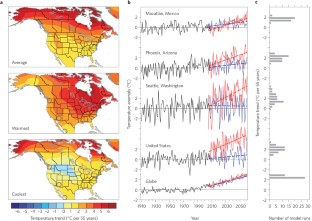
Figure 1: Range of future climate outcomes.
The alternative text for this image may have been generated using AI.
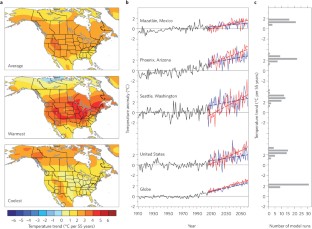
Figure 2: Range of future climate outcomes.
The alternative text for this image may have been generated using AI.
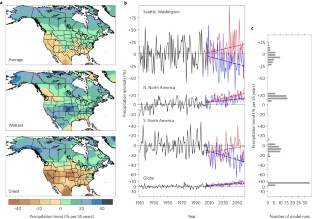
Figure 3: Range of future climate outcomes.
The alternative text for this image may have been generated using AI.
Change history
14 November 2012
In the version of this Perspective originally published, the last label on the x axis of Fig. 3b should have read '2050'. This error has now been corrected in the HTML and PDF versions.
References
- IPCC Climate Change 2007: The Physical Science Basis (eds Solomon, S. et al.) (Cambridge Univ. Press, 2007).
- Easterling, D. R. & Wehner, M. F. Is the climate warming or cooling? Geophys. Res. Lett. 36, L08706 (2009).
Article Google Scholar - Hawkins, E. & Sutton, R. The potential to narrow uncertainty in regional climate predictions. Bull. Am. Meterol. Soc. 90, 1085–1107 (2009).
Article Google Scholar - Deser, C., Phillips, A., Bourdette, V. & Teng, H. Uncertainty in climate change projections: the role of internal variability. Clim. Dynam. 38, 527–547 (2012).
Article Google Scholar - Hawkins, E. Our evolving climate: communicating the effects of climate variability. Weather 66, 175–179 (2011).
Article Google Scholar - Hawkins, E. & Sutton, R. The potential to narrow uncertainty in projections of regional precipitation change. Clim. Dynam. 37, 407–418 (2011).
Article Google Scholar - Santer, B. D. et al. Separating signal and noise in atmospheric temperature changes: The importance of timescale, J. Geophys. Res. 116, D22105 (2011).
Article Google Scholar - Meehl, G., Arblaster, J. & Branstator, G. Mechanisms contributing to the warming hole and the consequent U.S. east-west differential of heat extremes. J. Clim. http://dx.doi.org/10.1175/JCLI-D-11-00655.1 (2012).
- Zhang, R., Delworth, T. L. & Held, I. M. Can the Atlantic Ocean drive the observed multidecadal variability in Northern Hemisphere mean temperature. Geophys. Res. Lett. 34, L02709 (2007).
Google Scholar - Kerr, R. Vital details of global warming are eluding forecasters. Science 334, 173–174 (2011).
Article CAS Google Scholar - http://www.wcrp-climate.org/documents/WCRP_WorldModellingSummit_Jan2009.pdf
- Branstator, G. & Teng, H. Two limits of initial-value decadal predictability in a CGCM. J. Clim. 23, 6292–6311 (2010).
Article Google Scholar - Smith, D. M. et al. Improved surface temperature prediction for the coming decade from a global climate model. Science 317, 796–799 (2007).
Article CAS Google Scholar - Branstator, G. et al. Systematic estimates of initial value decadal predictability for six AOGCMs. J. Clim. 25, 1827–1846 (2012).
Article Google Scholar - Mahlstein, I., Knutti, R., Solomon, S. & Portmann, R. W. Early onset of significant local warming in low latitude countries. Environ. Res. Lett. 6, 034009 (2011).
Article Google Scholar - Diffenbaugh, N. S. & Scherer, M. Observational and model evidence of global emergence of permanent, unprecedented heat in the 20th and 21st centuries. Climatic Change 107, 615–624 (2011).
Article Google Scholar - Hawkins, E. & Sutton, R. Time of emergence of climate signals. Geophys. Res. Lett. 39, L01702 (2012).
Article Google Scholar - Tsunyuki, M., Nakicenovic, N. & Robinson, J. Overview of mitigation scenarios for global climate stabilization based on new IPCC emission scenarios (SRES). Environ. Econ. Policy Stud. 3, 65–88 (2000).
Article Google Scholar - Meehl, G. A. et al. Climate change projections for the twenty-first century and climate change commitment in the CCSM3. J. Clim. 19, 2597–2616 (2006).
Article Google Scholar - Willmott, C. J. & Robeson, S. M. Climatologically aided interpolation (CAI) of terrestrial air temperature. Int. J. Climatol. 15, 221–229 (1995).
Article Google Scholar - Rudolf, B. & Schneider, U. in Proc. 2nd Workshop of the Int. Precipitation Working Group IPWG 231–247 (EUMETSAT, 2004).
Google Scholar - Tebaldi, C., Arblaster, J. & Knutti, R. Mapping model agreement on future climate projections. Geophys. Res. Lett. 38, L23701 (2011).
Article Google Scholar - Dessai, S., Hulme, M., Lempert, R. & Pielke, R. Jr in Adapting to Climate Change: Thresholds, Values, Governance (eds Adger, W. N., Lorenzoni, I. & O'Brien, K.) 64–78 (Cambridge Univ. Press, 2009).
Book Google Scholar - Dessai, S., Hulme, M., Lempert, R. & Pielke, R. Jr Do we need better predictions to adapt to a changing climate? Eos 90, 111–112 (2009).
Article Google Scholar
Acknowledgements
The National Center for Atmospheric Research is sponsored by the National Science Foundation. Model simulations and analyses were conducted by C.D. and A.S.P.; C.D., R.K. and S.S. contributed equally to the writing.
Author information
Authors and Affiliations
- National Center for Atmospheric Research, 1850 Table Mesa Drive, Boulder, 80305, Colorado, USA
Clara Deser & Adam S. Phillips - ETH Zürich, Institute for Atmospheric and Climate Science, CHN N 12.1, Universitätstrasse 16, Zürich, CH-8092, Switzerland
Reto Knutti - Department of Earth, Atmospheric and Planetary Sciences, Massachusetts Institute of Technology, 77 Massachusetts Avenue, Cambridge, 02139, Massachusetts, USA
Susan Solomon
Authors
- Clara Deser
- Reto Knutti
- Susan Solomon
- Adam S. Phillips
Corresponding author
Correspondence toClara Deser.
Ethics declarations
Competing interests
The authors declare no competing financial interests.
Supplementary information
Rights and permissions
About this article
Cite this article
Deser, C., Knutti, R., Solomon, S. et al. Communication of the role of natural variability in future North American climate.Nature Clim Change 2, 775–779 (2012). https://doi.org/10.1038/nclimate1562
- Received: 19 January 2012
- Accepted: 02 May 2012
- Published: 26 October 2012
- Issue date: November 2012
- DOI: https://doi.org/10.1038/nclimate1562