A transcriptome atlas of rice cell types uncovers cellular, functional and developmental hierarchies (original) (raw)
- Letter
- Published: 04 January 2009
- S Lori Tausta1,2 na1,
- Neeru Gandotra1,2 na1,
- Ning Sun3 na1,
- Tie Liu1,2 na1 nAff4,
- Nicole K Clay1,2 nAff4,
- Teresa Ceserani1,2 nAff4,
- Meiqin Chen1,2 nAff4,
- Ligeng Ma1,2 nAff4,
- Matthew Holford3,
- Hui-yong Zhang1,2 nAff4,
- Hongyu Zhao3,
- Xing-Wang Deng1,2 &
- …
- Timothy Nelson1,2
Nature Genetics volume 41, pages 258–263 (2009) Cite this article
- 4171 Accesses
- 228 Citations
- 4 Altmetric
- Metrics details
Abstract
The functions of the plant body rely on interactions among distinct and nonequivalent cell types. The comparison of transcriptomes from different cell types should expose the transcriptional networks that underlie cellular attributes and contributions. Using laser microdissection and microarray profiling, we have produced a cell type transcriptome atlas that includes 40 cell types from rice (Oryza sativa) shoot, root and germinating seed at several developmental stages, providing patterns of cell specificity for individual genes and gene classes. Cell type comparisons uncovered previously unrecognized properties, including cell-specific promoter motifs and coexpressed cognate binding factor candidates, interaction partner candidates and hormone response centers. We inferred developmental regulatory hierarchies of gene expression in specific cell types by comparison of several stages within root, shoot and embryo.
This is a preview of subscription content, access via your institution
Access options
Subscribe to this journal
Receive 12 print issues and online access
$259.00 per year
only $21.58 per issue
Buy this article
- Purchase on SpringerLink
- Instant access to the full article PDF.
USD 39.95
Prices may be subject to local taxes which are calculated during checkout
Additional access options:
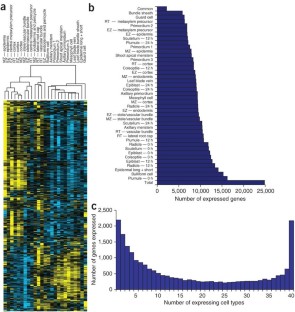
Figure 1: Global patterns of cellular gene expression.
The alternative text for this image may have been generated using AI.
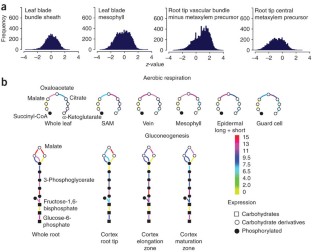
Figure 2: Cell-specific transcripts and selected metabolic pathways.
The alternative text for this image may have been generated using AI.
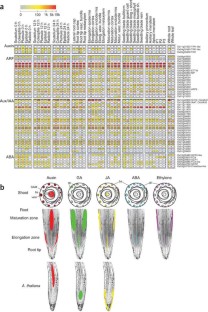
Figure 3: Cellular distributions of transcripts from selected hormone-related genes.
The alternative text for this image may have been generated using AI.
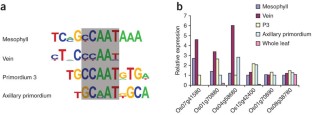
Figure 4: Identification of candidate cis and trans transcriptional control cognate partners on the basis of cellular coexpression.
The alternative text for this image may have been generated using AI.
Accession codes
Accessions
Gene Expression Omnibus
References
- Yu, H., Xia, Y., Trifonov, V. & Gerstein, M. Design principles of molecular networks revealed by global comparisons and composite motifs. Genome Biol. 7, R55 (2006).
Article Google Scholar - Birnbaum, K. et al. A gene expression map of the Arabidopsis root. Science 302, 1956–1960 (2003).
Article CAS Google Scholar - Brady, S.M. et al. A high-resolution root spatiotemporal map reveals dominant expression patterns. Science 318, 801–806 (2007).
Article CAS Google Scholar - Nelson, T., Gandotra, N. & Tausta, S.L. Plant cell types: reporting and sampling with new technologies. Curr. Opin. Plant Biol. 11, 567–573 (2008).
Article CAS Google Scholar - Nelson, T., Tausta, S.L., Gandotra, N. & Liu, T. Laser microdissection of plant tissue: what you see is what you get. Annu. Rev. Plant Biol. 57, 181–201 (2006).
Article CAS Google Scholar - Ishiwatari, Y. et al. Rice phloem thioredoxin h has the capacity to mediate its own cell-to-cell transport through plasmodesmata. Planta 205, 12–22 (1998).
Article CAS Google Scholar - Carland, F.M. & Nelson, T. Cotyledon vascular pattern2-mediated inositol (1,4,5) triphosphate signal transduction is essential for closed venation patterns of Arabidopsis foliar organs. Plant Cell 16, 1263–1275 (2004).
Article CAS Google Scholar - Petricka, J.J. & Nelson, T.M. Arabidopsis nucleolin affects plant development and patterning. Plant Physiol. 144, 173–186 (2007).
Article CAS Google Scholar - Zhan, S., Horrocks, J. & Lukens, L.N. Islands of co-expressed neighbouring genes in Arabidopsis thaliana suggest higher-order chromosome domains. Plant J. 45, 347–357 (2006).
Article CAS Google Scholar - Hurst, L.D., Pal, C. & Lercher, M.J. The evolutionary dynamics of eukaryotic gene order. Nat. Rev. Genet. 5, 299–310 (2004).
Article CAS Google Scholar - Lee, S., Jo, M., Lee, J., Koh, S.S. & Kim, S. Identification of novel universal housekeeping genes by statistical analysis of microarray data. J. Biochem. Mol. Biol. 40, 226–231 (2007).
CAS PubMed Google Scholar - Yang, G.X. et al. Microarray analysis of brassinosteroids- and gibberellin-regulated gene expression in rice seedlings. Mol. Genet. Genomics 271, 468–478 (2004).
Article CAS Google Scholar - Yazaki, J. et al. Transcriptional profiling of genes responsive to abscisic acid and gibberellin in rice: phenotyping and comparative analysis between rice and Arabidopsis. Physiol. Genomics 17, 87–100 (2004).
Article CAS Google Scholar - Liu, X. et al. A G protein-coupled receptor is a plasma membrane receptor for the plant hormone abscisic acid. Science 315, 1712–1716 (2007).
Article CAS Google Scholar - Razem, F.A., El-Kereamy, A., Abrams, S.R. & Hill, R.D. The RNA-binding protein FCA is an abscisic acid receptor. Nature 439, 290–294 (2006).
Article CAS Google Scholar - Shen, Y.Y. et al. The Mg-chelatase H subunit is an abscisic acid receptor. Nature 443, 823–826 (2006).
Article CAS Google Scholar - Abe, H. et al. Arabidopsis AtMYC2 (bHLH) and AtMYB2 (MYB) function as transcriptional activators in abscisic acid signaling. Plant Cell 15, 63–78 (2003).
Article CAS Google Scholar - Edwards, D., Murray, J.A. & Smith, A.G. Multiple genes encoding the conserved CCAAT-box transcription factor complex are expressed in Arabidopsis. Plant Physiol. 117, 1015–1022 (1998).
Article CAS Google Scholar - Lotan, T. et al. Arabidopsis LEAFY COTYLEDON1 is sufficient to induce embryo development in vegetative cells. Cell 93, 1195–1205 (1998).
Article CAS Google Scholar - Coustry, F., Sinha, S., Maity, S.N. & Crombrugghe, B. The two activation domains of the CCAAT-binding factor CBF interact with the dTAFII110 component of the Drosophila TFIID complex. Biochem. J. 331, 291–297 (1998).
Article CAS Google Scholar - Gusmaroli, G., Tonelli, C. & Mantovani, R. Regulation of novel members of the Arabidopsis thaliana CCAAT-binding nuclear factor Y subunits. Gene 283, 41–48 (2002).
Article CAS Google Scholar - Ma, L. et al. A microarray analysis of the rice transcriptome and its comparison to Arabidopsis. Genome Res. 15, 1274–1283 (2005).
Article CAS Google Scholar - Churchill, G.A. Fundamentals of experimental design for cDNA microarrays. Nat. Genet. 32 Suppl, 490–495 (2002).
Article CAS Google Scholar - Kulldorff, M., Rand, K., Gherman, G., Williams, W. & DeFrancesco, D. SaTScan v2.1: software for the spatial and space-time scan statistics. US National Cancer Institute 〈http://www.cancer.gov/prevention/BB/SaTScan.html##〉 (1998).
- Eisen, M.B., Spellman, P.T., Brown, P.O. & Botstein, D. Cluster analysis and display of genome-wide expression patterns. Proc. Natl. Acad. Sci. USA 95, 14863–14868 (1998).
Article CAS Google Scholar - Saldanha, A.J. Java Treeview–extensible visualization of microarray data. Bioinformatics 20, 3246–3248 (2004).
Article CAS Google Scholar - Beissbarth, T. & Speed, T.P. GOstat: find statistically overrepresented Gene Ontologies within a group of genes. Bioinformatics 20, 1464–1465 (2004).
Article CAS Google Scholar - Du, L. et al. The two-component signal system in rice (Oryza sativa L.): a genome-wide study of cytokinin signal perception and transduction. Genomics 89, 697–707 (2007).
Article CAS Google Scholar - Ito, Y. & Kurata, N. Identification and characterization of cytokinin-signalling gene families in rice. Gene 382, 57–65 (2006).
Article CAS Google Scholar - Jain, M. et al. Structure and expression analysis of early auxin-responsive Aux/IAA gene family in rice (Oryza sativa). Funct. Integr. Genomics 6, 47–59 (2006).
Article CAS Google Scholar
Acknowledgements
We thank N. Li for valuable database advice and assistance and P. Wu (Zhejiang University) for the rice root micrograph in Figure 3. This work was supported by US National Science Foundation Plant Genome Program grant DBI-0325821 to T.N., X.-W.D. and H.Z. T.L. and M.C. were supported in part by Peking-Yale Monsanto Fellowships.
Author information
Author notes
- Yuling Jiao, Tie Liu, Nicole K Clay, Teresa Ceserani, Meiqin Chen, Ligeng Ma & Hui-yong Zhang
Present address: Present addresses: Division of Biology, California Institute of Technology, Pasadena, California 91125, USA (Y.J.); Biology Department, Stanford University, Stanford, California 94305, USA (T.L.); Department of Molecular Biology, Massachusetts General Hospital, Boston, Massachusetts 02114, USA (N.K.C.); Department of Biological Sciences, University of Alberta, Edmonton, Alberta T6G 2E9, Canada (T.C.); Peking-Yale Joint Research Center of Plant Molecular Genetics and Agrobiotechnology, College of Life Sciences, Peking University, Beijing 100871, China (M.C.); National Institute of Biological Sciences, Zhongguancun Life Science Park, Beijing 102206, China (L.M. and H.-Y.Z.)., - Yuling Jiao, S Lori Tausta, Neeru Gandotra, Ning Sun and Tie Liu: These authors contributed equally to this work.
Authors and Affiliations
- Department of Molecular, Cellular and Developmental Biology, Yale University, New Haven, 06520, Connecticut, USA
Yuling Jiao, S Lori Tausta, Neeru Gandotra, Tie Liu, Nicole K Clay, Teresa Ceserani, Meiqin Chen, Ligeng Ma, Hui-yong Zhang, Xing-Wang Deng & Timothy Nelson - Peking-Yale Joint Research Center of Plant Molecular Genetics and Agrobiotechnology, College of Life Sciences, Peking University, Beijing, 100871, China
Yuling Jiao, S Lori Tausta, Neeru Gandotra, Tie Liu, Nicole K Clay, Teresa Ceserani, Meiqin Chen, Ligeng Ma, Hui-yong Zhang, Xing-Wang Deng & Timothy Nelson - Center for Statistical Genomics and Proteomics, Yale University, New Haven, 06520, Connecticut, USA
Ning Sun, Matthew Holford & Hongyu Zhao
Authors
- Yuling Jiao
- S Lori Tausta
- Neeru Gandotra
- Ning Sun
- Tie Liu
- Nicole K Clay
- Teresa Ceserani
- Meiqin Chen
- Ligeng Ma
- Matthew Holford
- Hui-yong Zhang
- Hongyu Zhao
- Xing-Wang Deng
- Timothy Nelson
Contributions
T.N., X.-W.D. and H.Z. conceived and oversaw the research. S.L.T., N.G. and T.L. performed cell isolations, RNA isolations and informatic analysis. Y.J., H.Z. and L.M. performed microarray hybridizations and informatic analysis. T.C., N.K.C. and M.C. performed cell and RNA isolations. N.S. designed and performed statistical methods for data processing and analysis. M.H. designed and implemented the atlas database and analytical tools. T.N. prepared the manuscript, with assistance from all coauthors.
Note: Supplementary information is available on the Nature Genetics website.
Corresponding author
Correspondence toTimothy Nelson.
Supplementary information
Rights and permissions
About this article
Cite this article
Jiao, Y., Lori Tausta, S., Gandotra, N. et al. A transcriptome atlas of rice cell types uncovers cellular, functional and developmental hierarchies.Nat Genet 41, 258–263 (2009). https://doi.org/10.1038/ng.282
- Received: 05 August 2008
- Accepted: 17 October 2008
- Published: 04 January 2009
- Issue date: February 2009
- DOI: https://doi.org/10.1038/ng.282